

OBD-II Code C2581: Brake Vacuum Fault OR ADAS Distance Sensor Fault
What C2581 means, why it triggers, and how to fix it on your vehicle
- Code C2581 indicates either a failing brake vacuum pump (common on Ford/Toyota) or a misaligned ADAS radar sensor (common on Nissan/VW).
- A hard brake pedal confirms a brake vacuum failure, doubling your stopping distance and making the vehicle unsafe to drive.
- Dashboard ADAS warnings mean your front radar is offline, disabling Automatic Emergency Braking and increasing rear-end collision risk by up to 50%.
- Always check the 40-amp electric vacuum pump fuse first for brake faults, and demand a $250-$700 sensor recalibration before replacing expensive ADAS parts.
What Does C2581 Mean?
Code C2581 has two distinct meanings depending on the manufacturer. For Ford, Toyota, and GM, it indicates a power brake system failure, specifically low vacuum pressure required for power assist. For Nissan, Mitsubishi, and Volkswagen, it points to a misaligned or faulty front-facing radar sensor used for adaptive cruise control and automatic emergency braking.
Technical definition: The SAE/ISO definition for C2581 is manufacturer-specific. Domestic and Toyota/Lexus models define it as 'Brake Vacuum Sensor Circuit Malfunction.' Nissan, Mitsubishi, and VW define it as 'Distance Sensor Malfunction,' indicating the forward-facing ADAS radar is misaligned or off its aiming point.
Can I Drive With C2581?
Yes, But With Caution. If the code relates to a brake system fault, your ability to stop the vehicle is significantly reduced, requiring much more pedal effort and increasing stopping distances. Do not drive the vehicle. If it relates to the ADAS system, the car is mechanically drivable, but critical safety features like Automatic Emergency Braking (AEB) are disabled, increasing collision risk.
Common Causes
- Failed Electric Brake Vacuum Pump (Brake System) (Very Common) — Modern engines (especially turbocharged or hybrid) use an electric pump to create vacuum for the brake booster. Moisture enters the pump, causing internal corrosion and seizure, which blows a dedicated 40-amp fuse and eliminates power brake assist.
- Misaligned ADAS Radar Sensor (ADAS System) (Very Common) — The front radar sensor, located behind the grille emblem, gets knocked out of alignment by minor bumper impacts, hitting curbs, or large potholes. A misalignment of just one degree triggers this fault.
- Leaking Vacuum Hoses or Grommets (Brake System) (Common) — Rubber hoses carrying vacuum to the brake booster crack, split, or disconnect. The rubber grommet where the vacuum sensor enters the brake booster frequently dry-rots, causing a hissing sound and vacuum loss.
- Damaged ADAS Sensor Bracket (ADAS System) (Common) — Even if the radar sensor survives a minor impact, the plastic or metal bracket holding it bends or cracks. This permanently misaligns the radar and sets the code until the bracket is replaced and the system recalibrated.
- Faulty Brake Booster Vacuum Sensor (Brake System) (Less Common) — The sensor measuring vacuum inside the brake booster fails internally. The computer reads an incorrect voltage from the sensor and triggers the code, even if actual vacuum levels are normal.
- Internal ADAS Sensor Failure (ADAS System) (Less Common) — The radar sensor suffers an internal electronic failure. This differs from physical misalignment and usually sets additional codes like C2582 alongside C2581.
- Wiring or Connector Issue (Both Systems) (Less Common) — Corrosion or damage to the wiring harness for either the brake vacuum pump or the ADAS radar sensor causes a loss of signal. On Ford F-150s, harness corrosion near the ABS module is a documented cause.
- Improper Previous Repairs (ADAS System) (Rare) — A poorly repaired front bumper, a non-genuine grille, or a thick 'clear bra' film installed directly over the radar sensor blocks or refracts the signal, causing this fault.
Symptoms
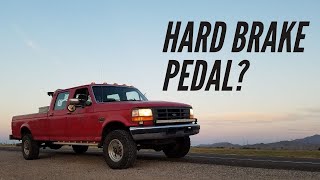
- Hard Brake Pedal (Brake System) — The brake pedal becomes extremely stiff, requiring significant leg strength to stop the vehicle. 🎬 Watch: A guide to diagnosing a hard brake pedal.
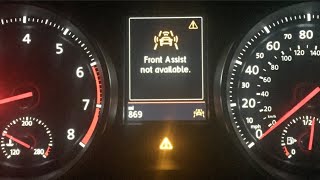
- ADAS Warning Lights On (ADAS System) — The dashboard displays 'Front Radar Obstruction,' 'AEB System Off,' or 'Front Assist Unavailable,' often accompanied by an icon of two cars crashing. 🎬 See what to do when Front Assist is unavailable.
- Increased Stopping Distance (Brake System) — Without power brake assist, the vehicle takes much longer to stop for a given amount of pedal pressure, especially during panic stops.
- Adaptive Cruise Control Disabled (ADAS System) — Features relying on the front radar, including adaptive cruise control and forward collision warning, are completely disabled.
- Hissing or Grinding Noise (Brake System) — A hissing sound near the brake pedal indicates a vacuum leak. A grinding or buzzing noise from the front fender on startup indicates a failing electric vacuum pump.
Diagnostic Flowchart
Tap your situation to follow the diagnostic path that matches what you're seeing on this code.
Common Fixes & Costs
- Replace Electric Brake Vacuum Pump
— Parts: $260-$510, Labor: $150-$250, ~1.5 hr book time
(Intermediate)
: OEM - Recalibrate ADAS Front Radar Sensor — Parts: $0, Labor: $250-$700, ~1.5 hr book time (Professional)
- Replace ADAS Front Radar Sensor and Calibrate
— Parts: $600-$2200, Labor: $350-$800, ~2.5 hr book time
(Professional)
: OEM - Replace Leaking Brake Booster Vacuum Hose/Grommet — Parts: $20-$90, Labor: $50-$150, ~0.8 hr book time (DIY)
- Replace ADAS Sensor Mounting Bracket
— Parts: $40-$250, Labor: $200-$400, ~2 hr book time
(Intermediate)
: OEM - Replace Brake Booster — Parts: $160-$1000, Labor: $200-$550, ~3 hr book time (Professional)
Used vs. New Parts: Buying Guide
When a used part is worth it: A used OEM electric brake vacuum pump from a low-mileage donor is a cost-effective alternative to aftermarket parts. Buying a used ADAS radar sensor is never recommended due to the high risk of receiving an internally failed or incompatible part.
Donor-vehicle mileage cap: roughly under 60000 miles for the part to have meaningful remaining life.
Donor quality checklist:
- Verify the donor vehicle wasn't scrapped for engine or brake-related issues.
- Match the part number exactly. Superseded numbers have different connectors.
- Avoid parts from flood-damaged or heavy rust-belt vehicles.
Decision logic:
- If The part is an ADAS radar sensor → Buy new OEM. Used sensors are a major gamble and often cannot be programmed to your vehicle, wasting money on labor and calibration attempts.
- If The part is an electric brake vacuum pump and budget is the primary concern → A used OEM pump from a verified low-mileage donor is a viable option.
- If The part is an electric brake vacuum pump and reliability is the primary concern → Buy a new OEM or high-quality aftermarket part (e.g., Dorman) with a warranty.
Warranty tradeoff: Used parts carry a 30-90 day warranty. New aftermarket parts offer 1-year to limited lifetime warranties. New OEM parts carry a 1-year/12,000-mile warranty.
Worst-case if a used part fails: $500-$1000. If a used ADAS sensor fails to calibrate, you pay for labor twice plus the cost of a new part.
What Happens If You Wait — Timeline
- Immediate: An electric pump seizes or a vacuum booster diaphragm ruptures. The brake pedal becomes extremely hard to press. (MPG impact: 0-5%% · Added cost: $0, but immediate, high risk of collision. Stopping distances double.)
- 0-1 week of continued driving: Driver exerts extreme force on the brake pedal for all stops, placing excessive strain on the brake master cylinder and pedal assembly. (MPG impact: 0-5%% · Added cost: Potential collision costs. Risk of secondary damage to master cylinder.)
- Immediate: A minor impact triggers the C2581 code. ADAS warning lights appear, and Automatic Emergency Braking (AEB) is disabled. (MPG impact: 0%% · Added cost: $0, but safety systems are offline. AEB prevents ~40% of rear-end crashes.)
- 1+ week of continued driving: The vehicle drives normally, but without the safety net of AEB. The driver is solely responsible for collision avoidance. (MPG impact: 0%% · Added cost: Potential collision costs. No further mechanical damage is caused by ignoring the light.)
Cost of Not Fixing It
- Immediate: Brake system fault: A hard brake pedal severely increases stopping distance, creating an immediate safety risk. ADAS fault: Automatic Emergency Braking is disabled, increasing rear-end collision risk by up to 50%. (Added cost: Potential for collision-related costs.)
- 0-3 months: Brake system fault: Continued driving puts excessive strain on the master cylinder and pedal assembly. ADAS fault: Drivers become overly reliant on disabled safety systems, leading to unsafe driving behavior. (Added cost: Negligible, unless an accident occurs.)
- 3+ months: Ignoring a brake vacuum leak causes the engine to run lean on the affected bank. The primary cost remains the high risk of brake failure. Ignored ADAS faults cause no further mechanical damage, but the safety risk persists. (Added cost: Collision costs ranging from minor bumper repair to total vehicle loss.)
Diagnosis Steps
- Identify System & Check for Obvious Issues
Determine if your vehicle uses this code for the Brake System (Ford, Toyota) or ADAS System (Nissan, VW). If ADAS, thoroughly clean the front grille and emblem. If Brake, visually inspect all vacuum hoses connected to the brake booster for cracks or disconnections.
Tools: Flashlight (Beginner) - Check for Manufacturer TSBs
Search for Technical Service Bulletins (TSBs) related to C2581 for your specific vehicle. Nissan and Ford have issued multiple TSBs providing updated diagnostic procedures and identifying common component failures like faulty vacuum pumps or misaligned radar sensors.
Tools: Online Access (Intermediate) - Check Brake Booster Function (Brake System)
With the engine off, pump the brake pedal 4-5 times until firm. Hold firm pressure on the pedal and start the engine. If the pedal drops slightly, the booster is holding vacuum. If it remains hard, there is zero vacuum assist.
Tools: None (Beginner) - Listen for Vacuum Pump & Check Fuse (Brake System)
Turn the ignition to 'On' without starting the engine. You should hear a small electric motor run for a few seconds. If silent, check the associated 40A fuse in the under-hood fuse box. A blown fuse strongly indicates a seized vacuum pump.
Tools: Multimeter or Test Light (Intermediate) - Check for ADAS Obstruction/Damage (ADAS System)
Inspect the front bumper and grille for signs of impact. Verify the radar sensor and its mounting bracket are secure and not visibly cracked or bent. A loose sensor guarantees this code.
Tools: Flashlight (Intermediate) - Analyze Scan Tool Live Data (Both Systems)
For brake systems, monitor the 'Brake Booster Vacuum' PID to confirm it matches your physical gauge test (18-22 in-Hg at idle). For ADAS systems, access the ADAS/ICC module and check 'Sensor Alignment Status' or 'Misalignment Angle'; any value greater than +/- 0.5 degrees confirms a physical misalignment requiring calibration.
Tools: Professional OBD-II Scan Tool (Advanced) - Measure Brake System Vacuum (Quantitative Test)
Connect a vacuum gauge to the main hose leading to the brake booster. With the engine idling, the gauge must show a steady 18-22 in-Hg. Readings below 17 in-Hg confirm a vacuum leak or failing pump.
Tools: Vacuum Gauge with T-fittings (Advanced) - Test Brake Vacuum Sensor Voltage (Brake System)
Back-probe the 3-wire brake booster vacuum sensor connector with the key on, engine off. Verify the 5V reference and ground. The signal voltage should vary based on booster vacuum. A voltage lower than 5V on the reference wire indicates harness corrosion.
Tools: Multimeter, Vehicle Wiring Diagram (Advanced)
When This Code Triggers (Freeze-Frame Conditions)
- Vehicle Speed: 30-70 mph (ADAS faults often set during steady-state highway driving when the system actively monitors traffic alignment.)
- Brake Pedal Status: Off / On (Brake vacuum faults set immediately upon startup (pump failure) or during a braking event where measured vacuum drops below a critical threshold.)
- Engine State: Running (The engine must be running for the fault to be detected. ADAS requires system power; brake vacuum requires the engine or electric pump to operate.)
- Time Since Engine Start: Varies (< 1 min or > 30 min) (Severe brake vacuum pump failures trigger the code instantly. ADAS misalignment faults require a longer drive cycle (e.g., 30+ minutes for Mitsubishi) to confirm the sensor is consistently off its aiming point.)
Related Codes
- C1A16 / C2582 — On Nissan vehicles, C1A16 means 'Radar Blocked' (clean the sensor). C2581 means 'Misaligned' (requires calibration). C2582 means 'Internal Circuit Malfunction' (requires sensor replacement).
- U3000 — A generic 'Control Module' fault. When stored with C2581, it points to a software issue fixable with a module reprogram or indicates a deeper communication network failure.
- C1391 — On Toyota/Lexus, indicates an accumulator leak in the brake booster assembly and accompanies C2581 if the system has multiple faults.
- C0049 — On Ford models, a 'Brake Fluid Level Sensor Circuit' fault appearing alongside brake vacuum codes indicates a broader issue with the ABS module's wiring harness.
Climate & Environmental Factors
- Cold Weather: Moisture inside the electric vacuum pump freezes, causing the pump to seize. Rubber seals become less pliable, turning minor vacuum leaks into major ones and causing a hard brake pedal on startup.
- Humidity and Rain: High humidity causes moisture ingress into the electric vacuum pump over time, leading to internal corrosion. Heavy rain temporarily obstructs ADAS radar views, and persistent moisture damages poorly sealed connectors.
- Road Salt and Grime: Thick road salt or mud covers the ADAS sensor, triggering temporary 'Radar Blocked' faults. Over time, corrosive salt damages the sensor's wiring and connectors, leading to hard faults.
How to Talk to a Mechanic About This Code
Say this: "State your symptom first. For a hard brake pedal, say: 'I have a C2581 code and a hard brake pedal. I suspect a brake vacuum issue, possibly the electric pump or a leak. Can you diagnose the vacuum system?' For ADAS warnings, say: 'I have a C2581 code and my front radar/AEB system shows an error. I believe this indicates a radar misalignment. Can you check for TSBs and attempt a recalibration before recommending a sensor replacement?'"
Directs the mechanic to the correct system (Brakes vs. ADAS) based on symptoms and prevents them from wasting time diagnosing the wrong system. It encourages them to follow best practices, like attempting a cheaper calibration before a costly replacement.
Avoid saying:
- 'My check engine light is on, can you look at it?' (Too vague, invites an expensive diagnostic process.)
- 'Just fix whatever is wrong.' (Gives the shop a blank check.)
- 'A guy on the internet said it's the...' (State the symptom and suspected system to guide their diagnosis instead.)
Questions to ask before authorizing the repair:
- For a Brake Fault: Did you test the electric vacuum pump and check its fuse? What was the vacuum reading at the booster?
- For an ADAS Fault: Did you check for TSBs? Will you attempt a recalibration first, as recommended by the manufacturer?
- For an ADAS Fault after an impact: Did you inspect the mounting bracket? Is it possible to replace just the bracket and recalibrate?
- If sensor replacement is recommended: Does the quoted price include the mandatory post-installation calibration?
Where to Take It: Dealer vs Independent vs Chain
- Dealer:
Best for: ADAS-related C2581 faults, especially on vehicles under warranty., Complex calibrations requiring manufacturer-specific tools (e.g., Nissan CONSULT, VW ODIS) and the latest TSBs.
Downsides: Highest labor rates, often 1.5-2x more than independent shops., May default to full sensor replacement instead of attempting a bracket repair or simple recalibration. (Typical cost: +50% vs. baseline) - Independent Shop:
For brake system faults, a trusted independent shop is excellent. For ADAS faults, ONLY use an independent shop if you verify they own the correct calibration equipment; otherwise, go to the dealer.
Best for: Brake-related C2581 faults (e.g., vacuum pump replacement, hose leaks) on out-of-warranty vehicles., Shops that prove they have invested in modern ADAS calibration equipment for your specific vehicle brand.
Downsides: Quality varies widely. Many shops lack the expensive equipment or clean, level space required for ADAS calibration. (Typical cost: +0% vs. baseline) - Chain Shop:
AVOID for C2581 diagnosis and repair. They are not equipped to handle brake vacuum diagnostics or ADAS calibration requirements.
Best for: Simple, unrelated maintenance like oil changes or tire rotations.
Downsides: Technician skill and diagnostic capability are highly variable., Almost never have the specialized equipment or training for ADAS calibration. (Typical cost: -10% vs. baseline)
When to Walk Away From the Repair
If the estimated repair cost for the C2581 fault exceeds 50% of your car's private-party value, seriously consider selling or trading in the vehicle instead of repairing it.
- Car worth $10000, fix is $850: Fix it. A vacuum pump replacement on an F-150 is well below the threshold.
- Car worth $6000, fix is $2200: Borderline. A $2200 ADAS sensor replacement is 37% of the car's value. Get a second opinion to confirm a cheaper bracket repair isn't possible.
- Car worth $3500, fix is $2500: Walk away. The repair cost is over 70% of the vehicle's value. It is not economically sensible to repair this vehicle.
What Scan Tool You Need for This Code
Minimum: A scanner that reads and clears 'C' (Chassis/ABS) codes and displays live data from the ABS and ADAS modules.
A basic $20 'P-code' reader will not see the C2581 code. You need a tool that accesses Chassis control modules. Without live data for brake vacuum or sensor alignment status, you cannot diagnose the cause.
Budget: BlueDriver Pro (~$100) — Reads and clears ABS/Chassis codes. Displays live data PIDs like 'Brake Booster Vacuum' to diagnose a brake fault.
Mid-range: Foxwell NT510 Elite (~$180) — Provides OE-level diagnostics. Reads C2581, views live data from the ADAS module to check alignment status, and performs active tests on the brake system, like commanding the vacuum pump.
Professional: Autel MaxiCOM MK808 / Launch X431 CRP919XBT (~$500-1200) — Full bidirectional control. Initiates the ADAS radar calibration procedure. Note: Performing the calibration also requires expensive physical targets and a controlled environment, making it a professional-only task.
How to Clear the Code After You Fix It
- Use a professional OBD-II scan tool to clear the C-code from the ABS or ADAS module.
- For ADAS repairs, perform the mandatory sensor calibration procedure using a scan tool and targets.
- For brake system repairs, perform several key-on/key-off cycles to allow the vacuum pump to run and the sensor to verify pressure.
- Perform the manufacturer-specified drive cycle to confirm the fix.
Drive cycle (~20 minutes): A typical drive cycle involves a cold start followed by mixed city and highway driving. ADAS faults require several minutes of driving on straight, clearly marked roads above 40 mph to verify radar alignment. Brake faults require multiple braking events.
Readiness monitors affected: This is a 'C' (Chassis) code and does not affect emissions readiness monitors.
Watch out for:
- Clearing the code with a basic scanner will not fix an ADAS misalignment; the code returns immediately until calibration is performed.
- If the brake pump fuse blew, it must be replaced. If it blows again, the new pump is defective or there is a wiring short.
- Disconnecting the battery will not clear this hard fault from the module's memory.
Will This Fail Emissions / State Inspection?
No — by itself this code doesn't fail OBD inspection (but it can keep readiness monitors from setting, which causes a separate fail).
- General: As a Chassis code, C2581 does not fail standard OBD-II emissions tests. However, if it illuminates a dedicated brake/ABS warning light, it causes a visual inspection failure in most states.
- California: A visible ABS or brake warning light results in an automatic inspection failure. ADAS-specific warning lights currently pass, but inspection criteria are evolving.
- New York: NYS safety inspections require all safety systems to function. An illuminated ABS/brake light is an automatic failure. A 'Service Driver Assist' message likely leads to failure.
- Texas: Annual safety inspections check the ABS warning lamp. If illuminated due to a brake-related C2581, the vehicle fails.
Most Commonly Affected Vehicles
- Nissan Rogue, Pathfinder, QX60 (2021-2024) — Prone to C2581 for the ADAS distance sensor. TSBs NTB23-009 and NTB22-098 advise performing a sensor alignment before replacing parts, as misalignment is the primary cause.
- Ford F-150 (2011-2020) — Commonly experiences C2581 due to electric brake vacuum pump failure, especially on 3.5L EcoBoost engines. Covered by TSB 15-0105 and Customer Satisfaction Program 15N05.
- Mitsubishi Outlander (2014-2022) — Sets C2581 for a misaligned forward radar sensor, disabling the Forward Collision Mitigation (FCM) system. Diagnosis requires a M.U.T.-III SE scan tool.
- Volkswagen Golf, Passat, Atlas, Tiguan (2016-2023) — Triggers 'Front Assist Unavailable' with C2581 due to a misaligned radar sensor. VW offers a specific bracket repair kit (Part No. 3Q0998561) to avoid replacing the entire sensor.
- Chevrolet / GMC Silverado, Sierra (2019-2023) — Displays a 'Service Driver Assist' message. C2581 indicates a radar sensor alignment fault or a wiring issue at the sensor connector.
- Honda CR-V, Accord (2018-2022) — Triggers multiple ADAS warning lights (Collision Mitigation, ACC). Often points to a faulty front radar sensor requiring replacement and calibration ($1500-$2000).
- Ford Escape (2017-2022) — Frequently points to a failed electric brake vacuum pump. A buzzing or grinding noise from the front of the vehicle on startup is a key symptom.
- Toyota Prius, Highlander Hybrid (2010-2018) — Relates to the complex electro-hydraulic brake system, often pointing to a fault within the expensive brake booster pump and accumulator assembly.
Manufacturer-Specific Notes
- Nissan/Infiniti: Exclusively uses C2581 to indicate a misaligned forward radar sensor. TSB NTB23-009 instructs technicians to perform an alignment with a CONSULT scan tool before replacing parts.
- Ford/Lincoln: Almost always points to a failure in the supplemental brake vacuum system. Ford issued Customer Satisfaction Program 15N05 for 2011-2012 F-150s, extending the vacuum pump warranty to 10 years/150,000 miles.
- Volkswagen: Uses the message 'Front Assist Unavailable.' The radar sensor bracket is a known weak point, and VW offers a specific repair kit to replace a broken bracket without replacing the sensor.
- Mitsubishi: Reports that the 'Radar of distance sensor is off the aiming point,' disabling FCM and AEB. Diagnosis requires driving the vehicle for over 30 minutes for the code to set as current.
- Toyota/Lexus: Relates to the brake booster and vacuum system, but is part of a highly complex and expensive electronically controlled braking (ECB) system found on their hybrids.
Real Owner Stories
2014 Ford F-150 EcoBoost at 150K miles
While reversing, the brake pedal suddenly became rock hard. The issue was intermittent, disappearing after the truck sat, only to return weeks later.
What they tried:
- Owner performed a visual inspection of vacuum lines, finding no leaks.
- A shop replaced the brake master cylinder for $800, but the problem returned.
- Owner replaced the brake booster, creating new problems and warning lights.
Outcome: The intermittent hard pedal is a classic symptom of a failing electric brake vacuum pump. The initial shop misdiagnosed it as a master cylinder. The owner's booster replacement introduced a new fault.
Lesson: For an intermittent hard pedal on an EcoBoost F-150, the electric vacuum pump and its 40A fuse are the primary suspects. Do not replace the booster or master cylinder until the pump is ruled out.
2022 Nissan Rogue at 25K miles
Multiple ADAS warning lights appeared, including 'Front Radar Unavailable,' along with code C2581. There was no known impact to the vehicle.
What they tried:
- The owner cleaned the front emblem and sensor area, but the code remained.
- The dealership was consulted and followed Nissan TSB NTB23-009.
Outcome: The dealership performed a 'Distance Sensor Alignment' using a CONSULT scan tool. This recalibration resolved the fault without replacing parts, covered under warranty.
Lesson: On newer Nissan, VW, and Mitsubishi vehicles, C2581 almost always means 'misaligned,' not 'broken.' Insist the shop performs a recalibration per manufacturer bulletins before agreeing to sensor replacement.
2023 Mitsubishi Outlander with low mileage
The 'Forward Collision Mitigation System Off' warning light began blinking constantly.
What they tried:
- The owner could not reset the system.
- The dealer suggested physical damage to the radar sensor bracket, quoting over $600 for a new bracket and recalibration, stating it was not a warranty issue.
Outcome: A minor, unnoticed event (like hitting a pothole) slightly bent the bracket, triggering the C2581 code. The repair required replacing the bracket and performing a calibration.
Lesson: A C2581 code from a minor impact is classified as external damage, not a warranty defect. Before paying for a full sensor replacement ($1500+), ask if a less expensive bracket replacement and recalibration is possible.
How to Prevent This Code From Triggering
- Periodically clean the ADAS radar sensor area. (Monthly or after driving in mud/snow.) — Prevents dirt, salt, or bug accumulation that blocks the radar signal and leads to faults.
- Avoid pressure washing the front grille directly. (During car washes.) — High-pressure water forces past seals on the ADAS sensor, introducing moisture that causes corrosion and electrical faults.
- Consider a protective film for the ADAS sensor. (One-time installation.) — A radar-compatible clear film protects the sensor lens from rock chips and pitting that degrade performance.
- Inspect brake vacuum hoses during routine maintenance. (Every oil change.) — Catches potential vacuum leaks (cracks, swelling) before they become severe enough to cause a hard brake pedal.
- Listen for unusual noises on startup. (Daily habit.) — A new grinding or buzzing noise from the engine bay on startup is an early warning that the electric brake vacuum pump is failing.
Frequently Asked Questions
Why are there two different meanings for code C2581?
OBD-II 'C' (Chassis) codes lack the strict standardization of 'P' (Powertrain) codes. Manufacturers assign them to different chassis systems, leading C2581 to represent brake vacuum faults on some brands and ADAS radar faults on others.
Is it safe to drive with code C2581?
If your brake pedal is hard to push, the vehicle is unsafe to drive due to severely compromised stopping power. If the code is for the ADAS system, the car brakes normally, but automatic safety features are disabled, increasing collision risk.
Can the C2581 code clear itself?
No, C2581 is a 'hard fault' indicating a specific physical failure like a misaligned sensor or a seized pump. Unlike a temporary 'Radar Blocked' warning from snow, C2581 requires a mechanical repair or professional recalibration to resolve.
Can bad weather or a car wash trigger a C2581 code?
Bad weather typically triggers a temporary 'Radar Blocked' code (like C1A16) that clears itself. C2581 is a 'hard fault' indicating physical sensor misalignment requiring recalibration. However, severe weather can push an already borderline sensor over the fault threshold.
Can I pass a state inspection with code C2581 active?
In states checking for ABS or stability control warning lights, a brake-related C2581 causes an immediate failure. An ADAS-related C2581 currently passes in most states, but this is changing as safety system inspections become stricter.
My mechanic quoted me $2,000 to fix C2581. Is that a rip-off?
If the repair involves replacing and calibrating an ADAS radar sensor on a newer vehicle, $1,500-$2,500 is realistic. If the issue is a simple vacuum hose, a blown fuse, or a bent bracket, that price is excessively high. Always demand a detailed breakdown of parts, labor, and calibration costs.
The C2581 code appeared after I hit a curb. What's the likely cause?
Hitting a curb or deep pothole easily knocks the front ADAS radar sensor out of alignment. Even without visible bumper damage, the internal sensor bracket bends, triggering the code and requiring professional recalibration.
My mechanic wants to replace my windshield for C2581. Is this correct?
This is a common misdiagnosis, as C2581 specifically points to the grille-mounted radar sensor or the brake system, not the windshield camera. Before replacing an expensive windshield, the shop must inspect the front radar for impact damage and follow the manufacturer's specific diagnostic procedure.
Key Takeaways
- Code C2581 indicates either a failing brake vacuum pump (common on Ford/Toyota) or a misaligned ADAS radar sensor (common on Nissan/VW).
- A hard brake pedal confirms a brake vacuum failure, doubling your stopping distance and making the vehicle unsafe to drive.
- Dashboard ADAS warnings mean your front radar is offline, disabling Automatic Emergency Braking and increasing rear-end collision risk by up to 50%.
- Always check the 40-amp electric vacuum pump fuse first for brake faults, and demand a $250-$700 sensor recalibration before replacing expensive ADAS parts.
Helpful Videos
Shop the Parts Behind C2581
Below are the parts most often responsible for code C2581, ranked by how frequently each one is the actual culprit (per the diagnosis above). Tap any to see what we have for your vehicle.



The information in this article is provided for general reference and educational purposes only. Vehicle specifications, procedures, and part compatibility can vary by production date, trim level, and region. Always consult your vehicle's factory service manual and verify part numbers before purchasing or performing repairs. Safety-critical components such as airbags, seat belts, and braking systems should be installed by a qualified professional.
- 🧭 Diagnostic Flowchart
- 🎬 Helpful Videos
- 🛍️ Shop This Part
- What Does C2581 Mean?
- Can I Drive With C2581?
- Common Causes
- Symptoms
- Common Fixes & Costs
- Used vs. New Parts: Buying Guide
- What Happens If You Wait — Timeline
- Cost of Not Fixing It
- Diagnosis Steps
- When This Code Triggers (Freeze-Frame Conditions)
- Related Codes
- Climate & Environmental Factors
- How to Talk to a Mechanic About This Code
- Where to Take It: Dealer vs Independent vs Chain
- When to Walk Away From the Repair
- What Scan Tool You Need for This Code
- How to Clear the Code After You Fix It
- Will This Fail Emissions / State Inspection?
- Most Commonly Affected Vehicles
- Manufacturer-Specific Notes
- Real Owner Stories
- 2014 Ford F-150 EcoBoost at 150K miles
- 2022 Nissan Rogue at 25K miles
- 2023 Mitsubishi Outlander with low mileage
- How to Prevent This Code From Triggering
- Frequently Asked Questions
- Why are there two different meanings for code C2581?
- Is it safe to drive with code C2581?
- Can the C2581 code clear itself?
- Can bad weather or a car wash trigger a C2581 code?
- Can I pass a state inspection with code C2581 active?
- My mechanic quoted me $2,000 to fix C2581. Is that a rip-off?
- The C2581 code appeared after I hit a curb. What's the likely cause?
- My mechanic wants to replace my windshield for C2581. Is this correct?
- Key Takeaways
- 🎟️ Get 5% Off