

OBD-II Code C2666: ABS Pump Motor Circuit Failure
The Ultimate 2026 Guide: What C2666 means, why it triggers, and how to fix it for good.
- Code C2666 disables your ABS, traction, and stability control systems due to an electrical fault in the ABS pump motor circuit.
- Stopping distances increase by 15-30% without ABS, making emergency braking highly dangerous on wet or loose surfaces.
- Always test the 30-60A ABS pump fuse and inspect the main connector for corrosion before replacing the $800+ ABS module.
- Mailing your original ABS module to a remanufacturing service costs $150-$350 and bypasses expensive dealer programming fees.
- Hyundai and Kia owners must check for open HECU recalls immediately, as internal module shorts pose a documented fire risk.
What Does C2666 Mean?
Code C2666 indicates the vehicle's main computer (PCM) or ABS module detected an electrical fault in the ABS pump motor circuit. This motor rapidly modulates brake pressure to prevent wheel lock-up. When this code sets, the system deactivates these critical safety features as a fail-safe.
Technical definition: C2666 is a manufacturer-specific Diagnostic Trouble Code (DTC) pointing to a fault in the ABS Pump Motor Control Circuit. It indicates an electrical open, short, high resistance, or mechanical failure of the pump motor. It is a specific version of the generic C0020 code.
Can I Drive With C2666?
Yes, But With Caution. Yes, but with extreme caution. Your standard hydraulic brakes function normally, but the Anti-lock Braking System (ABS), traction control, and stability control are disabled. This increases stopping distances by 15-30% (e.g., from 290 to 335 feet) and causes wheel lock-up during hard braking. This loss of control is a serious safety hazard on wet or loose surfaces.
Common Causes
- Failed ABS Control Module (Very Common) — The electronic module controlling the ABS system is the most frequent culprit. Internal power transistors and solder joints that supply current to the pump motor fail from heat, vibration, and age.
- Blown ABS Pump Fuse or Relay (Common) — The ABS pump motor draws significant current and relies on a 30-60A fuse and relay. A seizing motor draws excessive current and blows the fuse, while a failing relay causes intermittent power loss.
- Corroded Wiring or Water-Damaged Fuse Box (Common) — Moisture and heat cause corrosion on the ABS module connector pins. On Ford F-Series trucks, water leaks into the under-hood Battery Junction Box, corroding the high-amperage fuse and relay.
- Failed ABS Pump Motor (Common) — The electric motor that pressurizes brake fluid seizes, develops an internal short circuit, or wears out mechanically.
- Internal HECU Failure (Hyundai/Kia) (Less Common) — On many 2011-2023 Hyundai and Kia models, the integrated ABS module and pump (HECU) suffers internal electrical shorts. This poses a severe fire risk even when the vehicle is turned off. 🎬 Watch: News report on the Hyundai and Kia HECU fire risk.
- Low System Voltage (Rare) — Sensitive ABS electronics require stable voltage. A failing battery or defective alternator drops voltage, forcing the module to set false diagnostic codes like C2666 and P0562.
- Sticking Pump Motor Brushes (Rare) — Internal carbon brushes stick due to carbon dust buildup or lack of use. A stuck brush prevents the motor from spinning when commanded.
Symptoms
- ABS Light On — The ABS warning light illuminates permanently on the instrument cluster.
- Traction or Stability Control Light On — Modern traction (TCS) and stability control (ESC) systems rely on the ABS pump. A C2666 fault disables them and triggers their warning lights.
- Wheels Lock Up During Hard Braking — Without ABS, wheels lock and skid during panic stops, increasing stopping distance and causing steering loss.
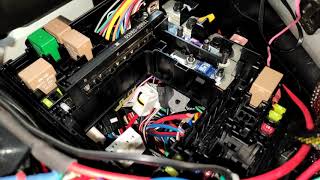
- Constant ABS Pump Noise — The ABS pump motor runs constantly, even with the key off, rapidly draining the battery. 🎬 Watch: How to replace a Ford ABS module that won't stop running.
- Brake Warning Light On — The main red 'BRAKE' warning light illuminates to signify a critical braking system fault.
Diagnostic Flowchart
Tap your situation to follow the diagnostic path that matches what you're seeing on this code.
Common Fixes & Costs
- Replace Blown Fuse and Re-test — Parts: $5-$15, Labor: $0, ~0.1 hr book time (Beginner)
- Repair/Remanufacture ABS Control Module — Parts: $150-$350, Labor: $100-$250, ~1.5 hr book time (Intermediate)
- Repair Damaged Wiring or Replace Fuse Box — Parts: $10-$150, Labor: $100-$300, ~3 hr book time (Intermediate)
- Replace ABS Module/Pump Assembly (New OEM) — Parts: $700-$1200, Labor: $150-$300, ~2.5 hr book time (Professional)
- Replace ABS Module/Pump Assembly (Used/Salvage) — Parts: $75-$400, Labor: $150-$300, ~2.5 hr book time (Professional)
Used vs. New Parts: Buying Guide
When a used part is worth it: A used ABS module/pump assembly is a budget-friendly option for older, high-mileage vehicles where the cost of a new part is prohibitive. It makes sense if you find a part with a matching part number and have access to a shop that can program it.
Donor-vehicle mileage cap: roughly under 100000 miles for the part to have meaningful remaining life.
Donor quality checklist:
- Verify the part number on the used unit EXACTLY matches your original.
- Source from a reputable salvage yard that offers at least a 90-day warranty.
- Visually inspect the connector pins for any signs of corrosion or damage before purchase.
Decision logic:
- If The fix is a known internal module failure and a repair service is available → Choose repair/remanufacture of your original module. It is the best value and avoids programming.
- If Vehicle is newer and under 80k miles → Favor a new OEM part to ensure longevity and compatibility.
- If Budget is the primary concern and the vehicle is over 150k miles → A used part is an acceptable risk, provided the part number matches and it can be programmed.
Warranty tradeoff: Used parts typically offer a 30-90 day warranty on the part only. New OEM parts carry a 1-2 year warranty. Remanufacturing services usually offer a 1-year to lifetime warranty on the repair.
Worst-case if a used part fails: $300-$600 if a used part fails after the warranty period, requiring repeat labor costs plus the cost of another part.
What Happens If You Wait — Timeline
- Immediate: ABS, Traction Control, and Stability Control lights illuminate. All related safety systems are disabled. The vehicle fails safety inspections. (MPG impact: 0%% · Added cost: $0 (Safety risk is the primary cost))
- 1 day - 1 week (if pump is running constantly): A stuck internal relay causes the ABS pump to run continuously, completely draining the battery. (MPG impact: 0%% · Added cost: $150-$300 for a new battery. Repeatedly draining a standard lead-acid battery permanently damages it.)
- 1-6 months (if caused by moisture/corrosion): An intermittent fault caused by moisture becomes a hard fault as corrosion worsens. Corrosion spreads from the connector to the internal pins of the module, forcing a full replacement. (MPG impact: 0%% · Added cost: $500-$1500+ as a simple wiring repair escalates into a full module replacement.)
- Ongoing (Hyundai/Kia specific): For recalled Hyundai/Kia models, the internal short in the HECU causes a thermal event at any time, parked or driving. (MPG impact: 0%% · Added cost: Total loss of vehicle due to fire.)
Cost of Not Fixing It
- Immediate: Loss of ABS, traction control, and stability control. Increased risk of accidents in emergency braking or slippery conditions. Automatic failure of vehicle safety inspections. (Added cost: Potential insurance claim deductible or total loss of vehicle in an accident.)
- 1-3 Months: If the pump motor is stuck running, it drains and destroys the vehicle's battery, requiring replacement. (Added cost: $150-$300 for a new battery.)
- 6+ Months: On Hyundai/Kia models with HECU recalls, continued driving poses a significant fire risk. (Added cost: Total vehicle loss due to fire.)
Diagnosis Steps
- Read All Trouble Codes
Use an ABS-capable OBD-II scanner. Document C2666 and any U0121 (Lost Communication) or P0562 (Low Voltage) codes, as these dictate different diagnostic paths.
Tools: ABS-capable OBD-II Scanner (Beginner) - Inspect ABS Fuses and Relays
Locate the 30-60A ABS pump motor fuse in the under-hood fuse box. Verify resistance is near 0 ohms. Swap the ABS relay with an identical non-critical relay (like the horn). Inspect the fuse box for water damage.
Tools: Multimeter, Fuse Puller (Beginner) - Check Battery and Charging System
Verify battery voltage is ~12.6V with the engine off and ~13.7-14.7V running. A weak charging system triggers false ABS codes.
Tools: Multimeter (Beginner) - Inspect ABS Module Wiring and Connector
Disconnect the main ABS electrical connector. Inspect the harness and module pins for green/white corrosion, bent pins, or heat melting.
Tools: Flashlight, Inspection Mirror (Intermediate) - Test Power, Ground, and Voltage Drop
Identify the main power and ground pins using a wiring diagram. Check for battery voltage and a solid ground (<1 ohm). Command the pump on with a scanner and measure voltage drop; readings above 0.5V indicate high circuit resistance.
Tools: Multimeter, Bi-Directional Scan Tool, Wiring Diagram (Advanced) - Command ABS Pump On
Use a bi-directional scanner to command the pump motor on. If it does not run despite verified power and ground, the ABS module/pump assembly is faulty.
Tools: Bi-Directional Scan Tool (Professional) - Perform Pump Motor Resistance Test
Measure resistance between the two pins leading to the pump motor. 'OL' indicates an open circuit, while ~0 ohms indicates a short. Healthy motors show 0.5 to 5.0 ohms.
Tools: Multimeter (Advanced)
When This Code Triggers (Freeze-Frame Conditions)
- System Voltage: 11.5V - 14.8V (Code sets if voltage is too low (bad battery/alternator) or during voltage spikes.)
- Vehicle Speed: 5-15 mph (Fault often detected during the initial system self-test at low speeds after startup.)
- Ignition Status: RUN (The module is powered and actively monitoring circuits.)
- Pump Motor Command: ON / OFF (The fault logs when the module commands the pump motor and does not see the expected electrical feedback.)
Related Codes
- C0020 — The generic SAE code for ABS Pump Motor Control Circuit. C2666 is the manufacturer-specific equivalent.
- U0121 — Lost Communication With ABS Control Module. Fix this first. C2666 means the module is online but faulty; U0121 means it is offline entirely.
- P0562 — System Voltage Low. If seen with C2666, the root cause is a weak battery or failing alternator.
- C2200 — Antilock Brake Module Internal Electronic Failure. Confirms the electronic module is faulty and requires replacement or repair.
- C1095, 01276, 5DF0 — Manufacturer-specific codes for ABS pump motor circuit failure from Ford, VW/Audi, and BMW, respectively.
Climate & Environmental Factors
- Cold Weather: Freezing temperatures freeze moisture inside electrical connectors, causing poor connections or temporary battery voltage drops that trigger false codes.
- Humidity and Road Salt: High humidity and road salt accelerate corrosion on the main ABS module connector pins and under-hood fuse box.
How to Talk to a Mechanic About This Code
Say this: "I have an ABS light and a C2666 code. Before we assume it's the expensive module, I'd like to authorize one hour of diagnostic time to specifically check the basics: please test the ABS pump fuse, the relay, and inspect the main electrical connector at the module for corrosion or damage."
This shows you have done your research and directs the mechanic to follow a logical, cost-effective diagnostic path. It prevents them from immediately quoting a full module replacement without ruling out simpler causes.
Avoid saying:
- 'My ABS light is on, just fix it.'
- 'I think I need a new ABS module.'
- 'Do whatever you think is best.'
Questions to ask before authorizing the repair:
- Did you find power and a good ground at the ABS module connector?
- Were you able to command the ABS pump on and off with your scan tool?
- What was the result of the visual inspection of the connector pins and fuse box?
- Is it possible to send my existing module out for a repair service instead of buying a new one?
- If the entire hydraulic unit needs replacement, does your quote include the computerized 'ABS bleed' procedure required afterward?
Where to Take It: Dealer vs Independent vs Chain
- Dealer:
A necessary option for warranty/recall work, but the most expensive choice for an out-of-warranty vehicle.
Best for: Vehicles under warranty or with an open recall (like the Hyundai/Kia fire risk)., Complex programming for brand new modules on newer cars.
Downsides: Highest cost for parts and labor, often 1.5x to 2x an independent shop., More likely to replace the entire assembly rather than attempting a targeted repair. (Typical cost: +75% vs. baseline) - Independent Shop:
Best choice for most customers. A good independent shop provides the best balance of expertise and value.
Best for: Out-of-warranty vehicles where cost is a major factor., Proper electrical diagnosis to pinpoint the exact failure., Openness to cost-saving options like using a remanufactured module.
Downsides: Quality and diagnostic capabilities vary widely. Ensure the shop has an ASE-certified technician and advanced scan tools. (Typical cost: +0% vs. baseline) - Chain Shop:
AVOID. This is not a simple parts-swapping job. The risk of misdiagnosis is very high.
Best for: Simple jobs like tire rotations or oil changes.
Downsides: Technicians often lack the advanced electrical diagnostic training for this code., Unlikely to have the bi-directional scan tools needed for proper testing and bleeding procedures., High pressure to sell parts leads to recommendations for full assembly replacements without proper diagnosis. (Typical cost: -10% vs. baseline)
When to Walk Away From the Repair
If the estimated repair cost for the ABS system exceeds 40-50% of your car's current private-party value, it is time to seriously consider walking away.
- Car worth $4000, fix is $1800: Walk away. The repair cost is nearly half the vehicle's value. It is not an economically sound repair.
- Car worth $15000, fix is $1200: Fix it. The repair cost is well below the 40% threshold and is a critical safety system.
- Car worth $6000, fix is $450: Fix it. If the diagnosis points to a wiring repair or a remanufactured module, the cost is very reasonable.
What Scan Tool You Need for This Code
Minimum: A scanner that reads and clears codes from the Anti-lock Braking System (ABS) module. A basic engine-only code reader is useless.
A $20 OBD-II reader only communicates with the Engine Control Module (ECM). It cannot see the ABS module, so it will not read C2666 or clear the ABS light.
Budget: BlueDriver Pro (~$90) — Reads and clears ABS codes, provides freeze-frame data, and offers live data graphing to monitor system voltage.
Mid-range: Foxwell NT630 Plus (~$160) — Provides bi-directional control to command the ABS pump motor on for testing. It performs the critical 'ABS Bleed' function after a hydraulic unit replacement.
Professional: Autel MaxiCOM MK808S (~$450-550) — Full professional-level diagnostics. Provides comprehensive bi-directional control, advanced live data, and all service functions including ABS bleed.
Rent vs buy: Auto parts store loaner tools read ABS codes but lack the bi-directional control needed for full diagnosis or the ABS bleed function. Buying a mid-range tool is a wise investment.
How to Clear the Code After You Fix It
- Reconnect any disconnected components (ABS module, battery).
- Use an ABS-capable OBD-II scan tool to clear codes from the Anti-lock Brake System module.
- Perform the ABS system self-test drive cycle.
Drive cycle (~10 minutes): Start the vehicle. Drive forward and accelerate to 15-20 mph. The ABS module performs a self-test, often with an audible click from the pump. Drive for 5-10 minutes with at least one stop to confirm the light stays off.
Readiness monitors affected: None directly, but clearing codes with a generic scanner resets all emissions readiness monitors.
Before emissions retest: drive at least 50 miles to fully set monitors.
Watch out for:
- Using a basic code reader that only clears engine codes will not turn off the ABS light.
- If the hydraulic unit was replaced, a simple code clear is insufficient; a special 'ABS Bleed' procedure must be performed.
- The code returns instantly if the underlying electrical or mechanical fault was not properly fixed.
Will This Fail Emissions / State Inspection?
No — by itself this code doesn't fail OBD inspection (but it can keep readiness monitors from setting, which causes a separate fail).
- California: An ABS light will NOT fail the emissions (smog) test. However, it fails a separate safety inspection or brake and lamp inspection if one is required.
- New York: An illuminated ABS light is a reason for safety inspection failure.
- Texas: An illuminated ABS warning light is NOT a cause for rejection in a Texas safety inspection. However, an illuminated red 'BRAKE' warning light IS a cause for failure.
Most Commonly Affected Vehicles
- Ford F-150 (2009-2014) — Extremely common failure. The ABS pump runs constantly, draining the battery. Check the under-hood fuse box for water intrusion.
- Chevrolet / GMC Silverado / Sierra (2007-2013) — Known for Kelsey Hayes 325 EBCM failures due to internal solder joint fractures.
- Dodge / Ram 1500 / 2500 (2006-2012) — ABS control module failures are widely reported, often accompanied by code C2200.
- Hyundai / Kia Various (e.g., Optima, Sorento, Sonata, Santa Fe) (2011-2023) — Massive recalls for the HECU shorting out and causing a fire risk. Check for open recalls immediately.
- Ford Fusion (2006-2012) — The ABS hydraulic control unit (HCU) is a known failure point.
- Nissan Altima / Sentra (2007-2012) — Suffer from ABS module failures related to faulty internal relays or bad solder joints.
- Subaru Outback / Forester (2010-2019) — Failure of the ABS/VDC module is a documented problem leading to pump circuit codes.
- Toyota Prius (2010-2015) — Notorious for failure of the brake booster pump and accumulator assembly, a similar and expensive failure.
Manufacturer-Specific Notes
- Ford: On F-150s, a continuously running ABS pump is a classic symptom of module failure. Pull the large ABS fuse to prevent battery drain until repaired.
- General Motors: Failures often stem from fractured solder joints on the module's circuit board. Remanufacturing services easily fix this.
- Hyundai / Kia: HECU failures pose a severe fire risk. NHTSA recalls mandate installing a new, lower-amperage fuse to prevent thermal events.
Real Owner Stories
2011 Ford F-150 with battery drain
Owner discovered a dead battery after the truck sat for two days. After jump-starting, a humming noise was heard from the engine bay with the key off.
What they tried:
- Identified the noise as the ABS pump running constantly.
- Pulled the 60A ABS pump fuse (#11) to stop the drain.
- Confirmed the issue was a classic F-150 internal ABS module failure.
Outcome: Owner removed the ABS control module and sent it to a repair service for $150. After reinstalling the repaired module, the pump operated normally and the code cleared.
Lesson: On Ford vehicles, a constantly running ABS pump is a direct sign of internal module failure. Pulling the fuses is a safe temporary measure to prevent battery drain.
2002 Fiat Stilo with parasitic draw
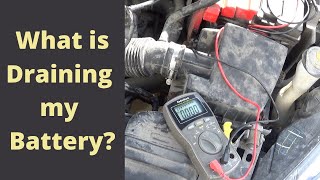
The battery died if the car sat for more than two days. A parasitic draw test showed a significant 0.7 Amp draw.
What they tried:
- Performed a parasitic draw test by pulling fuses one by one.
- Discovered the draw dropped to a normal 0.015 Amps when the ABS fuse was pulled.
Outcome: The owner sourced a used, matching ABS unit and replaced it. The parasitic draw disappeared, confirming the original ABS module had an internal short.
Lesson: A parasitic battery drain is often caused by a faulty ABS module failing to 'go to sleep'. A systematic fuse-pulling test isolates the problem circuit.
2018 Ford F-150 with intermittent battery drain
The battery died after a few days. A parasitic draw test showed the ABS module waking up every 60 seconds, drawing 4A for 8 seconds.
What they tried:
- Swapped the ABS module with a used one, but the problem persisted.
- Investigated what signals the ABS module to wake up.
Outcome: The owner discovered a short circuit within the Electronic Parking Brake (EPB) switch on the dashboard. This faulty switch sent a constant 'wake up' signal to the ABS module. Replacing the EPB switch fixed the problem.
Lesson: Even if a component like the ABS module draws power, it may not be the root cause. It could be receiving a faulty signal from another part of the vehicle's network.
How to Prevent This Code From Triggering
- Flush brake fluid every 2-3 years or 30,000 miles. (Every 2-3 years) — Brake fluid absorbs moisture from the air. This moisture corrodes the delicate internal components of the ABS pump, causing them to seize. Fresh fluid extends the life of the hydraulic unit.
- Periodically clean and protect electrical connectors. (Every 1-2 years) — The main ABS connector and fuse box are exposed to moisture. Spraying with electrical contact cleaner and applying dielectric grease prevents moisture intrusion and corrosion.
- Ensure under-hood and cowl drains are clear of debris. (Every 6 months) — When drainage channels clog with leaves, water overflows into areas like the fuse box, directly causing corrosion on ABS fuses and relays.
- Perform a hard stop in a safe area once or twice a year. (Annually) — In dry climates where ABS is rarely activated, the pump motor's internal brushes stick from lack of use. Purposely engaging the ABS ensures the pump motor spins.
Frequently Asked Questions
Is it safe to drive with code C2666?
You can drive, but emergency braking is compromised. Standard brakes work, but ABS, traction, and stability control are disabled. This increases stopping distances and skid risks on slippery surfaces.
Will C2666 cause my car to fail a safety inspection?
Yes. In all jurisdictions with vehicle safety inspections, an illuminated ABS warning light is an automatic failure.
What's the biggest mistake when diagnosing C2666?
The most common mistake is replacing the expensive ABS module without proper diagnosis. Always test the fuse, relay, and inspect the main connector for corrosion first.
My ABS pump runs all the time, even with the car off. What's wrong?
This indicates an internal failure in the ABS control module, common on Ford F-150s. The internal switch for the pump motor failed in the 'on' position. Pull the ABS pump fuse to prevent battery drain.
Can I just clear the C2666 code?
Clearing the code only works temporarily. If it is a hard fault, the code returns immediately during the module's self-test. The underlying electrical or mechanical issue must be repaired.
What's the difference between the ABS pump and the ABS module?
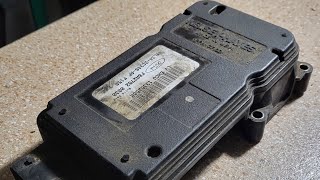
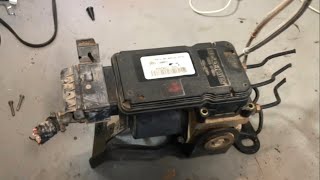
The pump is the mechanical hydraulic unit that moves brake fluid. The module is the electronic computer brain attached to it. They are often replaced together, but repair services only need the electronic module.
Why is repairing the ABS module cheaper than replacing it?
Remanufacturing fixes specific known failure points on your original circuit board. This costs a fraction of a new assembly. It also retains your vehicle's programming, avoiding dealer fees.
Will I need to bleed the brakes after replacing the ABS module?
If you only remove the electronic module, you do not need to bleed the brakes. If you replace the entire hydraulic assembly, you must perform a computerized ABS bleed procedure using a scan tool.
Key Takeaways
- Code C2666 disables your ABS, traction, and stability control systems due to an electrical fault in the ABS pump motor circuit.
- Stopping distances increase by 15-30% without ABS, making emergency braking highly dangerous on wet or loose surfaces.
- Always test the 30-60A ABS pump fuse and inspect the main connector for corrosion before replacing the $800+ ABS module.
- Mailing your original ABS module to a remanufacturing service costs $150-$350 and bypasses expensive dealer programming fees.
- Hyundai and Kia owners must check for open HECU recalls immediately, as internal module shorts pose a documented fire risk.
Helpful Videos
Shop the Parts Behind C2666
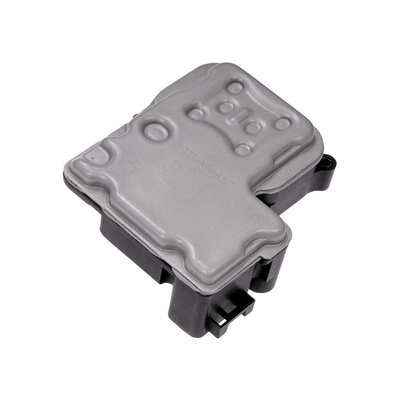
Below are the parts most often responsible for code C2666, ranked by how frequently each one is the actual culprit (per the diagnosis above). Tap any to see what we have for your vehicle.


The information in this article is provided for general reference and educational purposes only. Vehicle specifications, procedures, and part compatibility can vary by production date, trim level, and region. Always consult your vehicle's factory service manual and verify part numbers before purchasing or performing repairs. Safety-critical components such as airbags, seat belts, and braking systems should be installed by a qualified professional.
- 🧭 Diagnostic Flowchart
- 🎬 Helpful Videos
- 🛍️ Shop This Part
- What Does C2666 Mean?
- Can I Drive With C2666?
- Common Causes
- Symptoms
- Common Fixes & Costs
- Used vs. New Parts: Buying Guide
- What Happens If You Wait — Timeline
- Cost of Not Fixing It
- Diagnosis Steps
- When This Code Triggers (Freeze-Frame Conditions)
- Related Codes
- Climate & Environmental Factors
- How to Talk to a Mechanic About This Code
- Where to Take It: Dealer vs Independent vs Chain
- When to Walk Away From the Repair
- What Scan Tool You Need for This Code
- How to Clear the Code After You Fix It
- Will This Fail Emissions / State Inspection?
- Most Commonly Affected Vehicles
- Manufacturer-Specific Notes
- Real Owner Stories
- 2011 Ford F-150 with battery drain
- 2002 Fiat Stilo with parasitic draw
- 2018 Ford F-150 with intermittent battery drain
- How to Prevent This Code From Triggering
- Frequently Asked Questions
- Is it safe to drive with code C2666?
- Will C2666 cause my car to fail a safety inspection?
- What's the biggest mistake when diagnosing C2666?
- My ABS pump runs all the time, even with the car off. What's wrong?
- Can I just clear the C2666 code?
- What's the difference between the ABS pump and the ABS module?
- Why is repairing the ABS module cheaper than replacing it?
- Will I need to bleed the brakes after replacing the ABS module?
- Key Takeaways
- 🎟️ Get 5% Off