

OBD-II Code C3080: Brake Light Switch Circuit Fault
What C3080 means, why it triggers, and how to fix it
- Code C3080 flags a failure in the brake light switch circuit, immediately disabling your ABS and electronic stability control.
- Expect 2 to 3 immediate symptoms: an illuminated ABS light, dead or stuck-on brake lights, and an inability to shift out of Park.
- Replacing the brake light switch resolves 80% of C3080 codes, costing $15 to $80 for the part and taking under an hour to install.
- Do not drive with an active C3080 code; driving without brake lights or ABS increases your collision risk and violates traffic laws.
- Test the $5 brake light fuse and verify the switch's physical adjustment before authorizing a $1,000+ ABS module replacement.
What Does C3080 Mean?
Code C3080 means the main computer for your car's safety systems (like the ABS module) detects a problem in the brake light switch circuit. This switch is a small sensor that tells the vehicle's computers when your foot is on the brake pedal. If this signal is lost or incorrect, key safety features like ABS and stability control are disabled, and functions like cruise control and push-button start fail.
Technical definition: The official SAE definition for C3080 is "Brake Light Switch Circuit Fault". This indicates that the Anti-lock Brake System (ABS) or another chassis control module detects a malfunction, short, or open in the electrical circuit connected to the brake light switch. The module is not receiving the expected voltage signal when the brake pedal is applied or released.
Can I Drive With C3080?
Yes, But With Caution. Yes, but it is highly dangerous. Driving with code C3080 disables critical safety systems like your anti-lock brakes (ABS) and electronic stability control (ESC). This significantly increases the risk of losing control during emergency braking. Your brake lights also fail to operate, making you invisible to drivers behind you and creating a major rear-end collision hazard. Ignoring the issue leads to more expensive repairs if the initial electrical fault damages related control modules.
Common Causes
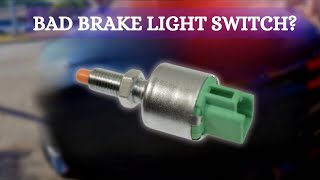
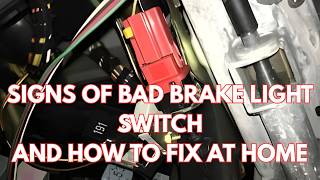
- Faulty Brake Light Switch (Very Common) — The switch is a mechanical part with internal moving contacts. Over thousands of cycles, these contacts wear out, the plastic housing cracks, or the plunger breaks, leading to a complete or intermittent failure. This is the most frequent cause of code C3080. 🎬 Watch: Common symptoms and fixes for a bad brake switch.
- Blown Brake Light Fuse (Common) — The brake light circuit is protected by a fuse. A short circuit in the wiring or a faulty bulb causes this fuse to blow, cutting power to the switch and immediately triggering the code.
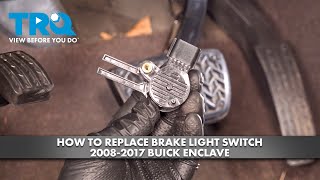
- Improperly Adjusted Brake Light Switch (Common) — The switch must be positioned correctly to activate the moment the brake pedal is pressed and deactivate when released. If it is misaligned, installed incorrectly, or knocked out of position, it sends an illogical signal to the computer. 🎬 See this walkthrough on how to replace a brake pedal switch.
- Damaged Wiring or Connectors (Common) — Wires leading to the switch fray, chafe against metal brackets, or corrode. Water leaks from a bad windshield seal or clogged sunroof drain often drip onto the fuse box or wiring harnesses in the driver's footwell, causing shorts and brittle connectors.
- Aftermarket LED Bulb Interference (Less Common) — Installing low-quality, non-CAN bus compatible LED brake light bulbs significantly alters the circuit's resistance. The ABS module monitors this resistance and interprets the unexpected value as a circuit fault, setting code C3080 even if the lights appear to function.
- Low System Voltage or Weak Ground (Less Common) — Vehicle control modules are highly sensitive to voltage. A dying battery, a failing alternator, or a corroded chassis ground connection causes intermittent voltage signals, leading to a C3080 code without a direct fault in the brake circuit itself.
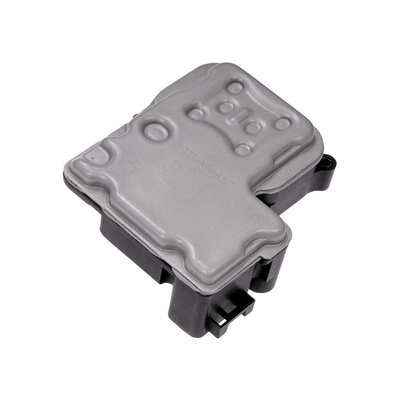
- Faulty ABS or Body Control Module (BCM) (Rare) — In rare instances, the problem lies within the computer module that reads the signal. The module itself fails internally, but this is only considered after all other possibilities (switch, wiring, fuses, grounds) are exhaustively ruled out.
Symptoms
- ABS and/or Traction/Stability Control (ESC) Light On — This is the most common sign. The computer disables these safety systems because it cannot trust the brake signal, which is a critical input for their operation.
- Brake Lights Do Not Work — A primary and dangerous symptom where the rear brake lights fail to illuminate when the brake pedal is pressed.
- Brake Lights Stay On Permanently — The brake lights remain lit even when your foot is off the pedal, which confuses other drivers, drains the battery, and overheats the light housings.
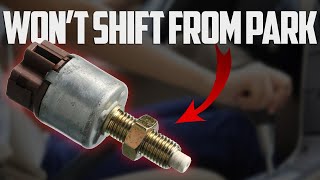
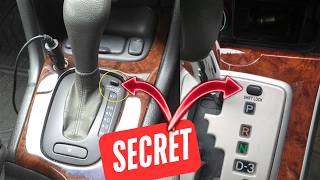
- Inability to Shift Out of Park or Start Engine — Modern cars with automatic transmissions and push-button start systems require a valid signal from the brake switch to authorize shifting out of 'Park' or cranking the engine. 🎬 Watch: How to fix a car that won't shift out of park.
- Cruise Control Inoperative — The cruise control system relies on the brake switch signal to disengage. If the signal is faulty, the system locks out the driver from setting a speed as a safety measure.
Diagnostic Flowchart
Tap your situation to follow the diagnostic path that matches what you're seeing on this code.
Common Fixes & Costs
- Replace Brake Light Switch — Parts: $15-$80, Labor: $60-$120, ~0.8 hr book time (DIY)
- Replace Blown Fuse — Parts: $1-$10, Labor: $0-$50, ~0.2 hr book time (DIY)
- Adjust Brake Light Switch — Parts: $0, Labor: $50-$100, ~0.5 hr book time (DIY)
- Repair Damaged Wiring or Connector — Parts: $10-$50, Labor: $150-$400, ~2 hr book time (Intermediate)
- Replace ABS Control Module — Parts: $800-$1500, Labor: $150-$300, ~1.8 hr book time (Professional)
DIY vs Professional
- Replace Brake Light Switch — Beginner: Yes, in most cases.
Tools: Basic hand tools (pliers, socket/wrench set), flashlight. - Replace Blown Fuse — Beginner: Yes.
Tools: Fuse puller (often included in fuse box) or needle-nose pliers. - Repair Damaged Wiring — Beginner: No. Recommended for intermediate to advanced DIYers.
Tools: Multimeter, wire cutters/strippers, soldering iron or quality crimp connectors, heat shrink tubing.
Used vs. New Parts: Buying Guide
When a used part is worth it: Given the low cost of a new brake light switch ($15-$80) and its nature as a wear-and-tear component, buying a used switch is never recommended. The labor cost to install it outweighs any potential savings.
Donor-vehicle mileage cap: roughly under 10000 miles for the part to have meaningful remaining life.
Donor quality checklist:
- If forced to consider used, only take one from a very low-mileage vehicle that was wrecked.
- Avoid parts from flood-damaged or high-mileage vehicles.
- Match the part number exactly; switches for cruise control and non-cruise models often look similar but are electrically different.
Decision logic:
- If The part is a brake light switch → buy new. The risk of premature failure and repeat labor costs makes a used switch a poor value proposition.
- If The part is an expensive ABS module → a professionally remanufactured unit with a warranty is a good alternative to a new OEM part. Avoid untested used modules from junkyards.
Warranty tradeoff: Used parts typically have a 30-90 day warranty at best. New aftermarket parts often carry a 1-year to limited lifetime warranty. OEM parts also carry a warranty, typically for 1 year.
Worst-case if a used part fails: $100-$200 if a used switch fails shortly after installation, requiring repeat labor plus the cost of another part.
Cost of Not Fixing It
- Immediate: Major safety risk. Inoperative brake lights lead to a rear-end collision. Disabled ABS/ESC increases the risk of losing control in an emergency stop. Potential for a traffic ticket. (Added cost: $150+ (for traffic citation), plus potential collision costs.)
- 0-1 month: If brake lights are stuck on, the battery drains, requiring a jump start or a new battery. Bulbs burn out prematurely. (Added cost: $150-$300 (for a new battery and/or service call).)
- 1-6+ months: Continued stress on related electrical systems. A short in the circuit potentially damages the more expensive Body Control Module (BCM) or ABS module. The primary cost remains the significant and ongoing safety hazard. (Added cost: $500-$1800+ (if a control module is damaged).)
Diagnosis Steps
- Verify Brake Light Operation
This simple test is crucial. Have an assistant observe the brake lights as you press and release the pedal. Note if they are dead, stuck on, flickering, or delayed. This result immediately narrows down the potential causes.
Tools: An assistant or a reflective surface (Beginner) - Perform a Full Diagnostic Scan
Use a professional-grade OBD-II scanner that reads Chassis (C) and Body (B) codes. Note all present codes; codes like P0571 are a huge clue, while U-codes indicate a complex network problem. Check the live data stream for PIDs related to the brake switch status; the scanner must show the switch state changing from 'On' to 'Off' as you press the pedal.
Tools: Advanced OBD-II Scanner (Beginner) - Check the Relevant Fuses
Consult the owner's manual to locate all fuses related to the brake system (often labeled 'STOP', 'ABS', 'BCM'). Visually inspect each fuse and use a multimeter to test for continuity even if they look intact.
Tools: Owner's manual, Multimeter, Fuse puller (Beginner) - Visually Inspect the Brake Light Switch and Wiring
The switch is located on a bracket above the brake pedal arm. Use a flashlight to inspect for obvious physical damage, a cracked housing, signs of melting on the connector, or loose, chafed, or corroded wires.
Tools: Flashlight (Beginner) - Test the Switch's Electrical Function
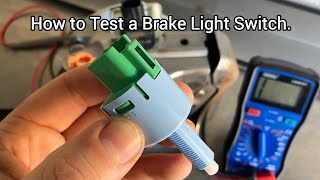
Unplug the switch connector. Set a multimeter to continuity (beep) or resistance (Ohms). Probe the switch's input and output pins. For a simple 2-pin switch, there is no continuity (infinite resistance, 'O.L.') when the plunger is out. When the plunger is pressed, the meter beeps or shows near-zero resistance (under 1 ohm). If it fails these tests, the switch is faulty.
Tools: Multimeter (Intermediate) - Verify Power and Ground at the Connector
With the switch unplugged and the ignition on, use a multimeter set to DC Volts. Probe the terminals on the harness-side connector. One wire must have constant 12V+ battery power (typically 11.8V to 12.6V). At least one wire must have a solid ground (near 0V when testing against the battery positive terminal). Lack of power or ground points to a wiring or fuse box issue.
Tools: Multimeter (Intermediate) - [PRO TIP] Perform a Circuit Load Test
A multimeter shows 12V on a circuit with high resistance that cannot actually power anything. To load test, connect a headlamp bulb or power probe between the 12V power feed and ground pin on the connector. A bright light confirms the circuit carries a real-world load. A dim or no light indicates high resistance in the power or ground wire.
Tools: Power probe or a test light/headlamp bulb with jumper wires (Advanced) - [PRO TIP] Check for Voltage Drop on the Ground Side
A poor ground is a common, often-missed issue. Set your multimeter to a low DC Volts scale (e.g., 2V). Connect the red lead to the ground pin on the harness connector and the black lead to a known-good chassis ground. Have a helper press the brake pedal. A reading above 0.2 volts (200 millivolts) indicates a poor ground connection that needs cleaning.
Tools: Multimeter, assistant (Advanced)
When This Code Triggers (Freeze-Frame Conditions)
- Vehicle Speed: 0 mph (Code often sets during the initial power-on self-test before driving, or when first applying the brake to shift from Park.)
- Brake Pedal Status: On/Pressed (The fault is logged when the module expects to see a voltage change from the switch (as the pedal is pressed or released) but does not.)
- System Voltage: 11.5-14.5V (The code is typically set during normal operating voltage. A voltage reading outside this range indicates a separate battery or alternator issue is causing the fault.)
- Ignition Cycle Status: Key On, Engine Off or Engine Running (The ABS module continuously monitors the brake switch circuit, so the fault is detected as soon as the ignition is turned on.)
Related Codes
- P0571 — This is the Powertrain Control Module (PCM) code for 'Brake Switch 'A' Circuit Malfunction'. It is the most common companion to C3080. If you have both codes, the problem is almost certainly the brake light switch or its direct wiring. Diagnosis starts at the switch.
- P0504 — 'Brake Switch 'A'/'B' Correlation'. Some vehicles use a dual-contact brake switch. This code sets when the PCM sees an illogical combination of signals from the two contacts. This strongly points to a faulty or misadjusted switch.
- C0040 — This code relates to a 'Brake Pedal Switch 'A' Circuit' fault in some manufacturer-specific contexts, directly pointing to the same component as C3080. If seen together, it reinforces the diagnosis of a switch or circuit failure.
- U0121 — 'Lost Communication With ABS Control Module'. This is a network code, not a circuit code. If you have C3080 and U0121 together, a major wiring harness issue is cutting both power to the brake circuit and communication to the module. Diagnose the U-code first.
Climate & Environmental Factors
- High Humidity / Coastal Regions: Moisture in the air, especially salt-laden air in coastal areas, accelerates corrosion on electrical connectors, pins, and ground points. This corrosion increases resistance in the circuit, triggering a C3080 fault.
- Cold Climates / Winter: Cold temperatures make plastic components, including the switch housing and wiring insulation, brittle and prone to cracking. This leads to mechanical failure of the switch or exposes wiring to the elements.
- Road Salt (De-icing): Salt spray gets kicked up into the undercarriage and engine bay, aggressively corroding wiring harnesses and ground connections. A corroded ground strap for the chassis or ABS module is a common cause of difficult-to-diagnose electrical faults.
How to Talk to a Mechanic About This Code
Say this: "I have an ABS light on and my scanner is showing code C3080. My understanding is that this is a brake light switch circuit fault. I'd like to schedule a diagnostic to confirm if the issue is the switch, its wiring, or adjustment before considering any major component replacements."
This signals that you are an informed customer. It directs the technician to the most probable and cheapest cause first, discouraging them from immediately quoting a very expensive ABS module replacement.
Avoid saying:
- 'My ABS light is on, can you just fix it?'
- 'I think I need a new ABS computer.'
- 'Just do whatever you think is necessary.'
Questions to ask before authorizing the repair:
- Did you test the brake light switch with a multimeter to confirm it failed?
- Did you verify there is 12-volt power and a solid ground at the switch's electrical connector?
- If you are recommending an ABS module replacement, can you show me the test results that prove the module is the point of failure?
- Have you checked for any technical service bulletins or recalls for this issue on my vehicle?
- Does your repair estimate include the cost to properly adjust the new switch upon installation?
Where to Take It: Dealer vs Independent vs Chain
- Dealer:
A good choice if you suspect a recall, but likely the most expensive option for a simple, out-of-warranty switch replacement.
Best for: Vehicles under warranty., Checking for and performing recall-related repairs (especially common for this part on Hyundai/Kia)., Complex electrical issues that an independent shop has failed to diagnose.
Downsides: Highest labor rates., Quicker to replace a whole module rather than diagnose a simpler wiring fault. (Typical cost: +50% vs. baseline) - Independent Shop:
Best fit for most situations. An experienced independent mechanic diagnoses and replaces a faulty brake light switch quickly and for a reasonable price.
Best for: Out-of-warranty vehicles where cost is a factor., This is a very common and routine repair that most competent shops handle efficiently.
Downsides: Shop quality and diagnostic skill vary; check reviews and look for ASE certifications. (Typical cost: +0% vs. baseline) - Chain Shop:
Acceptable, but with caution. Be very clear that you are only authorizing a diagnostic and/or a switch replacement. Get a second opinion if they recommend a more expensive repair.
Best for: Simple, straightforward brake light switch replacement if you are confident in the diagnosis.
Downsides: Technician skill varies widely., Higher risk of an incorrect diagnosis or being upsold on unnecessary repairs like a full ABS module replacement. (Typical cost: -10% vs. baseline)
When to Walk Away From the Repair
If the estimated repair cost exceeds 40-50% of the car's private-party value, you should seriously consider selling or trading in the vehicle instead of repairing it.
- Car worth $5000, fix is $150: Fix it. This is a minor cost for a critical safety repair.
- Car worth $4000, fix is $1800: Walk away. The repair cost is 45% of the car's value. This is a major repair that is likely not a good investment on an older, lower-value car.
- Car worth $2000, fix is $1500: Walk away. The repair cost is 75% of the vehicle's value. It makes no financial sense to proceed.
What Scan Tool You Need for This Code
Minimum: A code reader that specifically reads and clears Anti-lock Brake System (ABS) fault codes. Basic engine-only code readers fail to see the C3080 code.
A standard $20 OBD-II reader typically only accesses the Powertrain Control Module (engine and transmission). Since C3080 is a Chassis code stored in the ABS module, a basic scanner shows 'No Codes Found', leaving you confused while the ABS light stays on.
Budget: FOXWELL NT604 Elite / Autel AutoLink AL619 (~$90) — Reads and clears codes from the four major systems: Engine, ABS, SRS (Airbag), and Transmission. This is the minimum required to see and clear the C3080 code yourself.
Mid-range: XTOOL D7 / Foxwell NT809 (~$350) — Provides full-system diagnostics plus live data streaming. You watch the 'Brake Switch' status change from ON to OFF in real-time as you press the pedal, which is an excellent way to confirm if the switch is working intermittently.
Professional: Autel MaxiCOM MK808 / Launch X431 series (~$500-1200) — Offers full bidirectional control. While not strictly necessary for a C3080 diagnosis, these tools allow you to command modules and run active tests, which is invaluable for more complex electrical troubleshooting if the switch isn't the problem.
Rent vs buy: For a one-time fix, many auto parts stores like O'Reilly Auto Parts and AutoZone have a loaner tool program. You borrow an ABS-capable scanner for free after leaving a refundable deposit. Buy a scanner only if you plan to do your own diagnostics more than once or twice a year.
How to Clear the Code After You Fix It
- Use an ABS-capable OBD-II scan tool to clear the code from the ABS module.
- Turn the ignition off, wait 10 seconds, and restart the vehicle to see if the light returns.
- Perform a short test drive that includes several stops to confirm the repair.
Drive cycle (~15 minutes): After clearing the code, start the engine. Drive the vehicle for 10-15 minutes, ensuring you reach speeds above 30 mph and perform at least 5-10 normal stops. This allows the ABS module to verify the switch is functioning correctly. If the repair is successful, the light turns off on its own after a few ignition cycles and a short drive.
Readiness monitors affected: This is a chassis code and does not directly affect emissions readiness monitors like the Catalyst or O2 sensor monitors.
Watch out for:
- Using a basic OBD-II scanner that only clears Powertrain (P) codes fails to clear the Chassis (C) code from the ABS module.
- Simply disconnecting the battery fails to clear the code from the ABS module's memory, and the light reappears immediately.
- If the underlying fault (e.g., bad wiring, misadjusted switch) is not fixed, the code returns almost immediately after being cleared.
Will This Fail Emissions / State Inspection?
Yes — this code typically fails an OBD-II emissions inspection.
- California: An illuminated ABS warning light is grounds for a safety inspection failure. While it is not an emissions component, the OBD-II system check flags the chassis code, preventing a pass.
- New York: New York law explicitly states that if a vehicle's anti-lock brake system (ABS) warning light is on, it is considered grounds for the vehicle to fail the safety inspection.
- Texas: In the 17 counties requiring an emissions test, the vehicle undergoes an OBD-II scan. An active C-code like C3080 causes a failure. Even though safety inspections are no longer required for non-commercial vehicles as of 2025, the OBD-II check for emissions still catches this type of fault.
Most Commonly Affected Vehicles
- Ford F-150, Fusion, Escape (2010-2020) — Ford models often use the brake switch for push-button start logic. A C3080 repair on an F-150 is commonly related to the switch itself, with shop costs for replacement typically falling in the $100-$200 range.
- Jeep Grand Cherokee, Wrangler (2005-2018) — The third-generation (WK) Grand Cherokee introduced new electronic systems, making it more susceptible to electrical faults. Off-road use stresses wiring harnesses.
- Chevrolet / GMC Silverado, Sierra, Equinox (2007-2019) — A faulty brake light switch is a well-known issue that disables cruise control and triggers ABS warnings. Some models have related wiring harness chaffing issues.
- Honda Accord, Civic, CR-V (2008-2022) — On many Hondas, a primary symptom of a C3080-related fault is the inability to shift the transmission out of Park, often accompanied by ABS/VSA lights.
- Hyundai / Kia Elantra, Sonata, Optima, Soul (2011-2020) — These brands have had multiple recalls and service campaigns for brake light switch failures. Before replacing parts, check for any open recalls or TSBs related to the brake switch.
- Toyota Prius, Camry, Corolla (2010-2022) — A C3080 code is frequently found alongside powertrain code P0571, strongly indicating a fault in the brake switch circuit. This combination is a very common cause for cruise control failure.
- Nissan Altima, Rogue, Sentra (2013-2019) — A C3080 fault disables Intelligent Cruise Control (ICC) and triggers Automatic Emergency Braking (AEB) system warnings, creating a cascade of alerts on the dashboard.
- Subaru Outback, Forester, Impreza (2015-2022) — A failing brake light switch is a known issue that causes the ABS and Vehicle Dynamics Control (VDC) lights to illuminate. These models are also highly sensitive to low battery voltage.
Manufacturer-Specific Notes
- Various (with Push-Button Start): A C3080 fault prevents the vehicle from receiving the 'brake pedal pressed' signal, resulting in a no-start condition where accessories turn on but the engine does not crank. This is a very common and confusing symptom for drivers.
- Hyundai / Kia: Numerous recalls and service campaigns have been issued for brake light switches. Always check for open recalls on your specific VIN before purchasing parts. A common related failure is the deterioration of the brake pedal stopper pad, which prevents the switch from being properly depressed.
- Ford: On some F-150 and other models, a failing brake light switch causes the brake lights to stick on, draining the battery overnight. This is often the first symptom owners notice.
- Various (with Electronic Parking Brake): Systems with an electronic parking brake (EPB) often use the main brake pedal switch signal for engagement/disengagement logic. A fault causes a 'Parking Brake Malfunction' or 'Service Parking Brake' message to appear.
Frequently Asked Questions
Can I replace the brake light switch myself?
Yes, for most vehicles this is a straightforward DIY repair. The switch is an inexpensive part located above the brake pedal, held in by a clip or a small nut. It requires only basic hand tools to replace.
Is it safe to drive with code C3080?
While the car still moves, it is highly dangerous. Your ABS and stability control are offline, severely compromising your ability to control the car in an emergency stop. Furthermore, your brake lights fail to operate, which is extremely dangerous and illegal.
Why are my ABS and traction control lights on if the problem is just the brake lights?
Your ABS and traction control systems need to know precisely when you are braking to function correctly. When the signal from the brake light switch is lost or unreliable, the computer disables these systems as a safety precaution. This triggers the warning lights on your dash.
I replaced the brake light switch, but the code C3080 came back. What now?
If a new switch fails to fix it, the problem lies in the circuit. Check the brake light fuse, inspect the wiring for corrosion, and verify 12V power and ground at the connector. Finally, ensure the new switch is physically adjusted to contact the pedal arm.
What are the most common misdiagnosis mistakes for C3080?
The biggest mistake is prematurely replacing the expensive ABS module without exhaustively testing the brake light switch, its wiring, power, and ground first. Another common error is overlooking a poorly adjusted switch. Using incompatible aftermarket LED brake light bulbs also alters circuit resistance and fools the module.
Does a new brake light switch need to be calibrated?
Most brake light switches do not require electronic calibration, but correct physical installation is critical. The switch's plunger must be fully depressed when the pedal is at rest and activate the instant the pedal is touched. Improper physical adjustment is the primary reason the code returns after a replacement.
Can a weak car battery cause a C3080 code?
Yes, control modules operate within specific voltage ranges. A weak or dying battery provides inconsistent voltage, causing modules like the ABS computer to generate false codes, including C3080. If you have other seemingly unrelated electrical issues, test the battery and charging system first.
Key Takeaways
- Code C3080 flags a failure in the brake light switch circuit, immediately disabling your ABS and electronic stability control.
- Expect 2 to 3 immediate symptoms: an illuminated ABS light, dead or stuck-on brake lights, and an inability to shift out of Park.
- Replacing the brake light switch resolves 80% of C3080 codes, costing $15 to $80 for the part and taking under an hour to install.
- Do not drive with an active C3080 code; driving without brake lights or ABS increases your collision risk and violates traffic laws.
- Test the $5 brake light fuse and verify the switch's physical adjustment before authorizing a $1,000+ ABS module replacement.
Helpful Videos
Shop the Parts Behind C3080
Below are the parts most often responsible for code C3080, ranked by how frequently each one is the actual culprit (per the diagnosis above). Tap any to see what we have for your vehicle.



The information in this article is provided for general reference and educational purposes only. Vehicle specifications, procedures, and part compatibility can vary by production date, trim level, and region. Always consult your vehicle's factory service manual and verify part numbers before purchasing or performing repairs. Safety-critical components such as airbags, seat belts, and braking systems should be installed by a qualified professional.
- 🧭 Diagnostic Flowchart
- 🎬 Helpful Videos
- 🛍️ Shop This Part
- What Does C3080 Mean?
- Can I Drive With C3080?
- Common Causes
- Symptoms
- Common Fixes & Costs
- DIY vs Professional
- Used vs. New Parts: Buying Guide
- Cost of Not Fixing It
- Diagnosis Steps
- When This Code Triggers (Freeze-Frame Conditions)
- Related Codes
- Climate & Environmental Factors
- How to Talk to a Mechanic About This Code
- Where to Take It: Dealer vs Independent vs Chain
- When to Walk Away From the Repair
- What Scan Tool You Need for This Code
- How to Clear the Code After You Fix It
- Will This Fail Emissions / State Inspection?
- Most Commonly Affected Vehicles
- Manufacturer-Specific Notes
- Frequently Asked Questions
- Can I replace the brake light switch myself?
- Is it safe to drive with code C3080?
- Why are my ABS and traction control lights on if the problem is just the brake lights?
- I replaced the brake light switch, but the code C3080 came back. What now?
- What are the most common misdiagnosis mistakes for C3080?
- Does a new brake light switch need to be calibrated?
- Can a weak car battery cause a C3080 code?
- Key Takeaways
- 🎟️ Get 5% Off