

OBD-II Code C3239: Air Suspension General Plausibility Failure
What C3239 means, why it triggers, and how to fix it, primarily on Jaguar and Land Rover vehicles
- Code C3239 indicates a general plausibility failure where the air suspension module commands a height change but sensors report no movement.
- A leak in the rubber air springs causes over 70% of C3239 faults on Jaguar and Land Rover vehicles, forcing the compressor to overwork.
- Always perform a soapy water test to pinpoint leaks before spending $800 to $2,200 replacing an air compressor that burned out trying to compensate.
- Driving on a failed air suspension (riding on the bump stops) for more than a few days causes $1,500+ in secondary damage to shocks and tires.
- For Ford owners, 'C3239' is not a diagnostic code but an engineering part number for a fuel pump connector, requiring a completely different diagnostic approach.
What Does C3239 Mean?
Trouble code C3239 indicates the air suspension control module detected a system contradiction. For example, the module commands the air compressor to fill the springs, but height sensors report zero movement. This points to a general system failure rather than an isolated sensor glitch.
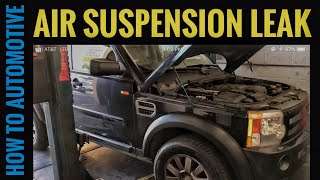
Technical definition: C3239 is a manufacturer-specific Chassis code primarily used by Jaguar Land Rover (JLR). The official definition is 'General Plausibility Failure'. 🎬 Watch: A deep dive into how Land Rover air systems work. It signifies the Ride Level Control Module (RLM) identified a contradiction between an output command and the resulting sensor feedback.
Can I Drive With C3239?
Yes, But With Caution. Yes, but your vehicle's ride height is incorrect, compromising handling and braking. Limit driving to reaching a repair shop. Driving on deflated air springs causes secondary damage to tires and the chassis, while minor leaks overwork the air compressor until it fails, adding $1,000+ to your repair bill.
Common Causes
- Leaking air suspension springs (Very Common) — Rubber air springs develop small cracks over time, allowing air to escape. This is the most frequent cause, forcing the compressor to run continuously until it triggers a fault when it cannot maintain pressure.
- Failing air suspension compressor (Common) — The compressor wears out from age or overwork caused by a leak. A weak compressor cannot generate enough pressure to lift the vehicle within the control module's allotted time limit.
- Faulty air suspension valve block (Common) — The valve block directs airflow to individual air springs. Internal solenoids stick or O-ring seals fail, causing leaks and preventing proper air distribution.
- Defective ride height sensor (Less Common) — These sensors report the height of each vehicle corner. Broken linkages or internal corrosion cause erratic data, tricking the module into detecting a lifting problem.
- Damaged or leaking air lines (Less Common) — Plastic air lines become brittle and crack, causing symptoms identical to a leaking air spring.
- Saturated compressor air dryer (Less Common) — The compressor's dryer unit removes moisture. Saturated desiccant allows water into the system, freezing in cold weather and damaging valve blocks.
- Corroded or damaged wiring (Rare) — Exposed wiring harnesses or connectors corrode, preventing components from activating and triggering false mechanical failure codes.
Symptoms
- Suspension Fault Warning Message — A 'SUSPENSION FAULT' or 'NORMAL HEIGHT ONLY' message illuminates on the instrument cluster.
- Vehicle sits lower than normal or uneven — The vehicle sags on one corner, one axle, or rests entirely on the bump stops. This is most obvious after parking overnight.
- Compressor runs constantly or is very loud — A buzzing or humming noise from the compressor area persists as it fights an active air leak.
- Bouncy or harsh ride quality — Deflated air springs eliminate suspension travel, causing a stiff, uncomfortable ride as the vehicle hits internal bump stops.
- Vehicle unable to change ride height — Selecting Off-Road or Access height fails, immediately triggering a dashboard fault message.
Diagnostic Flowchart
Tap your situation to follow the diagnostic path that matches what you're seeing on this code.
Common Fixes & Costs
- Replace leaking air spring(s)
— Parts: $150-$950 per spring, Labor: $200-$334 per spring, ~2.5 hr book time
(Intermediate)
Range Rover Sport (L320, 2006-2013): OEM RNB501460, LR016415 (Alt: Arnott AS-2808)
LR3 / Discovery 3 (2005-2009): OEM RNB501250, LR016416 (Alt: Arnott AS-2809) - Replace the air suspension compressor
— Parts: $250-$1,500, Labor: $150-$300, ~1.5 hr book time
(DIY)
LR3 / Discovery 3 / Range Rover Sport (L320): OEM LR072537 (AMK Upgrade Kit) (Alt: AMK LR072537G)
Range Rover (L322, 2006-2012): OEM LR025111 (Alt: Arnott P-2645) - Replace the air suspension valve block
— Parts: $45-$250, Labor: $100-$200, ~1 hr book time
(DIY)
Range Rover (L322, 2006-2012): OEM RVH000060 (Front) (Alt: Dorman 949-900) - Replace a faulty ride height sensor — Parts: $40-$450, Labor: $70-$170, ~0.8 hr book time (Intermediate)
- Convert to a coil spring suspension — Parts: $500-$2,500 for a full kit, Labor: $400-$800, ~5 hr book time (Advanced)
Used vs. New Parts: Buying Guide
When a used part is worth it: Buying a used air spring is never recommended due to unknown rubber degradation. A remanufactured strut (new air bladder on an OEM core) is the best compromise between cost and quality.
Donor-vehicle mileage cap: roughly under 40000 miles for the part to have meaningful remaining life.
Donor quality checklist:
- Choose reputable remanufacturers (like Arnott) that use high-quality new air sleeves.
- Avoid used parts from regions with extreme temperatures or road salt.
- Match part numbers exactly to ensure correct damping characteristics.
Decision logic:
- If Vehicle is newer and budget allows → Buy new OEM for guaranteed fit and performance.
- If Budget is a primary concern and you want to maintain active damping → A quality remanufactured OEM strut is the best value.
- If Active damping is not a priority → A new aftermarket strut offers the lowest cost for a brand-new component.
Warranty tradeoff: Used parts offer 30-90 day warranties. Remanufactured and new aftermarket parts typically include limited lifetime warranties. New OEM parts carry a 1-2 year warranty.
Worst-case if a used part fails: $300-600 (Repeat labor to install another part if the cheap part fails prematurely).
What Happens If You Wait — Timeline
- 0-4 weeks: A slow leak develops. The vehicle sags slightly overnight but raises upon starting. The compressor runs longer to compensate. (Added cost: $0)
- 1-3 months: The leak worsens. The 'SUSPENSION FAULT' light appears intermittently. The compressor runs excessively, causing significant wear. (Added cost: $50-$100 in accelerated compressor wear.)
- 3-6 months: The air compressor burns out completely. Code C3239 becomes permanent. The vehicle is stuck on the bump stops. (Added cost: $800 - $2,200 (Cost of new compressor and relay).)
- 6+ months: Driving on bump stops destroys shock absorbers, control arm bushings, and tires. (Added cost: $2,500 - $5,000+ (Cost of suspension rebuild and tires).)
Cost of Not Fixing It
- Short-Term (Weeks): A minor leak causes the compressor to run excessively, increasing wear and noise. (Added cost: Negligible, but guarantees future failure.)
- Medium-Term (1-3 Months): The overworked air compressor burns out completely. The vehicle drops to the bump stops and becomes unsafe to drive. (Added cost: $800 - $2,200 (Cost of a new compressor and relay).)
- Long-Term (3+ Months): Driving on the bump stops destroys shock absorbers, control arm bushings, and tires due to harsh impacts and misalignment. (Added cost: $1,500 - $4,000+ (Cost of suspension rebuild and new tires).)
Diagnosis Steps
- Visual Inspection
Park on level ground. Observe if any corner sits lower than the others. Listen for audible hissing indicating a major leak. Start the vehicle, command off-road height, and listen for the compressor.
Tools: None (Beginner) - The Soapy Water Test
With the system pressurized, spray soapy water on the air springs, valve block connections, and compressor dryer. Bubbles pinpoint the exact location of air leaks.
Tools: Spray bottle, soap, water (Beginner) - Scan for Specific Sub-Codes
Use a JLR-specific OBD-II scanner (like IIDTool or Autel). C3239 is a general code; specific sub-codes like C1A20 (slow pressure increase) or C1A13 (venting failure) reveal the exact root cause.
Tools: Advanced OBD-II Scanner (Intermediate) - Isolate Leaks with 'Towing Mode'
Raise the vehicle to off-road height, then disable the air suspension by pulling its fuse. Measure each corner's height. Re-measure after 12 hours. The corner that drops has a leaking air spring or line.
Tools: Fuse puller, Tape measure (Advanced) - Test the Compressor Output
Command the compressor to run via a scan tool and monitor reservoir pressure. A healthy compressor reaches 217 PSI (15 Bar) in under 2 minutes. Struggling to hit 150 PSI confirms a worn compressor or massive leak.
Tools: Advanced OBD-II Scanner (Advanced) - Test the Valve Block Solenoids
Command individual valve block solenoids to open and close using a scan tool. Listen for a 'click'. If a corner fails to raise despite a healthy compressor and spring, the valve block is defective.
Tools: Advanced OBD-II Scanner (Advanced) - Test Ride Height Sensor Voltage and Resistance
View live sensor data with a scanner or multimeter. The sensor requires a steady 5V reference. Output signal voltage must change smoothly between 0.5V and 4.5V as you manually move the arm. Erratic voltage, infinite resistance (open circuit), or zero resistance (short) indicates a failed sensor.
Tools: Advanced OBD-II Scanner, Multimeter (Advanced) - Perform a 'Hard Reset'
Disconnect both battery terminals and touch them together for 30 seconds to drain residual power. Reconnect the battery. This clears temporary electronic glitches in the control modules.
Tools: Wrench for battery terminals (Beginner) - Advanced (Ford-Specific): Fuel Pressure Test
If diagnosing a Ford, 'C3239' is a fuel pump connector part number, not a fault code. Check Key On, Engine Off (KOEO) fuel pressure (typically 35-45 PSI) to diagnose stalling issues related to this connector.
Tools: Fuel Pressure Gauge Kit, Advanced OBD-II Scanner (Advanced)
When This Code Triggers (Freeze-Frame Conditions)
- System State: Active (Logged when the Ride Level Control Module actively attempts to change or maintain vehicle height.)
- Compressor Status: Commanded ON (Sets when the compressor is commanded to run, but reservoir pressure fails to increase.)
- Height Change Request: In Progress (Triggered when height sensors fail to report the expected change within the specified time limit.)
- Valve Block Command: Venting (Sets when the system commands a valve to open, but the pressure sensor indicates no air release.)
Related Codes
- C1A20 — Indicates 'Pressure increases too slow'. C3239 is the general plausibility failure, while C1A20 pinpoints the cause: a weak compressor or massive air leak.
- C1A13-64 — Indicates 'Pressure does not decrease'. Points to a stuck compressor exhaust valve or faulty valve block preventing the vehicle from lowering.
- U0421 — Indicates 'Invalid Data Received From Ride Level Control Module'. A secondary code set in the ABS or Engine module. Resolving C3239 clears this code.
- C1131 — Indicates 'Air Spring Air Supply' failure. Points to an electrical failure of the compressor, whereas C1A20 indicates mechanical weakness.
Climate & Environmental Factors
- Cold Weather: Low temperatures contract air, lowering system pressure and forcing the compressor to work harder. Rubber air springs become brittle, exacerbating existing micro-cracks. Internal moisture freezes, blocking valves.
- High Humidity: Humid air saturates the compressor's desiccant dryer. Moisture then enters the system, causing internal corrosion in the valve block and sticking solenoids.
- High Altitude: Lower ambient air pressure increases the pressure differential the compressor must overcome, leading to longer run times and accelerated wear.
How to Talk to a Mechanic About This Code
Say this: "I have a 'Suspension Fault' warning and suspect a C3239 code. I need a diagnostic that includes a soapy water leak test on the air springs and a compressor output pressure test. Please confirm there are no leaks before recommending a compressor replacement."
Directs the technician to perform specific diagnostic steps, preventing them from replacing the expensive compressor without confirming the root cause leak.
Avoid saying:
- 'Just fix whatever's wrong'
- 'My suspension light is on, can you look at it?'
- 'The car is bouncy, I probably need a new compressor.'
Questions to ask before authorizing the repair:
- Did you find the exact location of the air leak, and can you show it to me?
- What was the result of the compressor pressure test? How many PSI did it build?
- Have you confirmed there are no leaks that caused the original compressor to fail?
- Does the estimate include the mandatory ride height calibration?
- What is the warranty on the parts and labor?
Where to Take It: Dealer vs Independent vs Chain
- Dealer:
A safe but expensive choice. Best for warranty work or if OEM-only parts are required.
Best for: Vehicles under factory or extended warranty., Complex repairs requiring manufacturer-specific software updates.
Downsides: Highest labor rates and parts prices., Inclined to replace entire assemblies rather than failing components. (Typical cost: +50% vs. baseline) - Independent Shop:
Best fit, provided it is a JLR specialist equipped with the necessary diagnostic tools.
Best for: Out-of-warranty vehicles where cost is a factor., Owners seeking a personal relationship with a specialist.
Downsides: General mechanics lack the specific diagnostic tools needed for calibration. (Typical cost: +0% vs. baseline) - Chain Shop:
AVOID. The complexity of the system guarantees misdiagnosis at a general chain shop.
Best for: Simple services like oil changes and tires.
Downsides: Technicians lack experience with complex JLR air suspension systems., Lack manufacturer-specific diagnostic tools for calibrations., High risk of misdiagnosis. (Typical cost: -10% vs. baseline)
When to Walk Away From the Repair
If the estimated repair cost exceeds 50% of the car's current private-party value, consider selling or trading it in.
- Car worth $7000, fix is $1400: Fix it. A single air strut replacement is well below the threshold.
- Car worth $8000, fix is $3800: Borderline. A cascade failure approaches 50% of the vehicle's value. Get a second opinion.
- Car worth $5000, fix is $3500: Walk away. The repair cost exceeds 60% of the car's value.
What Scan Tool You Need for This Code
Minimum: A diagnostic scanner capable of reading manufacturer-specific Chassis 'C' codes from the Ride Level Control Module.
Standard $50 OBD-II readers only access engine emissions codes. They cannot communicate with the suspension module and will show 'No Codes Found'.
Budget: Autel MaxiAP AP200 (~$70) — Reads and clears codes from the air suspension module and views live sensor data for initial diagnosis.
Mid-range: GAP IIDTool or Foxwell NT530 (~$180-500) — Offers full bidirectional control to command the compressor and valves. Performs mandatory ride height calibrations.
Professional: Autel MaxiCOM MK808 (~$500-1200) — Provides OEM-level functionality, guided diagnostics, and comprehensive live data graphing.
Rent vs buy: Auto parts store loaner tools are insufficient. Buy a midrange tool only if you plan to perform long-term DIY maintenance.
How to Clear the Code After You Fix It
- Use a JLR-compatible OBD-II scan tool to clear the code from the Ride Level Control Module.
- Cycle the suspension through all height settings (Access, Normal, Off-Road) to confirm proper operation.
- Perform a ride height calibration if a sensor or air spring was replaced.
Drive cycle (~15 minutes): Start the vehicle. Raise the suspension to Off-Road height and wait 30 seconds. Lower to Normal height and wait 30 seconds. Lower to Access height, wait 30 seconds, then return to Normal. Drive for 15 minutes to allow system self-checks.
Readiness monitors affected: None directly. Clearing all DTCs with a generic scanner resets engine readiness monitors.
Before emissions retest: drive at least 50 miles to fully set monitors.
Watch out for:
- Using a basic OBD-II scanner incapable of communicating with the Ride Level Control Module.
- Failing to perform a ride height calibration after replacing a height sensor.
- Clearing the code without fixing the underlying mechanical leak.
Will This Fail Emissions / State Inspection?
Yes — this code typically fails an OBD-II emissions inspection.
- California: An illuminated 'Suspension Fault' message fails the BAR-OIS inspection.
- New York: NYS safety inspections check for sagging or broken suspension components, resulting in immediate failure.
- Texas: A vehicle with a collapsed suspension is deemed unsafe to operate and subject to citation by law enforcement.
Most Commonly Affected Vehicles
- Land Rover Range Rover Sport (2006-2013) — Widely known for Hitachi compressor failures and front air spring leaks. The compressor housing traps moisture, accelerating failure.
- Land Rover LR3 / Discovery 3 (2005-2009) — Shares the Range Rover Sport architecture and suffers identical compressor and front air spring failures.
- Land Rover Range Rover (L322) (2003-2012) — Prone to age-related air spring and compressor issues. Pre-2006 models used a Wabco compressor; later models used Hitachi.
- Land Rover LR4 / Discovery 4 (2010-2016) — Experiences AMK compressor wear and front air spring leaks. The crossover valve block is a known failure point.
- Jaguar XJ (X350/X358) (2003-2009) — The CATS air suspension system is prone to front air strut leaks, manifesting as a sagging front end after parking.
- Mercedes-Benz GL-Class (X164), ML-Class (W164) (2007-2012) — The 'Airmatic' system suffers identical failure modes. While using different diagnostic codes, symptoms and repairs are analogous.
- Audi Allroad, Q7, A8 (2001-2020) — Adaptive air suspension is susceptible to leaking air springs, weak compressors, and faulty valve blocks.
- BMW X5, X6, 7-Series (2000-2022) — Rear-only or four-corner air suspension models frequently experience leaking rear air springs requiring post-install calibration.
Manufacturer-Specific Notes
- Jaguar / Land Rover: C3239 is a JLR-specific 'catch-all' code. It rarely appears alone and requires a capable scan tool to read the underlying sub-codes (like C1A20) to find the root cause.
- Ford / Lincoln / Mercury: On Ford vehicles, C3239 is an engineering part number for the Fuel Pump Control Module connector, NOT a diagnostic trouble code. Do not replace suspension parts on a Ford based on a 'C3239' search result.
- Mercedes-Benz: A common DIY mistake is replacing a leaking Airmatic strut but failing to replace the overworked suspension relay. The stuck relay causes the new compressor to run constantly and burn out immediately.
Real Owner Stories
2006 LR3 with 150,000 miles - The Slow Sag
The front of the truck sat lower than the rear every morning. The 'SUSPENSION FAULT' light illuminated after the compressor ran for a minute at startup.
What they tried:
- Ignored the issue as it resolved itself daily.
- Replaced the air compressor, relay, and front valve block based on forum advice after the truck failed to raise.
Outcome: The fault remained. A persistent, slow leak in the front air springs overworked and killed the original compressor. The final fix required replacing the front air springs.
Lesson: A sagging corner is always a leak. Fix leaks immediately to avoid burning out a new compressor, which costs over $1,000.
2007 Jaguar XJ8 with 30,000 miles - The Cold Weather Culprit
The front of the Jaguar completely lowered after parking for 24 hours in cold weather. The car rose upon starting but the issue repeated.
What they tried:
- Dealer found no fault codes and couldn't replicate the issue.
- Owner performed a soapy water test on the front air struts.
Outcome: Bubbles confirmed a leak at the top seal of the air spring. Cold temperatures contracted the aluminum top plate, causing the aged rubber seal to leak. Replacing the front air struts resolved the problem.
Lesson: Temperature drops reveal hidden problems. A simple soapy water test saves costly diagnostic fees at shops unable to replicate specific conditions.
2018 Audi SQ5 with 139,000 miles - A Cascade of Failures
Sudden 'SUSPENSION FAULT' warning accompanied by severe engine shaking.
What they tried:
- Shop replaced a faulty air suspension valve block for $1,025.
- A new suspension error code appeared immediately after.
Outcome: The original valve block had a hairline fracture, causing the air compressor to overwork and fail. The shop replaced the compressor for an additional $2,200.
Lesson: Ignoring minor symptoms like a frequently running compressor leads to cascade failures. A small leak turns a $250 valve block repair into a $2,200 compressor replacement.
How to Prevent This Code From Triggering
- Periodically Clean the Air Springs (Every 6 months or after off-roading) — Rinsing dirt and sand from the rubber folds prevents abrasive wear that causes leaks.
- Drain Moisture from the System (Monthly in humid climates, seasonally in dry climates) — Purging water traps prevents internal freezing and valve block corrosion.
- Inspect Air Lines and Height Sensor Linkages (Annually or during tire rotation) — Visual inspections catch brittle lines and broken linkages before they cause a breakdown.
- Use 'Jack Mode' or Pull the Fuse Before Lifting (Every time the vehicle is lifted on a two-post lift) — Prevents the system from self-leveling and over-extending brittle rubber air springs.
- Replace the Compressor Relay (Every time the compressor is replaced) — A stuck relay causes a brand-new compressor to run continuously and burn out within hours.
Frequently Asked Questions
Can I replace just one air spring or should I do them in pairs?
Always replace air springs in pairs (both front or both rear). If one fails from age, the other will fail shortly after, and replacing them together ensures balanced handling.
Is it possible to convert my air suspension to traditional coil springs?
Yes. Conversion kits replace the air system with standard struts and coil springs, providing a permanent fix but eliminating adjustable ride height.
Why did my suspension fail right after I got new tires?
Lifting a vehicle on a two-post lift allows the wheels to hang, stretching old, brittle rubber air springs and causing them to tear. Always put the vehicle in 'service mode' or pull the suspension fuse before lifting.
My car lowers overnight but airs up in the morning. Is it a big deal?
Yes. A slow leak forces your air compressor to run constantly. This overworks the compressor, leading to premature failure and turning a minor leak into a $1,000+ repair.
What are the most common misdiagnosis mistakes for this issue?
Replacing the expensive air compressor when only the inexpensive filter/dryer is leaking. Another mistake is failing to perform a soapy water test to find the actual leak before throwing parts at the vehicle.
My mechanic says C3239 isn't a real code on my Ford. Are they right?
Yes. On Ford, Lincoln, and Mercury vehicles, C3239 is an engineering part number for the Fuel Pump Control Module connector, not a diagnostic code. If your Ford has a suspension or stalling issue, scan for actual codes like U0109 or P025A.
What is the 'bump stop'?
The bump stop is a hard rubber block that cushions the suspension when it runs out of travel. When air suspension fails, the vehicle rests directly on these stops, causing a harsh ride and potential damage to steering components.
Key Takeaways
- Code C3239 indicates a general plausibility failure where the air suspension module commands a height change but sensors report no movement.
- A leak in the rubber air springs causes over 70% of C3239 faults on Jaguar and Land Rover vehicles, forcing the compressor to overwork.
- Always perform a soapy water test to pinpoint leaks before spending $800 to $2,200 replacing an air compressor that burned out trying to compensate.
- Driving on a failed air suspension (riding on the bump stops) for more than a few days causes $1,500+ in secondary damage to shocks and tires.
- For Ford owners, 'C3239' is not a diagnostic code but an engineering part number for a fuel pump connector, requiring a completely different diagnostic approach.
Helpful Videos

Shop the Parts Behind C3239
Below are the parts most often responsible for code C3239, ranked by how frequently each one is the actual culprit (per the diagnosis above). Tap any to see what we have for your vehicle.






The information in this article is provided for general reference and educational purposes only. Vehicle specifications, procedures, and part compatibility can vary by production date, trim level, and region. Always consult your vehicle's factory service manual and verify part numbers before purchasing or performing repairs. Safety-critical components such as airbags, seat belts, and braking systems should be installed by a qualified professional.
- 🧭 Diagnostic Flowchart
- 🎬 Helpful Videos
- 🛍️ Shop This Part
- What Does C3239 Mean?
- Can I Drive With C3239?
- Common Causes
- Symptoms
- Common Fixes & Costs
- Used vs. New Parts: Buying Guide
- What Happens If You Wait — Timeline
- Cost of Not Fixing It
- Diagnosis Steps
- When This Code Triggers (Freeze-Frame Conditions)
- Related Codes
- Climate & Environmental Factors
- How to Talk to a Mechanic About This Code
- Where to Take It: Dealer vs Independent vs Chain
- When to Walk Away From the Repair
- What Scan Tool You Need for This Code
- How to Clear the Code After You Fix It
- Will This Fail Emissions / State Inspection?
- Most Commonly Affected Vehicles
- Manufacturer-Specific Notes
- Real Owner Stories
- 2006 LR3 with 150,000 miles - The Slow Sag
- 2007 Jaguar XJ8 with 30,000 miles - The Cold Weather Culprit
- 2018 Audi SQ5 with 139,000 miles - A Cascade of Failures
- How to Prevent This Code From Triggering
- Frequently Asked Questions
- Can I replace just one air spring or should I do them in pairs?
- Is it possible to convert my air suspension to traditional coil springs?
- Why did my suspension fail right after I got new tires?
- My car lowers overnight but airs up in the morning. Is it a big deal?
- What are the most common misdiagnosis mistakes for this issue?
- My mechanic says C3239 isn't a real code on my Ford. Are they right?
- What is the 'bump stop'?
- Key Takeaways
- 🎟️ Get 5% Off