

Understanding "Code" C3239 on a 2018-2024 Ford Expedition: A Case of Mistaken Identity
C3239 is not a valid OBD-II trouble code for a Ford Expedition. It is an internal part number for an electrical connector used on the Ford Explorer, as referenced in several Ford Technical Service Bulletins (TSBs). No action should be taken based on this number alone.
- C3239 is not a fault code. It is a part number for an electrical connector on a Ford Explorer.
- Do not attempt to diagnose your Ford Expedition based on the number C3239.
- If your vehicle has symptoms like stalling or hesitation, the issue may be related to the Fuel Pump Control Module (FPCM) circuit, but it will set a different, valid trouble code (e.g., P0627, P008A, U0109).
- For a 2018-2024 Expedition, check the FPCM connector (C433/C4033) and grounds (G403/G406) located near the spare tire before replacing expensive components like the fuel pump.
What's Unique About the 2018-2024 Ford EXPEDITION
The confusion around C3239 stems from its appearance in official Ford TSBs that cover multiple vehicles. While these bulletins address potential Fuel Pump Control Module (FPCM) connector issues that can affect the Expedition, they explicitly associate the C3239 connector number with the Ford Explorer. The Expedition uses different connectors (C433/C4033) in the same circuit. It is critical not to diagnose your Expedition based on a part number intended for a different vehicle platform.
Diagnostic Flowchart
Tap your situation to follow the diagnostic path that matches what you're seeing on this vehicle.
Generation note: The 2018-2024 Ford Expedition belongs to the fourth generation (U553). The key point is that across this entire generation, C3239 is not a valid trouble code but a connector part number for a different model (Ford Explorer). The underlying issue described in the TSBs, related to the Fuel Pump Control Module (FPCM), is relevant to this generation, however.
- Mistaking the connector designator C3239 for a scannable OBD-II Diagnostic Trouble Code.
- Replacing the Fuel Pump when the actual issue is a poor connection at the Fuel Pump Control Module (FPCM) or a bad ground.
Diagnosis Steps
- Verify that C3239 is not a valid Diagnostic Trouble Code (DTC). No scan tool will report a 'C3239' code.
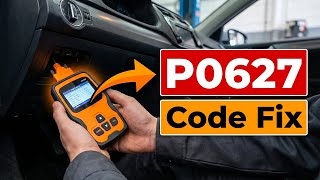
- If your vehicle is experiencing issues (such as stalling, hesitation, or a no-start condition), have the vehicle's computer scanned for actual DTCs. Issues with the Fuel Pump Control Module (FPCM) circuit, which the TSBs discuss, would likely generate codes such as P0627, P025A, or various U-codes (communication codes).
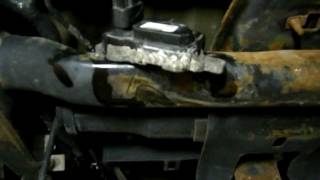
- Locate the Fuel Pump Control Module (FPCM). On the 2018-2024 Expedition, it is located on the driver's side frame rail, above the spare tire.
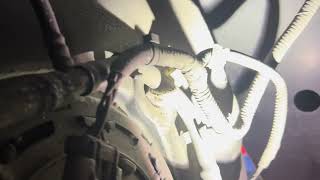
- Inspect the FPCM connector (C433/C4033 on an Expedition) for looseness, corrosion, or pushed-out pins. Ensure it is fully seated and the locking tab is engaged.
- Inspect the applicable FPCM ground points. TSB SSM 52483 identifies grounds G403 and G406 for the Expedition/Navigator. Check for looseness and corrosion at these points. A poor ground is a common cause of intermittent fuel delivery issues.
- Refer to Ford Technical Service Bulletins SSM 52483, SSM 51306, SSM 49618, and SSM 50661 for information on diagnosing FPCM connector issues on Ford SUVs, paying close attention to the correct connector and ground locations for the Expedition (C433/C4033 and G403/G406, not C3239 and G302).
Parts You'll Likely Need
- Dielectric Grease
- FPCM Connector Pigtail
Related Codes That Often Appear With This One
- P0627 - Fuel Pump 'A' Control Circuit / Open
- P025A - Fuel Pump Module Control Circuit/Open
- P025B - Fuel Pump Module Control Circuit Range/Performance
- P00C6 - Fuel Rail Pressure Too Low - Engine Cranking
- P008A - Low Pressure Fuel System Pressure - Too Low
- U0109 - Lost Communication With Fuel Pump Control Module
Technical Service Bulletins (TSBs) & Recalls
- SSM 52483: Notes issues with the FPCM connector and grounds, identifying C3239 as the connector for the Explorer and C433/C4033 for the Expedition/Navigator. It also specifies grounds G403/G406 for the Expedition/Navigator.
- SSM 51306: Recommends checking the FPCM connector is fully seated, again specifying C3239 for the 2018-2019 Explorer and C433 for the Expedition/Navigator.
- SSM 49618: Similar to SSM 51306, highlighting the FPCM connector seating issue and specifying different connectors for Explorer vs. Expedition.
- SSM 50661: Repeats the guidance of the other TSBs regarding checking the FPCM connector and grounds before replacing components.
Platform-Specific Known Issues
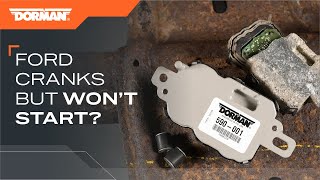
- While C3239 is not a code, the TSBs it is mentioned in point to a known issue on some Ford vehicles, including the Expedition. This involves poor connections at the Fuel Pump Control Module (FPCM) connector or its ground, which can cause stalling, hesitation, or a no-start condition.
- The FPCM is located on the driver's side frame rail, above the spare tire, an area susceptible to road spray and corrosion. 🎬 Watch: How corrosion causes stalling and no-start issues. Owners have successfully resolved stalling and no-start issues by simply cleaning and re-seating this connector.
- The relevant grounds for the FPCM on the Expedition are G403 and G406. These should be inspected for integrity as part of any diagnosis for fuel-delivery-related DTCs.
Mechanic-Grade Diagnostic Values
- Voltage at FPCM power supply pin — expected: Battery voltage (approx. 12V) with key on.. Failure: Voltage below 12V, or dropping to 0V after the initial prime, can indicate a wiring or relay issue upstream.
- Resistance between FPCM ground pin and chassis ground — expected: Less than 5 ohms.. Failure: High or infinite resistance indicates a bad ground connection (G403/G406), which is a common failure point.
- Fuel Pump Duty Cycle PID on Scan Tool — expected: Varies based on engine demand. Should show a commanded percentage from the PCM.. Failure: A 0% or 100% reading that does not change with demand may indicate a communication failure (U0109) or a fault in the module or wiring.
Scan Tool Commands That Help
- Ford IDS (Integrated Diagnostic System): Powertrain > Fuel System Test — This function allows a technician to command the fuel pump on, off, or to a specific duty cycle, bypassing the normal PCM commands. It is used to verify if the FPCM, wiring, and fuel pump are physically capable of operating, which helps isolate the fault to the control side (PCM, communication) or the component side (FPCM, pump).
Wiring & Ground Locations
- C433 / C4033 — The main electrical connector on the Fuel Pump Control Module (FPCM), located on the driver's side frame rail above the spare tire.. This is the connector specified for the Expedition in TSBs that mention C3239 for other vehicles. It is the primary point of failure due to corrosion or loose pins, leading to codes like U0109 and P0627.
- FPCM Connector Pinout (Typical) — On the C433/C4033 connector.. Knowing the pinout allows for precise testing. A typical arrangement includes: Pin for B+ (battery voltage in), Pin for Ground, Pin for FP-CMD (PWM command signal from PCM), and Pin for FP-PWR (variable voltage out to fuel pump). Testing these specific pins with a multimeter can pinpoint whether the fault is power supply, ground, or the control signal.
- G403 / G406 — Frame grounds located in the rear of the vehicle, near the FPCM.. These are the specific ground points for the FPCM circuit on the Expedition, as cited in TSB SSM 52483. A loose or corroded connection at these points will cause a loss of communication (U0109) or erratic fuel pump operation.
Real Owner Repair Stories
- Ford F150 Forum user 'mandbdesigns' (2015 F-150 2.7L EcoBoost (shares similar FPCM architecture)) — Vehicle died, then crank-no-start. Codes P0627 (Fuel Pump Control Circuit/Open) and P00C6 (Fuel Rail Pressure Too Low).
❌ Tried (didn't work) Replacing the Fuel Pump Driver Module (FPDM/FPCM) alone did not fix the issue.
✅ What actually fixed it The fuel pump itself had failed. The user replaced the FPDM first, which did not solve the problem, and then replaced the in-tank fuel pump, which resolved the no-start condition. 🎬 Watch: Step-by-step fuel pump replacement for this generation Expedition.
OEM Part Supersession History
Varies by year and specific build→KL3Z-9D370-B (Example FPCM for 2018-2019 Expedition)— Part revisions for reliability or manufacturing changes.
Heads up: Always verify the FPCM part number with the vehicle's VIN. While modules may look identical, internal logic can differ between model years or powertrain options.N/A→Motorcraft WPT-1775 (Example pigtail connector)— Provides a repair solution for a damaged harness-side connector.
Heads up: Connector pigtail part numbers are highly specific. WPT-1775 is cited for some 2018-2021 models, but verifying with a dealer parts department using the VIN is critical to ensure the correct pigtail is sourced.
Helpful Videos
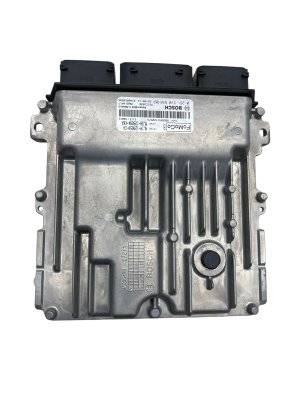
We Have This Part in Stock

The information in this article is provided for general reference and educational purposes only. Vehicle specifications, procedures, and part compatibility can vary by production date, trim level, and region. Always consult your vehicle's factory service manual and verify part numbers before purchasing or performing repairs. Safety-critical components such as airbags, seat belts, and braking systems should be installed by a qualified professional.
- Ford EXPEDITION:
- 🧭 Diagnostic Flowchart
- 🎬 Helpful Videos
- 🛍️ Shop This Part
- What's Unique About the 2018-2024 Ford EXPEDITION
- Diagnosis Steps
- Parts You'll Likely Need
- Related Codes That Often Appear With This One
- Technical Service Bulletins (TSBs) & Recalls
- Platform-Specific Known Issues
- Mechanic-Grade Diagnostic Values
- Scan Tool Commands That Help
- Wiring & Ground Locations
- Real Owner Repair Stories
- OEM Part Supersession History
- 🎟️ Get 5% Off