

C3239 on 2018-2019 Ford Explorer: FPCM Connector Problems, Stall/No-Start Causes, and Fixes
On a 2018-2019 Ford Explorer, 'C3239' is not a fault code but the name of the electrical connector for the Fuel Pump Control Module (FPCM). Stalling or no-start issues are almost always caused by this connector being loose or corroded. The fix is to inspect, clean, and securely reconnect it, which often costs nothing in parts.
- C3239 is NOT a trouble code; it's the name of the Fuel Pump Control Module connector on 2018-2019 Explorers.
- Before buying any parts for a no-start or stalling issue, physically check that the C3239 connector is clean and tightly secured.
- The most common codes that lead to this diagnosis are U0109, P025A, and P1233.
- The fix is usually free (securing the connector) or very cheap (cleaning supplies). Do not replace the expensive module or fuel pump until this simple check is done.
- Owners of 2020+ Explorers have a similar module, but the connector is named C4033.
What's Unique About the 2018-2023 Ford EXPLORER
The 2018-2023 year range spans two different Ford Explorer generations, and this is a critical distinction for this issue. The problem of a loose fuel pump module connector is so common that Ford has issued multiple service bulletins about it. Connector C3239 is specific to the fifth-generation Explorer, particularly the 2018-2019 model years. The sixth-generation Explorer (2020 and newer) uses a different connector, C4033, for the same module, though the principle of checking the connection remains a valid diagnostic step.
Diagnostic Flowchart
Tap your situation to follow the diagnostic path that matches what you're seeing on this vehicle.
Generation note: The specified vehicle range covers the end of the 5th generation (2011-2019) and the beginning of the 6th generation (2020-present). The connector C3239 is specifically called out in TSBs for the 2018-2019 Ford Explorer. For 2020-2023 models, the equivalent connector on the Fuel Pump Control Module is designated C4033.
Symptoms You May Notice
- Engine cranks but will not start
- Engine stalls unexpectedly while driving, sometimes intermittently
- Hesitation or stumbling during acceleration
- Loss of power under load, such as climbing a hill or towing.
- Rough or erratic idle
- Check Engine Light (Malfunction Indicator Lamp) is illuminated
- Replacing the Fuel Pump Control Module (FPCM) without first checking the C3239 connector and G302 ground.
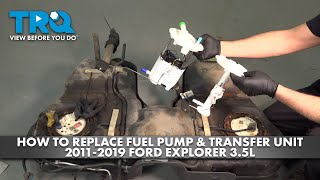
- Replacing the in-tank fuel pump when the issue is electrical and external to the tank.
Most Likely Causes
- Loose or Improperly Seated FPCM Connector (C3239) 🔴 High Probability This is a well-documented issue, cited in multiple Ford Technical Service Bulletins (SSM 51306, SSM 49618, etc.) as a primary check for fuel-related issues. Vibrations and the connector's exposed location can cause it to work itself loose over time.
How to confirm: Physically locate the Fuel Pump Control Module under the vehicle on the driver's side and check if the C3239 connector is loose or not fully clicked into place. Wiggling the connector while the engine is running (if possible) may replicate the stalling issue.
Typical fix: Disconnect the connector, inspect for damage, apply dielectric grease to the pins, and reconnect it firmly, ensuring the locking tab is engaged. 🎬 Watch: How to fix common fuel pump connector issues and stalling. No parts are typically required.
Est. part cost: $0 - $10 - Corroded or Damaged Pins in Connector C3239 🟡 Medium Probability The module's location under the vehicle exposes the connector to moisture, road salt, and debris, which can lead to corrosion or physical damage to the terminals over time. TSB SSM 51306 specifically calls out checking for damaged pins or pin push-outs.
How to confirm: Disconnect the connector and visually inspect the male and female pins for green/white corrosion, bending, or being pushed out of the connector body ('pin push-out').
Typical fix: Clean the terminals carefully with an electrical contact cleaner. If pins are severely corroded or damaged, the connector pigtail may need to be replaced. 🎬 Watch: Pro tips for rebuilding and repairing damaged electrical connectors. Ford recommends using electrical grease (Part No. XG-12) rather than dielectric grease for repairs.
Est. part cost: $20 - $50 - Loose or Corroded Ground Connection (G302) ⚪ Low Probability The TSBs also mention checking the ground connection. Like the connector, the ground point is susceptible to corrosion from its location under the vehicle. The ground point for the FPCM on 2018-2019 Explorers is designated G302.
How to confirm: Locate ground G302 at the rear of the vehicle and check for looseness or corrosion. A voltage drop test on the ground circuit can confirm a bad connection.
Typical fix: Remove the ground bolt, clean the contact surfaces of the terminal and chassis down to bare metal, and re-secure the connection tightly.
Est. part cost: $0
Rare But Worth Checking
- Failed Fuel Pump Control Module (FPCM): → Shop Fuel Pump This is a common misdiagnosis. The TSBs explicitly advise checking the connector and ground *before* replacing any components. Only replace the module if the connections and wiring are confirmed to be perfect but the problem persists. Some owners have reported replacing the module multiple times, suggesting an underlying wiring issue rather than faulty modules.
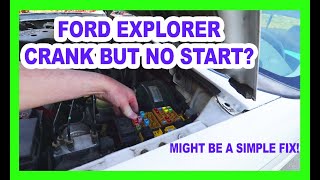
- Blown Fuel Pump Fuse: → Shop Fuel Pump A blown fuse can also cause a no-start condition. On 2016-2019 models, the fuse for the fuel pump is typically located in the engine compartment fuse box. Always check the fuse before replacing more expensive components.
Diagnosis Steps
- Confirm the presence of fuel-system related DTCs like U0109, P025A, P0627, or P1233. Do not expect to see 'C3239' from a scan tool.
- Safely raise and support the vehicle. A hoist is recommended, but jack stands can be used.
- Locate the Fuel Pump Control Module. On the 2018-2019 Explorer, it is located on the bottom side of the left (driver's side) front floor panel, potentially above a sound insulation shield.
- If a shield is present, remove the fasteners and lower it to access the FPCM.
- Inspect the C3239 connector. Check if it is physically loose or appears disconnected. The locking tab may be difficult to release if dirt and debris are present.
- Disconnect the negative battery terminal for safety.
- Disconnect the C3239 connector. This may require pressing a tab and wiggling the connector firmly. Inspect the pins and terminals on both the harness side and the module side for any signs of corrosion (green/white powder), moisture, or pushed-out pins.
- Locate ground point G302 at the rear of the vehicle and inspect it for tightness and corrosion.
- If corrosion is found on the connector or ground, clean it with electrical contact cleaner and a small brush. If no corrosion is present, proceed.
- Apply a small amount of electrical grease (Ford P/N XG-12) or dielectric grease to the connector pins to protect against future moisture intrusion.
- Reconnect connector C3239 firmly. You should hear or feel a 'click' as the locking tab engages.
- Re-install any shields that were removed.
- Reconnect the battery, clear all DTCs, and start the vehicle to see if the issue is resolved.
Parts You'll Likely Need
- Electrical Contact Cleaner & Electrical Grease
(OEM #XG-12 (Motorcraft Electrical Grease))— Used to clean corroded terminals and protect the connection from future moisture and corrosion. This is part of the primary fix.
Trusted brands: CRC, Permatex, Motorcraft
OEM price range: $15-$25
Aftermarket price range: $8-$15 - Fuel Pump Control Module Connector Pigtail
(OEM #WPT-150 (Motorcraft))— Only needed if the original C3239 connector housing or wires are physically broken or too corroded to be cleaned. The specific pigtail part number can vary, so visual confirmation is recommended.
Trusted brands: Dorman, Motorcraft, Standard Motor Products
OEM price range: $40-$70
Aftermarket price range: $20-$50 - Fuel Pump Driver Module (FPDM/FPCM)
(OEM #FU5Z-9D370-C (Motorcraft))— This part should only be replaced as a last resort after all connection and wiring issues have been ruled out. It is frequently replaced by mistake. The OEM part number for 2016-2019 Explorers is often cited as FU5Z-9D370-C or a similar variant.
Trusted brands: Motorcraft, Standard Motor Products, Dorman
OEM price range: $70-$120
Aftermarket price range: $50-$90
Related Codes That Often Appear With This One
- U0109 — This code means 'Lost Communication With Fuel Pump Control Module.' A loose C3239 connector is a direct cause of this communication loss.
- P025A — This code indicates an open circuit in the FPCM. A disconnected or corroded pin in the C3239 connector will create an open circuit.
- P1233 — This Ford-specific code means 'Fuel Pump Driver Module Offline. 🎬 See this guide on diagnosing and repairing the P1233 code.' Like U0109, it indicates a communication failure where the C3239 connector is the most likely culprit.
- P0087 — This code means 'Fuel Rail/System Pressure - Too Low.' If the FPCM loses power or communication intermittently, it cannot command the fuel pump to maintain adequate pressure.
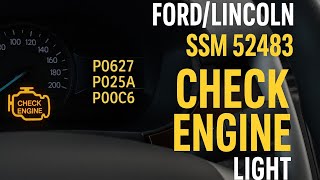
- P0627 — Indicates 'Fuel Pump 'A' Control Circuit/Open'. This is another code listed in Ford's TSBs related to this connector issue.
- P00C6 — Means 'Fuel Rail Pressure Too Low - Engine Cranking'. This code is also specifically mentioned in TSB SSM 51306 as a potential result of the faulty connector.
Technical Service Bulletins (TSBs) & Recalls
- SSM 51306: Instructs to check FPCM connector C3239 on 2018-2019 Explorer for being fully seated.
- SSM 49618: Recommends confirming the FPCM connector C3239 is fully seated on 2018-2019 Explorers before diagnostics.
- SSM 52483: Points to checking the FPCM connector (C3239 on Explorer) for pin issues or corrosion.
- SSM 50661: Advises verifying the FPCM connector C3239 is secure on 2018-2019 models.
- SSM 47926: Directs technicians to confirm the FPDM connector C3239 is fully seated on the Explorer.
- SSM 47257: Mentions an engineering investigation and advises checking the FPDM connector C3239 on the Explorer.
Platform-Specific Known Issues
- Multiple Ford Technical Service Bulletins (TSBs) have been released instructing technicians to check for a fully seated FPCM connector (C3239 on 2018-2019 models) before performing any other diagnostics for no-start or stalling conditions.
- Owner experiences shared on forums like 'explorerstforum.com' and 'fordexplorer.org' frequently cite this loose connector as the root cause for sudden stalling and no-start problems, often after dealers have failed to diagnose it correctly.
Mechanic-Grade Diagnostic Values
- FPCM Module Power Supply Voltage — expected: 11.5–12.5 V. Failure: Low voltage suggests a power supply issue, not necessarily a faulty module.
- CAN Bus Line Resistance — expected: < 60 Ω. Failure: An open circuit or higher resistance reading indicates a broken wire or poor connection in the communication lines.
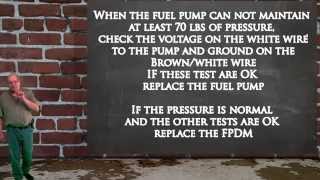
- Low-Pressure Fuel Pump Test (Forced Full Output) — expected: Must maintain at least 70 PSI. Failure: Pressure below 70 PSI indicates a weak in-tank fuel pump, even if the FPCM and wiring are good.
Scan Tool Commands That Help
- Ford IDS (Integrated Diagnostic System): Self-Test > Powertrain > Key On Engine Off (KOEO) & Key On Engine Run (KOER) — To retrieve all powertrain codes, including continuous memory DTCs related to the fuel system, which is the first step in any electronic diagnosis.
- Ford IDS (Integrated Diagnostic System): Data Logger — To monitor live data PIDs (Parameter IDs) such as Fuel Rail Pressure (FRP), fuel pump command percentage, and module voltage to identify intermittent dropouts during operation.
- Ford IDS (Integrated Diagnostic System) / FORScan: Reset All Adaptations / Reset KAM (Keep Alive Memory) — After a repair or if the vehicle runs poorly with no codes. Sometimes the Powertrain Control Module (PCM) retains incorrect fuel trim or sensor data, and a reset forces it to relearn.
- Ford IDS (Integrated Diagnostic System): Actuation Test / Output State Control — To command the fuel pump on or to a specific duty cycle, bypassing the normal control logic. This helps isolate whether the fault is in the control module, the pump itself, or the wiring.
Wiring & Ground Locations
- C3239 — The main electrical connector on the Fuel Pump Control Module (FPCM), which is located on the bottom side of the left (driver's side) front floor panel, above the sound insulation shield.. This is the primary point of failure identified in multiple Ford TSBs. A loose, corroded, or damaged connection here directly causes codes like U0109.
- G302 — For 2011+ Explorers, ground locations shift. While older diagrams show G302 at the base of the right 'B' pillar, the TSBs for the 2018-2019 model imply a location relevant to the rear-mounted FPCM, likely a chassis ground point near the rear of the vehicle. Precise diagrams for the exact year are needed for confirmation.. A poor ground for the FPCM can cause erratic behavior, communication loss, and stalling, mimicking a faulty module or connector.
- Fuse F63 (Underhood Fuse Box) — In the underhood power distribution box on 2016-2019 models, this is the 30A MCASE fuse for the fuel pump.. A blown fuse will cut all power to the FPCM, leading to a no-start and communication loss codes. It's a primary check before inspecting wiring.
Real Owner Repair Stories
- SHO Forum user 'Stringcheese' (Ford SHO (platform shares components with Explorer)) — U0109 'Lost Communication' error, continuous stalling at idle after replacing fuel pump and sending unit.
❌ Tried (didn't work) Replacing the fuel pump and sending unit.
✅ What actually fixed it The communication error (U0109) was resolved by replacing the fuel pump relay. The subsequent stalling issue was addressed by performing a KAM (Keep Alive Memory) reset using a scan tool, which forced the vehicle to relearn its fuel trims.
OEM Part Supersession History
FU5A-9D370-LA→FU5Z-9D370-F, FU5Z-9D370-C— Part revision and update. The 'C' and 'F' suffixes often denote revisions to the module's hardware or software to improve reliability.
Heads up: While FU5Z-9D370-C is the commonly cited replacement for 2016-2019 Explorers, newer parts like FU5Z-9D370-F may also be compatible or supersede it. Always verify fitment with a VIN.
Model Year Variations Within This Range
- 2016-2019: These models use a 30A MCASE fuse (F63) for the fuel pump and may not have a user-serviceable relay in the fuse box, as the function is integrated into the fuse box itself or controlled directly by the BCM/PCM.
- 2011-2015: Earlier models used a standard mini fuse (30A, position 65) and a separate, serviceable 4-pin relay (position 15) in the underhood fuse box.
Helpful Videos

Used OEM Parts in Stock
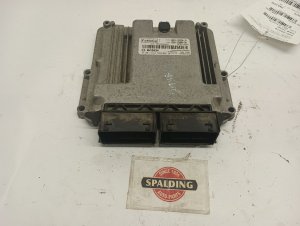
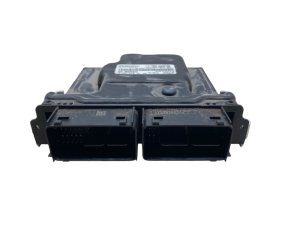
New Aftermarket Parts Available

The information in this article is provided for general reference and educational purposes only. Vehicle specifications, procedures, and part compatibility can vary by production date, trim level, and region. Always consult your vehicle's factory service manual and verify part numbers before purchasing or performing repairs. Safety-critical components such as airbags, seat belts, and braking systems should be installed by a qualified professional.
- Ford EXPLORER:
- 🧭 Diagnostic Flowchart
- 🎬 Helpful Videos
- 🛍️ Shop This Part
- What's Unique About the 2018-2023 Ford EXPLORER
- Symptoms You May Notice
- Most Likely Causes
- Rare But Worth Checking
- Diagnosis Steps
- Parts You'll Likely Need
- Related Codes That Often Appear With This One
- Technical Service Bulletins (TSBs) & Recalls
- Platform-Specific Known Issues
- Mechanic-Grade Diagnostic Values
- Scan Tool Commands That Help
- Wiring & Ground Locations
- Real Owner Repair Stories
- OEM Part Supersession History
- Model Year Variations Within This Range
- 🎟️ Get 5% Off