

C3239 on 2018-2022 Ford Transit: Not a Trouble Code (Connector Number Explained)
C3239 is not a valid diagnostic trouble code (DTC) for a Ford Transit. It is the engineering number for the Fuel Pump Control Module (FPCM) electrical connector on a 2018-2019 Ford Explorer. If you see this number, it's a reference from a service document, not a fault code from your vehicle's computer.
- C3239 is not a fault code for a Ford Transit; it is a part number for an electrical connector on a Ford Explorer.
- Do not attempt to diagnose your Transit based on 'C3239'. Use an OBD-II scanner to find the real trouble codes.
- If your Transit has fuel delivery symptoms like stalling, inspect the Fuel Pump Control Module connector (designated C433) for looseness or corrosion, as this is a known issue documented in multiple Ford TSBs.
- Real fault codes related to this issue include U0109, P0627, and P025A.
What's Unique About the 2018-2022 Ford TRANSIT
The confusion around C3239 arises because Ford often issues a single Technical Service Bulletin to address similar problems across different models, like the Explorer, F-150, and Transit. These documents list the specific connector number for each vehicle. While the Transit may experience similar fuel delivery issues, the connector to inspect is C433, not C3239. The underlying problem—a poor connection at the fuel pump module—is common, but the part number reference is vehicle-specific.
Diagnostic Flowchart
Tap your situation to follow the diagnostic path that matches what you're seeing on this vehicle.
Symptoms You May Notice
- No symptoms, as C3239 is not a fault code.
- If experiencing a related issue, symptoms will align with actual DTCs stored, such as U0109 (Lost Communication With Fuel Pump Control Module), which can cause engine cranking with no start, sudden stalling, and intermittent power loss.
- Searching for parts or diagnostic procedures for a 'C3239 code'.
- Replacing the Fuel Pump Control Module (FPCM) without first checking the C433 connector for proper seating and integrity.
Most Likely Causes
- Misinterpretation of a Technical Service Bulletin (TSB) 🔴 High Probability Ford TSBs often cover multiple vehicle platforms (Explorer, Transit, F-150) in a single document, leading to potential confusion between component designators.
How to confirm: Review the TSB and note that C3239 is listed next to the Ford Explorer, while a different number (C433) is listed for the Ford Transit.
Typical fix: Scan the vehicle with a proper OBD-II tool to retrieve the actual Diagnostic Trouble Codes (DTCs) that are causing the symptoms.
Est. part cost: $0
Diagnosis Steps
- Confirm that 'C3239' was read from a service document and not an OBD-II scanner.
- If the vehicle has symptoms (e.g., no-start, stalling, hesitation), connect an OBD-II scanner to the vehicle's diagnostic port.
- Read the actual Diagnostic Trouble Codes (DTCs) stored in the Powertrain Control Module (PCM) and other relevant modules.
- Diagnose the vehicle based on the real DTCs found. For example, if U0109 is present, proceed to inspect the Transit's FPCM connector, which is C433.
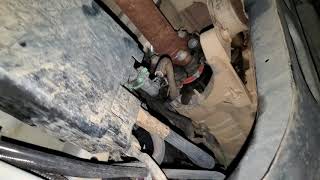
- Locate the Fuel Pump Control Module (FPCM) on the Transit. It is typically found on the frame rail, underneath the vehicle, often in front of the charcoal canister. 🎬 See this walkthrough for fixing the Transit fuel pump module
- Inspect the C433 connector for corrosion, damage, pushed-out pins, or signs of moisture intrusion.
- Ensure the C433 connector is fully seated and the locking tab is engaged. The TSBs repeatedly stress confirming the connector is seated before any parts are replaced.
- If the connector or wiring is damaged, a pigtail repair may be necessary. 🎬 Watch: How to repair a damaged fuel pump connector A Motorcraft pigtail kit includes the OE connector and wires for a durable repair.
Parts You'll Likely Need
- Fuel Pump Control Module Connector Pigtail
Related Codes That Often Appear With This One
- U0109 — This code, for 'Lost Communication With Fuel Pump Control Module,' is a real DTC that would prompt a technician to check the FPCM connector (designated C433 on a Transit).
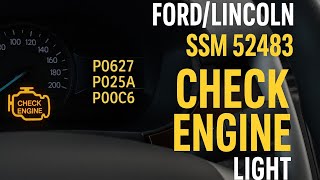
- P0627 — This code for 'Fuel Pump 'A' Control Circuit Open' is another common fault that points to an issue in the fuel pump electrical circuit, including its main connector.
- P025A — This code for 'Fuel Pump Module Control Circuit/Open' directly relates to the FPCM and its wiring, which would be investigated after finding this DTC.
Technical Service Bulletins (TSBs) & Recalls
- SSM 52483: Mentions checking the FPCM connector on various vehicles, identifying C433 for the Transit and C3239 for the Explorer.
- SSM 51306: Recommends confirming the FPCM connector is fully seated, specifying C433 for the Transit and C3239 for the Explorer.
- SSM 49618: Notes to check the FPCM connector (C433 on Transit, C3239 on Explorer) before replacing components.
- SSM 47926: Instructs to confirm the Fuel Pump Driver Module connector is seated, again listing C433 for Transit and C3239 for Explorer.
- SSM 50661: Repeats the instruction to check FPCM connectors (C433 for Transit) to prevent misdiagnosis.
- SSM 47257: An earlier TSB also highlighting the need to confirm the FPDM/FPCM connector is fully seated on Transit (C433) and other models.
Platform-Specific Known Issues
- Multiple Ford TSBs (SSM 52483, SSM 51306, SSM 49618, SSM 47926) point to issues with the Fuel Pump Control Module (FPCM) connector across various platforms, including the Transit. While the connector number is different (C433 for the Transit), the problem of a loose or corroded connector causing stalling or no-start conditions is a known issue.
- Owners on forums for related vehicles like the F-150 report intermittent stalling and no-start conditions that are resolved by inspecting and securing the FPCM connector, corroborating the issue described in the TSBs.
Mechanic-Grade Diagnostic Values
- FPCM Supply Voltage — expected: 11.5–12.5 Volts. Failure: Low or no voltage suggests a power supply issue (fuse, relay, wiring) rather than a module or communication fault.
- CAN Bus Network Resistance — expected: Typically less than 60 Ω between the CAN High and CAN Low pins at the diagnostic connector (with battery disconnected).. Failure: High resistance (e.g., 120 Ω) can indicate a break in the network or a missing terminating resistor. An open circuit reading points to a broken wire.
- Fuel Pump Relay Power (Timed) — expected: Battery voltage should be present at the fuel pump relay socket for approximately 2 seconds after the ignition is turned to the ON position.. Failure: No voltage indicates a problem with the PCM command or the primary power supply to the relay. 🎬 Watch: How to locate the fuel pump relay and fuses
Hidden / Shadow Codes Worth Checking
- U3000:44, U3000:45, U3000:49: These are examples of Continuous Memory Diagnostic Trouble Codes (CMDTCs) related to the Gateway Module (GWM). While not specific to the FPCM, they demonstrate that Ford vehicles store detailed sub-codes that require a dealer-level scanner to retrieve and can point to specific network or module hardware failures. (see via Ford IDS or FDRS scan tool.)
- B2139, B1600, B2141: These are Passive Anti-Theft System (PATS) codes indicating the PCM identification was not recognized. A no-start condition caused by a U0109 could be accompanied by PATS codes if the underlying electrical issue also affects the anti-theft system's communication. (see via Advanced scan tool like Forscan or Ford IDS/FDRS.)
Scan Tool Commands That Help
- Ford FDRS (Ford Diagnostic & Repair System): Programmable Module Installation (PMI) — Used after replacing the FPCM or PCM. The PMI function downloads the correct software and configuration for the new module based on the vehicle's VIN. A stable battery maintainer is required during this process.
- Ford FDRS: Self Test — This function commands all modules on the network to report their status and any stored DTCs, including CMDTCs that a generic scanner might miss. It's the first step in any network diagnosis.
- Forscan: Prime Fuel System / Read Extended DTCs — Forscan is a powerful aftermarket tool that can perform many dealer-level functions. For this issue, it can be used to command the fuel pump to prime the system (verifying FPCM control) and to read module-specific DTCs beyond the standard powertrain codes.
Wiring & Ground Locations
- Fuel Pump Control Module (FPCM) — On many US-spec Transits, it is located underneath the vehicle on a frame rail, often in front of the charcoal canister.. This is the module that loses communication, setting code U0109. Its exposed location makes its connector (C433) and wiring susceptible to moisture and corrosion.
- Prefuse Box — Located near the vehicle's battery, typically under the driver's seat on 2021+ models.. This box contains high-current fuses that protect primary circuits, including power feeds to other fuse boxes and modules like the FPCM.
- Engine Compartment Fuse Box — Located under the hood, housing critical fuses and relays for the powertrain control module and fuel system.. The primary relay and fuse for the FPCM are often located here. A failure in this box can cut power to the module.
Real Owner Repair Stories
- Ford Transit Forum user 'Andyb74' (2018 (68 plate) Ford Transit Luton 2.0L) — Multiple cascading warning lights (hill assist, AdBlue malfunction, DPF overload) after previous injector and engine replacements.
❌ Tried (didn't work) Replacing injectors, replacing engine.
✅ What actually fixed it The root cause was found to be corrosion in the PCM and engine wiring loom connector. The dealer stated a broken seal in the main plug allowed water ingress over a long period, leading to the multiple failures. The user argued this was a build-quality defect. - Ford Transit Forum user 'JMac' (Ford Transit Mk6 FWD 2.0L TDDI) — No start condition with fuel pump DTCs (P1665, P1608).
❌ Tried (didn't work) Replacing the fuel pump with a reconditioned unit, sending the electronic driver control (EDC) for testing (it passed), checking for continuity on all wires from the EDC plug to the PCM plug (all passed).
✅ What actually fixed it After verifying all components and wiring were good, the user tested the relay sockets in the engine bay fuse box with a power probe. The socket for the fuel pump relay was the only one that did not have power, indicating an internal failure within the fuse box itself.
OEM Part Supersession History
AA8Z-9D370-D→GA8Z-9D370-A— Part number update, likely for reliability improvements or supplier change.
Heads up: The new part number GA8Z-9D370-A replaces the old one.
Model Year Variations Within This Range
- 2020-2022: The Ford Transit received a significant refresh for the 2020 model year, including a new standard 3.5L PFDI V6 engine, an optional 3.5L EcoBoost V6, a 10-speed automatic transmission, and available All-Wheel Drive. These changes affect the powertrain and electrical architecture, so diagnostic procedures and part numbers may differ from the 2018-2019 models.
- 2018-2022 (Varies by configuration): While many US models have the FPCM on the frame rail, some configurations, particularly European models with AdBlue systems, may have the module located on top of the fuel tank. This makes access significantly more difficult and requires dropping the tank.
Helpful Videos
![[2/3] Ford Transit Not Starting - Fuel Pump Control Module Fix! 2015 Ford Transit Van 350 3.7L- Rd.↓](https://img.youtube.com/vi/swpfU356yAM/mqdefault.jpg)
Used OEM Parts in Stock
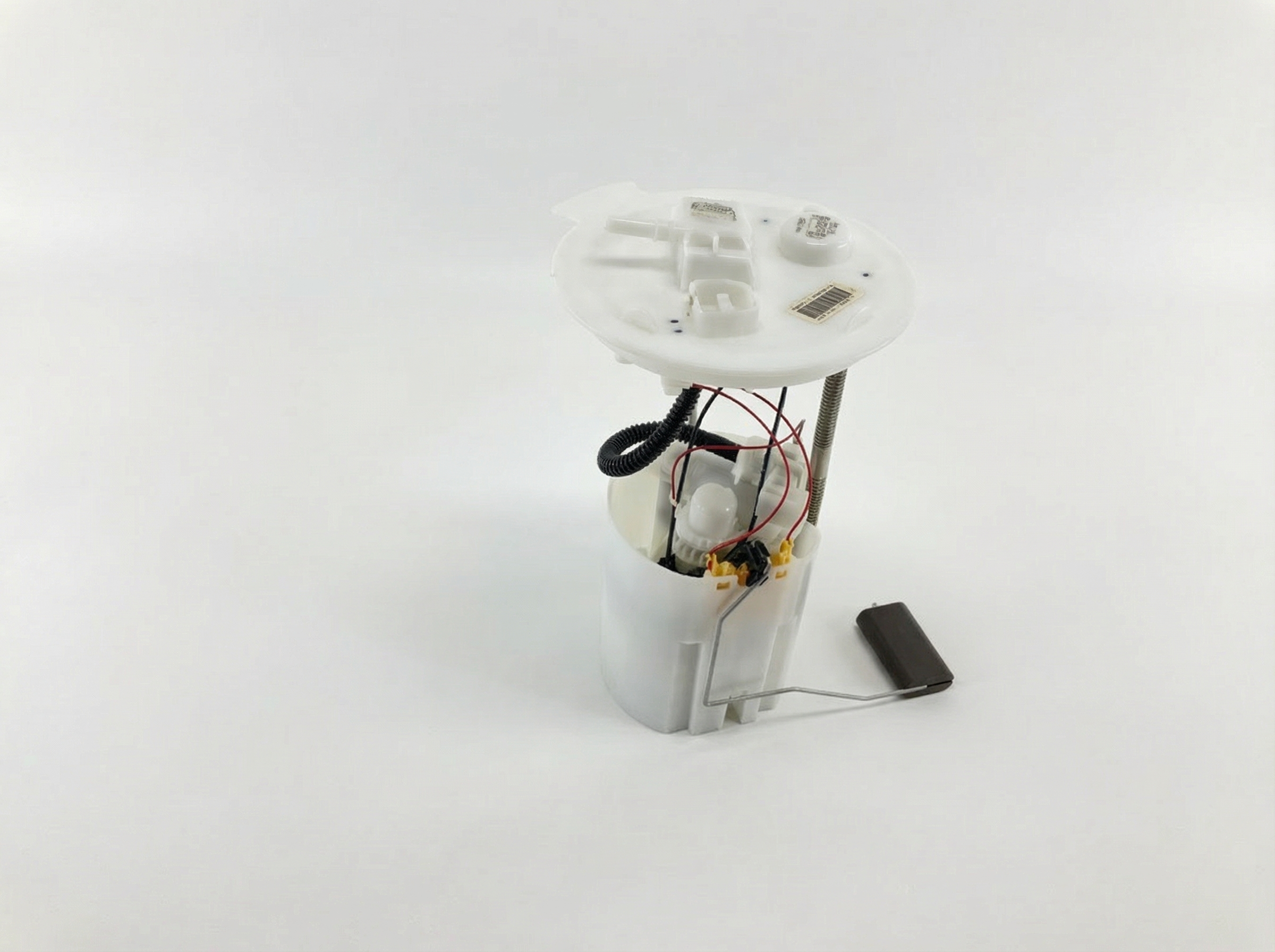
New Aftermarket Parts Available


The information in this article is provided for general reference and educational purposes only. Vehicle specifications, procedures, and part compatibility can vary by production date, trim level, and region. Always consult your vehicle's factory service manual and verify part numbers before purchasing or performing repairs. Safety-critical components such as airbags, seat belts, and braking systems should be installed by a qualified professional.
- Ford TRANSIT:
- 🧭 Diagnostic Flowchart
- 🎬 Helpful Videos
- 🛍️ Shop This Part
- What's Unique About the 2018-2022 Ford TRANSIT
- Symptoms You May Notice
- Most Likely Causes
- Diagnosis Steps
- Parts You'll Likely Need
- Related Codes That Often Appear With This One
- Technical Service Bulletins (TSBs) & Recalls
- Platform-Specific Known Issues
- Mechanic-Grade Diagnostic Values
- Hidden / Shadow Codes Worth Checking
- Scan Tool Commands That Help
- Wiring & Ground Locations
- Real Owner Repair Stories
- OEM Part Supersession History
- Model Year Variations Within This Range
- 🎟️ Get 5% Off