

C3239 on 2023-2024 Ford Transit: Not a Code, But a Clue to a Fuel System Problem
C3239 is not a valid trouble code for a Ford Transit. It is the part number for an electrical connector on a Ford Explorer. If you have stalling or no-start issues on your Transit, the actual problem is likely a poor connection at the Fuel Pump Control Module (FPCM) at connector C433, a known issue covered by Ford TSBs.
- C3239 is NOT a trouble code for your Transit; it's a connector part number for a Ford Explorer.
- If your Transit cranks but won't start or stalls, the most likely cause is a problem with the Fuel Pump Control Module (FPCM) or its connector (C433).
- Before buying any parts, physically inspect the FPCM connector under the driver's side of the van. Ensure it's clean, undamaged, and securely latched.
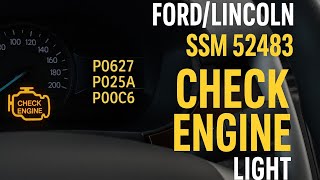
- Actual trouble codes to look for are U0109, P0627, and P025A.
- Replacing the FPCM is a common, relatively inexpensive, and DIY-friendly repair that often solves these symptoms.
What's Unique About the 2023-2024 Ford TRANSIT
The Ford Transit shares a common fuel system issue with other Ford trucks and SUVs, which is a poor connection at the Fuel Pump Control Module (FPCM). However, the specific component identifiers are different. While TSBs name the connector as C3239 for the Explorer, they explicitly name it C433 for the Transit. Other affected vehicles have their own identifiers, such as C460/C4336 for the F-150. This guide focuses on the actual problem affecting the Transit—FPCM connectivity—rather than the misidentified connector number.
Diagnostic Flowchart
Tap your situation to follow the diagnostic path that matches what you're seeing on this vehicle.
Symptoms You May Notice
- Engine cranks but does not start
- Engine stalls while driving
- Hesitation or stumbling on acceleration
- Loss of engine power
- Check Engine Light (Malfunction Indicator Lamp) is illuminated
- Replacing the in-tank fuel pump before inspecting the FPCM and its connector. The FPCM circuit is a very common failure point on these vans and is much cheaper and easier to access and repair than the fuel pump itself. 🎬 Watch: This walkthrough shows how to fix the Transit FPCM.
Most Likely Causes
- Fuel Pump Control Module (FPCM) Connector Not Fully Seated 🔴 High Probability → Shop Fuel Pump As documented in multiple Ford TSBs (like SSM 52483), this is a known issue across several Ford platforms. The connector can work its way loose over time due to vibration.
How to confirm: Locate the FPCM on the vehicle and physically inspect the C433 connector. Check if it is securely latched. Gently push on it to see if it clicks into place. The connector often has a red slide lock that must be disengaged before the release tang can be pressed.
Typical fix: Fully seat the connector until it clicks and the latch is secure. For added security, many owners and technicians recommend placing a zip-tie around the connector and module to prevent it from backing out again. No parts are typically required.
Est. part cost: $0-$1 - Damaged or Corroded FPCM Connector (C433) or Terminals 🟡 Medium Probability Depending on the FPCM's location (either on the frame rail or top of the fuel tank), it can be exposed to moisture, road salt, and debris, which can lead to corrosion or physical damage to the connector housing and internal pins.
How to confirm: Disconnect the C433 connector and inspect the pins and terminals on both the harness side and the module side for green or white corrosion, bent pins, or pushed-out terminals.
Typical fix: If corrosion is minor, it can be cleaned with an electrical contact cleaner and a small brush. If pins are damaged or the connector housing is broken, the connector pigtail must be replaced. This involves cutting the old connector off and splicing the new one in, wire by wire.
Est. part cost: $30-$80 - Loose or Corroded Ground Connection (G401) ⚪ Low Probability The ground connection for the FPCM is also on the frame and subject to the same environmental conditions as the module itself, as noted in TSB SSM 52483.
How to confirm: Locate the G401 ground point on the frame near the FPCM. Inspect it for rust or looseness. A voltage drop test from the FPCM ground wire to the battery negative terminal can confirm a bad ground.
Typical fix: Remove the ground bolt, clean the contact surfaces of the terminal and frame down to bare metal, and re-secure the connection tightly. Apply dielectric grease to prevent future corrosion.
Est. part cost: $0-$5 - Failed Fuel Pump Control Module (FPCM) ⚪ Low Probability → Shop Fuel Pump While less common than a connection issue, the module itself can fail internally from heat, vibration, or water intrusion. This is often a last resort after confirming the connector and wiring are good.
How to confirm: After verifying the connector, wiring, and grounds are intact, and if fuel-related DTCs persist, the module is the likely culprit. A scan tool that can communicate with the FPCM can check for internal faults.
Typical fix: Replace the Fuel Pump Control Module. This typically involves unbolting the old module and plugging in the new one.
Est. part cost: $60-$150
Diagnosis Steps
- Scan the vehicle for actual Diagnostic Trouble Codes (DTCs). Do not use 'C3239' as a diagnostic starting point. Look for codes like U0109, P0627, or P025A.
- Check the fuses related to the fuel pump. Based on owner reports, check fuse 65 in the fuse panel 🎬 Watch: How to test the fuel pump and relay system. located under the steering wheel.
- Locate the Fuel Pump Control Module (FPCM). The location varies by model year and configuration. First, check the driver's side frame rail, sometimes above the spare tire. If it is not there, it may be located on the top of the fuel tank, which may be accessible without fully dropping the tank.
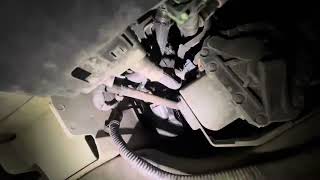
- Inspect the FPCM connector (C433 on the Transit) to ensure it is fully seated and latched. If loose, push until it clicks. Consider adding a zip-tie for reinforcement. 🎬 See how to secure the connector and prevent future stalling.
- Disconnect the connector and carefully inspect for any signs of corrosion, moisture, pushed-out pins, or other damage to the terminals and wiring.
- If the connector is in good condition, locate and inspect the associated ground point (G401 for Transit, per TSB SSM 52483) for looseness or corrosion. Clean and tighten as necessary.
- If no issues are found with the wiring or connections, the FPCM itself is the most likely cause of the failure.
- As a final check before replacing parts, one could verify power and ground at the FPCM connector with a multimeter using a vehicle-specific wiring diagram.
Parts You'll Likely Need
- Fuel Pump Control Module (FPCM)
(OEM #AA8Z-9D370-B, FU5A-9D370-JA, LC3Z-9D370-C (Verify with VIN))— This module controls the voltage sent to the fuel pump and is a very common failure point on Ford Transits, often causing a no-start or stalling condition. Part numbers vary by year, so VIN verification is critical.
Trusted brands: Motorcraft, Dorman
OEM price range: $60-$100
Aftermarket price range: $40-$80 - FPCM Connector Pigtail
(OEM #Potentially 3U2Z-14S411-XYB (Motorcraft WPT-1153) - VISUAL MATCH REQUIRED)— If the connector (C433) or its wiring is damaged by corrosion or impact, replacing the pigtail is necessary to ensure a solid connection to the new module.
Trusted brands: Motorcraft, Dorman
OEM price range: $40-$70
Aftermarket price range: $25-$50
Related Codes That Often Appear With This One
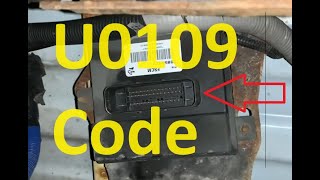
- U0109 — This code means "Lost Communication With Fuel Pump Control Module," which directly points to the electrical connection or module failure described.
- P0627 — This code indicates an open circuit in the fuel pump control, which can be caused by a loose C433 connector, damaged wiring, or a failed FPCM.
- P025A — This code means "Fuel Pump Module Control Circuit/Open" and is another direct indicator of a problem with the FPCM's electrical circuit.
- P025B / P00C6 / P008A — These are additional fuel pump and fuel pressure related codes that Ford lists in TSB SSM 52483 as being related to the FPCM connectivity issue.
Technical Service Bulletins (TSBs) & Recalls
- SSM 52483: The most current TSB, covering 2018-2024 models. It explicitly lists DTCs (U0109, P0627, etc.), confirms connector C433 and ground G401 for the Transit, and lists other affected Ford/Lincoln models.
- SSM 49618, SSM 50661, SSM 51306, SSM 47257: Earlier TSBs for various Ford models that establish the pattern of FPCM connector issues. They confirm C3239 is for the Explorer, while C433 is the correct connector number for the Transit.
Platform-Specific Known Issues
- Ford has issued multiple Technical Service Bulletins (TSBs) like SSM 52483 regarding this issue across many vehicle lines, including the Transit.
- The location of the FPCM is inconsistent across the Transit model range. On some, it is easily accessible on the driver-side frame rail. On others, particularly later models or diesel variants, it is located on top of the fuel tank, making access more difficult.
Mechanic-Grade Diagnostic Values
- FPCM Module Power Supply Voltage — expected: 11.5–12.5 V. Failure: Low or no voltage suggests a problem with the power supply circuit or fuse, not necessarily the module itself.
- CAN Bus Line Resistance — expected: Typically less than 60 Ω. Failure: An open circuit (infinite resistance) indicates a broken wire or disconnected connector in the communication network.
- Continuity between EDC plug and PCM plug — expected: 0.1-0.2 ohms. Failure: High resistance or an open circuit indicates a break in the wiring harness.
Scan Tool Commands That Help
- Ford IDS (Integrated Diagnostic Software) / FDRS (Ford Diagnostic and Repair System): Self-Test > All CMDTCs — This is the primary function to retrieve all continuous, on-demand, and sometimes intermittent trouble codes from all modules, including the PCM, to get an accurate picture beyond just a generic OBD-II scan.
- Ford IDS / FDRS: Datalogger — To monitor live data PIDs (Parameter IDs) from the FPCM and PCM, such as commanded fuel pressure, pump duty cycle, and module voltage. This helps determine if the module is receiving commands and functioning correctly.
- Ford IDS / FDRS: Module Programming — Required after replacing the FPCM or PCM to configure the new module to the vehicle's specific configuration and ensure communication with other modules.
Wiring & Ground Locations
- C433 — The electrical connector at the Fuel Pump Control Module (FPCM). The FPCM is typically on the driver's side frame rail above the spare tire, or on top of the fuel tank.. This is the primary point of failure according to Ford TSBs. A loose or corroded connection here will cause codes like U0109 and no-start/stalling symptoms.
- G401 — A chassis ground point located on the frame, typically near the FPCM.. This is the specific ground point for the FPCM on the Ford Transit. A loose or corroded G401 will interrupt the module's power circuit, causing it to fail and log communication codes.
- Fuse F65 (BJB) — In the Body Junction Box (fuse panel) located under the steering wheel.. Forum users report this fuse is related to the FPCM circuit. A blown fuse here will cut power to the module and should be checked early in the diagnostic process.
Real Owner Repair Stories
- Ford Transit Forum user 'JMac' (Ford Transit Mk6 2.0L TDDI) — No start, multiple fuel pump DTCs (P1665, 1608).
❌ Tried (didn't work) Replacing the fuel pump with a reconditioned unit., Sending both the original and replacement Electronic Diesel Control (EDC) modules for testing (both tested good)., Testing continuity of all pins from the EDC plug to the PCM plug (all wires were good, 0.1-0.2 ohms)., Testing all 5-pin relays in the engine bay fusebox (all tested good).
✅ What actually fixed it The user diagnosed a faulty fuse box. Using a power probe, they found that the socket for the fuel pump relay was not receiving power, while all other relay sockets were. This pointed to an internal failure within the fuse box itself.
OEM Part Supersession History
LC3Z-9D370-A→LC3Z-9D370-C— Standard part revision by the manufacturer, likely for improved reliability or internal components.
Model Year Variations Within This Range
- 2023-2024: There are no significant mechanical or powertrain differences reported between the 2023 and 2024 Ford Transit models that would affect this specific issue. Both model years are covered under the same TSB (SSM 52483) and use similar V6 engine options and electrical architecture.
Helpful Videos
![[2/3] Ford Transit Not Starting - Fuel Pump Control Module Fix! 2015 Ford Transit Van 350 3.7L- Rd.↓](https://img.youtube.com/vi/swpfU356yAM/mqdefault.jpg)
Used OEM Parts in Stock
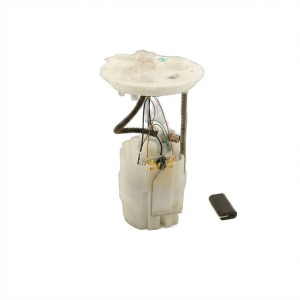
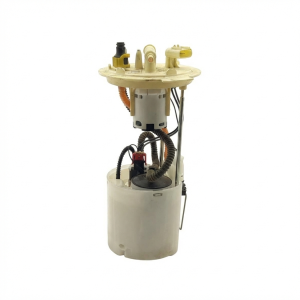
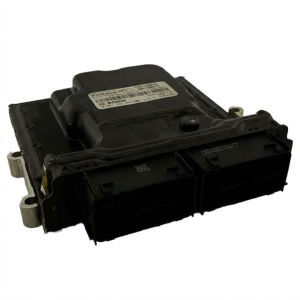
New Aftermarket Parts Available
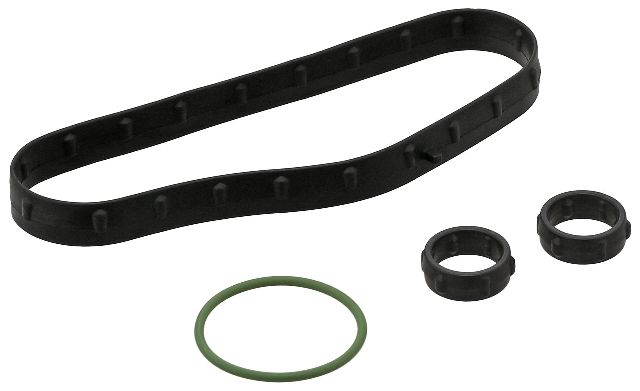

The information in this article is provided for general reference and educational purposes only. Vehicle specifications, procedures, and part compatibility can vary by production date, trim level, and region. Always consult your vehicle's factory service manual and verify part numbers before purchasing or performing repairs. Safety-critical components such as airbags, seat belts, and braking systems should be installed by a qualified professional.
- Ford TRANSIT:
- 🧭 Diagnostic Flowchart
- 🎬 Helpful Videos
- 🛍️ Shop This Part
- What's Unique About the 2023-2024 Ford TRANSIT
- Symptoms You May Notice
- Most Likely Causes
- Diagnosis Steps
- Parts You'll Likely Need
- Related Codes That Often Appear With This One
- Technical Service Bulletins (TSBs) & Recalls
- Platform-Specific Known Issues
- Mechanic-Grade Diagnostic Values
- Scan Tool Commands That Help
- Wiring & Ground Locations
- Real Owner Repair Stories
- OEM Part Supersession History
- Model Year Variations Within This Range
- 🎟️ Get 5% Off