

C3239 on 2020-2023 Lincoln Aviator: Not a Trouble Code (FPCM Connector Explained)
C3239 is not a fault code for a Lincoln Aviator; it's a connector number for an older Ford Explorer. If your Aviator has stalling or no-start issues, the real problem is likely a loose Fuel Pump Control Module (FPCM) connector (designated C4033 on your vehicle), a known issue covered by manufacturer bulletins. The fix is often as simple as inspecting and reseating the connector, a repair that can take as little as 15 minutes.
- C3239 is not a trouble code; it is a part number for an electrical connector on a different vehicle.
- Stalling or no-start problems on a 2020-2023 Aviator are very likely caused by a poor electrical connection at the Fuel Pump Control Module (FPCM).
- Before replacing any parts, the first and most important step is to inspect, clean, and securely reseat the FPCM connector (C4033) and its ground (G407).
- This is a known issue documented by Ford/Lincoln in multiple Technical Service Bulletins.
- The fix is often free or very low-cost, involving simple cleaning and re-seating of the connector.
What's Unique About the 2020-2023 Lincoln AVIATOR
The Lincoln Aviator shares its CD6 platform with the Ford Explorer, where issues with the Fuel Pump Control Module (FPCM) connection are well-documented. The module is typically mounted on the vehicle's frame rail, exposing its electrical connector to constant vibration and potential moisture intrusion. This design choice makes a loose or corroded FPCM connector a common point of failure, leading to stalling or no-start conditions that can be mistaken for a failed fuel pump.
Diagnostic Flowchart
Tap your situation to follow the diagnostic path that matches what you're seeing on this vehicle.
Symptoms You May Notice
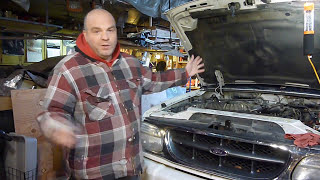
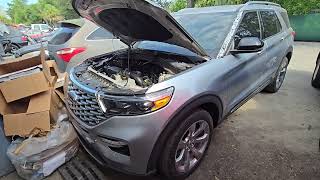
- Engine cranks but does not start 🎬 Watch: A step-by-step diagnosis and fix for this no-start condition.
- Sudden engine stalling, especially while driving
- Intermittent loss of power or hesitation during acceleration
- Check Engine Light is on
- Associated trouble codes like U0109, P0627, or P008A are stored in the computer.
- Replacing the fuel pump when the issue is the FPCM electrical connection.
- Replacing the Fuel Pump Control Module (FPCM) before thoroughly inspecting, cleaning, and securing its connector and ground connection.
Most Likely Causes
- Loose or Improperly Seated FPCM Connector (C4033) 🔴 High Probability The FPCM is located on the frame rail, where it is subject to vibration that can cause the connector to work itself loose over time. This is the primary issue identified in multiple manufacturer TSBs. Forum users have reported this as a frequent cause of sudden stalling.
How to confirm: Locate the FPCM on the driver's side frame rail, often accessible from underneath the vehicle, sometimes described as being on the bottom side of the left front floor panel. Visually and physically check if the main electrical connector (C4033) is fully seated and locked. Wiggling the connector may reproduce the fault. Many owners add a zip tie around the connector and module as a preventative measure to keep it secure.
Typical fix: Disconnect the battery. Disconnect the connector, clean both sides with electrical contact cleaner, and re-seat it firmly until it clicks and locks into place. This simple fix has resolved the issue for many owners in under 15 minutes.
Est. part cost: $0-$15 - Corroded or Damaged FPCM Connector Pins 🟡 Medium Probability The module's location under the vehicle exposes it to water, salt, and road debris, which can lead to corrosion inside the connector over time, causing a poor electrical connection.
How to confirm: After disconnecting the connector, inspect the pins on both the module and the harness side for green or white corrosion, or any bent or pushed-out pins.
Typical fix: If corrosion is minor, it can be cleaned with a specialized brush and contact cleaner. If pins are severely corroded or damaged, the connector pigtail must be cut off and a new one spliced into the harness using heat-shrink butt connectors. The Motorcraft pigtail part number WPT-1444 may be applicable.
Est. part cost: $30-$80 - Loose or Corroded FPCM Ground Connection (G407) ⚪ Low Probability The ground wire for the FPCM bolts directly to the vehicle's frame. This connection can rust over time, creating high resistance that prevents the module from operating correctly.
How to confirm: Locate the ground point G407 as specified in service information (near the FPCM on the frame rail). Check if the bolt is tight and if there is any rust or corrosion between the terminal and the frame.
Typical fix: Remove the ground bolt (typically a 10mm), clean the terminal and the frame contact point down to bare metal with a wire brush, and re-secure the connection tightly. Applying dielectric grease can prevent future corrosion.
Est. part cost: $0-$5
Rare But Worth Checking
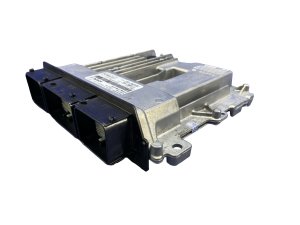
- Failed Fuel Pump Control Module (FPCM): → Shop Fuel Pump This is rare compared to connection issues. The module itself is generally reliable. Only replace the FPCM after confirming its connector and ground are perfect and it is receiving proper power but still not functioning.
- Damaged Wiring Harness: Physical damage to the wires leading to the FPCM from chafing or road debris can cause an open or short circuit. This should be suspected if the connector and ground are good but communication or circuit codes persist.
- Blown Fuel Pump Fuse: → Shop Fuel Pump A blown fuse for the FPCM will cause a loss of power and communication. For 2020-2023 models, check the 30A fuse at position 4 in the under-hood fuse box.
Diagnosis Steps
- Confirm that C3239 is not a trouble code but a reference to a connector. Use an OBD-II scanner to check for actual DTCs like U0109, P0627, or P008A.
- Disconnect the vehicle's battery to ensure safety. The battery is located under a cover in the engine bay.
- Safely raise the vehicle if necessary. Locate the Fuel Pump Control Module (FPCM) on the driver's side frame rail, under the vehicle.
- Carefully inspect the wiring harness leading to the FPCM for any signs of physical damage.
- Disconnect the main electrical connector (C4033) from the FPCM. Inspect both the harness side and the module side for corrosion, moisture, or bent/damaged pins.
- Clean the connector pins and sockets with electrical contact cleaner.
- Locate the FPCM ground point (G407) on the frame. Remove the bolt, clean the contact surfaces to bare metal, and re-secure it tightly.
- Firmly reconnect the C4033 connector, ensuring it clicks into place and the locking tab is secure. Consider adding a zip-tie for extra security, a common DIY fix.
- Reconnect the battery and start the vehicle to see if the symptoms are resolved. Clear any DTCs and perform a drive cycle to ensure they do not return.
Parts You'll Likely Need
- FPCM Connector Pigtail
(OEM #WPT-1444 (Motorcraft Service # FU2Z-14S411-AHA))— If the original connector or its pins are damaged by corrosion, a new pigtail must be spliced into the harness to ensure a reliable connection.
Trusted brands: Motorcraft
OEM price range: $50-$100
Aftermarket price range: $30-$80 - Electrical Contact Cleaner — This is essential for cleaning the connector pins and sockets without leaving a residue, which is often all that is needed to restore the connection.
Trusted brands: CRC, WD-40 Specialist
OEM price range: $10-$20
Aftermarket price range: $8-$15
Related Codes That Often Appear With This One
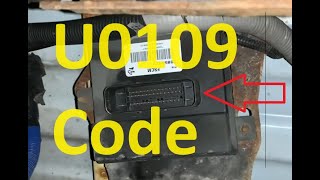
- U0109 — This code means 'Lost Communication With Fuel Pump Control Module,' which is the direct result of a loose or corroded C4033 connector. 🎬 See this video for common causes and fixes for code U0109.
- P0627 — This code means 'Fuel Pump 'A' Control Circuit Open,' indicating a break in the electrical circuit, often caused by a pin losing contact within the FPCM connector.
- P008A — This code means 'Low Pressure Fuel System Pressure - Too Low,' which is a symptom of the fuel pump not receiving the correct power command from the FPCM due to the connection issue.
- P00C6 — This code for 'Fuel Rail Pressure Too Low - Engine Cranking' is also specifically mentioned in TSB SSM 51306 as a direct consequence of the intermittent FPCM connection.
Technical Service Bulletins (TSBs) & Recalls
- SSM 51306: Instructs technicians to check ground G407 and FPCM connector C4033 on 2020-2022 Explorer/Aviator models for fuel delivery issues with codes like U0109, P0627, P008A, and P00C6.
- SSM 50661: Similar to SSM 51306, pointing to the FPCM connector C4033 and ground G407 as a primary checkpoint.
- SSM 49618: An earlier bulletin also highlighting the importance of a fully seated FPCM connector (C4033) on 2020-2021 models.
Platform-Specific Known Issues
- Multiple Technical Service Bulletins (TSBs) have been issued by Ford for the Aviator and Explorer platform regarding stalling or no-start conditions. These bulletins specifically instruct technicians to check that the FPCM connector (C4033 on the 2020-2023 Aviator) is fully seated and that the ground connection (G407) is clean and tight before replacing any components.
- Owners on forums for the platform-mate Ford Explorer have confirmed that simply cleaning and re-seating this connector, 🎬 Watch a mechanic fix this exact issue on the 3.0L platform. a 15-minute job, solved their stalling and no-start problems, saving them hundreds of dollars on a misdiagnosed fuel pump replacement.
Mechanic-Grade Diagnostic Values
- CAN Bus Network Resistance — expected: ~60 Ohms. Failure: A reading of ~120 Ohms indicates an open circuit or a break in the wiring. A reading near 0 Ohms indicates a short between the CAN High and CAN Low wires.
- FPCM Power Supply Voltage — expected: 11.5 - 12.5 Volts (Battery Voltage). Failure: 0V or significantly low voltage indicates an open/short in the power supply wire or a blown fuse.
- FPCM Ground Circuit Voltage Drop — expected: < 0.5 Volts. Failure: A reading higher than 0.5V indicates high resistance in the ground circuit (G407), which can cause the module to malfunction under load.
Scan Tool Commands That Help
- FORScan: Live Data PID Monitoring & Control — Use the PID monitor to watch FPCM status, fuel pressure commands, and module voltage in real-time. The control function allows a technician to command the fuel pump on/off to test the circuit integrity without starting the engine.
- Ford IDS (Integrated Diagnostic Software): Self Test / Read DTCs — The official dealer tool to retrieve all manufacturer-specific codes from all modules, providing a complete picture of network health.
- Ford IDS (Integrated Diagnostic Software): Module Service Function: Fuel System Test — This function allows the technician to command the fuel system to specific pressures (low and high) to verify the FPCM and fuel pump are responding correctly to PCM commands.
- Ford IDS / FORScan: Clear DTCs / Reset Modules — After a repair is completed, this function is used to clear stored fault codes. Some modules may require a reset procedure after being disconnected or replaced.
Wiring & Ground Locations
- C4033 — The main electrical connector at the Fuel Pump Control Module, located under the vehicle on the driver's side.. This is the most common point of failure. TSBs consistently point to this connector becoming loose or corroded, causing a loss of communication (U0109).
- G407 — The primary ground point for the FPCM, bolted to the vehicle's frame near the module on the driver's side.. A loose or corroded ground at this point creates high resistance, preventing the FPCM from operating correctly and mimicking a failed module.
- C1147 / C3136 — Inline harness connectors located in the wiring between the PCM and the FPCM.. TSB SSM 52482 specifically advises inspecting these inline connectors for being fully seated and free of damage, as they represent other potential points of failure in the communication circuit.
Real Owner Repair Stories
- Ford F150 Forum user (2012 Ford F-150 5.0L) — Engine died while slowing for a red light. Would crank, start, sputter, then die. Code U0109 was present.
❌ Tried (didn't work) Swapping fuel pump relay, Checking fuse 27
✅ What actually fixed it Found the plug to the FPCM was loose. The user cleaned it up and made sure it was plugged all the way in, which resolved the issue.
OEM Part Supersession History
LC3Z-9D370-A→LC3Z-9D370-C— Standard part revision by the manufacturer.
Heads up: The new part number (LC3Z-9D370-C) is the correct replacement for the old one.
Model Year Variations Within This Range
- 2020-2023: The 2020+ Aviator/Explorer platform uses FPCM connector C4033 and ground G407. This is different from the previous generation 2018-2019 Ford Explorer, which used connector C3239 and ground G302 for the same component. This is a critical distinction when referencing service information.
Helpful Videos
We Have This Part in Stock

The information in this article is provided for general reference and educational purposes only. Vehicle specifications, procedures, and part compatibility can vary by production date, trim level, and region. Always consult your vehicle's factory service manual and verify part numbers before purchasing or performing repairs. Safety-critical components such as airbags, seat belts, and braking systems should be installed by a qualified professional.
- Lincoln AVIATOR:
- 🧭 Diagnostic Flowchart
- 🎬 Helpful Videos
- 🛍️ Shop This Part
- What's Unique About the 2020-2023 Lincoln AVIATOR
- Symptoms You May Notice
- Most Likely Causes
- Rare But Worth Checking
- Diagnosis Steps
- Parts You'll Likely Need
- Related Codes That Often Appear With This One
- Technical Service Bulletins (TSBs) & Recalls
- Platform-Specific Known Issues
- Mechanic-Grade Diagnostic Values
- Scan Tool Commands That Help
- Wiring & Ground Locations
- Real Owner Repair Stories
- OEM Part Supersession History
- Model Year Variations Within This Range
- 🎟️ Get 5% Off