

OBD-II Code C3610: Reductant (DEF) System Connector Fault
What C3610 means, why it triggers other codes, and how to fix it on Ford diesel vehicles and others with similar issues
- C3610 is a Ford part number for a 4-pin DEF system connector, not a standard OBD-II diagnostic trouble code.
- Water intrusion in the C3610 connector severs communication with the DEF tank, triggering a 50 MPH speed-limiting countdown.
- Inspect the C3610 connector on the passenger-side frame rail before replacing the $1,500 DEF tank assembly or pump.
- Replace the corroded reductant wiring harness (Ford P/N HC3Z-14A411-A) per TSB 23-2161, and strictly avoid using dielectric grease on the new seals.
What Does C3610 Mean?
C3610 is not a standard OBD-II trouble code. It is a Ford-specific part number for a 4-pin electrical connector in the Diesel Exhaust Fluid (DEF) system. When this connector fails from water damage and corrosion, it severs communication between the vehicle's computer and the DEF tank sensors. This communication loss triggers actual trouble codes (like U02A2) and dashboard warning countdowns.
Technical definition: SAE/ISO does not define C3610 as a diagnostic trouble code (DTC). It is a Ford component identifier (also referenced as C4851) for the electrical connector linking the main vehicle harness to the reductant level, quality, and temperature sensors inside the DEF tank. Failure stems from water intrusion or terminal fretting caused by harness movement, a widespread defect documented in Ford Technical Service Bulletin (TSB) 23-2161.
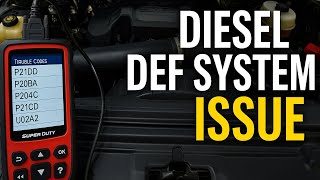
🎬 Watch: A mechanic explains these DEF codes and the TSB fix.Can I Drive With C3610?
Yes, But With Caution. Yes, but you must get it repaired immediately. The truck displays a mileage countdown (e.g., 'Speed limited to 50 MPH in 50 miles') before severely limiting speed. Once the countdown expires, the vehicle enters limp mode and refuses to restart after shutoff, requiring an expensive tow. While this specific fault does not cause mechanical engine damage, the operational risk of being stranded is absolute.
Common Causes
- Water Intrusion and Corrosion in Connector C3610/C4851 (Very Common) — The connector is located under the truck on the frame rail, making it highly exposed to road spray, salt, and pressure washing. Moisture penetrates the connector seals and causes green or white powdery corrosion on the electrical pins, disrupting communication. This is the number one cause, documented in Ford TSB 23-2161.
- Wiring Harness Chafing and Terminal Fretting (Common) — Improper routing causes the harness to rub against the frame or hang in the path of water runoff. Vibrations cause the metal terminals inside the connector to wear down or break over time ('terminal fretting'). The wires themselves break internally from stress or chafe against the frame, leading to an open circuit.
- Failed Reductant (DEF) Tank Assembly Module (Less Common) — If the pins on the DEF tank side of the connector are severely corroded, the internal module they connect to is damaged beyond repair. In this scenario, the entire DEF tank assembly, which contains the integrated sensors, must be replaced.
- Damaged or Recessed Connector Pins (Less Common) — The pins inside the connector on either the harness side or the DEF tank side become bent, pushed back ('recessed') into the connector housing, or broken. This happens during previous repairs, from excessive vibration, or from repeated connection/disconnection cycles.
- Contamination from Petroleum-Based Products (Less Common) — If petroleum-based products (like fuel, oil, or certain additives) accidentally contaminate the DEF fluid, it damages the entire system, including sensors. Ford specifies that such contamination requires the replacement of the tank, pump, heater, injector, and all lines, as cleaning is ineffective.
- Low Vehicle Battery Voltage (Rare) — Ford diesel trucks use two batteries. If one or both batteries are weak or have poor connections, the resulting low system voltage causes random communication errors across various modules, including the DEF system, triggering codes like U02A2.
Symptoms
- 'DEF System Fault' or 'Service Exhaust Fluid System' Message — The information screen on the dashboard displays a warning about the Diesel Exhaust Fluid system, accompanied by an audible chime.
- Check Engine Light On — The Malfunction Indicator Lamp (MIL) illuminates. A scanner finds communication codes like U02A2 or sensor circuit codes like P203B or P205B.
- Mileage Countdown to Speed Limitation — The dash shows a warning like "Speed Limited to 50 mph in 50 miles," which counts down as you drive, creating a sense of urgency.
- Vehicle Enters 'Limp Mode' — Once the countdown timer reaches zero, the truck's computer severely limits engine power and restricts the vehicle's speed to 50 MPH or less.
- Vehicle Will Not Restart — After a certain number of miles or key cycles while in limp mode, the vehicle's programming prevents it from starting again until the fault is repaired.
Diagnostic Flowchart
Tap your situation to follow the diagnostic path that matches what you're seeing on this code.
Common Fixes & Costs
- Replace Reductant Tank Wiring Harness
— Parts: $60-$100, Labor: $150-$300, ~1.5 hr book time
(Intermediate)
: OEM
: OEM
: OEM - Clean Connector Pins — Parts: $10-$20, Labor: $75-$150, ~0.5 hr book time (DIY)
- Replace DEF Tank Assembly
— Parts: $800-$1500, Labor: $225-$400, ~2.0 hr book time
(Professional)
: OEM
: OEM - Repair Damaged Wires — Parts: $10-$30, Labor: $150-$300, ~2.0 hr book time (Professional)
- DEF Injector Cleaning or Replacement
— Parts: $50-$250, Labor: $75-$150, ~1.0 hr book time
(DIY)
: OEM
: OEM
Used vs. New Parts: Buying Guide
When a used part is worth it: For the primary fix (reductant tank harness), buying used is strongly discouraged. The failure is caused by corrosion and wear, so a used harness from a salvage yard is highly likely to have the same vulnerability or existing damage. The cost savings are minimal compared to the high risk of repeat failure.
Donor-vehicle mileage cap: roughly under 10000 miles for the part to have meaningful remaining life.
Donor quality checklist:
- Verify the part number is the latest superseded version (e.g., HC3Z-14A411-A for Ford Super Duty), as older versions have the design flaw.
- Avoid parts from vehicles in the 'Salt Belt' or high-humidity regions due to the high risk of corrosion.
- Inspect connector seals and pins for any signs of moisture, degradation, or previous repair attempts.
Decision logic:
- If The required part is the reductant wiring harness (pigtail). → Always buy a new OEM or high-quality aftermarket part. The risk of a used part failing is too high.
- If The required part is the entire DEF tank assembly and budget is extremely tight. → A used assembly from a very low-mileage, accident-damaged vehicle is considered, but inspect the connector pins for perfect condition before purchase.
Warranty tradeoff: Used parts typically offer a 30-90 day warranty at best, which is not long enough for this type of corrosion failure to re-emerge. New OEM and reputable aftermarket parts offer warranties of 1 year or longer.
Worst-case if a used part fails: $300-$500, representing the cost of repeat labor to install another harness after a used one inevitably fails, plus the cost of the replacement part itself.
What Happens If You Wait — Timeline
- 0 miles from fault detection: The 'DEF System Fault' or 'Service Exhaust Fluid System' message appears on the dash, often with a check engine light. A mileage countdown begins (e.g., 'Speed limited in 500 miles'). (MPG impact: 0%% · Added cost: $0)
- 450-499 miles (example): The countdown timer becomes more urgent (e.g., 'Speed limited to 50 MPH in 50 miles'). The vehicle's computer prepares to force a repair by limiting operation. There is still no impact on performance. (MPG impact: 0%% · Added cost: $0)
- 500+ miles (example): The countdown timer expires. The truck enters 'limp mode,' and vehicle speed is strictly limited to 50 MPH (or less). Towing becomes difficult and unsafe. (MPG impact: N/A (Performance is limited)% · Added cost: $150-$500 if you are forced to get a tow because you cannot safely maintain highway speed.)
- After countdown expires + a few key cycles: After being shut off, the vehicle's programming prevents the engine from restarting until the fault is repaired. This is the final step to enforce emissions compliance, leaving the vehicle completely disabled. (MPG impact: N/A (Vehicle will not start)% · Added cost: $200-$400 for a mandatory dealer visit for diagnostics and a forced system reset, in addition to the cost of the tow and the actual repair.)
Cost of Not Fixing It
- Immediate (0-50 miles): Vehicle enters a speed-limited 'limp mode' (e.g., 50 mph) and refuses to restart once shut off. This results in being stranded and requiring a tow. (Added cost: $150-$500 for a tow, plus significant operational downtime.)
- Short Term (Weeks): Continued attempts to operate the vehicle with an active DEF fault leads to the system being locked in a no-start condition, requiring a dealer visit for a forced reset. (Added cost: $200-$400 for dealer diagnostic and reset procedures.)
- Long Term (Months): While this specific connector fault does not cause direct mechanical engine damage, ignoring emissions system warnings leads to a clogged Diesel Particulate Filter (DPF) or a contaminated SCR catalyst. (Added cost: $2000-$6000+ for DPF or SCR catalyst replacement.)
Diagnosis Steps
- Scan for Actual Trouble Codes
Use a quality OBD-II scanner to read the real trouble codes from the Powertrain Control Module (PCM). Look for codes like U02A2, P203B, P205B, or others mentioned in Ford TSB 23-2161. The presence of these codes together strongly points to the C3610 connector issue.
Tools: OBD-II Scanner (Beginner) - Locate, Disconnect, and Inspect Connector C3610
Safely raise and support the vehicle. Disconnect the negative battery terminals. Locate the 4-pin C3610 connector on the passenger-side frame rail near the DEF tank. Disconnect it and inspect both sides for green/white powdery corrosion, moisture, or bent pins. Gently pull the wires to check for internal breaks or chafing against the frame.
Tools: Jack, Jack Stands, Wrench Set, Flashlight (Intermediate) - Perform Pin-to-Pin Continuity Check
Disconnect the harness at both ends (at C3610 and its upstream connector). Set a multimeter to the continuity (beep) setting. Test each wire from its pin at one end of the harness to the corresponding pin at the other end. A lack of a beep indicates a broken wire inside the harness.
Tools: Multimeter, Wiring Diagram (Advanced) - Check CAN Bus Network Voltages
With the key on and engine off, carefully back-probe the CAN High and CAN Low terminals on the vehicle harness side of connector C3610. Using a multimeter set to DC volts, you should see approximately 2.6V on CAN High and 2.4V on CAN Low. If these voltages are missing or incorrect (e.g., 0V or 5V), the fault is upstream in the vehicle harness.
Tools: Multimeter, Back-probe Kit, Wiring Diagram (Advanced) - Test Reductant Temperature Sensor Resistance
With C3610 disconnected, use a multimeter to measure the resistance between the temperature sensor pins on the DEF tank side. An open circuit (infinite resistance) or short circuit (near zero resistance) indicates a failed sensor. Compare your reading to a temperature/resistance chart in the service manual.
Tools: Multimeter, Vehicle Service Manual (Advanced) - Verify DEF Pump Pressure (Live Data)
Using a scan tool that reads live data, monitor the DEF pressure PID. With the key on, engine off, the system must build and hold pressure. On a Ford 6.7L Power Stroke, the target pressure is approximately 73 PSI (5 bar). If the pump cannot reach or maintain this pressure, it indicates a leak, clogged filter, or failing pump.
Tools: Advanced OBD-II Scanner with Live Data (Advanced) - Check CAN Bus Signal with an Oscilloscope
If U-codes (communication faults) are present, the issue lies in the CAN bus wires. With the key on, engine off, back-probe the CAN High and CAN Low terminals. An oscilloscope provides the definitive test. You should see a clean, mirrored square wave pattern. The absence of this signal, or a noisy/distorted signal, confirms a network wiring fault. Stop DIY and tow to a shop if you lack this equipment.
Tools: Oscilloscope, Wiring Diagram, Back-probe Kit (Professional)
When This Code Triggers (Freeze-Frame Conditions)
- Engine State: Running (The fault is detected when the engine is running and the Powertrain Control Module (PCM) actively tries to communicate with the DEF system modules.)
- Vehicle Speed: Any (A communication fault like U02A2 is logged at any speed, including idle, as the PCM continuously polls the network.)
- Ambient Temperature: Any, but more common after wet conditions (The fault is caused by physical corrosion, so it is most likely triggered after driving in rain, through car washes, or in high-humidity environments.)
- Time After Start: Seconds to minutes (The code sets as soon as the PCM attempts its initial handshake with the reductant quality module and fails to receive a response.)
Related Codes
- U02A2 — This is a communication code meaning 'Lost Communication With Reductant Quality Module.' It is the first and most direct code set when connector C3610 fails. If U02A2 is the only communication code, the fault is isolated to the C3610 connector or the sensor module itself.
- P203B — 'Reductant Level Sensor Circuit Range/Performance.' This code triggers because the level sensor signal, which runs through C3610, is lost or incorrect due to the bad connection. This code specifically points to a problem with the sensor's electrical circuit.
- P205B — 'Reductant Tank Temperature Sensor Circuit Range/Performance.' The temperature sensor communicates through the C3610 connector, so it fails at the same time for the same reason. The combination of P205B and P203B makes a connector failure much more likely than two separate sensor failures.
- P21CD — 'Reductant Pump Control Circuit Open.' This code appears if water intrusion affects the nearby C3613 connector, which is part of the same faulty harness and controls the DEF pump. If you have P21CD along with sensor codes, the TSB-recommended harness replacement is the correct fix.
Climate & Environmental Factors
- Cold Climates: DEF freezes at 12°F (-11°C). While vehicle DEF systems have heaters, repeated freeze/thaw cycles promote crystallization of urea on sensors and in lines, leading to blockages and sensor reading errors.
- Road Salt & Humidity: In regions that use road salt for de-icing or have high humidity, electrical corrosion is accelerated. Salt spray and moisture act as an electrolyte, attacking the metal pins and seals of exposed connectors like C3610.
- High Temperatures: Prolonged exposure to temperatures above 86°F (30°C) causes the water in DEF to evaporate, increasing the urea concentration. This leads to crystallization and degrades the quality of the DEF, triggering quality sensor faults.
How to Talk to a Mechanic About This Code
Say this: "I have a Ford Super Duty with a 'DEF System Fault' and codes U02A2, P203B, and P205B. I'd like to schedule a diagnostic. Based on Ford's TSB 23-2161, please start by inspecting the C3610/C4851 connector on the frame rail for corrosion before diagnosing other components."
This signals you have done your research and know the most common cause. It directs the technician to the most likely, and least expensive, failure point first, preventing them from immediately quoting a full DEF tank replacement.
Avoid saying:
- 'My check engine light is on, can you look at it?' (This is too vague and invites a broad, expensive diagnostic process).
- 'Just fix whatever is wrong.'
- 'The internet said it's a sensor, can you replace it?' (This leads them to replace a good sensor without checking the wiring first).
Questions to ask before authorizing the repair:
- Did you find visible corrosion inside the C3610 connector? Can you send me a picture?
- Is the corrosion on the harness side or the tank side of the connector?
- If you are recommending replacing the entire DEF tank, can you explain why the harness replacement specified in TSB 23-2161 is not the correct repair?
- What is the warranty on the proposed repair and the new parts?
Where to Take It: Dealer vs Independent vs Chain
- Dealer:
Best for: Vehicles still under powertrain, emissions, or an extended warranty., Repairs covered by a Customer Satisfaction Program or TSB where the dealer offers assistance., Complex diagnostics requiring Ford-specific tools like IDS or FDRS.
Downsides: Highest labor rates and part markups., Defaults to replacing larger assemblies instead of smaller components. (Typical cost: +50% vs. baseline) - Independent Shop:
Excellent fit for out-of-warranty trucks, provided you choose a reputable shop specializing in diesels. They perform the harness replacement effectively at a lower cost than the dealer.
Best for: Out-of-warranty vehicles where cost is a primary concern., Shops that specialize in domestic or diesel trucks and are familiar with this common issue.
Downsides: Quality and diagnostic capabilities vary widely; vet the shop's reputation and certifications., Lacks immediate access to the latest TSBs or Ford-specific diagnostic software for post-repair resets. (Typical cost: +0% vs. baseline) - Chain Shop:
AVOID. This repair requires specific knowledge of a known TSB and potential electrical diagnosis that is beyond the scope of most chain repair shops.
Best for: Simple, routine maintenance like oil changes, tires, and batteries.
Downsides: Technicians lack the specialized training for complex electrical or emissions system diagnostics., High risk of misdiagnosis, leading to unnecessary and expensive part replacements (e.g., quoting a full DEF tank when only the harness is needed). (Typical cost: -10% vs. baseline)
When to Walk Away From the Repair
If the estimated repair cost exceeds 40-50% of the truck's current private-party market value, pause and evaluate your options. However, for high-value trucks like the ones affected, this threshold is rarely met for this specific repair.
- Car worth $45000, fix is $2500: Fix it. The repair cost is only ~5% of the vehicle's value and is critical for its operation.
- Car worth $18000, fix is $2500: Fix it. The repair cost is ~14% of the vehicle's value. Selling 'as-is' with a known emissions fault decreases the value by much more than the cost of the repair.
- Car worth $10000, fix is $2500: Borderline. If the truck has other major issues (engine, transmission), this is the tipping point. If it's otherwise solid, the repair is still worth it, but get a second opinion on the cost.
What Scan Tool You Need for This Code
Minimum: A code reader that accesses Ford-specific codes (not just generic OBD-II) to read the U-codes and P-codes from the PCM and other modules.
A cheap, generic $20 scanner only shows a generic communication error or no codes at all. You need a tool that specifically queries the Ford modules to see the combination of codes (U02A2, P203B, etc.) that points directly to the C3610 issue. After the repair, a basic scanner cannot perform the required 'Reductant System Reset'.
Rent vs buy: For this specific issue, buying is recommended. While you rent a basic code reader from an auto parts store to confirm the codes, you need a mid-range scanner with reset capabilities to complete the job and clear the dash warnings after the physical repair.
How to Clear the Code After You Fix It
- Reconnect the vehicle battery if it was disconnected for the repair.
- Use a quality OBD-II scan tool to clear all active and stored Diagnostic Trouble Codes (DTCs) from the Powertrain Control Module (PCM).
- Perform several key cycles (turning the ignition on and off, waiting 1-2 minutes between cycles).
- Perform the specific Ford DEF System drive cycle to allow the system to re-initialize and run its self-tests.
Drive cycle (~20 minutes): After clearing codes, start the engine and let it idle until the exhaust gas temperature exceeds 266°F (130°C) for at least 2 minutes. Then, accelerate steadily to 50 mph and perform a 6-second deceleration without using the brakes. Repeat this acceleration and deceleration cycle several times. Some systems require a 20-minute idle at operating temperature to self-reset.
Readiness monitors affected: Catalyst Monitor, Selective Catalytic Reduction (SCR) Monitor
Before emissions retest: drive at least 50 miles to fully set monitors.
Watch out for:
- Simply clearing the code with a scanner without performing the physical repair causes the fault to return almost immediately.
- Failure to perform the specific drive cycle prevents the 'DEF System Fault' message from clearing, even if the underlying hardware issue is fixed.
- If the readiness monitors are not set to 'Ready', the vehicle fails an emissions test. It takes multiple drive cycles over several days for all monitors to complete.
Will This Fail Emissions / State Inspection?
Yes — this code typically fails an OBD-II emissions inspection.
- California: An active check engine light and associated codes like U02A2 cause an automatic failure of the SMOG check. Additionally, all required readiness monitors must be set to 'Ready', which does not happen until the fault is repaired and a full drive cycle is completed.
- New York: The NYS DMV inspection includes an OBD-II scan. An illuminated check engine light for a DEF system fault results in an inspection failure. The repair must be completed and codes cleared before the vehicle passes.
- Texas: In the 17 counties requiring emissions testing, an illuminated check engine light is an automatic failure. The vehicle cannot be registered until the emissions system is repaired and the light is off.
Most Commonly Affected Vehicles
- Ford F-250/F-350/F-450 Super Duty (2017-2022) — These models with the 6.7L Power Stroke diesel are the primary vehicles affected. The wiring harness routing makes connector C3610 highly vulnerable, a known issue addressed by Ford TSB 23-2161.
- Ford F-150 (2018-2021) — F-150 models equipped with the 3.0L Power Stroke diesel share the same DEF system design flaw, making them equally susceptible to corrosion at connector C3610. The replacement harness part number is JL3Z-14407-A.
- Ford F-650/F-750 (2016-2022) — Medium-duty trucks with the 6.7L Power Stroke engine are included in TSB 23-2161 for the same DEF harness corrosion issue.
- Chevrolet/GMC Silverado/Sierra 2500HD/3500HD (2020-2024) — These trucks with the L5P Duramax engine suffer from a similar issue where the main connector to the DEF tank heater overheats and melts, causing heater circuit codes. GM issued Service Update N212342980 for this.
- Ram 2500/3500 (2014-2022) — Ram trucks with the 6.7L Cummins engine have issues with DEF system wiring. Owners report 'Lost Communication' codes (like U02A2) due to harnesses chafing on the frame and corroding.
- Volkswagen/Audi Passat/Touareg/Jetta/Golf TDI (2013-2016) — VW/Audi TDI models experience 'AdBlue' system faults due to corroded wiring or leaking DEF supply lines at the injector, causing pressure codes like P20E8.
- Mercedes-Benz Sprinter (2014-2022) — Sprinter vans with OM642 and OM651 diesel engines are notorious for DEF system failures, including faulty level sensors, heater elements, and NOx sensors. Wiring harness issues under the vehicle are a common source.
- Jaguar/Land Rover Various Diesel Models (2016-2021) — Vehicles using the JLR AJD-V6 and Ingenium diesel engines experience a range of DEF system faults, including sensor failures and pump issues, often exacerbated by short-trip driving habits.
Manufacturer-Specific Notes
- Ford: Ford's TSB 23-2161 explicitly warns technicians NOT to add dielectric grease to the new electrical connectors upon installation. Improper application traps moisture and debris, worsening the problem. The fix relies entirely on the improved seals of the new harness design.
- GM/Chevrolet: On L5P Duramax engines (2020-2021), the DEF tank harness connector overheats and arcs, causing multiple codes and reduced power. GM issued Service Update N212342980, which involves reprogramming the reductant control module as the fix, not replacing parts.
- Ram/Cummins: Ram issued TSB 14-003-23 for 2019-2022 trucks that set intermittent level sensor codes (P203E) in cold climates. The cause is DEF crystallization on the sensor during freeze/thaw cycles, not a bad sensor. The fix is to replace the urea delivery module and update the software.
- Volkswagen/Audi: On many 2.0L TDI models, a leaking DEF supply line causes a P20E8 'Reductant Pressure Too Low' code. TSB 26-16-02 instructs technicians to inspect for white DEF crystals at the injector connection. The fix is to replace the inexpensive supply line, not the expensive reductant injector itself.
Real Owner Stories
2015 F-250 Super Duty gets stranded in Montana
While towing a 5th wheel in a remote area, the owner received a DEF system fault, followed by a countdown that ended in the truck going into idle-only mode. The DEF tank was full.
What they tried:
- Refilling the already-full DEF tank had no effect.
- The truck had to be towed over 40 miles to a Ford dealership, requiring them to abandon their trailer on the roadside.
Outcome: A Ford technician ran the computer system through a specific reset procedure twice, which cleared the fault and restored function. However, the same issue reoccurred 3,000 km later, proving the underlying hardware problem was not fixed.
Lesson: Simply clearing the codes or performing a software reset is never enough. If the root cause, like a corroded C3610 connector, isn't physically repaired, the fault returns and leaves you stranded again.
2020 F-250 with 6.7L Diesel gets misdiagnosed with fuel contamination
A check engine light appeared, and the owner took the truck to the dealer. The dealer claimed to have found diesel fuel in the DEF tank and said it was operator error, not covered by warranty.
What they tried:
- The owner was certain they had not put fuel in the DEF tank and was the only driver. The issue occurred just one week after the dealer had replaced the fuel system and added DEF fluid themselves.
Outcome: The cause was a faulty sensor giving a false reading due to the C3610 connector issue, which triggers a cascade of confusing and misleading codes.
Lesson: If a shop claims DEF contamination, be skeptical, especially if you are the only person who fills the tank. Inspect the C3610 connector before authorizing a $2,000+ DEF system replacement.
DIYer with a 2013 F-250 chases multiple codes
A company truck with 85k miles first threw a code for the DEF heater. After replacing the heater, a new code, P20E8 'Reductant Pressure Too Low,' appeared a few days later.
What they tried:
- The owner first replaced the DEF heater, which solved the initial code.
- When the P20E8 code appeared, they suspected the DEF pump.
- The final fix was dropping the tank again to replace the pump.
Outcome: Replacing the pump cleared the P20E8 code. This case shows how multiple components in the DEF system fail in succession, often starting with the heater and leading to pump or sensor issues.
Lesson: When multiple seemingly separate DEF system codes appear over a short period, it strongly indicates a systemic problem like a failing wiring harness (the C3610 issue) causing cascading electrical failures.
Owner of a 2015 F-250 fixes the issue by driving
After receiving a 'DEF System Fault' and being speed-limited to 50 MPH, the owner tried several fixes.
What they tried:
- Checked all DEF-related connections under the truck.
- Disconnected both batteries for 15-20 minutes to reset the system.
- Filled the DEF tank completely.
Outcome: After being speed-limited, the owner hooked up their trailer and started driving to the next campsite. After about 20 miles of driving, the error fixed itself and full power was restored. The issue did not return for several weeks.
Lesson: A combination of a full DEF tank and a sustained drive cycle allows the system's self-diagnostics to reset, clearing the fault message. However, the problem returns if the underlying hardware issue remains.
How to Prevent This Code From Triggering
- Periodically Inspect Connector C3610 (Every oil change, or annually) — Visually inspecting the connector on the frame rail for early signs of corrosion or a loose connection allows you to catch the problem before it triggers a fault and leaves you stranded.
- Apply a Professional Undercarriage Protectant (Annually, especially before winter) — An oil or wax-based undercoating provides a barrier that repels water and road salt, protecting exposed connectors like C3610 and the surrounding frame from the elements that cause corrosion.
- Thoroughly Wash the Undercarriage (Regularly during winter months) — Using a pressure washer to clean the undercarriage removes accumulated road salt that accelerates corrosion of electrical components. Avoid using recycled water at car washes, as it is often salty.
- Ensure Proper Harness Securing (During inspection or repair) — Verify the harness is secured with clips and zip ties, preventing it from rubbing against the frame or hanging in the direct path of road spray. TSB 23-2161 specifically calls for adding a zip tie to the new harness to prevent stress.
- Use High-Quality, Fresh DEF (Every fill-up) — Using clean, fresh DEF from sealed containers prevents contamination and crystallization, which clogs filters, damages sensors, and causes the system to work harder, leading to premature failure.
Frequently Asked Questions
Is C3610 a real trouble code?
No, C3610 is the Ford part or circuit number for an electrical connector in the DEF system. It is often mistaken for a code because its failure directly causes other diagnostic trouble codes to appear.
What is the difference between C3610 and C4851?
They are two different names for the exact same 4-pin connector linking the main harness to the DEF tank sensors. Ford uses C3610 in some wiring diagrams and C4851 in others, but they refer to the same physical part.
What is the most common misdiagnosis for this problem?
The most common misdiagnosis is replacing the expensive DEF tank assembly or DEF pump when only the inexpensive wiring harness failed. Technicians unaware of Ford's TSB assume the sensors are bad rather than the corroded connector linking them. Always inspect connector C3610 first.
Why does my truck say 'DEF System Fault' and count down to a 50 MPH speed limit?
This is an emissions compliance feature mandated by the EPA. When the computer loses the signal from the DEF tank sensors, it assumes the emissions system is offline. It forces a repair by limiting vehicle speed and eventually preventing engine restarts.
Can I just clear the codes and keep driving?
No. Clearing the codes only removes the warnings temporarily. Because the underlying problem is a physical hardware failure, the fault returns within a single key cycle and restarts the countdown.
Why does Ford's TSB say not to use dielectric grease on the new connector?
Ford's official procedure strictly warns against using dielectric grease. Improper application traps moisture and debris inside the connector, guaranteeing a repeat failure. The official fix relies entirely on the new harness's improved rubber seals to keep water out.
Can I bypass or delete the DEF system because of this issue?
While aftermarket 'delete' kits exist, federal law prohibits tampering with or disabling a vehicle's emissions control system for road use. Deleting the system results in significant fines and prevents the vehicle from passing state emissions inspections.
What is Ford TSB 23-2161?
It is an official Ford document detailing the exact problem of water entering the DEF harness connectors. It identifies the cause, the real DTCs to look for (like U02A2, P203B, P205B), and the correct procedure for replacing the faulty harness.
Key Takeaways
- C3610 is a Ford part number for a 4-pin DEF system connector, not a standard OBD-II diagnostic trouble code.
- Water intrusion in the C3610 connector severs communication with the DEF tank, triggering a 50 MPH speed-limiting countdown.
- Inspect the C3610 connector on the passenger-side frame rail before replacing the $1,500 DEF tank assembly or pump.
- Replace the corroded reductant wiring harness (Ford P/N HC3Z-14A411-A) per TSB 23-2161, and strictly avoid using dielectric grease on the new seals.
Helpful Videos
Shop the Parts Behind C3610
Below are the parts most often responsible for code C3610, ranked by how frequently each one is the actual culprit (per the diagnosis above). Tap any to see what we have for your vehicle.



The information in this article is provided for general reference and educational purposes only. Vehicle specifications, procedures, and part compatibility can vary by production date, trim level, and region. Always consult your vehicle's factory service manual and verify part numbers before purchasing or performing repairs. Safety-critical components such as airbags, seat belts, and braking systems should be installed by a qualified professional.
- 🧭 Diagnostic Flowchart
- 🎬 Helpful Videos
- 🛍️ Shop This Part
- What Does C3610 Mean?
- Can I Drive With C3610?
- Common Causes
- Symptoms
- Common Fixes & Costs
- Used vs. New Parts: Buying Guide
- What Happens If You Wait — Timeline
- Cost of Not Fixing It
- Diagnosis Steps
- When This Code Triggers (Freeze-Frame Conditions)
- Related Codes
- Climate & Environmental Factors
- How to Talk to a Mechanic About This Code
- Where to Take It: Dealer vs Independent vs Chain
- When to Walk Away From the Repair
- What Scan Tool You Need for This Code
- How to Clear the Code After You Fix It
- Will This Fail Emissions / State Inspection?
- Most Commonly Affected Vehicles
- Manufacturer-Specific Notes
- Real Owner Stories
- 2015 F-250 Super Duty gets stranded in Montana
- 2020 F-250 with 6.7L Diesel gets misdiagnosed with fuel contamination
- DIYer with a 2013 F-250 chases multiple codes
- Owner of a 2015 F-250 fixes the issue by driving
- How to Prevent This Code From Triggering
- Frequently Asked Questions
- Is C3610 a real trouble code?
- What is the difference between C3610 and C4851?
- What is the most common misdiagnosis for this problem?
- Why does my truck say 'DEF System Fault' and count down to a 50 MPH speed limit?
- Can I just clear the codes and keep driving?
- Why does Ford's TSB say not to use dielectric grease on the new connector?
- Can I bypass or delete the DEF system because of this issue?
- What is Ford TSB 23-2161?
- Key Takeaways
- 🎟️ Get 5% Off