

OBD-II Code C3613: The Ultimate Guide to Ford's DEF System Connector Failure
What C3613 Means, Why It Triggers Limp Mode, and How to Fix It Permanently
- C3613 is not a standard OBD-II code; it is Ford's engineering designation for a 16-pin DEF system connector that frequently fails due to water intrusion.
- Ignoring the resulting 'DEF System Fault' warning triggers a 50 mph limp mode countdown, eventually preventing the engine from restarting.
- The permanent fix mandated by Ford TSB 23-2161 is replacing the $120-$200 reductant wiring harness, not just cleaning the corroded pins.
- You must perform a mandatory 'SCR System Reset' using a bi-directional scan tool (like FORScan) after parts replacement to clear limp mode.
What Does C3613 Mean?
C3613 is not a standard trouble code a scanner reads; it is the engineering name for a 16-pin electrical connector for the Diesel Exhaust Fluid (DEF) pump on Ford diesel trucks. Technicians and service bulletins use C3613 to refer to this specific part failing, which triggers actual trouble codes and warning messages. Water and road salt penetrate the connector, corroding the pins and disrupting power and communication to the DEF pump and heater assembly.
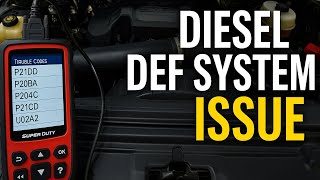
Technical definition: C3613 is a manufacturer-specific component designation (Ford) for the 16-pin electrical connector providing power and communication to the reductant (DEF) pump and heater assembly. Failure of this connector—or the nearby 4-pin C4851/C3610 connector—due to water intrusion, corrosion, or wiring damage triggers standard DTCs like P20BA, P21CD, or U02A2 in the Powertrain Control Module (PCM).
Can I Drive With C3613?
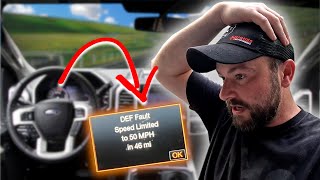
Yes, But With Caution. Yes, but only for a limited time. Your vehicle displays a 'DEF System Fault' warning, starting a countdown (e.g., 'Speed Limited to 50 mph in 50 miles'). If ignored, the speed limit drops to 5 mph, and the vehicle refuses to restart after being turned off. Continuing to drive with a malfunctioning DEF system accelerates soot buildup in the SCR catalyst and DPF, adding thousands of dollars in cleaning or replacement costs to the final repair bill.
Common Causes
- Water Intrusion in Connectors C3613 or C4851/C3610 (Very Common) — This is the primary cause documented in Ford TSB 23-2161. 🎬 Watch: A breakdown of TSB 23-2161 and these common codes. These connectors are exposed to road spray, rain, and pressure washers. Weather seals fail over time, allowing moisture and road salt to corrode the electrical pins, disrupting power and data signals to the DEF pump, heater, and level sensor.
- Damaged or Fretted Wiring (Common) — Constant vehicle vibrations cause the wires at the back of the connector to move and wear down. This microscopic wear, called 'fretting,' degrades the electrical connection even without obvious green or white corrosion. TSB 23-2161 advises securing the new harness with a zip tie to prevent recurrence.
- Failed DEF Pump/Heater Assembly (Less Common) — If water and corrosion are severe, the electrical pins on the DEF pump module itself are damaged beyond repair. In these cases, the entire DEF pump and heater assembly must be replaced alongside the wiring harness.
- DEF Fluid Crystallization (Less Common) — DEF fluid leaking from a line or the pump crystallizes on the outside of electrical connectors. These urea crystals attract moisture and accelerate corrosion, leading to the same electrical failures as direct water intrusion.
- Physical Harness Damage (Less Common) — The wiring harness leading to the DEF tank is located on the undercarriage and is easily damaged by road debris, off-roading, or improper routing after a previous repair, causing pinched or severed wires.
- Failed Reductant Quality Module (Rare) — The sensor measuring DEF concentration is integrated into the DEF tank assembly. While less common than wiring issues, this sensor fails internally, triggering communication codes like U02A2 and requiring replacement of the entire DEF tank assembly.
- Poor Ground Connection (Rare) — The DEF system relies on a solid ground connection to the vehicle's frame. A loose or corroded ground wire (such as G400 or G403) causes strange electrical issues and triggers DEF system fault codes.
Symptoms
- 'DEF System Fault' Message — A warning message appears on the dashboard information center, followed by a mileage countdown to speed limitation.
- Vehicle Enters Limp Mode — To comply with emissions regulations, the vehicle limits its top speed, often to 50 mph. 🎬 Watch: What the 50mph speed restriction looks like on your dash. A countdown appears, such as 'Speed Limited to 50 mph in 50 miles'.
- Vehicle Will Not Restart — Once the mileage countdown expires or after a certain number of key cycles, the vehicle refuses to restart after being shut off until the fault is repaired.
- Check Engine Light Is On — A fault in the DEF system triggers the Malfunction Indicator Lamp (MIL).
- Audible Chimes and Alerts — Persistent audible chimes accompany visual dashboard warnings to alert the driver to the urgent nature of the fault.
- 'Engine Idled See Manual' Message — When the system enters a severe state of restriction, this message appears on the instrument cluster.
Diagnostic Flowchart
Tap your situation to follow the diagnostic path that matches what you're seeing on this code.
Common Fixes & Costs
- Replace Reductant (DEF) Tank Harness
— Parts: $120-$200, Labor: $150-$300 (Typically 1-2 hours), ~1.5 hr book time
(Intermediate)
: OEM
: OEM
: OEM - Replace Reductant Harness and DEF Pump/Heater Assembly
— Parts: $600-$1000, Labor: $250-$500, ~2.0 hr book time
(Professional)
: OEM
: OEM - Replace Reductant Harness and DEF Tank Assembly
— Parts: $700-$1100, Labor: $300-$600, ~2.5 hr book time
(Professional)
: OEM - Repair Damaged Wires or Ground Connection — Parts: $10-$50, Labor: $150-$400, ~2.0 hr book time (Intermediate)
- Clean Connector and Apply Dielectric Grease (Emergency Only) — Parts: $5-$10, Labor: $0-$100, ~0.5 hr book time (DIY)
Used vs. New Parts: Buying Guide
When a used part is worth it: For the wiring harness, never. For expensive components like the DEF pump or tank assembly, a used part is a high-risk option that only makes sense on an older, high-mileage vehicle where the cost of new parts is prohibitive.
Donor-vehicle mileage cap: roughly under 50000 miles for the part to have meaningful remaining life.
Donor quality checklist:
- Verify donor vehicle was not scrapped for emissions or engine failure.
- Avoid parts from regions with heavy road salt use (Rust Belt).
- Visually inspect electrical pins on the used component for any signs of corrosion or moisture before purchase.
- Match part numbers exactly.
Decision logic:
- If The failed part is the wiring harness. → Always buy new; the part is inexpensive and a used one carries the same failure risk.
- If The failed part is the DEF pump/heater or tank assembly and the vehicle is under 150K miles. → Buy new (OEM or reputable aftermarket like Bosch) for reliability and warranty.
- If The vehicle is high-mileage and budget is the primary concern. → A used part from a low-mileage, non-rust-belt donor is a possibility, but expect a significantly shorter lifespan.
Warranty tradeoff: Used parts from a salvage yard typically offer a 30-90 day warranty. New aftermarket parts offer a 1-year or longer warranty. New OEM parts offer a 1-2 year warranty.
Worst-case if a used part fails: $500-$1500 if a used pump/tank fails after installation, which includes the cost of repeat labor plus another replacement part.
What Happens If You Wait — Timeline
- 0-50 miles: The 'DEF System Fault' warning appears, often with a mileage countdown (e.g., 'Speed limited to 50 mph in 50 miles'). The Check Engine Light turns on. (MPG impact: 0%% · Added cost: $0)
- After initial mileage countdown expires: Vehicle enters limp mode, limiting speed to 50 mph. After being shut off, the vehicle refuses to restart, requiring a tow. (MPG impact: 0-5% (due to limited speed)% · Added cost: $100-$300 (potential towing cost))
- Driving for several hundred miles with fault active: With DEF injection disabled, the DPF cannot properly regenerate. Soot builds up at an accelerated rate, increasing exhaust backpressure and reducing fuel economy. (MPG impact: 5-10%% · Added cost: $600-$1,000 (potential cost for professional off-vehicle DPF cleaning).)
- Extended driving with fault active: The DPF becomes irreversibly clogged with hardened soot and ash. Extreme backpressure and heat damage the DPF, SCR catalyst, and turbocharger. (MPG impact: 10-20%+% · Added cost: $2,500-$10,000 (cost for complete DPF and/or SCR catalyst replacement).)
Cost of Not Fixing It
- Immediate (0-50 miles): Vehicle enters speed-limited limp mode (e.g., 50 mph) and refuses to restart once shut down, requiring a tow. (Added cost: $100-$300 (for towing))
- 1-6 months: Continued operation without DEF injection leads to accelerated soot and ash buildup in the Diesel Particulate Filter (DPF), requiring professional off-vehicle cleaning. (Added cost: $600-$1600)
- 6+ months: Irreversible damage to the DPF and/or SCR catalyst from excessive soot and thermal stress, requiring complete replacement of the aftertreatment system assembly. (Added cost: $2500-$10000)
Diagnosis Steps
- Read the Actual Trouble Codes
Use an OBD-II scanner to read the actual codes stored in the Powertrain Control Module (PCM). Look for codes like P20BA, P20B9, or U02A2. The specific code pinpoints the exact circuit failing within the harness.
Tools: OBD-II Scanner (Beginner) - Locate Connectors C3613 and C4851/C3610
Find the DEF tank mounted on the frame rail. The C3613 connector is the larger, 16-pin plug attached to the DEF pump/heater assembly. Nearby is the smaller 4-pin C4851/C3610 connector for the level sensor.
Tools: Jack and Jack Stands, Safety Glasses (Beginner) - Disconnect and Inspect All Pins for Corrosion
Carefully disconnect both connectors. Look closely at both the harness side and the component side (pump and sensor). Green or white crusty corrosion on the metal pins is the definitive proof of failure. If pins on the pump or sensor are corroded, that entire component requires replacement.
Tools: Flashlight, Pick Tool (Intermediate) - Check for Voltage and Ground at the Connector
With the key on, use a multimeter to check for battery voltage (12V+) at the power supply pins on the harness side of the C3613 connector. Check for ground continuity between the ground pin and the chassis; resistance must be less than 1 ohm. Readings outside these specs indicate a wiring problem upstream.
Tools: Multimeter, Wiring Diagram (Professional) - Test DEF Heater Resistance (For P20BA/P20B9)
With the C3613 connector unplugged, use a multimeter to measure the resistance between the two heater circuit pins on the DEF pump assembly. A healthy heater reads between 2 and 10 ohms. A reading of 'OL' (Open Loop) indicates a broken heater element, requiring a new DEF pump/heater assembly.
Tools: Multimeter, Wiring Diagram (Advanced) - Test CAN Bus Signal Integrity (For U-codes)
If you have communication codes like U02A2, check the CAN bus circuit. With the battery disconnected, measure the resistance between the two CAN wires (CAN-H and CAN-L) at the C4851/C3610 connector. A reading of 60 ohms indicates the circuit is intact. A reading of 120 ohms suggests a broken wire.
Tools: Multimeter (Advanced) - Critical Final Step: Perform DEF System Reset
After replacing parts, you MUST perform a system reset to clear limp mode warnings. Using a bi-directional scan tool, initiate the 'Reductant System Test' or 'SCR System Reset' procedure. Failure to do this is the primary reason DIY repairs do not resolve dashboard warnings.
Tools: Bi-directional Scan Tool (e.g., FORScan, Ford IDS) (Advanced)
When This Code Triggers (Freeze-Frame Conditions)
- Engine Coolant Temp: 180-205°F (82-96°C) (Engine at full operating temperature.)
- Exhaust Gas Temperature (SCR Inlet): >392°F (>200°C) (Exhaust is hot enough for the SCR system to be active.)
- Vehicle Speed: 45-65 mph (Steady-state highway driving allows for stable system monitoring.)
- RPM: 1500-2500 (Typical engine speed during highway cruise.)
Related Codes
- U02A2 — Means 'Lost Communication With Reductant Quality Module'. TSB 23-2161 points towards a problem with the 4-pin C4851/C3610 connector due to corrosion disrupting the CAN bus data signal.
- P20BA — Means 'Reductant Heater 'A' Control Circuit Performance'. TSB 23-2161 indicates this points to a problem within the 16-pin C3613 connector, as corrosion adds resistance and interrupts the power supply to the DEF heater circuit.
- P20B9 — Means 'Reductant Heater 'A' Control Circuit Open'. Triggered when corroded pins completely break the electrical connection for the DEF heater. TSB 23-2161 directly associates this code with a failure in the C3613 connector.
- P21CD — Means 'Reductant Pump 'A' Control Circuit High'. Caused by a short circuit resulting from water and corrosion inside the C3613 connector or the C4851/C3610 connector.
- P208A — Means 'Reductant Pump 'A' Control Circuit Open'. Indicates a complete loss of connection to the DEF pump, often caused by a severely corroded pin in the C3613 connector.
Climate & Environmental Factors
- Road Salt and Winter Conditions: Salt-laden road spray is highly corrosive and dramatically accelerates the degradation of connector pins and seals once moisture gets inside. Failures are frequent in regions with harsh winters.
- Water Intrusion (Rain, Puddles, Washing): The connector's location on the chassis makes it highly vulnerable to direct water exposure from heavy rain, standing water, or pressure washers. This moisture is the root cause of corrosion.
- Cold Weather Operation: In temperatures below 12°F (-11°C), DEF fluid freezes, and the PCM commands the DEF heater to turn on. A corroded C3613 connector cannot handle the electrical load, causing a voltage drop that triggers performance codes like P20BA.
- High Humidity: In consistently humid climates, moisture remains in a compromised connector for longer periods, promoting slow but steady corrosion even without direct water spray.
How to Talk to a Mechanic About This Code
Say this: "I have a Ford diesel with a 'DEF System Fault' and it's in limp mode. I suspect it's the common wiring harness issue described in TSB 23-2161. I'd like to book a diagnostic to confirm if the C3613 or C4851 connector is corroded before replacing any major parts."
This signals you've done your research, references the specific TSB, and directs the technician to the known, inexpensive failure point (the harness) instead of starting with a costly, unnecessary diagnosis of the entire DEF pump or tank assembly.
Avoid saying:
- 'My check engine light is on, can you look at it?'
- 'My truck says 'DEF Fault,' just fix it.'
- 'I think I need a new DEF pump.'
Questions to ask before authorizing the repair:
- Did you inspect both the C3613 and C4851 connectors for corrosion as per the TSB?
- If the harness connector is corroded, are the pins on the pump module itself still clean and undamaged?
- Does your quote include replacing the harness (the TSB-recommended fix) or just cleaning the connector?
- Do you have the proper scan tool to perform the mandatory 'SCR System Reset' after the repair to clear the limp mode?
Where to Take It: Dealer vs Independent vs Chain
- Dealer:
Best for: Vehicles still under the 5-year/50,000-mile federal emissions warranty., Complex cases where a previous independent shop repair failed., Ensuring access to the latest TSBs and Ford's proprietary IDS scan tool.
Downsides: Highest labor rates, typically 25-50% more than independent shops., Defaults to replacing both the harness and pump assembly, increasing cost. (Typical cost: +40% vs. baseline) - Independent Shop:
Best fit for out-of-warranty repairs. A reputable independent diesel shop offers the best balance of expertise and value, provided you confirm they can perform the final SCR system reset.
Best for: Out-of-warranty vehicles where cost is a primary concern., Shops specializing in diesel or Ford trucks, as they are highly familiar with this common issue., Getting a targeted repair (e.g., harness only) if the diagnosis supports it.
Downsides: Quality varies; you must vet the shop's reputation and confirm they own a bi-directional scanner capable of the Ford SCR reset., May not be aware of the very latest TSB updates. (Typical cost: +0% vs. baseline) - Chain Shop:
AVOID. This repair requires specific knowledge and tools not typically available at general service chains. An incomplete repair leaves the vehicle in limp mode.
Best for: Simple services like oil changes or tire rotations.
Downsides: Technicians lack familiarity with this specific TSB and the required bi-directional scan tool for the SCR reset., High risk of misdiagnosis, leading to unnecessary replacement of expensive parts like the DEF pump. (Typical cost: -10% vs. baseline)
When to Walk Away From the Repair
If the estimated repair cost exceeds 50% of the vehicle's current private-party market value, pause and evaluate your options.
- Car worth $35000, fix is $2200: Fix it. The repair cost is only ~6% of the truck's value, making it a clear and easy decision.
- Car worth $25000, fix is $1800: Fix it. The repair cost is ~7% of the vehicle's value. This is a routine cost of owning a modern diesel.
- Car worth $15000, fix is $2500: Borderline, but likely fix it. The cost is ~17% of the value. Consider this if the truck is otherwise in excellent condition with no other major deferred maintenance.
What Scan Tool You Need for This Code
Minimum: A bi-directional scan tool capable of performing the Ford-specific 'SCR System Parameter Reset' or 'Reductant System Test'. A basic code reader that only clears DTCs is NOT sufficient.
A standard $50-$100 code reader cannot perform the mandatory system reset required to take the truck out of limp mode. After replacing the parts, the 'DEF System Fault' and speed limitation remain until the specific SCR reset is successfully completed with a bi-directional tool.
Budget: FORScan with OBDLink EX/MX+ Adapter (~$120) — This is the most affordable and powerful DIY option. The FORScan software (for Windows) combined with a quality adapter allows you to access all Ford modules and perform the necessary 'SCR System Parameter Reset' to complete the repair.
Mid-range: Foxwell NT710 / NT809BT (~$250-380) — These handheld tablet scanners offer full-system diagnostics and numerous service functions, including the bi-directional controls needed for the SCR system reset on Ford vehicles.
Professional: Autel MaxiCheck MX808S / XTOOL D7 (~$400-600) — These professional-grade tools provide comprehensive bi-directional control, active tests, and all OEM-level service functions, including the SCR reset, DEF pump tests, and injector quantity tests.
Rent vs buy: Rent is not a viable option. Rental tools from auto parts stores are basic code readers and lack the bi-directional capability to perform the SCR system reset. For this specific repair, you must either buy a capable scanner or pay a shop for the final reset procedure.
How to Clear the Code After You Fix It
- Reconnect battery if disconnected.
- Use a bi-directional scan tool to perform the specific 'SCR System Parameter Reset' or 'Reductant System Test' function.
- Follow the on-screen prompts which include key cycles or specific idle periods.
- Perform the required drive cycle to set readiness monitors.
Drive cycle (~30 minutes): A full drive cycle includes: a cold start, a short idle period, steady driving at highway speeds (e.g., 50 mph for several minutes), and multiple deceleration events without using the brake to allow monitors to run.
Readiness monitors affected: Catalyst Monitor (SCR), NOx/O2 Sensor Monitor
Before emissions retest: drive at least 100 miles to fully set monitors.
Watch out for:
- Using a basic code reader to 'Clear Codes' instead of using a bi-directional tool to perform the specific SCR system reset. This fails to take the vehicle out of limp mode.
- Not completing the full, specific drive cycle after the reset, which leaves readiness monitors 'Not Ready' and causes an emissions test failure.
- Simply disconnecting the battery, which rarely clears the inducement (limp mode) warnings.
Will This Fail Emissions / State Inspection?
Yes — this code typically fails an OBD-II emissions inspection.
- California: An active check engine light and any emissions-related DTC results in an automatic smog check failure. Readiness monitors must be set to 'Ready' to pass, requiring a significant drive cycle after repair.
- New York: An illuminated check engine light is an automatic failure for the OBD-II inspection on 1997 and newer diesel vehicles. For 2001+ model years, having more than one readiness monitor 'Not Ready' causes a failure.
- Texas: In the 17 counties requiring emissions testing, an illuminated check engine light is an automatic failure. The vehicle cannot pass until the fault is repaired and the light is off.
Most Commonly Affected Vehicles
- Ford F-250/F-350/F-450/F-550 Super Duty (2017-2022) — These models with the 6.7L Power Stroke are the most common vehicles to experience C3613 failure, as documented in TSB 23-2161. Pickup models and Chassis Cab models use different harness part numbers.
- Ford F-150 (2018-2021) — F-150s with the 3.0L Power Stroke diesel are prone to this issue. The connectors are located above the spare tire, making them highly susceptible to road spray.
- Ford F-650/F-750 (2016-2022) — These medium-duty trucks with the 6.7L engine are included in the official Ford service bulletin for this problem.
- Chevrolet/GMC Silverado/Sierra HD (2500/3500) (2017-2022) — Analogous Failure: These trucks experience similar DEF system issues related to DEF tank heater failures on the L5P Duramax engine, often addressed under GM Special Coverage Program N212353810.
- Ram 2500/3500 (2015-2022) — Analogous Failure: Ram trucks with the 6.7L Cummins engine experience a similar failure mode where the main electrical connector on the DEF pump gets wet, causing corrosion and electrical fault codes.
- Nissan Titan XD (2016-2019) — Analogous Failure: Titan XD trucks with the 5.0L Cummins engine are known for 'DEF System Error' warnings related to faulty sensors within the DEF tank assembly or software issues.
- Volkswagen/Audi/BMW/Mercedes-Benz Various Diesel Models (2010-Present) — Analogous Failure: Many European diesel vehicles are highly susceptible to DEF heater failures, triggering codes like P20BA and resulting in limp mode.
Manufacturer-Specific Notes
- Ford: Ford issued TSB 23-2161 acknowledging the water intrusion issue in connectors C3613 and C4851/C3610. Ford specifically warns against using dielectric grease as a fix, as it traps moisture if the seal is compromised. Repairs are covered under the federal emissions warranty.
- Ram (FCA/Stellantis): Ram trucks integrate the DEF heater, pump, and level sensor into a single unit called the 'DEF Header'. A failure of one component frequently requires replacing the entire assembly, leading to high repair costs.
- GM (Chevrolet/GMC): On L5P Duramax engines, DEF heater failures are extremely common and covered under GM Special Coverage Program N212353810. Wiring harness chafing on the frame rails is also a common cause of short circuits.
- Nissan: For the Titan XD with the 5.0L Cummins, many 'DEF System Error' issues were addressed by software updates in TSB NTB17-060b. Dealers perform a software reflash before replacing any hardware.
Real Owner Stories
2020 F-250 with P221C (Heater Circuit Low)
Check engine light came on. Owner inspected the C3613 connector and found no visible corrosion on the harness side, but the pins on the pump module itself were corroded.
What they tried:
- Initial diagnosis pointed to the common harness failure.
Outcome: Per TSB 23-2161 guidelines, since the component-side pins were damaged, both the DEF pump/heater assembly and the wiring harness had to be replaced for a permanent repair.
Lesson: Always inspect both sides of the connector. Corroded pins on the pump module require replacing the pump assembly, even if the harness looks okay.
2015 F-250 with P20EE & P207F (SCR Performance)
Received 'Exhaust system fluid fault, speed limited to 50mph' message on the highway. The warning message disappeared but the check engine light stayed on.
What they tried:
- The owner had previously replaced the DEF heater/pump assembly less than a year prior for a different DEF issue.
Outcome: The issue was related to a failing pump, plugged line, or a loose harness connection, not the heater itself. The truck required a proper diagnosis of the P207F code before replacing parts again.
Lesson: Don't assume the same part failed again. New codes point to different underlying issues. Misdiagnosis leads to replacing expensive parts unnecessarily.
2023 F-250 with U02A1 (Lost Communication with NOx Sensor)
Brand new truck with 146 miles displayed a 'DEF Fault Speed Limited to 50 MPH' message. The fault was intermittent, appearing after 5-10 minutes of driving.
What they tried:
- Technician checked connectors and wiring visually with no obvious faults. A voltmeter and oscilloscope were used to test the network.
Outcome: The oscilloscope revealed the powertrain network was shorting out. The problem was traced to a network wire shorting on the passenger side valve cover.
Lesson: Not all DEF faults are caused by C3613 connector corrosion. On newer vehicles or with communication-specific codes (U-codes), physical wiring damage like chafing is often the root cause.
DIY Repair Attempt on F-250 with DEF Fault
Got the 'DEF Fault' warning and 50 mph speed limit message. Owner was on a road trip and needed a quick fix.
What they tried:
- Filled the DEF tank completely.
- Cleaned the DEF pump connector (C3613).
- Disconnected the vehicle batteries for an extended period to reset the system.
Outcome: After cleaning the connector and performing a hard reset, the fault eventually cleared. The truck returned to normal operation temporarily.
Lesson: Cleaning the connector and performing a full battery reset clears the fault long enough to get out of limp mode in an emergency. However, this is not the permanent TSB-recommended repair and the fault returns.
How to Prevent This Code From Triggering
- Proactively apply dielectric grease around the *outside* of the connector seals. (Once, or during any under-vehicle service.) — Creates an additional barrier against moisture wicking into the connector's primary seal. Ford warns against putting grease *inside* a corroded connector, but it is safe preventatively on the outside of a clean connection.
- Create a 'drip loop' in the wiring harness. (Once, during harness installation or inspection.) — Arranging the wire to dip down before it rises into the connector encourages water to run off at the bottom of the loop instead of flowing directly into the connector's seam.
- Secure the harness with a zip tie to prevent movement. (Once, during harness installation.) — This is part of the official Ford TSB 23-2161 procedure. It prevents the harness from vibrating, which causes 'fretting corrosion'—microscopic wear on the electrical pins.
- Perform periodic visual inspections of under-vehicle connectors. (During every oil change, especially before winter.) — Catching early signs of compromised seals or harness damage allows for proactive cleaning and sealing before water intrusion causes a complete failure.
- Avoid using high-pressure washers directly on under-vehicle wiring. (Every time you wash the vehicle.) — High-pressure water forces its way past healthy connector seals, directly causing the water intrusion that leads to C3613 failure.
Frequently Asked Questions
Can I just clean the green corrosion out of the C3613 connector?
While cleaning the connector provides a temporary fix, the problem almost always returns. Corrosion damages the metal pins and compromises the weather seals, allowing moisture back in. The official Ford repair is replacing the entire wiring harness to ensure a permanent seal.
A mechanic replaced my DEF pump, but the codes came back. What happened?
This is a common misdiagnosis where the root cause is the wiring harness connector (C3613), not the pump itself. If the pins on the pump module are not severely corroded, replacing the expensive pump without replacing the faulty harness fails to solve the problem. The second most common reason is failing to perform the mandatory 'SCR System Reset' with a scan tool after the repair.
Is there a way to prevent this from happening again?
The official fix per TSB 23-2161 includes securing the new harness with a zip tie to prevent movement and wire fretting. Owners also report adding extra protective wire loom or creating a 'drip loop' in the harness to help water run off before it reaches the connector.
Why did this happen to my truck?
The primary cause is the location of the connector, which exposes it to direct road spray. The problem typically starts after driving in heavy rain, in winter conditions with road salt, or using a pressure washer on the undercarriage.
Is this covered under warranty or a recall?
This issue is not a recall, but it is covered by Ford's Federal Emissions Defect Warranty, typically 5 years or 50,000 miles for trucks over 8,500 lbs GVWR. Owners often get the repair covered out-of-warranty by referencing TSB 23-2161 directly with their dealer.
My truck is in limp mode. Will fixing the connector make it drive normally again?
Not immediately. After the physical repair, the DEF system's fault memory must be reset using a capable diagnostic scan tool. A specific 'SCR System Reset' procedure is required to take the vehicle out of limp mode and restore full operation.
What parts do I need to buy?
At a minimum, you need the reductant tank harness (e.g., Part No. HC3Z-14407-A for Super Duty Pickups). If the pins on the pump are also corroded, you need the DEF pump/heater assembly as well. Always verify part numbers with your vehicle's VIN before purchasing.
How do I know if my DEF fluid is bad or contaminated?
You cannot tell if DEF is contaminated just by looking at it. A technician uses a refractometer to test the urea concentration, which must be exactly 32.5%. Using DEF from a sealed, reputable source and avoiding contamination with diesel or coolant is the best prevention.
Key Takeaways
- C3613 is not a standard OBD-II code; it is Ford's engineering designation for a 16-pin DEF system connector that frequently fails due to water intrusion.
- Ignoring the resulting 'DEF System Fault' warning triggers a 50 mph limp mode countdown, eventually preventing the engine from restarting.
- The permanent fix mandated by Ford TSB 23-2161 is replacing the $120-$200 reductant wiring harness, not just cleaning the corroded pins.
- You must perform a mandatory 'SCR System Reset' using a bi-directional scan tool (like FORScan) after parts replacement to clear limp mode.
Helpful Videos
Shop the Parts Behind C3613
Below are the parts most often responsible for code C3613, ranked by how frequently each one is the actual culprit (per the diagnosis above). Tap any to see what we have for your vehicle.



The information in this article is provided for general reference and educational purposes only. Vehicle specifications, procedures, and part compatibility can vary by production date, trim level, and region. Always consult your vehicle's factory service manual and verify part numbers before purchasing or performing repairs. Safety-critical components such as airbags, seat belts, and braking systems should be installed by a qualified professional.
- 🧭 Diagnostic Flowchart
- 🎬 Helpful Videos
- 🛍️ Shop This Part
- What Does C3613 Mean?
- Can I Drive With C3613?
- Common Causes
- Symptoms
- Common Fixes & Costs
- Used vs. New Parts: Buying Guide
- What Happens If You Wait — Timeline
- Cost of Not Fixing It
- Diagnosis Steps
- When This Code Triggers (Freeze-Frame Conditions)
- Related Codes
- Climate & Environmental Factors
- How to Talk to a Mechanic About This Code
- Where to Take It: Dealer vs Independent vs Chain
- When to Walk Away From the Repair
- What Scan Tool You Need for This Code
- How to Clear the Code After You Fix It
- Will This Fail Emissions / State Inspection?
- Most Commonly Affected Vehicles
- Manufacturer-Specific Notes
- Real Owner Stories
- 2020 F-250 with P221C (Heater Circuit Low)
- 2015 F-250 with P20EE & P207F (SCR Performance)
- 2023 F-250 with U02A1 (Lost Communication with NOx Sensor)
- DIY Repair Attempt on F-250 with DEF Fault
- How to Prevent This Code From Triggering
- Frequently Asked Questions
- Can I just clean the green corrosion out of the C3613 connector?
- A mechanic replaced my DEF pump, but the codes came back. What happened?
- Is there a way to prevent this from happening again?
- Why did this happen to my truck?
- Is this covered under warranty or a recall?
- My truck is in limp mode. Will fixing the connector make it drive normally again?
- What parts do I need to buy?
- How do I know if my DEF fluid is bad or contaminated?
- Key Takeaways
- 🎟️ Get 5% Off