

C3613 Connector Fault on 2018-2021 Ford F-150 3.0L Diesel & Super Duty: DEF System Causes & Fixes
C3613 is not a trouble code but a critical electrical connector for the Diesel Exhaust Fluid (DEF) system. On 2018-2021 F-150s with the 3.0L diesel and 2017-2022 Super Duty trucks with the 6.7L diesel, water intrusion at this connector is common, causing DEF system faults and various 'P' and 'U' codes. The fix, per Ford TSB 23-2161, is typically replacing the reductant wiring harness and possibly the DEF pump/heater assembly.
- C3613 is a connector location, not a trouble code. Faults here cause other codes to appear.
- The root cause is almost always water and salt corroding the pins inside the C3613 connector for the DEF pump.
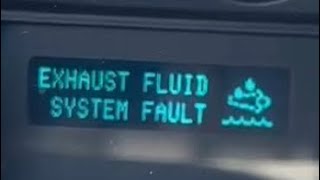
- Check for a "DEF System Fault" warning and check engine light with codes like P20BA, P20B9, or P208A.
- The correct fix per Ford TSB 23-2161 is to replace the reductant wiring harness and, if necessary, the DEF pump assembly.
- Do not simply clean the connector or use dielectric grease, as this will not provide a long-term solution.
What's Unique About the 2018-2021 Ford F-150
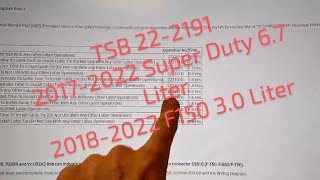
The 13th generation F-150 (2015-2020) and the first year of the 14th generation (2021) equipped with the 3.0L Power Stroke diesel engine are susceptible to this specific failure mode. The issue is also prevalent on 2017-2022 Super Duty trucks with the 6.7L Power Stroke. The placement of the reductant system components and the design of the wiring harness connectors make them vulnerable to water and road salt intrusion. Ford has acknowledged this weakness by issuing Technical Service Bulletin (TSB) 23-2161, which supersedes TSB 22-2191 and outlines 🎬 Watch: This video explains the TSB 23-2161 fix and common codes. a specific diagnostic and repair procedure for dealers to follow.
Diagnostic Flowchart
Tap your situation to follow the diagnostic path that matches what you're seeing on this vehicle.
Generation note: This issue affects the 2018-2020 models which are part of the 13th generation (P552) of the F-150, and the 2021 model year, which is the first year of the 14th generation (P702). The 3.0L Power Stroke engine and related emissions system are the key factors. The same failure mode also applies to 2017-2022 Super Duty trucks with the 6.7L Power Stroke engine.
Symptoms You May Notice
- Check Engine Light (Malfunction Indicator Lamp - MIL) is on
- "Exhaust Fluid System Fault" message on the dashboard.
- "Speed Limited to 50 mph in XX miles" countdown message.
- "Engine Idled See Manual" message may appear.
- Vehicle speed becomes limited to 50 mph, and can be reduced to 5 mph or a no-restart condition if not addressed.
- Visible green or white corrosion on the pins of the connector at the DEF tank/pump assembly.
- Faults often appear after driving in heavy rain or using a car wash.
- Replacing only the DEF pump/heater assembly without replacing the corroded wiring harness. If the harness is the source of the corrosion, the new pump will soon fail.
- Simply cleaning the corroded connector pins. This is a temporary fix at best, as the compromised seals will allow moisture to enter again.
- Applying dielectric grease to the connector. Ford's TSB 23-2161 specifically advises against this, as it can trap moisture if the seal is already compromised and interfere with the connection.
Most Likely Causes
- Water Intrusion and Corrosion at Connector C3613 and C3610 🔴 High Probability The connectors' location on the chassis makes them vulnerable to road spray from rain, snow, or car washes. The weather seals on the connectors can degrade or fail, allowing moisture and road salt to penetrate and corrode the electrical pins. TSB 23-2161 identifies both the 16-pin C3613 and 4-pin C3610 connectors as susceptible.
How to confirm: Visually inspect the 16-pin connector (C3613) at the reductant pump/heater assembly and the 4-pin connector (C3610) at the reductant level sensor/quality module for any signs of green or white crust, discoloration, or moisture inside. This requires lowering the DEF tank for access.
Typical fix: Per TSB 23-2161, if corrosion is found on the harness side only, the reductant tank harness must be replaced. If the pump assembly's or level sensor's connector pins are also corroded, the entire affected component must be replaced as well.
Est. part cost: $150-$600 - Terminal Fretting/Movement in Connector C3613 🟡 Medium Probability Vibrations from normal operation can cause micro-movements between the pins and terminals within the connector, leading to a poor connection over time. The TSB mentions this as a secondary cause addressed by the same repair.
How to confirm: This is difficult to confirm visually but is addressed by the same repair. If no corrosion is present but codes persist, the TSB directs replacement of the harness only.
Typical fix: Replace the reductant tank harness. The TSB also instructs technicians to secure the new harness with a cable tie to prevent movement and reduce the chance of fretting.
Est. part cost: $100-$200
Diagnosis Steps
- Confirm the presence of DEF/reductant system DTCs using an OBD-II scanner. Note all codes present.
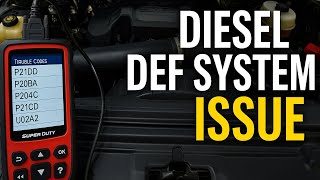
- Reference TSB 23-2161 to see if the stored codes match those listed in the bulletin (P21DD, P20BA, P20B9, P204C, P208A, etc.).
- Safely raise the vehicle and support it on jack stands.
- Locate the DEF tank and the reductant pump/heater assembly.
- Disconnect the 16-pin connector C3613 and the 4-pin connector C3610.
- Thoroughly inspect both the harness side and the component side of the connectors for any signs of green/white corrosion, moisture, or damaged pins.
- If corrosion is found on the harness connector but the component (pump or sensor module) is clean, replace only the reductant tank harness.
- If corrosion is found on the component side (the pump or level sensor module), replace both the harness and the affected component.
- If no corrosion is found at all, the TSB still advises replacing the reductant tank harness to address potential terminal fretting.
- After parts replacement, secure the new harness with a zip tie as instructed by the TSB to reduce movement.
- IMPORTANT: Do not add any dielectric grease to the electrical connectors.
- Clear all DTCs and perform the reductant system reset procedure using a compatible professional scan tool.
Parts You'll Likely Need
- Reductant Tank Harness
(OEM #JL3Z-14A411-A (Verify with VIN))— This is the primary part that fails due to water intrusion and corrosion at connectors C3613 and C3610, as identified in TSB 23-2161. Part number is a likely candidate but must be verified.
Trusted brands: Motorcraft
OEM price range: $100-$200
Aftermarket price range: $70-$150 - Reductant (DEF) Pump and Heater Assembly
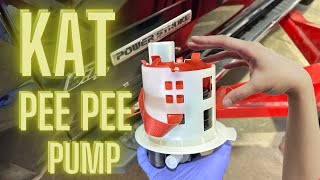
(OEM #KL3Z-5J225-A (Verify with VIN))— This assembly must be replaced if the connector pins on the unit itself are found to be corroded, as cleaning is not a permanent solution. Part number is a likely candidate but must be verified.
Trusted brands: Motorcraft, Bosch
OEM price range: $400-$600
Aftermarket price range: $250-$450 - Reductant Tank (includes Level Sensor/Quality Module)
(OEM #Verify with VIN)— If corrosion is found on the reductant level sensor/quality module at connector C3610, the entire DEF tank assembly must be replaced as the sensor is integrated.
Trusted brands: Motorcraft
OEM price range: $500-$800
Aftermarket price range: N/A
Related Codes That Often Appear With This One
- P20BA — Indicates a performance issue with the reductant heater 'A' control circuit, a common result of corrosion at C3613.
- P20B9 — Points to an open circuit in the reductant heater 'A' control, directly related to corroded pins in connector C3613.
- P208A — Relates to the reductant pump control circuit being open, often caused by a failed connection at C3613.
- P21DD — Reductant Heater 'A' Control Circuit Voltage Too Low, another symptom of a high-resistance connection from corrosion.
- U02A2 — Indicates a loss of communication with the reductant quality module, which can be caused by corrosion at the related C3610 connector, often damaged by the same water intrusion issue.
- P204C — Reductant Pressure Sensor Circuit Low. This code is explicitly listed in TSB 23-2161 as being related to this connector issue.
- P203B — Reductant Level Sensor Circuit Performance. This code points to the C3610 connector and is listed in TSB 23-2161.
- P21CD — Reductant Pump 'B' Control Circuit Open. This is another code specified in TSB 23-2161 as a potential result of the connector failure.
Technical Service Bulletins (TSBs) & Recalls
- TSB 23-2161: Supersedes TSB 22-2191 to update the parts list and procedure for a known issue where water intrusion into DEF system connectors (C3613, C3610) causes multiple DTCs. It provides the official inspection and replacement procedure.
- TSB 22-2191: The predecessor to the current TSB, now superseded.
Platform-Specific Known Issues
- Ford Technical Service Bulletin 23-2161 directly addresses the failure of connectors C3613 and C3610 due to water intrusion, causing a host of emissions-related trouble codes on the 3.0L diesel F-150.
- The same TSB confirms this is a shared problem with the 6.7L Power Stroke engine in 2017-2022 Ford Super Duty trucks, pointing to a design vulnerability in the emissions system wiring across platforms.
Mechanic-Grade Diagnostic Values
- Reductant (DEF) Tank Heater Resistance — expected: ~1.7 Ohms. Failure: An open circuit (infinite resistance) or a reading significantly outside the expected value.
- Reductant (DEF) Pressure Line Heater Resistance — expected: 2.0 to 5.0 Ohms. Failure: An open circuit (O.L.) or a reading outside the specified range indicates a failed heater element in the line.
- Reductant (DEF) Pump Pressure — expected: Approximately 73 PSI (5 bar). Failure: The pump struggling to build pressure or building pressure far in excess of the target can indicate a failing pump or a blockage.
Scan Tool Commands That Help
- Ford IDS (Integrated Diagnostic System): SCR Parameter Reset — This function is used to reset onboard SCR system data, which is typically required after replacing a major component like the SCR catalyst or the entire DEF tank/pump assembly.
- Ford IDS (Integrated Diagnostic System): SCR Visual Leak Check — This command pressurizes the DEF system to allow a technician to visually inspect for any fluid leaks in the lines, pump, or injector, which could cause pressure-related codes.
- Ford IDS (Integrated Diagnostic System): SCR System Emptying / Refill Activation — Used to depressurize and empty the DEF lines for service, and then to force a quick refill detection after the tank has been refilled. This can help the system relearn levels after service.
- Professional Scan Tool (Autel, Snap-on, etc.): Reductant System Prime — After replacing the DEF pump or harness, this function runs the pump to purge air out of the system and ensure it is full of fluid before normal operation.
Wiring & Ground Locations
- C3613 — The 16-pin electrical connector located at the reductant (DEF) pump/heater assembly on the DEF tank.. This is the primary point of failure identified in TSB 23-2161 for water intrusion and corrosion, causing codes like P208A, P20BA, and P21DD.
- C3610 — The 4-pin electrical connector at the reductant level sensor/quality module, also on the DEF tank assembly.. This connector is also cited in TSB 23-2161 as being prone to water intrusion, leading to communication codes like U02A2.
- G400 — A common ground point located on the vehicle frame.. Wiring diagrams for similar Ford Super Duty models show that DEF system components, such as NOx sensors, use this frame ground. A corroded or loose G400 ground could cause erratic sensor readings and various system faults.
Real Owner Repair Stories
- Ford Truck Enthusiasts Forum (2015 Ford F-250 6.7L Power Stroke) — Started with code P20BA (reductant heater). After replacing the heater, got P20E8 (pressure too low). After replacing the pump, got P20E9 (pressure too high).
❌ Tried (didn't work) Replaced the in-tank DEF heater assembly., Replaced the DEF pump with a Dorman aftermarket unit.
✅ What actually fixed it The user was advised that the aftermarket (Dorman) pump was the likely cause of the new P20E9 pressure-too-high code and that only the OEM Ford pump should be used. It was also clarified that no PCM reset or relearn is required after a pump replacement on this platform. - GM1500Diesel Forum (similar system behavior) (2021 GMC Sierra 3.0L Diesel) — Speed reduction warning message, Check Engine Light, and codes P10DC and P20BE related to the DEF tank heater.
❌ Tried (didn't work) Owner was unable to resolve the issue on their own.
✅ What actually fixed it The dealer service department found that the DEF tank heater module electrical connector was not properly seated. They reseated the connector and cleared the codes, which resolved the issue.
Helpful Videos
We Have This Part in Stock


The information in this article is provided for general reference and educational purposes only. Vehicle specifications, procedures, and part compatibility can vary by production date, trim level, and region. Always consult your vehicle's factory service manual and verify part numbers before purchasing or performing repairs. Safety-critical components such as airbags, seat belts, and braking systems should be installed by a qualified professional.
- Ford F-150:
- 🧭 Diagnostic Flowchart
- 🎬 Helpful Videos
- 🛍️ Shop This Part
- What's Unique About the 2018-2021 Ford F-150
- Symptoms You May Notice
- Most Likely Causes
- Diagnosis Steps
- Parts You'll Likely Need
- Related Codes That Often Appear With This One
- Technical Service Bulletins (TSBs) & Recalls
- Platform-Specific Known Issues
- Mechanic-Grade Diagnostic Values
- Scan Tool Commands That Help
- Wiring & Ground Locations
- Real Owner Repair Stories
- 🎟️ Get 5% Off