

OBD-II Code C3616: Communication Network Error (Manufacturer-Specific)
What C3616 means, why it triggers, and how to fix it
- Code C3616 (CID 3616) signals a CAN bus communication failure on Caterpillar equipment, but on Cummins engines, it indicates a mechanical failure of the VGT turbo actuator.
- Over 80% of C3616 faults stem from physical wiring damage, corroded connectors, or a failed 120-ohm terminating resistor, not a failed $3,000 ECM.
- Ignoring this code triggers a severe limp mode that cuts engine power by up to 50% and causes unpredictable, unsafe machine shutdowns.
- Diagnose the CAN bus by measuring resistance at the diagnostic port with the battery disconnected; a healthy network reads exactly 60 ohms, while 120 ohms indicates a missing terminating resistor.
What Does C3616 Mean?
Code C3616 is a manufacturer-specific code, primarily used by Caterpillar (as CID 3616), signaling a critical communication failure between electronic control modules. The main computer has lost contact with one or more essential components. This failure disrupts the Controller Area Network (CAN bus), the nervous system allowing modules to exchange data for engine, transmission, and hydraulic operation.
Technical definition: The official SAE/OBD-II definition for C3616 does not exist. In Caterpillar systems, CID 3616 indicates a data link failure where an electronic control module (ECM) cannot communicate with another device on the CAN bus. Expected data from a specific module is missing, disrupting the network. The fault pairs with a Failure Mode Identifier (FMI) like FMI 9 (Abnormal Update Rate) or FMI 12 (Bad Device) to pinpoint the exact failure.
Can I Drive With C3616?
Yes, But With Caution. You can move the vehicle, but performance is severely limited in a 'limp mode,' and some functions fail completely. Continued operation risks unexpected shutdowns, creating serious safety hazards. If the module controlling engine cooling loses communication, you risk severe secondary damage (e.g., engine overheating) adding thousands of dollars to the repair bill. Immediate diagnosis is critical.
Common Causes
- Damaged or Corroded Wiring Harness (Very Common) — The twisted-pair CAN bus wires run throughout the machine and suffer damage from vibration, frame rubbing, or moisture. This is the most frequent cause on equipment that flexes extensively.
- Faulty or Corroded Connectors (Very Common) — Plugs connecting wiring harnesses are major failure points. Moisture intrusion causes pin corrosion, while pins also bend or break. Up to 60% of communication faults on aging machines originate here.
- Failed CAN Bus Terminating Resistor (Common) — The CAN bus network uses a 120-ohm resistor at each end to prevent data signal reflection. If one resistor fails or unplugs, it causes data errors and communication breakdowns across the entire network.
- Improperly Installed Aftermarket Devices (Common) — Aftermarket telematics or GPS trackers plugged into the diagnostic port interfere with the CAN bus. They draw excess power, introduce noise, or send improper signals, causing essential modules to drop offline.
- Low or Unstable System Voltage (Common) — Electronic modules require steady, clean power. A weak battery, failing alternator, or poor connections cause voltage drops, triggering intermittent communication dropouts.
- Failed Electronic Control Module (ECM) (Less Common) — Any single computer module on the network fails internally over time. A bad module disrupts the entire network by sending corrupt data ('babbling') or no data at all.
- Software or ECM Configuration Issues (Less Common) — An incorrect software flash causes a control module to stop communicating. Replacing a module without programming it for the specific machine configuration also triggers this fault.
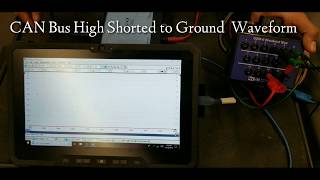
- High Intensity EMI/RFI (Rare) — High levels of electromagnetic interference from running high-power cables too close to the CAN harness corrupt data signals and cause intermittent errors. 🎬 Watch: How to test a CAN network with a scope.
Symptoms
- Warning Lights on Dash — A primary 'Check Engine' light, a communication fault indicator, or multiple system warning lights illuminate simultaneously.
- Reduced Engine Power ('Limp Mode') — The machine enters a 'derate' or 'limp' mode, severely limiting engine power and speed to protect systems.
- Loss of Gauge or Display Readings — Gauges for fuel, temperature, or speed drop to zero, behave erratically, or display '--'.
- Erratic or Non-Functional Systems — Hydraulic functions fail, the transmission defaults to neutral, or other controlled systems become completely unresponsive.
- Complete No-Start or Unexpected Shutdown — If the engine controller loses contact with the immobilizer or transmission, the engine refuses to crank or shuts down unexpectedly during operation.
Diagnostic Flowchart
Tap your situation to follow the diagnostic path that matches what you're seeing on this code.
Common Fixes & Costs
- Repairing Damaged Wiring Harness — Parts: $20-$200, Labor: $300-$1,500, ~2.5 hr book time (Intermediate)
- Cleaning or Replacing Connectors — Parts: $10-$100, Labor: $150-$600, ~1.5 hr book time (DIY)
- Replacing a Failed Terminating Resistor — Parts: $15-$120, Labor: $150-$450, ~1.0 hr book time (Intermediate)
- Replacing Cummins VGT Actuator — Parts: $800-$1,500, Labor: $300-$800, ~3.0 hr book time (Intermediate)
- Replacing a Failed Battery or Alternator — Parts: $250-$1,000, Labor: $200-$500, ~1.5 hr book time (DIY)
- Replacing a Failed Control Module (ECM) — Parts: $2,500-$7,000, Labor: $400-$1,200, ~2.5 hr book time (Professional)
- Software Update / Module Re-Flash — Parts: $0, Labor: $200-$600, ~1.5 hr book time (Professional)
Used vs. New Parts: Buying Guide
When a used part is worth it: For a complex electronic component like an ECM or VGT actuator, buying a 'used' part from a scrapyard is highly discouraged. There is no knowledge of its history, it carries no warranty, and it has a high risk of premature failure. A 'remanufactured' unit from a reputable supplier is the preferred cost-saving option over brand new.
Donor-vehicle mileage cap: roughly under 250000 miles for the part to have meaningful remaining life.
Donor quality checklist:
- For remanufactured ECMs, verify the supplier offers a warranty (1-year or lifetime is common).
- Ensure the remanufacturer pre-programs the module to your machine's serial number for a plug-and-play installation.
- For VGT actuators, using a genuine Holset remanufactured part is critical for reliability.
- Avoid 'as-is' sales; the small initial savings are not worth the risk of repeat labor costs.
Decision logic:
- If The budget is extremely tight and the machine is very old → An ECM repair service is the lowest-cost option, if the original unit is repairable.
- If You need the machine back online quickly with high reliability → A pre-programmed remanufactured ECM offers the best balance of cost, speed, and warranty.
- If The part is a Cummins VGT actuator → Favor a new or remanufactured OEM (Holset) part. The calibration process is required regardless, so part quality is paramount.
Warranty tradeoff: Used parts typically have no warranty. Remanufactured parts often come with a 1-year to lifetime warranty, which is a major advantage. New OEM parts carry a manufacturer's warranty, but the part cost is significantly higher.
Worst-case if a used part fails: $800-$2000 if a used/poorly remanufactured part fails. This includes the cost of repeat labor, machine downtime, and sourcing another replacement part.
What Happens If You Wait — Timeline
- 0 hours - 1 day: Initial fault occurs. On a CAT, the machine immediately enters 'limp mode' with severe power reduction; multiple warning lights appear. On a Cummins, the exhaust brake stops working and throttle response becomes poor. (MPG impact: 10-30%% · Added cost: $0)
- 1 day - 1 week: Continued operation is attempted. For a CAN fault, unpredictable shutdowns become a major safety risk. For a Cummins VGT fault, poor combustion from incorrect boost levels overloads the DPF with soot and increases oil consumption. (MPG impact: 15-40%% · Added cost: $500 - $2,500 (Risk of DPF damage, tow bills from unexpected shutdown))
- 1 week - 1 month: Secondary damage becomes highly likely. If the CAN fault was intermittent, it becomes permanent. If the engine ECM loses communication with the cooling fan controller, the engine catastrophically overheats. On a Cummins, if the VGT fault was caused by EGR cooler debris, that same debris destroys the turbocharger's turbine wheel. (MPG impact: 20-50% (Machine is often unusable)% · Added cost: $4,000 - $15,000 (Cost of a new turbocharger or significant engine repairs from overheating))
- 1+ month: Catastrophic failure. The machine is inoperable. Ignoring a severe CAN bus failure leads to a cascade where a voltage spike from a shorted wire damages multiple expensive control modules. Ignoring the Cummins VGT issue leads to complete turbocharger failure, sending metal fragments into the engine. (MPG impact: N/A (Machine will not run)% · Added cost: $10,000 - $25,000+ (Cost of multiple ECMs, a complete engine overhaul, or both))
Cost of Not Fixing It
- Immediate: Machine enters a derated 'limp mode' with severely reduced power. Unpredictable shutdowns occur, creating a serious safety hazard. Key functions like hydraulics become inoperable. (Added cost: $0)
- Days to Weeks: Risk of catastrophic secondary damage. If the ECM loses contact with the cooling system module, the engine overheats, leading to complete engine failure. On a Cummins, ignoring the VGT fault destroys the turbocharger. (Added cost: $5,000-$25,000+)
- Months: The machine is rendered unusable or too unsafe to operate long before this timeframe. Continued intermittent use leads to severe secondary damage. (Added cost: N/A)
Diagnosis Steps
- Perform a Thorough Visual Inspection
Carefully inspect all visible wiring harnesses around the engine, articulation points, and areas exposed to debris. Look for rubbing, melting, or rodent damage, and unplug major connectors to check for corrosion or bent pins.
Tools: Flashlight, Mirror (Beginner) - Check Battery and Charging System
Confirm the electrical foundation is solid. Use a multimeter to check battery voltage with the engine off (~12.6V) and running (~13.7-14.7V). Low or unstable voltage causes communication errors.
Tools: Digital Multimeter (Beginner) - Connect a Manufacturer-Specific Diagnostic Scanner
Use a diagnostic tool compatible with your equipment (e.g., Cat ET). This tool identifies which specific module (by MID or Source Address) stopped communicating and shows the specific FMI associated with the CID 3616 fault.
Tools: Manufacturer-Specific Diagnostic Scanner (e.g., Cat ET) (Advanced) - Check CAN Bus Resistance
With the key off and battery disconnected, measure resistance between the CAN High and CAN Low pins at the diagnostic connector. A healthy network reads exactly 60 ohms. A 120-ohm reading means one terminating resistor is missing; 0 ohms indicates a short.
Tools: Digital Multimeter (Intermediate) - Perform a "Wiggle Test"
With the machine on and the scanner monitoring communication, gently wiggle connectors and suspected harness sections. If the symptom changes or the code toggles, you found the intermittent open or short.
Tools: Diagnostic Scanner (Intermediate) - Check CAN Bus Voltages (Key On, Engine Off)
With the key on and engine off, measure DC voltage between CAN pins and chassis ground. CAN High should be ~2.5V to 2.7V; CAN Low should be ~2.3V to 2.5V. Readings of 0V or battery voltage indicate a short.
Tools: Digital Multimeter (Advanced) - Isolate the Faulty Module
Disconnect one control module at a time from the CAN network and re-check if communication restores to the others. If the network recovers after unplugging a specific module, that module is internally shorted or 'babbling'.
Tools: Basic hand tools, Diagnostic Scanner (Advanced) - PRO TIP: Perform Dynamic Voltage Drop Test at Module
With the suspected module plugged in and key on, measure voltage between the module's power pin and battery positive, then ground pin and battery negative. Readings over 0.5V indicate high resistance causing the module to drop out under load.
Tools: Digital Multimeter with long leads (Professional) - PRO TIP: Analyze CAN Bus Waveform with an Oscilloscope
For intermittent faults, analyze the CAN bus waveform. A healthy bus shows clean, mirror-image square waves (CAN High 2.5V-3.5V, CAN Low 2.5V-1.5V). Distorted patterns pinpoint exact electrical faults a multimeter misses.
Tools: Automotive Oscilloscope (Professional)
When This Code Triggers (Freeze-Frame Conditions)
- System Voltage: 12.5V (Key On) / 13.8V (Running) (Code sets during low voltage events or while running.)
- Engine RPM: 800-2200 RPM (Fault appears when engine vibration is present, from idle to working speeds.)
- Machine Status: Varies (Occurs at key-on, during operation, or intermittently when flexing articulation points or experiencing vibration.)
- FMI (Failure Mode Identifier): 9, 12, or 2 (The FMI is critical freeze frame data, indicating 'Abnormal Update Rate', 'Bad Device', or 'Data Erratic' respectively.)
Related Codes
- SPN 639 / FMI 9 — This is a standard J1939 code for 'CAN Data Link Abnormal Update Rate.' CID 3616 is a general Caterpillar alarm for a data link problem, while FMI 9 gives a specific reason: a module is online but not sending data at the expected rate.
- U-prefix codes (e.g., U0100) — In passenger vehicles, U-codes signify network communication problems. A code like U0100 (Lost Communication With ECM/PCM) is the passenger car equivalent of C3616. U-codes appear on cars using standard OBD-II protocols, while C3616/CID 3616 is specific to heavy equipment.
- Cummins Fault Code 2387 — On Cummins ISX engines, this code for 'VGT Actuator Driver Circuit - Mechanical System Not Responding' often appears alongside fault 3616. Both point to a stuck turbocharger actuator, frequently caused by debris from a failing EGR cooler per TSB170038.
- SPN 1231 / FMI 9 — This J1939 code means 'J1939 Network #2 (Proprietary) - Abnormal update rate'. It is functionally identical to SPN 639 but refers to a secondary, often manufacturer-specific CAN bus. Diagnosing it follows the exact same steps.
Climate & Environmental Factors
- High Humidity / Moisture: Moisture accelerates corrosion in connectors and penetrates compromised wire insulation, leading to shorts or changes in resistance that disrupt CAN signals. Condensation from temperature swings also contributes heavily.
- Extreme Cold: Low temperatures make wiring insulation and plastic connector housings brittle, increasing the risk of physical damage from vibration. Extreme cold also affects internal oscillators of electronic modules, causing them to stop communicating.
- Extreme Heat: High ambient temperatures increase the electrical resistance of wires over time, degrading signal integrity. Heat also accelerates the breakdown of insulation, making wires more susceptible to shorting.
- Altitude: Altitude has no direct, significant impact on the electrical function of the CAN bus itself.
How to Talk to a Mechanic About This Code
Say this: "I have a machine with a C3616 (or CID 3616) communication fault. I'd like to schedule a diagnostic. Please start by checking the CAN bus resistance and inspecting the main harnesses for damage, especially at any pivot points, before testing individual modules. If it's a Cummins engine, please be aware this code points to the VGT actuator and TSB170038."
This signals you've done your research and understand that the most common causes are wiring or power issues, not a failed ECM. It directs the technician to follow a logical, cost-effective diagnostic path and prevents them from immediately quoting the most expensive repair.
Avoid saying:
- 'Just fix whatever's wrong'
- 'My check engine light is on, can you look at it?' (too vague, invites unnecessary work)
- 'The machine is acting up, I think the computer is bad.'
Questions to ask before authorizing the repair:
- What was the CAN bus resistance reading at the diagnostic port? Was it 60 ohms?
- Did you find a specific voltage drop or high resistance on a power or ground wire to a module?
- Can you show me a picture of the damaged wire or corroded connector you found?
- If you are recommending an ECM replacement, what specific tests did you perform to condemn the old one?
- For a Cummins engine, did you find physical debris jamming the VGT actuator?
Where to Take It: Dealer vs Independent vs Chain
- Dealer:
Best for: Equipment under warranty, Complex software updates or module programming, When you need a guaranteed fix with OEM parts and expertise
Downsides: Highest labor rates, often $150-$200+/hour., May be geographically inconvenient., Slower to schedule service due to high demand. (Typical cost: +40% vs. baseline) - Independent Shop:
Excellent choice, but you MUST vet the shop first. Ask them if they have the specific OEM diagnostic software for your machine and if they have experience diagnosing J1939 network faults. A good independent heavy-duty shop is often the best value.
Best for: Out-of-warranty equipment where cost is a major factor., Common repairs on well-known models., Building a long-term relationship with a local mechanic.
Downsides: Quality varies widely; must verify they have the correct diagnostic software (e.g., Cat ET, Cummins Insite) and experience with CAN bus systems., May not have immediate access to all OEM parts. (Typical cost: +0% vs. baseline) - Chain Shop:
AVOID COMPLETELY. These shops are for passenger cars only.
Best for: Not applicable for heavy equipment.
Downsides: Automotive chain shops (e.g., Midas, Jiffy Lube) do not have the tools, software, or knowledge to service heavy equipment., Attempting a repair here wastes time and money. (Typical cost: +0% vs. baseline)
When to Walk Away From the Repair
If the estimated repair cost exceeds 50% of the machine's current market or auction value, seriously consider replacing it instead of repairing it. This is the '50% rule' in the heavy equipment industry.
- Car worth $75000, fix is $8000: Fix it. The repair cost is well below the 50% threshold and makes economic sense.
- Car worth $40000, fix is $22000: Walk away. The repair cost is over 50% of the machine's value. It's time to consider selling as-is or replacing the unit.
What Scan Tool You Need for This Code
Minimum: A handheld scanner that supports heavy-duty J1939 and J1708 protocols. It must read manufacturer-specific fault codes, not just generic OBD-II codes.
A cheap $50 car code reader is useless. It cannot connect to the 9-pin Deutsch connector on most heavy equipment and cannot understand the J1939 protocol or the manufacturer-specific MID/CID/FMI code structure.
Budget: ANCEL HD3100 or similar (~$150) — Reads and clears heavy-duty codes for most major brands. Displays live data. It's a good starting point for identifying the fault but lacks the deep diagnostic and programming functions of pro tools.
Mid-range: Autel AL529HD or FOXWELL HD500 (~$250) — Provides broader vehicle coverage and some advanced functions like DPF regeneration. These tools are excellent for owner-operators or small shops needing more than just code reading.
Professional: Nexiq USB-Link 3 with OEM Software (Cat ET/Cummins Insite) or Autel MaxiSys MS909CV (~$800-5500) — This is the professional-level solution. The Nexiq is an interface connecting a laptop to the machine, allowing you to use actual dealer software for full diagnostic control, wiring diagrams, and module programming. The Autel MS909CV is an all-in-one tablet providing dealer-level diagnostics, bidirectional controls, and topology mapping for most heavy-duty brands.
Rent vs buy: For a one-time, complex issue like C3616, it is more cost-effective to hire a mobile diesel mechanic or take the machine to a shop with the proper diagnostic tools. The professional software required (Cat ET, Cummins Insite) is subscription-based and too expensive for a single repair. Buy a midrange tool only if you plan to perform your own diagnostics regularly.
How to Clear the Code After You Fix It
- Ensure all connectors are secured and the battery is reconnected.
- Use a manufacturer-specific scan tool (e.g., Cat ET, Cummins Insite) to connect to the ECM.
- Select the function to view and clear diagnostic codes.
- Perform a 'work cycle' to verify the repair.
Drive cycle (~20 minutes): A 'work cycle' for heavy equipment is more effective than a road-based drive cycle. After clearing the code, start the engine and let it warm up for 5 minutes. Operate the machine through its full range of functions: drive forward and reverse, raise and lower implements, and articulate or steer from lock to lock. Operate at various engine speeds for at least 15 minutes to ensure the fault does not reappear under load and vibration.
Readiness monitors affected: Not applicable in the same way as passenger vehicles. The ECM continuously monitors communication and immediately flags a recurring fault.
Watch out for:
- Simply clearing the code without performing a work cycle. The fault only appears under specific operational loads or temperatures.
- Using a generic OBD-II scanner, which cannot clear manufacturer-specific codes from heavy equipment ECMs.
- Not fixing the root cause (e.g., a chafed wire), causing the code to return immediately.
Will This Fail Emissions / State Inspection?
Yes — this code typically fails an OBD-II emissions inspection.
- California: Any active fault code related to engine or aftertreatment control causes a failure of the Heavy-Duty Inspection and Maintenance Program (HD I/M) test. The check engine light must be off.
- New York: For diesel vehicles over 8,500 lbs GVWR in the New York Metropolitan Area (NYMA), an annual emissions inspection is required. An illuminated Malfunction Indicator Lamp (MIL) is an automatic failure.
- Texas: Commercial vehicles require an annual inspection in Texas. In the 17 counties requiring emissions testing, an active OBD fault code like C3616 results in an inspection failure.
Most Commonly Affected Vehicles
- Caterpillar 3616 Industrial Diesel Engine (1990-Present) — This code is directly associated with the Caterpillar 3600 series engines used in power generation, marine, and industrial applications.
- Caterpillar Excavators (Various Models) (2000-Present) — Modern excavators rely heavily on CAN bus communication. Harnesses are prone to damage at the articulation point between the house and boom, and where they pass through the swing bearing.
- Caterpillar D-Series Dozers (e.g., D5, D6) (2004-Present) — CAN bus faults are common on modern dozers, affecting grade control, powertrain, and hydraulic systems. Early D-series models with complex electronics were known for intermittent electrical issues.
- Caterpillar Telehandlers (Various Models) (2000-Present) — Telehandlers have specific diagnostic procedures for CAN bus failures involving multiple controllers for the boom, powertrain, and chassis.
- Cummins ISX15 CM871 / CM871E (2007-2010) — CRITICAL: On these Cummins engines, fault code 3616 means 'Engine VGT Nozzle Position - Mechanical System Not Responding.' It is NOT a communication code. TSB170038 notes that metal pieces from a cracking internal heat shield in the EGR cooler break off and jam the turbocharger actuator.
- John Deere Various Agricultural & Construction Models (2000-Present) — John Deere does not use code C3616, but their equipment relies on the same J1939 CAN bus protocol. They experience identical failures (wiring, terminators, module power) requiring the same diagnostic process.
- Hyundai Various Models (e.g., Elantra, Sonata) (2006-2024) — Hyundai uses a *different code*, C1616, for CAN bus off or airbag circuit issues. This should not be confused with the heavy equipment code C3616.
- Cadillac CT4-V (2020-2024) — The curb weight of the Cadillac CT4-V is 3,616 lbs. This number is unrelated to any diagnostic trouble code.
Manufacturer-Specific Notes
- Caterpillar: Caterpillar uses a three-part diagnostic code: MID (Module Identifier), CID (Component Identifier), and FMI (Failure Mode Identifier). C3616 is the CID. The MID tells you WHICH module is reporting the fault, and the FMI tells you HOW it failed (e.g., FMI 2 for 'Data Erratic', FMI 9 for 'Abnormal Update').
- Cummins: Cummins uses the 3616 fault code number for an entirely different problem: a stuck Variable Geometry Turbocharger (VGT) actuator. It is a mechanical failure code, not a communication code. Mistaking this for a CAN bus issue leads to a completely incorrect and costly diagnosis.
- John Deere: John Deere systems use a 'Source Address' (SA) to identify the controller logging a fault. This is functionally equivalent to Caterpillar's MID. Identifying the SA of the faulting controller is the first step to narrow down the problem.
- General Automotive: This code is not used by most passenger car manufacturers. If you see a 'C' code on a car, it refers to the Chassis system (brakes, steering, suspension). Network issues on cars are almost universally designated with a 'U' code.
Real Owner Stories
Cummins ISX with intermittent power loss and codes 3616 & 2387
A truck driver reported that his engine lost power and the check engine light illuminated under load. The codes present were 3616 and 2387.
What they tried:
- Initially suspected a wiring or communication issue due to the code number.
- A mechanic following Cummins TSB170038 inspected the EGR cooler.
- The heat shield inside the EGR cooler was found cracked and shedding metal fragments.
Outcome: The metal debris jammed the VGT actuator, causing it to stick. The fix required replacing both the EGR cooler (with an updated part number lacking the internal shield) and the damaged VGT actuator. The total repair cost was several thousand dollars but permanently resolved the issue.
Lesson: On a Cummins ISX, code 3616 is NOT a communication fault. Always check for companion code 2387 and investigate the EGR cooler for failure per TSB170038 before attempting any CAN bus diagnostics.
Caterpillar excavator with multiple system failures and CID 3616 FMI 9
An excavator operator experienced sudden loss of hydraulic control, and the main display panel showed multiple system warnings and a CID 3616 FMI 9 (Abnormal Update Rate) fault.
What they tried:
- A technician first checked battery voltage and performed a visual inspection, finding no obvious issues.
- Using Cat ET, they confirmed the hydraulic controller was the module that dropped off the network.
- They measured CAN bus resistance at the diagnostic port and got 120 Ohms, indicating a missing terminating resistor or an open circuit.
- Inspecting the main harness where it flexed with the boom, they found a section chafed through, severing one of the CAN wires.
Outcome: The technician repaired the severed CAN wire using a Deutsch connector splice kit, ensuring a sealed, durable connection. After the repair, CAN resistance returned to the correct 60 Ohms. All modules came back online, and the machine resumed normal function.
Lesson: A 120-Ohm reading on a CAN bus test almost always points to an open circuit or a missing terminator. On articulating equipment, always inspect the wiring harnesses at pivot and flex points first, as this is the most common failure location.
Mahindra 3616 Tractor with intermittent no-start and electrical issues
A tractor owner reported that their Mahindra 3616 sometimes refused to start. They also noted that rats previously chewed some wiring. Separately, another owner noted repeated glow plug failures.
What they tried:
- One owner found rodents chewed through multiple wiring harnesses, causing headlight and hazard light failures.
- Another owner with a similar model discovered a loose fuel bowl letting air into the system, causing hard starts mistaken for a glow plug issue.
- A Mahindra service bulletin revealed that on some 3016/3616 models, the glow plug timer was back-fed power through the fuel solenoid, causing glow plugs to burn out prematurely. The fix was a simple diode added to the harness.
Outcome: For the rodent damage, the owner faced a tedious wire-by-wire repair. For the hard starting, tightening the fuel bowl solved the problem. For the glow plug issue, installing the dealer-recommended diode fixed the electrical back-feed and stopped the premature failures.
Lesson: The number '3616' refers to a vehicle model, like the Mahindra 3616 tractor, not just a fault code. Electrical issues on these machines are often due to external factors like rodent damage or known issues addressed by service bulletins. Always check for loose components and TSBs before diagnosing complex systems.
Fleet vehicle with new GPS tracker suddenly logs CAN bus faults
Immediately after a new aftermarket GPS telematics unit was installed via the diagnostic port, a truck began logging intermittent CAN communication faults and occasionally went into limp mode.
What they tried:
- The shop initially suspected a faulty ECM or a wiring problem on the truck.
- Before starting expensive diagnostics, the fleet manager asked if anything recently changed.
- The technician unplugged the newly installed GPS tracker and cleared the codes.
Outcome: With the aftermarket device disconnected, the CAN bus faults did not return. The GPS unit was either faulty, improperly configured, or had an internal terminating resistor disrupting the network by adding a third 120-Ohm resistor to the bus.
Lesson: If a CAN bus fault appears immediately after installing a new device into the diagnostic port, that device is the number one suspect. Always disconnect any aftermarket electronics from the CAN bus as the first diagnostic step.
How to Prevent This Code From Triggering
- Periodically inspect and clean major electrical connectors (Annually or every 1,000 hours) — Prevents moisture and dirt from causing corrosion on CAN bus pins. Disconnecting, cleaning with contact cleaner, and applying dielectric grease to the seals of Deutsch or Amphenol connectors maintains network integrity.
- Secure and protect wiring harnesses (During any service) — Ensures CAN bus wiring is properly secured in clips and looms, preventing it from rubbing against the frame or other components, which causes chafing and short circuits. Pay special attention to harnesses at pivot points.
- Maintain a healthy charging system (Monthly check) — Low or unstable system voltage is a common cause of communication dropouts. Regularly testing the battery and alternator output ensures all electronic modules receive the stable power required to communicate effectively.
- Perform regular VGT actuator cycling (Cummins) (Weekly) — On Cummins engines, soot builds up and causes the VGT actuator to stick. Using the engine brake frequently or performing a stationary 'VGT hysteresis test' with a scan tool cycles the actuator through its full range of motion, clearing soot deposits.
- Validate any new aftermarket electronic devices (Before installation) — Ensures telematics or GPS units do not interfere with the CAN bus. A device with an improper internal terminating resistor brings the entire network down. Test the device on a single machine before a fleet-wide rollout.
Frequently Asked Questions
What is the most common mistake when diagnosing a C3616 code?
The most common and expensive mistake is immediately replacing the Electronic Control Module (ECM) without a full diagnosis. The actual cause is usually a much cheaper problem like a corroded wire, a loose connector, or a failed terminating resistor. Always test the wiring, power, and grounds to the affected module before condemning it.
Can aftermarket accessories cause a C3616 fault?
Yes, aftermarket devices like fleet telematics or GPS trackers plugged into the diagnostic port frequently interfere with the CAN bus network. If the code appeared after installing such a device, unplug it immediately. Clear the codes and see if the communication problem disappears.
Can I fix a C3616 code myself?
Simple fixes like cleaning battery terminals, checking fuses, or cleaning a dirty connector are DIY-friendly. Diagnosing wiring harnesses or replacing control modules requires specialized tools (like Cat ET), wiring diagrams, and advanced knowledge. Stop DIY and tow to a specialized heavy-duty shop for complex network issues.
How much does it cost to fix a C3616 code?
Repair costs vary dramatically based on the root cause. A simple wiring repair costs $300-$800, while replacing a failed Cummins VGT actuator costs $2,000-$3,500. If a major control module fails on heavy equipment, the part alone costs $2,500 to over $7,000, pushing total bills past $10,000.
What is a CAN bus?
A Controller Area Network (CAN) bus is a two-wire network acting as the nervous system for a machine. It allows all electronic control modules (engine, transmission, hydraulics) to communicate using a standardized protocol.
What is the difference between CAN High and CAN Low?
CAN High and CAN Low are the two network wires that transmit mirror-image data. At rest, both sit at 2.5 volts. During transmission, CAN High jumps to 3.5 volts and CAN Low drops to 1.5 volts, creating a noise-resistant differential signal.
What voltage should I see on a CAN bus with a multimeter?
With the key on and network active, a multimeter shows an average voltage because the signal fluctuates rapidly. Expect approximately 2.6V on CAN High and 2.4V on CAN Low. Voltages stuck at 0V, battery voltage, or identical on both lines indicate a hard fault.
Key Takeaways
- Code C3616 (CID 3616) signals a CAN bus communication failure on Caterpillar equipment, but on Cummins engines, it indicates a mechanical failure of the VGT turbo actuator.
- Over 80% of C3616 faults stem from physical wiring damage, corroded connectors, or a failed 120-ohm terminating resistor, not a failed $3,000 ECM.
- Ignoring this code triggers a severe limp mode that cuts engine power by up to 50% and causes unpredictable, unsafe machine shutdowns.
- Diagnose the CAN bus by measuring resistance at the diagnostic port with the battery disconnected; a healthy network reads exactly 60 ohms, while 120 ohms indicates a missing terminating resistor.
Helpful Videos
Shop the Parts Behind C3616
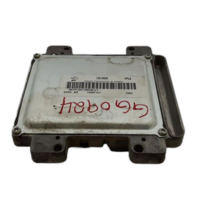
Below are the parts most often responsible for code C3616, ranked by how frequently each one is the actual culprit (per the diagnosis above). Tap any to see what we have for your vehicle.



The information in this article is provided for general reference and educational purposes only. Vehicle specifications, procedures, and part compatibility can vary by production date, trim level, and region. Always consult your vehicle's factory service manual and verify part numbers before purchasing or performing repairs. Safety-critical components such as airbags, seat belts, and braking systems should be installed by a qualified professional.
- 🧭 Diagnostic Flowchart
- 🎬 Helpful Videos
- 🛍️ Shop This Part
- What Does C3616 Mean?
- Can I Drive With C3616?
- Common Causes
- Symptoms
- Common Fixes & Costs
- Used vs. New Parts: Buying Guide
- What Happens If You Wait — Timeline
- Cost of Not Fixing It
- Diagnosis Steps
- When This Code Triggers (Freeze-Frame Conditions)
- Related Codes
- Climate & Environmental Factors
- How to Talk to a Mechanic About This Code
- Where to Take It: Dealer vs Independent vs Chain
- When to Walk Away From the Repair
- What Scan Tool You Need for This Code
- How to Clear the Code After You Fix It
- Will This Fail Emissions / State Inspection?
- Most Commonly Affected Vehicles
- Manufacturer-Specific Notes
- Real Owner Stories
- Cummins ISX with intermittent power loss and codes 3616 & 2387
- Caterpillar excavator with multiple system failures and CID 3616 FMI 9
- Mahindra 3616 Tractor with intermittent no-start and electrical issues
- Fleet vehicle with new GPS tracker suddenly logs CAN bus faults
- How to Prevent This Code From Triggering
- Frequently Asked Questions
- What is the most common mistake when diagnosing a C3616 code?
- Can aftermarket accessories cause a C3616 fault?
- Can I fix a C3616 code myself?
- How much does it cost to fix a C3616 code?
- What is a CAN bus?
- What is the difference between CAN High and CAN Low?
- What voltage should I see on a CAN bus with a multimeter?
- Key Takeaways
- 🎟️ Get 5% Off