

OBD-II Code P0005: Fuel Shutoff Valve 'A' Control Circuit/Open
The Ultimate 2026 Guide to Diagnosing and Fixing P0005
- Never drive a vehicle with an active P0005 code, as the fuel shutoff valve will unexpectedly close and cause a complete engine stall at highway speeds.
- Always test the fuel shutoff solenoid's internal resistance with a multimeter; a reading of 'OL' (infinite ohms) confirms the part is dead and requires replacement.
- On 2003-2010 Ford 6.0L and 6.4L Powerstroke engines, test the Fuel Injection Control Module (FICM) first, as a voltage drop below 45V causes 70% of P0005 codes.
- Verify the circuit receives a full 12 volts and has a solid chassis ground before buying a new $200+ shutoff valve, as broken wiring causes this code just as often as a failed part.
What Does P0005 Mean?

P0005 means the Engine Control Module (ECM) detects a broken electrical connection in the fuel shutoff valve control circuit. This valve, found almost exclusively in diesel engines, stops fuel flow when you turn the ignition off. An 'open' circuit means a cut wire, blown fuse, or disconnected plug prevents the computer from operating the valve.
Technical definition: The SAE/OBD-II definition for P0005 is "Fuel Shutoff Valve 'A' Control Circuit/Open." This indicates the Powertrain Control Module (PCM) detects a complete loss of electrical continuity in the fuel shutoff valve circuit, preventing valve operation.
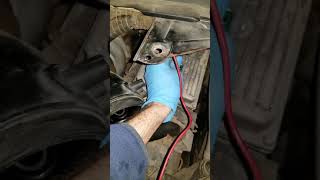
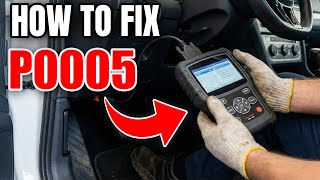
🎬 Watch: How to fix the fuel shutoff valve control circuitCan I Drive With P0005?
No — Do Not Drive. Do not drive. The engine will likely stall unexpectedly, causing a complete loss of power and steering control in traffic. Continuing to operate the vehicle will eventually lead to a permanent no-start condition, leaving you stranded.
Common Causes

- Faulty Fuel Shutoff Valve (Solenoid) (Very Common) — The electronic solenoid valve is the most frequent failure point. The internal coil winding breaks over time, creating an open circuit.
- Wiring or Connector Issues (Common) — Damaged, corroded, or disconnected wires break the electrical path. Common culprits include chafing on engine brackets, rodent damage, and moisture corrosion inside the connector plug.
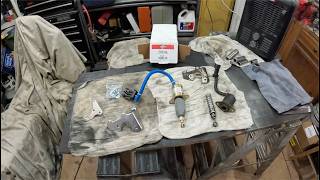
- Blown Fuse or Faulty Relay (Common) — A blown fuse cuts all power to the circuit instantly. A faulty relay that fails to close its internal contacts has the exact same effect. 🎬 Watch: A step-by-step guide to testing your fuel shut-off solenoid
- Faulty Fuel Injection Control Module (FICM) (Common) — On 2003-2010 Ford Powerstroke diesels, a failing FICM is a primary cause. The module's internal power supply fails, disrupting the 48V signal to the fuel system and triggering this code. 🎬 See how to perform a FICM voltage test
- Poor Ground Connection (Less Common) — The circuit requires a solid chassis ground to complete its path. A corroded or loose ground wire at the valve or PCM interrupts the circuit.
- Faulty Ignition Switch (Rare) — The ignition switch provides the initial power signal to the fuel shutoff circuit. Internal switch wear interrupts this signal, triggering a P0005 code even if the under-hood wiring is intact.
- Faulty Engine Control Module (ECM) (Rare) — The internal driver circuit inside the ECM that sends the ground signal to the valve fails. This is the absolute last component to suspect after exhaustively ruling out wiring and solenoids.
Symptoms

- Engine will not start (Crank-no-start) — If the valve is stuck closed or lacks the electrical signal to open, zero fuel reaches the engine, resulting in a continuous crank without starting.
- Engine stalls unexpectedly — If the circuit develops an intermittent open connection while driving, the valve snaps shut, instantly cutting the fuel supply and stalling the vehicle.
- Check Engine Light is on — The ECM immediately illuminates the Malfunction Indicator Lamp (MIL) when it detects the open circuit.
- Poor performance and abnormal exhaust smoke — An intermittent electrical fault causes erratic valve operation, leading to rough idling, hesitation, decreased fuel economy, and puffs of unburnt white smoke or rich black smoke.
Diagnostic Flowchart

Tap your situation to follow the diagnostic path that matches what you're seeing on this code.
Common Fixes & Costs
- Replace Fuel Shutoff Valve/Solenoid — Parts: $50-$300, Labor: $100-$250, ~1.5 hr book time (Intermediate)
- Repair Wiring or Replace Connector Pigtail — Parts: $15-$60, Labor: $150-$400, ~2.5 hr book time (Intermediate)
- Replace Blown Fuse or Fuel System Relay — Parts: $5-$40, Labor: $0-$75, ~0.2 hr book time (DIY)
- Replace or Repair Fuel Injection Control Module (FICM) — Parts: $350-$700, Labor: $150-$300, ~2 hr book time (Professional)
- Replace/Reprogram Engine Control Module (ECM) — Parts: $500-$1500+, Labor: $150-$300, ~1.5 hr book time (Professional)
Used vs. New Parts: Buying Guide
When a used part is worth it: For mechanical components like an external solenoid from an older Cummins, a tested used part from a salvage yard is cost-effective. For complex electronics like a Ford FICM, a professionally remanufactured unit with a warranty is mandatory.
Donor-vehicle mileage cap: roughly under 100000 miles for the part to have meaningful remaining life.
Donor quality checklist:
- Verify the part includes a functional 30-90 day warranty.
- For electronic modules, demand proof the part was bench-tested and confirmed working.
- Reject parts from vehicles with flood, fire, or major front-end collision damage.
Decision logic:
- If The part is a simple external solenoid and the new price exceeds $200 → A tested used part is a reasonable choice to save money.
- If The part is an electronic module like a FICM or ECM → Buy a professionally remanufactured unit with a strong warranty. Used modules carry too much risk.
- If The vehicle is critical for daily business use → Always buy a new OEM or premium remanufactured part to eliminate repeat failures.
Warranty tradeoff: Used parts offer a 30-90 day parts-only warranty. New aftermarket and remanufactured parts include 1-year to lifetime warranties. OEM parts offer 1-2 year warranties if installed by a dealer.
Worst-case if a used part fails: $300-$800 if a used electronic module fails, requiring repeat labor and a second replacement part.
What Happens If You Wait — Timeline
- Immediate: Code P0005 sets. The engine cranks but will not start, or starts and immediately stalls. The Check Engine Light illuminates. (MPG impact: N/A (vehicle is undrivable)% · Added cost: $150-$400 for a tow truck.)
- 0-2 weeks (with an intermittent fault): The vehicle experiences random, unpredictable stalling while driving, creating a severe safety hazard. Fuel economy drops slightly due to erratic valve operation. (MPG impact: 0-5%% · Added cost: $0-$50 in wasted fuel.)
- 1-3 months (with an intermittent fault): Continued electrical instability strains other components. On Ford Powerstrokes, this destroys borderline FICMs. Repeated hard starting wears out the starter motor and batteries. (MPG impact: 5-10%% · Added cost: $500-$1000 for a destroyed FICM or starter motor.)
- 3+ months (if ignored): An ignored intermittent short or open causes electrical feedback that permanently damages the driver circuit inside the Engine Control Module (ECM). (MPG impact: 10%+% · Added cost: $800-$2000+ for ECM replacement and complex harness repairs.)
Cost of Not Fixing It
- Immediate: Engine will not start, or stalls while driving, posing a severe safety risk and leaving you stranded. (Added cost: $150-$400 for a tow truck.)
- 1-3 months: Repeated electrical stress destroys borderline components. On Ford Powerstrokes, this overworks and kills the FICM. (Added cost: $500-$1000 to replace a destroyed FICM that was previously salvageable.)
- 3+ months: Ignoring the electrical fault causes voltage spikes that permanently damage the Engine Control Module (ECM) driver circuit. (Added cost: $800-$2000+ for complex harness repair or ECM replacement.)
Diagnosis Steps
- Scan for All DTCs and Review Freeze Frame Data
Use an OBD-II scanner to read all stored codes. Note related codes like P0006 (circuit low) or P0007 (circuit high), and fuel pressure codes. Review freeze frame data to identify the exact engine RPM and temperature when P0005 triggered.
Tools: OBD-II Scanner (Beginner) - Check Fuses and Relays
Consult the owner's manual to locate the fuel system and ECM fuses. Visually inspect them for breaks. Swap the fuel shutoff relay with an identical non-critical relay (like the horn) to test for a faulty relay.
Tools: Owner's manual, fuse puller (Beginner) - Perform a Visual Inspection
Locate the fuel shutoff valve on or near the high-pressure fuel pump. Inspect the electrical connector for green corrosion, pushed-out pins, or water intrusion. Trace the wiring harness back to the ECM, looking for chafed or melted insulation.
Tools: Flashlight, inspection mirror (Beginner) - Test the Solenoid Resistance
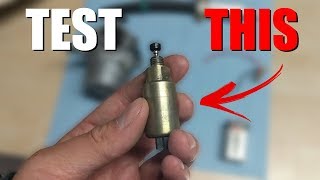
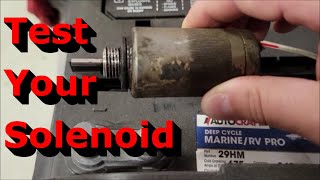
Disconnect the valve's electrical connector. Set a multimeter to Ohms (Ω) and measure resistance across the valve's two terminals. A reading of 'OL' (Over Limit) confirms the internal coil is broken, and the valve requires replacement. Normal resistance is typically 5-20 Ohms.
Tools: Multimeter, service manual (Intermediate) - Check for Voltage and Ground at the Connector
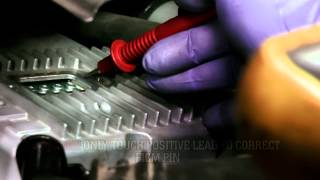
Turn the ignition 'ON' (engine off). Set a multimeter to DC Volts. Probe the power pin on the harness connector while grounding the black lead to the chassis; it must show ~12V. Next, switch to Ohms and test the ground pin for continuity to the chassis. Lack of voltage means a blown fuse or broken power wire; lack of continuity means a broken ground.
Tools: Multimeter, service manual (Intermediate) - Pro Tip: Perform a 'Wiggle Test'
Connect your multimeter to the harness connector to measure voltage. Gently wiggle the wiring harness from the connector back toward the ECM. If the voltage reading drops out while moving a specific section of wire, you have pinpointed the internal break.
Tools: Multimeter with long leads (Advanced) - Pro Tip: Test Ford Powerstroke FICM Voltage
On 6.0L Powerstroke engines, remove the small access plate on the FICM. Set a multimeter to DC Volts. Probe the screw head closest to the driver's side with the key on. The voltage must be 47-49V. If it drops below 45V during cranking or running, the FICM is failing and causing the code.
Tools: Multimeter, Torx driver (T20) (Advanced) - Advanced: Monitor Live Data PIDs
Use an advanced scan tool to monitor the commanded state ('On'/'Off') of the fuel shutoff valve. If the ECM commands the valve 'On' but symptoms persist, the issue is downstream (wiring, relay, valve). If the ECM never commands it 'On', suspect the ECM or a missing sensor input.
Tools: Advanced OBD-II Scan Tool (Advanced) - Advanced: Fuel System Pressure Hold Test
Connect a fuel pressure gauge to the service port. Turn the key 'On' to prime the system, note the peak pressure, and turn the key off. A drop of more than 10 PSI in one minute indicates a mechanical leak (like a stuck injector), ruling out an electrical open circuit as the sole issue.
Tools: Fuel Pressure Gauge Kit (Advanced) - Pro Tip: Use an Oscilloscope to Verify Command Signal
Connect an oscilloscope to the control wire at the solenoid connector. Turn the key on. You must see a clean square wave pattern jumping from 0V to battery voltage. A flat line at 0V confirms no signal is reaching the valve, isolating the fault to the wiring harness or ECM.
Tools: Oscilloscope, wiring diagram (Professional)
When This Code Triggers (Freeze-Frame Conditions)
- Engine Coolant Temp: Varies (Code triggers on a cold engine at key-on or on a fully warmed-up engine during driving.)
- RPM: 0 or 700-2500 (Triggers at key-on (0 RPM) if the initial circuit check fails, or during steady-state cruise when the circuit is continuously monitored.)
- Engine Load: 0-60% (The fault is not load-dependent and occurs at idle or under moderate load conditions.)
- Vehicle Speed: 0-65 mph (An open circuit is detected at a standstill or during highway driving, instantly causing a stall.)
Related Codes
- P0006 — P0006 means 'Fuel Shutoff Valve 'A' Control Circuit Low,' indicating a short to ground. P0005 indicates an open circuit (a complete break). Diagnostically, P0005 shows infinite resistance, while P0006 shows a direct short to ground.
- P0007 — P0007 means 'Fuel Shutoff Valve 'A' Control Circuit High,' indicating a short to power. A multimeter test on a P0005 circuit shows zero voltage, whereas a P0007 circuit shows voltage on a wire that should be a ground.
- P0087 — P0087 'Fuel Rail/System Pressure - Too Low' is a mechanical pressure code. P0005 is a direct cause of P0087; if the shutoff valve fails to open electrically, the system cannot build pressure.
- P000A/B/C/D — These codes relate to 'Camshaft Position Slow Response' and involve variable valve timing. They are completely unrelated to the fuel system and P0005.
Climate & Environmental Factors
- Humid/Wet Climates or Road Salt Usage: Accelerates corrosion on wiring connectors and ground terminals. Moisture intrusion into the solenoid plug is a primary cause of the 'open circuit' condition.
- Cold Climates: Extreme cold reduces battery efficiency, causing severe voltage drops during cranking. This strains voltage-sensitive components like the Ford FICM, dropping output below the critical 45V threshold.
- Vibration and Heat: Constant engine vibration and extreme heat cycles make wiring insulation brittle, leading to chafing and broken wires near engine brackets.
How to Clear the Code After You Fix It
- Reconnect battery if disconnected for repair
- Use an OBD-II scan tool to clear all diagnostic trouble codes (DTCs)
- Perform a complete drive cycle to allow readiness monitors to run
Drive cycle (~20 minutes): Cold start (vehicle sat for 8+ hours). Idle for 2-3 minutes. Drive at a steady speed between 40-60 mph for 15 minutes. Perform a few coast-down decelerations without braking. Allow the engine to idle for another 1-2 minutes before shutdown.
Readiness monitors affected: Fuel System Monitor, Comprehensive Component Monitor
Before emissions retest: drive at least 50 miles to fully set monitors.
Watch out for:
- Disconnecting the battery clears codes but resets all readiness monitors, causing an immediate emissions test failure.
- The code returns immediately upon key-on if the underlying open circuit was not properly repaired.
Will This Fail Emissions / State Inspection?
Yes — this code typically fails an OBD-II emissions inspection.
- California: An illuminated Check Engine Light results in an automatic smog check failure. A full drive cycle must be completed to set readiness monitors before retesting.
- New York: NYS vehicle inspection includes an OBD-II scan. An active P0005 code is an automatic failure.
- Texas: In counties requiring emissions testing, an active P0005 code causes an immediate failure of the OBD-II inspection.
Most Commonly Affected Vehicles
- Ford F-250/F-350 with Powerstroke Diesel (2003-2010) — Extremely common on 6.0L and 6.4L engines. Caused almost exclusively by a failing Fuel Injection Control Module (FICM) or chafed wiring harnesses near the valve covers.
- Dodge Ram 2500/3500 with Cummins Diesel (1994-1998.5) — On 12-valve Cummins engines with the P7100 injection pump, the external fuel shutoff solenoid (OEM 5016244AA) is a notorious failure point.
- Chevrolet/GMC Silverado/Sierra with Duramax Diesel (2001-2010) — The engine harness frequently chafes on brackets near the alternator or sharp metal edges, leading to an open circuit and blown ECM fuses.
- Volkswagen Golf, Passat, Jetta with TDI Diesel (2006-2016) — Points to a fault with the Fuel Pressure Regulating Valve (N276) located directly on the high-pressure fuel pump (HPFP).
- Mercedes-Benz Sprinter (2008-2018) — Wiring and connector corrosion at the high-pressure fuel system shutoff valve are frequent culprits.
- BMW 3 Series, 5 Series, X3, X5 with Diesel Engines (2007-2017) — Indicates an electrical fault in the fuel shutoff valve circuit, which is integrated tightly with the high-pressure fuel system.
- Audi A3, A4, A6, Q5 with TDI Engines (2006-2016) — Similar to VW, Audi TDIs log P0005 when the Fuel Pressure Regulating Valve (N276) or its wiring harness fails.
- Peugeot 308, 407, 508, Partner with HDi Engines (2005-2015) — Indicates a broken wire or failed solenoid in the fuel shut-off valve control circuit.
Manufacturer-Specific Notes
- General: This code is almost exclusively found on diesel engines. Modern gasoline cars integrate fuel shutoff functions directly into the fuel injectors and lack a dedicated shutoff valve.
- Ford: On 6.0L/6.4L Powerstroke diesels, always test the FICM first. A voltage reading below 45V from the FICM is the most common cause for P0005, even if the valve and wiring are perfect.
- Dodge/Cummins: On 1994-1998.5 trucks, the fuel shutoff solenoid is mechanical with an external relay. A faulty starter that stays engaged will burn out the solenoid. Always replace the relay alongside the solenoid.
- General Motors (GM): Duramax engine wiring harnesses are highly susceptible to chafing over the alternator bracket and FICM bracket. Check for Technical Service Bulletins (TSBs) regarding harness routing.
- Volkswagen/Audi: The N276 valve on the high-pressure fuel pump (HPFP) was part of a massive class-action settlement extending warranty coverage. Check with a dealer for any remaining goodwill programs.
Real Owner Stories
2008 Ford F-250 (6.4L Powerstroke) with 180,000 miles experiencing intermittent stalling.
The truck stalled unexpectedly while driving and eventually refused to start. A P0005 code was stored.
Outcome: The mechanic found the main wiring harness rubbed through on a bracket, and the FICM connector was heavily corroded. Repairing the harness and replacing the FICM cost $800.
Lesson: On Powerstroke engines, P0005 is frequently caused by wiring harness chafing or FICM failure. A thorough visual inspection and a FICM voltage test are mandatory first steps.
2005 Chevrolet Silverado (6.6L Duramax LLY) with a crank-no-start condition.
The truck cranked but would not start. The scanner showed a U0105 code (Lost Communication with FICM), which shares circuitry with P0005.
Outcome: The fuse was blown. Replacing it allowed the truck to start immediately, though the underlying cause was a chafed wire that temporarily shorted out.
Lesson: Always check fuses first. A blown ECM or FICM fuse is the easiest fix for a no-start condition. If it blows again, trace the harness for a short.
1997 Dodge Ram 2500 (12v Cummins) with an intermittent no-start.
The truck occasionally failed to start, lacking the audible 'click' from the fuel shutoff solenoid on the P7100 injection pump.
Outcome: Replacing the fuel shutoff solenoid (Cummins P/N 3919422) and its associated relay permanently resolved the issue. The old solenoid coil tested 'OL' for infinite resistance.
Lesson: For older mechanical diesels, the external fuel shutoff solenoid is the primary suspect. Testing its resistance confirms the failure instantly.
How to Prevent This Code From Triggering
- Protect Wiring Harnesses in High-Heat/Vibration Areas (During any major service or repair) — Wrapping vulnerable harness sections with high-temperature cloth tape or heat shield sleeves prevents the chafing and broken wires that trigger P0005.
- Use a Quality Diesel Fuel Lubricity Additive (Every fill-up) — Ultra-low-sulfur diesel (ULSD) lacks lubricity. Additives reduce mechanical stress on high-pressure fuel system valves and pumps, promoting overall longevity.
- Periodically Clean Electrical Connectors (Once every 2-3 years or when exposed) — Disconnecting the solenoid plug, spraying it with electrical contact cleaner, and ensuring a tight connection prevents moisture-induced open circuits.
- Ensure Battery and Charging System Health (Annually) — Weak batteries cause severe voltage drops during cranking, destroying sensitive electronics like the Ford FICM and triggering circuit codes.
Frequently Asked Questions
Can I fix P0005 myself?
Replacing a blown fuse, faulty relay, or external shutoff valve is manageable for DIYers with basic tools. Diagnosing wiring issues or replacing a Ford FICM requires intermediate multimeter skills. Leave ECM replacement and programming to professionals.
What is the most common misdiagnosis for P0005?
The most common mistake is replacing the fuel shutoff valve without testing the circuit. The code returns immediately because the actual problem was a hidden wiring break, a bad ground, or a failing FICM. A full electrical diagnosis is mandatory.
Will P0005 fail an emissions test?
Yes. An active Check Engine Light causes an automatic failure in all jurisdictions. Furthermore, the underlying fault severely disrupts the engine's fuel control, directly impacting emissions output.
Where is the fuel shutoff valve located?
On older diesels like the 12-valve Cummins, it is an external solenoid mounted on the injection pump. On modern diesels like the Duramax or TDI, it is integrated directly into the high-pressure fuel pump. Always consult a vehicle-specific service manual for the exact location.
Will P0005 clear itself?
No, P0005 indicates a hard electrical fault that requires physical repair. The Check Engine Light and drivability issues will persist until the open circuit is fixed. You must clear the code manually with a scan tool afterward.
Can a bad ground cause a P0005 code?
Yes. An electrical circuit requires a complete path to and from the power source. A missing, loose, or corroded ground connection breaks this path, triggering the open circuit code.
What's the difference between P0005, P0006, and P0007?
All three indicate a fault in the same circuit but describe different electrical states. P0005 means an 'Open' (a complete wire break), P0006 means 'Low' (a short to ground), and P0007 means 'High' (a short to power).
Key Takeaways
- Never drive a vehicle with an active P0005 code, as the fuel shutoff valve will unexpectedly close and cause a complete engine stall at highway speeds.
- Always test the fuel shutoff solenoid's internal resistance with a multimeter; a reading of 'OL' (infinite ohms) confirms the part is dead and requires replacement.
- On 2003-2010 Ford 6.0L and 6.4L Powerstroke engines, test the Fuel Injection Control Module (FICM) first, as a voltage drop below 45V causes 70% of P0005 codes.
- Verify the circuit receives a full 12 volts and has a solid chassis ground before buying a new $200+ shutoff valve, as broken wiring causes this code just as often as a failed part.
Helpful Videos
Shop the Parts Behind P0005
Below are the parts most often responsible for code P0005, ranked by how frequently each one is the actual culprit (per the diagnosis above). Tap any to see what we have for your vehicle.



The information in this article is provided for general reference and educational purposes only. Vehicle specifications, procedures, and part compatibility can vary by production date, trim level, and region. Always consult your vehicle's factory service manual and verify part numbers before purchasing or performing repairs. Safety-critical components such as airbags, seat belts, and braking systems should be installed by a qualified professional.
- 🧭 Diagnostic Flowchart
- 🎬 Helpful Videos
- 🛍️ Shop This Part
- What Does P0005 Mean?
- Can I Drive With P0005?
- Common Causes
- Symptoms
- Common Fixes & Costs
- Used vs. New Parts: Buying Guide
- What Happens If You Wait — Timeline
- Cost of Not Fixing It
- Diagnosis Steps
- When This Code Triggers (Freeze-Frame Conditions)
- Related Codes
- Climate & Environmental Factors
- How to Clear the Code After You Fix It
- Will This Fail Emissions / State Inspection?
- Most Commonly Affected Vehicles
- Manufacturer-Specific Notes
- Real Owner Stories
- 2008 Ford F-250 (6.4L Powerstroke) with 180,000 miles experiencing intermittent stalling.
- 2005 Chevrolet Silverado (6.6L Duramax LLY) with a crank-no-start condition.
- 1997 Dodge Ram 2500 (12v Cummins) with an intermittent no-start.
- How to Prevent This Code From Triggering
- Frequently Asked Questions
- Can I fix P0005 myself?
- What is the most common misdiagnosis for P0005?
- Will P0005 fail an emissions test?
- Where is the fuel shutoff valve located?
- Will P0005 clear itself?
- Can a bad ground cause a P0005 code?
- What's the difference between P0005, P0006, and P0007?
- Key Takeaways
- 🎟️ Get 5% Off