

OBD-II Code P0006: Fuel Shutoff Valve 'A' Control Circuit Low
What P0006 means, why it triggers, and how to fix it
- Code P0006 indicates low voltage in the fuel shutoff valve circuit, a critical fault that prevents engine startup or causes sudden stalling.
- A failed fuel shutoff valve solenoid (FCA/MPROP) causes up to 65% of P0006 codes, making it the most frequent point of failure.
- Never drive a vehicle with an active P0006 code, as the engine will shut off unexpectedly at highway speeds and disable power steering and brakes.
- Test the circuit with a multimeter before spending $300 to $900 on a new valve; a $5 blown fuse or corroded ground wire often triggers this exact code.
What Does P0006 Mean?
P0006 means the Powertrain Control Module (PCM) detects abnormally low voltage in the fuel shutoff valve's electrical circuit. This safety valve, primarily found on diesel engines at the high-pressure fuel pump, controls the volume of fuel entering the pump to be pressurized. When the PCM sees this voltage drop, it instantly triggers the Check Engine Light.
Technical definition: P0006 is defined as 'Fuel Shutoff Valve 'A' Control Circuit Low'. The Powertrain Control Module (PCM) detects a voltage signal from the control circuit that falls below the manufacturer's specified range, almost always indicating a short to ground.
Can I Drive With P0006?
No — Do Not Drive. Your engine will not start, or it will stall unexpectedly, leaving you stranded. Driving creates a serious safety hazard due to the sudden loss of power steering and brakes when the engine shuts off.
Common Causes
- Faulty Fuel Shutoff Valve Solenoid (Very Common) — The solenoid valve itself is the most frequent point of failure. An internal short circuit, open circuit, or mechanical seizure within the valve's coil causes the low voltage reading. This accounts for up to 65% of P0006 cases.
- Wiring or Connector Issues (Common) — The wiring harness going to the fuel shutoff valve degrades, corrodes, shorts to ground, or frays due to heat and engine vibration. A loose or corroded electrical connector interrupts the signal.
- Blown Fuse or Faulty Relay (Less Common) — A blown fuse or a failed relay cuts power to the fuel shutoff valve circuit, resulting in an immediate low voltage condition.
- Poor Ground Connection (Less Common) — The circuit requires a solid ground connection. A corroded or loose ground strap creates unwanted resistance and a voltage drop.
- Aftermarket Modifications (Less Common) — Installing incompatible aftermarket performance exhaust systems on diesel engines creates excessive backpressure. This strain on the fuel system causes the shutoff valve circuit to fail, a known issue on Cummins engines.
- Failed Fuel Pressure Regulator (Rare) — A failing fuel pressure regulator on the fuel rail indirectly causes this code by creating erratic fuel pressure that impacts the shutoff valve's electrical load.
- Faulty Powertrain Control Module (PCM) (Very Rare) — The internal driver circuit inside the PCM that controls the shutoff valve fails, or the software corrupts. Consider this only after exhaustively testing all wiring and the valve itself.
Symptoms
- Engine will not start — The fuel shutoff valve sticks closed, preventing fuel from reaching the engine and causing a hard no-start condition.
- Engine stalls while driving — The valve closes intermittently while running, instantly cutting off the fuel supply and stalling the engine.
- Check Engine Light is on — The PCM illuminates the Malfunction Indicator Lamp (MIL) immediately upon detecting the fault.
- Engine continues to run after turning key off ('Dieseling') — The valve fails to close when the ignition switches off, allowing fuel to enter the engine and causing it to sputter and run.
- Reduced engine performance and fuel economy (also visible on scanner) — Improper valve operation disrupts fuel regulation, causing poor acceleration, rough idling, and increased fuel consumption.
Diagnostic Flowchart
Tap your situation to follow the diagnostic path that matches what you're seeing on this code.
Common Fixes & Costs
- Replace Fuel Shutoff Valve Solenoid — Parts: $150 - $500, Labor: $150 - $450, ~1.5 hr book time (Intermediate)
- Repair Wiring or Connector — Parts: $5 - $50, Labor: $200 - $400, ~2.5 hr book time (Intermediate)
- Replace Blown Fuse or Relay — Parts: $5 - $30, Labor: $0 - $65, ~0.2 hr book time (DIY)
- Clean or Repair Ground Connection — Parts: $1 - $10, Labor: $50 - $150, ~0.8 hr book time (DIY)
- Replace Powertrain Control Module (PCM) — Parts: $800 - $2500+, Labor: $150 - $300, ~1.5 hr book time (Professional)
Used vs. New Parts: Buying Guide
When a used part is worth it: A used Fuel Shutoff Valve is never recommended. It is a high-wear electrical and mechanical part. Savings are minimal compared to the risk of premature failure and repeated labor costs.
Donor-vehicle mileage cap: roughly under 40000 miles for the part to have meaningful remaining life.
Donor quality checklist:
- Verify the donor vehicle was not scrapped for engine or fuel system issues.
- Match the part number exactly; revisions are common and may not be interchangeable.
- Inspect the electrical connector for any signs of corrosion, melting, or damage.
Decision logic:
- If The part is under $300 new (aftermarket or OEM) → Always buy new. The labor cost to replace it a second time outweighs any savings from a used part.
- If Vehicle is high mileage (>150K miles) and the repair is for resale → A tested, warranted used part might be a calculated risk, but disclose the repair to the buyer.
- If The part is a known high-failure item (like on many diesel trucks) → Strongly favor a new OEM or reputable aftermarket part with a good warranty.
Warranty tradeoff: Used parts typically offer a 30-90 day warranty, which may not cover labor. New aftermarket parts often come with a 1-year to limited lifetime warranty. New OEM parts carry a 1-2 year warranty.
Worst-case if a used part fails: $300-$600 (Cost of repeat labor plus the need to buy another part if the used one fails).
What Happens If You Wait — Timeline
- Immediate: Code sets, MIL is on. The engine fails to start or stalls immediately. This is a hard fault in a critical safety system. (MPG impact: N/A (Vehicle is likely undrivable)% · Added cost: $150-$300 (Towing and diagnostic fees if stranded))
- 1-7 days (if vehicle runs intermittently): The vehicle experiences random stalling, rough idle, and poor engine performance. Each stalling event is a major safety risk. (MPG impact: 5-15%% · Added cost: $50-$100 (Wasted fuel, potential strain on battery/starter from restart attempts))
- 1-4 weeks: Continued operation with erratic fuel control causes carbon buildup on injectors and pistons. The high-pressure fuel pump strains to compensate. (MPG impact: 10-20%% · Added cost: $300-$800 (Potential damage to starter from hard starting; diagnostic costs increase as symptoms become more complex))
- 1+ month: Fuel starvation or extreme pressure spikes cause catastrophic failure of the high-pressure injection pump, sending metal debris throughout the fuel system. (MPG impact: 20%+% · Added cost: $4000-$10000+ (Full fuel system replacement including pump, rails, lines, and injectors))
Cost of Not Fixing It
- Immediate: Vehicle will not start or stalls while driving, leaving you stranded and creating a severe safety risk. (Added cost: $150-$300 (Towing and emergency diagnostic fees))
- 1-3 months: Repeated starting attempts strain the starter and battery. Incorrect fuel mixtures cause heavy carbon buildup on internal engine components. (Added cost: $300-$700 (Potential starter or battery replacement))
- 3+ months: Severe fuel control issues damage the high-pressure fuel pump or injectors due to fuel starvation or erratic pressure spikes. (Added cost: $2000-$5000+ (High-pressure fuel system components replacement))
Diagnosis Steps
- Verify the Code and Review Data
Use an OBD-II scanner to confirm P0006 is active. Check for related codes (P0005, P0007, P0087) and review freeze frame data to identify engine conditions when the code set.
Tools: OBD-II Scanner (Beginner) - Inspect Fuses and Relays
Locate the fuel shutoff valve circuit fuse and relay in the fuse box. Visually inspect the fuse for a blown filament and swap the relay with a known good one of the same type.
Tools: Owner's Manual, Fuse Puller (Beginner) - Visually Inspect Wiring and Connector
Inspect the wiring harness leading to the fuel shutoff valve. Look for melted insulation, frayed wires, or corrosion near hot exhaust components. Ensure the connector is secure and pins are clean.
Tools: Flashlight (Beginner) - Test for Voltage at the Connector
Disconnect the valve's electrical connector. With the ignition 'On', use a multimeter to check for battery voltage (11-14 Volts) at the power supply wire. Low voltage points to an upstream wiring or relay issue.
Tools: Multimeter (Intermediate) - Test the Fuel Shutoff Valve Solenoid Resistance
Set the multimeter to Ohms (Ω). Measure the resistance between the terminals on the disconnected fuel shutoff valve. Compare to the manufacturer spec (typically 5-15 ohms). Infinite resistance (OL) means an open circuit; near zero means a short.
Tools: Multimeter, Service Manual (Intermediate) - Check for a Short to Ground
With the key off and valve disconnected, check for continuity between the control circuit wire and a known good chassis ground. Continuity indicates a short to ground in the wiring harness.
Tools: Multimeter (Advanced) - Advanced: Analyze Live Data with a Scan Tool
Using an advanced scan tool, monitor 'Desired Fuel Rail Pressure' and 'Actual Fuel Rail Pressure'. If 'Actual' is significantly lower and fluctuates, the metering unit is failing. Monitor the valve command duty cycle percentage for changes with engine load.
Tools: Advanced OBD-II Scan Tool (Advanced) - Advanced: Perform a Voltage Drop Test on the Ground Circuit
Set the multimeter to DC Volts. Place the positive lead on the negative battery terminal and the negative lead on the valve connector's ground pin (while connected and key on). A reading above 200 millivolts indicates excessive ground resistance.
Tools: Multimeter (Advanced) - Pro Tip: Use a Scope to Analyze the Circuit Waveform
Backprobe the control circuit wire at the PCM or valve with an oscilloscope. A clean pulse-width modulated (PWM) square wave should appear when commanded on. Noise or voltage spikes indicate a failing PCM driver or intermittent short.
Tools: Digital Storage Oscilloscope, Service Manual (Professional)
When This Code Triggers (Freeze-Frame Conditions)
- Engine Coolant Temp: 185-210°F (85-99°C) (Fully warmed up, fault often logged during steady operation.)
- Engine RPM: 700-1200 RPM or 1500-2500 RPM (Fault can occur during idle after startup or at a steady cruise.)
- Engine Load: 20-40% (Light to moderate load, not typically during heavy acceleration.)
- Vehicle Speed: 0 MPH or 45-65 MPH (Can trigger at startup (no-start condition) or during highway cruising.)
Related Codes
- P0005 — Indicates a complete loss of signal (Circuit Open), like a cut wire or unplugged component. P0006 means voltage is present but abnormally low.
- P0007 — Indicates voltage is too high (Circuit High), usually from a short to power. Seeing P0006 and P0007 together points to an intermittent short or failing PCM driver.
- P0003 — Involves low voltage in the fuel volume regulator circuit. If both appear, suspect a widespread electrical issue like a bad ground or damaged shared wiring harness.
- P0230 — Indicates a primary fuel pump circuit malfunction. A fault here drops system voltage to the fuel shutoff valve, indirectly triggering P0006.
Climate & Environmental Factors
- High Humidity / Road Salt: Moisture and salt accelerate corrosion on wiring, connectors, and ground points, increasing resistance or causing shorts.
- Extreme Cold: Freezing temperatures make wiring insulation brittle and prone to cracking, exposing wires and creating shorts.
- High Vibration: Rough terrain or high mileage causes wire chafing. Wires rub against the engine block, wearing through insulation and shorting to ground.
How to Talk to a Mechanic About This Code
Say this: "I have a P0006 code on my [Vehicle Year, Make, Model] and it will not start. Please test the electrical circuit, including voltage and ground at the fuel shutoff valve connector, and check the valve's resistance before recommending a replacement."
This signals that you understand the code relates to an electrical circuit fault, not just a bad part. It directs the technician to perform a proper diagnosis to find the root cause (which could be simple wiring) and prevents them from immediately quoting a costly part replacement.
Avoid saying:
- 'My truck won't start, can you fix it?'
- 'My check engine light is on, I think it's the fuel pump.'
- 'Just replace the fuel shutoff valve.'
Questions to ask before authorizing the repair:
- What were the voltage and resistance readings at the fuel shutoff valve?
- Did you find a short or open in the wiring harness?
- If the valve needs replacement, is the new part OEM or aftermarket, and what is the warranty on the part and labor?
- Can you provide the freeze-frame data from the original scan?
Where to Take It: Dealer vs Independent vs Chain
- Dealer:
Best for: Vehicles still under a powertrain or emissions warranty., Complex, manufacturer-specific diesel engine issues (e.g., BMW, Mercedes-Benz)., If a known Technical Service Bulletin (TSB) or recall exists for the issue.
Downsides: Typically the highest labor rate and part costs., May be less willing to perform a wiring repair and more likely to replace a full harness. (Typical cost: +50% vs. baseline) - Independent Shop:
Best fit for most cases. Find a reputable shop with diesel or strong electrical diagnostic experience. They are more likely to trace and repair a wiring fault.
Best for: Out-of-warranty diesel trucks (Ford, GM, Ram) where P0006 is a common, well-understood issue., Shops that specialize in diesel or electrical diagnostics., Cost-conscious owners who want a thorough diagnosis.
Downsides: Quality varies greatly; look for ASE certifications and positive reviews related to diesel or electrical work., May lack access to the very latest manufacturer software updates. (Typical cost: +0% vs. baseline) - Chain Shop:
AVOID. P0006 requires specialized electrical and fuel system knowledge beyond the scope of most chain shops. High risk of misdiagnosis.
Best for: Not recommended for this repair.
Downsides: Technicians often lack the specialized training for high-pressure diesel fuel systems., High pressure to sell parts leads to replacing the valve without proper electrical diagnosis, failing to fix the root cause. (Typical cost: -10% vs. baseline)
When to Walk Away From the Repair
If the estimated repair cost exceeds 50% of the vehicle's private-party value, consider selling it as-is or trading it in.
- Car worth $20000, fix is $900: Fix it. This is a routine repair cost for a modern diesel truck and is well below the threshold.
- Car worth $8000, fix is $4500: Walk away. The repair cost is over 50% of the truck's value, and this indicates a catastrophic failure (like the injection pump), which could have other hidden damages.
- Car worth $12000, fix is $2800: Borderline. This likely involves a PCM replacement. Get a second opinion to confirm the PCM is truly faulty before proceeding.
What Scan Tool You Need for This Code
Minimum: A scanner that can read and graph live data, specifically 'Actual' vs. 'Desired' Fuel Rail Pressure.
A basic $20 code reader will only show 'P0006'. It cannot show you the live data from the fuel pressure sensors or the valve's command signal, which is essential to know if the problem is the valve, the wiring, or a fuel supply issue (like a weak lift pump).
Budget: BlueDriver Pro Scan Tool (~$100) — Reads codes, provides freeze-frame data, and graphs live data PIDs like fuel pressure.
Mid-range: Foxwell NT510 Elite (~$180) — Adds bidirectional controls to command the fuel pump or actuator on and off directly.
Professional: Autel MaxiCOM MK808 / MK906BT (~$500-1200) — Provides full bidirectional control, OEM-level diagnostics, and performs special functions like injector coding.
Rent vs buy: For P0006, buying a scanner is highly recommended. A budget pick like the BlueDriver is a valuable tool for any car owner. If you have a diesel truck, a mid-range bidirectional scanner is a wise investment that will pay for itself by helping you avoid just one misdiagnosis.
How to Clear the Code After You Fix It
- Use an OBD-II scan tool to clear the P0006 code.
- Reconnect the battery if it was disconnected for the repair.
- Perform a complete drive cycle to allow the ECU to run its self-tests.
Drive cycle (~20 minutes): Cold start the vehicle after sitting for 8 hours. Idle for 3 minutes with A/C and defroster on. Drive for 7 minutes at a steady 55 MPH. Decelerate to 20 MPH without braking, then accelerate back to 55 MPH for 5 minutes. Idle for 30 seconds before shutting off.
Readiness monitors affected: Comprehensive Component Monitor, Fuel System Monitor
Before emissions retest: drive at least 50 miles to fully set monitors.
Watch out for:
- Simply disconnecting the battery will clear the code but not the underlying readiness monitor status, which can cause an emissions test failure.
- The code will return immediately if the root electrical fault was not properly repaired.
Will This Fail Emissions / State Inspection?
Yes — this code typically fails an OBD-II emissions inspection.
- California: An active P0006 code results in an automatic smog check failure. All readiness monitors must be 'Ready' before a re-test, which requires a complete drive cycle after the repair.
- New York: The NYS DMV vehicle safety/emissions inspection includes an OBD-II scan. A Check Engine Light with code P0006 is an automatic failure.
- Texas: In counties requiring emissions testing, a vehicle with an illuminated Check Engine Light for P0006 will fail the OBD portion of the inspection.
Most Commonly Affected Vehicles
- Ford F-250/F-350 with Power Stroke Diesel (2011-2019) — The Fuel Metering Unit on the CP4 high-pressure pump is a common failure point. Wiring harness issues where the harness rubs against engine components are also frequent.
- Chevrolet / GMC Silverado / Sierra with Duramax Diesel (2011-2016) — The Fuel Metering Unit (MPROP) on the CP4 injection pump is a known failure item. A recall (N232412280) exists for some 2022-2024 models for a related valve defect.
- Ram 2500/3500 with Cummins Diesel (2007-2018) — The Fuel Control Actuator (FCA) on the CP3 injection pump is a very common failure point. Aftermarket exhaust modifications are heavily linked to this code in Cummins engines.
- Toyota / Lexus Hilux, Land Cruiser Prado, IS 220d (D-4D Diesel) (2005-2015) — On these D-4D diesel engines, the component is called a Suction Control Valve (SCV). Electrical failure of the SCV is a notorious cause of P0006 and starting issues.
- Hyundai / Kia Tucson, Sorento, Telluride (CRDi / Smartstream Diesel) (2012-2022) — This code sets due to a short circuit in the wiring for the Fuel Pressure Control Valve (FPCV) or an internal failure of the valve solenoid itself.
- Subaru WRX, STI, Ascent (DIT Turbo Engines) (2015-2021) — On these direct-injection turbo models, the fuel pressure control solenoid circuit develops shorts, particularly where the wiring routes near the turbocharger heat shield.
- Volkswagen Golf TDI, Passat TDI, Caddy TDI (2004-2015) — Commonly affected by this code, pointing to a defective N276 Fuel Pressure Regulating Valve or wiring problems in the control circuit.
- Ford Transit, Focus TDCi, Mondeo TDCi (2000-2015) — These European Ford diesel models frequently experience this code due to issues with the fuel cut-off valve and its electrical circuit.
- Peugeot 206, 307, 407 (2001-2012) — These models frequently log the P0006 code, typically caused by a faulty fuel cut-off valve on the high-pressure pump.
- BMW X5, 3-Series, 5-Series (Diesel Models) (2007-2018) — P0006 in BMW diesel vehicles points to a failure of the fuel quantity control valve or its associated wiring. Diagnosis requires BMW-specific software (ISTA/D).
Manufacturer-Specific Notes
- Cummins (Ram): Called a Fuel Control Actuator (FCA) on the CP3 pump. Failure prevents starting. TSB D-24-10 extends emissions warranty for 2013-2019 models.
- GM (Duramax): Recall N232412280 covers 2022-2024 Duramax models for a defective solenoid causing stalling. On 2011-2016 LML engines, it is called the Fuel Metering Unit (MPROP).
- Toyota (D-4D): Known as the Suction Control Valve (SCV) on D-4D diesels. It is a notorious failure item causing no-starts and stalling.
- Mercedes-Benz: Older diesels (OM60x) use a vacuum-operated diaphragm instead of an electronic solenoid. Vacuum leaks mimic P0006 symptoms but set different codes.
Real Owner Stories
2008 Dodge Ram 2500 with 6.7L Cummins at 165K miles
Truck would not start after sitting overnight. Check Engine Light was on with code P0006.
What they tried:
- Checked fuses, all were good.
- Attempted to start the truck after unplugging the Fuel Control Actuator (FCA) electrical connector.
Outcome: The truck started immediately after the FCA was unplugged, confirming the FCA was the faulty component. Replaced the FCA (Bosch part) for around $200. The repair took less than an hour, and the code was cleared.
Lesson: A quick way to test a faulty FCA on Cummins engines is to unplug it. If the engine starts, the FCA is the cause. Do not drive the vehicle this way; it is only for diagnosis.
2015 Ford F-250 with 6.7L Power Stroke at 200K miles
P0006 code appeared after driving through a heavy rainstorm. The truck experienced intermittent stalling at low speeds.
What they tried:
- Initially suspected the Fuel Control Actuator (also called a metering unit on this engine) was failing.
- Upon closer inspection of the engine bay, found a corroded connector in the main wiring harness near the firewall.
Outcome: The corroded connector was the source of the low voltage signal. After cleaning the connector pins and applying dielectric grease, the connection was restored. The P0006 code was cleared and did not return.
Lesson: Environmental factors like moisture cause wiring issues that mimic a failed component. A thorough visual inspection of the wiring harness is a critical first step.
2012 Chevy Silverado 2500HD with 6.6L Duramax LML at 110K miles
Engine stalled on the highway and would not restart. Towed to a shop, which diagnosed P0006 and P0087 (Fuel Rail/System Pressure - Too Low).
What they tried:
- Shop replaced the fuel metering unit (MPROP) on the CP4 injection pump, but the codes returned.
- They then replaced the fuel filter, with no change.
- Finally, a pressure test revealed the lift pump was weak and not supplying enough fuel to the CP4 pump.
Outcome: The root cause was a failing in-tank lift pump. The lack of supply pressure was starving the high-pressure pump, causing the metering valve circuit to register low voltage under load. Replacing the lift pump resolved both the P0087 and P0006 codes.
Lesson: When multiple fuel codes appear, the problem lies with a shared component. A low-voltage code (P0006) with a low-pressure code (P0087) strongly suggests a fuel supply issue like a failing lift pump.
How to Prevent This Code From Triggering
- Use a high-quality diesel fuel additive with added lubricity (Every fill-up) — Additives restore lubrication, reducing friction and extending the life of mechanical parts within the valve and pump.
- Replace fuel filters at or before the manufacturer's recommended interval (Per vehicle maintenance schedule (e.g., every 15,000 miles)) — A clogged filter restricts fuel flow, forcing the fuel pump and control valve to work harder.
- Periodically inspect and protect the engine wiring harness (Every oil change or 6 months) — Applying protective conduit or heat-resistant tape to vulnerable areas prevents wire chafing and shorts.
- Clean and apply dielectric grease to critical electrical connectors (Once every 1-2 years, or when working on the system) — Dielectric grease seals the connector from moisture and oxygen, preventing corrosion that causes low voltage signals.
Frequently Asked Questions
What are common mistakes when diagnosing P0006?
The most common mistake is replacing the fuel shutoff valve without performing a full electrical diagnosis. The root cause is often a cheaper fix, like a corroded wire, loose connector, or blown fuse. Always use a multimeter to test voltage and resistance first.
Can aftermarket parts cause a P0006 code?
Yes. Aftermarket modifications, especially performance exhaust systems on diesel trucks, increase backpressure. This strains the fuel shutoff valve and its control circuit, leading to electrical failure and triggering P0006.
How much does it cost to fix P0006?
Diagnostic fees average $100 to $200. Simple electrical fixes cost under $150, while repairing damaged wiring runs $200 to $400. Replacing the fuel shutoff valve costs $300 to $900 total.
Can I fix a P0006 code myself?
Simple fixes like replacing a blown fuse or cleaning a ground connection are easy DIY tasks. Replacing the valve or repairing wiring requires intermediate skills and tools. Accurately diagnosing the exact cause is tricky, so professional diagnosis is recommended to avoid wasting money.
Will P0006 clear itself?
No, P0006 indicates a hard fault in a critical circuit and will not clear on its own. You must diagnose and repair the underlying electrical problem before clearing the code with a scan tool.
Why did my P0006 code come back after a repair?
A returning code means the root cause was not correctly identified or the repair was incomplete. This happens due to a faulty replacement part, an unfound intermittent wiring short, or a rare PCM issue.
What's the difference between 'Circuit Low' and 'Circuit Open'?
A 'Circuit Low' (P0006) code means the PCM sees voltage lower than expected, often pointing to a short to ground. A 'Circuit Open' (P0005) code means the PCM detects zero voltage, indicating a cut wire or unplugged component.
Key Takeaways
- Code P0006 indicates low voltage in the fuel shutoff valve circuit, a critical fault that prevents engine startup or causes sudden stalling.
- A failed fuel shutoff valve solenoid (FCA/MPROP) causes up to 65% of P0006 codes, making it the most frequent point of failure.
- Never drive a vehicle with an active P0006 code, as the engine will shut off unexpectedly at highway speeds and disable power steering and brakes.
- Test the circuit with a multimeter before spending $300 to $900 on a new valve; a $5 blown fuse or corroded ground wire often triggers this exact code.
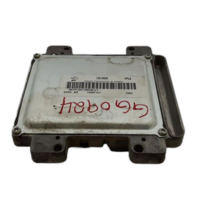
Shop the Parts Behind P0006
Below are the parts most often responsible for code P0006, ranked by how frequently each one is the actual culprit (per the diagnosis above). Tap any to see what we have for your vehicle.



The information in this article is provided for general reference and educational purposes only. Vehicle specifications, procedures, and part compatibility can vary by production date, trim level, and region. Always consult your vehicle's factory service manual and verify part numbers before purchasing or performing repairs. Safety-critical components such as airbags, seat belts, and braking systems should be installed by a qualified professional.
- 🧭 Diagnostic Flowchart
- 🛍️ Shop This Part
- What Does P0006 Mean?
- Can I Drive With P0006?
- Common Causes
- Symptoms
- Common Fixes & Costs
- Used vs. New Parts: Buying Guide
- What Happens If You Wait — Timeline
- Cost of Not Fixing It
- Diagnosis Steps
- When This Code Triggers (Freeze-Frame Conditions)
- Related Codes
- Climate & Environmental Factors
- How to Talk to a Mechanic About This Code
- Where to Take It: Dealer vs Independent vs Chain
- When to Walk Away From the Repair
- What Scan Tool You Need for This Code
- How to Clear the Code After You Fix It
- Will This Fail Emissions / State Inspection?
- Most Commonly Affected Vehicles
- Manufacturer-Specific Notes
- Real Owner Stories
- 2008 Dodge Ram 2500 with 6.7L Cummins at 165K miles
- 2015 Ford F-250 with 6.7L Power Stroke at 200K miles
- 2012 Chevy Silverado 2500HD with 6.6L Duramax LML at 110K miles
- How to Prevent This Code From Triggering
- Frequently Asked Questions
- What are common mistakes when diagnosing P0006?
- Can aftermarket parts cause a P0006 code?
- How much does it cost to fix P0006?
- Can I fix a P0006 code myself?
- Will P0006 clear itself?
- Why did my P0006 code come back after a repair?
- What's the difference between 'Circuit Low' and 'Circuit Open'?
- Key Takeaways
- 🎟️ Get 5% Off