

P0008 on 2008-2017 Buick Enclave: Stretched Timing Chain Causes and Fixes
On a 2008-2017 Buick Enclave, code P0008 almost always means the timing chains have stretched. This is a very common, serious, and expensive repair due to high labor costs, typically ranging from $2,500 to $4,500. Do not ignore this code, as continued driving risks the chain breaking, which can lead to catastrophic, non-repairable engine failure.
- P0008 on a 3.6L Buick Enclave is a serious code that almost always means the timing chains have stretched.
- Do not waste money replacing camshaft or crankshaft sensors; the problem is mechanical, not electrical.
- The repair is very labor-intensive and expensive, typically costing $2,500-$4,500. This is not a DIY job for a novice.
- Using high-quality full synthetic 5W-30 oil and adhering to strict oil change intervals is the best way to prolong the life of the timing chains.
- Driving with this code is risky and can lead to the timing chain breaking, which would destroy the engine.
What's Unique About the 2008-2017 Buick Enclave
The first-generation Buick Enclave and its GM Lambda siblings (Chevy Traverse, GMC Acadia, Saturn Outlook) with the 3.6L V6 engine are notorious for premature timing chain wear, especially in the 2008-2012 models. This widespread issue was caused by a combination of an early timing chain design prone to stretching due to wear in the pin holes, and an overly optimistic Oil Life Monitor (OLM) system that encouraged excessively long oil change intervals. The degraded oil could not properly lubricate the chains and hydraulic tensioners, accelerating wear. The problem was so prevalent that General Motors issued a Special Coverage Adjustment (#11340C) that extended the warranty for this specific repair to 10 years/120,000 miles, acknowledging the defect.
Symptoms You May Notice
- Check Engine Light illuminated
- Rattling or scraping noise from the engine, especially on a cold startup
- Rough or unstable idle
- Reduced engine power and poor acceleration
- Decreased fuel economy
- Slightly longer engine crank time before starting
- Replacing the camshaft or crankshaft position sensors. The P0008 code indicates a mechanical correlation problem between the sensors, not a failure of the sensors themselves. Replacing sensors is a common and costly mistake 🎬 Watch: How to fix a P0008 code on GM 3.6L engines that will not fix a stretched timing chain.
Most Likely Causes
- Stretched Timing Chains 🔴 High Probability → Shop Engine Timing Chain The original timing chains used on the 3.6L V6 engines were of a design susceptible to premature stretching as the chain link pin holes would elongate. This was exacerbated by long oil change intervals recommended by the factory Oil Life Monitor, leading to oil degradation and increased wear on the chains and tensioners.
How to confirm: Use an advanced scan tool to monitor camshaft position deviation data. A deviation of more than 4-6 degrees from the crankshaft at idle confirms a mechanical timing issue. A lab scope can also be used to visually compare cam and crank sensor waveforms for the most definitive non-invasive diagnosis. 🎬 Watch: How to use a lab scope to diagnose timing issues
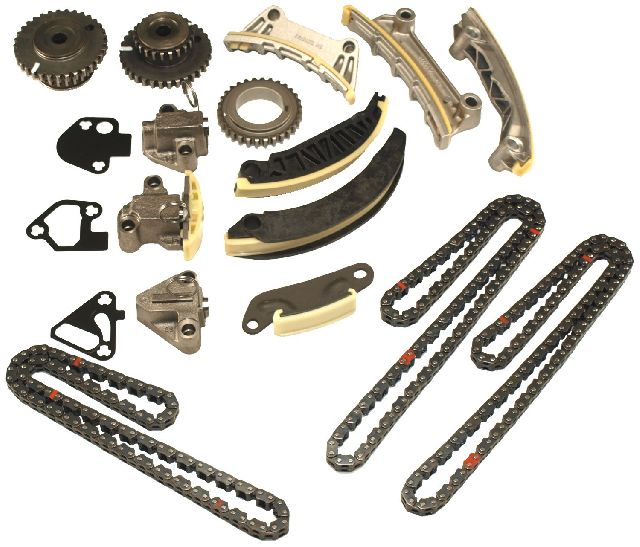
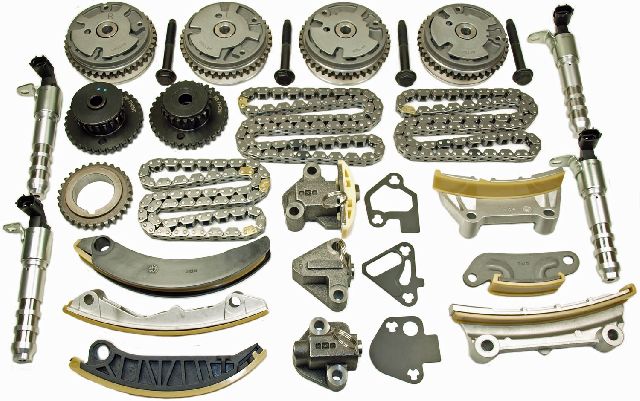
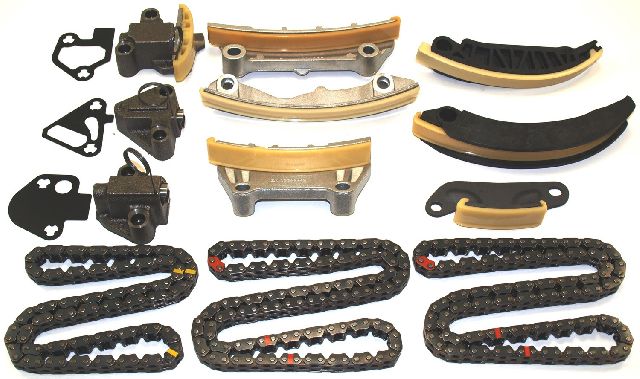
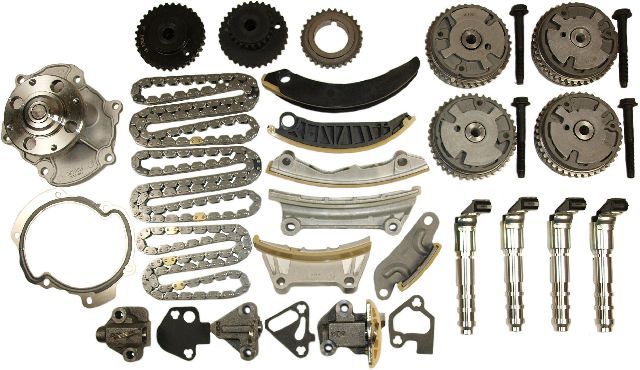
Typical fix: Replacement of all three timing chains, all tensioners, and all guides with an updated kit. The water pump is often replaced at the same time as it must be removed for access.
Est. part cost: $400-$1300 - Worn or Failed Timing Chain Tensioners 🔴 High Probability → Shop Engine Timing Chain The hydraulic tensioners rely on clean oil at the proper pressure to keep the chains tight. Degraded or low-viscosity oil can cause them to fail, stick, or lose pressure, allowing slack in the chains which accelerates wear and can cause rattling noises.
How to confirm: A distinct rattling noise on cold starts is a strong indicator. They are always diagnosed during the physical inspection when replacing the timing chains and are considered a mandatory replacement item.
Typical fix: Tensioners are always replaced as part of a complete timing chain service. They are included in all comprehensive timing chain kits.
Est. part cost: $100-$250 (if bought separately, but always part of a kit) - Low or Degraded Engine Oil 🟡 Medium Probability These engines can consume oil, and the original Oil Life Monitor calibration allowed for very long change intervals (up to 10,000-12,000 miles), leading to oil breakdown and sludging. The entire timing system, including VVT phasers and tensioners, is critically dependent on oil pressure and quality.
How to confirm: Check the oil level on the dipstick. Inspect the oil for cleanliness and proper viscosity. An oil pressure test can also be performed. This is the first and most important check.
Typical fix: Perform an oil and filter change using a full synthetic 5W-30 oil that meets GM's dexos1 specification. Clear the codes and see if P0008 returns. If it does, the chains have likely suffered permanent stretch.
Est. part cost: $50-$100
Rare But Worth Checking
- Faulty Camshaft Actuator Solenoid (VVT Solenoid): → Shop Engine Camshaft A solenoid that is stuck or clogged with debris can sometimes cause timing correlation codes. While not the most common cause for P0008, it's much easier and cheaper to check than the timing chains. You can try swapping solenoids between banks to see if the code changes (e.g., to P0009) or moves to a different cam code (e.g., P0017).
- Slipped Crankshaft Reluctor Wheel: → Shop Engine Crankshaft GM issued a TSB (PIP3423, latest revision PIP3423P) that mentions a slipped crankshaft position sensor reluctor wheel as a possible, though rare, cause for P0008 and related codes. This requires crankshaft replacement if confirmed and can sometimes be inspected with a borescope through the crank sensor hole. NHTSA ODI #11481701 notes that a manufacturer bulletin for this code indicates the crankshaft moves and gears may be affected.
Diagnosis Steps
- Verify the code P0008 (and any other codes) with an OBD-II scanner.
- Check the engine oil level and condition. If low or dirty, perform an oil and filter change with the correct 5W-30 synthetic oil, clear the code, and see if it returns. This is the first and most critical step. NHTSA ODI #11265888 describes a case where the vehicle lost power and threw codes P0008, P0017, and P0009, with the shop discovering the oil was 3 quarts low despite a recent change.
- Listen for a distinct rattling or chain-slap noise from the engine, particularly on the passenger side (front of the engine) during a cold start.
- Using an advanced scan tool, access live data and monitor the 'Camshaft Position Variance' or similar PIDs for Bank 1. A consistent deviation greater than 4-6 degrees at idle or steady RPM confirms a timing chain issue.
- If scan tool data is inconclusive, a lab scope can be used to capture and compare the crankshaft position sensor signal with the Bank 1 camshaft position sensor signals to visually confirm the timing relationship.
- As a preliminary check, consider swapping the Bank 1 camshaft actuator solenoids with the Bank 2 solenoids to see if the fault code follows them (e.g., P0008 changes to P0009).
- If a timing chain issue is confirmed, the next step is mechanical disassembly to replace the timing chains, tensioners, and guides.
Parts You'll Likely Need
- Engine Timing Chain Kit
(OEM #12651450 (for 2009 LLT), 12650231 (for 2008 LY7))— This is the definitive fix. A complete kit ensures all worn components (chains, guides, tensioners) are replaced with updated parts to prevent a recurrence. Verify the correct kit by VIN.
Trusted brands: ACDelco (OEM), Cloyes
OEM price range: $450-$700
Aftermarket price range: $300-$500 - Engine Oil and Filter — Crucial for the health of the new timing components. Always use a full synthetic 5W-30 oil meeting GM dexos1 specifications. Post-repair, many experts recommend 5,000-mile change intervals regardless of the OLM.
Trusted brands: ACDelco, Mobil 1, Pennzoil
OEM price range: $50-$80
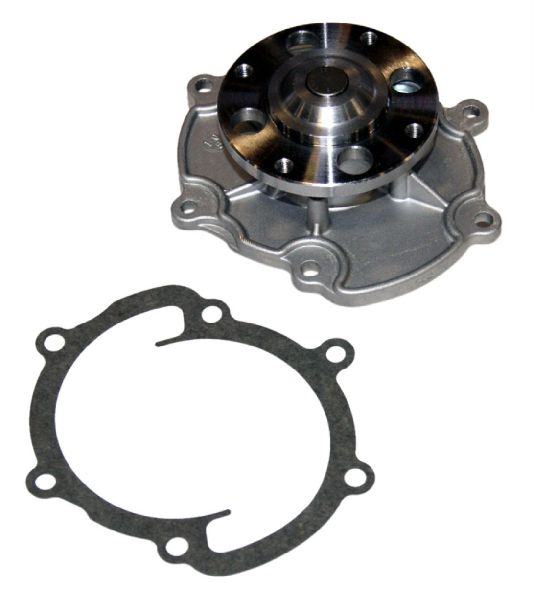
Aftermarket price range: $40-$60 - Water Pump
(OEM #12682295 (ACDelco))— The water pump must be removed to access the timing cover. Given the high labor cost, it is highly recommended to replace it preventatively during the timing chain job.
Trusted brands: ACDelco (OEM), Gates, Bosch
OEM price range: $150-$250
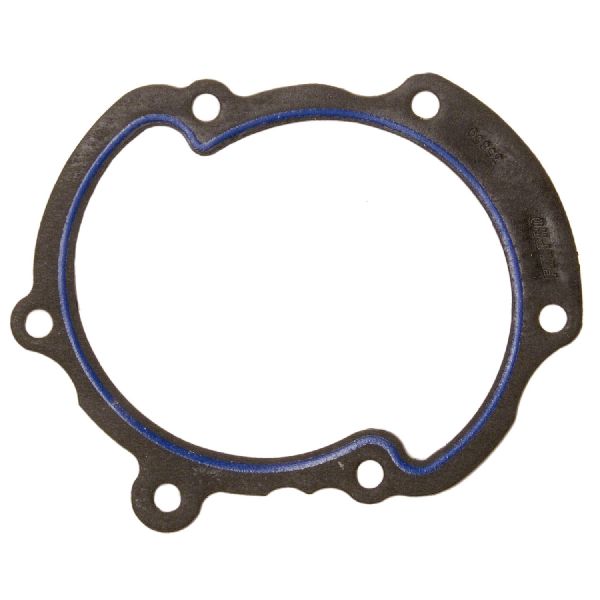
Aftermarket price range: $80-$150 - Various Gaskets and Seals — Jobs of this magnitude require replacing the timing cover gasket, valve cover gaskets, crankshaft seal, and other various seals that are removed during disassembly. These are typically included in high-quality timing chain kits.
Trusted brands: ACDelco, Fel-Pro
OEM price range: $100-$200
Aftermarket price range: $75-$150
Related Codes That Often Appear With This One
- P0017 — Exhaust Camshaft Position Correlation Bank 1. This code often appears with P0008 as they both relate to timing errors on Bank 1, strongly indicating a stretched timing chain.
- P0016 — Intake Camshaft Position Correlation Bank 1. Similar to P0017, this points to a timing misalignment on Bank 1.
- P0009 — Engine Position System Performance Bank 2. If this code is present with P0008, it indicates the timing issue is affecting both cylinder banks, which is common when the primary timing chain is stretched.
- P0018 / P0019 — Camshaft Position Correlation codes for Bank 2. Seeing these with Bank 1 codes reinforces that the issue is with the primary timing components affecting the entire engine.
Technical Service Bulletins (TSBs) & Recalls
- 11340C: Special Coverage Adjustment for premature timing chain wear on specific model years, including the 2009 Enclave.
- 12-06-01-009F: Details the updated timing chain service kits for various GM vehicles with the 3.6L V6 experiencing codes like P0008, P0009, P0016-P0019.
- PIP3423M: Instructs technicians to check for loose timing chains or a slipped crankshaft reluctor wheel when these codes are present.
Platform-Specific Known Issues
- Special Coverage Adjustment #11340C: GM issued this program for certain 2009 Enclave models (and other GM vehicles), extending the warranty for premature timing chain wear to 10 years or 120,000 miles. The program also included an ECM reprogram to adjust the oil life monitor for more frequent changes. While this program is now expired for all vehicles due to age, it serves as an official acknowledgment of the widespread defect.
- Oil Life Monitor (OLM) Calibration: The original OLM software allowed for excessively long oil change intervals, which was a primary contributor to premature chain wear. Even after repair, it is critical to change the oil more frequently (e.g., every 5,000 miles) than the monitor might suggest.
- Engine-Out vs. Engine-In Repair: Dealerships and many independent shops will drop the entire front subframe with the engine and transmission to perform this repair, as it provides better access. Some skilled DIYers and technicians have performed the job with the engine in the vehicle, but it is extremely difficult due to tight clearances against the firewall. NHTSA ODI #11241876 mentions a dealer estimate of $2,500 for this repair, noting the engine must be pulled.
Mechanic-Grade Diagnostic Values
- Camshaft Position Actuator Solenoid Resistance (2009-2017 LLT Engine) — expected: 7 to 12 Ohms. Failure: A reading of 0 Ohms (short), infinite/OL (open), or significantly outside the expected range indicates a failed solenoid coil.
- Camshaft Position Actuator Solenoid Resistance (2008 LY7 Engine) — expected: 4.6 to 7.5 Ohms. Failure: A reading outside this range indicates a failed solenoid coil. Note the different specification for the earlier engine.
- Engine Oil Pressure (Warm Engine) — expected: Minimum of 24 psi at 1,000 RPM, 34 psi at 2,000 RPM, and 38 psi at 4,000 RPM.. Failure: Pressure below these minimums can starve VVT components and tensioners, indicating a worn oil pump or other internal issues.
- Scan Tool 'Camshaft Position Variance' PID — expected: < 2-4 degrees at idle.. Failure: A consistent deviation greater than 4-6 degrees between 'Desired' and 'Actual' camshaft position angles strongly suggests a mechanical timing issue like a stretched chain.
- Crankshaft Reluctor Wheel Position Check (per TSB PIP3423P) — expected: 25mm to 26mm from the end of the machined surface of the crankshaft throw to the edge of the open space in the reluctor.. Failure: A measurement outside this range, or visible offset, indicates the reluctor has slipped, requiring crankshaft replacement.
Scan Tool Commands That Help
- GDS2 / Tech2: Camshaft Position Actuator Control / Test — This bidirectional command allows a technician to manually command the VVT solenoids to advance or retard timing while monitoring the actual cam angle on the scan tool. It helps verify if the solenoids and phasers are responding correctly, isolating a hydraulic/mechanical issue from an electrical one.
- GDS2 / Tech2: Crankshaft Position Variation Relearn — This procedure is critical after replacing timing chains, camshafts, the crankshaft, or the ECM. It synchronizes the ECM to the new mechanical tolerances of the crank reluctor wheel. Failure to perform this relearn can cause codes like P0008 to return even after a successful mechanical repair.
Wiring & Ground Locations
- G103 / G104 — Primary engine grounds typically located on the cylinder heads. G103 may be on the front of the passenger side (Bank 1) head, and G104 on the rear of the driver's side (Bank 2) head.. The ECM and its sensors, including the camshaft and crankshaft position sensors, rely on a stable ground reference. A loose or corroded ground at these points can cause erratic sensor signals, potentially leading to false timing correlation codes.
- G110 — Located on the right rear of the engine, sometimes mounted to the back of the cylinder head.. This is another primary ground point for the engine control module and its sensors. A poor connection here can cause a variety of difficult-to-diagnose electrical issues, including false sensor codes.
- Camshaft Position Sensor Connector — On the valve covers, near the VVT solenoids. Bank 1 (firewall side) sensors are difficult to access.. The plastic connectors and wiring can become brittle from heat cycles, leading to poor connections. TSB PI0090C noted issues with poor terminal connections on these sensors. While less common than chain stretch, a faulty connection can mimic sensor failure.
Real Owner Repair Stories
- NHTSA ODI #11121254 — An owner reported that at 48,800 miles, the check engine light came on with code P0008. Upon inspection, it was discovered the timing chain had excessive wear, requiring the replacement of the chain, both camshafts, valve cover gaskets, and other components.
- NHTSA ODI #11197317 — An owner experienced the "dreaded timing chain codes" P0008 and P0017 at 128,000 miles. They noted that most shops refused to touch the vehicle because of the extensive nature of the repair.
- YouTube user comment (2010 Buick Enclave, 150,000 miles) — Check Engine Light with codes P0008 and P0017.
❌ Tried (didn't work) Replaced VVT solenoids, Replaced crank position sensor, Performed an oil change
✅ What actually fixed it The codes remained after replacing sensors, which led to the conclusion that the timing chains were stretched. The user proceeded with a full timing chain replacement job to resolve the codes. - YouTube video by a DIY mechanic (2009 Buick Enclave) — Check Engine Light with code P0008, poor engine performance.
✅ What actually fixed it The owner performed a complete timing chain replacement with the engine still in the vehicle. He noted several 'gotchas', including the need to remove the power steering pump and all four camshaft actuators (phasers) to get the timing cover off. He described the job as 'miserable' but ultimately successful in fixing the P0008 code.
OEM Part Supersession History
12651450 (LLT Engine Kit)→12679117, 12693218, and finally 12700436.— GM progressively updated the timing chain kits to improve durability and address the premature stretching issue. Later kits feature chains of a more robust design.
Heads up: While older kits may physically fit, only the latest available part number should be used to ensure the most durable components are installed to prevent a repeat failure.12650231 (LY7 Engine Kit)→12679116, 12693219, and finally 12700435.— Continuous improvement to combat premature chain stretching, as detailed in Special Coverage bulletin 11340C.
Heads up: Using old stock or an early-design aftermarket kit risks a repeat failure. Always use the latest revision.
Model Year Variations Within This Range
- 2008 vs. 2009-2017: The VVT actuator solenoids have different electrical resistance specifications. The 2008 LY7 engine solenoid should measure between 4.6-7.5 Ohms, while the 2009-2017 LLT engine solenoid should measure between 7-12 Ohms. Using the wrong part or test specification will lead to misdiagnosis.
- 2008-2011: These earlier models with the LY7 and early LLT engines are significantly more prone to premature timing chain stretch. GM implemented an improved timing chain design starting around the 2012 model year, making the issue less common, but not impossible, on later vehicles.
- 2009+: The 2009 and later models use the LLT direct-injected engine. This adds a high-pressure fuel pump driven by a camshaft. While not a direct cause of P0008, it adds complexity to the valvetrain system compared to the 2008 LY7 port-injected engine.
Diagnostic Flowchart
Other Known Issues on This Vehicle
Issues unrelated to this code that are worth knowing about as an owner of this generation:
- Cracked 3-5-R Transmission Wave Plate 🔴 High — Very common on 2007-2009 models with the 6T70/6T75 transmission, typically occurring between 20,000 and 80,000 miles. Results in loss of 3rd, 5th, and Reverse gears. (Ref: Special Coverage Adjustment #14404B extended warranty to 10 years/120,000 miles.)
- Power Steering Pump Failure / Rack Leaks 🟠 Medium — Widespread issue on 2008-2012 models, causing whining noises, intermittent loss of power assist, and fluid leaks from the pump or steering rack. (Ref: Special Coverage Adjustment #14329 extended warranty to 10 years/150,000 miles for pump replacement and related repairs.)
- Leaking Water Pump 🟠 Medium — Common failure item, often noticed by coolant smell, puddles under the vehicle, or rising engine temperatures. The pump is located in a difficult-to-access area, making replacement labor-intensive.
- Worn/Failed Upper Engine Torque Strut Mount 🟡 Low — The upper engine mount (dogbone mount) frequently fails, causing a 'clunk' noise when accelerating or shifting gears as the engine rocks excessively.
- Seat-Mounted Side Impact Airbag (SIAB) Wiring 🔴 High — A high-resistance connection in the wiring harness under the front seats can disable the side airbags and seatbelt pretensioners, illuminating the airbag warning light. (Ref: Recall #14030 / NHTSA 14V118000. Also covered under Special Coverage #14330.)
Used vs. New Parts: Buying Guide for This Vehicle
When a used part is the smart pick: For this specific repair, using used parts is strongly discouraged. The primary cause of failure is wear (stretched chains), and the labor cost is extremely high. Installing used timing components would be a significant gamble with a high probability of premature failure, forcing you to pay for the 20+ hour labor job a second time.
What to inspect on the donor part:
- Not applicable. Do not use donor/junkyard timing components for this repair.
OEM-only on this vehicle (don't cheap out):
- While not strictly OEM-only, the timing chain kit is the most critical part of the repair. Using a genuine ACDelco (GM) kit with the latest part number is the safest choice to ensure you get the most updated, durable chain design.
Aftermarket brands forum-validated for this vehicle:
- Cloyes: Widely regarded in professional and DIY communities as a high-quality OEM equivalent for GM timing systems. They are a major OEM supplier and their aftermarket kits are known to meet or exceed OEM specs.
- Melling: Another well-respected brand that offers complete timing kits for this engine, often bundled with their oil pumps, which is a wise 'while-you're-in-there' replacement.
Brands owners have reported issues with on this vehicle:
- No-name or unbranded timing kits from online marketplaces. The quality of the chain material, guides, and tensioners is paramount for longevity. A cheap, low-quality kit is almost guaranteed to fail prematurely, potentially causing catastrophic engine damage.
Real Owner Stories
Aggregated from forums and TSBs cited above. Mileages and costs reflect what owners reported in those sources.
2010 Buick Enclave 3.6L V6 — 130000 miles
Symptoms: Code P0008 present; owner inquired how long the vehicle could be driven with the code.
What fixed it: Mechanics recommended dropping the entire drivetrain to perform a timing chain replacement.
Source hint: Reddit r/MechanicAdvice - '2010 Buick Enclave timing chain Question'
2009 Buick Enclave 3.6L V6 — ~100000 miles
Symptoms: Code P0008; described as a 'beast' of a job with numerous difficulties including hidden bolts and the need for a specific size puller.
What fixed it: In-vehicle timing chain replacement (teardown of the VVT system).
Source hint: YouTube - 'In vehicle GM 3.6L VVT timing chain replacement (code P0008) teardown gotchas and hints'
2010 Buick Enclave 3.6L V6 — ~110000 miles
Symptoms: Timing chain stretched; one owner experienced complete engine failure on the highway after the code appeared.
What fixed it: Timing chain replacement.
Cost: $4,500-$4,500
Source hint: CarComplaints.com - '2010 Buick Enclave Timing Chain Stretched'
Related OBD-II Codes
Frequently Asked Questions
Is there a warranty extension for the timing chain issue on my 2009 Buick Enclave?
Can I fix code P0008 on my 3.6L Enclave just by changing the oil?
Why did the timing chains fail so early on the 2008-2017 Buick Enclave 3.6L V6?
Do I have to pull the engine out of my Enclave to replace the timing chains?
What data should I look for on a scan tool to confirm P0008 is a mechanical failure?
Should I replace the water pump while fixing the P0008 code?
Helpful Videos

We Have This Part in Stock

The information in this article is provided for general reference and educational purposes only. Vehicle specifications, procedures, and part compatibility can vary by production date, trim level, and region. Always consult your vehicle's factory service manual and verify part numbers before purchasing or performing repairs. Safety-critical components such as airbags, seat belts, and braking systems should be installed by a qualified professional.
- Buick Enclave:
- 🧭 Diagnostic Flowchart
- 🎬 Helpful Videos
- 🛍️ Shop This Part
- What's Unique About the 2008-2017 Buick Enclave
- Symptoms You May Notice
- Most Likely Causes
- Rare But Worth Checking
- Diagnosis Steps
- Parts You'll Likely Need
- Related Codes That Often Appear With This One
- Technical Service Bulletins (TSBs) & Recalls
- Platform-Specific Known Issues
- Mechanic-Grade Diagnostic Values
- Scan Tool Commands That Help
- Wiring & Ground Locations
- Real Owner Repair Stories
- OEM Part Supersession History
- Model Year Variations Within This Range
- Other Known Issues on This Vehicle
- Used vs. New Parts: Buying Guide for This Vehicle
- Real Owner Stories
- 2010 Buick Enclave 3.6L V6 — 130000 miles
- 2009 Buick Enclave 3.6L V6 — ~100000 miles
- 2010 Buick Enclave 3.6L V6 — ~110000 miles
- Related OBD-II Codes
- Frequently Asked Questions
- 🎟️ Get 5% Off