

P0008 on 2005-2012 Buick LaCrosse: Stretched Timing Chain Causes & Fixes
On a 2005-2012 Buick LaCrosse with the 3.6L V6 engine, the P0008 code almost always means the timing chains have stretched. This is a serious and expensive repair, often costing between $2,000 and $4,000, that requires replacing the timing chains, tensioners, and guides. The issue was so common that GM created special warranty coverage and updated parts to address it.
- P0008 on a 2005-2012 LaCrosse with the 3.6L V6 is a serious code that almost certainly points to stretched timing chains.
- Do not ignore this code. Driving with a faulty timing chain can lead to catastrophic engine failure.
- The repair is not suitable for most DIY mechanics. It is complex, requires special tools, and is very labor-intensive.
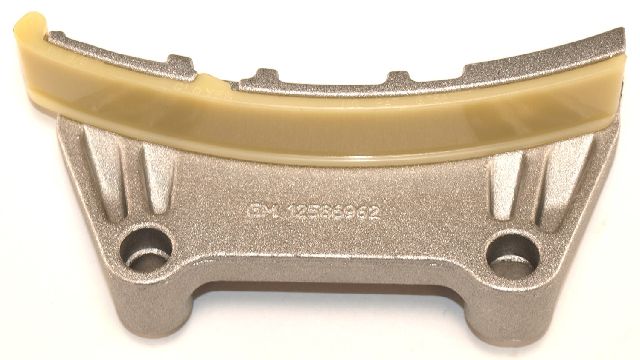
- Ensure the repair includes a complete timing chain kit with all chains, tensioners, and guides.
- After the repair, using high-quality full synthetic oil and following a shorter oil change interval (e.g., every 5,000 miles) can help prevent the issue from recurring.
What's Unique About the 2005-2012 Buick LACROSSE
The 3.6L V6 engine (codes LY7 and LLT) used in this era of LaCrosse is well-documented for having issues with premature timing chain wear and stretching. This was so prevalent that GM issued multiple Technical Service Bulletins (TSBs) and Special Coverage Adjustment #11340 to address the problem. The issue is often attributed to a combination of an overly optimistic oil life monitoring system, which led to extended oil change intervals causing oil degradation, and the design of the original timing chains themselves. As a result, a P0008 code on this specific vehicle is a very strong indicator of a stretched primary or secondary timing chain, rather than a simpler sensor issue.
Diagnostic Flowchart
Tap your situation to follow the diagnostic path that matches what you're seeing on this vehicle.
Generation note: This year range covers the end of the first generation (2005-2009) and the beginning of the second generation (2010-2012) LaCrosse. Both generations offered the 3.6L V6 engine (LY7 and later the direct-injection LLT), which is the primary platform affected by the P0008 timing chain issue.
Symptoms You May Notice
- Check Engine Light is on
- Reduced engine power and poor acceleration.
- Rough running engine or rough idle, sometimes felt as a vibration in the cabin.
- Rattling, scraping, or clattering noise from the front (passenger side) of the engine, especially on a cold startup.
- Decreased fuel economy.
- Longer than usual crank time to start the engine.
- Replacing only the camshaft or crankshaft position sensors without verifying the mechanical timing. This will not fix a stretched timing chain and the code will return.
- Replacing only one of the three timing chains or only a single failed tensioner. The job should always be done with a complete kit to prevent a repeat failure, as the other original components are likely worn as well.
- Mistaking the P0008 code for a VVT solenoid or actuator problem. P0008 specifically indicates a bank-wide timing issue, which points to the chain itself.
Most Likely Causes
- Stretched Timing Chains 🔴 High Probability → Shop Engine Timing Chain The original timing chains on the GM 3.6L V6 were prone to premature wear and stretching, a well-documented issue acknowledged by GM through TSBs like 12-06-01-009F. Poor oil quality from extended change intervals accelerates this wear.
How to confirm: A technician can use a scan tool to view camshaft deviation data; a deviation greater than 6 degrees is a strong indicator. Physical confirmation requires removing the engine's front timing cover to inspect the chains for excessive slack, which is a labor-intensive process.
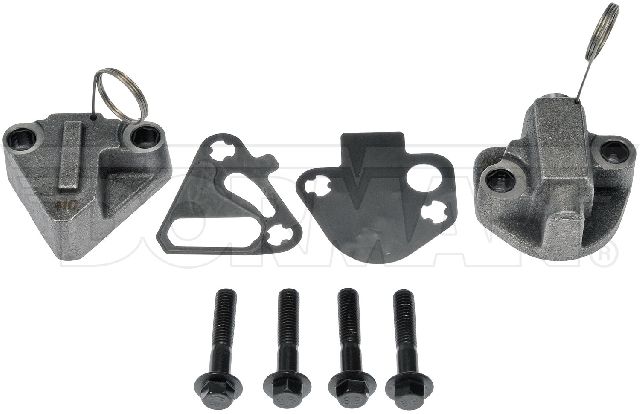
Typical fix: Replace all three timing chains (primary and two secondary), all tensioners, guides, and the crankshaft sprocket. It is critical to use the updated parts specified in GM's service bulletins, often sold as a complete kit.
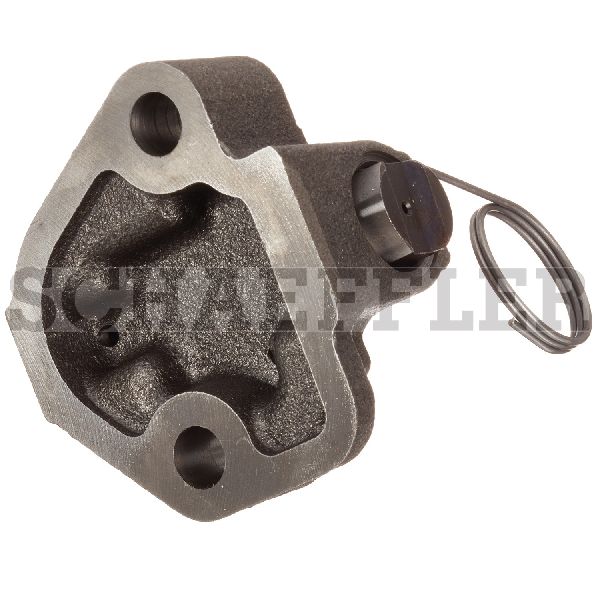
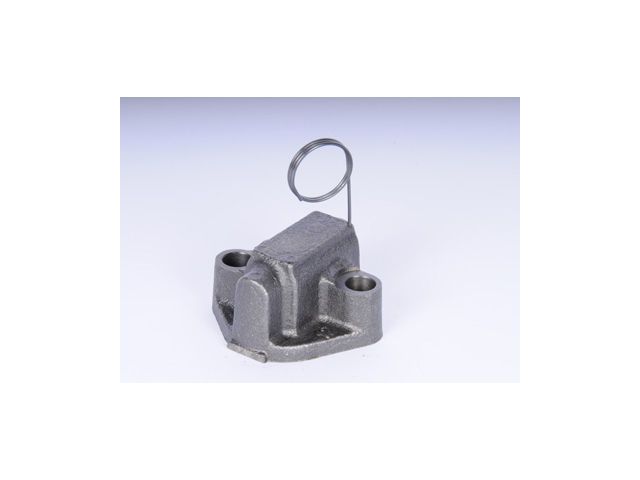
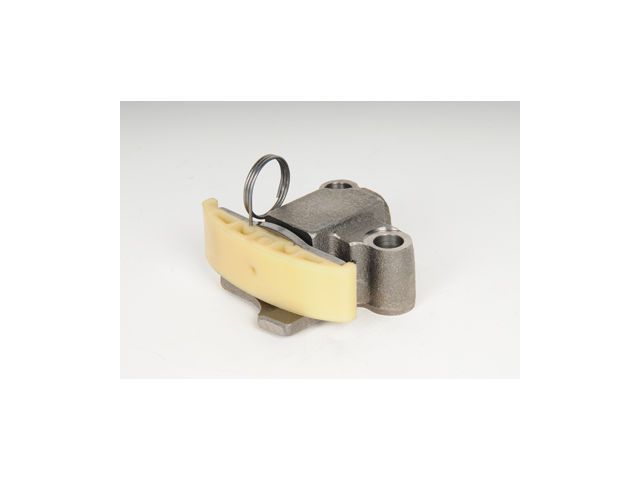
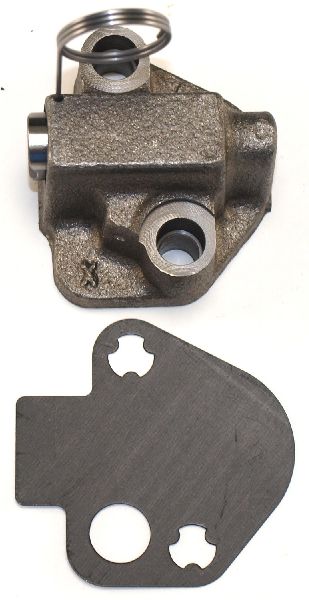
Est. part cost: $250-$500 for a complete kit - Worn or Failed Timing Chain Tensioners 🔴 High Probability → Shop Engine Timing Chain The tensioners, which use oil pressure to keep the chains tight, can fail, lose pressure, or wear out, leading to chain slack. This is part of the same common timing system failure and is addressed during a full timing chain job.
How to confirm: Diagnosed along with the timing chains. A failed tensioner will result in a visibly loose chain and may cause a rattling noise.
Typical fix: Tensioners are always replaced as part of a complete timing chain service. They are included in quality timing chain kits.
Est. part cost: Included in timing chain kits. - Low or Degraded Engine Oil 🟡 Medium Probability The timing chain tensioners are hydraulic and rely on clean oil at the proper pressure to function. Extended oil change intervals, as originally recommended by the GM Oil Life Monitor (OLM), contributed to oil breakdown and sludging. This starved components of lubrication, accelerating wear on the chains and guides. GM later issued software updates to shorten the OLM intervals.
How to confirm: Check the oil level and condition on the dipstick. If the oil is very low, black, or sludgy, it's a significant contributing factor. A history of infrequent oil changes strongly points to this as a root cause.
Typical fix: An oil and filter change is necessary, but if the P0008 code is already present, the mechanical damage to the chains is likely already done and they will still need replacement. Adhering to 3,000-5,000 mile oil change intervals with full synthetic oil is recommended post-repair.
Est. part cost: $40-$80
Rare But Worth Checking
- Faulty Camshaft or Crankshaft Position Sensor: → Shop Engine Crankshaft Position Sensor While possible, this is a rare cause for a lone P0008 code on this engine. A P0008 indicates both cams on Bank 1 are out of sync, which is unlikely to be caused by a single sensor. Owners and even some shops may replace sensors first hoping for a cheap fix, but it rarely resolves the P0008 code.
- Faulty Camshaft Actuator Solenoid (VVT Solenoid): → Shop Engine Camshaft A stuck solenoid can cause a timing correlation error, but it typically sets other codes (like P0016/P0017) and is unlikely to cause P0008 by itself, as P0008 points to a base timing issue affecting both cams on one bank.
- Shifted Crankshaft Reluctor Wheel: → Shop Engine Crankshaft TSB PIP3423P notes that in rare cases, after ruling out timing chains, the reluctor wheel pressed onto the crankshaft can move, causing a timing discrepancy. This is a major repair that requires crankshaft replacement and is typically investigated only after a timing chain replacement fails to fix the code.
Diagnosis Steps
- Read the fault codes with an OBD-II scanner to confirm P0008 and any other related codes.
- Check the engine oil level and condition. Low or dirty oil is a major red flag for accelerated timing chain wear.
- Listen for a distinct rattling or scraping noise from the passenger side of the engine bay, especially during a cold start.
- Using an advanced scan tool, monitor the camshaft position deviation PIDs. If the scan tool shows a deviation angle greater than 6-7 degrees for Bank 1, it strongly confirms a stretched chain.
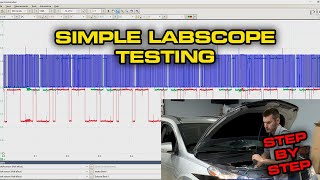
- If scan tool data is unavailable, an oscilloscope can be used to compare the live waveform patterns of the crankshaft and camshaft sensors to a known-good pattern. A time-shifted (retarded) cam signal relative to the crank signal is definitive proof of a stretched chain.
- If a timing chain replacement has already been performed and the code returns, investigate the possibility of a shifted crankshaft reluctor wheel as per TSB PIP3423P, which can be inspected with a borescope through the crank sensor hole.
Parts You'll Likely Need
- Timing Chain Kit
(OEM #12700436 (ACDelco kit for many LLT applications))— This is the definitive fix. The kit should include all three chains (primary and two secondary), all three tensioners, guides, gaskets, and seals. Using a complete kit with updated parts is crucial.
Trusted brands: ACDelco (GM OE), Cloyes
OEM price range: $350-$500
Aftermarket price range: $250-$400
Related Codes That Often Appear With This One
- P0009 — This is the equivalent timing correlation error code for Bank 2 (the bank closer to the radiator). Seeing both P0008 and P0009 strongly indicates a stretched primary timing chain affecting both banks, or a shifted crankshaft reluctor wheel.
- P0016, P0017, P0018, P0019 — These are more specific crankshaft-to-camshaft correlation codes for intake and exhaust cams on both banks. They often appear alongside P0008 and are all related to the same root cause of stretched timing chains, as noted in TSB #12-06-01-009F and #PIP3423P.
Technical Service Bulletins (TSBs) & Recalls
- PIP3423P: Mentions inspecting for loose timing chains or tensioners for P0008. Also introduces the rare possibility of a moved crankshaft reluctor wheel if chains are confirmed to be good.
- 12-06-01-009F: Announces the availability of updated, comprehensive timing chain kits for repairing stretched chains that cause code P0008 and others. Lists affected vehicles including the 2007-2012 LaCrosse.
- 11340B/C: A Special Coverage Adjustment extending the warranty on certain model years (including 2009 LaCrosse) for premature timing chain wear and providing for a free repair or ECM reprogram.
Platform-Specific Known Issues
- GM issued Special Coverage Adjustment #11340 (with revisions A, B, C) for some 2007-2009 models with the 3.6L engine, including the 2009 LaCrosse. This extended the warranty for premature timing chain wear to 10 years or 120,000 miles. While this program has expired for all affected vehicles due to age, it serves as an official acknowledgment of the defect.
- An early contributing factor was the GM Oil Life Monitoring System (OLM), which allowed for excessively long oil change intervals. This led to oil degradation that accelerated chain wear. GM later issued a software update via dealers (sometimes as part of the Special Coverage) to shorten these intervals and trigger oil change reminders more frequently.
- Due to the transverse mounting of the engine, accessing the timing cover is more difficult than on rear-wheel-drive platforms, often requiring the removal of the passenger-side engine mount and supporting or lowering the engine.
Mechanic-Grade Diagnostic Values
- Camshaft Position Sensor (Hall Effect) Signal Circuit Voltage — expected: 5V (a square wave alternating between 0V and 5V when the engine is running). Failure: A flatlined voltage, or a voltage that does not produce a clean square wave, can indicate a sensor or wiring issue. With the sensor unplugged, the signal wire should read 5V.
- Camshaft Position Sensor Ground Circuit Voltage — expected: At or below 0.1V (100mV) when connected.. Failure: A voltage significantly higher than 0.1V indicates a poor ground connection, which can cause erratic sensor readings.
- Cam/Crank Correlation Oscilloscope Test — expected: Known-good patterns for a specific engine show the crankshaft sensor signal and camshaft sensor signals aligning at precise, repeatable intervals.. Failure: On a vehicle with a stretched timing chain, the camshaft sensor waveform for the affected bank will be visibly retarded (shifted to the right) in time relative to the crankshaft sensor's top-dead-center reference pulse.
Scan Tool Commands That Help
- GDS2 / Tech2 or equivalent advanced scanner: Camshaft Position Deviation Data PID Monitoring — This is the primary data-based diagnostic step. Instead of a command, it involves monitoring the live data PIDs for Bank 1 and Bank 2 Cam/Crank correlation. A value consistently exceeding 4-6 degrees of deviation is a strong indicator of a stretched timing chain, eliminating the need for exploratory sensor replacement.
Wiring & Ground Locations
- G103 — Located at the left rear of the engine compartment on the cowl, often above the brake booster.. This ground serves the Body Control Module (BCM), Instrument Panel Cluster (IPC), and the Data Link Connector (DLC). A poor connection here can cause a wide range of communication and electrical issues, potentially affecting how the ECM communicates or receives power, though it's less likely to be a direct cause of P0008 than an engine block ground.
- G105 / G106 — G105 is typically at the left front of the engine compartment. G106 is often on the front center of the frame cross rail, under the crank pulley.. These are primary engine compartment and frame grounds. The ECM and its sensors rely on clean, solid ground paths. A corroded or loose ground at G106, which often serves as a primary engine ground, could introduce electrical noise or voltage offsets to the cam/crank sensor signals, potentially corrupting the readings sent to the ECM.
- ECM Type: E39 / E39A — Engine Control Module, located in the engine bay.. The 2010 and later LaCrosse with the 3.6L LLT engine uses a GM E39 or E39A ECM. Knowing the ECM type is critical for technicians using advanced tools for programming, flashing, or accessing specific diagnostic tables and pinouts for checking sensor wiring continuity directly at the ECM connectors.
Real Owner Repair Stories
- YouTube video on channel 'I Fix Cars!' (2010 Chevy Camaro 3.6L LLT (same engine family)) — P0008 and P0017 codes returned immediately after clearing, even after just one mile of driving. No audible rattling noise.
❌ Tried (didn't work) Swapping cam sensors from the right bank to the left bank (codes did not follow the sensors)., Flushing the engine oil and performing an oil change.
✅ What actually fixed it Complete timing chain kit replacement. The video shows the old chain being visibly stretched when compared to the new one. The owner states this is a very common problem on the 3.6L GM engine. - Reddit user on r/MechanicAdvice (2010 Buick LaCrosse CXS 3.6L with ~132,000 miles) — Intermittent Check Engine Light with code P0008. The light would appear for a few engine starts, then disappear, then return again.
❌ Tried (didn't work) The user was in the diagnostic phase, asking if an ECU upgrade to allow more tolerance was a viable option (it is not a fix).
✅ What actually fixed it The thread confirms the user's research that a timing chain replacement is the expected, albeit expensive, repair. This story is valuable as it documents the intermittent nature of the code in the early stages of chain stretch. - Reddit user on r/MechanicAdvice (Vehicle unspecified, but GM 3.6L engine) — P0008 code appeared 200 miles *after* a professional timing chain replacement.
❌ Tried (didn't work) The timing chain job itself did not resolve the code long-term.
✅ What actually fixed it The diagnosis pointed towards two possibilities: 1) The mechanic made an error during installation, leaving the timing off by a tooth. 2) The rare case of a shifted crankshaft reluctor wheel, which would not be fixed by the chain replacement. This story highlights the importance of correct installation and the existence of edge-case failures.
OEM Part Supersession History
12651450→12700436— The original timing chains were prone to premature stretching. The updated kits contain chains made from more durable materials and potentially revised guide/tensioner designs to improve longevity.
Heads up: The new kit is backwards compatible and is the correct part to use for repairs on all 2005-2012 models. Using old stock or a non-updated part number risks a repeat failure.12679117, 12693218→12700436— These are other previous part numbers for the timing chain kit that have been consolidated into the current recommended part.
Model Year Variations Within This Range
- 2005-2008, some early 2009: These model years primarily used the port-injected LY7 version of the 3.6L V6. It has a 10.2:1 compression ratio and different pistons (flat-top) than the later LLT engine.
- Late 2009-2012: These model years used the direct-injected LLT version of the 3.6L V6. Key differences include a higher compression ratio (11.3:1), pistons with a dished top to accommodate the direct injector spray pattern, and a different engine computer (GM E39). While the timing chain issue is common to both, internal engine parts like pistons are not interchangeable.
Helpful Videos
We Have This Part in Stock

The information in this article is provided for general reference and educational purposes only. Vehicle specifications, procedures, and part compatibility can vary by production date, trim level, and region. Always consult your vehicle's factory service manual and verify part numbers before purchasing or performing repairs. Safety-critical components such as airbags, seat belts, and braking systems should be installed by a qualified professional.
- Buick LACROSSE:
- 🧭 Diagnostic Flowchart
- 🎬 Helpful Videos
- 🛍️ Shop This Part
- What's Unique About the 2005-2012 Buick LACROSSE
- Symptoms You May Notice
- Most Likely Causes
- Rare But Worth Checking
- Diagnosis Steps
- Parts You'll Likely Need
- Related Codes That Often Appear With This One
- Technical Service Bulletins (TSBs) & Recalls
- Platform-Specific Known Issues
- Mechanic-Grade Diagnostic Values
- Scan Tool Commands That Help
- Wiring & Ground Locations
- Real Owner Repair Stories
- OEM Part Supersession History
- Model Year Variations Within This Range
- 🎟️ Get 5% Off