

P0008 on 2010-2016 Buick LaCrosse: Stretched Timing Chain Causes and Fixes
On these Buick LaCrosse V6 models, P0008 almost always means the timing chains have stretched. This is a serious, complex, and expensive repair costing $2,000-$4,000, as the chains, tensioners, and guides need to be replaced to prevent catastrophic engine failure. Continuing to drive is not recommended as it risks the chain breaking, which would destroy the engine.
- P0008 on a 2010-2016 LaCrosse V6 is a serious code that almost certainly means the timing chains have stretched.
- Do not waste money replacing sensors or VVT solenoids; the problem is mechanical and requires a full timing chain kit replacement.
- This is a very expensive repair ($2,000-$4,000) due to high labor costs. It is not a DIY-friendly job.
- Limit driving the vehicle until it can be repaired to avoid catastrophic engine failure.
- After repair, use high-quality full synthetic oil and change it every 5,000 miles to prolong the life of the new components.
What's Unique About the 2010-2016 Buick LaCrosse
The GM High Feature V6 engine family (including the 3.0L LF1, 3.6L LLT, and 3.6L LFX) used in the LaCrosse has a notorious, well-documented history of premature timing chain stretching. The issue was so widespread that GM issued multiple Technical Service Bulletins (TSBs) and a special warranty extension (#11340C) which has since expired for all of these model years. The problem is blamed on a combination of the original timing chain design and overly long oil change intervals suggested by the factory's Oil Life Monitor (OLM). Degraded oil fails to provide adequate lubrication and hydraulic pressure for the tensioners, accelerating wear on the chain link pins.
Symptoms You May Notice
- Check Engine Light illuminated
- Rattling or chain-like noise from the engine, especially during a cold start
- Rough or unstable idle
- Reduced engine power and poor acceleration
- Decreased fuel economy
- Engine may be hard to start
- Engine may run rough or misfire, particularly on cold starts
- Replacing the camshaft position sensors.
- Replacing the crankshaft position sensor.
- Replacing the variable valve timing (VVT) solenoids.
Most Likely Causes
- Stretched Timing Chains 🔴 High Probability → Shop Engine Timing Chain The original equipment timing chains used in the GM 3.0L and 3.6L V6 engines were susceptible to premature wear and stretching in the chain link pin holes. This wear is accelerated by oil degradation.
How to confirm: The definitive confirmation is a physical inspection for slack after removing the timing cover. An advanced scan tool can also show camshaft deviation data; a persistent variance of more than +/- 4 degrees at idle strongly indicates a stretched chain.
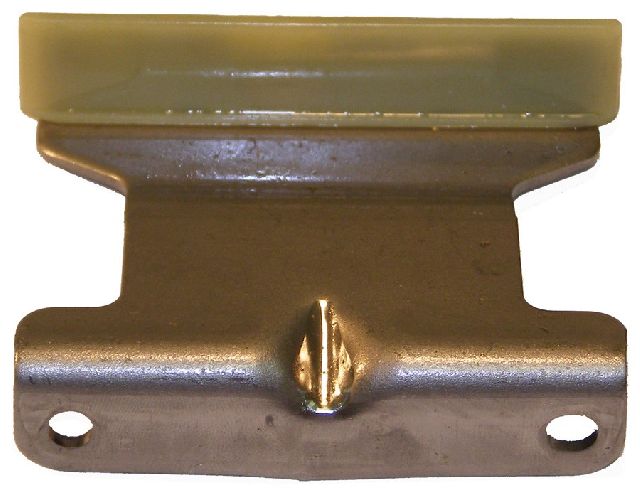
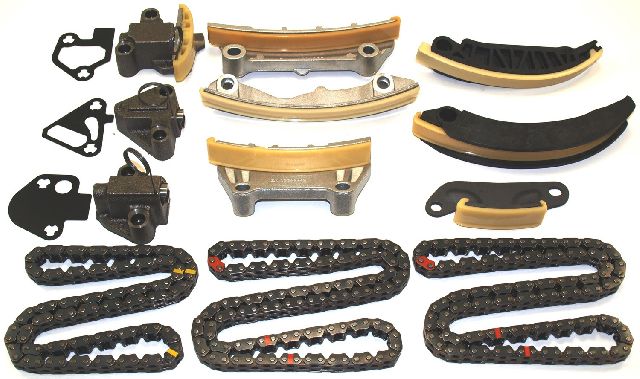
Typical fix: Replace all three timing chains, all tensioners, and all guides with a complete, updated timing chain kit. It is critical to replace everything as a set to ensure a lasting repair.
Est. part cost: $250-$600 - Worn or Failed Timing Chain Tensioners 🔴 High Probability → Shop Engine Timing Chain The hydraulic tensioners rely on clean oil and proper pressure. They can weaken, get clogged with sludge from degraded oil, or fail mechanically, allowing the chains to become slack.
How to confirm: Usually diagnosed during a full timing chain inspection. A failed tensioner will allow visible slack in the chain. A rattling noise on startup that goes away is a classic sign of a tensioner that is slow to build oil pressure.
Typical fix: Tensioners are always replaced as part of a complete timing chain service. Never replace just a tensioner without replacing the chains and guides.
Est. part cost: $50-$150 (if bought separately, but included in full kits) - Low or Degraded Engine Oil 🟡 Medium Probability The factory Oil Life Monitor often recommended excessively long change intervals, leading to oil breakdown. These engines' hydraulic timing chain tensioners require clean, full-pressure oil to function correctly. Using oil that does not meet the GM dexos1 specification can also contribute to accelerated wear.
How to confirm: Check the oil level on the dipstick and inspect its condition. If the oil is very dark, sludgy, or low, it is a significant contributing factor.
Typical fix: An oil change with high-quality full synthetic oil (meeting dexos1 spec) and a new filter is a mandatory first step. However, if the P0008 code is already present, the chains are almost certainly already stretched and will still need replacement.
Est. part cost: $50-$100
Rare But Worth Checking
- Slipped Crankshaft Reluctor Wheel: → Shop Engine Crankshaft While rare, some GM TSBs (like PIP3423P) mention that the reluctor wheel on the crankshaft, which the position sensor reads, can shift slightly. This causes a timing correlation error even if the chains are good. This is difficult to diagnose and confirm, often only discovered after a timing chain replacement fails to fix the code.
Diagnosis Steps
- Verify the code with an OBD-II scanner.
- Check the engine oil level and condition. If low or dirty, perform an oil change with the correct specification oil (full synthetic dexos1) and a new filter. Clear the code to see if it returns immediately.
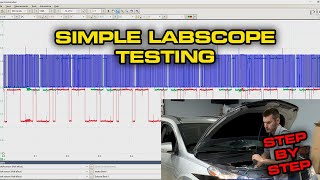
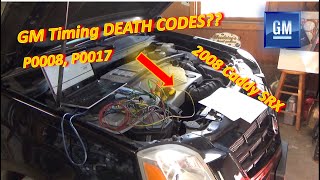
- Using an advanced scan tool (like GM's GDS2), monitor the camshaft deviation PIDs for Bank 1. 🎬 Watch how to test timing chain issues using a labscope. A consistent deviation greater than +/- 4 degrees at idle points directly to a mechanical timing issue.
- Listen for a rattling noise from the engine's front cover (passenger side of the engine bay), especially on a cold start. This is a classic symptom of a loose timing chain.
- If symptoms and scan data point to a timing issue, the next step is to schedule a professional repair for a full timing chain kit replacement.
- The definitive diagnosis involves removing the engine timing cover to physically inspect the timing chains for slack and check the tensioners and guides for wear or damage.
Parts You'll Likely Need
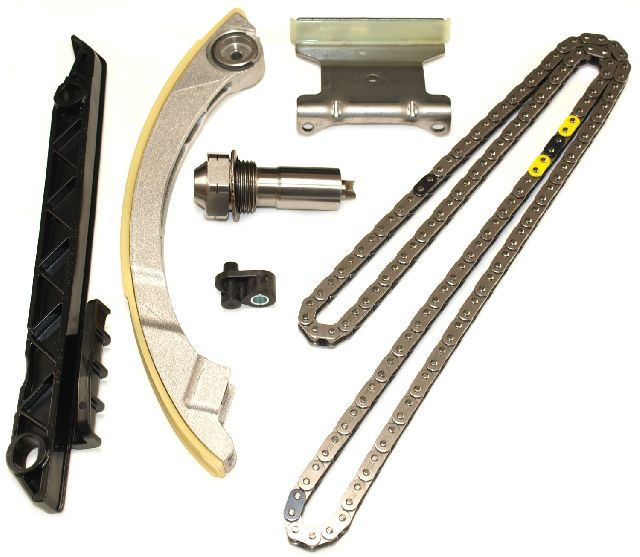
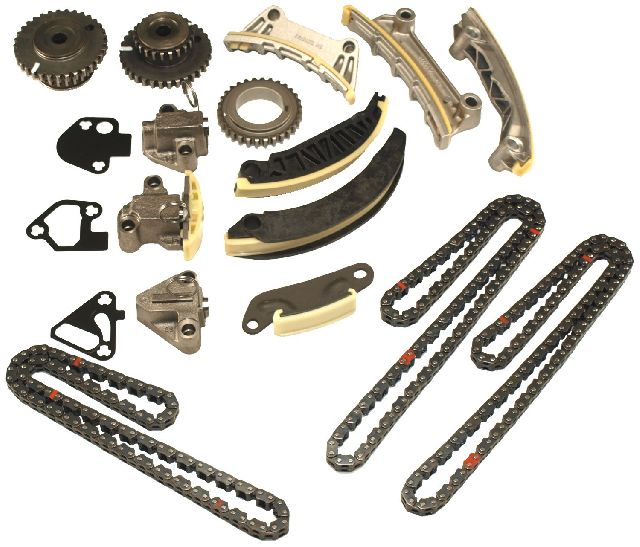
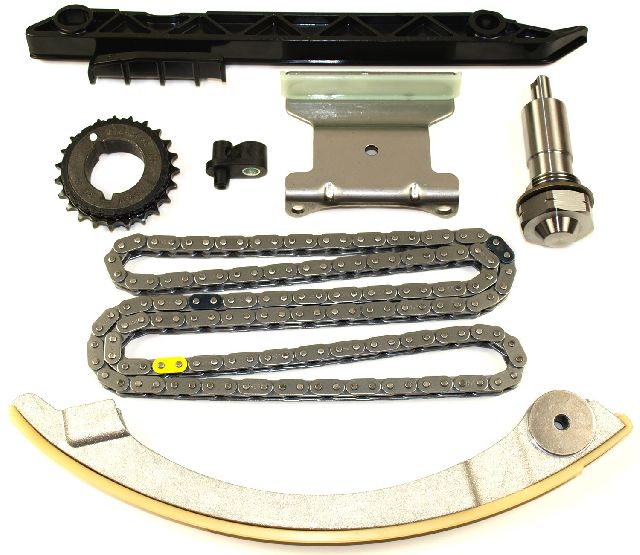
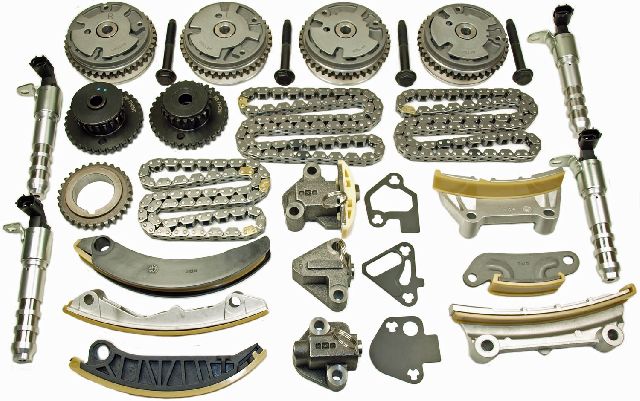
- Engine Timing Chain Kit
(OEM #ACDelco 12693218 (supercedes older kits))— This is the definitive fix. A complete kit ensures all worn components (chains, tensioners, guides, sprockets) are replaced with updated parts to prevent a repeat failure. Using a high-quality OEM kit is critical.
Trusted brands: ACDelco (OEM), Cloyes, Melling
OEM price range: $400-$600
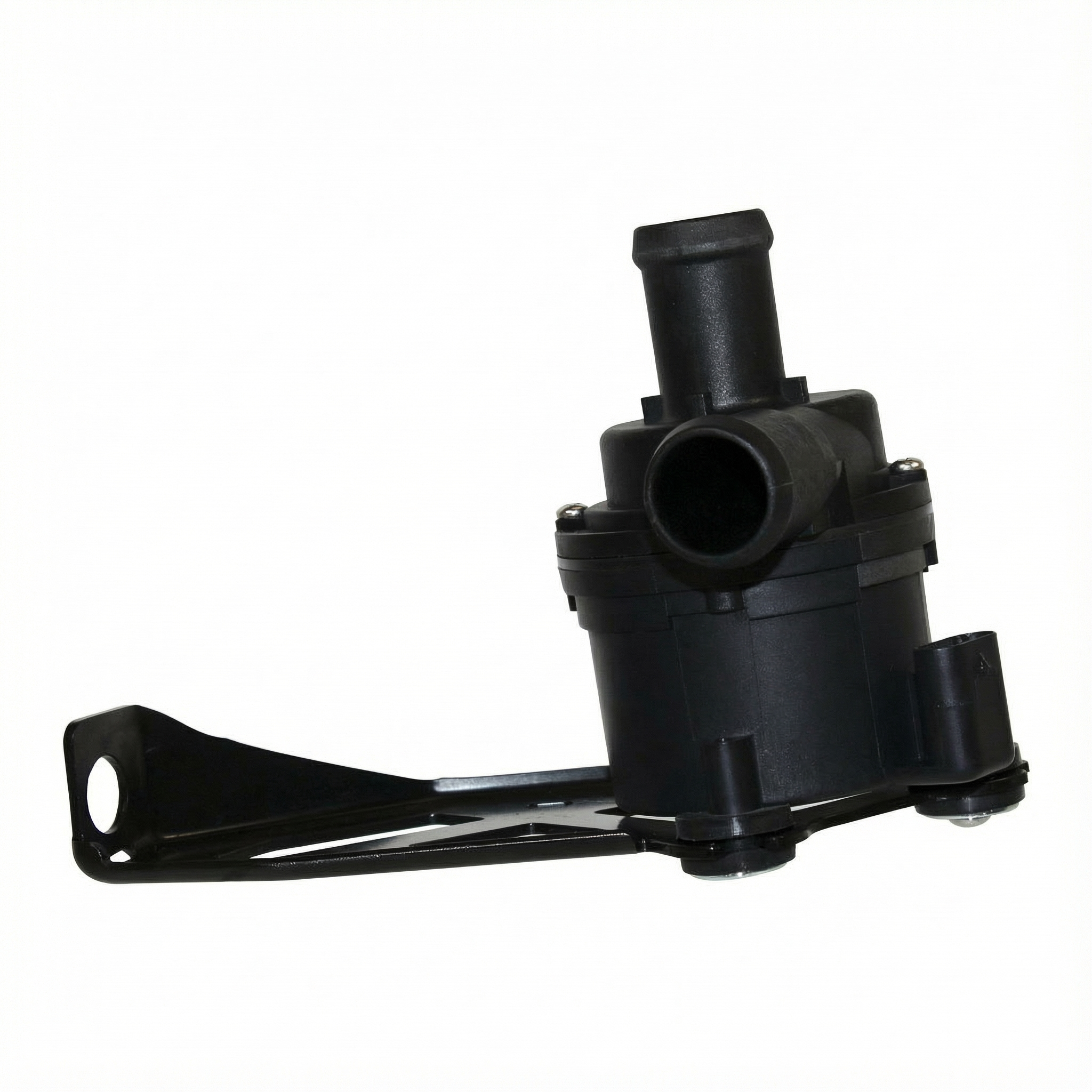
Aftermarket price range: $250-$500 - Water Pump — The water pump is driven by the timing chain and is inaccessible without removing the timing cover. It is highly recommended to replace it during the timing chain job to avoid a future, equally labor-intensive repair.
Trusted brands: ACDelco, Gates, Bosch
OEM price range: $100-$200
Aftermarket price range: $50-$100
Related Codes That Often Appear With This One
- P0009 — This is the identical timing correlation error but for Bank 2 (the front bank). Seeing P0008 and P0009 together strongly confirms a stretched primary timing chain that affects both banks.
- P0016, P0017, P0018, P0019 — These are more specific codes for crankshaft/camshaft correlation on individual cams (intake/exhaust). Their presence along with P0008 reinforces the diagnosis of a major mechanical timing failure, as noted in GM TSBs.
Technical Service Bulletins (TSBs) & Recalls
- 12-06-01-009G (and previous versions): Provides information on updated timing chain kits and lists P0008 as a related code. It specifies which kits to use for various HFV6 engines.
- PIP3423P: Advises technicians to inspect for loose timing chains or a slipped crankshaft reluctor wheel when P0008 and other related timing codes are present.
- 11340C: This is the Special Coverage Adjustment bulletin that extended the warranty for timing chain wear. It explicitly mentions that premature wear could be caused by original oil change intervals.
Platform-Specific Known Issues
- GM issued Special Coverage Adjustment #11340C for premature timing chain wear on some model years and engines (including the LLT), extending the warranty to 10 years or 120,000 miles. This coverage has now expired for all 2010-2016 vehicles.
- The original GM Oil Life Monitoring System (OLM) programming was overly optimistic, contributing to oil degradation that accelerated timing chain wear. The special coverage adjustment also included an ECM reprogram to shorten the oil change interval.
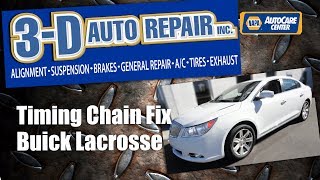
- A video from a mechanic performing the job on a 2010 LaCrosse with 86,000 miles shows the complete replacement of chains, guides, tensioners, and sprockets to resolve a P0008 code. 🎬 Watch this step-by-step timing chain repair on a 2010 LaCrosse.
Mechanic-Grade Diagnostic Values
- Camshaft Position Actuator Solenoid (VVT Solenoid) Resistance — expected: 7-13 Ohms for LLT and LFX engines.. Failure: A reading of 0 Ohms (short), OL/infinite (open circuit), or a value significantly outside the expected range indicates a failed solenoid coil.
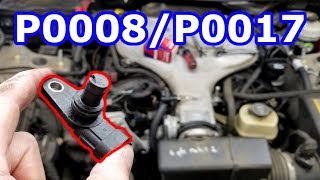
- Camshaft Position Sensor (Hall Effect) Ground Circuit Voltage — expected: At or less than 0.1V (100mV) with Key On, Engine Off (KOEO).. Failure: Voltage significantly higher than 100mV points to a poor ground connection for the sensor, which can corrupt its signal to the ECM.
Scan Tool Commands That Help
- GDS2 (GM Techline): Camshaft Position Actuator Solenoid Test — This bidirectional command allows a technician to command the VVT solenoids on and off while the engine is running. By monitoring cam deviation PIDs during the test, you can confirm if a solenoid is mechanically stuck or responding slowly, helping to rule out a faulty solenoid before condemning the timing chains.
- GDS2 (GM Techline): Crankshaft Position Variation Relearn — This relearn procedure is mandatory after replacing timing chains, the crankshaft, camshafts, or the ECM. It allows the ECM to learn the minor mechanical variations of the new components to ensure accurate timing and misfire detection. Failure to perform this can cause timing codes to reappear even after a successful mechanical repair.
Real Owner Repair Stories
- Camaro5 Forum user 'secrethero89' (2011 Chevrolet Camaro V6 (LLT Engine) with 55,000 miles) — Check Engine Light with P0008 & P0009, sluggish performance, extreme power loss.
❌ Tried (didn't work) Replaced all timing chains with a Cloyes kit., Replaced all four VVT sprockets (cam phasers).
✅ What actually fixed it The crankshaft reluctor wheel had slipped by 1.5 teeth. A mechanic forced the wheel back into its correct position on the crank and applied a small tack weld to secure it. - BobIsTheOilGuy Forum user 'longo', a self-identified GM engineer (2008 Cadillac CTS 3.6L DI (LLT Engine)) — Check Engine Light with P0008 at 72,000 miles.
❌ Tried (didn't work) Performing frequent (5,000-6,000 mile) oil changes with Mobil 1 synthetic oil only delayed the failure compared to a similar vehicle that failed at 42,000 miles using the Oil Life Monitor.
✅ What actually fixed it The vehicle required a full timing chain replacement, which was covered under GM's special coverage warranty. The user confirmed the issue was a known design/spec problem with the original chains. - ScannerDanner Forum user 'bizz2222' (2008 Buick Enclave 3.6L) — P0011 and C0561 appeared immediately after a timing chain replacement job.
❌ Tried (didn't work) Physical inspection of the new timing chain installation, which was confirmed to be correct.
✅ What actually fixed it Performing a 'crank/cam relearn' procedure with a scan tool resolved the codes. This highlights the necessity of the electronic relearn step after the mechanical work is completed.
OEM Part Supersession History
12578518, 12628348, 12646784, 12655421→ACDelco 12679100— Updated design for the Camshaft Position Actuator Solenoid (VVT Solenoid).
Heads up: While these are often replaced in a misdiagnosis of P0008, using the latest part number is crucial if a solenoid is ever actually needed.
Model Year Variations Within This Range
- 2010-2012 (LLT Engine): The 3.6L LLT engine, used in the earlier part of this range, is considered more susceptible to the timing chain issue than the later LFX. It features an aluminum intake manifold and a Bosch ECU.
- 2012-2016 (LFX Engine): The 3.6L LFX engine, introduced around 2012, featured several updates. This includes cylinder heads with integrated exhaust manifolds (making exhaust headers incompatible), a lighter composite intake manifold, and a Delphi ECU. While still vulnerable to timing chain stretch, the issue is considered somewhat less prevalent than on the earlier LLT.
Diagnostic Flowchart
Other Known Issues on This Vehicle
Issues unrelated to this code that are worth knowing about as an owner of this generation:
- 6T70/6T75 Transmission Wave Plate Failure 🔴 High — Common in earlier models of the generation (approx. 2010-2012), often occurring between 30,000 and 100,000 miles. Results in loss of 3rd, 5th, and Reverse gears. (Ref: TSB 09-07-30-012F, Special Coverage 14404A (expired))
- Intermittent Headlight Failure (Low Beams) 🟠 Medium — Common across many model years. The low-beam headlights can shut off intermittently while driving, often traced to a faulty Headlamp Driver Module (HDM) relay in the under-hood fuse box. (Ref: A recall existed for some GM models but not consistently for all LaCrosse years.)
- Water Leaks into Cabin 🟡 Low — Frequently reported problem. Clogged sunroof drains are a primary cause, leading to water on the passenger floor. Leaks through the cowl fresh air intake are also known to cause wet passenger-side carpets.
- Carbon Buildup on Intake Valves 🟠 Medium — A common issue for all direct-injection (SIDI) engines (LF1, LLT, LFX). Over time, carbon deposits build up on the back of the intake valves, causing cold start misfires, rough idle, and reduced performance.
- Sticking Electric Power Steering 🟠 Medium — Some owners report the steering wheel can feel sticky or require extra effort to turn off-center after driving straight for extended periods. This was subject to a Special Coverage Adjustment on other GM models. (Ref: Special Coverage 14232A (for other GM models, but describes the same symptom))
Used vs. New Parts: Buying Guide for This Vehicle
When a used part is the smart pick: For a P0008 code, a used part only makes sense when replacing the entire engine assembly. The cost of the timing chain repair can approach the cost of a lower-mileage used engine. Never purchase individual used timing components (chains, tensioners, guides) as they are wear items and the cause of the failure.
Donor-vehicle mileage cap: roughly under 80000 miles for the part to have meaningful remaining life.
What to inspect on the donor part:
- Prefer an LFX engine (2012+) over an LLT if possible, as they have revised components.
- Remove the oil fill cap and inspect with a flashlight for any thick, black sludge, which indicates poor maintenance and a high likelihood of timing issues.
- Ask the salvage yard if they can provide compression or leak-down test numbers for the engine.
- Look for a donor vehicle with documented rear-end collision damage, which is less likely to have caused engine stress than a frontal impact.
OEM-only on this vehicle (don't cheap out):
- Engine Timing Chain Kit: Given the history of this engine, using the latest OEM ACDelco kit is the safest bet to ensure you have the most updated chain and guide designs.
Aftermarket brands forum-validated for this vehicle:
- Cloyes (Timing Chain Kits)
- Melling (Timing Chain Kits & Oil Pumps)
Real Owner Stories
Aggregated from forums and TSBs cited above. Mileages and costs reflect what owners reported in those sources.
2010 Buick LaCrosse 3.6L V6 — 86000 miles
Symptoms: The vehicle triggered a P0008 code, requiring a teardown of the front of the engine.
What fixed it: Complete replacement of the timing chains, guides, tensioners, and sprockets using a full timing set.
Source hint: YouTube: Buick Lacrosse 2010 w 3.6 l engine, code P0008, timing chains remove
2010 Buick LaCrosse CXL
Symptoms: The Check Engine Light illuminated with code P0008, indicating both cams on Bank 1 were off relative to the crank.
What fixed it: The issue was identified as a mechanical timing alignment problem (stretched chains) rather than a sensor or solenoid failure.
Source hint: ScannerDanner Forum: 2010 Buick lacrosse CXL
Related OBD-II Codes
Frequently Asked Questions
Does the Special Coverage Adjustment #11340C for timing chain wear still apply to my 2010-2016 Buick LaCrosse?
I have a P0008 code on my 3.6L V6; can I just replace the sensors to fix it?
What specific oil should I use in my LaCrosse to prevent timing chain issues?
Is there a TSB for the updated timing chain kits for the HFV6 engine?
My LaCrosse makes a rattling noise only during cold starts; is this related to P0008?
What scan tool data confirms the chains are stretched on the 3.0L or 3.6L engine?
Helpful Videos
Used OEM Parts in Stock
New Aftermarket Parts Available

The information in this article is provided for general reference and educational purposes only. Vehicle specifications, procedures, and part compatibility can vary by production date, trim level, and region. Always consult your vehicle's factory service manual and verify part numbers before purchasing or performing repairs. Safety-critical components such as airbags, seat belts, and braking systems should be installed by a qualified professional.
- Buick LaCrosse:
- 🧭 Diagnostic Flowchart
- 🎬 Helpful Videos
- 🛍️ Shop This Part
- What's Unique About the 2010-2016 Buick LaCrosse
- Symptoms You May Notice
- Most Likely Causes
- Rare But Worth Checking
- Diagnosis Steps
- Parts You'll Likely Need
- Related Codes That Often Appear With This One
- Technical Service Bulletins (TSBs) & Recalls
- Platform-Specific Known Issues
- Mechanic-Grade Diagnostic Values
- Scan Tool Commands That Help
- Real Owner Repair Stories
- OEM Part Supersession History
- Model Year Variations Within This Range
- Other Known Issues on This Vehicle
- Used vs. New Parts: Buying Guide for This Vehicle
- Real Owner Stories
- 2010 Buick LaCrosse 3.6L V6 — 86000 miles
- 2010 Buick LaCrosse CXL
- Related OBD-II Codes
- Frequently Asked Questions
- 🎟️ Get 5% Off