

P0008 on 2013-2016 Buick LaCrosse: Timing Chain Causes and Fixes
On a 2013-2016 Buick LaCrosse with the 3.6L V6 engine, the P0008 code almost always indicates stretched timing chains. This is a serious, labor-intensive repair with costs typically ranging from $1,800 to $3,000. The issue is well-documented for the GM High Feature V6 engine family.
- P0008 on a 2013-2016 LaCrosse 3.6L V6 is a strong indicator of stretched timing chains.
- This is a serious issue that should be addressed promptly to avoid the risk of severe engine damage.
- The repair is expensive and complex, requiring the replacement of a full timing chain kit by a professional mechanic.
- Do not waste money replacing camshaft/crankshaft sensors or VVT solenoids before confirming the mechanical timing is correct.
- Using high-quality synthetic oil (dexos1) and adhering to strict oil change intervals (5,000 miles or less) is the best way to prolong the life of the timing components.
What's Unique About the 2013-2016 Buick LACROSSE
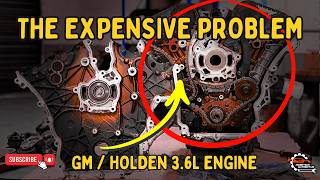
The GM 3.6L V6 engine (RPO code LFX in this LaCrosse) is part of the 'High Feature' V6 family and has a well-documented history of premature timing chain stretch across many GM models. This issue was so prevalent that multiple Technical Service Bulletins (TSBs) and a Special Coverage Adjustment were issued. The problem is often attributed to a combination of the original timing chain design and long oil change intervals recommended by the oil life monitoring system (OLM). Following the OLM could lead to oil degradation, which accelerates wear on the chains, plastic guides, and hydraulic tensioners.
Diagnostic Flowchart
Tap your situation to follow the diagnostic path that matches what you're seeing on this vehicle.
Symptoms You May Notice
- Check Engine Light is on
- Engine running rough or unstable idle
- Reduced engine power and poor acceleration
- Rattling, scraping, or chain-slapping noise from the engine, especially on cold starts, that may quiet down as the engine warms up.
- Decreased fuel economy
- Engine surging or fluctuating idle.
- Replacing only the camshaft and crankshaft position sensors without verifying the mechanical timing. If the timing chains are stretched, new sensors will not fix the problem.
- Replacing VVT solenoids (also called camshaft actuators). While VVT system faults can cause timing issues, P0008 on this engine points more directly to a base timing problem between the crank and both cams on one bank, which is characteristic of a stretched primary chain, not a single actuator failure.
Most Likely Causes
- Stretched Timing Chains 🔴 High Probability → Shop Engine Timing Chain The 3.6L V6 engine family has a known design susceptibility to premature timing chain wear, exacerbated by extended oil change intervals. The original chains were prone to stretching, a problem GM addressed with updated parts in later service kits.
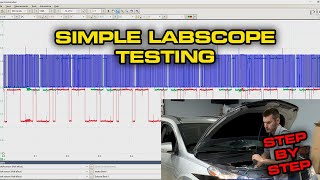
How to confirm: A mechanic can use an advanced scan tool to view camshaft correlation data in real-time; deviations that grow over time point to a timing issue. A more definitive, but labor-intensive, diagnosis is a physical inspection for slack in the chains, which requires removing the engine's front timing cover. An electronic method using a labscope to compare cam and crank sensor waveforms is the preferred professional method before disassembly. 🎬 Watch: How to test timing chain stretch with a labscope.
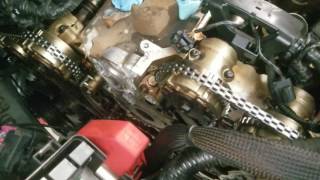
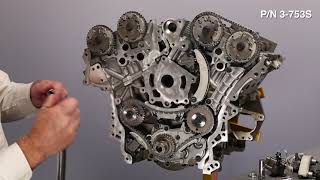
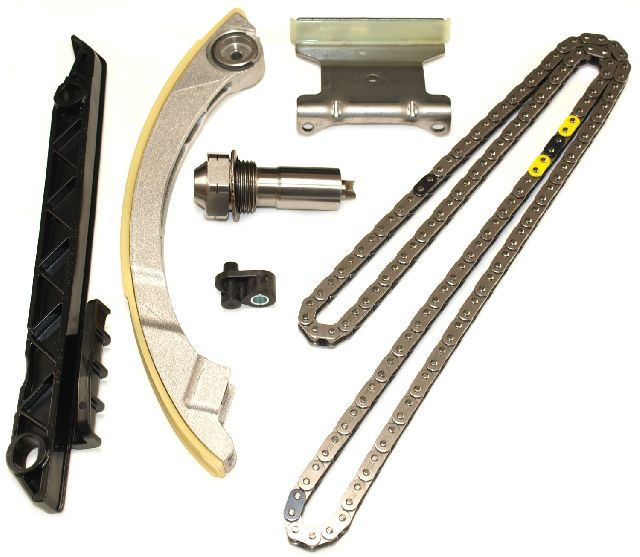
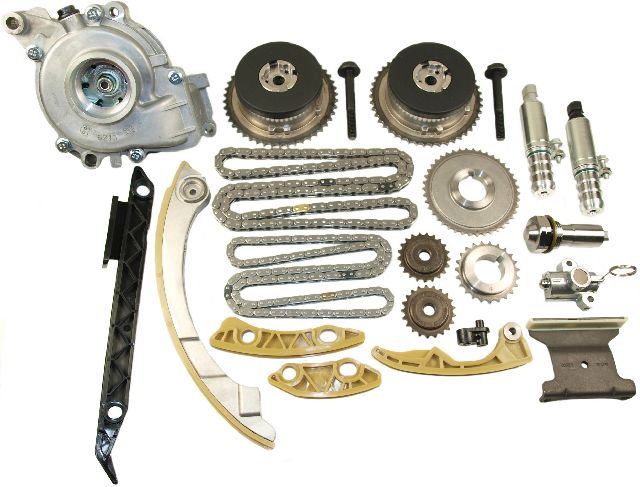
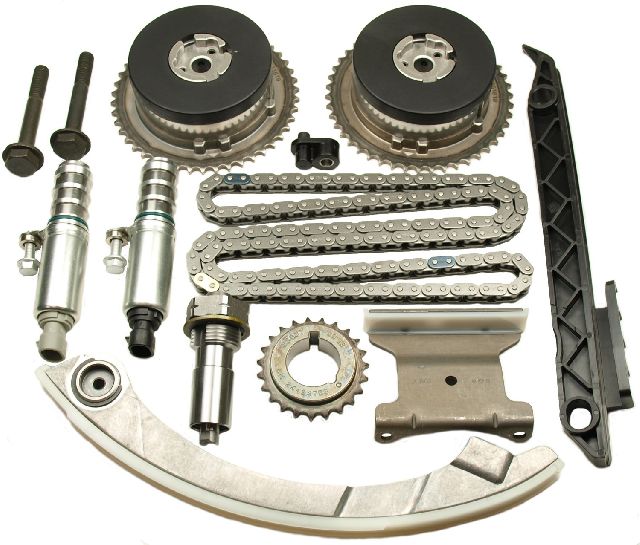
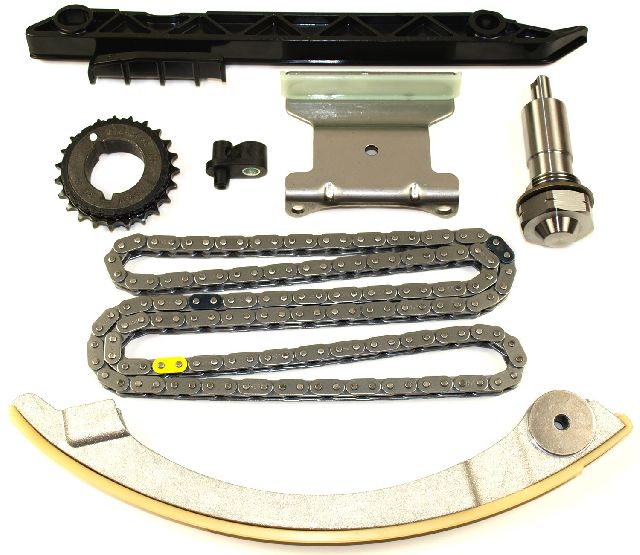
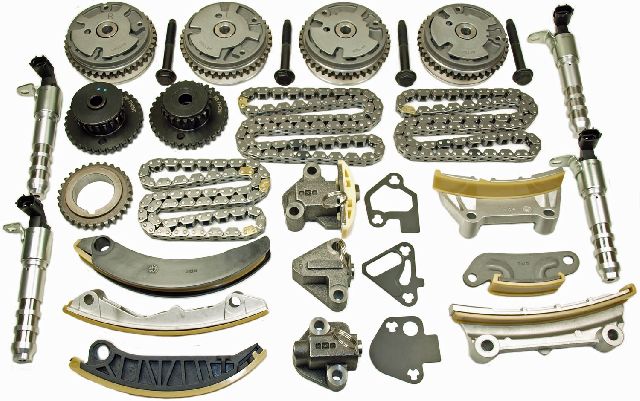
Typical fix: Replace all three timing chains, along with the tensioners, guides, and sprockets as a complete kit. It is critical to use a new, updated kit to prevent a repeat failure. 🎬 Watch: Expert installation tips for your new Melling timing kit.
Est. part cost: $250-$600 for a quality aftermarket kit (e.g., Melling, Cloyes) or an OEM ACDelco kit. - Failed Timing Chain Tensioners 🟡 Medium Probability → Shop Engine Timing Chain The hydraulic tensioners rely on clean engine oil at the proper pressure. Degraded or low oil can cause them to fail, get stuck, or lose their ability to keep the chain taut, allowing it to become slack. Failed tensioners are both a cause of slack and a result of a whipping, stretched chain.
How to confirm: During a physical inspection of the timing chains, the tensioners will be visibly collapsed, stuck, or failing to hold pressure against the chain guides.
Typical fix: Tensioners are always replaced as part of a complete timing chain service. They are included in all reputable timing chain kits.
Est. part cost: Included in the timing chain kit. - Low or Degraded Engine Oil ⚪ Low Probability This is a major contributing factor rather than a direct cause. The GM oil life monitor in the early 2010s often allowed for intervals exceeding 10,000 miles, leading to oil breakdown (loss of viscosity and lubricating properties) which starves the timing components and accelerates wear. One owner on a forum noted his father's identical car needed chains at 42k miles using the OLM, while his car lasted to 72k miles with 5-6k mile oil changes.
How to confirm: Check the oil level on the dipstick and inspect its condition. If it's very low or appears like dark sludge, it's a significant contributing factor to the timing chain wear.
Typical fix: Perform an oil and filter change with a high-quality full synthetic oil meeting the GM dexos1 specification. This will not fix a stretched chain but is absolutely critical for the longevity of the new components. Most experts recommend 5,000-mile intervals regardless of the OLM.
Est. part cost: $50-$100
Rare But Worth Checking
- Slipped Crankshaft Reluctor Wheel: → Shop Engine Crankshaft GM issued a TSB (#PIP3423P) noting that the reluctor wheel, which the crankshaft position sensor reads, can move on the crankshaft. This will cause timing codes like P0008 even if the chains are perfectly fine. Diagnosis is difficult and may require a borescope inserted through the crank sensor hole or oil pan removal to visually inspect its position relative to the crankshaft counterweight. Some aftermarket engine builders tack weld the reluctor wheel in place during a rebuild to prevent this.
- Faulty Camshaft or Crankshaft Position Sensors: → Shop Engine Crankshaft Position Sensor While possible, it's extremely uncommon for a sensor itself to fail in a way that sets a P0008 code without other sensor-specific codes (like for an open circuit). They are often misdiagnosed as the cause when the timing chains are the real issue. Many owners have replaced these sensors only to have the code return quickly.
Diagnosis Steps
- Read the fault codes with an OBD-II scanner to confirm P0008 and any other related codes (P0009, P0016-P0019).
- Check the engine oil level and condition. Low or dirty oil is a major red flag and contributing factor.
- Using an advanced scan tool, monitor the camshaft position data (desired vs. actual angles) for Bank 1 and Bank 2. A technician tip is to clear the codes with the engine off, then start the engine while watching the data PIDs; they should tell the truth briefly before the code resets and the computer defaults the values.
- Listen for a distinct rattling or scraping noise from the front (passenger side) of the engine, where the timing chains are located. The noise is often most prominent during a cold start for a few seconds.
- The most efficient professional diagnosis is to use a labscope to capture and compare the waveforms from the crankshaft position sensor and all four camshaft position sensors. A stretched chain will cause a visible delay (retard) in the cam signals relative to the crank signal.
- If scan tool data or scope analysis points to a timing issue, the final confirmation is a direct visual inspection. This requires removing the valve covers and the front timing cover to check for excessive slack by pressing on the chain guides.
- If chains appear tight, the rare possibility of a slipped crankshaft reluctor wheel must be investigated per TSB #PIP3423P, which may require using a borescope through the crank sensor port or removing the oil pan.
Parts You'll Likely Need
- Timing Chain Kit
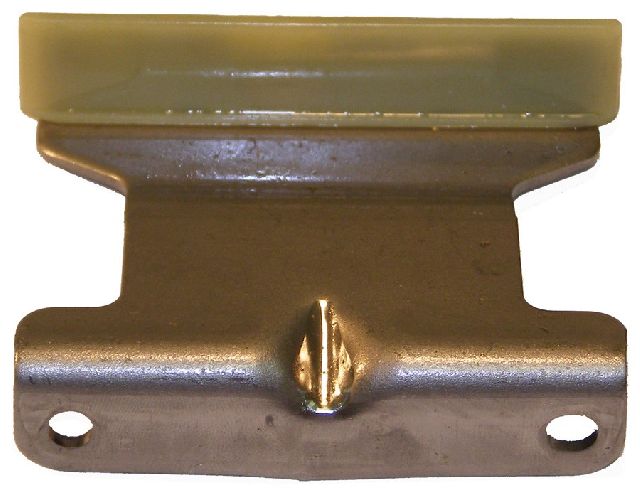
(OEM #12650230 (This is a common kit number, but verify with VIN. Later kits like 12700436/12700437 may also apply))— This is the definitive fix for the most common cause, a stretched timing chain. A complete kit ensures all wearable components (chains, guides, tensioners, sprockets, gaskets) are replaced at once to prevent repeat failures.
Trusted brands: ACDelco (OEM), Melling, Cloyes
OEM price range: $400-$600
Aftermarket price range: $250-$450
Related Codes That Often Appear With This One
- P0009 — P0009 is the equivalent timing correlation error for Bank 2 (the front bank, closer to the radiator). Seeing P0008 and P0009 together strongly indicates a problem with the primary timing chain that serves both banks or a slipped crankshaft reluctor wheel.
- P0016, P0017, P0018, P0019 — These are all specific crankshaft-to-camshaft correlation codes for intake and exhaust cams on both banks. They often appear with P0008 and P0009 and are further evidence of a systemic timing chain issue, as noted in multiple GM TSBs.
Technical Service Bulletins (TSBs) & Recalls
- PIP3423P: Mentions that P0008/P0009 and other codes can be caused by loose timing chains or a slipped crankshaft reluctor wheel.
Platform-Specific Known Issues
- Premature timing chain stretch on the 3.6L V6 is a widely acknowledged issue. GM issued Special Coverage Adjustment (SCA) 11340C, which extended the warranty for this specific problem to 10 years or 120,000 miles on many affected vehicles. This SCA originally applied to earlier model years (pre-LFX engines) but demonstrates GM's acknowledgement of the problem in the High Feature V6 family. Most, if not all, 2013-2016 models are now outside this potential coverage window based on time alone.
- An early attempt by GM to solve the issue involved an ECM reprogram to change oil life monitor calculations and adjust timing parameters, but this often proved insufficient, leading to the extended warranty coverage for chain replacement.
Scan Tool Commands That Help
- GDS2 (or equivalent professional scan tool): Crankshaft Position (CKP) Variation Learn / CASE Relearn — This procedure must be performed after replacing the crankshaft position sensor, the ECM, or after significant engine repairs. It synchronizes the ECM to the precise position of the crankshaft reluctor wheel. Failure to perform this relearn can result in a P1336 code and potentially incorrect timing calculations by the ECM.
Wiring & Ground Locations
- G103 — On the left side of the engine compartment, on the cowl panel above the brake booster. Some service documents also place a G103 on the left frame rail under the Starter Generator Control Module bracket.. This is a major ground point for the Body Control Module (BCM), Instrument Panel Cluster (IPC), and the Data Link Connector (DLC). A poor connection here can cause a wide range of communication and electrical issues, though it's not a primary cause of P0008.
- Engine Block/Transmission Grounds — Main engine-to-chassis grounds are typically found on a bellhousing bolt stud and at the rear of the passenger side cylinder head. Another key ground cable runs from the transmission housing to a stud on the frame rail.. A poor main engine ground can cause erratic behavior from sensors that rely on the block for a ground reference, including the crankshaft and camshaft position sensors. This is a rare cause for P0008 but is a fundamental check for any electrical diagnosis.
Real Owner Repair Stories
- YouTube channel 'Samcrac' (GM vehicle with 3.6L V6 engine) — Engine ran rough, timing codes present.
❌ Tried (didn't work) A complete timing chain replacement was performed using a new aftermarket timing kit.
✅ What actually fixed it The aftermarket timing chain kit failed within 5 miles. Teardown revealed the aftermarket chains used an older, weaker link design. The job was redone using a genuine, revised OEM timing kit which featured visibly more robust, reinforced chain links, which permanently resolved the issue. - Reddit user in r/MechanicAdvice (2007 Suzuki XL7 with 3.6L VVT (GM LY7 engine)) — Initially a P0009 code (Bank 2 timing error). After timing chain replacement, a P0008 code (Bank 1 timing error) appeared 6 days later.
❌ Tried (didn't work) Complete timing chain replacement (which fixed P0009 but was followed by P0008).
✅ What actually fixed it The mechanic diagnosed the new P0008 code as a stuck camshaft actuator on Bank 1, stating it was unrelated to the timing chain job. This story highlights the possibility of a separate component failure (like a VVT actuator/phaser) occurring around the same time as a chain replacement, complicating diagnosis.
OEM Part Supersession History
Various older designs used prior to ~2012→Kits including revised chains (e.g., within OEM kit 12650230)— The original timing chain design used a link style that was prone to premature stretching and wear.
Heads up: The critical difference is in the chain link design. The newer, revised OEM chains are visibly more robust and have extra reinforcement compared to the simpler design of the original chains. Using an aftermarket kit that still contains the older, non-revised chain design can lead to a repeat failure in a very short time.
Model Year Variations Within This Range
- 2013-2016: All 2013-2016 LaCrosse models with the V6 used the 3.6L LFX engine. While this engine featured improved timing chain components compared to its predecessor (the LLT), it was not completely immune to the timing chain stretch issue that causes P0008, especially when the Oil Life Monitor (OLM) is followed for extended drain intervals. A 2014 refresh was primarily cosmetic and did not change the LFX powertrain or its underlying potential for this code.
Helpful Videos
We Have This Part in Stock

The information in this article is provided for general reference and educational purposes only. Vehicle specifications, procedures, and part compatibility can vary by production date, trim level, and region. Always consult your vehicle's factory service manual and verify part numbers before purchasing or performing repairs. Safety-critical components such as airbags, seat belts, and braking systems should be installed by a qualified professional.
- Buick LACROSSE:
- 🧭 Diagnostic Flowchart
- 🎬 Helpful Videos
- 🛍️ Shop This Part
- What's Unique About the 2013-2016 Buick LACROSSE
- Symptoms You May Notice
- Most Likely Causes
- Rare But Worth Checking
- Diagnosis Steps
- Parts You'll Likely Need
- Related Codes That Often Appear With This One
- Technical Service Bulletins (TSBs) & Recalls
- Platform-Specific Known Issues
- Scan Tool Commands That Help
- Wiring & Ground Locations
- Real Owner Repair Stories
- OEM Part Supersession History
- Model Year Variations Within This Range
- 🎟️ Get 5% Off