

P0008 on 2004-2011 Cadillac CTS 3.6L: Stretched Timing Chain Causes and Fixes
On a 2004-2011 Cadillac CTS with the 3.6L V6, code P0008 almost always means the timing chains have stretched. This is a very common and serious issue requiring a complete timing chain kit replacement, an expensive repair costing between $2,200 and $3,600. GM acknowledged the problem with a special warranty extension (11340C) to 10 years/120,000 miles, which has now expired for most vehicles.
- P0008 on a 3.6L CTS is a serious code that almost certainly points to stretched timing chains.
- Do not waste money replacing camshaft or crankshaft sensors; they are not the cause.
- This is a very expensive repair due to high labor costs, but it is the only correct fix.
- Check with a GM dealer to see if your vehicle's VIN might have been covered under the Special Coverage Adjustment #11340C, even if it has now expired.
- Continued driving with this code is risky and can lead to complete engine failure.
What's Unique About the 2004-2011 Cadillac CTS
The GM 3.6L V6 engine family (LY7 and its successor, the LLT) used in this era of Cadillac CTS is infamous for premature timing chain stretching. The problem was so widespread that General Motors issued multiple Technical Service Bulletins (TSBs) and a "Special Coverage Adjustment" (#11340C) that extended the warranty for this specific failure to 10 years or 120,000 miles for many affected vehicles. The issue is often attributed to a combination of the original 'silent chain' design, long oil change intervals recommended by the factory's oil life monitor (OLM), and a PCV system design that could lead to sludge and accelerated wear. The OLM was later reprogrammed by GM as part of the special coverage to recommend shorter intervals.
Generation note: This range covers the first-generation CTS (2004-2007) and the second-generation CTS (2008-2011). The 3.6L LY7 engine was used from 2004-2009. The direct-injection 3.6L LLT engine was introduced in 2008. The timing chain issue is a known problem across both engine versions and generations within this timeframe, as confirmed by their inclusion in GM's TSBs.
Symptoms You May Notice
- Check Engine Light is on
- Reduced engine power and poor acceleration
- Engine running rough or idling poorly
- Rattling, clattering, or whining noise from the front of the engine, especially on cold startup
- Increased fuel consumption
- Difficulty starting the engine
- Engine may stall, especially at low speeds or when stopping
- Replacing the camshaft position sensors or crankshaft position sensor. These sensors are simply reporting the timing error; they are almost never the cause of a P0008 code on this engine. Multiple forum users report spending hundreds on sensors with no effect. 🎬 Watch: Why replacing sensors won't fix a P0008 code
Most Likely Causes
- Stretched Timing Chains 🔴 High Probability → Shop Engine Timing Chain This is a well-documented design and materials issue with the early GM 3.6L V6 engines, which used a 'silent chain' design prone to wear. Manufacturer TSB Bulletin #12-06-01-009F specifically announces the availability of timing chain kits to repair stretched chains that set DTC P0008. The problem is exacerbated by long oil change intervals, as degraded oil fails to properly lubricate the chains and tensioners.
How to confirm: A mechanic will use a scan tool (like a GM Tech 2) to read cam/crank deviation data; a consistent deviation of more than 4-5 degrees confirms chain slack. Physical confirmation requires removing the engine's front cover to measure the slack in the chains, which is a labor-intensive process.
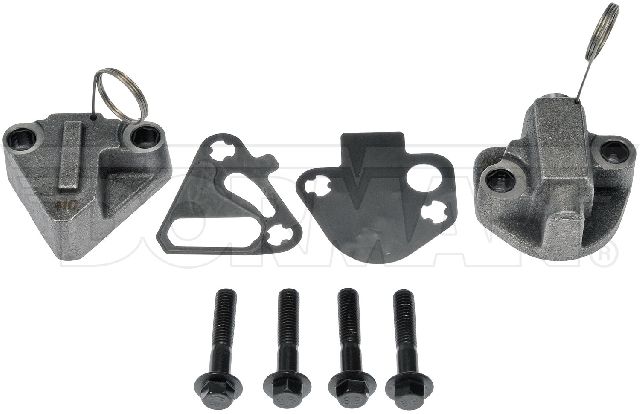
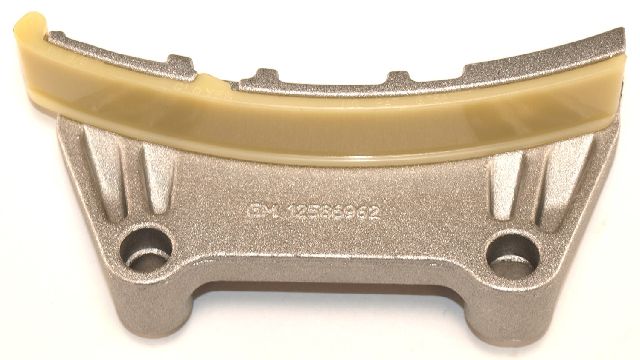
Typical fix: Replace all three timing chains (one primary, two secondary), all tensioners, and all guides with an updated OEM or high-quality aftermarket kit. It is also highly recommended to replace the water pump and front crankshaft seal at the same time.
Est. part cost: $400-$800 - Worn or Failed Timing Chain Tensioners/Guides 🟡 Medium Probability → Shop Engine Timing Chain The hydraulic tensioners and plastic guides are part of the same system and wear along with the chains. Manufacturer Bulletin #PIP3423P instructs technicians that P0008 may be set due to loose timing chains or tensioners. A failing tensioner can lose hydraulic pressure, causing slack even if the chain isn't significantly stretched.
How to confirm: These are inspected for wear, damage, or full extension during the timing chain replacement job. A rattling noise on startup is a strong indicator of a tensioner or guide failure.
Typical fix: These components are always replaced as part of a complete timing chain service. They are included in the timing chain kit.
Est. part cost: $100-$200 (as part of a kit) - Low or Degraded Engine Oil ⚪ Low Probability The timing chain tensioners are hydraulic and rely on clean oil at the correct pressure to function. GM's own TSBs link premature wear to the original, overly optimistic oil change intervals recommended by the Oil Life Monitor. These engines are also known for some oil consumption, which can lead to low oil levels if not checked regularly.
How to confirm: Check the oil level on the dipstick and inspect its condition. If it's very low, black, or sludgy, this is a likely contributing factor.
Typical fix: An oil and filter change is a critical first step and a preventative measure. However, if the P0008 code is already set, the chains are almost certainly already stretched and will still need replacement.
Est. part cost: $50-$100
Rare But Worth Checking
- Slipped Crankshaft Reluctor Wheel: → Shop Engine Crankshaft GM TSB #PIP3423P notes that the reluctor wheel, which the crankshaft position sensor reads, can physically move on the crankshaft. This causes a timing correlation code even with good chains. Confirming this may require a borescope, and the fix requires crankshaft replacement.
Diagnosis Steps
- Read the codes with an OBD-II scanner and note any other codes present (e.g., P0009, P0017).
- Check the engine oil level and condition. If low or dirty, perform an oil and filter change with the correct specification oil (ACDelco dexos1). This is good maintenance but will not fix a set P0008 code.
- Clear the codes and test drive the vehicle. If the code returns immediately, it confirms a hard mechanical fault.
- A professional technician should use an advanced scan tool to observe the camshaft/crankshaft correlation data to confirm a timing deviation. 🎬 Watch: How to test timing chain stretch with a labscope A deviation greater than 4-5 degrees is a definitive sign of a stretched chain.
- If a timing deviation is confirmed, the only reliable fix is engine disassembly to replace the timing chains, tensioners, and guides.
- Do not replace sensors unless they have a specific failure code and have been tested independently. This is a common and costly misdiagnosis.
Parts You'll Likely Need
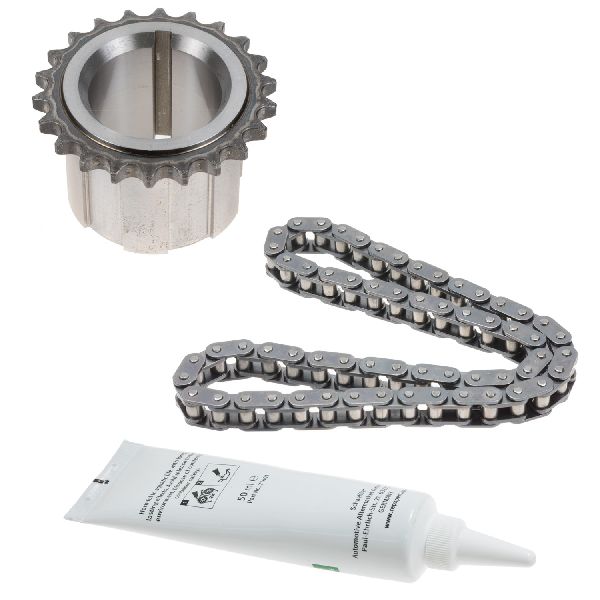
- Engine Timing Chain Kit
(OEM #12650230 (For 2007 LY7 models), 12650231 (For 2008-2009 LY7 models), 12651450 (For 2008-2009 LLT models))— This is the definitive fix. A complete kit includes all three chains, all tensioners, and all guides needed to correctly service the system. TSB 12-06-01-009F lists these specific kit part numbers for the covered models.
Trusted brands: ACDelco (OEM), Cloyes
OEM price range: $450-$800
Aftermarket price range: $300-$600
Related Codes That Often Appear With This One
- P0009 — This is the identical code for Bank 2 (driver's side). Seeing P0008 and P0009 together strongly indicates the primary timing chain has stretched, as it affects both banks.
- P0016, P0017, P0018, P0019 — These are more specific codes for crankshaft/camshaft correlation on the intake and exhaust cams for both banks. They are symptoms of the same root cause: stretched timing chains.
Technical Service Bulletins (TSBs) & Recalls
- 11340C: Special Coverage Adjustment for Timing Chain Wear - Extends warranty to 10 years/120,000 miles for certain 2007-2009 models and covers timing chain replacement. Also instructs dealers to reprogram the ECM to shorten oil change intervals.
- 12-06-01-009F: Information on High Feature V6 Timing Chain Kits - Details the availability of updated parts kits for the repair and advises against replacing non-wear items like sprockets and actuators.
- PIP3423P: Diagnostic Information for Timing Codes - Instructs technicians to check for loose timing chains or a rare slipped crankshaft reluctor wheel.
Platform-Specific Known Issues
- Premature timing chain failure is the single most significant known issue for this engine and is directly responsible for the P0008 code. GM's Special Coverage Adjustment #11340C was created specifically to address this widespread problem.
Mechanic-Grade Diagnostic Values
- VVT Solenoid Resistance (LY7 Engine, 2004-2009) — expected: 4.6-7.5 Ohms at 68°F (20°C). Failure: A reading outside this range, or an open/short circuit, indicates a failed solenoid coil.
- VVT Solenoid Resistance (LLT Engine, 2008-2011) — expected: 7-13 Ohms at 68°F (20°C). Failure: A reading outside this range indicates a failed solenoid coil. Note the difference from the LY7 engine.
- Engine Oil Pressure (LY7 Engine, warm) — expected: Minimum 24 psi at 1,000 RPM; 34 psi at 2,000 RPM; 38 psi at 4,000 RPM. Failure: Pressure below these minimums indicates a lubrication problem that will accelerate timing chain wear and can cause VVT-related codes.
- Scan Tool 'Camshaft Position Variance' PID — expected: Less than 2 degrees at idle when commanding the actuator.. Failure: A consistent variance greater than 4-5 degrees at idle strongly suggests a mechanical timing issue like a stretched chain.
Hidden / Shadow Codes Worth Checking
- P1336: This code indicates that the Crankshaft Position (CKP) System Variation has not been learned by the ECM. It does not cause P0008 but will appear if the mandatory relearn procedure is not performed or fails after a timing chain replacement. (see via Standard OBD-II scanner. It is set when the relearn procedure fails.)
Scan Tool Commands That Help
- GM Tech 2 / GDS2 or equivalent professional scan tool: Crankshaft Position Variation Learn (also called CASE Learn) — This procedure is mandatory after replacing the timing chains, crankshaft sensor, or ECM. It allows the ECM to learn the minor variations in the crankshaft reluctor wheel to accurately detect misfires. Failure to perform this will often leave a P1336 code and can affect engine performance.
Wiring & Ground Locations
- G103 / G104 — Located on the rear of the cylinder heads, near the bellhousing area. G103 is typically on the passenger side head, G104 on the driver's side.. These are primary grounds for the Engine Control Module (ECM). A loose or corroded connection can cause unstable voltage and erratic sensor readings for the cam and crank sensors, potentially leading to false correlation codes even with good timing components.
- G108 — A ground strap running from the back of the left (driver's side) cylinder head to the firewall.. Provides the main ground path between the engine block and the vehicle chassis. A poor connection can cause a voltage offset in sensor signals, disrupting the sensitive cam/crank correlation readings.
- CMP Sensor Wiring — At the camshaft position sensor connectors on the front of the engine.. On many 3.6L engines, the shared 5-volt reference wire is Gray and the low reference (ground) wire is Tan. Verifying a stable 5V on the gray wire and good continuity to ground (via G103/G104) on the tan wire is a key electrical check before condemning mechanical parts, although it is rarely the cause of P0008.
Real Owner Repair Stories
- Reddit user on r/Cadillac (2008 Cadillac CTS 3.6L, 100,500 miles) — Check Engine Light with P0008, significant loss of power.
❌ Tried (didn't work) A local shop suggested replacing VVT solenoids, crankshaft sensor, or oil pressure sensor but was not confident enough to perform the work.
✅ What actually fixed it The dealership correctly diagnosed the need for a timing chain inspection/replacement. The user was quoted $3,000-$3,500 for the full job. Another user in the same thread confirmed they wasted ~$400 replacing sensors on their '07 model with the same code, which did not fix the issue. - YouTube user 'Kevin Nadeau' (2007 Cadillac CTS 3.6L, 88,000 miles) — Check Engine Light with codes P0008 and P0017.
❌ Tried (didn't work) Replaced the Bank 1 Exhaust Camshaft Position Sensor (Sensor B)., Cleaned and inspected the VVT solenoids.
✅ What actually fixed it The attempted repairs did not fix the code, which returned after a short test drive. The video creator concluded that the actual underlying problem was the stretched timing chains, confirming that sensor replacement is not the correct fix for this code. - NHTSA ODI #11161992 — An owner reported the P0008 warning light came on while driving. While their mechanic stated the timing chain needed replacement, the dealer referenced Special Coverage Adjustment 11340C for the repair.
- NHTSA ODI #11329290 — A driver experienced issues and was told by a shop that the P0008 code indicated an engine position system performance fault related to a loose belt/chain that required immediate repair.
- NHTSA ODI #10808284 — An owner of a vehicle with 65,000 miles reported receiving a P0008 error (chain chamber) at a service center, though they encountered difficulties with guarantee coverage for the chain change.
OEM Part Supersession History
N/A - Original design chains→Kits like 12650230 (2007), 12650231 (2008-09 LY7), 12651450 (2008-09 LLT)— The original 'silent chains' were prone to premature stretching. The replacement kits contain updated chains with improved durability.
Heads up: TSB 12-06-01-009F explicitly states that idler sprockets, camshaft actuator gears, and the crankshaft gear should NOT be replaced as part of a standard timing chain job for this code, as they are not considered wear items and are often replaced unnecessarily.
Model Year Variations Within This Range
- 2004-2009 (LY7) vs 2008-2011 (LLT): The port-injected LY7 and direct-injected LLT engines have different VVT solenoids with distinct electrical resistance specifications. LY7 solenoids are 4.6-7.5 Ohms, while LLT solenoids are 7-13 Ohms. Using the wrong solenoid will cause performance issues even if it fits physically.
- 2004-2006: Early build 2004-2006 models used a 78-link primary chain and 92-link roller-type secondary chains. Later models used different chain designs. It is critical to verify the correct kit for the specific VIN/build date.
Diagnostic Flowchart
Other Known Issues on This Vehicle
Issues unrelated to this code that are worth knowing about as an owner of this generation:
- Excessive Oil Consumption 🟠 Medium — Common across the 3.6L LY7/LLT engine family. Some owners report adding 1 quart every 1000-2000 miles. GM considers up to 1 quart per 2000 miles to be 'normal'. (Ref: No recall, but multiple forum discussions and some dealer acknowledgements. Often attributed to PCV system design and piston ring tension.)
- Rear Differential Failure 🔴 High — More common on higher-performance V-Sport models, but also reported on standard models. Can occur due to fluid breakdown or component failure, leading to whining/grinding noises and eventual lock-up. (Ref: Recall N192279370 was issued for 2014-2015 CTS-V Sport models for fracturing roll pins, but earlier models can also experience failures.)
- Water Pump Failure 🟠 Medium — A known issue on the 3.6L V6 where the water pump may leak coolant, leading to overheating if not addressed. It is often recommended to be replaced preemptively during a timing chain service.
- Ignition Switch Failure 🔴 High — Part of a massive GM recall, the ignition switch could be bumped out of the 'Run' position, disabling the engine and airbags while driving. (Ref: GM Recall #14V344000 (July 2014) covered 2003-2014 CTS models.)
Used vs. New Parts: Buying Guide for This Vehicle
When a used part is the smart pick: For this specific P0008 repair, using used parts is NOT recommended for any of the core timing components. The only scenario where used parts might be considered is for non-wear external components like the timing cover itself if it were damaged during disassembly, or for sensors if being swapped for diagnostic purposes.
What to inspect on the donor part:
- Not applicable for timing chains, tensioners, or guides. These parts must be purchased new.
OEM-only on this vehicle (don't cheap out):
- While not strictly OEM-only, the timing chain kit is the most critical component. Using a high-quality, reputable brand is essential. Cheap, unbranded kits are a major gamble that can lead to catastrophic failure.
Aftermarket brands forum-validated for this vehicle:
- Cloyes: Widely regarded in professional and DIY communities as a high-quality OEM equivalent or better for timing components. Their kits (e.g., 9-0753S) are a common choice for this repair.
- Melling: Another reputable brand known for quality engine components, including timing sets.
Brands owners have reported issues with on this vehicle:
- Unbranded, no-name kits from online marketplaces. The risk of poor materials, incorrect dimensions, and premature failure is extremely high and not worth the potential cost of engine destruction.
Real Owner Stories
Aggregated from forums and TSBs cited above. Mileages and costs reflect what owners reported in those sources.
2008 Cadillac CTS 3.6L DI — 72000 miles
Symptoms: Owner noted the P0008 code finally caught up with them despite performing more frequent 5-6k mile oil changes than the OLM suggested.
What fixed it: Timing chain replacement covered under the 10yr/120k mile special coverage.
Source hint: BobIsTheOilGuy.com - P0008 Code finally caught up with me
2008 Cadillac CTS 3.6L — 100000 miles
Symptoms: P0008 code; local shop suggested sensors but dealership identified timing chain issue.
What fixed it: Timing chain replacement.
Cost: $3000-$3500
Source hint: Reddit r/Cadillac - 2008 Cadillac CTS getting P0008 code
2007 Cadillac CTS 3.6L — 77000 miles
Symptoms: P0008 code present.
What fixed it: Timing chain replacement performed by dealer under Special Coverage Adjustment #11340.
Cost: $0-$0
Source hint: CaddyInfo.com - Timing Chain Replaced - Special Warranty
Related OBD-II Codes
Frequently Asked Questions
Is there a special warranty for the timing chain issue on my 2008 Cadillac CTS?
My mechanic suggested replacing the sensors first for my P0008 code; is this recommended?
Can I just change the oil to fix the P0008 code on my 3.6L V6?
What specific data should a technician look for to confirm the timing chain is stretched?
Does TSB 12-06-01-009F suggest I need to replace the sprockets and actuators too?
Why is the 3.6L LY7 engine in my CTS so prone to this P0008 code?
Helpful Videos
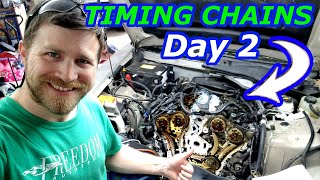
We Have This Part in Stock



The information in this article is provided for general reference and educational purposes only. Vehicle specifications, procedures, and part compatibility can vary by production date, trim level, and region. Always consult your vehicle's factory service manual and verify part numbers before purchasing or performing repairs. Safety-critical components such as airbags, seat belts, and braking systems should be installed by a qualified professional.
- Cadillac CTS:
- 🧭 Diagnostic Flowchart
- 🎬 Helpful Videos
- 🛍️ Shop This Part
- What's Unique About the 2004-2011 Cadillac CTS
- Symptoms You May Notice
- Most Likely Causes
- Rare But Worth Checking
- Diagnosis Steps
- Parts You'll Likely Need
- Related Codes That Often Appear With This One
- Technical Service Bulletins (TSBs) & Recalls
- Platform-Specific Known Issues
- Mechanic-Grade Diagnostic Values
- Hidden / Shadow Codes Worth Checking
- Scan Tool Commands That Help
- Wiring & Ground Locations
- Real Owner Repair Stories
- OEM Part Supersession History
- Model Year Variations Within This Range
- Other Known Issues on This Vehicle
- Used vs. New Parts: Buying Guide for This Vehicle
- Real Owner Stories
- 2008 Cadillac CTS 3.6L DI — 72000 miles
- 2008 Cadillac CTS 3.6L — 100000 miles
- 2007 Cadillac CTS 3.6L — 77000 miles
- Related OBD-II Codes
- Frequently Asked Questions
- 🎟️ Get 5% Off