

P0008 on 2012-2018 Cadillac CTS 3.6L: Stretched Timing Chain Causes and Fixes
On a 2012-2018 Cadillac CTS with the 3.6L V6 engine, code P0008 almost always means the timing chains have stretched. This is a serious mechanical failure requiring a complete timing chain kit replacement, a job that typically costs $2,200 to $3,600 at a repair shop. The issue is a well-documented design flaw, and ignoring it can lead to catastrophic engine failure.
- P0008 on a 3.6L Cadillac CTS is a serious code that almost certainly points to a stretched timing chain.
- Do not waste money replacing camshaft or crankshaft sensors; they are rarely the cause of this specific code.
- The only correct fix is a complete timing chain service, which is a labor-intensive and expensive repair.
- Continued driving is risky and can lead to catastrophic engine failure if the chain breaks.
- Adhering to strict 5,000-mile oil change intervals with high-quality full synthetic oil is the best way to prolong the life of the timing chains.
What's Unique About the 2012-2018 Cadillac CTS
The GM 3.6L V6 engine family (including both the LLT and LFX versions in this CTS) has a well-documented history of premature timing chain stretching. The problem was exacerbated by an aggressive Oil Life Monitor (OLM) system that allowed for excessively long oil change intervals, leading to oil degradation that accelerated wear. The problem became so widespread that General Motors issued a Special Coverage Program (#11340C) that extended the warranty for this specific failure to 10 years or 120,000 miles for many owners. Because this is a known mechanical flaw, P0008 on this vehicle is rarely caused by a simple sensor failure.
Generation note: The 2012-2018 year range covers the end of the second generation (2012-2014) and the third generation (2014-2019). The 3.6L engine also transitioned from the LLT to the LFX design around 2012. However, the P0008 code related to stretched timing chains is a known issue common to both the LLT and LFX engines, as confirmed by GM service bulletins.
Symptoms You May Notice
- Check Engine Light illuminated
- Reduced engine power and poor acceleration.
- Engine running rough or unstable idle.
- Rattling or whining noise from the front of the engine, especially on a cold start.
- Decreased fuel economy.
- Difficulty starting the engine.
- Replacing the camshaft position sensors. This is the most common mistake, as the sensors are rarely the cause of a P0008 correlation code. Forum users report spending hundreds of dollars on sensors with no success.
- Replacing the VVT solenoids (camshaft actuators). A faulty solenoid typically sets a different code (like P0016/P0017) and would not cause this specific timing correlation error across the entire bank.
Most Likely Causes
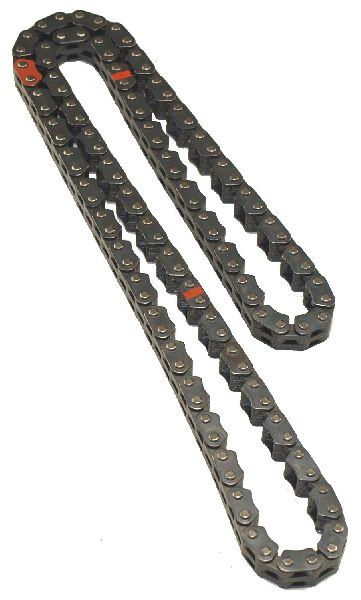
- Stretched Timing Chains 🔴 High Probability → Shop Engine Timing Chain The original timing chains used on many GM 3.6L V6 engines were susceptible to premature wear and stretching. This is the most common cause for P0008 on this platform, often occurring between 40,000 and 110,000 miles.
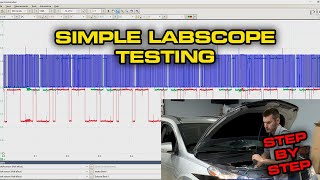
How to confirm: A technician can use a scan tool to view camshaft position deviation data. A definitive diagnosis requires removing the timing cover to physically measure chain slack. An advanced technician may use an oscilloscope to compare cam and crank sensor patterns against a known good waveform. 🎬 Watch: How to test GM 3.6L timing chains with a labscope
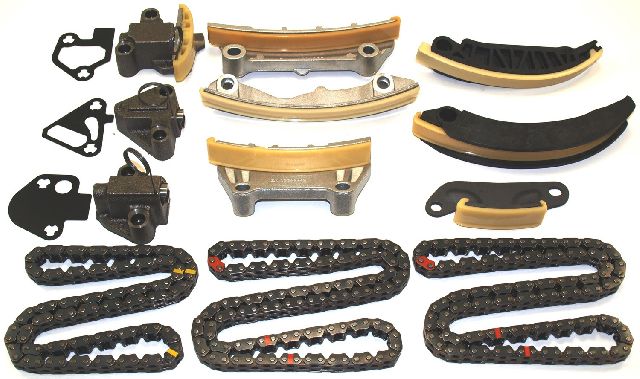
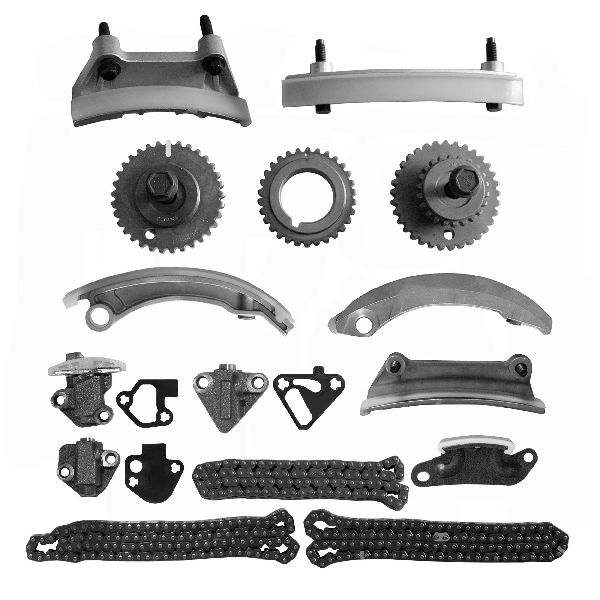
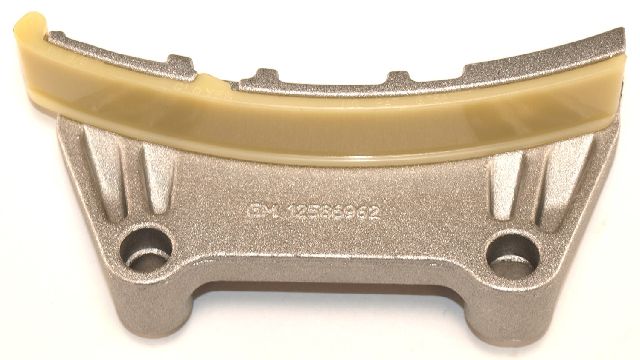
Typical fix: Replace all three timing chains, all tensioners, and all guides with an updated timing chain kit. This is a major repair.
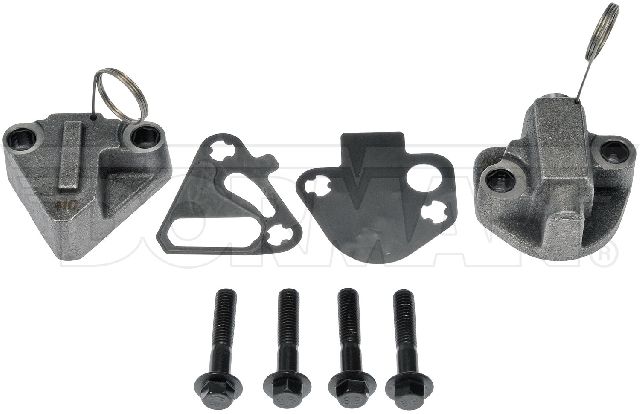
Est. part cost: $300-$700 - Worn Timing Chain Tensioners or Guides 🔴 High Probability → Shop Engine Timing Chain Tensioners are hydraulic and can fail or weaken, allowing the chain to become slack. The plastic guides can become brittle and break. These parts are always replaced during a timing chain service. Manufacturer TSB Bulletin #PIP3423P notes that technicians must specifically inspect for loose timing chains or tensioners when this code is present.
How to confirm: Diagnosed during physical inspection when the timing cover is removed. A failed tensioner will allow visible slack in the chain.
Typical fix: Replace all timing components as part of a complete timing chain kit.
Est. part cost: $300-$700 (as part of kit) - Low Engine Oil Level or Poor Oil Quality 🟡 Medium Probability The timing chain tensioners are hydraulic and rely on clean oil at the correct pressure to function. Infrequent oil changes (often due to following the original OLM recommendations) or using oil that does not meet GM's dexos specification can accelerate chain and tensioner wear.
How to confirm: Check the oil level on the dipstick and review vehicle service history for oil change intervals. Sticking to 5,000-mile intervals is recommended.
Typical fix: Perform an oil and filter change with a high-quality full synthetic oil meeting GM's specifications. This is critical maintenance but will not fix already-stretched chains.
Est. part cost: $50-$100
Rare But Worth Checking
- Slipped Crankshaft Reluctor Wheel: → Shop Engine Crankshaft This is a known but much less common issue on some GM engines. GM issued a technical service bulletin (PIP3423P) that mentions this as a possibility to check for when diagnosing timing codes. In some cases, the reluctor wheel can move on the crankshaft, causing a timing mismatch even with new chains.
- Faulty Camshaft or Crankshaft Position Sensor: → Shop Engine Crankshaft Position Sensor While a sensor can fail, it is very rarely the cause of P0008 on this engine. The code indicates a correlation error, not a sensor circuit fault. Do not replace sensors without first verifying the mechanical timing.
Diagnosis Steps
- Verify the code with a quality OBD-II scanner.
- Check the engine oil level and condition. Low or dirty oil can cause timing issues. Ensure the correct dexos-rated oil is being used.
- Using an advanced scan tool, monitor the camshaft position data (Camshaft Position Variance PIDs) to see if it deviates from the desired angle. A deviation beyond a few degrees at idle is a strong indicator of a problem.
- If scan tool data suggests a timing issue, the next step is a physical inspection. This requires partial engine disassembly to remove the timing cover.
- Once the cover is off, inspect the timing chains for excessive slack and check for broken or worn guides and tensioners. TSB Bulletin #PIP3423P advises that if standard diagnostics are followed, the technician will need to inspect for loose timing chains or tensioners.
- If chains are stretched, a full timing chain kit replacement is required.
Parts You'll Likely Need
- Timing Chain Kit
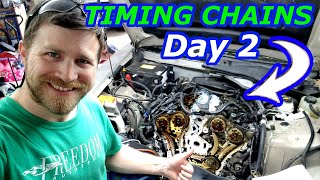
(OEM #12651450 (ACDelco kit for many LFX/LLT applications, verify by VIN))— This is the definitive fix. A complete kit includes all three chains, tensioners, guides, and sometimes sprockets and seals needed to properly restore engine timing. TSB 12-06-01-009F specifies the correct kit to use. 🎬 Watch: Reassembling the timing chains and engine (Day 2)
Trusted brands: ACDelco (OEM), Cloyes (High-quality aftermarket, e.g., 9-0753S)
OEM price range: $400-$600
Aftermarket price range: $250-$450
Related Codes That Often Appear With This One
- P0009 — This is the identical code for Bank 2. Seeing P0008 and P0009 together strongly confirms a problem with the primary timing chain, as it affects both banks of the engine. TSB Bulletin #12-06-01-009F notes that these codes often set simultaneously when chains are stretched.
- P0016, P0017, P0018, P0019 — These are more specific crankshaft-to-camshaft correlation codes for the intake and exhaust cams on both banks. They are symptoms of the same root problem: stretched timing chains.
Technical Service Bulletins (TSBs) & Recalls
- 11340C: Special Coverage Adjustment for premature timing chain wear. It provided a 10-year/120,000-mile warranty for the repair and included an ECM reprogram to adjust the Oil Life Monitor.
- 12-06-01-009F: Provides information on the correct High Feature V6 timing chain kits to use for the repair, listing specific part numbers and applications. It advises against replacing sprockets or guides unless they are visibly worn. This bulletin announces the availability of specific kits for repairing stretched timing chains that set DTC P0008.
- PIP3423P: A diagnostic aid for various timing codes, including P0008, that suggests checking for a slipped crankshaft reluctor wheel in addition to loose chains. This communication provides information to the technician that codes including P0008 or P0009 may be set.
Platform-Specific Known Issues
- GM issued Special Coverage Adjustment #11340C, which extended the warranty on the timing chains to 10 years or 120,000 miles from the vehicle's in-service date. This program also covered reprogramming the ECM to shorten oil change intervals. While this program has expired for all 2012-2018 models, it highlights the prevalence of the issue and GM's acknowledgment of the defect.
Mechanic-Grade Diagnostic Values
- Camshaft Position Angle Variance (Scan Tool PID) — expected: Less than 4 degrees of deviation at idle and 2000 RPM.. Failure: A consistent deviation greater than 4-6 degrees indicates a stretched timing chain or other mechanical timing fault.
- Camshaft Position Actuator Solenoid Resistance (LFX Engine) — expected: 6.9 to 7.9 ohms at 68°F (20°C).. Failure: A reading of no resistance (open circuit) or significantly outside the specified range indicates a faulty solenoid.
- Oscilloscope Cam/Crank Waveform (Known-Good Bank 1) — expected: On a known-good 3.6L engine, the Bank 1 intake cam sensor signal should cross the crank sensor signal in the middle of the missing tooth gap on the crankshaft reluctor.. Failure: A signal that is shifted to the right (retarded) indicates a stretched chain.
Scan Tool Commands That Help
- GDS2 (GM Dealer Tool): Camshaft Position Actuator Control — This bidirectional test allows a technician to command each VVT solenoid to a specific angle to see if it responds correctly. This helps differentiate a stuck VVT phaser or faulty solenoid from a stretched timing chain before major disassembly.
- GDS2 (GM Dealer Tool): Crankshaft Position Variation Learn — This procedure is required after replacing the crankshaft position sensor or the ECM. It allows the ECM to learn the profile of the new reluctor wheel for accurate misfire detection, but it will not fix a P0008 code caused by a mechanical timing fault.
Wiring & Ground Locations
- ECM Location — Under the plastic engine cover, on the top-front of the engine.. The ECM receives all sensor inputs and controls the VVT solenoids. Poor connections or corrosion at the main connectors can cause erratic behavior, though it's a rare cause for P0008.
- ECM Grounds — A crucial ground strap for the ECM is located on the side of the engine block, near the ECM itself. Other key engine grounds are G106 (right rear of engine) and G130 (rear of right cylinder head).. A poor ground connection for the ECM can disrupt the low reference signals from the cam and crank sensors, potentially causing false or intermittent timing codes. Verifying these grounds are clean and tight is a key electrical diagnostic step.
- Bank 1 Camshaft Position Sensor Connector — Bank 1 is the passenger side. The two sensors are on the front of the engine, on the valve cover. The connectors are 3-pin.. The ECM uses the signal from these sensors to determine Bank 1 timing. A technician can back-probe these connectors to test sensor signals with an oscilloscope. Pin A is typically the 5V reference, Pin B is the low reference (ground), and Pin C is the signal wire.
Real Owner Repair Stories
- Camaro5 Chevy Camaro Forum (2011 Camaro V6 (LLT Engine)) — P0008 and P0009 codes, sluggish performance, extreme power loss.
❌ Tried (didn't work) Replaced all timing chains with a Cloyes kit., Replaced all four VVT sprockets (cam phasers)., Replaced all four camshaft position sensors (ACDelco)., Replaced all four VVT solenoids., Replaced crankshaft position sensor (ACDelco).
✅ What actually fixed it The crankshaft reluctor wheel had slipped by 1.5 teeth. A mechanic was able to carefully reposition it without removing the crankshaft and added a tack weld to secure it. This resolved the codes and restored performance.
OEM Part Supersession History
Various older kits→12651450 (ACDelco kit for many LFX/LLT)— GM released updated timing chain kits to address premature stretching. TSB 12-06-01-009F, released in 2012 and revised through 2015, consolidated multiple part numbers into specific kits designed to be more durable.
Heads up: TSB 12-06-01-009F explicitly states that for a stretched chain repair, technicians should NOT replace idler sprockets, camshaft actuators, or the crankshaft gear unless they are visibly worn, as they are being replaced unnecessarily. The kits do not contain these parts.
Model Year Variations Within This Range
- 2012 (Transition Year): The 3.6L engine transitioned from the LLT to the LFX design around the 2012 model year. The LFX features a revised cylinder head design, lighter components, and an integrated exhaust manifold. While both engines suffer from P0008, the LFX was intended to have improved timing chain durability, though problems still occur. It's crucial to verify the engine code (8th digit of VIN: 'D' for LLT, '3' for LFX) before ordering parts.
- 2009-2014 (LLT): Models with the direct-injected LLT engine were particularly hard on oil, which accelerated chain wear. Any repair on these models must include an ECM reflash to update the Oil Life Monitor (OLM) software to recommend shorter oil change intervals, a step that was part of GM's Special Coverage program.
Diagnostic Flowchart
Other Known Issues on This Vehicle
Issues unrelated to this code that are worth knowing about as an owner of this generation:
- CUE Infotainment Screen Delamination 🟠 Medium — Extremely common on 2013-2017 models. The screen develops a 'spiderweb' crack appearance and becomes unresponsive to touch due to an internal gel drying out. (Ref: No recall, but a class-action lawsuit was filed. Repair involves replacing the screen with an improved gel-free design.)
- Rear Differential Failure 🔴 High — More common on performance (V-Sport) and AWD models, but can occur on others. Owners report a whining or howling noise that progresses. Parts have been on backorder for extended periods. (Ref: Recall N192279370 for 2014-2015 CTS-V Sport models for fracturing roll pins, but widespread bearing failure is reported on other models without a specific recall.)
- Carbon Buildup on Intake Valves 🟠 Medium — A common issue on all direct injection (DI) engines like the LLT and LFX. Buildup can cause misfires, rough idle, and reduced power, typically becoming noticeable around 80,000-100,000 miles. (Ref: GM TSB PIP5029D addresses diagnosis for misfires caused by carbon deposits. The fix is a manual cleaning (walnut blasting).)
- Transmission Shutter/Jerking 🟠 Medium — Some owners report a shutter or jerking feeling, particularly when backing up and turning or during gear changes. This can sometimes be addressed with a fluid flush, but may indicate torque converter issues.
Used vs. New Parts: Buying Guide for This Vehicle
When a used part is the smart pick: For this specific P0008 repair, using used parts is strongly discouraged. The primary failure is wear on the timing chains, tensioners, and guides. Installing used components with unknown mileage provides no assurance of longevity and risks a repeat failure of a very labor-intensive job.
What to inspect on the donor part:
- Not applicable for timing components. Always buy new.
OEM-only on this vehicle (don't cheap out):
- Timing Chain Kit: While high-quality aftermarket kits exist, using the latest revision ACDelco (OEM) kit is the safest choice to ensure you have the most updated chain and tensioner design to prevent a recurrence of the problem.
Aftermarket brands forum-validated for this vehicle:
- Cloyes: Widely regarded in forums as a high-quality OEM equivalent for timing components. Their kits (e.g., 9-0753S) are a common choice for both DIY and professional repairs.
- Melling: Another reputable aftermarket manufacturer of timing components.
Brands owners have reported issues with on this vehicle:
- Unbranded, low-cost kits from online marketplaces. Forum discussions and reviews frequently warn against using no-name kits, as the quality of the chain links and tensioner seals is critical for longevity. A premature failure would require re-doing the entire 10-15 hour job.
Real Owner Stories
Aggregated from forums and TSBs cited above. Mileages and costs reflect what owners reported in those sources.
2008 Cadillac CTS 3.6L V6 — 72000 miles
Symptoms: P0008 code triggered; noted that the issue was caught up with him despite maintenance.
What fixed it: Replacement of timing chains and tensioners with revised parts.
Source hint: BobIsTheOilGuy - 'P0008 Code finally caught up with me'
2008 Cadillac CTS 3.6L V6 — 42000 miles
Symptoms: Premature timing chain failure attributed to following long factory oil change intervals.
What fixed it: Timing chain replacement under the 10yr/120k mile special coverage program.
Source hint: BobIsTheOilGuy - 'P0008 Code finally caught up with me'
2008 Cadillac CTS 3.6L V6 — ~85000 miles
Symptoms: P0008 code and a noticeable loss of power.
What fixed it: The owner was quoted for a full timing chain replacement, though another user warned that replacing sensors first resulted in 'absolutely bupkis'.
Cost: $3000-$3500
Source hint: Reddit r/Cadillac - '2008 Cadillac CTS getting P0008 code'
2008 Cadillac CTS 3.6DI — ~100000 miles
Symptoms: Significant drop in MPG and low oil levels accompanied by the P0008 code.
What fixed it: Timing chain service (implied by context of P0008 diagnosis).
Source hint: CadillacForums - 'P0008 2008 cts'
Related OBD-II Codes
Frequently Asked Questions
Is there a warranty extension for the timing chain on my 2012-2018 Cadillac CTS?
Can I just replace the sensors to fix the P0008 code on my CTS?
What specific timing chain kit should be used for the 3.6L V6 repair?
How often should I change the oil on my CTS to prevent P0008?
Does the P0008 code mean my crankshaft reluctor wheel has slipped?
Will an ECM reprogram help with my timing chain issues?
Helpful Videos
We Have This Part in Stock


The information in this article is provided for general reference and educational purposes only. Vehicle specifications, procedures, and part compatibility can vary by production date, trim level, and region. Always consult your vehicle's factory service manual and verify part numbers before purchasing or performing repairs. Safety-critical components such as airbags, seat belts, and braking systems should be installed by a qualified professional.
- Cadillac CTS:
- 🧭 Diagnostic Flowchart
- 🎬 Helpful Videos
- 🛍️ Shop This Part
- What's Unique About the 2012-2018 Cadillac CTS
- Symptoms You May Notice
- Most Likely Causes
- Rare But Worth Checking
- Diagnosis Steps
- Parts You'll Likely Need
- Related Codes That Often Appear With This One
- Technical Service Bulletins (TSBs) & Recalls
- Platform-Specific Known Issues
- Mechanic-Grade Diagnostic Values
- Scan Tool Commands That Help
- Wiring & Ground Locations
- Real Owner Repair Stories
- OEM Part Supersession History
- Model Year Variations Within This Range
- Other Known Issues on This Vehicle
- Used vs. New Parts: Buying Guide for This Vehicle
- Real Owner Stories
- 2008 Cadillac CTS 3.6L V6 — 72000 miles
- 2008 Cadillac CTS 3.6L V6 — 42000 miles
- 2008 Cadillac CTS 3.6L V6 — ~85000 miles
- 2008 Cadillac CTS 3.6DI — ~100000 miles
- Related OBD-II Codes
- Frequently Asked Questions
- 🎟️ Get 5% Off