

P0008 on 2010-2016 Cadillac SRX: Stretched Timing Chain Causes and Fixes
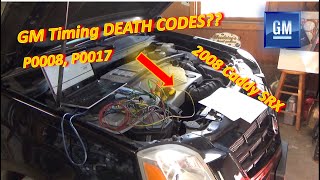
On a 2010-2016 Cadillac SRX with the 3.0L or 3.6L V6 engine, code P0008 almost always means the timing chains have stretched. This is a serious, well-documented mechanical issue requiring a complex and expensive repair to replace the chains, tensioners, and guides. Expect repair costs to range from $2,100 to over $3,500.
- P0008 on a 2010-2016 SRX is a serious code that almost certainly means you need a timing chain replacement.
- Do not drive the vehicle. Ignoring the code risks the chain breaking, which will destroy the engine.
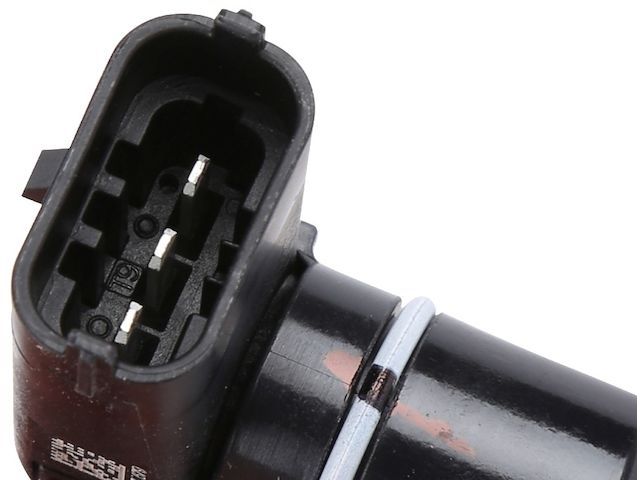
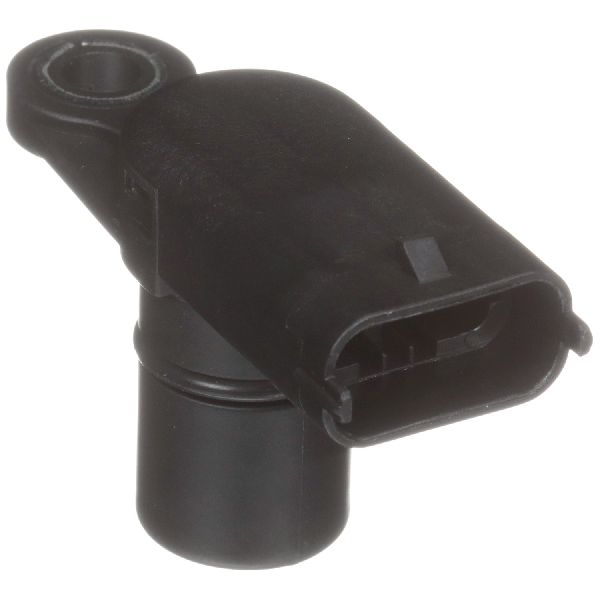
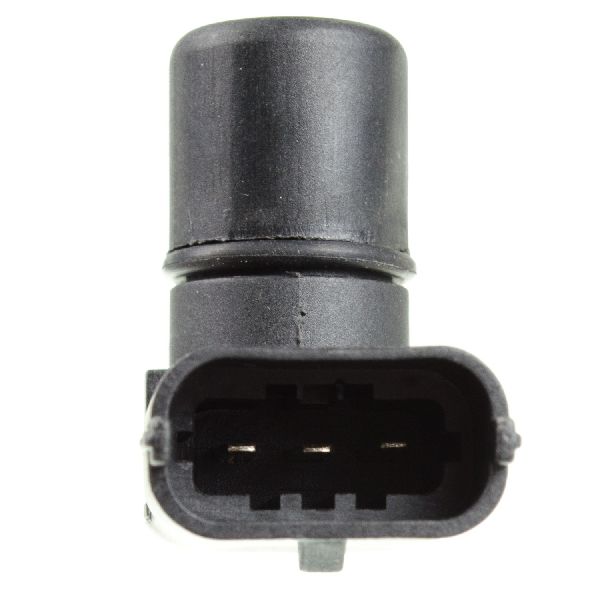
- Do not waste money replacing camshaft or crankshaft sensors, as they are not the cause of the problem.
- The repair is expensive, typically over $2,000, due to the high labor involved.
- After the repair, use high-quality full synthetic oil and change it every 5,000 miles to prolong the life of the new chains.
What's Unique About the 2010-2016 Cadillac SRX
The GM High Feature V6 engines (3.0L LF1 and 3.6L LFX) used in the SRX are notorious for premature timing chain stretch, typically occurring between 70,000 and 120,000 miles. This issue was so widespread that General Motors issued multiple Technical Service Bulletins (TSBs) and a Special Coverage Adjustment program (11340C) that extended the warranty for this specific failure to 10 years/120,000 miles. This program has now expired for all vehicles due to age. The problem is widely attributed to the original timing chain design and long oil change intervals suggested by the Oil Life Monitor (OLM), which could lead to oil degradation and accelerated wear.
Symptoms You May Notice
- Check Engine Light is on
- Rattling noise from the engine, especially on a cold start for a few seconds
- Reduced engine power and poor acceleration
- Rough idle or engine misfires
- Increased fuel consumption
- Engine running poorly or hesitating
- Replacing the camshaft or crankshaft position sensors. These sensors are simply reporting the timing error; they are almost never the cause of a P0008 code on this vehicle.
Most Likely Causes
- Stretched Timing Chains 🔴 High Probability → Shop Engine Timing Chain The original timing chains in these GM V6 engines were susceptible to premature wear and stretching. This is often blamed on a combination of the chain's initial design and extended oil change intervals promoted by the oil life monitor, which failed to prevent oil breakdown and sludge formation.
How to confirm: The definitive confirmation is physical inspection, but a strong indicator is a persistent P0008 code, often accompanied by a startup rattle. An oscilloscope can also be used to compare cam and crank signals to a known-good pattern, which is the best non-invasive confirmation method.
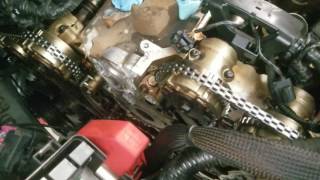
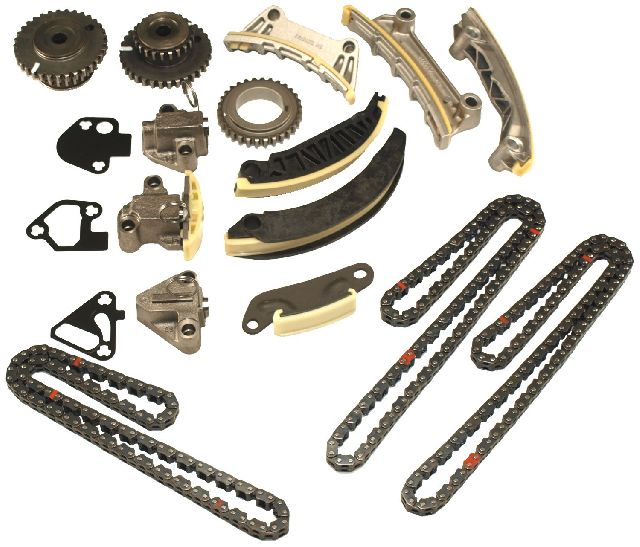
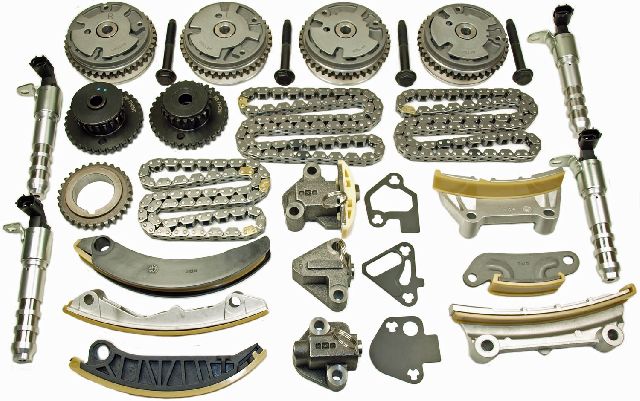
Typical fix: Replace all three timing chains, all tensioners, and all guides as a complete kit. Using an updated OEM (ACDelco) kit is highly recommended as it contains redesigned parts to prevent recurrence.
Est. part cost: $300-$700 - Failed Timing Chain Tensioners or Guides 🔴 High Probability → Shop Engine Timing Chain Tensioners are hydraulic and can fail or weaken due to oil sludge or wear. The plastic guides can become brittle and break. These parts are integral to the timing system and are almost always replaced along with the chains as part of a complete kit.
How to confirm: A rattling noise is a primary symptom. Diagnosis is confirmed during the visual inspection when replacing the timing chains.
Typical fix: Replace as part of a complete timing chain kit. It is not recommended to replace only the tensioners or guides.
Est. part cost: $150-$250 (as part of a kit) - Low Engine Oil Level or Poor Oil Quality 🟡 Medium Probability The timing chain tensioners and camshaft phasers are hydraulically operated. Low or dirty oil starves these components, accelerating wear on the chains and causing tensioner failure. Following the oil life monitor to its maximum can allow for oil degradation, which was a major contributing factor to this issue.
How to confirm: Check the oil level on the dipstick and inspect its condition. If the oil is low, very dark, or sludgy, it is a major contributing factor.
Typical fix: Change the oil and filter immediately using a quality full-synthetic oil. However, if code P0008 is already present, the mechanical damage to the chains is likely permanent and an oil change alone will not fix it. - Failed Camshaft Actuator Solenoids (VVT Solenoids) ⚪ Low Probability → Shop Engine Camshaft These solenoids control oil flow to the cam phasers. They can become clogged with sludge or fail electronically, causing incorrect camshaft timing that can sometimes trigger correlation codes. While much less common than chain stretch, they are a possible cause.
How to confirm: Solenoids can be tested with a scan tool that can command them to actuate. They can also be removed, inspected for debris, and tested for resistance. A common diagnostic step is to swap the solenoids between banks to see if the code follows.
Typical fix: Replace the faulty solenoid(s). Many technicians recommend replacing all four as a preventative measure if one has failed. This is a much cheaper and easier repair than a timing chain job.
Est. part cost: $40-$80 per solenoid
Rare But Worth Checking
- Slipped Crankshaft Reluctor Wheel: → Shop Engine Crankshaft GM TSB PIP3423P notes that if the chains and tensioners appear to be in good condition, the reluctor wheel on the crankshaft may have slipped. This is rare but would cause the same timing correlation codes. Confirming this requires a borescope or engine disassembly, and the fix is to replace the entire crankshaft.
Diagnosis Steps
- Verify the code with an OBD-II scanner and check for other related codes (P0009, P0016-P0019).
- Check the engine oil level and condition. Low or dirty oil is a critical clue to the root cause and a contributor to chain wear.
- Listen for a distinct rattling or scraping noise from the front of the engine, especially during a cold start. This is a classic sign of a loose timing chain.
- As a preliminary step, inspect and test the camshaft actuator (VVT) solenoids. They are relatively easy to access and can be swapped or replaced to rule out a simpler problem before condemning the chains.
- Using an advanced scan tool, monitor the camshaft angle variance parameters. A deviation of more than +/- 4-6 degrees on Bank 1 at a steady idle or 2000 RPM points to a stretched chain.
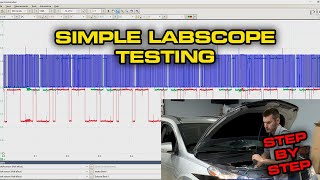
- For definitive electronic confirmation, a technician can use an oscilloscope to compare the crankshaft and camshaft sensor waveforms against a known-good pattern. A retarded signal on the cam sensor indicates a stretched chain.
- If the above steps confirm a timing issue, the final step is engine disassembly to physically inspect and replace the timing components.
Parts You'll Likely Need
- Engine Timing Chain Kit
(OEM #12680750 (This number supersedes 12635447, 12673669, 12675579))— This is the only correct and complete fix. The kit should include all three chains, tensioners, guides, and necessary gaskets to address the root cause of the stretched chain.
Trusted brands: ACDelco, Cloyes
OEM price range: $400-$600
Aftermarket price range: $250-$450 - Camshaft Position Actuator Solenoid
(OEM #12636175 (Intake), 12636176 (Exhaust))— Often replaced as a preventative measure or if they are suspected as a contributing cause. Clogged or failing solenoids can mimic timing issues.
Trusted brands: ACDelco, Dorman
OEM price range: $50-$90
Aftermarket price range: $30-$60
Related Codes That Often Appear With This One
- P0009 — This is the identical code for Bank 2 (the front bank). Seeing P0008 and P0009 together strongly confirms a problem with the primary timing chain affecting both banks.
- P0016, P0017, P0018, P0019 — These are more specific crankshaft-to-camshaft correlation codes. They frequently appear with P0008 and are all symptoms of a stretched timing chain or related mechanical timing issue.
Technical Service Bulletins (TSBs) & Recalls
- 12-06-01-009F: Information on High Feature V6 Timing Chain Kits for repairing stretched chains causing codes like P0008. Confirms the issue across many GM models and specifies kit contents.
- PIP3423P: Diagnostic aid for timing codes (P0008, P0009, etc.), suggesting inspection of timing chains or a potentially slipped crankshaft reluctor wheel as a rare alternative cause.
- 11340C: Special Coverage Adjustment extending the warranty for timing chain wear (now expired). This document confirms GM's acknowledgment of the defect and provided temporary relief to owners.
Platform-Specific Known Issues
- GM issued Special Coverage Adjustment #11340C for certain model years, extending the warranty for timing chain wear to 10 years or 120,000 miles. This program has now expired for all 2010-2016 SRX models due to age, leaving owners responsible for the full cost of repair.
- TSB 12-06-01-009F (and its revisions) provides information on the updated timing chain service kits for the 3.0L and 3.6L engines, acknowledging the issue and listing the affected vehicles and parts.
Mechanic-Grade Diagnostic Values
- Scan Tool Camshaft Position Angle Variance (Bank 1) — expected: < +/- 4 degrees at steady idle/2000 RPM. Failure: A consistent deviation greater than 4-6 degrees indicates a mechanical timing issue (stretched chain).
- Camshaft Position Actuator Solenoid (VVT Solenoid) Resistance — expected: Approximately 5 to 12 Ohms at 68°F (20°C). Some sources specify a tighter range of 6.9-7.9 Ohms.. Failure: A reading of infinite resistance (open circuit), near-zero (short circuit), or a value significantly outside the expected range indicates a failed solenoid.
- Lab Scope Cam/Crank Correlation (Known Good Pattern, Bank 1) — expected: The intake camshaft sensor signal transitions high within the wide gap of the crankshaft sensor's signal pattern. The exhaust camshaft signal transitions high approximately 3 crank teeth after the gap.. Failure: If the camshaft signals are visibly shifted to the right (retarded) relative to the crankshaft signal's sync gap, it electronically confirms a stretched timing chain.
- Engine Oil Pressure (LFX Engine, Warm Idle) — expected: 20-30 PSI.. Failure: Pressure consistently below 20 PSI at warm idle can be insufficient for proper VVT phaser operation and may contribute to or exacerbate timing correlation codes.
Scan Tool Commands That Help
- GDS2 (GM Global Diagnostic System 2): Data Display > Camshaft Position Angle Variance — This is the primary non-invasive step to electronically quantify the timing deviation. It displays the difference in degrees between the ECM's desired camshaft position and the actual position, directly confirming a correlation error if the value exceeds the threshold (typically >4-6 degrees).
- GDS2 (GM Global Diagnostic System 2): Control Functions > Camshaft Position Actuator Solenoid Control — This bidirectional test allows the technician to command each VVT solenoid on and off independently while the engine is running. A noticeable change in engine idle (stumble or roughness) confirms the solenoid is mechanically functional, helping to rule it out as the cause before condemning the timing chains.
- GDS2 (GM Global Diagnostic System 2): Module Programming > ECM Reprogramming — In some cases, GM has released software updates that widen the acceptable tolerance for cam/crank variance. This might be attempted if the deviation is minor and no mechanical symptoms (like startup rattle) are present, though it does not fix the underlying mechanical wear.
Wiring & Ground Locations
- G103 / G104 — Primary engine-to-chassis grounds. Locations vary slightly, but G103 is often on the front of the passenger side (Bank 1) cylinder head, and G104 is on the rear of the driver's side (Bank 2) cylinder head.. The camshaft and crankshaft position sensors require a clean, stable ground reference to send accurate signals to the ECM. A loose or corroded connection at these points can cause erratic signals and potentially trigger false timing correlation codes.
- ECM Connector C1 (X1) — The main connector at the Engine Control Module (ECM), often located in the engine bay, sometimes within the air filter housing assembly.. The signal wires for the Bank 1 camshaft position sensors and the control wires for the Bank 1 VVT solenoids terminate here. For example, on some 3.6L engines, the Bank 1 Intake CMP sensor signal is at Pin 4. Checking for continuity and voltage at these pins is the final step in diagnosing a wiring fault.
Real Owner Repair Stories
- YouTube Comment on 'P0008 Cadillac fix' video (Cadillac SRX (year not specified), 3.6L V6) — Check Engine Light with codes P0008 and P0017. Loss of power, delayed acceleration, especially around 40 mph.
❌ Tried (didn't work) Replacing only the camshaft position sensors.
✅ What actually fixed it The problem was resolved by replacing all four VVT (camshaft actuator) solenoids. The user suggests this is a common cause and should be done along with the cam sensors. - YouTube video by Kevin Nadeau (2007 Cadillac CTS, 3.6L V6 (similar engine and issue)) — Check Engine Light with codes P0008 and P0017.
❌ Tried (didn't work) The final fix was a timing chain replacement, but the video documents the diagnostic process.
✅ What actually fixed it The initial attempt shown in one video was to replace the Bank 1 camshaft position sensors and clean the VVT solenoids. The creator states the light stayed off after a test drive, implying this can be a fix in some cases. However, a follow-up video confirms this did not permanently fix the issue and a full timing chain replacement was required.
"I Checked Everything" — The Actual Cause
- For a P0008 code, the equivalent of a 'smoke test clean' scenario is when the VVT solenoids and camshaft sensors all test perfectly fine, yet the timing correlation code persists. In this situation, the hidden cause is often a slipped crankshaft reluctor wheel. This mechanical failure perfectly mimics a stretched timing chain to the ECM but will not be found by testing individual electrical components. Diagnosis requires advanced methods like lab scope analysis of the cam/crank signals or visual inspection with a borescope through the crankshaft position sensor hole.
When the Usual Fixes Don't Work
- While the overwhelming consensus for a persistent P0008 code is a stretched timing chain, there are documented cases where the issue was resolved with less invasive repairs. One owner reported that replacing the camshaft position sensors did not fix their P0008/P0017 codes, but replacing all four VVT solenoids did. This suggests that in a minority of cases, a hydraulic control issue within the solenoids can create a timing correlation fault without permanent mechanical damage to the chains. Therefore, testing or swapping the VVT solenoids is a valid, cost-effective diagnostic step before committing to a full timing chain replacement.
OEM Part Supersession History
Multiple older part numbers (e.g., 12635447, 12673669)→12680750 (ACDelco kit for LFX)— GM released multiple revisions of the timing chain kits to incorporate more durable chains with an improved design to combat premature stretching.
Heads up: Using an older, superseded timing chain kit from old stock may lead to a repeat failure in a much shorter timeframe. It is critical to install the latest available OEM or equivalent part number to get the benefit of the improved design.
Model Year Variations Within This Range
- 2010-2011: These models primarily used the 3.0L V6 (LF1) engine. While it shares the same High Feature V6 architecture and is also prone to timing chain stretch, the specific timing chain kit and some related components have different part numbers than the later 3.6L engine.
- 2012-2016: These models use the 3.6L V6 (LFX) engine. Notably, some sources indicate the 2012 model year LFX engines are more susceptible to chain failure as they may have used a timing chain design carried over from the previous, more problematic LLT V6. Improvements were reportedly made for the 2013 model year, making later models slightly less prone to this issue.
Diagnostic Flowchart
Other Known Issues on This Vehicle
Issues unrelated to this code that are worth knowing about as an owner of this generation:
- CUE Infotainment System Failure 🟠 Medium — Very common; screen delaminates, cracks ('spider-webbing'), or becomes unresponsive, typically after 3-5 years. A class-action lawsuit was filed over this issue. (Ref: Multiple dealer service bulletins were issued (e.g., in Dec 2014 and Aug 2017), but no official recall. GM later offered a limited reimbursement program.)
- Rear Suspension Toe Link Separation 🔴 High — Significant enough to cause multiple recalls. An improperly serviced or loose toe link can separate, causing loss of vehicle control. (Ref: Recall N212340980 (NHTSA 21V473000). Dealers replace the adjustable toe links with a non-adjustable version to permanently fix the issue.)
- Condensation in Headlight Assemblies 🟡 Low — A common complaint where moisture gets trapped inside the headlight housing, causing a foggy appearance and potentially leading to bulb failure.
- Leaking Sunroof Drains 🟠 Medium — The sunroof drain tubes can become clogged, causing water to overflow and leak into the vehicle's interior, potentially damaging the headliner and electronics.
- Power Liftgate Malfunction 🟡 Low — Owners report the power liftgate failing to open completely or closing unexpectedly, often due to weak liftgate support struts.
Used vs. New Parts: Buying Guide for This Vehicle
When a used part is the smart pick: For the P0008 repair itself, sourcing used wear items like timing chains, tensioners, or guides is never a smart choice. However, sourcing a complete, low-mileage used engine from a reputable salvage yard can be a cost-effective alternative to performing the labor-intensive timing chain job on a high-mileage engine.
Donor-vehicle mileage cap: roughly under 80000 miles for the part to have meaningful remaining life.
What to inspect on the donor part:
- Verify the donor vehicle's mileage. Aim for a donor under 80,000 miles.
- If possible, get a vehicle history report to check for regular maintenance.
- Pull the dipstick and oil cap. The oil should not be sludgy, milky, or excessively dark.
- Prioritize engines from 2013-2016 models, as they are more likely to have the updated timing chain design.
- Look for a seller that offers a startup warranty and has run a compression test.
OEM-only on this vehicle (don't cheap out):
- Engine Timing Chain Kit: Due to the high-labor nature of the job and the known defect, using an OEM (ACDelco) kit with the latest part number is the safest bet to ensure longevity and avoid a repeat failure.
Aftermarket brands forum-validated for this vehicle:
- Cloyes: For timing chain kits, Cloyes is a widely respected aftermarket brand, considered by many to be an OEM supplier and a reliable alternative to ACDelco.
Brands owners have reported issues with on this vehicle:
- Unnamed, low-cost timing chain kits sold on marketplaces. The quality of the chain material and tensioners is critical, and failure of a cheap component will result in having to redo the entire 12-16 hour job.
Real Owner Stories
Aggregated from forums and TSBs cited above. Mileages and costs reflect what owners reported in those sources.
2012 Cadillac SRX — 95000 miles
Symptoms: P0008 and P0017 codes present.
What fixed it: Timing chain replacement.
Cost: $3,400-$3,400
Source hint: cadillacforums.com - '2012 SRX P0008 and P0017'
2011 Cadillac SRX — 108000 miles
Symptoms: P0008 code triggered.
What fixed it: Timing chain replacement (discussed as the typical fix after special coverage expired).
Source hint: cadillacforums.com - 'P0008 Code on 2011 SRX'
2010-2016 Cadillac SRX
Symptoms: P0008 and P0017 codes; replacing camshaft sensors alone did not resolve the issue.
What fixed it: Replacing the VVT solenoids (Camshaft Actuator Solenoids).
Source hint: YouTube Comment on 'P0008 Cadillac fix' video
Related OBD-II Codes
Frequently Asked Questions
Is my 2010-2016 Cadillac SRX covered under the Special Coverage Adjustment #11340C for timing chain wear?
What specific parts should be used to fix the P0008 code on my 3.0L or 3.6L engine?
Can I just change my oil to clear the P0008 code on my SRX?
Is there a cheaper alternative to a full timing chain replacement for P0008?
Does TSB 12-06-01-009F apply to the 3.0L LF1 engine as well as the 3.6L LFX?
Why is my Cadillac SRX rattling for a few seconds during a cold start?
Helpful Videos

We Have This Part in Stock


The information in this article is provided for general reference and educational purposes only. Vehicle specifications, procedures, and part compatibility can vary by production date, trim level, and region. Always consult your vehicle's factory service manual and verify part numbers before purchasing or performing repairs. Safety-critical components such as airbags, seat belts, and braking systems should be installed by a qualified professional.
- Cadillac SRX:
- 🧭 Diagnostic Flowchart
- 🎬 Helpful Videos
- 🛍️ Shop This Part
- What's Unique About the 2010-2016 Cadillac SRX
- Symptoms You May Notice
- Most Likely Causes
- Rare But Worth Checking
- Diagnosis Steps
- Parts You'll Likely Need
- Related Codes That Often Appear With This One
- Technical Service Bulletins (TSBs) & Recalls
- Platform-Specific Known Issues
- Mechanic-Grade Diagnostic Values
- Scan Tool Commands That Help
- Wiring & Ground Locations
- Real Owner Repair Stories
- "I Checked Everything" — The Actual Cause
- When the Usual Fixes Don't Work
- OEM Part Supersession History
- Model Year Variations Within This Range
- Other Known Issues on This Vehicle
- Used vs. New Parts: Buying Guide for This Vehicle
- Real Owner Stories
- 2012 Cadillac SRX — 95000 miles
- 2011 Cadillac SRX — 108000 miles
- 2010-2016 Cadillac SRX
- Related OBD-II Codes
- Frequently Asked Questions
- 🎟️ Get 5% Off