

P0008 on 2005-2011 Cadillac STS: Stretched Timing Chain Causes and Fixes
On a 2005-2011 Cadillac STS with the 3.6L V6 engine, the P0008 code almost always indicates the timing chains have stretched. This is a serious and expensive repair, typically costing between $2,600 and $3,400, that involves replacing the chains, tensioners, and guides. This issue was so common that GM created a special warranty program to cover the repair for many owners.
- P0008 on a 3.6L V6 Cadillac STS is almost certainly caused by stretched timing chains.
- This is a serious mechanical issue that requires immediate attention to prevent potential catastrophic engine failure.
- Do not waste money replacing camshaft or crankshaft sensors; they are rarely the cause.
- The correct repair is a complete timing chain kit replacement, which is a labor-intensive and expensive job best left to a professional.
- Using high-quality synthetic oil and adhering to a 5,000-mile change interval can help prolong the life of the replacement chains.
What's Unique About the 2005-2011 Cadillac STS
The GM High Feature 3.6L V6 engines (the port-injected LY7 used from 2005-2007 and the direct-injection LLT from 2008-2011) are notorious for premature timing chain wear. The root cause is believed to be a combination of factors: an early timing chain design that used a less durable 'silent chain' type, and overly optimistic oil change intervals programmed into the original Oil Life Monitor (OLM) system, which could lead to oil degradation. This oil breakdown accelerates wear on the chains and the hydraulic tensioners. The issue was so widespread that GM issued multiple Technical Service Bulletins (TSBs) and Special Coverage Program #11340, extending the warranty to 10 years/120,000 miles for this specific failure on many affected vehicles, including the 2007-2009 STS.
Diagnostic Flowchart
Tap your situation to follow the diagnostic path that matches what you're seeing on this vehicle.
Generation note: This range covers the single generation of the Cadillac STS (2005-2011). However, the 3.6L V6 engine was updated for the 2008 model year from the port-injected LY7 to the direct-injection LLT. Both versions are well-documented to have this timing chain issue, though specific part numbers for the repair kits may differ slightly. The problem was most pronounced on 2007-2009 models.
Symptoms You May Notice
- Check Engine Light is on
- Rattling or scraping noise from the front of the engine, especially on a cold start or during idle
- Reduced engine power and poor acceleration
- Rough or unstable idle
- Difficulty starting the engine
- Increased fuel consumption
- Replacing only the camshaft position sensors or crankshaft position sensor without verifying the mechanical timing.
- Replacing the variable valve timing (VVT) solenoids. While related to timing, they are rarely the root cause of a P0008 code.
- Attributing the code to a faulty oil pressure sensor. While low oil pressure is a contributing factor, the sensor itself is not the cause of the timing correlation error.
Most Likely Causes
- Stretched Timing Chains 🔴 High Probability → Shop Engine Timing Chain The original timing chains on the early 3.6L V6 engines were of a 'silent chain' design that proved susceptible to premature stretching. This is the primary cause for P0008, as confirmed by numerous TSBs and GM's own special coverage program. Failures have been reported at mileages as low as 42,000 miles.
How to confirm: A technician can use an advanced scan tool to monitor camshaft deviation angles; values exceeding +/- 4 degrees typically confirm a stretched chain. The definitive method is to remove the engine front cover and physically measure the chain slack against specifications.
Typical fix: Replace all three timing chains (one primary, two secondary), all tensioners, and all guides using an updated kit. It is highly recommended to also replace the water pump (which is driven by the timing chain) and crankshaft/camshaft sprockets at the same time.
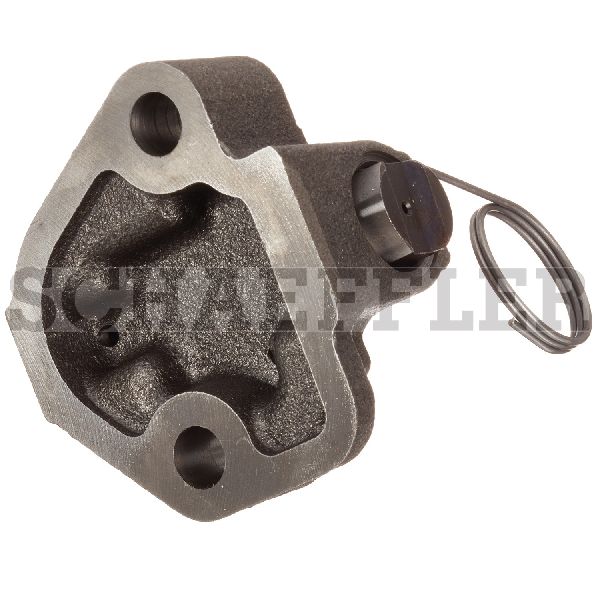
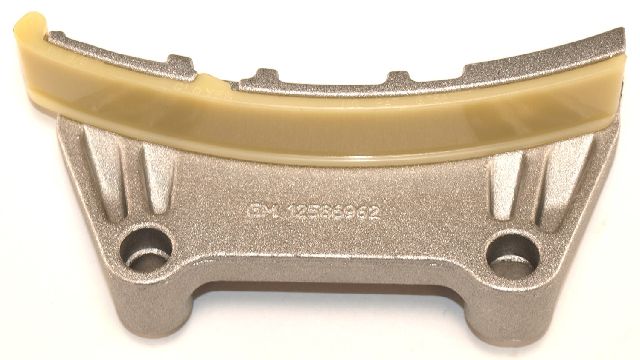
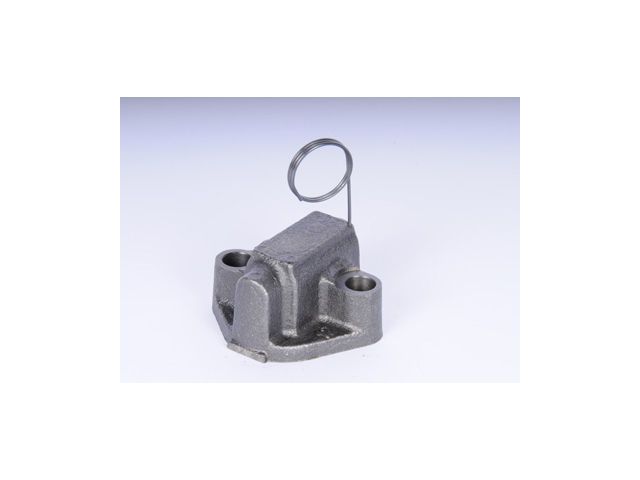
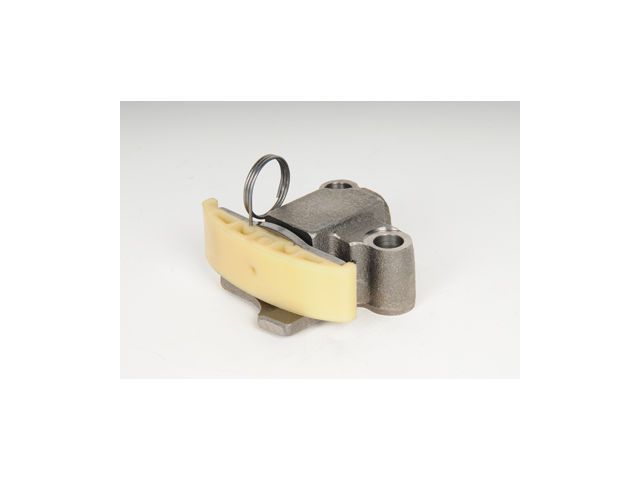
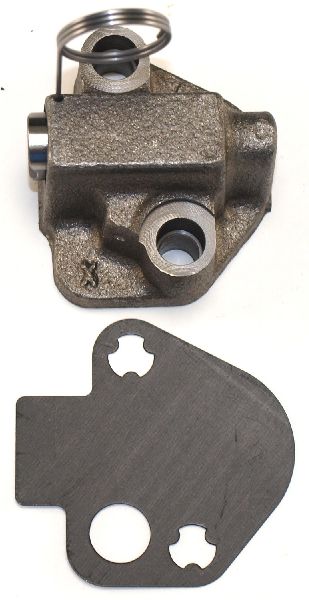
Est. part cost: $400-$1000 - Failed Timing Chain Tensioners or Guides 🔴 High Probability → Shop Engine Timing Chain The tensioners are hydraulic and rely on clean oil at the proper pressure to function. As oil breaks down, the tensioners can weaken, allowing slack in the chain. The plastic guides can also become brittle and break. These parts are considered wear items along with the chains themselves.
How to confirm: Diagnosed during physical inspection when replacing the timing chains. A rattling noise is a strong indicator. Sometimes, broken pieces of the plastic guides can be found in the oil pan.
Typical fix: Replace as part of a complete timing chain kit. These parts should never be replaced in isolation; doing so is a false economy as the labor to access them is the same.
Est. part cost: $0 (Included in timing chain kit) - Low or Dirty Engine Oil 🟡 Medium Probability GM's original Oil Life Monitor (OLM) programming allowed for excessively long oil change intervals (up to 10,000-12,000 miles). This was especially problematic on the direct-injection LLT engine, where fuel dilution can contaminate the oil more quickly. Degraded oil loses its lubricating properties and can clog the small passages that feed the hydraulic tensioners, accelerating wear on the entire system.
How to confirm: Check the oil level and condition. If the oil is very low, past its change interval, or appears like dark sludge, this is a major contributing factor. This was so critical that part of GM's fix was to issue a software update (CSP 10287) to shorten the OLM intervals.
Typical fix: Perform an oil and filter change with a high-quality full synthetic oil. However, if the P0008 code is already set, this will not fix the stretched chain; it is a critical preventative measure for the new components. Adhering to a 3,000-5,000 mile oil change interval is recommended.
Est. part cost: $50-$100
Rare But Worth Checking
- Slipped Crankshaft Reluctor Wheel: → Shop Engine Crankshaft TSB PIP3423P explicitly states that the reluctor wheel (a toothed ring on the crankshaft that the position sensor reads) can move from its pressed-on position. This throws off the crankshaft position sensor's readings and can set P0008 and related codes, perfectly mimicking a stretched chain. Diagnosis involves inspecting the wheel's position, sometimes with a borescope through the crank sensor hole. The original fix required crankshaft replacement, though a separate reluctor wheel was later made available.
- Faulty Camshaft or Crankshaft Position Sensor: → Shop Engine Crankshaft Position Sensor While a sensor can fail, it is a very uncommon cause for P0008 on this engine. Many owners and even some shops mistakenly replace these sensors first, only to find the code returns because the underlying mechanical issue (the chain) was not addressed. This should be considered a last resort after mechanical timing has been verified.
Diagnosis Steps
- Read and document all trouble codes with an OBD-II scanner.
- Check engine oil level and condition. Note the date/mileage of the last oil change if available.
- Listen for a distinct rattling or chain-slap noise from the front of the engine, especially during a cold start. The noise may quiet down as the engine warms up and oil pressure builds.
- Using an advanced scan tool (like a GM Tech 2), monitor the camshaft position deviation data for all four cams. If any of the values are consistently beyond +/- 4 degrees at idle or 2,000 RPM, it confirms a mechanical timing issue.
- If scan tool data is inconclusive but a problem is suspected, the next step is to follow TSB PIP3423P and inspect the crankshaft reluctor wheel for movement, potentially using a borescope.
- The most definitive, but also most labor-intensive, step is to remove the engine front cover to physically inspect the timing chains for slack, and check the tensioners and guides for wear or damage.
Parts You'll Likely Need
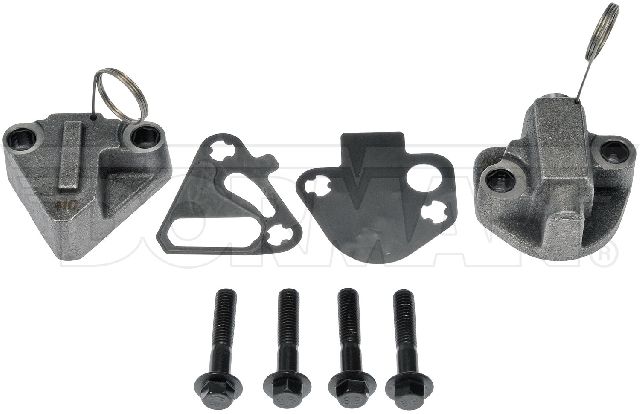
- Engine Timing Chain Kit
(OEM #12700434)— This is the comprehensive solution, addressing the primary failure point. A quality kit includes all three chains, three tensioners, and all six guides, plus necessary gaskets/seals. Using an updated kit from a reputable brand is crucial for a lasting repair. 🎬 Watch: In-vehicle teardown tips and gotchas for replacing the timing chain.
Trusted brands: ACDelco (OEM), Cloyes (Often cited as a high-quality alternative, part #9-0753S), Melling
OEM price range: $500-$800
Aftermarket price range: $350-$600
Related Codes That Often Appear With This One
- P0009 — This is the equivalent timing correlation error code for Bank 2 (front bank). Seeing both P0008 and P0009 strongly indicates a problem with the primary timing chain that affects both banks, making a stretched chain the almost certain culprit. 🎬 Watch: Understanding these GM timing death codes and what they mean.
- P0016, P0017, P0018, P0019 — These are more specific correlation codes for the intake and exhaust camshafts on both banks (e.g., P0016 is Crank/Cam correlation for Bank 1 Intake). They frequently appear with P0008 and are all symptomatic of a stretched timing chain or slipped reluctor wheel.
Technical Service Bulletins (TSBs) & Recalls
- PIP3423P: Links P0008 to loose timing chains or a slipped crankshaft reluctor wheel.
- 12-06-01-009F: Announces availability of updated timing chain kits to fix stretched chains causing P0008.
- 11340C: Special Coverage program extending warranty to 10 years/120,000 miles for timing chain wear on 2007-2009 models and mandating an ECM reprogram.
Platform-Specific Known Issues
- Special Coverage Program #11340C: GM issued a special warranty extension for certain 2007-2009 STS models (among others) to 10 years or 120,000 miles to cover the cost of premature timing chain wear. This program acknowledged that even with regular oil changes, the chains could fail. It also included an ECM reprogram to shorten the oil change intervals calculated by the OLM.
- TSB #PIP3423P: This critical bulletin directly links DTCs P0008, P0009, and P0016-P0019 to two primary causes: loose/stretched timing chains or a slipped crankshaft reluctor wheel. It instructs technicians to check for chain slack first, and if none is found, to inspect the reluctor wheel for movement before replacing other parts.
- TSB #12-06-01-009F: Announces the availability of updated timing chain kits specifically designed to be the service replacement for stretched timing chains that cause code P0008 and other related codes.
Mechanic-Grade Diagnostic Values
- VVT Solenoid Driver Circuit Resistance — expected: Below 5.0 Ohms. Failure: A reading above 5.0 Ohms indicates an open circuit or high resistance in the wiring between the ECM and the solenoid.
- Engine Oil Pressure (LLT/LFX Engine) — expected: 20-25 psi at warm idle; approx. 60 psi during normal operation.. Failure: Pressure spiking to 70-110 psi on a cold start is considered normal and not a fault. Persistently low pressure below specifications when warm can indicate oiling problems that accelerate timing chain wear.
- Camshaft/Crankshaft Position Sensor Resistance — expected: 200 - 1,000 Ohms (General Specification). Failure: A reading of zero indicates a short circuit, while an infinite reading (OL) indicates an open circuit. This is a general test; sensor failure is not a common cause for P0008 on this engine.
Scan Tool Commands That Help
- GM Tech 2 / GDS2: Actuate Variable Oil Pump Solenoid — This bidirectional control can be used to command the VVT system's oil pump solenoid to its maximum position to verify the solenoid's electrical circuit and response. It helps differentiate between an electrical fault and a mechanical/hydraulic issue within the VVT system.
- GM Tech 2 / GDS2: Crankshaft Position (CKP) Variation Learn — This procedure, also known as a CASE relearn, must be performed after replacing the crankshaft position sensor or the ECM. It is not directly used to diagnose P0008, but failure to perform it after a related repair can cause other running issues or codes.
Wiring & Ground Locations
- ECM (Engine Control Module) — On the 3.6L engine, the ECM is located at the front of the engine, mounted directly to the right (Bank 1) valve cover.. The ECM is the central computer that receives signals from the cam/crank sensors and controls the VVT solenoids. All related wiring terminates here.
- G103 (3.6L) — This critical ground is fastened directly to the ECM case on the top right side of the engine.. A poor ground at the ECM can cause erratic sensor readings, incorrect calculations, and false trouble codes. Verifying this ground is tight and corrosion-free is a key electrical diagnostic step.
- G113 (3.6L) — Located on the front center of the right front (Bank 1) cylinder head.. This is a primary engine-to-chassis ground point. A loose or corroded connection here can affect the entire engine's electrical system, including the ignition and sensor circuits necessary for proper timing.
- G100 — Located on the rear side of the right (Bank 1) cylinder head.. Provides another essential ground path for the engine block and components mounted to it. A bad ground here can lead to voltage drop issues that mimic sensor failures.
Real Owner Repair Stories
- Reddit user in r/MechanicAdvice (2008 Cadillac STS 3.6L V6) — P0008 code, lack of power, trouble starting after refueling.
❌ Tried (didn't work) A full timing chain replacement was performed., One year later, the P0008 code returned., The mechanic then replaced the camshaft position sensors, but the code came back immediately on the drive home.
✅ What actually fixed it The final fix was not posted by the original author, but another user pointed to the TSB for a slipped crankshaft reluctor wheel as the likely cause when a P0008 code persists after a timing chain replacement. This highlights a critical diagnostic path when the primary fix fails. - YouTube channel Nestor Auto Repair (2004 Cadillac CTS (with similar 3.6L engine)) — P0008 code present.
❌ Tried (didn't work) The video advises against immediately performing a timing chain replacement before checking other components.
✅ What actually fixed it The two camshaft position sensors on Bank 1 were replaced. The creator stated the fix was successful and the code did not return after a test drive. While this is a less common fix, it demonstrates that in some rare cases a sensor can be the root cause.
"I Checked Everything" — The Actual Cause
- A common scenario for this code is when a technician replaces the timing chains, clears the code, and it returns shortly after. The assumption is the new parts are faulty or the job was done incorrectly. However, as documented in TSB PIP3423P and seen in real-world repair stories, the underlying cause can be a slipped crankshaft reluctor wheel, which produces the exact same symptoms as a stretched chain but will not be fixed by replacing the chains.
When the Usual Fixes Don't Work
- While the overwhelming cause of P0008 is a stretched timing chain, there are documented cases where the code was resolved by replacing the Bank 1 camshaft position sensors. This should only be considered after verifying the mechanical timing is correct via scan tool cam deviation data, as it is a far less common solution and often attempted in error.
OEM Part Supersession History
Varies (Early, pre-2012 designs)→Kit P/N 12650230 (For 2007 LY7 Models)— GM released updated timing chain kits to address premature stretching. TSB #12-06-01-009F, released in its final form in 2015, announced comprehensive kits with the latest product enhancements.
Heads up: It is critical to use the correct kit for the specific engine (LY7 vs. LLT) and model year. Using an older design chain will result in a repeat failure.N/A (Aftermarket)→Cloyes 9-0753S / 9-0753SX— Cloyes is a widely-used aftermarket supplier that provides kits engineered to meet or exceed the updated OEM specifications.
Model Year Variations Within This Range
- 2005-2007: These models use the port-injected 3.6L LY7 engine. They require a specific timing chain kit, such as GM P/N 12650230 for the 2007 model year.
- 2008-2011: These models use the direct-injected 3.6L LLT engine. While suffering from the same timing chain issues, they use a different, updated timing chain kit specified in GM's service bulletins. The direct injection system is also more susceptible to oil contamination from fuel dilution, making frequent oil changes even more critical.
Helpful Videos
We Have This Part in Stock

The information in this article is provided for general reference and educational purposes only. Vehicle specifications, procedures, and part compatibility can vary by production date, trim level, and region. Always consult your vehicle's factory service manual and verify part numbers before purchasing or performing repairs. Safety-critical components such as airbags, seat belts, and braking systems should be installed by a qualified professional.
- Cadillac STS:
- 🧭 Diagnostic Flowchart
- 🎬 Helpful Videos
- 🛍️ Shop This Part
- What's Unique About the 2005-2011 Cadillac STS
- Symptoms You May Notice
- Most Likely Causes
- Rare But Worth Checking
- Diagnosis Steps
- Parts You'll Likely Need
- Related Codes That Often Appear With This One
- Technical Service Bulletins (TSBs) & Recalls
- Platform-Specific Known Issues
- Mechanic-Grade Diagnostic Values
- Scan Tool Commands That Help
- Wiring & Ground Locations
- Real Owner Repair Stories
- "I Checked Everything" — The Actual Cause
- When the Usual Fixes Don't Work
- OEM Part Supersession History
- Model Year Variations Within This Range
- 🎟️ Get 5% Off