

P0008 on 2013-2019 Cadillac XTS: Causes and Fixes for Timing Chain Issues
On a 2013-2019 Cadillac XTS, the P0008 code almost certainly means the engine's timing chains have stretched. This is a serious and expensive repair, often costing $2,200-$3,000+, and should be addressed immediately to prevent catastrophic engine failure. The issue is so well-known that GM issued special warranty extensions to cover this specific repair.
- P0008 on a 2013-2019 Cadillac XTS is a serious code that almost always indicates stretched timing chains.
- This is not a DIY-friendly repair. It is complex, labor-intensive, and requires special tools.
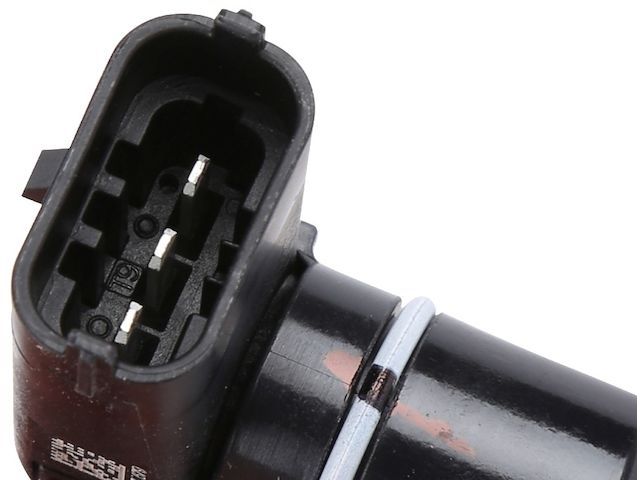
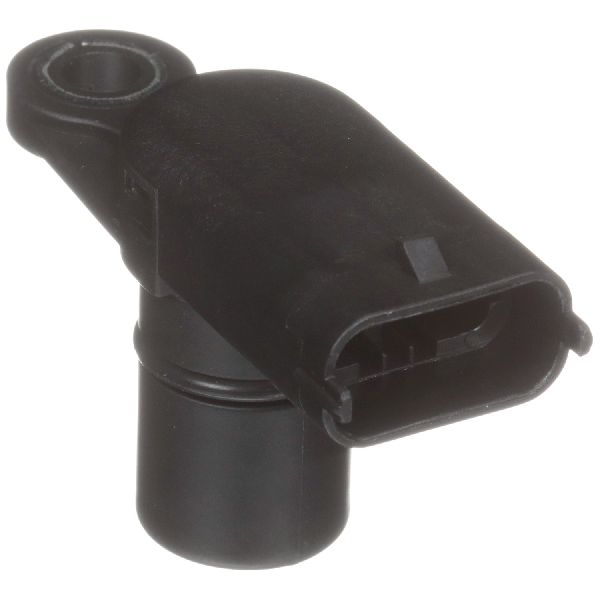
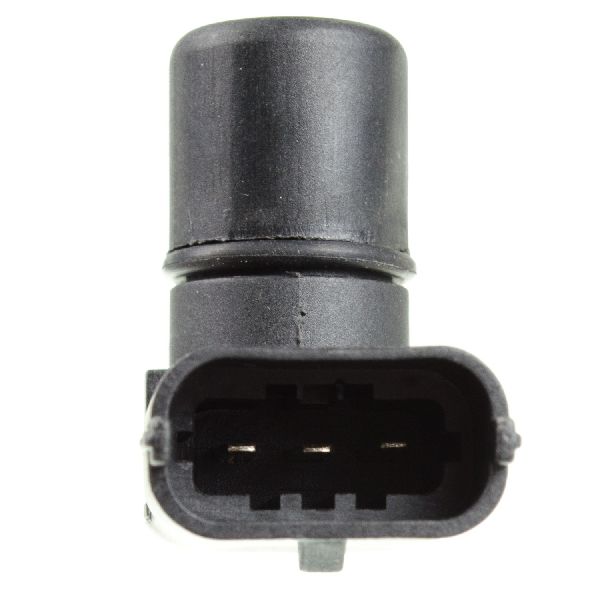
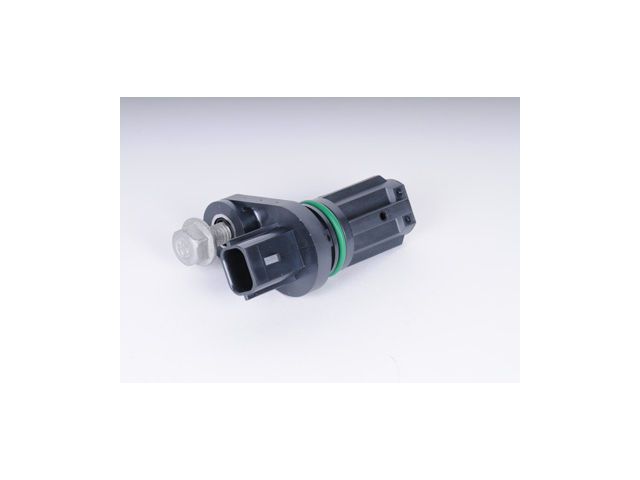
- Do not waste money replacing camshaft or crankshaft sensors; they are rarely the cause of this specific code.
- The only correct fix is a complete timing chain service, replacing the chains, tensioners, and guides.
- To prolong the life of the new timing chains, adhere strictly to oil change schedules using a high-quality, full synthetic Dexos-approved engine oil.
What's Unique About the 2013-2019 Cadillac XTS
The Cadillac XTS, particularly models with the 3.6L V6 engine (LFX), is part of a larger family of GM vehicles known for premature timing chain wear. While GM made improvements to the timing chain design for the LFX engine compared to its predecessor (the LLT), the fundamental issue of chain stretching persists. This problem is often exacerbated by the original Oil Life Monitor (OLM) programming, which allowed for excessively long oil change intervals, leading to oil degradation and accelerated wear on chains and tensioners. This code is so indicative of this specific problem that GM has issued multiple Technical Service Bulletins (TSBs) and even special warranty coverage programs (like #11340C and #14582) for various models using this engine.
Diagnostic Flowchart
Tap your situation to follow the diagnostic path that matches what you're seeing on this vehicle.
Symptoms You May Notice
- Check Engine Light illuminated
- Rattling or clattering noise from the front of the engine, especially on a cold start that may last a few seconds
- Reduced engine power and poor acceleration
- Rough idling or engine vibration
- Lower than normal fuel economy
- Slightly longer crank time to start the engine.
- Replacing the camshaft or crankshaft position sensors. While these sensors report the timing data, they are rarely the cause of a P0008 code, which indicates a base mechanical timing problem. 🎬 Watch: A breakdown of the causes and fixes for P0008. Many owners waste money on this attempted fix only for the code to return.
- Replacing only one of the three timing chains or a single failed component. The entire system wears together, and a complete kit is required for a lasting repair.
Most Likely Causes
- Stretched Timing Chains 🔴 High Probability → Shop Engine Timing Chain The 3.6L V6 engine family has a documented history of premature timing chain wear and stretching. This is the most common cause for P0008, acknowledged by GM through TSBs and special coverage programs. The wear is often accelerated by degraded engine oil from extended change intervals.
How to confirm: A physical inspection of the timing chain slack is the definitive test. A technician may also use a scan tool to observe cam/crank correlation data; 🎬 Watch: How to test timing chain stretch using a labscope. a deviation of more than 4-6 degrees is a strong indicator of a stretched chain.
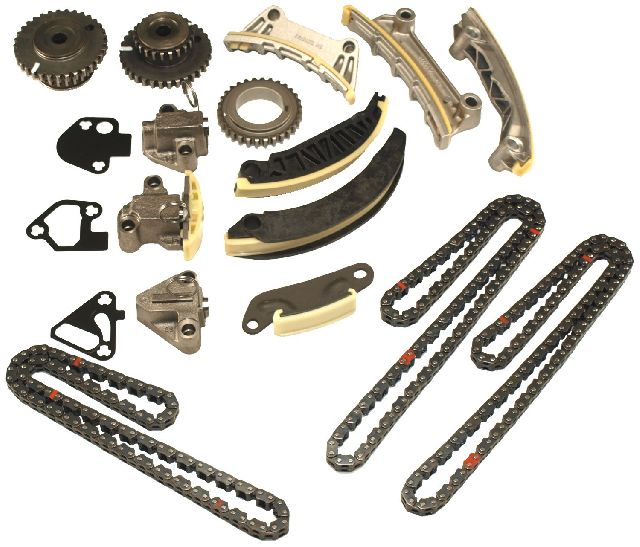
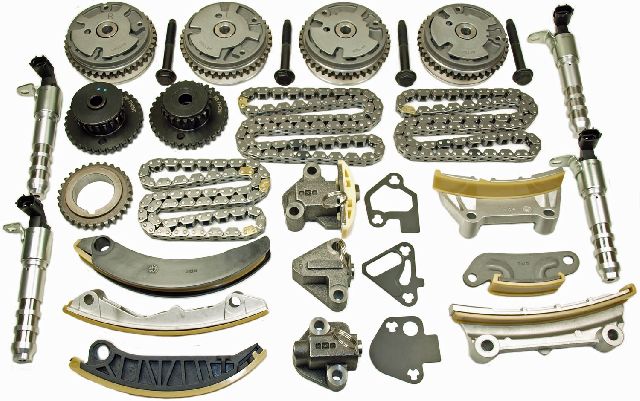
Typical fix: Replace all three timing chains (primary and both secondary), all tensioners, and all guides with an updated kit. It is critical to replace everything as a set.
Est. part cost: $400-$700 - Failed Timing Chain Tensioners 🔴 High Probability → Shop Engine Timing Chain The hydraulic tensioners can fail, get clogged with sludge, or become weak, allowing the chains to become loose. This is often a direct result of degraded or low engine oil.
How to confirm: Usually diagnosed during the inspection for a stretched timing chain. A rattling noise on startup that goes away after a few seconds is a classic symptom of a failing tensioner that is slow to build oil pressure.
Typical fix: Tensioners are always replaced as part of a complete timing chain service. Never replace just a tensioner without replacing the chains.
Est. part cost: $555-$576 (for tensioner-specific replacement, but typically part of a full kit) - Low or Degraded Engine Oil 🟡 Medium Probability Inadequate lubrication is a leading cause of premature wear on timing components. The hydraulic tensioners and chain links rely on clean, full synthetic oil at the proper pressure to function correctly. GM's original Oil Life Monitor (OLM) system often recommended intervals that were too long, contributing to oil breakdown.
How to confirm: Check the oil level on the dipstick and review vehicle service records for oil change intervals. Oil changes should be performed every 5,000 miles, regardless of the OLM reading, to prolong chain life.
Typical fix: Perform an oil and filter change with a high-quality full synthetic Dexos-approved oil. However, if the P0008 code is already present, damage to the timing components has likely already occurred and an oil change alone will not fix it.
Est. part cost: $50-$100
Rare But Worth Checking
- Slipped Crankshaft Reluctor Wheel: → Shop Engine Crankshaft A known issue documented in GM TSB #PIP3423P. The reluctor wheel that the crankshaft position sensor reads can physically move on the crankshaft, causing a timing correlation error even if the chains are fine. This requires crankshaft replacement if confirmed, though some mechanics have successfully repositioned and tack-welded it.
Diagnosis Steps
- Verify the P0008 code is present using an OBD-II scanner, and check for related codes like P0009, P0016-P0019.
- Check the engine oil level and condition. Note if the oil is low, dirty, or overdue for a change. Low oil is a major red flag.
- Listen for any rattling or slapping noises from the engine's front cover, especially during a cold start.
- Use a professional scan tool to monitor the live data for camshaft and crankshaft position sensor correlation. Deviations greater than 4-6 degrees consistently point to a timing issue.
- The definitive step is to perform a physical inspection. This involves significant labor to remove the engine's front timing cover to directly check the timing chains for excessive slack or looseness.
- If chains appear tight after replacement and the code returns, investigate the rare possibility of a slipped crankshaft reluctor wheel, as noted in TSB #PIP3423P and confirmed in owner forums.
Parts You'll Likely Need
- Timing Chain Kit
(OEM #ACDelco 12650230, 12700436 (verify specific kit for VIN))— This is the definitive fix. A complete kit ensures all worn components (3 chains, 3 tensioners, all guides) are replaced at once with updated parts to prevent a repeat failure.
Trusted brands: ACDelco (GM OE)
OEM price range: $500-$750
Aftermarket price range: $300-$500 - Camshaft Cover Gasket Set — These gaskets must be replaced anytime the camshaft (valve) covers are removed for inspection or service.
Trusted brands: ACDelco, Fel-Pro
OEM price range: $80-$150
Aftermarket price range: $50-$100 - Engine Oil and Filter — Fresh, high-quality full synthetic oil (like ACDelco Dexos approved) is critical for the lubrication and longevity of the new timing components. Shortening oil change intervals to 5,000 miles is highly recommended.
Trusted brands: ACDelco
OEM price range: $60-$100
Aftermarket price range: $50-$80 - Front Crankshaft Seal — This seal is located in the front timing cover and should always be replaced when the cover is removed for the timing chain service.
Trusted brands: ACDelco, SKF
OEM price range: $20-$40
Aftermarket price range: $10-$25
Related Codes That Often Appear With This One
- P0009 — This is the identical timing correlation error but for Bank 2. Seeing both P0008 and P0009 together strongly points to a stretched primary timing chain that affects both cylinder banks, making it the almost certain culprit.
- P0016, P0017, P0018, P0019 — These are more specific crankshaft/camshaft correlation codes for the intake and exhaust cams on both banks. They are all symptoms of the same underlying stretched timing chain issue and are often set along with P0008.
Technical Service Bulletins (TSBs) & Recalls
- PIP3423P: Provides diagnostic aid for P0008, P0009, and other timing codes, pointing to loose timing chains or a slipped crankshaft reluctor wheel.
- 12-06-01-009F: Details information on High Feature V6 timing chain kits to be used for repairing stretched chain issues.
- Special Coverage Adjustment #11340C / #14582: Extended warranty coverage for timing chain replacement on many affected GM models.
Platform-Specific Known Issues
- The 3.6L V6 engine family (including the LFX in the XTS) has a well-documented history of premature timing chain stretching.
- GM issued TSB #PIP3423P which directly links P0008 with loose timing chains or, in rare cases, a slipped crankshaft reluctor wheel.
- GM also issued TSB #12-06-01-009F providing information on updated timing chain kits to be used for repairing stretched chain issues.
- GM acknowledged the high failure rate by issuing Special Coverage Adjustments (SCA) like #11340C and #14582 for many vehicles with this engine, extending the warranty for timing chain replacement to 10 years or 120,000 miles. Owners should check with a GM dealer to see if their specific VIN was covered, though most are now expired.
Mechanic-Grade Diagnostic Values
- Camshaft Actuator Solenoid (VVT Solenoid) Resistance — expected: 5.0 to 15.0 Ohms. One source specifies 6.9-7.9 Ohms at 68°F.. Failure: An open circuit (infinite resistance, or mega-ohms) or a reading significantly outside the expected range indicates a failed solenoid.
- Scan Tool Cam/Crank Correlation PID — expected: Close to 0 degrees at idle.. Failure: A consistent deviation greater than 4 to 6 degrees at idle is a strong indicator of a mechanical timing issue (stretched chain).
- Crankshaft Reluctor Wheel Position (per TSB PIP3423) — expected: 25 to 26 mm from the end of the machined surface of the crankshaft throw to the edge of the open space in the reluctor.. Failure: Any measurement outside this range indicates the wheel has slipped on the crankshaft, requiring crankshaft replacement.
- Camshaft Position Sensor Reference Voltage (Key On, Engine Off) — expected: 4.8 to 5.2 Volts.. Failure: Significant deviation from 5V could indicate a wiring or ECM issue, not typically the sensor itself.
Scan Tool Commands That Help
- GDS2 (or equivalent professional scan tool): Camshaft Position Actuator Solenoid Control — Use this bidirectional control to command a specific VVT solenoid on and off while the engine is running. A functional solenoid will cause a noticeable change in engine operation (stumble, roughness), confirming it is mechanically working and helping to rule it out as the cause before condemning the timing chains.
- GDS2 (or equivalent professional scan tool): Crankshaft Position Variation Learn (CASE Relearn) — This procedure is mandatory after replacing the crankshaft, crankshaft position sensor, or ECM. It does not diagnose P0008, but failure to perform it after a related repair can cause other running issues or set different codes like P0315.
Wiring & Ground Locations
- G103 — Typically located on the cowl in the engine compartment, often above the brake booster.. This is a major ground for the Body Control Module (BCM), Instrument Panel Cluster (IPC), and the Data Link Connector (DLC). A poor connection here can cause communication issues with scan tools or erratic behavior from various modules.
- G130 / G131 / G135 / G136 — Grounds located on the rear of the left and right cylinder heads.. These are critical engine grounds. The ECM and its sensors (including Cam and Crank sensors) rely on a solid ground connection to provide accurate signals. A loose or corroded ground here can cause erratic sensor readings that could potentially be misinterpreted by the ECM.
Real Owner Repair Stories
- Camaro5 Chevy Camaro Forum (2011 Chevrolet Camaro 3.6L V6 (LLT engine, predecessor to LFX but with same failure modes) at 55,000 miles) — Check engine light with P0008 and P0009, sluggish performance, extreme power loss.
❌ Tried (didn't work) Replaced all timing chains with a new kit., Replaced all four VVT sprockets (cam phasers).
✅ What actually fixed it The crankshaft reluctor wheel had slipped by 1.5 teeth. A mechanic fixed it by removing the oil pan, carefully forcing the wheel back into position on the crankshaft, and applying a small tack weld to prevent it from moving again. - BobIsTheOilGuy forum user 'GMBoy' (2008 Cadillac CTS 3.6L DI (Direct Injection)) — Check Engine Light with P0008 at 72,000 miles.
❌ Tried (didn't work) N/A - went for warranty repair.
✅ What actually fixed it A full timing chain replacement was performed under GM's special warranty extension. The key insight was that even with diligent 5,000-6,000 mile oil changes using high-quality synthetic oil, the failure still occurred, suggesting a fundamental design flaw that proper maintenance can only delay, not prevent.
"I Checked Everything" — The Actual Cause
- For code P0008, the equivalent of a 'smoke test clean' scenario is when the timing chains are inspected and found to be tight (or have just been replaced), yet the code persists. The most documented cause for this situation is a slipped crankshaft reluctor wheel. The mechanical timing of the chains and sprockets is correct, but the reference wheel that the crankshaft position sensor reads has moved, creating a discrepancy that the ECM flags as a P0008 fault.
OEM Part Supersession History
12651450 (and others)→12700436 (or kit 12693218)— GM released updated, more comprehensive timing chain kits to improve durability and address the premature stretching issues found in the early 3.6L High Feature engines.
Heads up: TSB 12-06-01-009 specifically advises NOT to replace idler sprockets, camshaft actuators, or the crankshaft gear for a simple stretched chain condition, as they are not considered wear items in this scenario and are often replaced unnecessarily.12655420 (Intake VVT Solenoid)→19419980— Part number consolidation and potential minor design revisions by GM over the vehicle's production run.
Model Year Variations Within This Range
- 2013-2019: A styling and technology refresh occurred for the 2018 model year, but the 3.6L LFX and LF3 V6 powertrains remained fundamentally the same. Therefore, the causes and fixes for P0008 are consistent across the entire 2013-2019 production run.
Helpful Videos

We Have This Part in Stock

The information in this article is provided for general reference and educational purposes only. Vehicle specifications, procedures, and part compatibility can vary by production date, trim level, and region. Always consult your vehicle's factory service manual and verify part numbers before purchasing or performing repairs. Safety-critical components such as airbags, seat belts, and braking systems should be installed by a qualified professional.
- Cadillac XTS:
- 🧭 Diagnostic Flowchart
- 🎬 Helpful Videos
- 🛍️ Shop This Part
- What's Unique About the 2013-2019 Cadillac XTS
- Symptoms You May Notice
- Most Likely Causes
- Rare But Worth Checking
- Diagnosis Steps
- Parts You'll Likely Need
- Related Codes That Often Appear With This One
- Technical Service Bulletins (TSBs) & Recalls
- Platform-Specific Known Issues
- Mechanic-Grade Diagnostic Values
- Scan Tool Commands That Help
- Wiring & Ground Locations
- Real Owner Repair Stories
- "I Checked Everything" — The Actual Cause
- OEM Part Supersession History
- Model Year Variations Within This Range
- 🎟️ Get 5% Off