

P0008 on 2010-2015 Chevrolet Camaro: Stretched Timing Chain Causes and Fixes
On a 2010-2015 V6 Camaro, P0008 almost always means the timing chains have stretched. This is not a sensor issue. The only fix is a complex and expensive timing chain replacement, costing $1,800-$3,500 at a shop. Ignoring the code can lead to catastrophic engine failure.
- P0008 on a V6 Camaro is a serious code that almost certainly indicates stretched timing chains, a well-known factory defect.
- The only correct repair is a full timing chain kit replacement, which is a very expensive, professional-level job.
- Do not waste money on replacing sensors; they are not the problem.
- If the code returns immediately after a chain replacement, the crankshaft reluctor wheel has likely slipped.
- Using high-quality synthetic oil and shortening oil change intervals is critical for the longevity of the replacement chains.
What's Unique About the 2010-2015 Chevrolet Camaro
The GM 3.6L V6 engine, especially the earlier LLT version (2010-2011), is infamous for premature timing chain failure. The original chain design and long oil change intervals recommended by the oil life monitor are considered primary contributors to the chains stretching over time. GM issued several Technical Service Bulletins (TSBs), like #12-06-01-009F, and a special warranty extension (#11340C) for this exact issue on many vehicles with this engine. However, this special coverage, which extended the warranty to 10 years or 120,000 miles, is now expired for all 2010-2015 models.
Symptoms You May Notice
- Check Engine Light is on
- Reduced engine power and sluggish acceleration
- Rough or unstable idle
- Rattling or scraping noise from the front of the engine, especially on a cold start
- Decreased fuel economy
- Engine surging
- Loss of power and fear of engine failure while driving, as noted in NHTSA ODI #11041879
- Replacing the camshaft position sensors.
- Replacing the crankshaft position sensor.
- Replacing the VVT solenoids (camshaft actuators).
Most Likely Causes
- Stretched Timing Chains 🔴 High Probability → Shop Engine Timing Chain The primary cause is a well-documented design issue with the original timing chains used in the 3.6L V6 engine family, which are prone to wear in the chain link pin holes. This was exacerbated by extended oil change intervals encouraged by the original Oil Life Monitor calibration.
How to confirm: The definitive diagnosis is a physical inspection of the chains for slack. An advanced scan tool can also read camshaft deviation data; a deviation greater than +/- 4 degrees at idle is a strong indicator of a mechanical timing issue. A rattling noise on cold starts is also a classic sign. NHTSA ODI #10910914 describes an instance where this code appeared at 100,000 miles, resulting in high gas consumption and power loss.
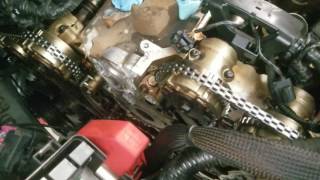
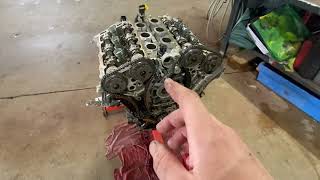
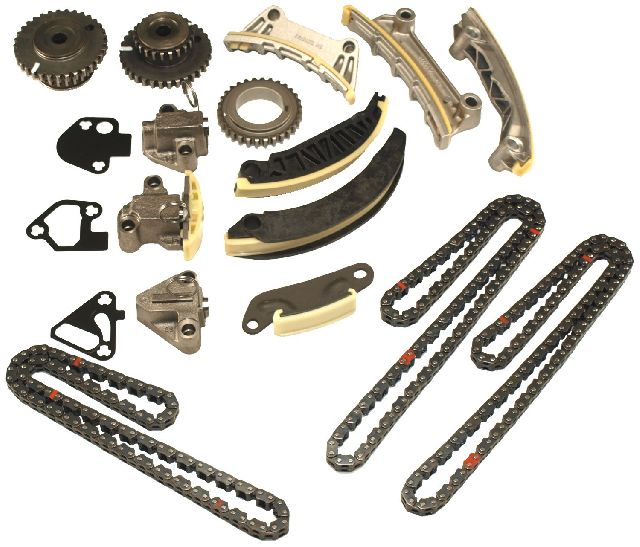
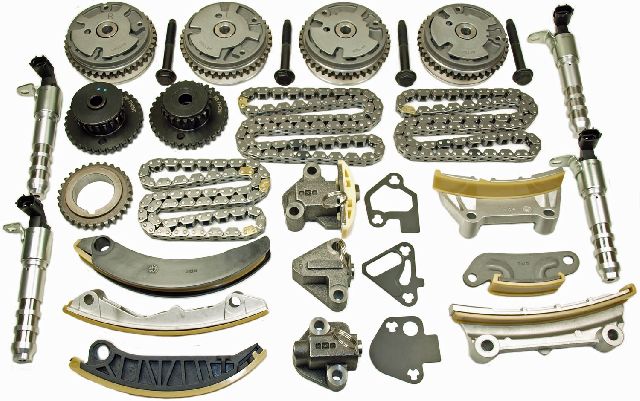
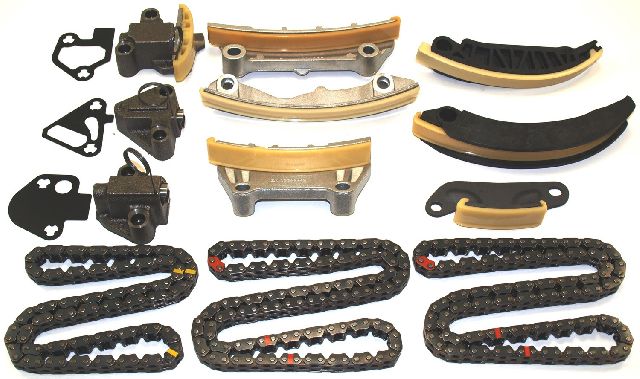
Typical fix: Replace all three timing chains, all tensioners, and all guides with an updated OEM or high-quality aftermarket kit. Per TSB #12-06-01-009F, the sprockets and actuators are typically not replaced unless damaged.
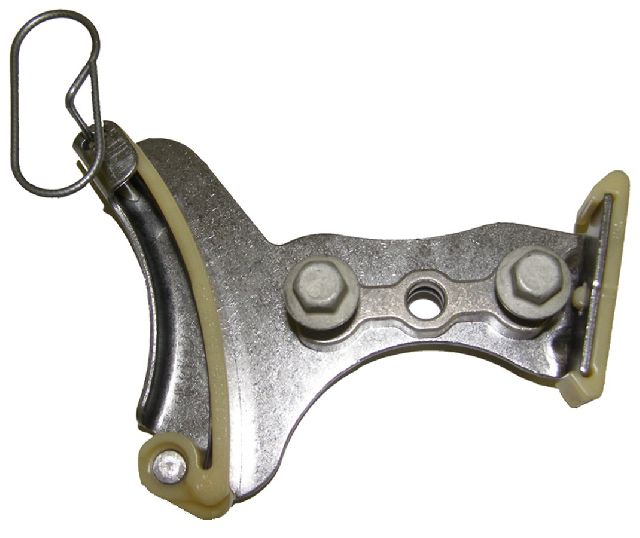
Est. part cost: $300-$700 - Worn Timing Chain Tensioners or Guides 🟡 Medium Probability → Shop Engine Timing Chain The tensioners are hydraulic and their effectiveness is reduced by degraded oil. The plastic guides can become brittle and break. A failed tensioner or guide can cause the chain to go slack, leading to the P0008 code even if the chain itself isn't severely stretched. Manufacturer Bulletin #PIP3423P explicitly instructs technicians to inspect for loose timing chains or tensioners when P0008 is present.
How to confirm: Physical inspection during the timing chain service is the only way to confirm. They are considered a 'while you're in there' replacement and are included in all reputable kits.
Typical fix: Replace as part of a complete timing chain kit service.
Est. part cost: $0 (Included in timing chain kit) - Low or Dirty Engine Oil ⚪ Low Probability This is a primary contributing factor. The timing chain tensioners and camshaft phasers are hydraulically operated by engine oil pressure. Low oil level or dirty, sludged oil can starve the tensioners, preventing them from taking up chain slack properly and dramatically accelerating wear on the chains. NHTSA ODI #10948003 reports a case where a dealership attributed the P0008 code to dirty oil.
How to confirm: Check the oil level and condition on the dipstick. An oil change will not fix a stretched chain, but it is a critical first step and may prevent future issues.
Typical fix: Perform an oil and filter change using a full synthetic 5W-30 oil that meets the GM dexos specification. This is a maintenance item, not a fix for an existing P0008 code.
Est. part cost: $50-$100
Rare But Worth Checking
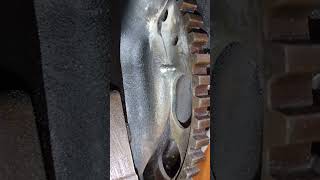
- Slipped Crankshaft Reluctor Wheel: → Shop Engine Crankshaft This is a known issue on the 3.6L V6. If the timing chains have been replaced but the P0008 code (often with P0009, P0016, P0017) returns immediately, this is the next most likely cause. The reluctor wheel is press-fit and can move on the crankshaft, creating a timing correlation error. A user on Camaro5.com confirmed this was their issue after a chain replacement failed to fix the codes, and the mechanic was able to reposition and tack-welded the wheel in place after removing the oil pan. 🎬 Watch: How to fix a slipped crankshaft reluctor wheel
Diagnosis Steps
- Confirm code P0008 (and any others) with an OBD-II scanner. NHTSA ODI #11041879 notes that P0008 may appear alongside P0007 and P0017.
- Check engine oil level and condition. If low or dirty, perform an oil change with dexos-approved 5W-30 synthetic oil. This will not fix the code but is a necessary first step.
- Listen for a rattling noise from the front of the engine during a cold start. This is a classic sign of a loose timing chain.
- Using an advanced scan tool, monitor the live data for camshaft position deviation. If a 🎬 Watch: How to diagnose timing issues using a labscope significant, steady deviation (e.g., > +/- 4 degrees) is present, it confirms a mechanical timing problem.
- Do NOT replace sensors. The code indicates a correlation problem, meaning the sensors are likely working correctly and reporting a real mechanical fault.
- If the above steps confirm a timing issue, the next step is to schedule a timing chain replacement. This is a major repair with a book time of around 7.8 hours for the Camaro, but often takes longer in practice.
- If the code returns immediately after a timing chain replacement, the crankshaft reluctor wheel position must be inspected, which can be done by removing the oil pan.
Parts You'll Likely Need
- Timing Chain Kit
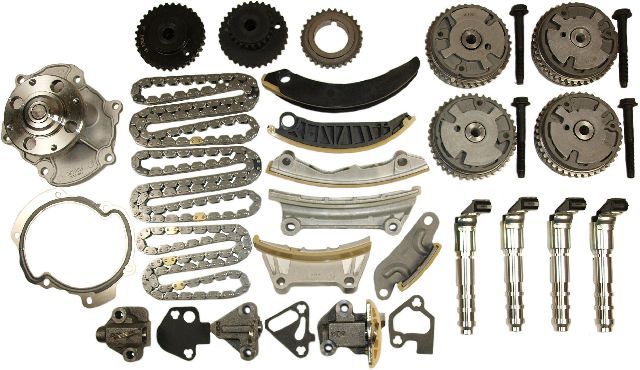
(OEM #12700436)— This is the definitive fix for a stretched timing chain. A complete kit should include all three chains (primary and two secondary), all tensioners, guides, and associated hardware. The OEM ACDelco part number 12700436 supersedes previous versions like 12651450.
Trusted brands: ACDelco (OEM), Cloyes (P/N 9-0753S is a well-regarded aftermarket option)
OEM price range: $400-$600
Aftermarket price range: $250-$450
Related Codes That Often Appear With This One
- P0009 — This is the identical fault for Bank 2 (driver's side). Seeing P0008 and P0009 together is extremely common and reinforces the diagnosis of stretched timing chains affecting the entire engine.
- P0016, P0017, P0018, P0019 — These are more specific crankshaft-to-camshaft correlation codes. They are often set along with P0008/P0009 and are all symptoms of the same root cause: a mechanical timing issue. Their presence strongly points to either stretched chains or a slipped reluctor wheel. NHTSA ODI #10969711 specifically documents P0008 and P0017 occurring together due to stretched chains.
Technical Service Bulletins (TSBs) & Recalls
- 12-06-01-009F: Announces the availability of comprehensive timing chain kits for repairing stretched timing chains that cause DTCs like P0008 on the 3.6L V6. It explicitly lists the 2010-2012 Camaro (LLT, LFX) and states that sprockets and actuators should not be replaced unnecessarily for this issue.
- PIP3423P: A manufacturer preliminary information bulletin that advises technicians to inspect for loose timing chains or a slipped crankshaft reluctor wheel when codes P0008, P0009, and P0016-P0019 are set.
- 11340C: Special Coverage Adjustment that extended the warranty on timing chains to 10 years/120,000 miles for many 3.6L vehicles due to premature wear. It also involved reprogramming the ECM to shorten oil life monitor intervals.
Platform-Specific Known Issues
- The 3.6L V6 (LLT/LFX) has a widely documented history of premature timing chain failure across numerous GM platforms (Camaro, Traverse, Acadia, CTS, etc.).
- GM issued Special Coverage Adjustment #11340C for some vehicles with this engine, extending the warranty for timing chain wear to 10 years or 120,000 miles. This program is expired for all 2010-2015 Camaros but confirms GM's official acknowledgment of the defect. The program also included an ECM reprogram to shorten oil change intervals.
- A slipped crankshaft reluctor wheel is a known secondary cause that can mimic a stretched chain or cause the code to return after a chain replacement. This is documented in GM TSB PIP3423P and confirmed by owner experiences.
Mechanic-Grade Diagnostic Values
- Camshaft Position Actuator Solenoid (VVT Solenoid) Resistance — expected: 7-13 Ohms for LLT/LFX engines. A more precise range is 6.9-7.9 Ohms at 68°F (20°C).. Failure: A reading of 0 Ohms (short), OL/infinite (open circuit), or a value significantly outside the expected range indicates a failed solenoid coil.
- Scan Tool Camshaft Angle Variance (Desired vs. Actual) — expected: Less than +/- 2-3 degrees at idle on a healthy engine.. Failure: A steady deviation greater than +/- 4 degrees at idle is a strong indicator of a mechanical timing issue like a stretched chain.
- Crankshaft Reluctor Wheel Position Check (per TSB PIP3423) — expected: A measurement from the machined surface of the crank throw to the edge of the reluctor opening should be 25-26mm.. Failure: Any other measurement indicates the wheel has slipped on the crankshaft.
Scan Tool Commands That Help
- GDS2 (GM Techline): Crankshaft Position Variation Relearn — This procedure should be performed after replacing a crankshaft, crankshaft position sensor, or ECM. It allows the ECM to learn the minor variations in the reluctor wheel to ensure accurate misfire detection. It will NOT fix a P0008 code caused by a major timing discrepancy but is a necessary final step if the crankshaft is replaced.
Wiring & Ground Locations
- G103 — On the left rear of the engine compartment, located on the cowl above the brake booster.. This is a major ground point for the Body Control Module (BCM) and the Data Link Connector (DLC), and poor grounding here can cause a variety of communication and module errors.
- G106 — On the left rear of the 3.6L engine block.. This is a primary engine block ground. A poor connection here can affect sensor readings that rely on a clean ground reference, including the cam and crank sensors.
- Engine Block to Frame/Chassis Grounds — There are multiple ground straps. A large one is on the passenger side of the engine, attached to the front of the head and near the ABS block. Another is on the driver's side near the coolant temp sensor. Others are located at the rear of each cylinder head.. Corroded or loose engine-to-chassis grounds can cause erratic behavior from the ECM and sensors, as the engine block itself may not have a stable ground reference to the rest of the vehicle.
Real Owner Repair Stories
- Camaro5.com user 'secrethero89' (2011 Camaro V6 Cabriolet, 55,000 miles) — Check engine light with P0008 & P0009, sluggish performance, extreme power loss.
❌ Tried (didn't work) Replaced timing chains with a Cloyes kit., Replaced all four VVT sprockets (cam phasers).
✅ What actually fixed it The crankshaft reluctor wheel had slipped by 1.5 teeth. A mechanic removed the oil pan, carefully forced the wheel back to its original position on the crank, and applied a small tack weld to secure it. This resolved all codes and restored engine power. - NHTSA ODI #10969711 — An owner reported that their vehicle was diagnosed by a dealer with stretched timing chains at 52,724 miles after codes P0008 and P0017 appeared, with a repair estimate of $3,000.
When the Usual Fixes Don't Work
- While stretched timing chains are the cause of P0008 in over 95% of cases for this vehicle, there are documented instances where the code persists after a full timing service. In these cases, the root cause was a slipped crankshaft reluctor wheel. A Camaro5 forum member had a mechanic successfully reposition and tack-weld the wheel into place by only removing the oil pan, which fixed the problem after a new timing set and phasers did not. This confirms that if P0008, P0009, P0016, or P0017 return immediately after a chain replacement, the reluctor wheel is the primary suspect.
OEM Part Supersession History
12651450→12700436 (and later 12693218, which is a more comprehensive kit)— The original timing chains were prone to premature stretching. The superseding part numbers feature updated, more robust chains to address the design flaw.12628348, 12655421 (VVT Solenoids)→12679100— Updates to improve reliability and resistance to oil contamination and heat failure.
Heads up: While physically similar, resistance values can differ on very early vs. later 3.6L engines. It's critical to use the correct part for the specific engine RPO code (LLT vs LFX).
Model Year Variations Within This Range
- 2010-2011 (LLT) vs 2012-2015 (LFX): The LLT engine is considered more susceptible to the timing chain issue than the updated LFX. The LFX featured design improvements including stronger timing chains and integrated cylinder heads/exhaust manifolds, though it is still known to suffer from the same P0008 problem, just potentially less frequently.
Diagnostic Flowchart
Other Known Issues on This Vehicle
Issues unrelated to this code that are worth knowing about as an owner of this generation:
- Main Engine Water Pump Failure 🟠 Medium — Commonly fails between 60,000 and 100,000 miles. Signs include coolant leaks from the passenger side of the engine, a whining noise, or overheating.
- Torque Converter Shudder 🟠 Medium — Affects automatic transmission models, causing a shudder or vibration at low speeds (around 40-50 mph). Often requires a fluid flush with a specific fluid or torque converter replacement.
- Passenger Airbag Sensor Mat Failure 🟠 Medium — The sensor mat in the passenger seat can tear, causing the airbag light to illuminate and disabling the passenger airbag. This was a common issue, especially on 2010-2011 models. (Ref: Recall was issued for some vehicles.)
- Key Stuck in Ignition / Ignition Switch Failure 🟡 Low — A recall was issued because the driver's knee could bump the key fob, moving the ignition out of the 'run' position. Separately, owners report the key getting stuck due to a faulty shifter interlock on automatic models. (Ref: GM Recall #14294)
- Auxiliary Water Pump Failure (for Heater) 🟡 Low — This small electric pump assists with cabin heat at idle. Its failure results in no heat when the car is stopped but does not cause engine overheating. It's a common failure point but relatively easy to replace.
Used vs. New Parts: Buying Guide for This Vehicle
When a used part is the smart pick: For this specific repair (P0008), using used parts is STRONGLY DISCOURAGED. The primary failure components—timing chains, guides, and tensioners—are wear items with a known design flaw. Installing used timing components would be installing parts that are already part-way through their limited lifespan, making the extensive labor of the job likely to be repeated soon.
What to inspect on the donor part:
- Not applicable. Do not use salvaged timing components for this repair.
OEM-only on this vehicle (don't cheap out):
- Timing Chain Kit: While some aftermarket kits are well-regarded, using a genuine ACDelco kit with the latest part number is the safest option to ensure you have the most updated chain design.
Aftermarket brands forum-validated for this vehicle:
- Cloyes: The 9-0753S kit is widely used and respected in the community as a high-quality alternative to OEM.
Brands owners have reported issues with on this vehicle:
- Unnamed, no-brand 'white box' kits from online marketplaces. These often use inferior materials for chains and guides, leading to rapid failure and repeating this very expensive job.
Real Owner Stories
Aggregated from forums and TSBs cited above. Mileages and costs reflect what owners reported in those sources.
2011 Chevrolet Camaro 3.6L V6
Symptoms: The car threw P0008, P0009, and P0016 codes. The owner replaced the timing chains and VVT phasers, but the issue persisted.
What fixed it: The ultimate fix was identifying a slipped crankshaft reluctor wheel. A mechanic repositioned and tack-welded the wheel without removing the crankshaft.
Source hint: Camaro5.com: PLS HELP! P0008 Timing Chain Replaced, No Change. (FIXED)
2011 Chevrolet Camaro 3.6L V6
Symptoms: Vehicle threw code P0008.
What fixed it: The community identified the issue as stretched timing chains, a known defect covered under GM's special coverage for the 3.6L engine.
Source hint: Camaro5.com: Early 2011 V6 Just threw P0008
Related OBD-II Codes
Frequently Asked Questions
Does GM Special Coverage Adjustment #11340C still apply to my 2010-2015 Chevrolet Camaro?
I replaced my timing chains but P0008 came back immediately. What else could it be on my Camaro?
What specific oil should I use in my 3.6L V6 to prevent timing chain wear?
Does TSB #12-06-01-009F recommend replacing the VVT actuators when fixing P0008?
Can a scan tool confirm the timing issue on my Camaro without tearing down the engine?
Is the P0008 code caused by a bad sensor on the LLT/LFX engine?
Helpful Videos
We Have This Part in Stock


The information in this article is provided for general reference and educational purposes only. Vehicle specifications, procedures, and part compatibility can vary by production date, trim level, and region. Always consult your vehicle's factory service manual and verify part numbers before purchasing or performing repairs. Safety-critical components such as airbags, seat belts, and braking systems should be installed by a qualified professional.
- Chevrolet Camaro:
- 🧭 Diagnostic Flowchart
- 🎬 Helpful Videos
- 🛍️ Shop This Part
- What's Unique About the 2010-2015 Chevrolet Camaro
- Symptoms You May Notice
- Most Likely Causes
- Rare But Worth Checking
- Diagnosis Steps
- Parts You'll Likely Need
- Related Codes That Often Appear With This One
- Technical Service Bulletins (TSBs) & Recalls
- Platform-Specific Known Issues
- Mechanic-Grade Diagnostic Values
- Scan Tool Commands That Help
- Wiring & Ground Locations
- Real Owner Repair Stories
- When the Usual Fixes Don't Work
- OEM Part Supersession History
- Model Year Variations Within This Range
- Other Known Issues on This Vehicle
- Used vs. New Parts: Buying Guide for This Vehicle
- Real Owner Stories
- 2011 Chevrolet Camaro 3.6L V6
- 2011 Chevrolet Camaro 3.6L V6
- Related OBD-II Codes
- Frequently Asked Questions
- 🎟️ Get 5% Off