

P0008 on 2012-2019 Chevrolet Impala: Stretched Timing Chain Causes & Fixes
On a 2012-2019 Impala with the 3.6L V6 LFX engine, code P0008 almost always means the timing chains have stretched. This is a serious and expensive repair, often costing $1,800-$3,000+, that requires replacing the primary and secondary timing chains, tensioners, and guides. Ignoring this can lead to catastrophic engine failure.
- P0008 on a 3.6L Impala is a serious code that points directly to a stretched timing chain.
- Do not ignore this code. A chain failure will destroy the engine.
- The correct fix is to replace all timing chains, tensioners, and guides with a complete, updated kit (OEM part #12700436 or equivalent).
- This is not a DIY-friendly repair for beginners and requires a significant budget ($1800+) for professional service.
- To prevent recurrence, use high-quality full-synthetic oil and consider changing it every 5,000 miles, regardless of what the Oil Life Monitor says.
What's Unique About the 2012-2019 Chevrolet IMPALA
The 2012-2019 Chevrolet Impala, particularly models equipped with the 3.6L V6 LFX engine, are known for premature timing chain wear. This isn't a random failure; it's a well-documented issue across many GM vehicles that use this engine family. The problem is so common that GM issued several revisions of a technical service bulletin (TSB #12-06-01-009F) announcing updated timing chain replacement kits to address the issue. The LFX engine, introduced for the 2012 model year, featured a new cam timing chain and tensioner setup intended to address the well-documented issues from the prior LLT engine, but problems can still occur. Forum discussions suggest that extended oil change intervals recommended by the factory Oil Life Monitor (OLM), combined with the stresses of direct injection, contribute to oil breakdown and accelerated chain wear.
Diagnostic Flowchart
Tap your situation to follow the diagnostic path that matches what you're seeing on this vehicle.
Generation note: The 2012-2019 range covers two Impala generations. The ninth generation (sold as 'Impala Limited' from 2014-2016) and the tenth generation (2014-2020) both offered the 3.6L V6 LFX engine, which is the primary engine affected by this issue. Therefore, the problem and fix are consistent across both generations when this engine is present.
Symptoms You May Notice
- Check Engine Light is on
- Reduced engine power and poor acceleration
- Rough or unstable idle
- Rattling or scraping noise from the front of the engine (passenger side), especially on a cold start for a few seconds
- Decreased fuel economy
- Engine may run in a reduced power or "limp mode"
- Replacing only the camshaft or crankshaft position sensors. These sensors are almost always accurately reporting the timing misalignment; they are not the cause of it. Replacing them is a waste of money and will not fix the code.
Most Likely Causes
- Stretched Timing Chains 🔴 High Probability → Shop Engine Timing Chain The primary chains on the GM 3.6L V6 engine are known to stretch prematurely. This is widely considered the main cause for P0008. Factors contributing to this include long oil change intervals, oil breakdown, and the inherent design and material of the original chains. GM's TSB #12-06-01-009F directly addresses this by providing updated parts.
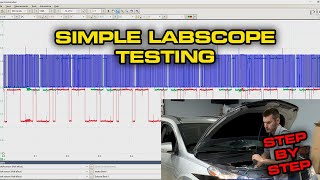
How to confirm: A technician will use an advanced scan tool to view cam/crank correlation data; a deviation of more than a few degrees typically confirms the issue. An oscilloscope can be used to graphically compare the sensor waveforms to a known-good pattern to confirm a timing lag. 🎬 Watch: How to use a labscope to confirm timing lag A physical inspection, which requires significant labor to access the timing cover, will reveal excessive slack in the chains.
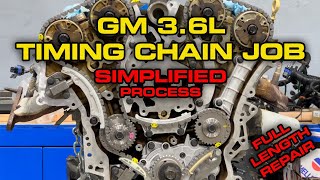
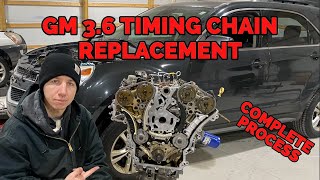
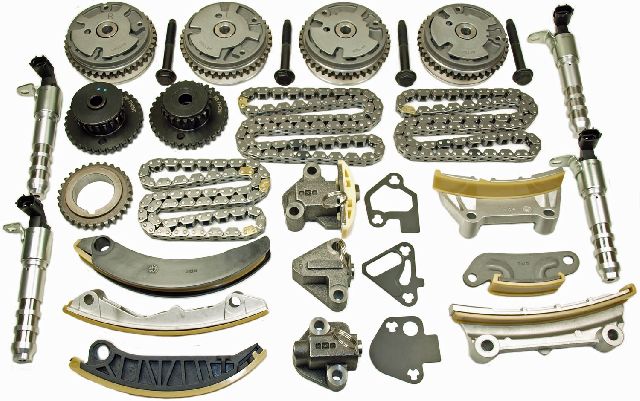
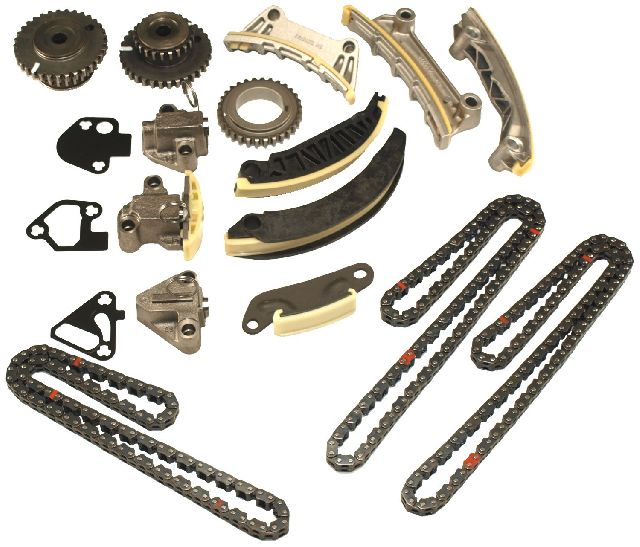
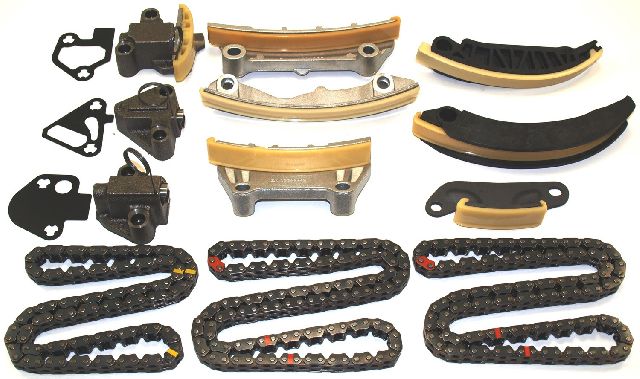
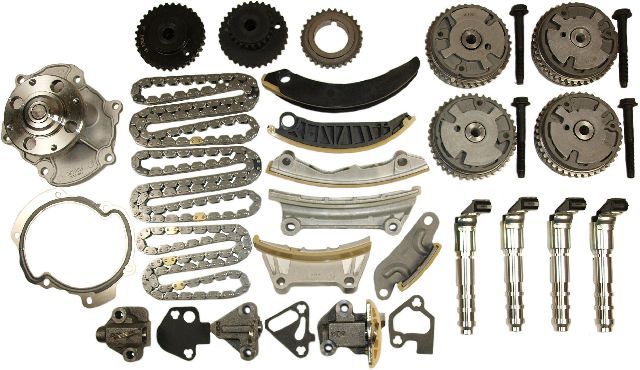
Typical fix: Replace all three timing chains (1 primary, 2 secondary), all tensioners, and all plastic guides with an updated kit. It is also highly recommended to replace the water pump at the same time, as it is driven by the timing chain and requires the same labor to access.
Est. part cost: $250-$600 - Failed Timing Chain Tensioners 🟡 Medium Probability → Shop Engine Timing Chain Tensioners are hydraulic and rely on clean oil at the proper pressure to keep the chains tight. If they fail, become weak, or get clogged with sludge from degraded oil, the chains can become loose, leading to timing errors and noise.
How to confirm: During a physical inspection for a stretched chain, the tensioners are checked for proper function, extension, and wear. A failed tensioner is often diagnosed concurrently with stretched chains.
Typical fix: Replace timing chain tensioners. This is always done as part of a full timing chain service; they are included in all reputable kits.
Est. part cost: $50-$150 - Low or Degraded Engine Oil 🟡 Medium Probability The timing chain tensioners and VVT phasers are hydraulic and require clean oil at the proper pressure to function. Many owners and technicians in forums believe the GM Oil Life Monitor (OLM) allows for excessively long oil change intervals, leading to oil degradation, sludge, and accelerated wear on all timing components. Shortening the interval to 5,000 miles is a common preventative recommendation.
How to confirm: Check the oil level on the dipstick and review the vehicle's maintenance history. The oil may appear dark, sludgy, or be very low.
Typical fix: Perform an oil and filter change with a quality full-synthetic dexos1-approved oil. However, if P0008 is already set, this is highly unlikely to fix the problem and is considered a contributing factor, not the root cause. The mechanical wear has already occurred.
Est. part cost: $50-$100
Rare But Worth Checking
- Worn Camshaft or Crankshaft Reluctor Wheels: → Shop Engine Crankshaft The reluctor wheel is what the position sensor reads. While rare, damage or movement of this wheel on the crankshaft can cause timing codes without any actual chain stretch. GM has a specific TSB (PIP3423P) that mentions inspecting the crankshaft reluctor wheel.
- Faulty Camshaft Actuator (Phaser): → Shop Engine Camshaft A stuck or slow-responding camshaft phaser can sometimes mimic a timing chain issue, though it's less common for this specific code and more often associated with codes like P0011 or P0014. However, a failure is still possible.
- Faulty Engine Control Module (ECM): → Shop Engine Control Module (ECM) This is extremely rare and should be considered a last resort. The ECM should only be suspected after all other mechanical and sensor-related possibilities have been exhaustively ruled out by a professional.
Diagnosis Steps
- Verify the presence of P0008 with an OBD-II scanner and check for any other related codes.
- Check engine oil level and condition. Note if the oil is low, old, or appears sludgy. An oil change is good practice but will not fix an existing mechanical issue.
- Using an advanced scan tool with live data capability, monitor the camshaft and crankshaft position sensor data. An oscilloscope is the best tool to visualize the sensor waveforms and confirm a timing lag.
- Listen for a distinct rattling or scraping noise from the front passenger side of the engine, especially during a cold start. This is a classic sign of a loose chain slapping against the guides.
- If scan data confirms a timing deviation and/or noises are present, the next step is engine disassembly to physically inspect the timing chains, guides, and tensioners for wear, stretch, and damage. This is a labor-intensive step. 🎬 Watch this teardown for helpful hints and common gotchas
- Confirm the correct, updated replacement parts are ordered before beginning the repair. TSB #12-06-01-009F specifies the correct kit.
Parts You'll Likely Need
- Engine Timing Chain Kit
(OEM #12700436)— This is the definitive fix. A complete kit ensures all worn components (chains, tensioners, guides, gaskets) are replaced at once with updated parts to restore proper engine timing and prevent a repeat failure.
Trusted brands: ACDelco (GM OE), Cloyes
OEM price range: $300-$450
Aftermarket price range: $200-$350
Related Codes That Often Appear With This One
- P0009 — This is the equivalent code for Bank 2 (the bank closer to the radiator). If both P0008 and P0009 are present, it strongly indicates a problem with the primary timing chain that affects both banks, making a stretched chain diagnosis almost certain.
- P0016, P0017, P0018, P0019 — These are more specific crank/cam correlation codes for intake and exhaust cams on both banks. Their presence alongside P0008 further confirms a significant mechanical timing issue, as noted in GM's service bulletins.
Technical Service Bulletins (TSBs) & Recalls
- PIP3423P: Notes that codes P0008, P0009, and P0016-P0019 may be set and instructs technicians to inspect for loose timing chains or tensioners, and also to inspect the crankshaft reluctor wheel.
- 12-06-01-009F: Announces the availability of high feature V6 timing chain kits to repair stretched timing chains that cause codes like P0008. It specifies which parts to replace and which (like sprockets) are often replaced unnecessarily.
Platform-Specific Known Issues
- The 3.6L V6 LFX engine has a well-documented history of premature timing chain stretching across numerous GM platforms, including the Impala, Traverse, Acadia, and Cadillac models.
- GM has released updated timing chain kits to address this issue, which are considered more durable than the original factory parts. Using the kit specified in TSB #12-06-01-009F is critical for a lasting repair.
- While GM offered a Special Coverage Adjustment (SCA) for this issue on some earlier 3.6L engines (LLT), extending the warranty to 10 years/120,000 miles, this program may not apply to all 2012-2019 Impala models. Owners should check with a dealer.
- Many technicians strongly recommend shortening oil change intervals to 5,000 miles using a full synthetic dexos1 oil to prolong the life of the new timing components, as the factory Oil Life Monitor is often cited as a contributing factor to the original failure.
Mechanic-Grade Diagnostic Values
- Crankshaft Reluctor Wheel Position — expected: 25 to 26 mm from the end of the machined surface of the crankshaft throw to the edge of the open space in the reluctor wheel.. Failure: Any measurement outside the 25-26mm range, or a visual offset (clockwise or counter-clockwise) compared to a known-good crankshaft, indicates the wheel has slipped.
- Crankshaft Reluctor Wheel Position (visual check) — expected: Approximately 3.5 teeth should be visible between the crank's edge and the gap in the reluctor wheel.. Failure: A different number of teeth visible indicates the wheel has moved.
- Oscilloscope Cam/Crank Correlation (Bank 1 - Known Good) — expected: On a known-good engine, the intake cam signal crosses within the gap of the crankshaft signal. The exhaust cam signal triggers about three pulses after the crankshaft signal gap.. Failure: A stretched chain will cause the camshaft signals to shift to the right on the scope (retard) relative to the crankshaft signal.
Scan Tool Commands That Help
- GDS2 / Tech2 / Advanced Scan Tool: Camshaft Position Variance / Cam/Crank Correlation PID — This is a primary diagnostic step. Use this live data parameter to see the degrees of deviation between the crankshaft and camshafts. A significant and consistent deviation (often more than 4-5 degrees) is a strong indicator of a stretched timing chain without requiring engine disassembly.
Wiring & Ground Locations
- G111 — Lower left rear of the engine.. This is a primary engine ground point. A poor connection here could potentially affect the Engine Control Module (ECM) or its sensors, although it's an unlikely cause for a specific timing correlation code.
- G103 (on related platforms) — On some GM vehicles, located at the left rear of the engine compartment on the cowl, above the brake booster. On others, on the engine itself.. This ground is known to be used by the ECM on various GM models. A TSB for other models mentions checking this ground for misfire issues, highlighting the importance of clean ECM grounds for proper engine management.
- ECM Connector — At the Engine Control Module.. The ECM receives signals from the cam and crank sensors via this connector. In extremely rare cases of chasing intermittent issues, checking for pin integrity and clean connections is a valid, though last-resort, diagnostic step.
Real Owner Repair Stories
- Camaro5 Chevy Camaro Forum (2011 Camaro V6 (3.6L LLT Engine) at 55,000 miles) — Check engine light with P0008 and P0009, sluggish performance, extreme power loss.
❌ Tried (didn't work) Replaced all timing chains with a Cloyes kit., Replaced all 4 VVT sprockets (cam phasers).
✅ What actually fixed it The crankshaft reluctor wheel had slipped by 1.5 teeth. A mechanic was able to carefully force it back into its original position without removing the crankshaft and applied a small tack weld to prevent it from moving again. The owner recommends checking the reluctor wheel position (visible by removing the oil pan) before replacing timing chains.
OEM Part Supersession History
12651450→12700436 (also supersedes 12679117, 12693218)— GM updated the timing chain kits to improve durability and address premature stretching issues found in earlier versions of the 3.6L engine family.
Model Year Variations Within This Range
- 2012-2019: The 2012 model year marked the introduction of the 3.6L LFX engine, which replaced the previous LLT. The LFX was designed with an updated, more durable timing chain and tensioner setup specifically to address the well-known wear issues of the earlier engine. While the P0008 code can still occur on the LFX, the underlying components are of a revised design compared to pre-2012 GM vehicles with the 3.6L engine.
Helpful Videos
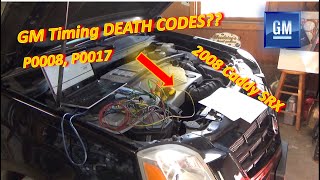
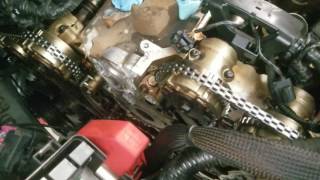
We Have This Part in Stock


The information in this article is provided for general reference and educational purposes only. Vehicle specifications, procedures, and part compatibility can vary by production date, trim level, and region. Always consult your vehicle's factory service manual and verify part numbers before purchasing or performing repairs. Safety-critical components such as airbags, seat belts, and braking systems should be installed by a qualified professional.
- Chevrolet IMPALA:
- 🧭 Diagnostic Flowchart
- 🎬 Helpful Videos
- 🛍️ Shop This Part
- What's Unique About the 2012-2019 Chevrolet IMPALA
- Symptoms You May Notice
- Most Likely Causes
- Rare But Worth Checking
- Diagnosis Steps
- Parts You'll Likely Need
- Related Codes That Often Appear With This One
- Technical Service Bulletins (TSBs) & Recalls
- Platform-Specific Known Issues
- Mechanic-Grade Diagnostic Values
- Scan Tool Commands That Help
- Wiring & Ground Locations
- Real Owner Repair Stories
- OEM Part Supersession History
- Model Year Variations Within This Range
- 🎟️ Get 5% Off