

P0008 on 2011-2025 Dodge Durango 3.6L: Causes and Fixes for Timing System Faults
On a 2011-2025 Dodge Durango with the 3.6L Pentastar engine, code P0008 almost always indicates a stretched timing chain. This is a common issue on this engine, especially after 80,000-100,000 miles. The repair is complex and expensive, involving the replacement of timing chains, guides, and tensioners, often costing $1,500-$3,000+ at a shop. Driving is not recommended as it can lead to catastrophic engine failure.
- P0008 on a 3.6L Durango is a serious code that almost always points to a stretched timing chain.
- Do not continue to drive the vehicle, as you risk catastrophic engine failure.
- The repair is not DIY-friendly and is expensive, typically costing between $1,500 and $3,500.
- When repairing, it is critical to replace the chains, guides, and tensioners as a complete kit. Replacing the water pump and cam phasers at the same time is highly recommended.
- Maintaining the correct oil level with regular changes using manufacturer-specified oil is the best way to prolong the life of timing components.
What's Unique About the 2011-2025 Dodge Durango
The 3.6L Pentastar V6, while used across many Chrysler, Dodge, and Jeep vehicles, has a well-documented history of timing chain stretch, particularly in earlier models (2011-2015). Code P0008 is the primary indicator of this specific mechanical failure. While other causes are possible, a stretched timing chain is by far the most common culprit on high-mileage Pentastar engines. The issue is so prevalent that it's a widely discussed topic in owner forums and among professional mechanics. Unlike some similar GM engines which also suffer from P0008, the cause on the Pentastar is almost always the chain itself, not a slipped reluctor wheel.
Generation note: The 2011-2025 model year range covers the third generation of the Dodge Durango (2011-present). While the core 3.6L Pentastar engine remains, it has received updates over the years. However, the fundamental timing chain design and the potential for P0008 due to chain stretch are relevant across this entire period, though more common in earlier models (approx. 2011-2015).
Symptoms You May Notice
- Check Engine Light is on
- Rough or unstable idle
- Reduced engine power and poor acceleration.
- Decreased fuel economy.
- Rattling or whining noise from the front of the engine, especially on a cold start.
- Engine may stall or be hard to start
- Replacing only the camshaft or crankshaft sensors without verifying the mechanical timing. The sensors are often not the root cause for this specific code on this engine.
- Replacing VVT solenoids when the actual problem is a stretched chain or low oil pressure.
Most Likely Causes
- Stretched Timing Chains 🔴 High Probability → Shop Engine Timing Chain The 3.6L Pentastar engine is known for timing chain stretch, especially in models approaching or exceeding 100,000 miles. Wear and tear, combined with long oil change intervals, are the primary factors. The chains physically elongate over time, causing the cam/crank correlation to fall out of spec.
How to confirm: A mechanic can confirm this by measuring the timing chain deflection after removing the timing cover. A more advanced, non-invasive method involves using an oscilloscope to analyze the relationship between the crankshaft and camshaft sensor signals. A stretched chain will cause the cam signal to be 'retarded' (shifted to the right) relative to the crank signal.
Typical fix: Replace all timing chains (primary and secondaries), tensioners, and guides. It is highly recommended to replace the water pump and camshaft phasers at the same time, as they are accessible during the repair.
Est. part cost: $300-$700 for a complete timing kit. - Failed Timing Chain Tensioner(s) 🟡 Medium Probability → Shop Engine Timing Chain The tensioners, which are hydraulically operated by engine oil pressure, keep the chains properly tensioned. They can fail due to wear, internal seal failure, or loss of oil pressure, allowing the chains to go slack and cause timing correlation faults.
How to confirm: Visual inspection after removing the timing cover. A failed tensioner may be stuck, broken, or not providing adequate pressure. A rattling noise that subsides after the engine warms up can also point to a failing tensioner.
Typical fix: Replace the failed tensioner. However, if a tensioner has failed, it is considered best practice to replace the entire timing chain kit as the slack has likely accelerated chain and guide wear.
Est. part cost: $50-$150 per tensioner. - Low or Dirty Engine Oil ⚪ Low Probability The timing chain tensioners and camshaft phasers are hydraulically operated by engine oil. Low oil level or dirty, sludgy oil can starve these components, leading to improper timing adjustments and accelerated wear on the chains and guides. Using the incorrect oil viscosity can also contribute to the problem.
How to confirm: Check the oil level on the dipstick and inspect the oil's condition. If it is very dark, thick, or below the minimum mark, this could be a contributing factor.
Typical fix: Perform an oil and filter change using the manufacturer-specified oil (e.g., 5W-20 or 5W-30 synthetic, depending on the year). If this resolves the code, it was likely the cause; however, wear to the timing components may have already occurred and the code may return.
Est. part cost: $50-$100
Rare But Worth Checking
- Faulty Camshaft or Crankshaft Position Sensor: → Shop Engine Crankshaft Position Sensor While these sensors can fail, they typically set their own specific codes (e.g., P0335, P0340). It's rare for a sensor failure to cause P0008 alone, but a weak or intermittent signal could contribute.
- Faulty VVT Solenoid or Camshaft Phaser: → Shop Engine Camshaft A stuck VVT solenoid (oil control valve) or a failing camshaft phaser can cause timing correlation issues. These usually trigger other codes like P000A, P0011, or P0014, but could be seen alongside P0008. Debris in the oil can clog the solenoid screens, causing them to malfunction.
- Slipped Crankshaft Reluctor Wheel: → Shop Engine Crankshaft This is a known issue on some GM 3.6L engines which are similar in design, but less commonly reported on the Pentastar. The reluctor wheel, which the crankshaft sensor reads, can physically move on the crankshaft, causing a false timing reading. This requires crankshaft replacement.
Diagnosis Steps
- Verify the code with an OBD-II scanner.
- Check the engine oil level and condition. Top off or change the oil if it is low or dirty. Clear the code and see if it returns.
- Listen for any rattling or whining noises from the engine, which strongly suggest a timing chain issue.
- Use a professional scan tool to monitor live data for the camshaft and crankshaft positions. Deviations can point to a timing issue.
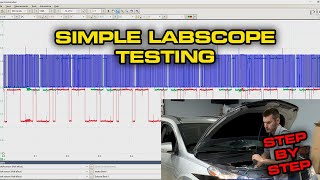
- For advanced diagnosis, use a lab scope to compare the camshaft and crankshaft sensor waveforms. A stretched chain will cause the cam signal to be 'retarded' (shifted to the right) relative to the crank signal. This is the most definitive non-invasive test.
- If mechanical timing is suspected, the next step is to remove the engine's front timing cover for a visual inspection of the chains, guides, and tensioners. This is a labor-intensive process.
- Inspect the timing marks on the sprockets to confirm if the engine has jumped time.
Parts You'll Likely Need
- Timing Chain Kit
(OEM #5184357AE (or newer revisions))— This is the most common failure. A complete kit ensures all wearable components are replaced at once.
Trusted brands: Mopar, Cloyes
OEM price range: $400-$600
Aftermarket price range: $250-$450 - Water Pump — The water pump is driven by the timing chain and is accessible only when the timing cover is off. It is highly recommended to replace it as a preventative measure.
Trusted brands: Mopar, Gates, ACDelco
OEM price range: $150-$250
Aftermarket price range: $50-$120 - Camshaft Phaser / VVT Actuator
(OEM #5184352AF (Intake), 5184355AF (Exhaust))— These can get clogged with debris from a failing timing system or fail on their own. Since they must be removed for chain replacement, it is wise to replace them, especially on high-mileage engines.
Trusted brands: Mopar, Dorman
OEM price range: $100-$180 each
Aftermarket price range: $60-$120 each
Related Codes That Often Appear With This One
- P0009 — P0009 is the equivalent code for Bank 2 (driver's side). If both secondary chains or the primary chain have stretched significantly, you may see both codes.
- P0016, P0017, P0018, P0019 — These are more specific camshaft/crankshaft correlation codes. P0008 is a more general code indicating a problem on Bank 1, and these may appear with it to pinpoint the exact cam that is out of sync.
Technical Service Bulletins (TSBs) & Recalls
- TSB 09-002-17 (related to 2016 model year camshafts)
- TSB 09-002-14 Rev. B (related to 2011-2013 cylinder head defect)
Platform-Specific Known Issues
- A Technical Service Bulletin (TSB 09-002-17) was issued for some 2016 models for a camshaft manufacturing defect that could cause similar codes (P000A/P000C), requiring camshaft replacement. While not directly for P0008, it highlights the sensitivity of the valvetrain.
- Early 3.6L Pentastar engines (approx. 2011-2013) are generally considered more prone to timing chain issues than later versions.
- A known defect in the left cylinder head of 2011-2013 models can cause misfires (P0300, P0302, P0304, P0306) but is generally unrelated to the P0008 timing correlation code. This issue was covered by an extended warranty (X56).
Mechanic-Grade Diagnostic Values
- VVT Solenoid Internal Resistance — expected: 7.0 to 8.0 Ohms at 68°F (20°C). Failure: A reading of infinity (OL) indicates an open circuit, while a reading near zero Ohms indicates a shorted coil.
- VVT Solenoid Connector Voltage (Key On, Engine Off) — expected: ~12V (Battery Voltage) on the power supply pin. Failure: No voltage suggests a blown fuse or a break in the power supply wire from the Auto Shutdown (ASD) relay.
- VVT Solenoid Control Circuit Resistance to PCM — expected: Below 5.0 Ohms. Failure: Resistance above 5.0 Ohms indicates an open or high-resistance circuit in the wiring between the solenoid and the PCM.
Scan Tool Commands That Help
- wiTECH or equivalent professional scanner: Active Test / Bidirectional Control for VVT Solenoid — This command manually actuates a specific VVT solenoid. It can be used to confirm if a solenoid is electrically functional and not seized without removing it. An audible click should be heard. This helps rule out a faulty solenoid before suspecting deeper mechanical issues or wiring faults.
- wiTECH or equivalent professional scanner: Monitor 'Desired' vs. 'Actual' Camshaft Position PIDs — While observing live data, command the PCM to advance or retard timing. If the 'Actual' camshaft position value lags significantly behind the 'Desired' value or doesn't move, it strongly indicates a stretched chain or a stuck/failing cam phaser.
Wiring & Ground Locations
- Engine Harness Chafe Point — A common chafe point is where the main engine wiring harness passes over a ground strap stud on the rear of the driver's side cylinder head.. Vibration can cause the stud to rub through the insulation of sensor wires, including those for the camshaft or crankshaft position sensors. An intermittent short to ground on one of these signal wires can cause erratic readings and potentially trigger timing correlation codes like P0008.
- S4012 (Ground Splice) — Located in the engine harness, at the center rear of the 3.6L engine.. This is a splice point for multiple ground circuits within the engine harness. Corrosion or a break at this splice could affect the ground reference for the cam and crank sensors, leading to signal integrity issues and potential timing codes.
- PCM Connectors (C1, C2, etc.) — The Powertrain Control Module (PCM) is typically located in the engine bay. The specific connectors for the cam/crank sensors must be identified via a wiring diagram.. Testing for continuity and resistance on the sensor circuits requires probing the correct pins at the PCM connector to verify the integrity of the wiring harness from the sensor to the computer.
Real Owner Repair Stories
- Reddit user 'jeffel374' on r/MechanicAdvice (2007 Suzuki XL7 with 3.6L VVT engine (GM LY7, similar design principles)) — Initially had a P0009 (Bank 2 timing correlation).
❌ Tried (didn't work) A full timing chain replacement was performed to fix the P0009 code.
✅ What actually fixed it Six days after the timing chain replacement, a P0008 (Bank 1) code appeared. A GM technician in the comments stated that this code would not be caused by a failed actuator and that the timing was likely set incorrectly during the complex, two-stage timing procedure, even though it took several days to set the code. The implication is the new code was a result of an error in the previous repair.
OEM Part Supersession History
Various early PNs for 2011-2015 kits→5184357AE (and subsequent revisions like AF, AG, etc.)— The original timing chains were prone to premature stretching. Updated kits feature revised chain designs and potentially improved tensioners to increase longevity.
Heads up: The timing components for the pre-2016 engines are different from the updated Pentastar engine released in 2016. While the core P0008 issue exists for both, using the wrong year kit will result in incorrect timing. Always verify the kit is for the correct engine version.
Model Year Variations Within This Range
- 2016-Present: For 2016, the 3.6L Pentastar received a significant update. Changes included a two-stage variable valve lift (VVL) system, cooled EGR, a new intake manifold, and updates to the VVT system. The timing chains and sprockets were also revised. While the P0008 code can still occur, the components are not interchangeable with the earlier 2011-2015 engines.
- 2011-2013: These early model years are most known for timing chain stretch issues. They were also subject to an extended warranty for a separate left cylinder head defect that caused misfires, but this is unrelated to the P0008 timing fault. The prevalence of P0008 on these early models led to the development of updated timing chain kits.
Diagnostic Flowchart
Other Known Issues on This Vehicle
Issues unrelated to this code that are worth knowing about as an owner of this generation:
- Cracked Oil Filter/Cooler Housing 🔴 High — Extremely common across all model years. The plastic housing becomes brittle from heat cycles and cracks, causing a major oil and/or coolant leak into the engine valley.
- Rocker Arm / Lifter Failure ('Pentastar Tick') 🔴 High — Very common across all model years. Needle bearings in the rocker arms fail, causing a distinct ticking noise that can progress to a misfire and camshaft damage if ignored. (Ref: S1709000010 Rev. A (related TSB for investigation))
- Totally Integrated Power Module (TIPM) Failure 🔴 High — Common on 2011-2013 models. The internal fuel pump relay fails, causing the engine to stall without warning or fail to start. (Ref: Recalls: 14V530000, 15V115000, 19V813000.)
- Left Cylinder Head Defect 🔴 High — Common only on 2011-2013 models. Premature valve guide wear leads to compression loss and misfires on Bank 2 (cylinders 2, 4, 6). (Ref: TSB 09-002-14 Rev. B; Warranty Extension X56 (10yr/150k miles).)
- PCV Valve Failure 🟠 Medium — Common maintenance item that often fails after 100,000 miles, leading to oil consumption and potential seal leaks.
Used vs. New Parts: Buying Guide for This Vehicle
When a used part is the smart pick: For a P0008 repair, sourcing used parts is generally not recommended for the core components. However, if the cause is traced to a faulty sensor or VVT solenoid, a used OEM sensor from a low-mileage donor vehicle can be a cost-effective alternative to a new aftermarket part.
Donor-vehicle mileage cap: roughly under 60000 miles for the part to have meaningful remaining life.
What to inspect on the donor part:
- For sensors/solenoids, check for physical damage, corrosion on pins, or brittle plastic.
- Verify the donor vehicle's mileage if possible.
- Ensure the part number matches exactly, especially for sensors.
OEM-only on this vehicle (don't cheap out):
- Timing Chain Kit: NEVER use a used timing chain, tensioner, or guide. The entire point of the repair is to replace worn items with new ones. While Mopar is the OEM, high-quality aftermarket kits are a viable alternative.
- Camshaft Phasers (VVT Actuators): Due to the complexity and high failure rate from oil contamination, it is strongly advised to use new OEM (Mopar) or reputable aftermarket phasers rather than used ones.
Aftermarket brands forum-validated for this vehicle:
- Timing Chain Kit: Cloyes is a widely respected and commonly used aftermarket brand for timing components, often considered equivalent to OEM quality.
- Water Pump: Gates, ACDelco (while a GM brand, they make quality pumps that fit many applications).
Brands owners have reported issues with on this vehicle:
- Unnamed, 'white box' timing kits from online marketplaces (e.g., eBay, Amazon) should be avoided. These kits often use lower-quality materials for chains and guides, which can lead to premature failure and a repeat of this very expensive repair.
Real Owner Stories
Aggregated from forums and TSBs cited above. Mileages and costs reflect what owners reported in those sources.
2011 Dodge Durango 3.6L V6
Symptoms: Owner performed a timing job and ensured all timing marks were lined up, but the vehicle still exhibited timing correlation issues.
What fixed it: The complexity of the timing job on the 3.6L Pentastar often requires precise alignment; the owner sought advice on verifying marks and sensor relationships.
Source hint: Reddit thread showing a user with P0017 after a timing job, highlighting the complexity: https://www.reddit.com/r/MechanicAdvice/comments/ay9t5b/2011_dodge_durango_36l_timing_marks_all_lined_up/
2011-2025 Dodge Durango 3.6L V6 — ~100000 miles
Symptoms: Rattling or whining noise from the front of the engine on cold starts, reduced engine power, and poor acceleration.
What fixed it: Replacement of all timing chains (primary and secondaries), tensioners, and guides.
Source hint: Reddit r/AskMechanics thread discussing P0008 causes: https://www.reddit.com/r/AskMechanics/comments/136x9q6/best_way_to_fix_p0008/
Related OBD-II Codes
Frequently Asked Questions
I have a 2016 Dodge Durango; does TSB 09-002-17 mean my P0008 code is caused by a camshaft defect?
My 2012 Durango has a misfire and a timing code; is this covered under the X56 warranty extension?
Is my 2013 Durango more likely to have timing chain issues than the newer models?
Can I just change the oil to fix a P0008 code on my 3.6L Pentastar?
I hear a rattling noise on cold starts in my Durango; is this related to P0008?
If I need to replace the timing chains, what else should I replace while the engine is open?
Helpful Videos

We Have This Part in Stock

The information in this article is provided for general reference and educational purposes only. Vehicle specifications, procedures, and part compatibility can vary by production date, trim level, and region. Always consult your vehicle's factory service manual and verify part numbers before purchasing or performing repairs. Safety-critical components such as airbags, seat belts, and braking systems should be installed by a qualified professional.
- Dodge Durango:
- 🧭 Diagnostic Flowchart
- 🎬 Helpful Videos
- 🛍️ Shop This Part
- What's Unique About the 2011-2025 Dodge Durango
- Symptoms You May Notice
- Most Likely Causes
- Rare But Worth Checking
- Diagnosis Steps
- Parts You'll Likely Need
- Related Codes That Often Appear With This One
- Technical Service Bulletins (TSBs) & Recalls
- Platform-Specific Known Issues
- Mechanic-Grade Diagnostic Values
- Scan Tool Commands That Help
- Wiring & Ground Locations
- Real Owner Repair Stories
- OEM Part Supersession History
- Model Year Variations Within This Range
- Other Known Issues on This Vehicle
- Used vs. New Parts: Buying Guide for This Vehicle
- Real Owner Stories
- 2011 Dodge Durango 3.6L V6
- 2011-2025 Dodge Durango 3.6L V6 — ~100000 miles
- Related OBD-II Codes
- Frequently Asked Questions
- 🎟️ Get 5% Off