

P0008 on 2011-2014 Ford Edge 3.5L: Engine Position System Performance Causes and Fixes
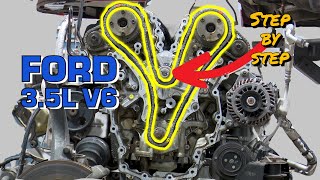
On a 2011-2014 Ford Edge with the 3.5L V6, code P0008 almost always means the primary timing chain has stretched. This is a serious, labor-intensive repair that also requires replacing the internal water pump, guides, and tensioners, typically costing $2,000-$3,500. The issue is common across many Ford and Lincoln models using the transverse-mounted 3.5L Cyclone V6.
- P0008 on your 2011-2014 Edge is a serious code that points directly to a stretched timing chain.
- This is not a simple sensor issue; do not waste money replacing cam or crank sensors.
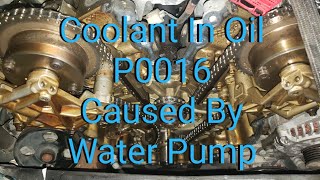
- The root cause is often linked to the failure of the internal water pump, which contaminates the engine oil.
- The correct repair is a complete timing service: replace the chain, guides, tensioners, and the water pump all at once.
- This is a very difficult and expensive repair (DIY 5/5, Shop Cost $2000+) that should be performed by a qualified professional.
What's Unique About the 2011-2014 Ford Edge
The 3.5L V6 Cyclone engine (also known as Duratec 35) in this generation of Ford Edge has two well-documented, related issues that lead to this code. First, the primary timing chain is known to stretch, often becoming noticeable around 100,000-150,000 miles. This directly causes the cam/crank misalignment. Second, the engine uses an internal, timing-chain-driven water pump for packaging reasons in its transverse application. When this pump's seals inevitably fail, it can leak coolant directly into the engine oil, compromising lubrication and drastically accelerating wear on the timing chain, guides, and tensioners.
Symptoms You May Notice
- Check Engine Light is on
- Engine runs rough, especially at idle
- Rattling, scraping, or whirring noise from the front of theengine (timing cover area), especially on a cold start.
- Reduced engine power and poor acceleration
- Lower than normal fuel economy
- Difficulty starting the engine
- Engine may go into 'limp mode' with reduced power.
- Replacing only the camshaft or crankshaft position sensors. While these sensors report the problem, they are rarely the cause of it. The issue is almost always the mechanical timing components.
- Replacing only the VCT solenoids. While faulty solenoids can cause other timing codes (like P0011/P0012), they are not the typical root cause for the P0008 correlation code, which points to a base timing issue (stretched chain).
- Performing an oil change to fix the code. While correct oil level and condition are critical for the VCT system, a simple oil change will not fix a mechanically stretched chain or failed water pump.
Most Likely Causes
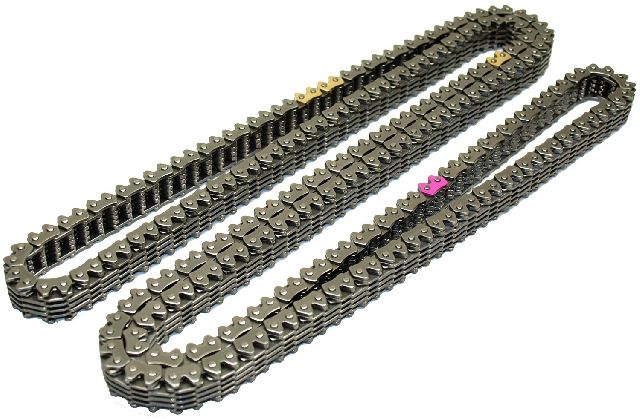
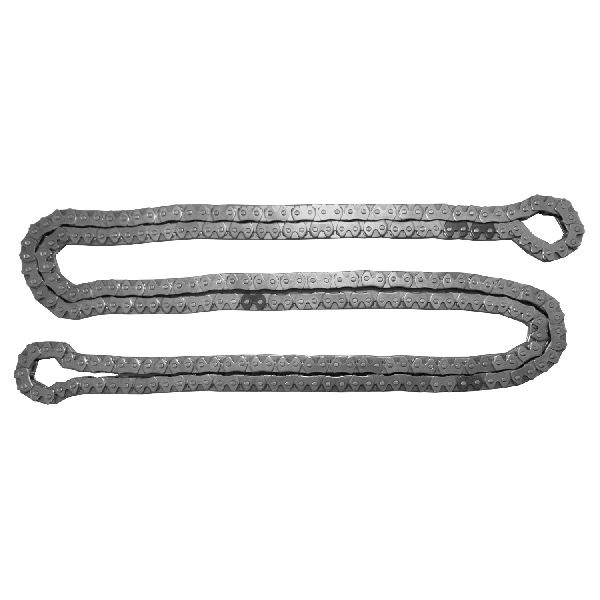
- Stretched Primary Timing Chain 🔴 High Probability → Shop Engine Timing Chain The 3.5L Cyclone engine family is known for timing chain stretch, often exacerbated by long oil change intervals or coolant contamination from a failing water pump. The stretch introduces slack, altering the cam/crank correlation beyond what the PCM can compensate for.
How to confirm: A professional scan tool can monitor desired vs. actual camshaft position angles (PIDs). A persistent deviation that the PCM cannot correct confirms a timing issue. Physical confirmation requires removing the timing cover to measure chain slack, which is a significant job.
Typical fix: Replace the primary timing chain, all guides, and all tensioners. It is critical to also replace the water pump and VCT phasers at the same time.
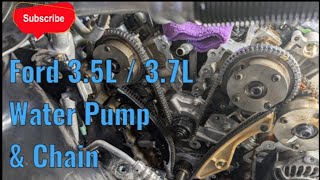
Est. part cost: $400-$800 for a complete kit - Failing Internal Water Pump 🔴 High Probability The water pump is located inside the engine and is driven by the timing chain. When its bearing or seals fail, it can leak coolant into the oil pan, contaminating the oil and destroying its lubricating properties, which rapidly accelerates timing chain wear. This is a widely criticized design flaw of the transverse 3.5L/3.7L Cyclone engines.
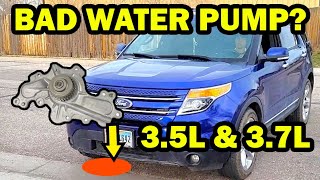
How to confirm: Check for a 'milky' or 'chocolate milk' appearance on the oil dipstick or oil cap. Also, check for unexplained coolant loss. A weep hole located behind the alternator, just above a freeze plug, may drip 🎬 Watch: How to spot a water pump leak in this corner coolant as an early warning of internal seal failure.
Typical fix: The water pump must be replaced. This is done in conjunction with the timing chain service as the labor is nearly identical. Failing to replace the pump during a timing job is a major risk.
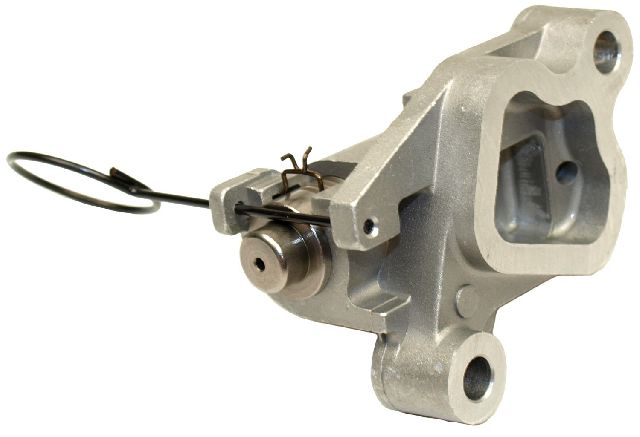
Est. part cost: $100-$250 - Worn Timing Chain Tensioners and Guides 🟡 Medium Probability → Shop Engine Timing Chain These plastic and metal components wear down from contact with the chain and can break, especially with contaminated oil or a stretched chain. Broken guide pieces can fall into the oil pan and potentially clog the oil pump pickup tube.
How to confirm: Diagnosed during physical inspection when the timing cover is removed. Broken pieces of the plastic guides may be found in the oil pan. A rattling noise is a strong indicator.
Typical fix: Always replaced as part of a complete timing chain service kit. Individual replacement is not recommended.
Est. part cost: Included in timing kit - Low or Dirty Engine Oil ⚪ Low Probability The Variable Camshaft Timing (VCT) system uses oil pressure to adjust timing. Low or contaminated oil can cause the VCT phasers to respond slowly or not at all, potentially triggering a timing correlation code. This is more often a contributing factor that accelerates chain wear rather than the sole cause of P0008.
How to confirm: Check the oil level and condition. If it's low or appears dirty/milky, an oil change may be a first step, but it's unlikely to fix an existing mechanical issue if P0008 is already set.
Typical fix: Change the oil and filter with the correct specification (5W-20). However, this is usually a contributing factor, not the root cause, if P0008 is present.
Est. part cost: $40-$70
Rare But Worth Checking
- Failing VCT Solenoid: A solenoid can get stuck or clogged with debris, preventing proper VCT phaser operation. This is easier to replace than the timing chain and worth testing first if symptoms are intermittent. Clogged solenoids are often a symptom of a larger problem (like debris from worn guides).
- Failing Camshaft or Crankshaft Position Sensor: → Shop Engine Crankshaft Position Sensor While these sensors can fail, they are an uncommon cause for P0008 on this engine. They are more likely to set sensor-specific circuit codes (e.g., P0340, P0335).
- Clogged VVT Phaser/Actuator: The phaser itself can become clogged with sludge or debris, preventing it from adjusting cam timing correctly. They are typically replaced during a full timing job.
Diagnosis Steps
- Verify engine oil level and condition. If the oil is milky, stop immediately as coolant is present, indicating a likely water pump failure.
- Scan for all DTCs. Note if other codes like P0016-P0019 or P0009 are present, which strengthens the diagnosis of a stretched primary timing chain.
- Using a professional scan tool (like Ford IDS or FORScan), monitor the live data PID for VCT_ADV_ERR (VCT Advance Error). This value should be close to 0° at idle. A consistent deviation of more than +/- 5 degrees indicates a mechanical timing problem.
- Listen for a rattling or scraping noise from the passenger side of the engine, where the timing cover is located. This noise is a classic symptom of a loose timing chain, especially during a cold start.
- Inspect the water pump weep hole, located behind the alternator, for any signs 🎬 Watch: How to diagnose a failing internal water pump of coolant leakage or crusting.
- If the above steps point to a timing issue, the next step is to remove the valve cover and/or timing cover for a physical inspection of the chain, guides, and tensioners. This is a labor-intensive process.
Parts You'll Likely Need
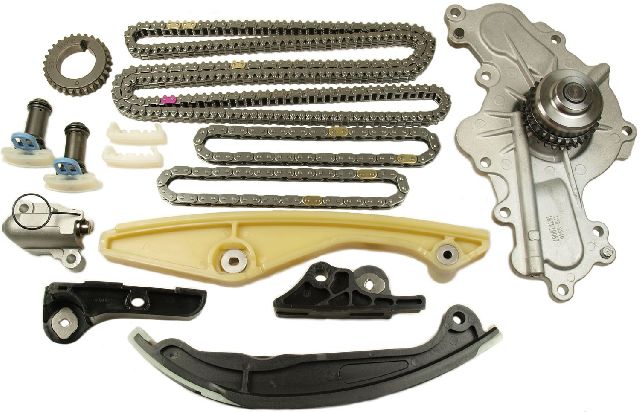
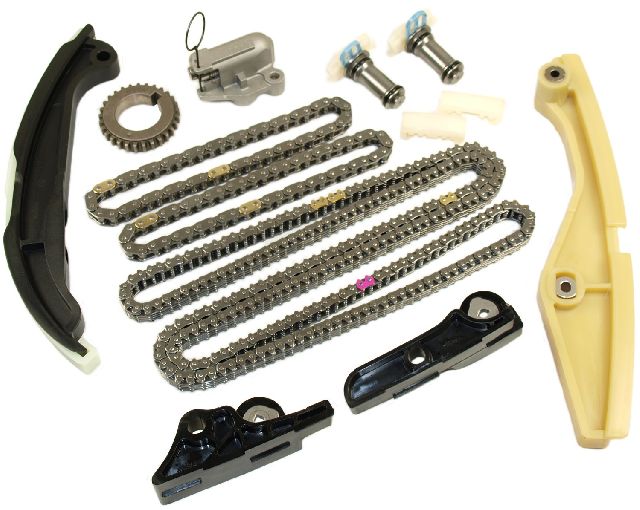
- Timing Chain Kit
(OEM #Partial numbers include AT4Z-6268-C (Primary Chain), JL3Z-6L266-A (Primary Tensioner). A full OEM kit is the best approach.)— This is the primary failure point. A complete kit should include the primary chain, secondary chains, all guides, tensioners, and VCT phasers/sprockets.
Trusted brands: Motorcraft, Cloyes
OEM price range: $500-$900
Aftermarket price range: $300-$600 - Water Pump
(OEM #Motorcraft PW488 or PW537 depending on production date.)— Because the water pump is internal and driven by the timing chain, it MUST be replaced during a timing chain service to prevent premature failure and catastrophic coolant/oil mixing.
Trusted brands: Motorcraft, Gates, AISIN
OEM price range: $150-$250
Aftermarket price range: $80-$150 - VCT Solenoids (Oil Control Valves)
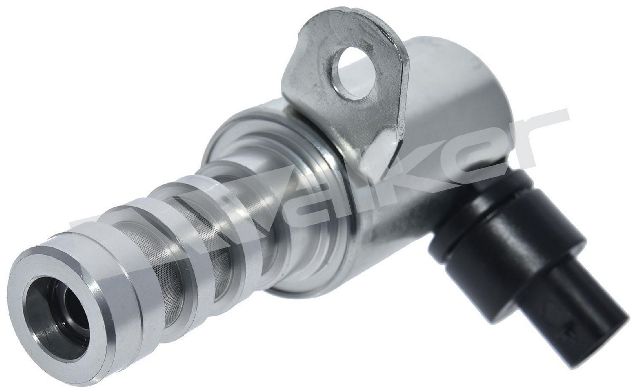
(OEM #AT4Z-6M280-A, AT4Z-6M280-B)— Often recommended to replace while the front cover is off, as they can become clogged with debris from the failing timing components. There are four total (2 intake, 2 exhaust).
Trusted brands: Motorcraft, Dorman
OEM price range: $40-$70 each
Aftermarket price range: $20-$50 each
Related Codes That Often Appear With This One
- P0016 — Crankshaft/Camshaft Correlation (Bank 1, Sensor A). This is a more specific version of P0008, pointing to the intake cam on Bank 1.
- P0017 — Crankshaft/Camshaft Correlation (Bank 1, Sensor B). Points to the exhaust cam on Bank 1.
- P0009 — Engine Position System Performance (Bank 2). If both P0008 and P0009 are present, it's an almost certain confirmation of a stretched primary timing chain affecting both banks.
- P0018 — Crankshaft/Camshaft Correlation (Bank 2, Sensor A). Points to the intake cam on Bank 2.
- P0019 — Crankshaft/Camshaft Correlation (Bank 2, Sensor B). Points to the exhaust cam on Bank 2.
Platform-Specific Known Issues
- The transverse-mounted 3.5L V6 has an internal, timing-chain-driven water pump which is a known major failure point. Failure often leads to coolant contaminating the engine oil, which in turn causes accelerated timing chain wear and the P0008 code.
- Owner experiences on forums like fordedgeforum.com consistently point to timing chain stretch as the cause for P0008, with repair quotes frequently in the $2,500-$4,000 range at dealerships or independent shops.
- A Reddit user on r/FordEdge shared a repair bill of around $2,000 for a water pump replacement, with commenters noting this was a good price and reinforcing the need to do the timing components at the same time.
Mechanic-Grade Diagnostic Values
- VCT Solenoid Internal Resistance — expected: 5 to 15 Ohms. Failure: A reading outside this range indicates a faulty solenoid coil.
- Scan Tool PID: VCT_ADV_ERR (VCT Advance Error) at idle — expected: 0° (+/- 5°). Failure: A consistent reading outside the +/- 5° range indicates a cam/crank correlation error that the system cannot correct, pointing to a mechanical fault like a stretched chain.
- Engine Oil Pressure at Hot Idle (via mechanical gauge) — expected: Minimum 15 PSI. Failure: Pressure below 15 PSI can cause erratic VCT operation and trigger various timing codes.
- Cam Phaser Bolt Torque Sequence (Torque-to-Yield bolts) — expected: Stage 1: Tighten to 30 ft-lbs. Stage 2: Loosen one full turn. Stage 3: Tighten to 18 ft-lbs. Stage 4: Tighten an additional 180 degrees. New bolts are required.. Failure: Improper torquing can lead to bolt failure or damage to the new cam phaser, such as shearing the internal pins.
Scan Tool Commands That Help
- Ford IDS or FORScan: VCT Solenoid Bidirectional Control — To test VCT solenoid functionality before major disassembly. The command cycles the solenoid on and off, and a technician should listen for an audible click and observe a change in idle quality. This helps isolate a faulty solenoid from a mechanical chain/phaser issue.
- Ford IDS: Reset All Adaptations / KAM Reset — After replacing timing components, VCT solenoids, or sensors. This command clears the Powertrain Control Module's learned values (Keep Alive Memory), forcing it to relearn timing parameters with the new parts.
Wiring & Ground Locations
- Water Pump Weep Hole — Located on the engine block behind the alternator. Looking from the front of the vehicle, it is a small notch or hole just above a freeze plug.. This is the primary external indicator of an internal water pump seal failure. Coolant dripping or crusting from this hole is an early warning that coolant may be leaking into the engine oil, which accelerates timing chain wear and causes P0008.
- VCT Solenoid Connectors — The electrical connectors for the four VCT solenoids are located on top of the valve covers, near the front of the engine.. These are the primary points for electrical testing of the VCT solenoids (checking for power, ground, and resistance). A poor connection here can mimic a failed solenoid.
Real Owner Repair Stories
- Synthesized from multiple owner reports and technician videos (2011 Ford F-150 3.5L (same engine family and failure mode), 147,000 miles) — Check engine light with codes P0016 and P0018. The owner continued to drive the vehicle, revving the engine to overcome poor performance.
❌ Tried (didn't work) Continuing to drive the vehicle despite the check engine light and drivability issues.
✅ What actually fixed it The engine ultimately failed catastrophically. The stretched timing chain allowed the pistons to contact the intake valves, causing them to bend and resulting in zero compression across all cylinders. The only fix at this point was a complete engine replacement. This serves as a cautionary tale against ignoring P0008 and related timing codes.
OEM Part Supersession History
BL3Z-6268-A, AT4Z-6268-B→AT4Z-6268-C— Ford updated the primary timing chain design to improve durability and reduce stretch.
Heads up: Using the older part numbers is not recommended as they are prone to the original stretching issue. Always use the latest revision.
Model Year Variations Within This Range
- 2011-2014: For the 2011 model year, the 3.5L V6 was updated to 285 hp, up from 265 hp in the 2007-2010 models. However, the fundamental design of the timing system and internal water pump, which is the root cause of P0008, remained consistent through the 2011-2014 period for the transverse 3.5L engine.
- 2011-2014: The broader 3.5L/3.7L Cyclone engine family has multiple variations (e.g., roller vs. inverted tooth chains, 2 vs. 4 VVT phasers, internal vs. external water pumps) depending on the vehicle platform (FWD/RWD) and induction (NA/Turbo). It is critical to verify the correct timing kit for the specific vehicle VIN.
Diagnostic Flowchart
Other Known Issues on This Vehicle
Issues unrelated to this code that are worth knowing about as an owner of this generation:
- Power Transfer Unit (PTU) Failure (AWD Models) 🔴 High — Common, especially on earlier models (2007-2014). The unit is located near the hot exhaust with no drain plug, causing the fluid to cook and break down, leading to seal and gear failure. (Ref: No recall, but it is a widely documented problem. Aftermarket solutions with drain plugs and heat shields exist.)
- Door Ajar Sensor Malfunction 🟡 Low — Extremely common on 2011-2013 models. The sensor within the door latch fails, causing the 'Door Ajar' light to stay on, which keeps the interior lights on and drains the battery. (Ref: Ford issued TSB 18-2013 for this issue, outlining a cleaning procedure. Many owners resort to disabling the switch or replacing the latch assembly.)
- Electronic Throttle Body Failure 🟠 Medium — Affects many Ford models from this era, including the Edge. Can cause sudden deceleration into 'limp mode', rough idle, or stalling. (Ref: Subject of a class-action lawsuit and numerous complaints to the NHTSA. Ford extended warranty coverage for some vehicles but not all.)
- Brake Booster Failure 🔴 High — Common on 2007-2015 models. The internal diaphragm can tear, leading to a hard brake pedal, hissing noise, and loss of power brake assist. (Ref: Ford issued Customer Satisfaction Program 13N02 and Recall 23S12 for certain years to address this.)
- Transmission Input Speed/Output Speed Sensor (TSS/OSS) Failure 🟠 Medium — Common on earlier models, can cause erratic speedometer behavior, 'ODO Error' message, and harsh shifting as the transmission enters a fail-safe mode.
Used vs. New Parts: Buying Guide for This Vehicle
When a used part is the smart pick: For this specific repair, using used parts is strongly discouraged. The primary failure components (timing chain, tensioners, guides, water pump) are all wear items. Using a used part carries a very high risk of premature failure, forcing a repeat of a 10-15 hour labor job.
What to inspect on the donor part:
- Not applicable. Do not use used wear parts for this repair.
OEM-only on this vehicle (don't cheap out):
- Timing Chain Kit
- Water Pump
Aftermarket brands forum-validated for this vehicle:
- Cloyes (for timing chain kits)
- Gates (for water pumps)
- AISIN (for water pumps)
Brands owners have reported issues with on this vehicle:
- Unbranded, low-cost timing kits from online marketplaces. While a major brand like Cloyes is generally reliable, even their kits can occasionally have a defective component like a tensioner, so careful inspection of all parts before installation is wise.
Real Owner Stories
Aggregated from forums and TSBs cited above. Mileages and costs reflect what owners reported in those sources.
2011-2014 Ford Edge 3.5L V6
Symptoms: Owner reported a water pump failure that required a significant repair.
What fixed it: Replacement of the internal water pump and timing components.
Cost: $2,000-$2,000
Source hint: Reddit r/FordEdge thread titled 'It finally happened'
2011-2014 Ford Edge 3.5L V6
Symptoms: Timing chain stretch leading to P0008 code.
What fixed it: Timing chain replacement.
Cost: $2,500-$4,000
Source hint: fordedgeforum.com owner experiences
Related OBD-II Codes
Frequently Asked Questions
Why is the 3.5L Cyclone engine in my Ford Edge prone to P0008?
I have a 'Door Ajar' light that won't turn off on my 2011 Ford Edge; is there a TSB for this?
Is it true that the water pump on the 3.5L V6 can destroy the engine?
How can I check if my water pump is failing before it ruins the timing chain?
What is the typical repair cost for a P0008 timing chain issue on a Ford Edge?
Should I replace the water pump while fixing the timing chain for P0008?
Helpful Videos
We Have This Part in Stock

The information in this article is provided for general reference and educational purposes only. Vehicle specifications, procedures, and part compatibility can vary by production date, trim level, and region. Always consult your vehicle's factory service manual and verify part numbers before purchasing or performing repairs. Safety-critical components such as airbags, seat belts, and braking systems should be installed by a qualified professional.
- Ford Edge:
- 🧭 Diagnostic Flowchart
- 🎬 Helpful Videos
- 🛍️ Shop This Part
- What's Unique About the 2011-2014 Ford Edge
- Symptoms You May Notice
- Most Likely Causes
- Rare But Worth Checking
- Diagnosis Steps
- Parts You'll Likely Need
- Related Codes That Often Appear With This One
- Platform-Specific Known Issues
- Mechanic-Grade Diagnostic Values
- Scan Tool Commands That Help
- Wiring & Ground Locations
- Real Owner Repair Stories
- OEM Part Supersession History
- Model Year Variations Within This Range
- Other Known Issues on This Vehicle
- Used vs. New Parts: Buying Guide for This Vehicle
- Real Owner Stories
- 2011-2014 Ford Edge 3.5L V6
- 2011-2014 Ford Edge 3.5L V6
- Related OBD-II Codes
- Frequently Asked Questions
- 🎟️ Get 5% Off