

P0008 on 2017-2020 Genesis G80 3.8L: Engine Timing Causes and Fixes
P0008 on a Genesis G80 3.8L almost always means the timing chain has stretched. This is a serious, labor-intensive repair costing $1,500-$3,000+. Always check the engine oil level and condition first, but prepare for a timing system replacement. Ignoring this code can lead to catastrophic engine failure.
- P0008 on your G80 3.8L is a serious code that points to a mechanical timing problem, not a simple sensor failure.
- The most likely cause is a stretched timing chain, which is a complex and expensive repair.
- Always check your engine oil level and condition first, as low or dirty oil can cause or worsen timing issues.
- Do not ignore this code. Driving with a significant timing issue risks catastrophic engine failure.
- This repair is not recommended for DIYers; it requires professional service due to its complexity.
What's Unique About the 2017-2020 Genesis G80
The Hyundai/Genesis Lambda II 3.8L V6 engine is generally considered robust, but like many modern engines with long timing chains, it can be susceptible to chain stretch and tensioner issues at higher mileage. The primary cause for P0008 is almost always the physical stretching of the timing chain itself, rather than sensor or solenoid failure. While Hyundai has faced class-action lawsuits and issued extended warranties for engine issues in other models (like the GM 3.6L V6, which has similar codes), the Lambda V6 in the G80 has not been subject to such widespread campaigns for this specific timing problem, making it a significant out-of-pocket repair for most owners outside of the standard powertrain warranty.
Symptoms You May Notice
- Check Engine Light is on
- Engine runs rough, especially at idle
- Rattling or whirring noise from the front of the engine, particularly on cold startup.
- Reduced engine power and poor acceleration.
- Lower than normal fuel economy.
- Engine may be hard to start or may stall.
- Replacing the camshaft position sensors or crankshaft position sensor. These sensors are almost never the cause of a P0008 code, as they are accurately reporting the timing problem.
Most Likely Causes
- Stretched Timing Chain and/or Failed Tensioners 🔴 High Probability → Shop Engine Timing Chain The Lambda II V6 engine family can experience timing chain stretch and tensioner failure over time, especially with extended oil change intervals or high mileage (typically over 80,000-100,000 miles). The tensioners are oil-pressure dependent, and if they lose pressure or fail, the chain develops slack.
How to confirm: An advanced scan tool can compare commanded vs. actual camshaft angles. A deviation of more than 4-5 degrees at idle usually confirms a mechanical timing issue. A rattling noise on startup is also a strong indicator. A mechanic can also use an oscilloscope to analyze the cam and crank sensor patterns to confirm the misalignment.
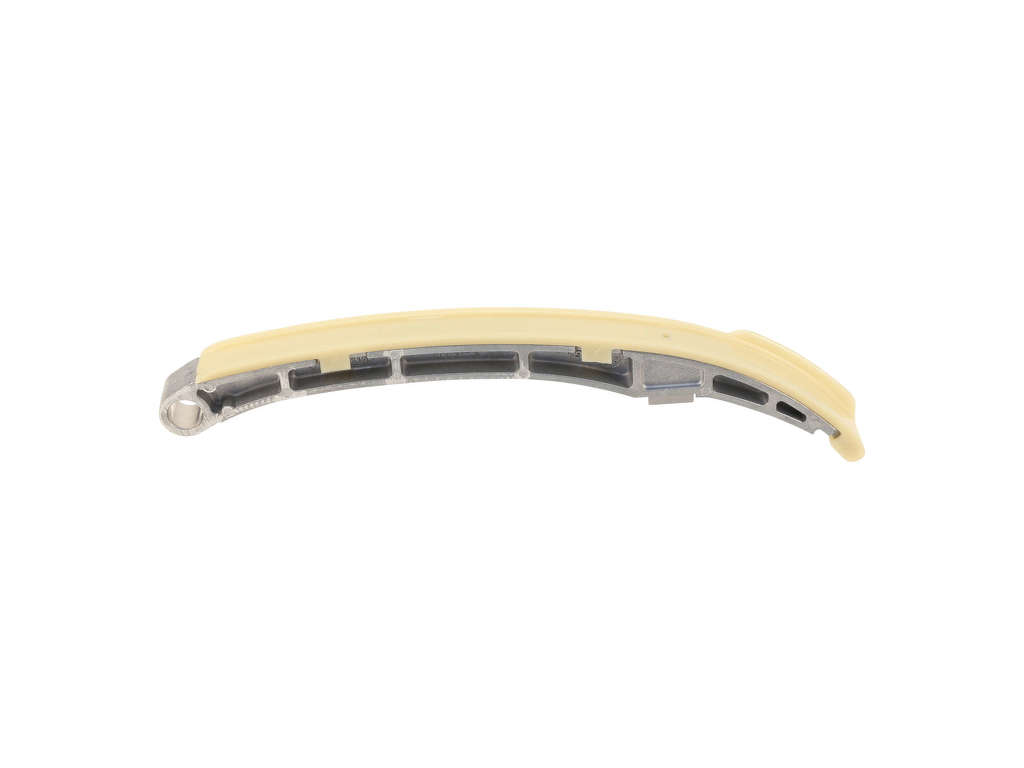
Typical fix: Complete replacement of the primary and secondary timing chains, all hydraulic tensioners, and all plastic chain guides. This is a labor-intensive job. It is also wise to replace the water pump during this service as it is driven by the timing chain and accessible during the repair.
Est. part cost: $400-$800 for a complete OEM kit. - Low or Dirty Engine Oil 🟡 Medium Probability The timing chain tensioners and camshaft phasers (CVVT) are hydraulically operated by engine oil pressure. Low oil levels, incorrect viscosity, or oil that is dirty or sludgy can starve these components, causing the tensioners to not function properly and leading to chain slack and timing correlation codes.
How to confirm: Check the engine oil level on the dipstick and inspect the oil's condition. If it is low, black, or sludgy, this could be the cause or a major contributing factor.
Typical fix: Perform an engine oil and filter change using a high-quality, full-synthetic oil of the manufacturer-specified viscosity (typically 5W-30). Clear the code and see if it returns. This is the first and most important diagnostic step.
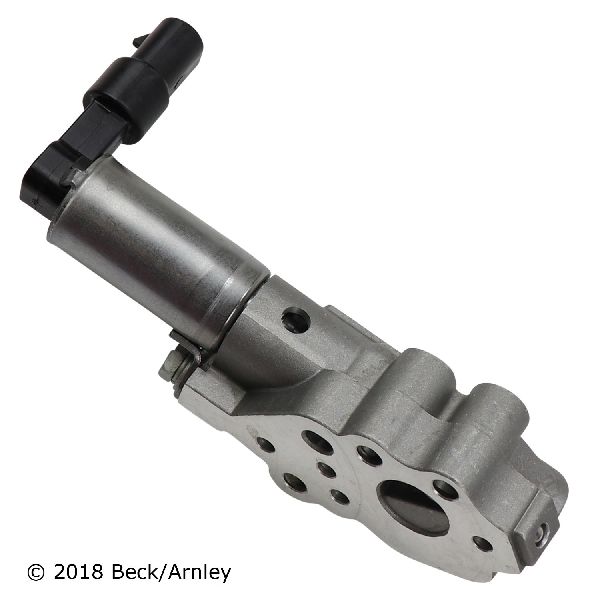
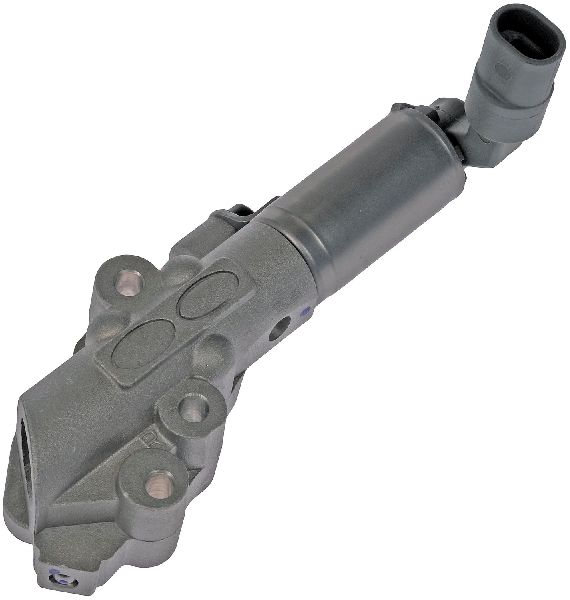
Est. part cost: $50-$100 for oil and filter. - Failing Oil Control Valve (OCV) / VVT Solenoid ⚪ Low Probability An OCV can become clogged with sludge or fail electrically, preventing proper camshaft phasing. While possible, it's less common for this to be the root cause of P0008 compared to chain stretch. It is more likely to set a more specific cam performance code.
How to confirm: Swap the Bank 1 and Bank 2 OCVs. If the code changes to P0009 (Bank 2), the OCV is faulty. A scan tool can also command the solenoid to check for response. Resistance can be tested with a multimeter and should be within 6.9-7.9 ohms.
Typical fix: Replace the faulty OCV for Bank 1. There is one for the intake and one for the exhaust camshaft.
Est. part cost: $60-$120 per solenoid.
Rare But Worth Checking
- Failed Camshaft or Crankshaft Position Sensor: → Shop Engine Crankshaft Position Sensor This is very rare. The P0008 code indicates the sensors are working correctly and are detecting a real mechanical misalignment. Do not replace sensors as a first step; it is almost always a waste of money for this specific code. A forum user with a 2015 Genesis 3.8L reported replacing all four cam sensors and OCVs without fixing the P0016/P0017 codes, which were ultimately caused by a stretched chain.
- Failed Camshaft Phaser (CVVT Actuator): → Shop Engine Camshaft The gear on the end of the camshaft can fail, but it is much more common for the timing chain to be the issue. Phaser failure is usually diagnosed during a timing chain replacement job and they are often replaced as part of a complete timing service.
Diagnosis Steps
- Check Engine Oil: Verify the oil level is full and the oil is clean and of the correct viscosity (5W-30 full synthetic is recommended). If not, perform an oil change, clear the code, and re-test.
- Scan for Codes: Use an OBD-II scanner to confirm P0008 and check for any other related codes (like P0009, P0016, P0017). The presence of multiple correlation codes strongly points to a mechanical fault.
- Use an Advanced Scan Tool: Monitor live data for the camshaft and crankshaft positions. Look at the commanded vs. actual cam timing angles for Bank 1. A deviation greater than 4-5 degrees at idle strongly indicates a stretched timing chain.
- Inspect OCVs (Optional): If scan tool data is inconclusive, you can swap the Bank 1 and Bank 2 Oil Control Valves to see if the fault code moves to the other bank (P0009). You can also test the solenoid's resistance (spec: 6.9-7.9 ohms).
- Mechanical Inspection: If the steps above confirm a timing issue, the next step is mechanical inspection, which involves removing the engine's front timing cover to visually inspect the timing chain, guides, and tensioners for wear, slack, or damage. This is a labor-intensive step and usually proceeds directly to replacement.
Parts You'll Likely Need
- Timing Chain Kit
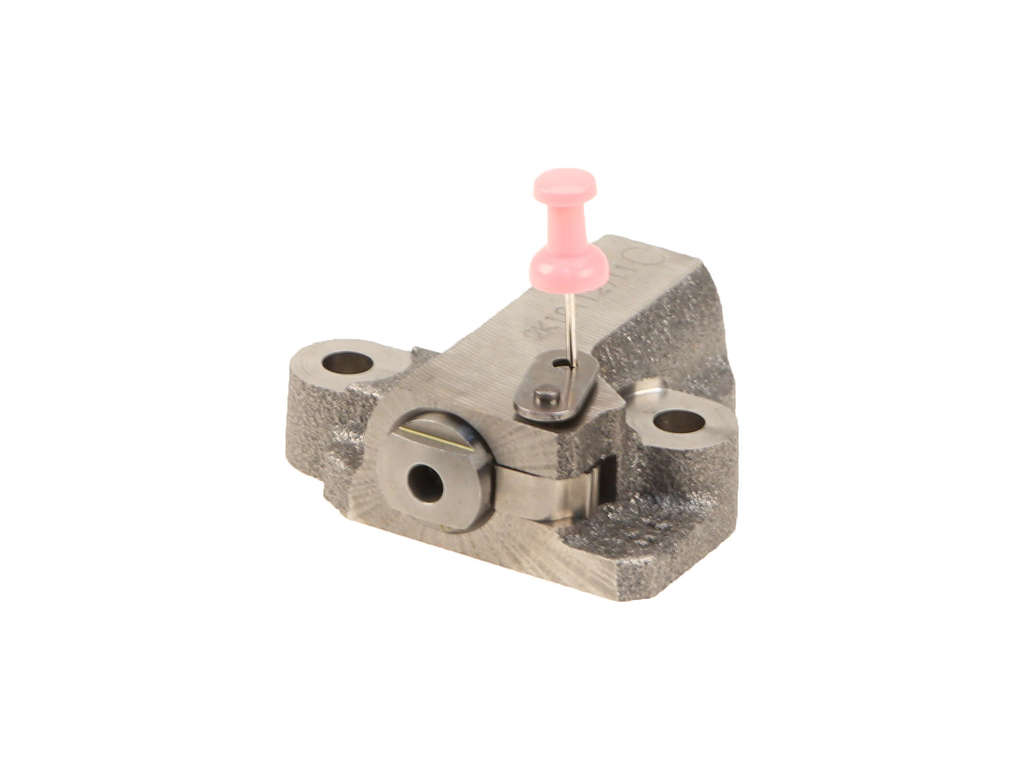
(OEM #24321-3L100)— This is the most common failure. A complete kit should be used, including the primary chain, two secondary chains (part #24321-3L100 is for the secondary chains), primary chain (#24312-3C100), all tensioners, and all guides to ensure a lasting repair.
Trusted brands: Hyundai/Kia Genuine
OEM price range: $400-$800
Aftermarket price range: $250-$500 - Oil Control Valve (VVT Solenoid)
(OEM #Intake: 24355-3L100, Exhaust: 24360-3CAA2)— Only needed if diagnosis confirms it is the point of failure, which is less common for this code. There is one for the intake and one for the exhaust camshaft on Bank 1.
Trusted brands: Hyundai/Kia Genuine, Delphi, Denso
OEM price range: $80-$150
Aftermarket price range: $50-$100
Related Codes That Often Appear With This One
- P0009 — This is the identical code but for Bank 2. If both P0008 and P0009 are present, it's a near-certain confirmation that the primary timing chain (which serves both banks) is stretched.
- P0016 — Crankshaft/Camshaft Position Correlation Bank 1 Sensor 'A' (Intake). This is a more specific version of P0008, pointing to the intake camshaft on Bank 1. It often appears with P0008 and strongly suggests a base timing issue.
- P0017 — Crankshaft/Camshaft Position Correlation Bank 1 Sensor 'B' (Exhaust). This points to a timing issue with the exhaust camshaft on Bank 1 and frequently accompanies P0008 and P0016, further confirming a mechanical timing problem on the entire bank.
Platform-Specific Known Issues
- The Lambda II V6 engine family has a known history of timing chain stretch and tensioner issues, particularly at mileages over 80,000-100,000 miles.
- source — A user on the Genesis Owners forum with a 2015 Hyundai Genesis 3.8 (same engine) reported codes P0016 and P0017. After the owner unsuccessfully replaced all four Cam Position Sensors and all four OCVs, the dealer diagnosed a stretched timing chain with a repair quote over $4,000. This highlights that for these codes, the root cause is often the chain itself, not the sensors.
Mechanic-Grade Diagnostic Values
- Oil Control Valve (OCV) Coil Resistance — expected: 6.9 - 7.9 Ohms at 68°F (20°C). Failure: A reading of infinity (open circuit), near-zero (short circuit), or significantly outside the specified range.
- Crankshaft Position Sensor (CKPS) Coil Resistance — expected: 774 - 946 Ohms at 68°F (20°C). Failure: A reading outside this range indicates a faulty sensor coil.
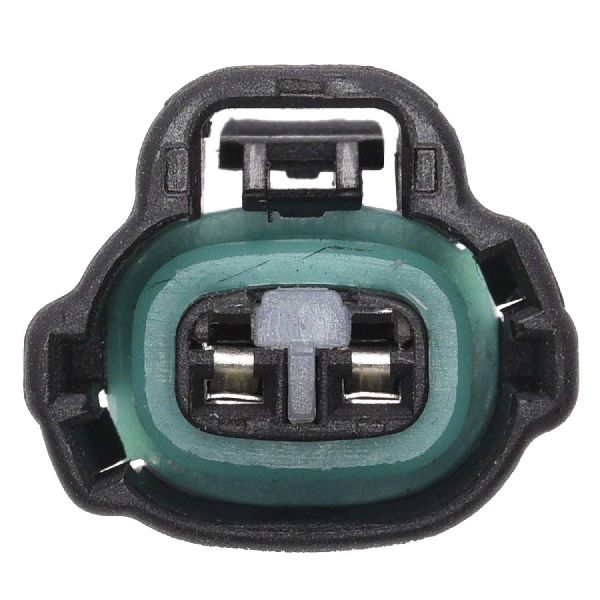
- OCV Connector Voltage (Key On, Engine Off) — expected: Pin 1 (Power): ~12V (Battery Voltage). Pin 2 (Control): 0V.. Failure: No voltage on Pin 1 suggests a power supply circuit fault (check fuses). Any voltage on Pin 2 suggests a short to power on the control line from the ECM.
- Camshaft Position Sensor (CMPS) Signal Voltage — expected: Digital square wave signal switching between approx. 0V and 5V.. Failure: A HIGH signal should be > 3.8V and a LOW signal < 2.0V. A LOW signal consistently above 0.6V can indicate a bad ground circuit.
- Scan Tool Cam/Crank Deviation Angle (at idle) — expected: Less than 4-5 degrees.. Failure: A consistent deviation of more than 4-5 degrees between commanded and actual camshaft position indicates a mechanical timing issue (stretched chain).
Scan Tool Commands That Help
- Hyundai GDS (Global Diagnostic System): CVVT Actuator Test (Active Test) — This bidirectional command manually activates an OCV solenoid at idle. A healthy response is the engine stumbling or stalling. If there is no change in engine operation, it confirms a fault in the OCV, its wiring, a clogged oil passage, or a stuck phaser.
- Hyundai GDS (Global Diagnostic System): Resetting ECVVT values / Cam Position Learning Reset — This function must be performed after replacing a CVVT phaser, timing chain, or other major timing components. It erases the ECM's learned camshaft position values and forces it to relearn the new baseline positions.
- Hyundai GDS (Global Diagnostic System): Flight Record — For intermittent timing faults, this function can be activated to continuously record engine data. When the fault occurs, the technician can trigger it to save the data from the preceding minutes, allowing for analysis of sensor data leading up to the event.
Wiring & Ground Locations
- 91885-D2010 — Engine bay, connecting the engine block to the chassis.. This is the part number for the main engine ground wire assembly. A poor engine ground can cause erratic behavior in sensors like the Camshaft and Crankshaft Position Sensors, potentially leading to incorrect data and fault codes. Verifying this ground connection is a key electrical diagnostic step.
- 91880-B1510 / 91880-B1520 — Connects the transmission housing to the chassis.. This is the part number for the transmission ground wire assembly (2WD/4WD). Since the Crankshaft Position Sensor is often mounted near the transmission bell housing, a solid ground connection here is crucial for a clean sensor signal.
Real Owner Repair Stories
- Genesis Owners Forum (2015 Hyundai Genesis 3.8L (Lambda II engine)) — Check Engine Light with codes P0016 and P0017.
❌ Tried (didn't work) Replaced all four Camshaft Position Sensors., Replaced all four Oil Control Valves (OCVs).
✅ What actually fixed it A dealer diagnosis confirmed a stretched timing chain. The final repair was a complete timing chain replacement, which resolved the codes. The quoted cost was over $4,000.
OEM Part Supersession History
24355-3L100→24355-3L100— No supersession found, part number appears stable.
Heads up: A parts catalog notes for this Intake OCV: '2018 Model Years, Intake Control Valve Solenoids Are Not Used.' This is unusual and may be a catalog error, but technicians working on a 2018 model should verify the physical presence of the intake OCVs before ordering parts.
Model Year Variations Within This Range
- 2018: A parts catalog includes a note suggesting that the 2018 3.8L model may not use intake OCVs (Part #24355-3L100). This should be physically verified before diagnosis or parts ordering, as it would represent a significant change from other model years within this generation.
Diagnostic Flowchart
Other Known Issues on This Vehicle
Issues unrelated to this code that are worth knowing about as an owner of this generation:
- ABS Module Electrical Short / Fire Risk 🔴 High — Common enough to trigger multiple recalls (e.g., NHTSA 21V358000, 19V538000). Affects a wide range of model years. (Ref: Recall 201 / NHTSA 21V358000. Owners are advised to park outdoors away from structures until the recall fix (fuse replacement) is performed.)
- Carbon Buildup on Intake Valves 🟠 Medium — A common issue for all Gasoline Direct Injection (GDI) engines, including the Lambda II. Typically becomes noticeable after 80,000-100,000 miles, causing rough idle, misfires, and reduced power.
- Excessive Oil Consumption 🟠 Medium — Some owners report higher than normal oil consumption. Hyundai has issued general TSBs for oil consumption inspection across many models. (Ref: TSB 23-EM-007H (Combustion Chamber Cleaning Procedure))
- Starter Solenoid Water Intrusion 🔴 High — Affects 2015-2019 models. Water can enter the starter solenoid, causing an electrical short and potential engine compartment fire. (Ref: Recall 254 / NHTSA 24V107000. The fix involves installing a remedy relay kit.)
- Harsh Transmission Shifting 🟡 Low — Some owners of earlier models (particularly 2017-2018) reported harsh shifting or banging sounds at low speeds (20-40 km/h). Often addressed with software resets by the dealer.
Used vs. New Parts: Buying Guide for This Vehicle
When a used part is the smart pick: For minor, related faults ONLY (not the primary P0008 cause), a used Oil Control Valve (OCV) or Cam/Crank sensor from a low-mileage, reputable salvage yard can be a cost-effective diagnostic part or replacement. It is not recommended for the primary fix.
Donor-vehicle mileage cap: roughly under 60000 miles for the part to have meaningful remaining life.
What to inspect on the donor part:
- Verify the donor vehicle's mileage.
- Inspect the part for any physical damage, cracks, or corrosion on electrical connectors.
- For OCVs, check the screen for any signs of metallic debris or heavy sludge, which indicates the donor engine was poorly maintained.
OEM-only on this vehicle (don't cheap out):
- Timing Chain Kit (Chains, Guides, Tensioners)
- Camshaft Phasers (CVVT Actuators)
Aftermarket brands forum-validated for this vehicle:
- Denso (for sensors, often an OEM supplier)
- Delphi (for sensors, often an OEM supplier)
Brands owners have reported issues with on this vehicle:
- Unbranded 'white-box' timing chain kits from online marketplaces. The quality of the chain, guides, and tensioners is critical to engine longevity, and failures are common with low-quality kits.
Real Owner Stories
Aggregated from forums and TSBs cited above. Mileages and costs reflect what owners reported in those sources.
2015 Hyundai Genesis Sedan 3.8L V6
Symptoms: The owner observed codes P0016 and P0017. They attempted to fix the issue by replacing all four Cam Position Sensors and all four Oil Control Valves (OCVs), but the codes persisted.
What fixed it: A dealer diagnosis confirmed a stretched timing chain, requiring a complete timing chain replacement.
Cost: $4,000-$4,500
Source hint: Genesis Owners forum thread titled 'P0016 on 2017-2020 Genesis G80 crank-cam correlation causes and fixes'
Related OBD-II Codes
Frequently Asked Questions
My 2017 Genesis G80 is showing P0008; could this be related to the oil consumption issues mentioned in TSB 23-EM-007H?
I have a P0008 code and a rattling noise on cold startup. Is it safe to just replace the sensors?
Is there a specific oil I should use in my 3.8L V6 to prevent timing correlation codes?
What is the resistance specification for the Oil Control Valves on the Genesis 3.8L engine?
Is the P0008 code related to the ABS module fire recall on the G80?
How much deviation in camshaft angles is considered a failure on the Lambda II V6?
Helpful Videos

We Have This Part in Stock

The information in this article is provided for general reference and educational purposes only. Vehicle specifications, procedures, and part compatibility can vary by production date, trim level, and region. Always consult your vehicle's factory service manual and verify part numbers before purchasing or performing repairs. Safety-critical components such as airbags, seat belts, and braking systems should be installed by a qualified professional.
- Genesis G80:
- 🧭 Diagnostic Flowchart
- 🎬 Helpful Videos
- 🛍️ Shop This Part
- What's Unique About the 2017-2020 Genesis G80
- Symptoms You May Notice
- Most Likely Causes
- Rare But Worth Checking
- Diagnosis Steps
- Parts You'll Likely Need
- Related Codes That Often Appear With This One
- Platform-Specific Known Issues
- Mechanic-Grade Diagnostic Values
- Scan Tool Commands That Help
- Wiring & Ground Locations
- Real Owner Repair Stories
- OEM Part Supersession History
- Model Year Variations Within This Range
- Other Known Issues on This Vehicle
- Used vs. New Parts: Buying Guide for This Vehicle
- Real Owner Stories
- 2015 Hyundai Genesis Sedan 3.8L V6
- Related OBD-II Codes
- Frequently Asked Questions
- 🎟️ Get 5% Off