

P0008 on 2015-2017 GMC Acadia: Causes and Fixes for Engine Timing Issues
On a 2015-2017 GMC Acadia, the P0008 code almost always indicates stretched timing chains. This is a serious, labor-intensive repair that can cost between $2,500 and $4,000. Do not replace the cam or crank sensors as a first step; they are almost never the root cause on this platform.
- P0008 on a 2015-2017 Acadia means you likely have a stretched timing chain.
- This is a serious issue; stop driving the vehicle as soon as possible to prevent catastrophic engine failure.
- Do not waste money replacing camshaft or crankshaft sensors, as they are merely reporting the timing problem.
- The repair is expensive and complex, requiring the replacement of the timing chains, tensioners, and guides as a complete kit.
- Using high-quality full synthetic oil and changing it regularly is the best way to prolong the life of the new timing chains.
What's Unique About the 2015-2017 Gmc ACADIA
The first-generation GMC Acadia, along with its platform mates (Chevrolet Traverse and Buick Enclave), is widely known for premature timing chain wear and stretching on its 3.6L V6 engine. The 2015-2017 models use the LFX version of the 3.6L V6, which was an update to the earlier LLT engine and was intended to be more durable. However, while considered more robust than the 2007-2012 models, they are still susceptible to timing chain stretch, often due to the original chain design and oil life monitor systems that encouraged overly long oil change intervals. The problem is so common that it should be the first and primary suspicion when a P0008 code appears.
Diagnostic Flowchart
Tap your situation to follow the diagnostic path that matches what you're seeing on this vehicle.
Generation note: The 2015-2017 model years are part of the first generation Acadia (2007-2017). An all-new, smaller second generation was introduced for 2017, but GMC also sold the first-generation model as the 'Acadia Limited' for that year. This guide applies to all first-generation 2015-2017 models with the 3.6L V6 (LFX engine).
Symptoms You May Notice
- Check Engine Light is on
- Reduced engine power or sluggish acceleration
- Rough or unstable idle
- Rattling, scraping, or chain-slap noise from the engine (passenger side), especially on cold starts
- Difficulty starting the engine or a long crank time
- Decreased fuel economy
- Replacing the camshaft position sensors
- Replacing the crankshaft position sensor
Most Likely Causes
- Stretched Timing Chains 🔴 High Probability → Shop Engine Timing Chain The 3.6L V6 engine family (LLT and LFX) has a well-documented history of premature timing chain wear. This is often attributed to a combination of the original chain design and overly optimistic oil change intervals recommended by the oil life monitor, which can lead to oil degradation and accelerated wear.
How to confirm: A technician can use an advanced scan tool to observe the camshaft deviation angles (e.g., Camshaft Position Variance). Persistent deviation beyond a few degrees confirms a mechanical timing issue. Definitive confirmation requires a physical inspection by removing the engine's front cover to check for chain slack.
Typical fix: Replace all three timing chains (one primary, two secondary), all tensioners, guides, and associated seals and gaskets. This is always done as a complete kit using updated parts. It is also common to replace the water pump and oil pump at the same time since they are accessible during the repair.
Est. part cost: $300-$600 - Failed Timing Chain Tensioners 🔴 High Probability → Shop Engine Timing Chain The tensioners are hydraulic and rely on clean oil at the proper pressure to function. They can fail or weaken due to oil sludge or wear, leading to chain slack. This is often a contributing factor and a symptom of the main timing chain issue.
How to confirm: Diagnosed along with the timing chains. If a tensioner fails, the chain will be visibly loose upon inspection, and the tensioner piston will be over-extended.
Typical fix: Always replaced as part of a complete timing chain service. Never replace just a tensioner without also replacing the chains and guides.
Est. part cost: $100-$200 (if bought separately) - Low or Degraded Engine Oil 🟡 Medium Probability The timing chain tensioners and VVT phasers are hydraulic and require clean oil at the proper pressure to function correctly. Extended oil change intervals or low oil levels due to consumption can starve these components, accelerating wear on the entire timing system.
How to confirm: Check the oil level on the dipstick and inspect its condition. However, if the P0008 code is already set, damage to the chains has likely already occurred and an oil change alone will not fix it.
Typical fix: An oil change is critical maintenance but will not fix stretched chains. It is a preventative measure for the new components after the repair is complete.
Est. part cost: $50-$100
Rare But Worth Checking
- Slipped Crankshaft Reluctor Wheel: → Shop Engine Crankshaft GM service bulletin PIP3423P mentions that the reluctor wheel, which the crankshaft position sensor reads, can slip on the crankshaft. This will cause timing correlation codes even if the chains are mechanically sound. The bulletin provides measurements to verify its position. This is less common but a known issue across the GM 3.6L engine family.
- Faulty Camshaft Actuator Solenoid (Oil Control Valve): → Shop Engine Camshaft A solenoid stuck in one position can affect cam phasing and potentially trigger a correlation code. However, this would more commonly set a VVT-specific code (like P0016/P0017/P0018/P0019) first. Technicians can test these with a scan tool's bidirectional controls.
Diagnosis Steps
- Read the fault codes with an OBD-II scanner and note all codes present, especially P0009, P0016-P0019.
- Check the engine oil level and condition. A low or dirty oil level is a significant red flag and contributing factor.
- Listen for a distinct rattling or scraping noise from the front of the engine (passenger side), which is the sound of a loose timing chain, especially on a cold start.
- Use an advanced scan tool (like GM's GDS2) to monitor live data for camshaft position deviation for all four camshafts. Any significant, persistent deviation (more than +/- 4 degrees) points towards a mechanical timing issue.
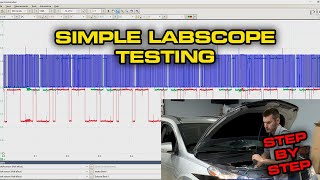
- If scan tool data is inconclusive, a technician may use an oscilloscope to compare the crankshaft and camshaft sensor patterns directly, which is a definitive way to diagnose a timing correlation issue electronically. 🎬 Watch: How to use a labscope to diagnose timing codes.
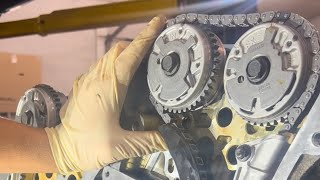
- If scan tool data confirms a deviation, the next step is to physically inspect the timing components. This involves significant labor to remove the engine's front timing cover.
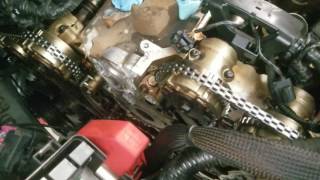
- During physical inspection, check for slack in the chains and look for extended tensioner pistons, which indicate chain stretch.
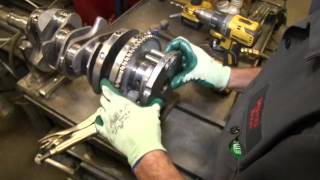
- If the chains appear tight, refer to TSB PIP3423P and inspect the crankshaft reluctor wheel for slippage. 🎬 See how the reluctor wheel can slip and cause issues.
Parts You'll Likely Need
- Timing Chain Kit
(OEM #12680750)— This is the definitive fix. A quality kit includes all three chains, all three tensioners, guides, and sometimes the idler sprockets, seals, and bolts. Using an updated GM or ACDelco kit is highly recommended, as GM released revised parts to address premature wear.
Trusted brands: ACDelco, Cloyes
OEM price range: $400-$600
Aftermarket price range: $250-$450
Related Codes That Often Appear With This One
- P0017 — Crankshaft Position - Camshaft Position Correlation (Bank 1, Exhaust Cam). Often set with P0008, indicating a timing discrepancy on the Bank 1 exhaust cam.
- P0016 — Crankshaft Position - Camshaft Position Correlation (Bank 1, Intake Cam). Often set with P0008, indicating a timing discrepancy on the Bank 1 intake cam.
- P0009 — Engine Position System Performance (Bank 2). Indicates the same timing issue is detected on the other cylinder bank (closer to the radiator). The presence of both P0008 and P0009 strongly points to a stretched primary timing chain affecting both banks.
- P0018 — Crankshaft Position - Camshaft Position Correlation (Bank 2, Intake Cam). Indicates a timing issue on Bank 2.
- P0019 — Crankshaft Position - Camshaft Position Correlation (Bank 2, Exhaust Cam). Indicates a timing issue on Bank 2.
Technical Service Bulletins (TSBs) & Recalls
- PIP3423P: Mentions that codes P0008, P0009, P0016, P0017, P0018, or P0019 may require inspection for loose timing chains or tensioners, and if those are okay, to inspect the crankshaft reluctor wheel for movement. [⭐ MANUFACTURER TSB — highest authority]
- 11340C: A Special Coverage Adjustment for earlier model years (e.g., 2007-2009) that extended warranty coverage for timing chain wear to 10 years/120,000 miles. It acknowledges premature wear as a known issue.
- 12-06-01-009F: Announces the availability of updated, more comprehensive timing chain service kits designed to repair worn timing chains that cause codes like P0008.
Platform-Specific Known Issues
- The 3.6L V6 engine in the first-generation Acadia is known for premature timing chain failure. GM issued a Special Coverage Adjustment (#11340C) for earlier model years (up to 2009) which extended the warranty to 10 years/120,000 miles for this issue. The 2015-2017 models are not covered by this expired program, but its existence confirms the well-documented nature of the problem.
- The manufacturer TSB #PIP3423P specifically instructs technicians to inspect for loose timing chains or tensioners when P0008 is present. If the chains are not the cause, it directs them to check for a slipped crankshaft reluctor wheel. [⭐ MANUFACTURER TSB — highest authority]
Mechanic-Grade Diagnostic Values
- VVT (Camshaft Actuator) Solenoid Resistance — expected: 8 to 13 Ohms. Failure: A reading outside this range (including an open or shorted circuit) indicates a faulty solenoid.
- Crankshaft Position Sensor (CKP) RPM Signal — expected: 100 to 500 RPM on a scan tool during engine cranking.. Failure: A reading of zero RPM during cranking while the engine is physically turning indicates a failed CKP sensor.
- Crankshaft Position Sensor (CKP) Power Supply — expected: A 3-wire Hall effect sensor should have a 5V reference voltage and a good ground from the ECM at the sensor connector with the key on, engine off.. Failure: Absence of the 5V reference or ground points to a wiring or ECM issue, not a sensor failure.
- Engine Oil Pressure (at normal operating temperature) — expected: Refer to GM Service Information for specific pressures at given RPMs. For example, a minimum of 24 psi at 1,000 RPM is a common specification.. Failure: Pressure below specification can starve the hydraulic tensioners and VVT phasers, leading to timing codes. This could be caused by a faulty oil pump relief valve.
Scan Tool Commands That Help
- GDS2 (GM Tech2Win): Camshaft Position Actuator Control — This bidirectional test allows a technician to command each VVT solenoid to a specific angle (e.g., 0 to 20 degrees) and observe the engine's response. It is used to verify that the solenoids and phasers are mechanically responding to commands, helping to rule them out as the cause before condemning the timing chains.
- GDS2 (GM Tech2Win): Crankshaft Position Variation Learn — This relearn procedure MUST be performed after replacing the crankshaft position sensor or the ECM. Failure to do so can result in misfire detection issues or other running problems.
Wiring & Ground Locations
- Bank 1 Camshaft Sensors & VVT Solenoids — On the passenger side of the engine (Bank 1), the two camshaft position sensors and two VVT solenoids are located on the front of the cylinder head, partially obscured by the ECM and its mounting bracket.. This is the physical location of the components on Bank 1 that are monitored for this code. Checking the integrity of their connectors and wiring harness for damage or oil contamination is a key diagnostic step.
- Engine Control Module (ECM) Connectors — The ECM is typically located on the passenger side of the engine bay. It has large multi-pin connectors (e.g., X1, X2).. The signal, power, and ground circuits for the camshaft and crankshaft sensors all terminate at the ECM. Verifying pin integrity and checking for corrosion at these main connectors can be necessary in complex electrical diagnostic situations.
Real Owner Repair Stories
- Camaro5 Chevy Camaro Forum, user 'secrethero89' (2011 Camaro V6 (LLT Engine, predecessor to LFX with same core issue) with 55,000 miles) — Check Engine Light with P0008 and P0009, sluggish performance, extreme power loss.
❌ Tried (didn't work) Replaced all timing chains with a Cloyes kit., Replaced all four VVT sprockets (cam phasers).
✅ What actually fixed it The crankshaft reluctor wheel had slipped by 1.5 teeth. A mechanic was able to carefully force the wheel back into its correct position without removing the crankshaft and then applied a small tack weld to prevent it from moving again. This resolved all codes and restored engine power.
"I Checked Everything" — The Actual Cause
- A common scenario for P0008 is when a full timing chain replacement does not fix the code. In these cases, the root cause is often a slipped crankshaft reluctor wheel. The timing chains and sensors are reporting a real timing deviation, but the deviation is caused by the crankshaft position sensor's reference wheel being in the wrong position on the crankshaft. Technicians who stop their diagnosis after confirming the new chains are tight will miss this underlying issue.
When the Usual Fixes Don't Work
- While stretched timing chains are the cause of P0008 in the vast majority of cases, there is significant evidence of repairs where a full timing chain replacement did not solve the problem. The most notable counter-evidence points to a slipped crankshaft reluctor wheel. In this scenario, the ECM receives conflicting (but accurate) data from the cam and crank sensors because the crank sensor's reference point has physically moved. Owners have spent thousands on a timing job only for the light to return immediately, with the final fix being a much more involved crankshaft repair or replacement.
OEM Part Supersession History
Various older timing chain part numbers→Kits like GM #12680750— GM released updated timing chain kits to address premature stretching and wear. TSB #12-06-01-009F announced these more robust, comprehensive kits for service repairs.
Heads up: Using older design chains will likely lead to a repeat failure.
Model Year Variations Within This Range
- 2015-2017: These models use the LFX version of the 3.6L V6. Compared to the earlier LLT engine, the LFX features cylinder heads with integrated exhaust manifolds and other internal changes intended to improve durability. However, the fundamental timing chain architecture remains similar, and they are still prone to the same P0008 failure, though potentially less frequently than 2009-2012 models.
Helpful Videos

We Have This Part in Stock


The information in this article is provided for general reference and educational purposes only. Vehicle specifications, procedures, and part compatibility can vary by production date, trim level, and region. Always consult your vehicle's factory service manual and verify part numbers before purchasing or performing repairs. Safety-critical components such as airbags, seat belts, and braking systems should be installed by a qualified professional.
- Gmc ACADIA:
- 🧭 Diagnostic Flowchart
- 🎬 Helpful Videos
- 🛍️ Shop This Part
- What's Unique About the 2015-2017 Gmc ACADIA
- Symptoms You May Notice
- Most Likely Causes
- Rare But Worth Checking
- Diagnosis Steps
- Parts You'll Likely Need
- Related Codes That Often Appear With This One
- Technical Service Bulletins (TSBs) & Recalls
- Platform-Specific Known Issues
- Mechanic-Grade Diagnostic Values
- Scan Tool Commands That Help
- Wiring & Ground Locations
- Real Owner Repair Stories
- "I Checked Everything" — The Actual Cause
- When the Usual Fixes Don't Work
- OEM Part Supersession History
- Model Year Variations Within This Range
- 🎟️ Get 5% Off