

P0008 on 2015-2016 GMC Canyon 3.6L: Stretched Timing Chain Causes and Fixes
On a 2015-2016 GMC Canyon with the 3.6L V6, code P0008 almost always means the timing chains have stretched. This is a serious, labor-intensive repair requiring replacement of the chains, tensioners, and guides, with shop costs typically ranging from $1,800 to $3,000+.
- P0008 on a 2015-2016 GMC Canyon 3.6L almost certainly means the timing chains have stretched and need to be replaced.
- This is a serious code. Do not continue driving the vehicle, as it could lead to catastrophic engine failure.
- The repair is complex and expensive, typically costing $1,800 to $3,500. This is not a DIY-friendly job.
- Do not waste money replacing camshaft or crankshaft sensors; they are almost never the root cause.
What's Unique About the 2015-2016 GMC Canyon
The 3.6L LFX V6 engine, while an improvement over its predecessor (the LLT), still has a known history of premature timing chain issues. This problem was so common on earlier GM 3.6L engines that special warranty extensions like #11340A were issued for older models. While the 2015-2016 models are considered more robust, they are still highly susceptible to this failure, making stretched timing chains the primary suspect for a P0008 code.
Symptoms You May Notice
- Check Engine Light is on
- Reduced engine power and poor acceleration
- Rough or unstable idle
- Rattling or scraping noise from the engine, especially on cold starts, that may last for a few seconds.
- Lower than normal fuel economy
- Remote start may be disabled by the system when the code is active.
- Replacing only the camshaft position sensors or crankshaft position sensor. These sensors are rarely the cause of the problem; they are simply reporting the mechanical misalignment.
Most Likely Causes
- Stretched Timing Chains 🔴 High Probability → Shop Engine Timing Chain The GM 3.6L V6 engine family has a well-documented history of premature timing chain wear, even in the updated LFX version. Wear in the chain link pin holes causes the chains to elongate, or "stretch." This is the overwhelming cause of P0008 on this platform.
How to confirm: A technician can use an advanced scan tool to monitor the camshaft position deviation data. A physical inspection, which is labor-intensive, is the ultimate confirmation by checking the extension of the tensioner plungers.
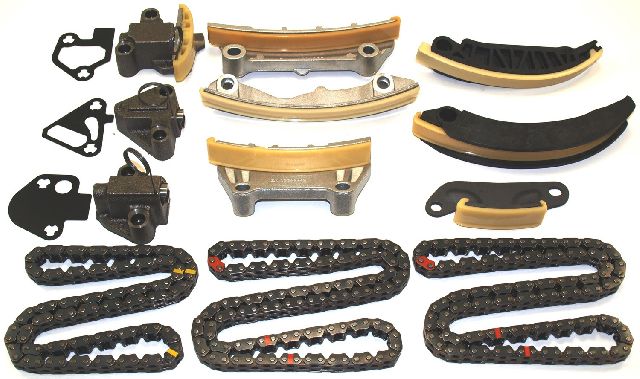
Typical fix: Replace all three timing chains, all tensioners, and all guides as a complete kit. It is critical to use updated, high-quality parts (such as ACDelco) to prevent recurrence.
Est. part cost: $400-$800 - Low or Degraded Engine Oil 🟡 Medium Probability The timing chain tensioners are hydraulically operated by engine oil. Low oil levels or oil that has broken down from extended change intervals can lead to inadequate tensioner performance, accelerating chain wear. The original oil life monitoring system calibration on earlier GM 3.6L engines was criticized for allowing excessively long intervals, contributing to this problem.
How to confirm: Check the engine oil level on the dipstick and inspect its condition. If the oil is very low, dark, or sludgy, it is a contributing factor.
Typical fix: Change the oil and filter using a high-quality full synthetic oil of the correct viscosity (dexos approved). This will not fix already stretched chains but is critical for the longevity of new parts.
Est. part cost: $50-$100
Rare But Worth Checking
- Slipped Crankshaft Reluctor Wheel: → Shop Engine Crankshaft This is a rare but serious issue documented in GM Technical Service Bulletin PIP3423P. The reluctor wheel, which the crankshaft position sensor reads, can physically move on the crankshaft, causing a persistent timing correlation code even after the chains are replaced. Confirming this may require a borescope inserted through the crank sensor hole or oil pan removal, and the fix is a new crankshaft.
- Faulty Camshaft or Crankshaft Position Sensor: → Shop Engine Crankshaft Position Sensor While possible, this is extremely unlikely to be the cause of P0008 on this engine. The sensors are usually just accurately reporting the mechanical timing fault. Do not replace sensors as a first step.
- Failed or Clogged VVT Solenoid: A camshaft actuator solenoid that is stuck or has clogged oil screens can cause incorrect camshaft phasing and trigger correlation codes. While less common than chain stretch for P0008, it's a plausible cause and is easier to inspect/replace than the chains.
Diagnosis Steps
- Verify the code with an OBD-II scanner.
- Check the engine oil level and condition. Top up or change if necessary. An oil change alone will not fix a stretched chain.
- Using an advanced scan tool, monitor the camshaft and crankshaft position sensor data to confirm a correlation issue. Look for cam phase angle deviations.
- Listen for any rattling or whining noises from the front of the engine (timing cover area), which would indicate loose chains or worn guides, especially on a cold start. 🎬 Watch: How to diagnose and fix VVT startup clattering Manufacturer Bulletin #PIP3423P specifically advises technicians to inspect for loose timing chains or tensioners when this code is present.
- If chain stretch is confirmed via scan data or noise, the recommended repair is to replace the timing chains, tensioners, and guides.
- If codes persist after chain replacement, investigate the possibility of a slipped crankshaft reluctor wheel as per TSB PIP3423P.
Parts You'll Likely Need
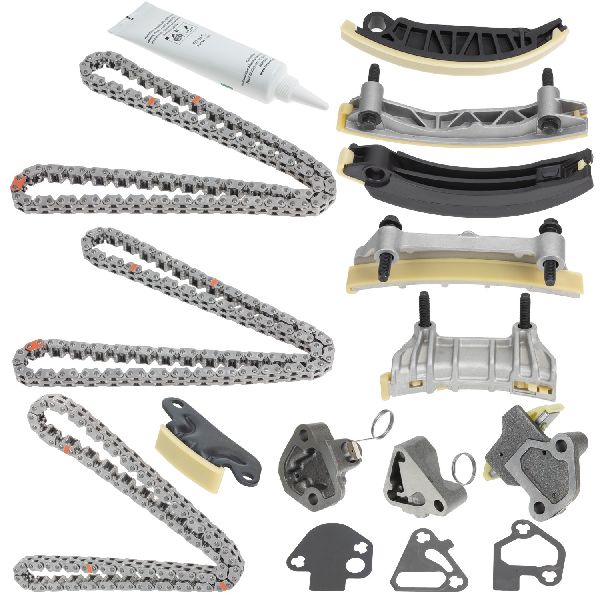
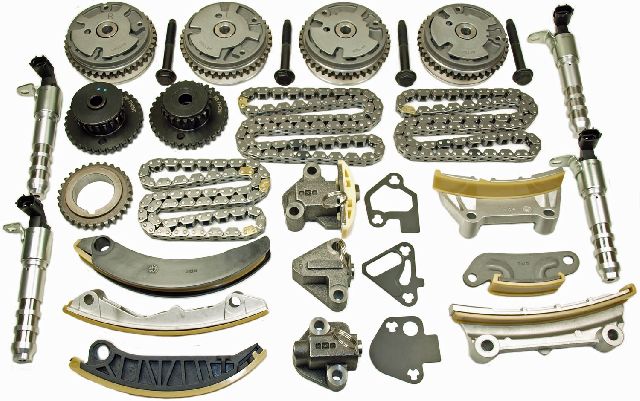
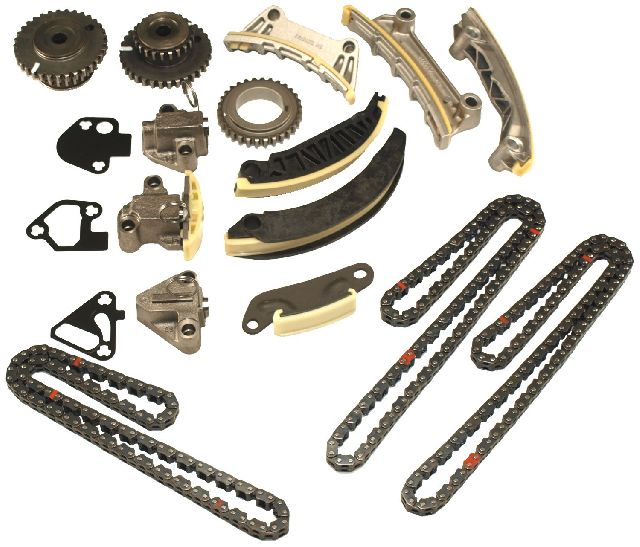
- Engine Timing Chain Kit
(OEM #ACDelco 12700437)— This is the primary failure point for code P0008. A complete kit ensures all wearable components (chains, tensioners, guides) are replaced with updated parts.
Trusted brands: ACDelco, INA, Cloyes
OEM price range: $500-$800
Aftermarket price range: $300-$500
Related Codes That Often Appear With This One
- P0009 — This is the identical code for Bank 2. It is very common to see P0008 and P0009 together, as the primary timing chain that stretches affects the timing for both cylinder banks.
- P0016, P0017, P0018, P0019 — These are all specific camshaft/crankshaft position correlation codes for different cams (intake/exhaust) and banks (1/2). Their presence alongside P0008 strongly confirms a systemic timing issue, almost certainly pointing to the timing chains. Bulletin #PIP3423P notes that these codes often set in conjunction with P0008.
Technical Service Bulletins (TSBs) & Recalls
- PIP3423P: Addresses DTCs P0008, P0009, and other timing correlation codes, pointing to either stretched timing chains or a slipped crankshaft reluctor wheel as the cause.
- 12-06-01-009: Provides information on the official GM timing chain service kits and clarifies which components should and should not be replaced during the repair.
Platform-Specific Known Issues
- The 3.6L LFX engine is known for premature timing chain stretch, which is the overwhelming cause of P0008.
- GM issued TSB PIP3423P which points technicians to inspect for loose timing chains or a slipped crankshaft reluctor wheel for this code on LFX engines.
- GM TSB 12-06-01-009 provides information on the updated timing chain kits and advises against unnecessarily replacing guides and sprockets for a simple stretch condition.
Mechanic-Grade Diagnostic Values
- Camshaft Position Variance (Live Data) — expected: Within +/- 4 degrees at idle and steady RPM.. Failure: A consistent reading of 8 degrees or more on a professional scan tool (like GDS2) strongly indicates a stretched chain or mechanical timing fault. The value will typically be a retarded value (positive number) that may increase with RPM.
- Engine Oil Pressure (LFX Engine, warm) — expected: ~30 PSI at idle, rising with RPM.. Failure: Significantly lower oil pressure can starve the hydraulic tensioners and VVT phasers, accelerating wear and causing timing codes. This points to a lubrication system problem (e.g., oil pump, pickup tube seal) as a contributing factor.
- Camshaft Position Actuator (VVT) Solenoid Resistance — expected: 8-12 Ohms between the two pins on the solenoid.. Failure: A reading of OL (open circuit) or near 0 Ohms (short circuit) indicates a failed solenoid. While not the primary cause of P0008, it's a valid diagnostic step for related VVT codes.
Scan Tool Commands That Help
- GDS2 (GM Global Diagnostic System 2): Engine Data Display > Camshaft Position Variance — This is the primary diagnostic function for P0008. It allows a technician to view the live degree of error between the crankshaft and camshafts. Watching this data at idle, and then raising the RPM, provides the definitive data needed to confirm a mechanical timing stretch without disassembling the engine.
- GDS2 (GM Global Diagnostic System 2): VVT Actuator Tests / Solenoid Control — If cam variance is borderline or intermittent, a technician can command the VVT solenoids to activate while monitoring the cam angle. If the angle changes as commanded, it proves the solenoid and phaser are responding, further isolating the problem to base timing (the chain). If it fails to respond, it could indicate a faulty solenoid, clogged oil passage, or failed phaser.
Wiring & Ground Locations
- G103 / G104 / G107 — Primary engine grounds located on the front and sides of the engine block and cylinder heads. G103 is often on the driver's side, while G107 can be on the front of the passenger side cylinder head.. The crankshaft and camshaft position sensors are highly sensitive and require a clean ground reference to send accurate signals to the ECM. While extremely unlikely to be the root cause of a persistent P0008 (which is almost always mechanical), a loose or corroded ground can introduce electrical noise, potentially causing intermittent or false correlation codes. Verifying these grounds are clean and tight is a fundamental step in any complex electrical diagnosis.
Real Owner Repair Stories
- Composite of multiple forum threads (ColoradoFans, Reddit) (2016 Chevrolet Colorado / GMC Canyon 3.6L LFX, mileage typically 70,000-120,000) — Check Engine Light on, code P0008 and often P0009/P0017. Sometimes a faint rattle on cold start, but often no other symptoms besides the light.
❌ Tried (didn't work) Replacing the Bank 1 camshaft position sensor., Replacing the crankshaft position sensor., Performing multiple oil changes in a short period.
✅ What actually fixed it A complete timing chain service. The consensus from owners and technicians is that these codes on the LFX engine are a definitive sign of chain stretch. The successful repair involves replacing all three timing chains, all tensioners, and all plastic guides with a new OEM (ACDelco) kit. The cost is consistently reported in the $2,000 - $3,000 range at an independent shop.
"I Checked Everything" — The Actual Cause
- The equivalent scenario for P0008 is 'Timing chains were replaced, but the code came back.' In this rare situation, the cause is almost always a slipped crankshaft reluctor wheel, as documented in TSB PIP3423P. The new chains are perfectly timed, but the wheel that the crankshaft sensor reads has physically rotated on the crank, giving the ECM a false reading of the crank's true position. This requires crankshaft replacement to fix.
OEM Part Supersession History
Various older kits→ACDelco 12700437 (or equivalent complete kit)— GM has updated the timing chain design multiple times since the High Feature V6 was introduced to improve durability and reduce stretching. Using the latest available OEM kit is critical to prevent a repeat failure.
Heads up: Using older design chains or mixing new and old components is highly discouraged and likely to lead to premature failure.
Model Year Variations Within This Range
- 2015-2016: These model years exclusively use the 3.6L LFX V6. Starting in 2017, the GMC Canyon switched to the updated 3.6L LGZ V6. While related, the LGZ has a different timing drive system, different VVT components (like an Intake Camshaft Position Actuator Park Lock Solenoid), and its own set of specific TSBs. Therefore, diagnosis and parts for a 2017+ model can differ significantly.
Diagnostic Flowchart
Other Known Issues on This Vehicle
Issues unrelated to this code that are worth knowing about as an owner of this generation:
- Transmission Shudder (6L50/8L45) 🟠 Medium — Common complaint, especially with the 8-speed. Can occur at various mileages. TSB 16-NA-175 suggests a fluid flush with an updated fluid. (Ref: TSB 16-NA-175)
- Power Steering Failure 🔴 High — Affects 2015 models primarily. A recall was issued to fix a poor electrical connection in the steering gear assembly. (Ref: NHTSA Campaign Number: 21V241000)
- Harsh Shifting / Transmission Failure (2015 models) 🔴 High — Particularly noted in the first model year (2015), with reports of harsh shifting, hesitation, and sometimes complete failure requiring replacement. (Ref: PIP5305, TSB 15805)
- Loose Battery Cable Connections 🟠 Medium — Some 2015-2016 models may have had improperly secured battery cables from the factory, leading to charging issues or a no-start condition. (Ref: GM Program #N152059130)
Used vs. New Parts: Buying Guide for This Vehicle
When a used part is the smart pick: For this specific repair, using used parts from a junkyard is NEVER a smart choice. The failure is due to wear, and the labor cost is extremely high. Installing used timing components would be a massive and unjustifiable risk.
What to inspect on the donor part:
- Not applicable. Do not use donor parts for this repair.
OEM-only on this vehicle (don't cheap out):
- Engine Timing Chain Kit (Chains, Tensioners, Guides): This is the most critical area. The ACDelco Genuine GM kit is the safest choice to ensure you have the latest, most durable parts. The cost savings of aftermarket are not worth the risk of a repeat failure given the 10+ hours of labor.
- Camshaft Phasers/Actuators: If not included in the kit, these should also be OEM. They are complex hydraulic components that are critical to engine performance.
Aftermarket brands forum-validated for this vehicle:
- Cloyes: Cloyes is a well-known timing component manufacturer and is an OEM supplier for many brands. Their high-end kits are generally considered a viable alternative to OEM, but ensure it is a complete kit with all chains, guides, and tensioners.
- Melling: Melling is another respected aftermarket brand, particularly for oil pumps and timing components. As with Cloyes, their kits are often considered high quality, but OEM is the safest bet for a first-time repair on this engine.
Brands owners have reported issues with on this vehicle:
- No-name/white-box eBay or Amazon kits: Avoid generic, unbranded timing kits. They often use inferior materials for the chains and especially the plastic guides, which can become brittle and fail, leading to catastrophic engine damage. The price savings are a trap.
Real Owner Stories
Aggregated from forums and TSBs cited above. Mileages and costs reflect what owners reported in those sources.
2016 Chevrolet Colorado 3.6L (LFX)
Symptoms: P0017 code (related to P0008) appearing; owner attempted to replace sensors but the code persisted.
What fixed it: Timing chain replacement was identified as the necessary fix by the community, as sensor swaps are a common misdiagnosis path.
Source hint: Reddit r/chevycolorado - Persistent P0017 after sensor swaps
2016 Chevrolet Colorado 3.6L (LFX)
Symptoms: P0017 code triggered; owner sought advice on the high cost of the repair.
What fixed it: Timing chain replacement.
Cost: $2200
Source hint: ColoradoFans.com - P0017 code, almost always timing chains
2010 GMC Acadia 3.6L — 80000 miles
Symptoms: Check Engine Light with code P0008.
What fixed it: Technician recommended timing chain replacement.
Cost: $4000
Source hint: Edmunds - 2010 GMC Acadia Review & Ratings
2010 Chevy Traverse 3.6L — 155000 miles
Symptoms: Check Engine Light with codes P0008 and P0302 (cylinder 2 misfire).
What fixed it: Mechanic recommended an engine-out timing chain replacement.
Cost: $2000
Source hint: Reddit r/Cartalk - 2010 Chevy Traverse, p0008 code and p0302 code
Related OBD-II Codes
Frequently Asked Questions
Does TSB PIP3423P apply to my 2015-2016 GMC Canyon with the 3.6L LFX engine?
Can I just change the oil to fix the P0008 code on my Canyon?
Is there a specific timing chain kit GMC recommends for this repair?
Why is my remote start not working while the Check Engine Light is on for P0008?
Is the P0008 code related to the transmission shudder I'm feeling in my 2016 Canyon?
What data should a mechanic look for on a scan tool to confirm the timing chain is the problem?
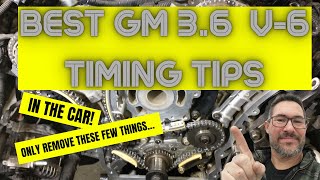
Helpful Videos
We Have This Part in Stock


The information in this article is provided for general reference and educational purposes only. Vehicle specifications, procedures, and part compatibility can vary by production date, trim level, and region. Always consult your vehicle's factory service manual and verify part numbers before purchasing or performing repairs. Safety-critical components such as airbags, seat belts, and braking systems should be installed by a qualified professional.
- GMC Canyon:
- 🧭 Diagnostic Flowchart
- 🎬 Helpful Videos
- 🛍️ Shop This Part
- What's Unique About the 2015-2016 GMC Canyon
- Symptoms You May Notice
- Most Likely Causes
- Rare But Worth Checking
- Diagnosis Steps
- Parts You'll Likely Need
- Related Codes That Often Appear With This One
- Technical Service Bulletins (TSBs) & Recalls
- Platform-Specific Known Issues
- Mechanic-Grade Diagnostic Values
- Scan Tool Commands That Help
- Wiring & Ground Locations
- Real Owner Repair Stories
- "I Checked Everything" — The Actual Cause
- OEM Part Supersession History
- Model Year Variations Within This Range
- Other Known Issues on This Vehicle
- Used vs. New Parts: Buying Guide for This Vehicle
- Real Owner Stories
- 2016 Chevrolet Colorado 3.6L (LFX)
- 2016 Chevrolet Colorado 3.6L (LFX)
- 2010 GMC Acadia 3.6L — 80000 miles
- 2010 Chevy Traverse 3.6L — 155000 miles
- Related OBD-II Codes
- Frequently Asked Questions
- 🎟️ Get 5% Off