

P0008 on 2013-2017 GMC Terrain 3.6L V6: Timing Chain Causes and Fixes
On a 2013-2017 GMC Terrain with the 3.6L V6, code P0008 almost always means the timing chains have stretched. This is a serious, labor-intensive repair typically costing $2,000-$4,500 to replace the chains, tensioners, and guides. The root cause is a combination of chain design and oil degradation from extended oil change intervals.
- P0008 on a 2013-2017 GMC Terrain 3.6L almost certainly indicates a stretched timing chain.
- This is a serious and expensive repair; do not waste money replacing sensors first.
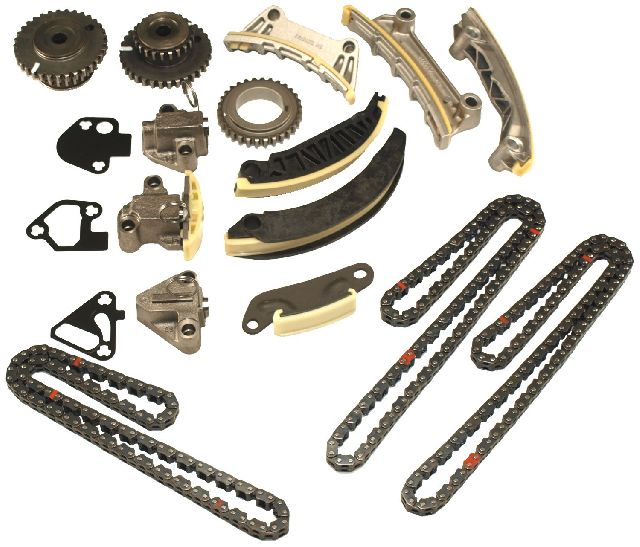
- The repair involves replacing all three chains, tensioners, and guides with an updated kit.
- Continued driving is not recommended as it risks catastrophic engine failure.
- Strict adherence to oil change intervals with dexos-approved full synthetic oil is critical to prolonging the life of the timing chains.
What's Unique About the 2013-2017 GMC Terrain
The GM High Feature V6 engine family (including the LFX in this Terrain) has a notorious history of premature timing chain wear. This was often blamed on a combination of the original chain design and an overly optimistic Oil Life Monitor (OLM) system that led to oil degradation and sludging. While the LFX engine used from 2013-2017 received an updated, more durable timing chain design compared to earlier LLT engines, failures still occur, especially with poor oil maintenance or low oil levels. The issue was so common on earlier models that GM issued special warranty programs (like #11340), confirming the widespread nature of the problem.
Symptoms You May Notice
- Check Engine Light illuminated
- Engine running rough, especially at idle
- Reduced engine power and poor acceleration
- Lower than normal fuel economy
- Rattling or clattering noise from the engine, especially on cold startups
- A 'surging' or fluctuating idle
- Replacing only the camshaft or crankshaft position sensors without confirming a mechanical timing issue. The sensors are usually reporting the problem correctly, they are not the cause.
- Replacing only one of the three timing chains or just a single tensioner. The entire system should be replaced as a kit to ensure a lasting repair.
- Attributing the code to a faulty ECM. While not impossible, it is extremely rare for the ECM to be the cause of this specific mechanical correlation code.
Most Likely Causes
- Stretched Timing Chains 🔴 High Probability → Shop Engine Timing Chain The GM 3.6L V6 engine family has a well-documented history of premature timing chain wear due to chain design and oil quality issues. The chains physically elongate as the pin bushings wear, causing slack and incorrect timing.
How to confirm: A technician can use a professional scan tool to monitor camshaft position deviation/variance data. A consistent deviation of more than 4-6 degrees typically confirms a stretched chain. Visual inspection for slack is also possible but requires significant disassembly.
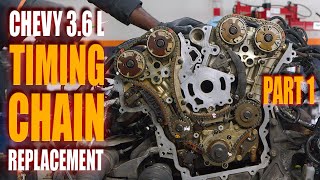
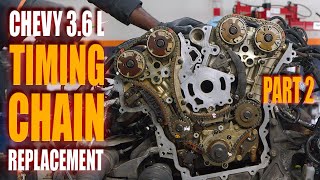
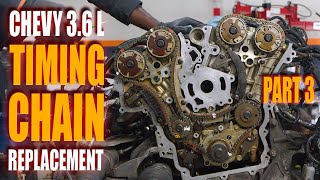
Typical fix: Replace all three timing chains (one primary, two secondary) along with all tensioners and guides as a complete kit. Using updated OEM parts is critical.
Est. part cost: $300-$700 - Failed Timing Chain Tensioners or Guides 🔴 High Probability → Shop Engine Timing Chain The hydraulic tensioners rely on clean oil at the proper pressure. Degraded or low oil can cause them to fail or become clogged with sludge, allowing the chain to become slack. The plastic guides can become brittle and break, with pieces sometimes falling into the oil pan.
How to confirm: These are typically inspected and replaced during a timing chain service. A rattling noise is a strong indicator of a tensioner or guide issue. Broken guide pieces may be found when dropping the oil pan.
Typical fix: Replace tensioners and guides as part of a complete timing chain kit replacement.
Est. part cost: $300-$700 (as part of kit) - Low or Degraded Engine Oil 🟡 Medium Probability The timing chain tensioners and VVT system are hydraulically operated. Low oil levels or oil that has broken down from extended change intervals (as suggested by the OLM) can lead to insufficient pressure, causing chain slack and setting this code.
How to confirm: Check the engine oil level and condition on the dipstick. If the oil is low, black, or gritty, it needs to be changed. This is a primary contributing factor to the mechanical failure.
Typical fix: Perform an oil and filter change using a full synthetic oil that meets GM's dexos specification. Clear the code and see if it returns. This is often a contributing factor rather than the sole cause; by the time P0008 is set, the damage is usually done.
Est. part cost: $50-$80
Rare But Worth Checking
- Slipped Crankshaft Reluctor Wheel: → Shop Engine Crankshaft A crankshaft reluctor wheel that has spun on the crankshaft can cause timing correlation codes. GM has a TSB (PIP3423P) that mentions this possibility, which can be inspected with a borescope through the crankshaft position sensor hole. If it has moved, the crankshaft must be replaced.
- Faulty Camshaft or Crankshaft Position Sensor: → Shop Engine Crankshaft Position Sensor While possible, these sensors are rarely the root cause of P0008 on this engine. They are often misdiagnosed and replaced unnecessarily. The sensors are usually reporting the mechanical problem correctly, they are not the cause.
- Faulty VVT Solenoids (Camshaft Position Actuator Solenoids): Clogged or failed VVT solenoids can sometimes cause timing-related codes. They can be removed and inspected for debris on their screens. While they can be a cause, they are less common for P0008 than the chains themselves.
Diagnosis Steps
- Check the engine oil level and condition. If low or dirty, perform an oil and filter change with the correct dexos-rated oil, clear the codes, and see if the code returns. This is a critical first step and contributing factor.
- Use a professional scan tool to check for other related trouble codes (P0009, P0016-P0019).
- Use the scan tool to monitor live data for camshaft/crankshaft correlation PIDs, specifically looking for 'Camshaft Position Variance' for Bank 1. A consistent deviation beyond 4-6 degrees at idle or steady RPM strongly suggests a stretched chain.
- Listen for any rattling or chain noise from the engine, particularly on cold starts, which would indicate slack in the timing system. Manufacturer Bulletin #PIP3423P advises technicians that for codes like P0008, they must specifically inspect for loose timing chains or tensioners.
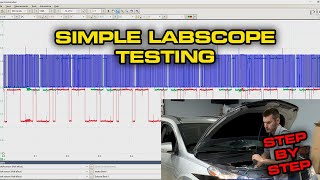
- If scan tool data is inconclusive, a technician may use a PicoScope (oscilloscope) to compare the actual cam and crank sensor waveforms against a known-good pattern to visually confirm a timing shift. 🎬 See how to test timing chain issues with a labscope
- If the above steps confirm a timing discrepancy, the next step is to proceed with the mechanical inspection and replacement of the timing chain system.
- As a rare final check, if chains are found to be in specification, inspect the crankshaft reluctor wheel for slippage per TSB PIP3423.
Parts You'll Likely Need
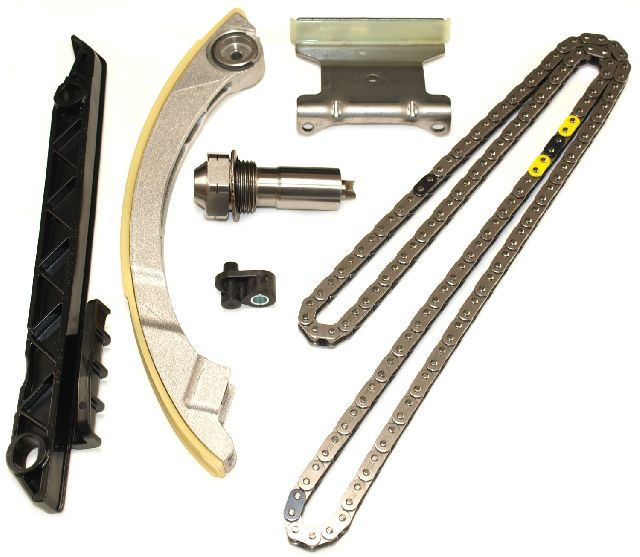
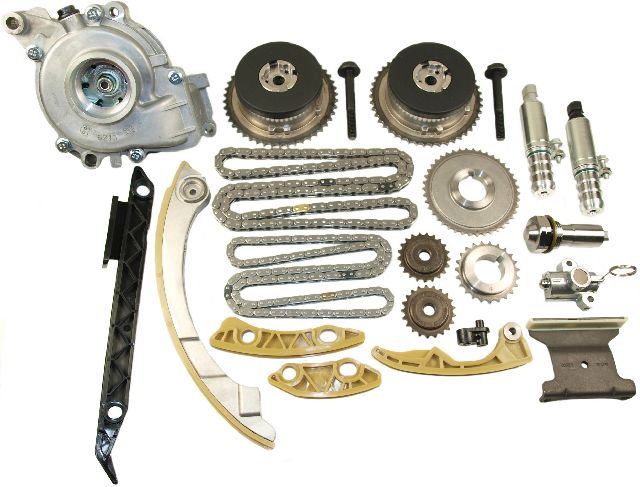
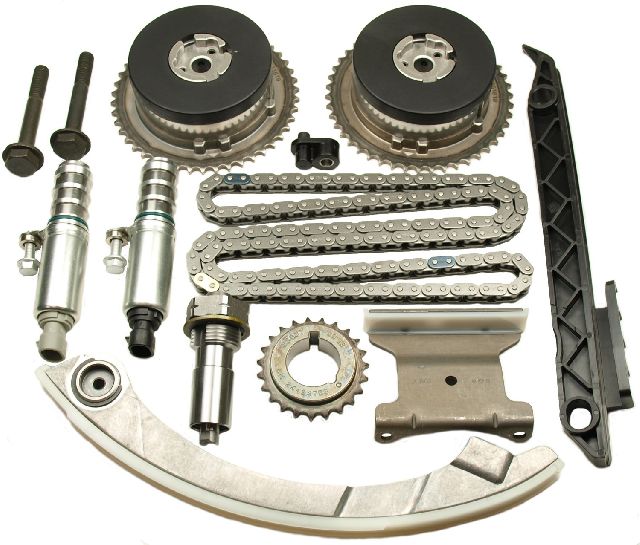
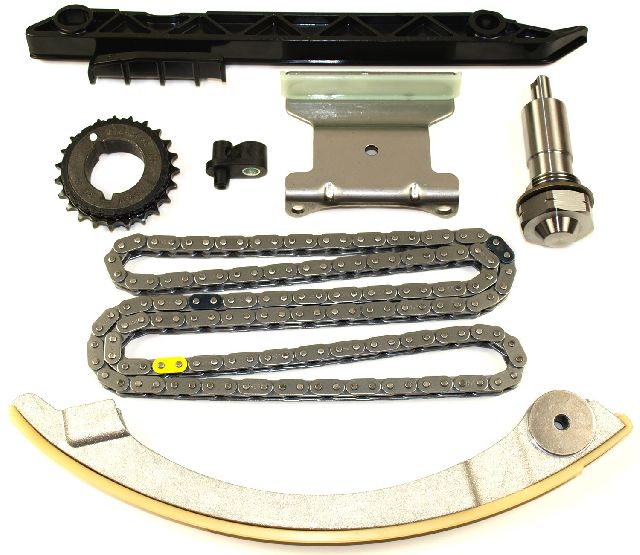
- Engine Timing Chain Kit
(OEM #ACDelco 12650230 (or superseding part number))— This is the definitive fix for a stretched timing chain. A complete kit ensures all related wear items (chains, tensioners, guides, gaskets) are replaced with updated parts to prevent a repeat failure.
Trusted brands: ACDelco (OEM), Melling, Cloyes
OEM price range: $400-$600
Aftermarket price range: $300-$500
Related Codes That Often Appear With This One
- P0009 — This is the identical code for Bank 2 (the front cylinder bank). It is very common to see P0008 and P0009 together, as the primary timing chain that stretches affects both banks.
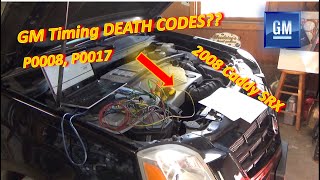
- P0016, P0017, P0018, P0019 — These are more specific crankshaft/camshaft position correlation codes. Their presence alongside P0008 further confirms a systemic mechanical timing issue, pointing directly to the timing chains. 🎬 Watch: Understanding GM timing death codes
Technical Service Bulletins (TSBs) & Recalls
- 12-06-01-009F: Information on High Feature V6 Timing Chain Kits and Chain Guide Replacements for DTCs P0008, P0009, P0016, P0017, P0018 and/or P0019. This TSB details the official repair kits.
- PIP3423P: Diagnostic aid mentioning the rare possibility of a slipped crankshaft reluctor wheel causing timing codes across the HFV6 engine family. This communication provides guidance for technicians when codes P0008, P0009, P0016, P0017, P0018, or P0019 are set.
Platform-Specific Known Issues
- The 3.6L LFX engine, while improved over its predecessor (the LLT), is still susceptible to timing chain stretch, particularly if oil changes are neglected.
- GM issued Special Coverage Adjustment #11340 for timing chain wear on many 3.6L engines, extending the warranty to 10 years/120,000 miles. While this has likely expired for most 2013-2017 vehicles, it acknowledges the known defect.
- Due to the transverse (FWD) mounting of the engine, accessing the timing cover is extremely difficult, leading many technicians to recommend pulling the engine for the repair, which significantly increases labor costs.
Mechanic-Grade Diagnostic Values
- VVT (Camshaft Position Actuator) Solenoid Resistance — expected: 8 to 13 Ohms. Failure: A reading outside this range, or an open/short circuit, indicates a faulty solenoid.
- Camshaft Position Sensor Resistance — expected: Approximately 1.2 kΩ. Failure: A significant deviation from 1.2 kΩ or an open/short circuit.
- Crankshaft Position Sensor (CKP) RPM Signal during Cranking — expected: 100 to 500 RPM on a scan tool. Failure: A reading of zero RPM while the engine is physically turning indicates a failed CKP sensor.
- Crankshaft Reluctor Wheel Position Measurement — expected: 25 to 26 mm from the end of the machined surface of the crankshaft throw to the edge of the open space in the reluctor wheel.. Failure: Any measurement outside this range indicates the reluctor wheel has slipped on the crankshaft.
Scan Tool Commands That Help
- GDS2/Tech2: Camshaft Position Variance Live Data — This is the primary diagnostic data PID to monitor. A consistent deviation of more than 4-6 degrees between the desired and actual camshaft position at idle or steady RPM is a strong confirmation of a stretched timing chain, saving significant diagnostic time.
- Oscilloscope (e.g., PicoScope): Crankshaft vs. Camshaft Sensor Waveform Comparison — This is the definitive, visual confirmation of a timing issue. By overlaying the live cam and crank sensor waveforms on a known-good pattern, a technician can physically see the timing shift caused by a stretched chain. This is used to eliminate any doubt before committing to an engine-out repair.
Wiring & Ground Locations
- ECM Connector X1 — On the Engine Control Module, located in the left front of the engine compartment.. A known issue documented in GM TSB PI1067B involves the wiring harness coming off the X1 connector rubbing through on the metal ECM bracket. While this TSB is often associated with 5-volt reference codes (like P0641), a short in the cam/crank sensor signal wires in this same harness could theoretically cause erratic signals and contribute to timing correlation codes.
- Bank 1 Camshaft Position Sensor Connectors — On the rear cylinder head (closer to the firewall), at the end of each of the two camshafts.. GM issued TSB PI0090D for intermittent hesitation, which was traced to poor terminal connections in the camshaft position sensor harness connectors. While this TSB addresses drivability and not P0008 directly, a poor connection could cause an intermittent loss of signal, which the ECM might misinterpret as a timing correlation fault under specific conditions.
Real Owner Repair Stories
- Reddit user on r/MechanicAdvice (2007 Suzuki XL7 with GM 3.6L LY7 engine (predecessor to LFX with same core issue)) — Initially had a P0009 (Bank 2 timing correlation).
❌ Tried (didn't work) A full timing chain replacement was performed to fix the P0009 code.
✅ What actually fixed it Six days after the timing chain replacement, the vehicle returned with a P0008 code (Bank 1). The mechanic diagnosed this subsequent code as a stuck camshaft actuator, which was a separate failure from the original stretched chain issue. This highlights that even after the primary repair, related components (like VVT actuators) can fail independently.
OEM Part Supersession History
12635447, 12673669, 12675579→12680750 (GM Genuine)— GM periodically updates timing chain kits to include improved chain designs, more durable guides, and better tensioners to combat premature wear. These supersessions represent the latest engineering solution to the problem.
Heads up: While older kits might fit, using the latest superseded part number is critical to ensure you are getting the most durable and up-to-date components to prevent a repeat failure. TSB 12-06-01-009F explicitly details using the complete, updated kits for this repair.
Diagnostic Flowchart
Other Known Issues on This Vehicle
Issues unrelated to this code that are worth knowing about as an owner of this generation:
- Premature Water Pump Failure 🟠 Medium — Can fail as early as 75,000 miles. Often replaced preventatively during a timing chain job, as it is driven by the timing chain in some related engines, though access is the main driver for replacement during the P0008 job on the LFX.
- Service Stabilitrak / Traction Control Warnings 🟠 Medium — Common issue often caused by faulty wheel speed sensors or their magnetic tone rings on the wheel hubs, which can corrode and break. Other causes include issues with the throttle body, steering angle sensor, or low battery voltage.
- Excessive Oil Consumption 🟠 Medium — More prevalent on the 2.4L 4-cylinder, but the 3.6L V6 can also consume oil, which exacerbates the timing chain wear if the level is not checked and maintained frequently. (Ref: A previous Special Coverage program existed for the 2.4L engine, but not specifically for the LFX V6.)
- Carbon Buildup on Intake Valves 🟡 Low — A common characteristic of all direct injection (DI) engines, including the LFX. Over time, it can cause misfires, hesitation, or a rough idle. Not typically a critical failure but requires periodic cleaning (e.g., walnut blasting) for optimal performance at high mileage.
- Catalytic Converter Failure 🔴 High — The LFX engine features exhaust manifolds integrated into the cylinder heads, which also contain the primary catalytic converters. Failure can be expensive and is sometimes accelerated by engine issues like excessive oil consumption. (Ref: Covered under the federal emissions warranty (8 years/80,000 miles), but failures can occur outside this window.)
Used vs. New Parts: Buying Guide for This Vehicle
When a used part is the smart pick: For this specific P0008 repair, using used parts is highly discouraged for almost all components. The only potential exception would be external engine hardware or brackets if damaged during repair. A complete used engine from a low-mileage donor could be considered if the cost is comparable to the timing chain job, but it carries its own risks.
Donor-vehicle mileage cap: roughly under 50000 miles for the part to have meaningful remaining life.
What to inspect on the donor part:
- For a complete engine swap, demand service records showing frequent, high-quality oil changes.
- Look for a donor vehicle with rear-end or side collision damage, not a frontal impact that could have shocked the engine.
- Remove the oil fill cap and look inside with a flashlight. Avoid any engine with visible sludge or varnish.
- If possible, get a warranty from the salvage yard on the engine's internal condition.
OEM-only on this vehicle (don't cheap out):
- Timing Chain Kit: This is the absolute highest-wear component and the root cause of the problem. Never use a used timing chain. Always buy a new, complete kit from a reputable brand, preferably the latest OEM ACDelco version.
- Camshaft/Crankshaft Position Sensors: While not typically the cause, if they need replacement, the price difference between new and used is negligible. New sensors from brands like ACDelco or Delphi eliminate the risk of installing a part that is near the end of its life.
Aftermarket brands forum-validated for this vehicle:
- ACDelco (OEM)
- Melling
- Cloyes
Brands owners have reported issues with on this vehicle:
- No-name, unbranded timing chain kits from online marketplaces. The quality of the chain metallurgy and guide plastics is paramount. A cheap, low-quality kit is likely to fail prematurely, forcing a repeat of this extremely labor-intensive job.
Real Owner Stories
Aggregated from forums and TSBs cited above. Mileages and costs reflect what owners reported in those sources.
2011 GMC Terrain 3.0L V6
Symptoms: Vehicle was throwing multiple timing codes including P0008, P0017, P0009, and P0018.
What fixed it: The owner discussed these codes in the context of the High Feature V6 timing issues common to the platform.
Source hint: GMTNation - Forum thread discussing timing codes on a 2011 Terrain
2017 GMC Terrain 3.6L LFX V6
Symptoms: Discussion regarding the long-term reliability and known issues of the LFX engine variant.
What fixed it: Monitoring oil quality and addressing timing chain wear common to the engine family.
Source hint: BobIsTheOilGuy - Discussion on LFX engine reliability and issues
Related OBD-II Codes
Frequently Asked Questions
Is there a TSB for the timing chain issues on my 2013-2017 GMC Terrain 3.6L?
Does GM offer any warranty extensions for timing chain wear on the LFX engine?
Why is the labor cost so high for a P0008 repair on the Terrain?
Can I just change the oil to fix the P0008 code?
What scan tool data confirms my Terrain has a stretched timing chain?
Is there anything else besides the chain that could cause P0008 on this V6?
Helpful Videos
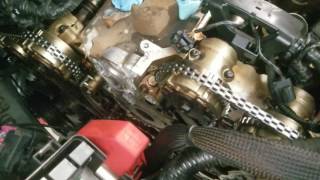
We Have This Part in Stock
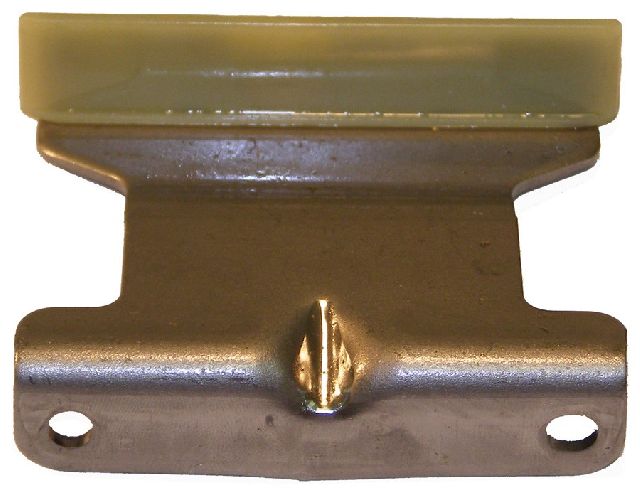

The information in this article is provided for general reference and educational purposes only. Vehicle specifications, procedures, and part compatibility can vary by production date, trim level, and region. Always consult your vehicle's factory service manual and verify part numbers before purchasing or performing repairs. Safety-critical components such as airbags, seat belts, and braking systems should be installed by a qualified professional.
- GMC Terrain:
- 🧭 Diagnostic Flowchart
- 🎬 Helpful Videos
- 🛍️ Shop This Part
- What's Unique About the 2013-2017 GMC Terrain
- Symptoms You May Notice
- Most Likely Causes
- Rare But Worth Checking
- Diagnosis Steps
- Parts You'll Likely Need
- Related Codes That Often Appear With This One
- Technical Service Bulletins (TSBs) & Recalls
- Platform-Specific Known Issues
- Mechanic-Grade Diagnostic Values
- Scan Tool Commands That Help
- Wiring & Ground Locations
- Real Owner Repair Stories
- OEM Part Supersession History
- Other Known Issues on This Vehicle
- Used vs. New Parts: Buying Guide for This Vehicle
- Real Owner Stories
- 2011 GMC Terrain 3.0L V6
- 2017 GMC Terrain 3.6L LFX V6
- Related OBD-II Codes
- Frequently Asked Questions
- 🎟️ Get 5% Off