

P0008 on 2008-2009 Pontiac Torrent 3.6L: Stretched Timing Chain Causes and Fixes
Code P0008 on a 2008-2009 Pontiac Torrent with the 3.6L V6 engine almost always indicates the timing chains have stretched. This is a serious and expensive repair that involves replacing the timing chains, tensioners, and guides. GM acknowledged this widespread issue with Special Coverage Adjustment #11340C, which extended the warranty to 10 years/120,000 miles, though this has now expired. Expect a shop to charge between $1,800 and $2,700 for this job.
- P0008 on a 2008-2009 Torrent almost exclusively points to a stretched timing chain on the 3.6L V6 GXP model.
- This is a serious issue that can lead to catastrophic engine failure if ignored. Driving should be limited.
- The root cause is a combination of an early timing chain design and overly long oil change intervals recommended by the factory Oil Life Monitor.
- The only correct fix is to replace all three chains, tensioners, and guides with an updated kit. Do not waste money on sensors first.
- GM acknowledged this with a special warranty extension (#11340C), which has since expired but confirms the widespread nature of the defect.
What's Unique About the 2008-2009 Pontiac TORRENT
This code is a very common and well-documented issue specifically on the 2008-2009 Torrent GXP model equipped with the 3.6L V6 (RPO code LY7) engine. Early versions of this GM "High Feature" V6 were prone to premature timing chain stretching. This was exacerbated by long oil change intervals recommended by the original oil life monitoring system (OLM), leading to oil degradation that accelerated wear on the chains and tensioners. GM later issued TSBs to recalibrate the OLM for more frequent changes and released updated timing chain kits to address the hardware deficiencies.
🎬 Watch: Understanding the causes and fixes for the P0008 code.Diagnostic Flowchart
Tap your situation to follow the diagnostic path that matches what you're seeing on this vehicle.
Symptoms You May Notice
- Check Engine Light is on
- Rattling or scraping noise from the front of the engine, especially on cold starts
- Reduced engine power and poor acceleration
- Rough running or unstable idle
- Difficulty starting the engine
- Increased fuel consumption
- Replacing only the camshaft position sensors. As noted in owner complaints and forums, this is often the first, incorrect, step taken. The issue was almost always resolved by replacing the timing chains.
- Replacing the VVT solenoids (camshaft actuators). A P0008 code is set when both cams on Bank 1 are out of sync, which points to a primary chain issue, not an individual solenoid failure.
Most Likely Causes
- Stretched Timing Chains 🔴 High Probability → Shop Engine Timing Chain The 3.6L V6 engine used in the Torrent GXP had timing chains with a design susceptible to premature wear and stretching. This is a widely recognized factory issue acknowledged by GM through multiple TSBs and a special warranty extension.
How to confirm: The definitive diagnosis is a physical inspection of the chains' slack after removing the engine's front timing cover. An advanced scan tool can also show cam/crank correlation deviations greater than 4-6 degrees, which strongly suggests chain stretch. An oscilloscope can also be used to electronically verify timing by comparing cam and crank sensor waveforms to a known-good pattern.
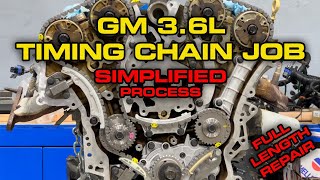
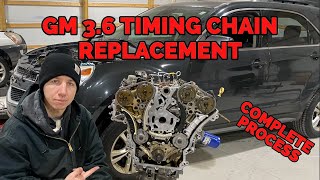
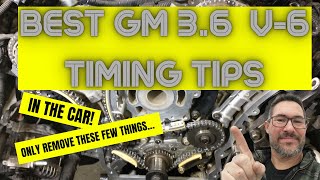
Typical fix: Replace all three timing chains, all tensioners, and all guides with an updated-design kit. It is critical to replace all components as a set to prevent repeat failure.
Est. part cost: $300-$700 - Failed Timing Chain Tensioners 🔴 High Probability → Shop Engine Timing Chain The hydraulic tensioners rely on clean oil and proper pressure. They can weaken, leak, or fail, leading to chain slack. This is considered part of the overall timing system failure and they are always replaced with the chains.
How to confirm: A rattling noise on startup is a key indicator. They are inspected for failure or leaks when the timing cover is removed. A complete failure can be catastrophic.
Typical fix: Replace as part of a complete timing chain kit.
Est. part cost: $100-$200 (if bought separately, but included in kits) - Low or Degraded Engine Oil 🟡 Medium Probability The hydraulic tensioners require clean oil at the proper level to function. The original OLM calibration allowed for excessively long oil change intervals, leading to oil breakdown (sludge) which starves the timing components of proper lubrication and accelerates wear.
How to confirm: Check the oil level on the dipstick and inspect its condition. If the oil is very low or appears dirty and sludgy, it is a major contributing factor. This was a root cause of the widespread issue.
Typical fix: An oil and filter change with full synthetic oil meeting GM's dexos1 specification is necessary, but this will not fix chains that are already stretched. It is a critical preventative measure.
Est. part cost: $40-$80
Rare But Worth Checking
- Faulty Camshaft or Crankshaft Position Sensor: → Shop Engine Crankshaft Position Sensor While a sensor can fail, it is very rarely the cause of P0008 on this engine. The code indicates a correlation issue between multiple sensors, making a single sensor failure an unlikely culprit. Replacing sensors without confirming the timing system's health is a common and costly misdiagnosis.
- Slipped Crankshaft Reluctor Wheel: → Shop Engine Crankshaft TSB PIP3423P notes that in rare cases where the chains are found to be tight, the reluctor wheel pressed onto the crankshaft may have moved. This requires checking a specific measurement from the crankshaft throw to the reluctor wheel opening (25-26mm). A slipped reluctor necessitates crankshaft replacement.
Diagnosis Steps
- Verify the code with an OBD-II scanner and check for any other related codes (P0009, P0016-P0019).
- Check the engine oil level and condition. If low or dirty, perform an oil change with high-quality full synthetic oil, clear the codes, and see if they return. Note that this will not fix a stretched chain.
- Listen for a distinct rattling or scraping noise from the front of the engine (passenger side) during a cold start. This sound typically lasts for a few seconds and is a strong indicator of a loose timing chain.
- Using an advanced scan tool (like a GM Tech2 or GDS2), monitor the cam/crank correlation data PIDs. Consistent deviation greater than 4-6 degrees at idle is a strong sign of chain stretch.
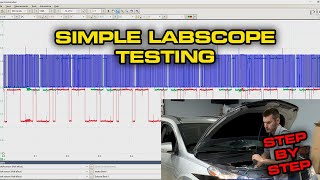
- For definitive electronic diagnosis, use an oscilloscope to compare the crankshaft and camshaft sensor waveforms against a known-good pattern. A visible time shift (retard) in the cam sensor signals confirms chain stretch without disassembly.
- The most definitive physical step is to remove the engine's front timing cover and physically inspect the timing chains, guides, and tensioners for slack, wear, or damage. This is a labor-intensive process.
Parts You'll Likely Need
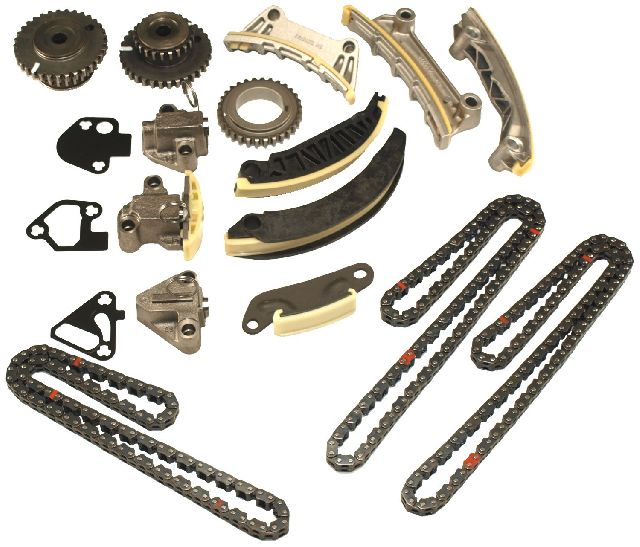
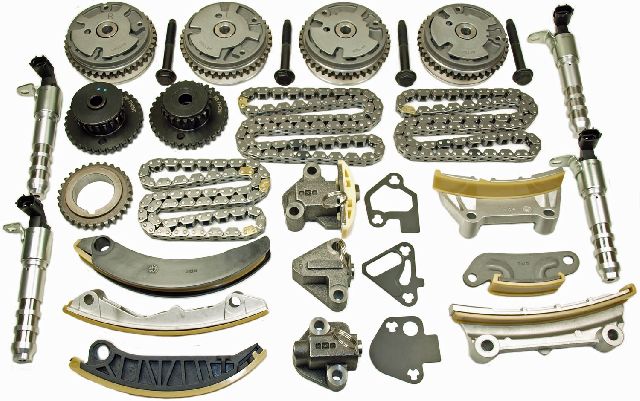
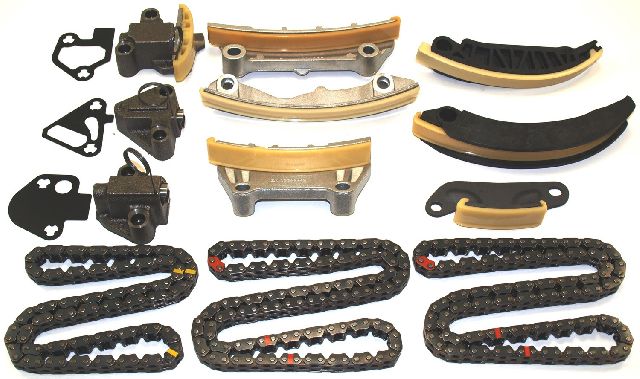
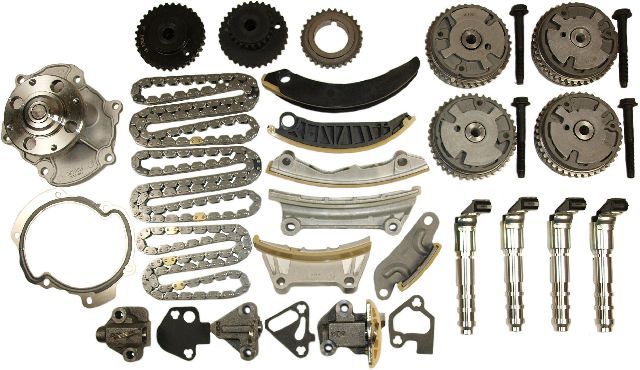
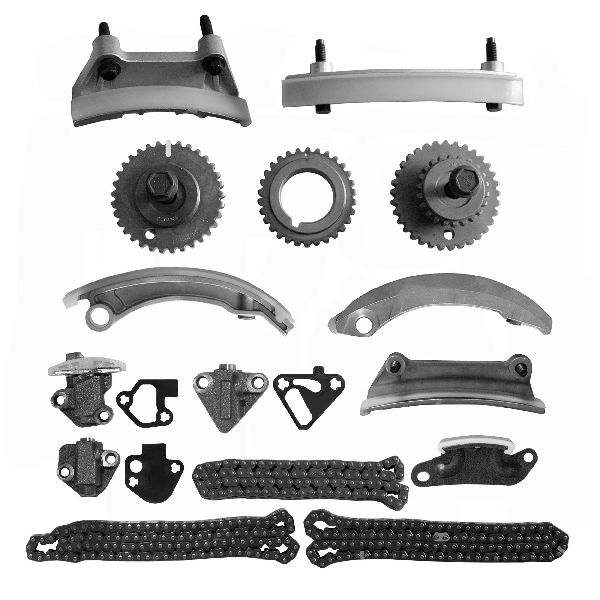
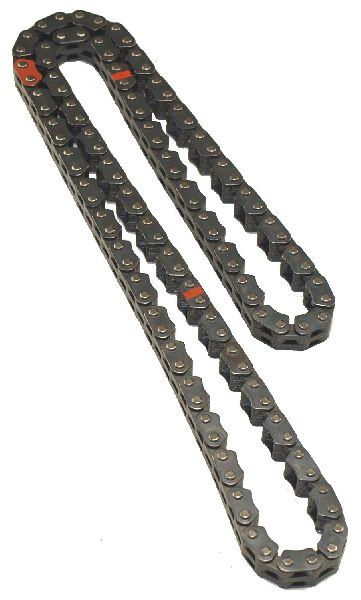
- Engine Timing Chain Kit
(OEM #12650231 (Superseded, verify with dealer))— This is the comprehensive solution. A kit ensures all related wear items (3 chains, 3 tensioners, guides, gaskets) are replaced simultaneously with updated parts to prevent a repeat failure.
Trusted brands: ACDelco (OEM), Cloyes (e.g., 9-0753S)
OEM price range: $400-$600
Aftermarket price range: $250-$450
Related Codes That Often Appear With This One
- P0009 — This is the identical code but for Bank 2 (the front cylinder bank). It is very common to see P0008 and P0009 together, indicating the timing issue affects the entire engine via the primary timing chain.
- P0016, P0017, P0018, P0019 — These codes all relate to specific crankshaft/camshaft correlation errors on different camshafts (intake/exhaust) and banks (1/2). They are frequently set along with P0008 and further confirm a systemic timing chain problem, as noted in TSBs.
Technical Service Bulletins (TSBs) & Recalls
- PIP3423P: Advises technicians to inspect for loose timing chains or tensioners for a list of codes including P0008, and also to check for a slipped crankshaft reluctor wheel.
- 12-06-01-009F: Announces availability of high feature V6 timing chain kits for repairing stretched timing chains that set DTC P0008, among others.
- 11340C: This was a Special Coverage Adjustment (not a standard TSB) that extended the warranty for timing chain replacement to 10 years/120,000 miles and included an ECM reprogram to shorten oil life monitor intervals.
Platform-Specific Known Issues
- The 2008-2009 Pontiac Torrent GXP uses the 3.6L LY7 V6, which is known for premature timing chain failure. GM released multiple Technical Service Bulletins (TSBs) acknowledging the problem and providing repair guidance.
- GM issued Special Coverage Adjustment #11340C, which extended the warranty on the timing chains to 10 years or 120,000 miles for many 2009 models. This program also included an ECM reprogram to shorten oil change intervals. This coverage has now expired for all 2009 Torrents based on age.
- Bulletin #12-06-01-009F specifically announces the availability of updated timing chain kits to address stretched chains causing codes like P0008.
- Another TSB, #PIP3423P, instructs technicians to inspect for loose timing chains or tensioners when P0008 is present, and if chains are good, to check for a rare slipped crankshaft reluctor wheel.
Mechanic-Grade Diagnostic Values
- Cam/Crank Correlation Data PID — expected: Less than +/- 4 degrees of deviation at idle.. Failure: A consistent deviation of more than 4 degrees, and especially over 8-9 degrees, strongly indicates a mechanical timing issue like a stretched chain.
- Crankshaft Reluctor Wheel Position — expected: 25mm to 26mm. Failure: A measurement outside this range indicates the reluctor wheel has physically slipped on the crankshaft. The measurement is taken from the end of the machined surface of the crankshaft throw to the edge of the open space in the reluctor.
- Labscope Cam vs. Crank Waveform (Known Good) — expected: On Bank 1 (firewall side), the intake cam signal transition should occur within the wide crank sensor sync gap. The exhaust cam signal transition should occur approximately three crank teeth after the gap.. Failure: A shift of the camshaft signal waveforms to the right on the timeline (retard) relative to the crankshaft signal indicates a stretched chain.
Scan Tool Commands That Help
- GM Tech2 / GDS2: Crankshaft Position (CKP) Variation Learn — After replacing major engine components like a timing chain or crankshaft, this procedure is necessary to allow the ECM to learn the new variations in the crankshaft reluctor wheel. Failure to perform this can sometimes result in new timing-related codes being set even after a successful mechanical repair.
Wiring & Ground Locations
- G103 / G104 / G105 (example designators) — The primary engine-to-chassis grounds are typically located on the engine block, cylinder heads, and near the transmission bellhousing, secured to the frame rail or subframe.. The Crankshaft and Camshaft position sensors are Hall-effect sensors that rely on a clean ground reference to send an accurate square-wave signal to the ECM. A corroded or loose engine ground can introduce noise or voltage offsets into the sensor signals, potentially causing the ECM to misinterpret the cam/crank relationship and set false correlation codes.
- I/P Fuse Block — Located under the dashboard in the passenger's side of the center console, behind a cover.. This fuse block powers various modules, including the Body Control Module (BCM) and provides power to circuits related to the instrument panel and data communication. While not a direct cause, a fault here could disrupt communication or power to modules involved in setting the code.
- G201 / G203 — G201 is behind the right front kick panel. G203 is at the lower center of the dash, on the I/P fuse block.. These are primary interior ground points for various modules and data lines. A fault at these locations can cause widespread communication issues on the GMLAN network, which could potentially manifest as erroneous codes, although it's an unlikely primary cause for P0008.
Real Owner Repair Stories
- g8board.com forum user (2009 Pontiac G8 V6 (same LY7 engine), 115,000 miles) — Check Engine Light with code P0008.
❌ Tried (didn't work) Owner went straight to the correct repair after diagnosis.
✅ What actually fixed it A repair shop replaced the timing chains, guides, and tensioners. The repair successfully cleared the P0008 code and resolved the issue. The total cost was approximately $2,000. - Camaro5 Chevy Camaro Forum user (2011 Camaro V6 (LLT Engine, similar architecture)) — P0008 and P0009, sluggish performance, extreme power loss.
❌ Tried (didn't work) Replaced all timing chains with a Cloyes kit., Replaced all four VVT sprockets (cam phasers).
✅ What actually fixed it The crankshaft reluctor wheel had slipped by 1.5 teeth. This is a rare but critical failure mode where the timing chains are not the root cause, confirming the importance of checking for this as outlined in TSB PIP3423P.
OEM Part Supersession History
12650231→12700435— Superseded by GM to an updated part number. This is common practice as minor improvements are made to the components in the kit.
Heads up: The new part number 12700435 replaces the previous 12650231, 12679116, and 12693219, indicating it is the correct and latest service part.
Helpful Videos

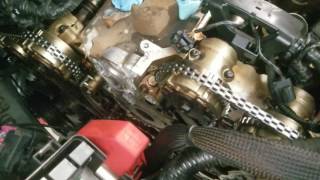
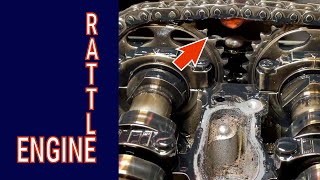
We Have This Part in Stock

The information in this article is provided for general reference and educational purposes only. Vehicle specifications, procedures, and part compatibility can vary by production date, trim level, and region. Always consult your vehicle's factory service manual and verify part numbers before purchasing or performing repairs. Safety-critical components such as airbags, seat belts, and braking systems should be installed by a qualified professional.
- Pontiac TORRENT:
- 🧭 Diagnostic Flowchart
- 🎬 Helpful Videos
- 🛍️ Shop This Part
- What's Unique About the 2008-2009 Pontiac TORRENT
- Symptoms You May Notice
- Most Likely Causes
- Rare But Worth Checking
- Diagnosis Steps
- Parts You'll Likely Need
- Related Codes That Often Appear With This One
- Technical Service Bulletins (TSBs) & Recalls
- Platform-Specific Known Issues
- Mechanic-Grade Diagnostic Values
- Scan Tool Commands That Help
- Wiring & Ground Locations
- Real Owner Repair Stories
- OEM Part Supersession History
- 🎟️ Get 5% Off