

P0008 on 2007-2010 Saturn OUTLOOK: Stretched Timing Chain Causes and Fixes
P0008 on a 2007-2010 Saturn Outlook almost always means the timing chains have stretched. This is a common, well-documented issue with the 3.6L V6 engine. The problem was so widespread GM issued a special warranty extension (10 years/120,000 miles) to cover the repair, which has since expired. The only correct fix is to replace the timing chains, tensioners, and guides, which is a labor-intensive job costing between $1,800 and $3,000+.
- P0008 on a 2007-2010 Saturn Outlook is a near-certain indicator of stretched timing chains, a known issue with the 3.6L V6 engine.
- Do not waste money replacing camshaft or crankshaft sensors; they are not the cause of the problem.
- The only correct repair is a complete timing chain job, replacing all chains, tensioners, and guides with an updated kit.
- This is a difficult, labor-intensive job that should be performed by a professional mechanic.
- Ignoring the code can lead to severe and catastrophic engine damage.
What's Unique About the 2007-2010 Saturn OUTLOOK
The 2007-2010 Saturn Outlook uses the GM High Feature 3.6L V6 engine (LY7 and LLT variants), which is notorious for premature timing chain stretching. This issue was exacerbated by GM's original Oil Life Monitor (OLM) calibration, which allowed for excessively long oil change intervals. The degraded oil could not properly lubricate and cool the three long timing chains, leading to accelerated wear. GM acknowledged this design flaw by issuing multiple Technical Service Bulletins (TSBs) and a Special Coverage Adjustment (#11340C) that extended the warranty on this specific failure. Unlike many other vehicles where P0008 could have several equally likely causes, on this specific platform, the timing chains are the overwhelming culprit.
Diagnostic Flowchart
Tap your situation to follow the diagnostic path that matches what you're seeing on this vehicle.
Symptoms You May Notice
- Check Engine Light is on
- Reduced engine power and poor acceleration, may feel like the vehicle is stalling.
- Rough or unstable idle
- Rattling or scraping noise from the front (passenger side) of the engine, especially on cold starts for a few seconds.
- Decreased fuel economy
- Whining noise during acceleration or turning.
- Replacing only the camshaft or crankshaft position sensors. These sensors are accurately reporting a mechanical problem; they are not the cause of it.
- Replacing only one timing chain or one tensioner. The problem affects the entire system of three chains, and a partial repair will fail quickly, forcing you to pay for the same extensive labor again.
- Performing an engine flush. While an oil flush might help a sticking VVT solenoid, it cannot reverse the physical stretching of a metal chain. If the code is set, the damage is done.
Most Likely Causes
- Stretched Timing Chains 🔴 High Probability → Shop Engine Timing Chain The original timing chains used in the 3.6L V6 were susceptible to premature wear and stretching due to their material composition and long length. This was compounded by an overly optimistic Oil Life Monitor (OLM) that led to infrequent oil changes, causing oil degradation and poor lubrication. GM later issued a software update to shorten the OLM interval as part of Special Coverage Adjustment #11340C.
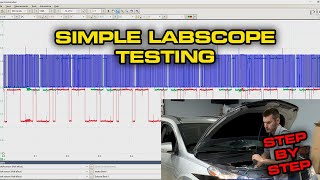
How to confirm: The definitive way is to physically inspect the chains for slack by removing the engine's front timing cover. A professional scan tool or lab scope can also be used to graph the camshaft and crankshaft sensor signals to electronically verify the timing deviation without major disassembly. 🎬 Watch: How to use a labscope to verify timing chain stretch.
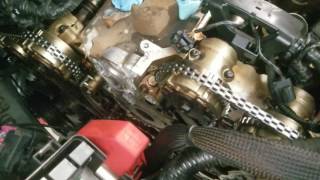
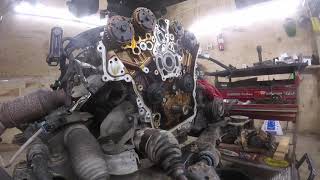
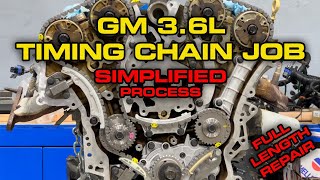
Typical fix: Replace all three timing chains, all tensioners, and all guides with an updated kit. It is critical to use the new, improved parts designed to address this specific flaw.
Est. part cost: $250-$600 - Failed Timing Chain Tensioners or Guides 🔴 High Probability → Shop Engine Timing Chain The tensioners are hydraulic and rely on clean oil at the correct pressure to keep the chains tight. Low or dirty oil weakens their ability to function, allowing chain slack. The plastic guides can become brittle with age and heat cycles, breaking apart and falling into the oil pan. This is often a consequence of or contributor to a stretched chain.
How to confirm: Physical inspection during a timing chain service is the only way to confirm. A failed tensioner will allow visible slack in the chain, and broken guide pieces may be found in the oil pan or timing cover.
Typical fix: Always replaced as part of a complete timing chain service. Never replace just a tensioner or guide without replacing the chains.
Est. part cost: $50-$150 (included in most kits) - Low or Degraded Engine Oil 🟡 Medium Probability The hydraulic tensioners and VVT phasers require clean oil at the proper pressure to function. The original Oil Life Monitor (OLM) could suggest intervals as long as 10,000-12,000 miles, which was proven to be too long for conventional oil, leading to sludge and accelerated wear. Even with synthetic oil, owners who followed the OLM sometimes experienced failures. This is considered a primary contributing factor to the widespread timing chain problem.
How to confirm: Check the oil level and condition on the dipstick. If it's low, black, or sludgy, this is a likely contributing factor.
Typical fix: Perform an oil and filter change with a high-quality full synthetic oil meeting GM's Dexos specification. However, if the P0008 code is already set, this will not fix the stretched chain, but it is critical for the health of the new parts. Post-repair, many owners adopt a 5,000-mile oil change interval regardless of the OLM.
Est. part cost: $40-$80
Rare But Worth Checking
- Faulty Camshaft Actuator Solenoid (VVT Solenoid): → Shop Engine Camshaft A solenoid can get clogged with debris from dirty oil or fail electronically, causing incorrect camshaft phasing. While less common than chain stretch for a P0008 code on this engine, it's easier to check and replace. However, it rarely fixes a P0008 code without an accompanying solenoid-specific code (like P0011 or P0014).
- Worn Camshaft Phaser/Actuator: → Shop Engine Camshaft The phaser itself can fail, but this is much less common than chain issues. TSB #12-06-01-009D explicitly states that actuators should not be replaced for a stretched chain concern. However, some mechanics replace them as a precautionary measure during a full timing chain job, especially if the engine has high mileage.
Diagnosis Steps
- Confirm the code P0008 (and any others like P0009, P0016-P0019) with an OBD-II scanner.
- Check the engine oil level and condition. If low or dirty, perform an oil and filter change with the correct synthetic oil, clear the code, and test drive. If the code returns immediately or under load, proceed.
- Listen for a rattling or scraping noise from the passenger side of the engine bay on a cold start. This is a classic sign of a loose timing chain.
- Using a professional scan tool or lab scope, monitor the live data for camshaft position deviation for Bank 1. Any significant or fluctuating deviation that exceeds the manufacturer's specification confirms a mechanical timing issue.
- If a timing issue is confirmed, the only remaining step is to perform a full timing chain service. This involves significant engine disassembly to access and replace the chains, guides, and tensioners.
Parts You'll Likely Need
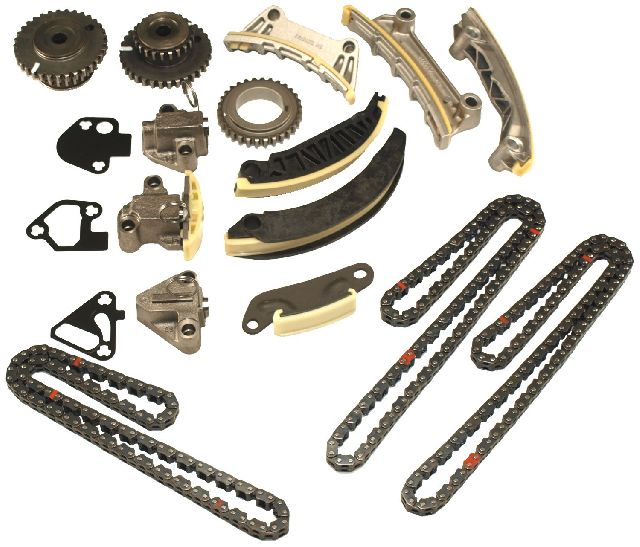
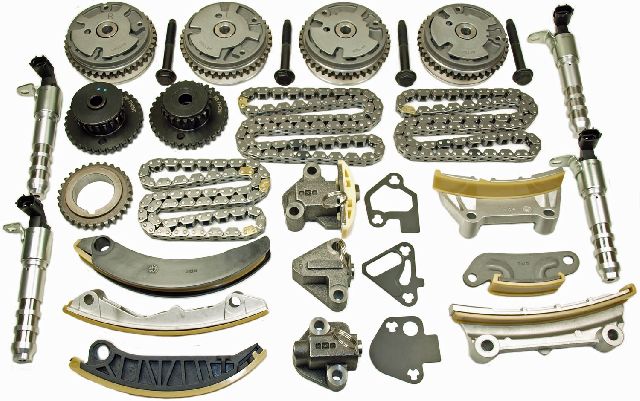
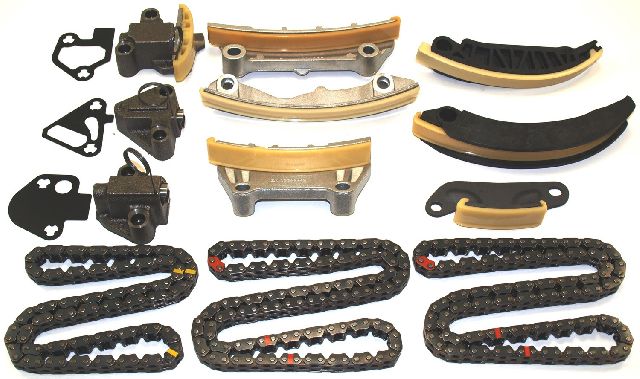
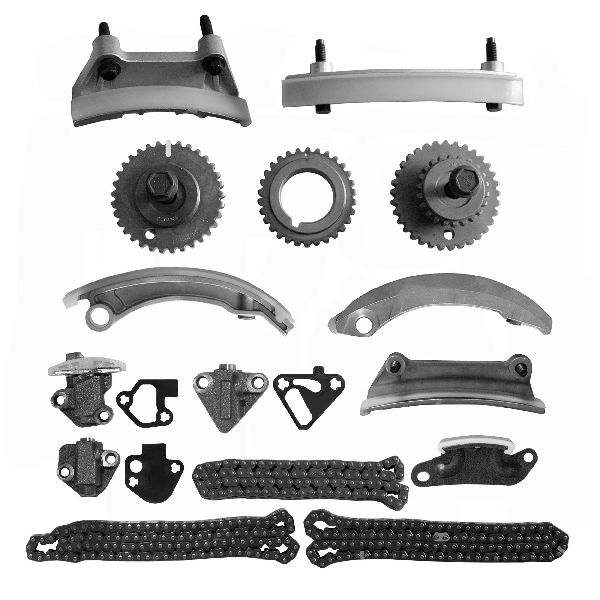
- Engine Timing Chain Kit
(OEM #12651450 (Supersedes earlier versions), 12650230 (For 2007 models))— This is the primary failure point. A complete kit ensures all worn components (3 chains, 3 tensioners, guides) are replaced with updated parts designed to prevent recurrence. TSB 12-06-01-009F announced these updated kits.
Trusted brands: ACDelco (OEM), Cloyes
OEM price range: $400-$550
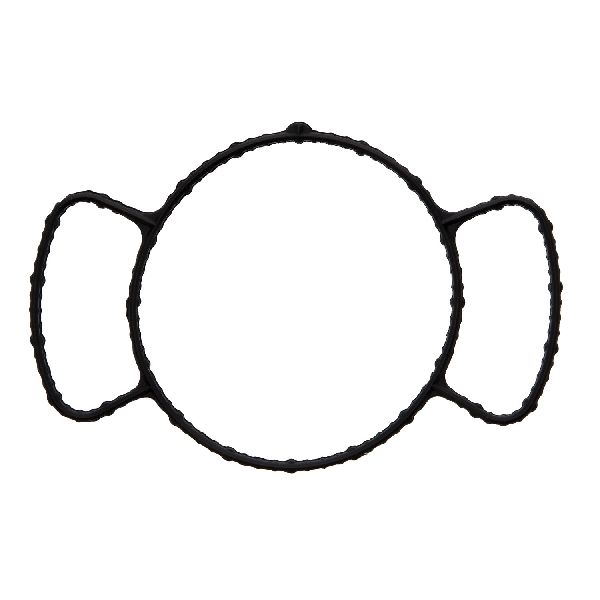
Aftermarket price range: $250-$400 - Timing Cover Gasket Set — The timing cover must be removed for the repair, and the gaskets are single-use and must be replaced to prevent oil leaks.
Trusted brands: Fel-Pro, Mahle
OEM price range: $50-$90
Aftermarket price range: $30-$60 - Engine Oil and Filter — Fresh, clean oil of the correct specification (full synthetic meeting Dexos standards) is critical for the proper function and longevity of the new hydraulic timing chain tensioners.
Trusted brands: ACDelco, Mobil 1
OEM price range: $50-$80
Aftermarket price range: $40-$60
Related Codes That Often Appear With This One
- P0009 — This is the same timing correlation error, but for Bank 2. It's very common to see both P0008 and P0009 together, indicating all three chains are stretched and affecting both cylinder banks.
- P0016 — Crankshaft Position - Camshaft Position Correlation (Bank 1, Sensor A). A more specific code pointing to the intake cam on Bank 1 being out of sync with the crank.
- P0017 — Crankshaft Position - Camshaft Position Correlation (Bank 1, Sensor B). A more specific code pointing to the exhaust cam on Bank 1 being out of sync with the crank.
- P0018 — Crankshaft Position - Camshaft Position Correlation (Bank 2, Sensor A). A more specific code pointing to the intake cam on Bank 2.
- P0019 — Crankshaft Position - Camshaft Position Correlation (Bank 2, Sensor B). A more specific code pointing to the exhaust cam on Bank 2.
Technical Service Bulletins (TSBs) & Recalls
- PIP3423P: Instructs technicians to inspect for loose timing chains or tensioners when P0008, P0009, P0016, P0017, P0018, or P0019 are set.
- 12-06-01-009F: Announces the availability of updated timing chain kits to repair stretched timing chains that cause P0008 and other related codes. It also lists all affected GM models.
- 11340C: This is not a TSB but a 'Special Coverage Adjustment.' It details the extended warranty (10 years/120,000 miles) for timing chain wear and the requirement to reprogram the ECM for shorter oil life intervals.
Platform-Specific Known Issues
- The 3.6L V6 engine in the Saturn Outlook and its platform-mates had a high rate of premature timing chain failure. GM issued TSB #12-06-01-009F announcing the availability of improved timing chain kits to address this.
- GM also issued TSB #PIP3423P, which guides technicians to inspect for loose timing chains or tensioners when P0008 or related codes are present.
- Special Coverage Adjustment #11340C: Due to the high failure rate, GM initiated a special warranty program, #11340C, extending coverage for timing chain wear to 10 years or 120,000 miles from the vehicle's in-service date, whichever came first. This covered the full cost of timing chain replacement. The program also included a mandate to reprogram the ECM to shorten the oil change intervals calculated by the Oil Life Monitor. As of now, all 2007-2010 vehicles have surpassed the 10-year time limit, so this repair is no longer covered by GM.
Wiring & Ground Locations
- G103 — At the back of the passenger side cylinder head on the engine block, just above the bellhousing.. This is a primary ground for the Powertrain Control Module (PCM). A loose or corroded G103 can cause erratic sensor readings and various engine management codes, including timing correlation faults.
- G104 — At the back of the driver's side cylinder head on the engine block, just above the bellhousing.. This is a primary ground for the Throttle Actuator Control (TAC) module and other critical engine systems. A poor connection here can lead to reduced engine power mode and other drivability issues that can accompany a P0008 code.
- ECM (Engine Control Module) — Located under the driver's side kick panel, near the OBD-II port.. This is the computer that receives signals from the cam/crank sensors and sets the P0008 code. While rarely the cause, knowing its location is necessary for advanced diagnostics like checking pinout voltages or inspecting for connector issues.
Real Owner Repair Stories
- Reddit user in r/MechanicAdvice (2007 Suzuki XL7 (with the same GM 3.6L LY7 engine)) — A recurrent P0009 (Bank 2 timing correlation) code.
❌ Tried (didn't work) N/A - The first repair was a full timing chain replacement to address the P0009.
✅ What actually fixed it The initial timing chain replacement fixed the P0009, but a P0008 code (Bank 1) appeared 6 days later. The mechanic diagnosed this new code as a stuck camshaft actuator, which would require another expensive repair. The user was questioning if the new code was a coincidence or a result of the initial repair. This highlights the importance of replacing all related components (chains, guides, tensioners, and potentially VVT components if symptoms warrant) at the same time to avoid sequential failures and repeated labor costs.
OEM Part Supersession History
12651450→12693218, then 12700436— GM has updated the timing chain kits multiple times to improve durability and reduce the stretching issue that plagued the early 3.6L V6 engines.
Heads up: It is critical to use the latest revision kit (e.g., 12700436 or newer) for any repair. While older kits may physically fit, they do not contain the improved parts and the failure is likely to recur.
Model Year Variations Within This Range
- 2007-2008: These models primarily used the 3.6L V6 LY7 engine. This engine featured standard multi-port fuel injection.
- 2009-2010: The 2009 model year introduced the 3.6L V6 LLT engine, which featured direct injection. This resulted in a slight increase in horsepower and torque. While both LY7 and LLT engines share the same fundamental architecture and are known for timing chain issues, there can be differences in specific components like high-pressure fuel pumps and intake manifolds. The core cause of P0008 (timing chain stretch) remains the same across both engine types.
Helpful Videos
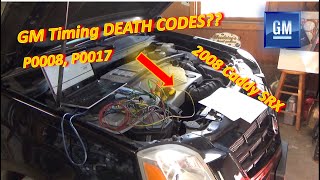
We Have This Part in Stock
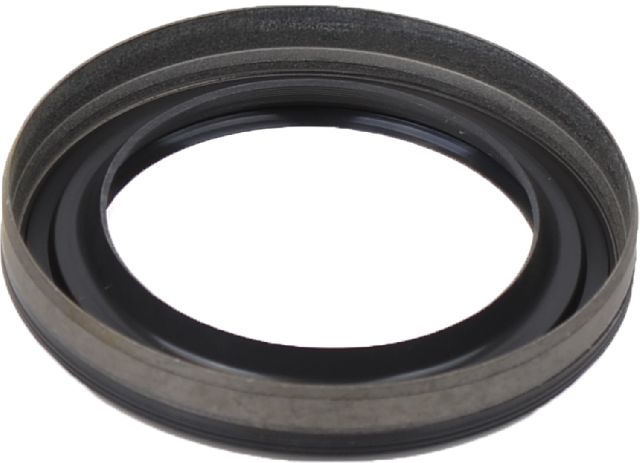

The information in this article is provided for general reference and educational purposes only. Vehicle specifications, procedures, and part compatibility can vary by production date, trim level, and region. Always consult your vehicle's factory service manual and verify part numbers before purchasing or performing repairs. Safety-critical components such as airbags, seat belts, and braking systems should be installed by a qualified professional.
- Saturn OUTLOOK:
- 🧭 Diagnostic Flowchart
- 🎬 Helpful Videos
- 🛍️ Shop This Part
- What's Unique About the 2007-2010 Saturn OUTLOOK
- Symptoms You May Notice
- Most Likely Causes
- Rare But Worth Checking
- Diagnosis Steps
- Parts You'll Likely Need
- Related Codes That Often Appear With This One
- Technical Service Bulletins (TSBs) & Recalls
- Platform-Specific Known Issues
- Wiring & Ground Locations
- Real Owner Repair Stories
- OEM Part Supersession History
- Model Year Variations Within This Range
- 🎟️ Get 5% Off