

P0008 on 2008-2010 Saturn VUE: Causes and Fixes for Engine Position System Performance
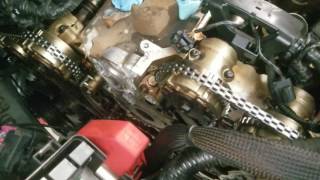
On a 2008-2010 Saturn VUE with the 3.6L V6 engine, code P0008 almost always indicates the timing chains have stretched. This is a major, labor-intensive repair costing between $1,800 and $3,000, and requires replacing the chains, tensioners, and guides. The issue was so common GM issued a special warranty extension to cover it.
- P0008 on a 3.6L V6 Saturn VUE is a serious code that almost certainly means the timing chains have stretched.
- This is a known, widespread issue with this specific GM engine, confirmed by numerous TSBs and a special warranty program.
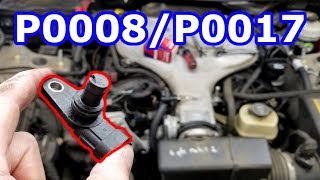
- Do not waste money replacing camshaft or crankshaft sensors; they are simply reporting the mechanical fault.
- The repair is expensive ($1800-$3700) and labor-intensive, but necessary to prevent catastrophic engine failure.
- Using the latest revised timing chain kit and adhering to strict 5,000-mile oil changes with full synthetic oil is critical for the new chains' longevity.
What's Unique About the 2008-2010 Saturn VUE
The 2008-2010 Saturn VUE uses the GM 3.6L 'High Feature' V6 (engine code LY7), which is notorious for premature timing chain stretching. This widespread issue was so common that GM issued multiple Technical Service Bulletins (TSBs) and a Special Coverage Adjustment (#11340C) that extended the warranty for this specific failure to 10 years or 120,000 miles. The problem was linked to two primary factors: the design of the original timing chains and the original Oil Life Monitor (OLM) programming, which permitted overly long oil change intervals, leading to oil breakdown that accelerated wear.
Diagnostic Flowchart
Tap your situation to follow the diagnostic path that matches what you're seeing on this vehicle.
Symptoms You May Notice
- Check Engine Light is on
- Reduced engine power and poor acceleration, sometimes described as the engine feeling like it's 'lugging'.
- Rough or unstable idle
- Rattling, scraping, or 'clattering' noise from the passenger side of the engine, especially on cold starts.
- Decreased fuel economy
- Engine may set misfire codes as the incorrect timing affects combustion.
- Replacing camshaft or crankshaft position sensors. The code P0008 indicates the sensors are working but are reporting a mechanical problem. Replacing the sensors will not fix the underlying timing chain misalignment.
Most Likely Causes
- Stretched Timing Chains 🔴 High Probability → Shop Engine Timing Chain The 3.6L LY7 V6 engine used in this vehicle has a well-documented history of premature timing chain wear. This was due to a combination of the original chain design and lubrication issues. GM later released updated timing chain kits to address this.
How to confirm: A mechanic can use a scan tool to view camshaft/crankshaft correlation data; a significant deviation confirms a timing issue. Physical inspection and measuring chain slack is the ultimate confirmation but requires extensive labor.
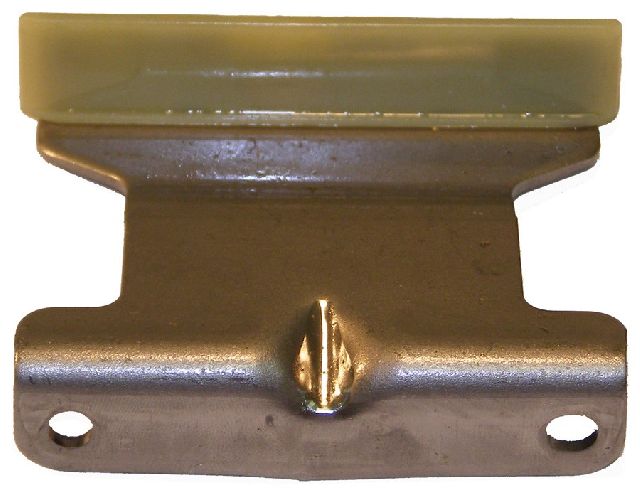
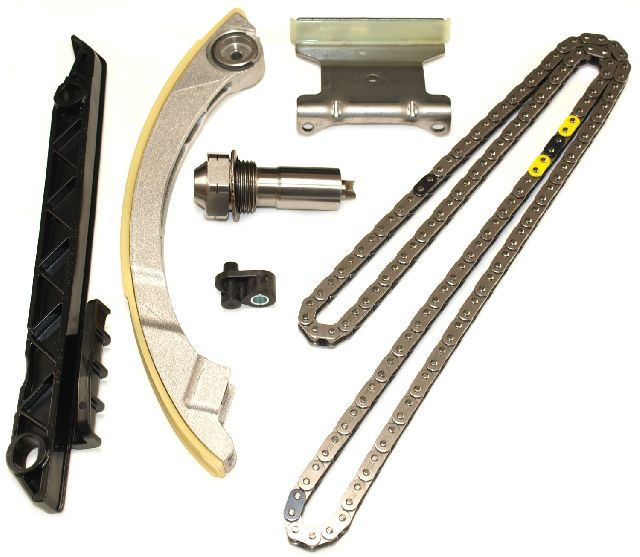
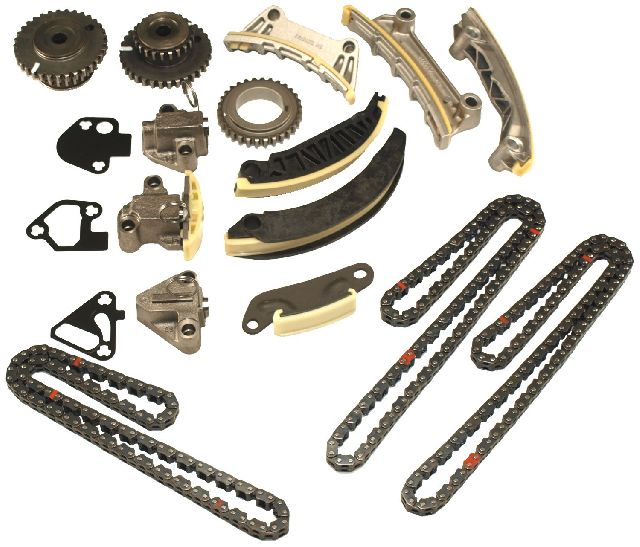
Typical fix: Replace all three timing chains, all tensioners, and all guides. This is typically done as a complete kit. It is critical to use the updated, more durable parts.
Est. part cost: $250-$600 - Worn Timing Chain Tensioners or Guides 🔴 High Probability → Shop Engine Timing Chain The tensioners are hydraulic and rely on oil pressure to keep the chains tight. The plastic guides can become brittle and break. These parts wear along with the chains and are considered a primary contributor to the chains becoming loose.
How to confirm: Confirmed during visual inspection when replacing the timing chains. A rattling noise on startup is a strong indicator of a failing tensioner that is slow to build oil pressure.
Typical fix: Always replaced as part of a complete timing chain kit service. It is not recommended to replace only the tensioners or guides.
Est. part cost: $0 (Included in timing chain kit) - Low or Degraded Engine Oil 🟡 Medium Probability The timing chain tensioners are hydraulic and rely on clean oil at the proper pressure to function. Extended oil change intervals, as originally recommended by GM's Oil Life Monitor, contributed to oil breakdown, sludge formation, and accelerated chain wear. Even owners using high-quality synthetic oil experienced failures when following the original OLM.
How to confirm: Check the oil level on the dipstick and inspect its condition. If the oil is very low, black, or sludgy, this is a likely contributing factor.
Typical fix: Perform an oil and filter change with the correct specification oil (5W-30 full synthetic meeting GM's Dexos specification is recommended). However, this will not fix stretched chains; it is a critical preventative measure for the new chains.
Est. part cost: $40-$80
Rare But Worth Checking
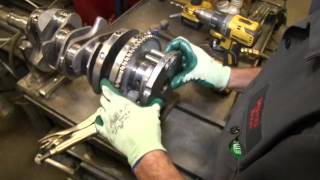
- Slipped Crankshaft Reluctor Wheel: → Shop Engine Crankshaft While rare, GM issued TSBs (including PIP3423P) noting that the reluctor wheel, which the crankshaft position sensor reads, can physically move on the crankshaft because it is only a press-fit. This creates a timing mismatch signal even with good chains. Diagnosis can sometimes be done with a borescope through the crank sensor port, but the fix requires either crankshaft replacement or permanently fixing the wheel in place. 🎬 Watch: How to secure a slipped crankshaft reluctor wheel.
Diagnosis Steps
- Read the codes with an OBD-II scanner to confirm P0008 and any other related codes (like P0009, P0016-P0019).
- Check the engine oil level and condition. If low or dirty, correct this first, clear the codes, and see if they return. This is a critical first step as low oil pressure affects the hydraulic tensioners.
- Listen for a rattling or scraping noise from the engine's front (passenger side) on a cold start. This is a classic sign of a failing timing chain tensioner or loose chain.
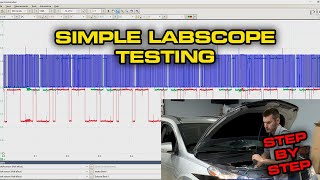
- Use an advanced scan tool to monitor the camshaft and crankshaft position sensor data, specifically looking at the Camshaft Angle Variance parameters. A consistent deviation of more than 4 degrees indicates a mechanical timing problem. The most accurate electronic test is to use an oscilloscope to compare the cam and crank sensor waveforms against a known-good pattern. 🎬 Watch: How to test timing chain correlation with a labscope.
- If a timing deviation is confirmed by scan tool data or noise, the next step is to proceed with the timing chain replacement procedure.
- As a rare final check, particularly if new chains don't solve the issue, inspect the crankshaft reluctor wheel for movement as per TSB PIP3423P. This can sometimes be viewed with a borescope through the crankshaft position sensor hole.
Parts You'll Likely Need
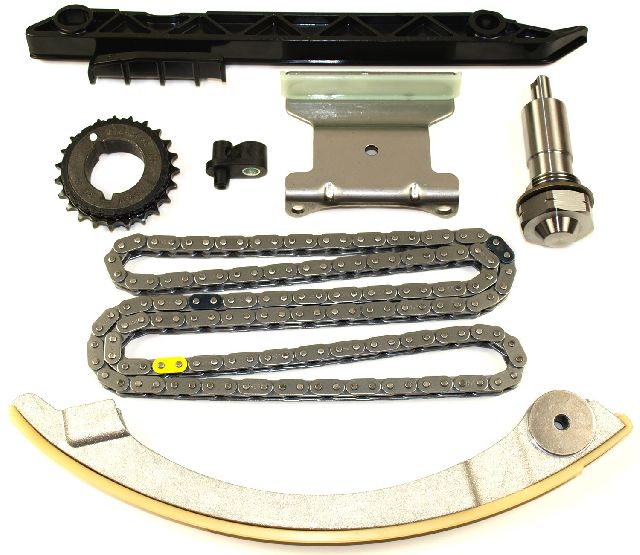
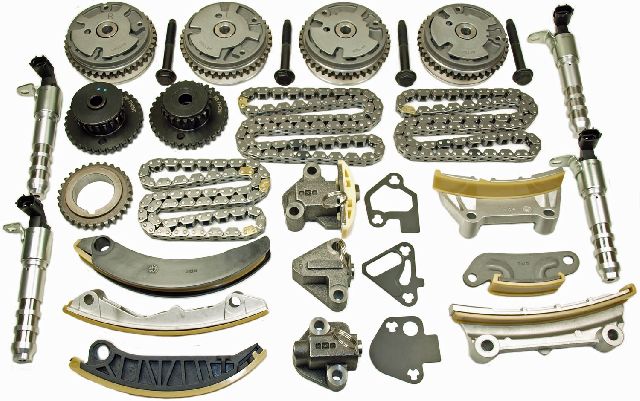
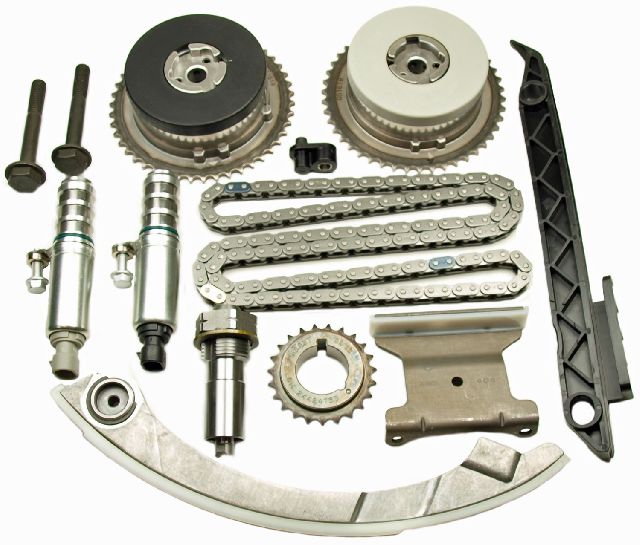
- Engine Timing Chain Kit
(OEM #12651450 (superseded by 12693218))— This is the definitive fix. The kit should include three chains, three tensioners, and all necessary guides and gaskets to address the common wear and stretching issue. Using the latest revised GM parts is crucial for a lasting repair.
Trusted brands: ACDelco (OEM), Cloyes (e.g., 9-0753S), Melling
OEM price range: $400-$600
Aftermarket price range: $250-$450
Related Codes That Often Appear With This One
- P0009 — This is the equivalent code for Bank 2 (the front cylinder head). It's very common to see both P0008 and P0009 together, as the primary timing chain affects both banks.
- P0016, P0017, P0018, P0019 — These are more specific camshaft/crankshaft correlation codes for intake and exhaust cams on both banks. They frequently accompany P0008 and are all caused by the same stretched timing chain issue, as noted in TSB #PIP3423P and other service documents.
Technical Service Bulletins (TSBs) & Recalls
- PIP3423P: Notes that codes P0008, P0009, P0016-P0019 can be caused by loose timing chains, tensioners, or a rare slipped crankshaft reluctor wheel.
- 12-06-01-009F: Announces the availability of updated timing chain kits to repair stretched timing chains that cause code P0008 and related DTCs. It explicitly lists the 2008-2010 Saturn VUE as an affected vehicle.
- 11340C: Details the Special Coverage Adjustment for premature timing chain wear, extending the warranty to 10 years/120,000 miles and including an ECM reprogram to adjust the Oil Life Monitor.
Platform-Specific Known Issues
- The GM 3.6L LY7 engine has a widely recognized design issue leading to premature timing chain failure. This was the subject of GM Special Coverage Program #11340C, which extended the warranty for this specific problem to 10 years or 120,000 miles. This program has now expired for all 2008-2010 vehicles.
- The original factory oil life monitoring system (OLM) allowed for excessively long oil change intervals, which is considered a major contributor to the accelerated wear of the timing chains due to oil degradation. The special coverage program also included a reprogramming of the ECM to shorten these intervals.
Mechanic-Grade Diagnostic Values
- Scan Tool Cam/Crank Correlation PID — expected: Less than +/- 4 degrees of deviation at idle.. Failure: A consistent deviation of more than 4 degrees, with the code often setting when deviation exceeds 6-9 degrees, strongly indicates a mechanical timing issue.
- VVT Camshaft Actuator Solenoid Resistance (LY7 Engine) — expected: 4.6-7.9 Ohms.. Failure: A reading of 0 Ohms (short circuit) or infinite/OL (open circuit) indicates a failed solenoid.
- Engine Oil Pressure (Mechanical Gauge) — expected: Minimum 10 psi at idle (hot); Minimum 20 psi at 2,000 RPM (hot).. Failure: Pressure below these minimums indicates a serious mechanical issue (e.g., worn oil pump, internal leak, worn bearings) that can cause or exacerbate timing chain problems.
- Oscilloscope Cam/Crank Waveform Pattern (Bank 1 - Firewall Side) — expected: On a known-good engine, the intake cam sensor signal (Bank 1) should cross/split the missing tooth gap of the crankshaft sensor signal. The exhaust cam sensor signal should go high approximately three crank teeth after the missing tooth gap.. Failure: A stretched chain will cause both cam signals to shift to the right (retard) relative to the crankshaft signal. This is the most definitive non-invasive test.
Scan Tool Commands That Help
- GDS2 / Tech2: Camshaft Position Actuator Solenoid Test — This bidirectional control allows a technician to command the VVT solenoids on and off while monitoring camshaft angle data. It helps rule out a faulty solenoid or phaser if the P0008 code is present but the cause is uncertain.
Wiring & Ground Locations
- G105 — At the left rear of the engine.. This is a primary engine ground. A poor connection here can cause erratic signals from critical sensors like the crankshaft and camshaft position sensors, potentially leading to misdiagnosis.
- G106 — On the engine, at the left front top corner (for the 3.6L V6).. Another critical engine ground point. A loose or corroded connection at G106 can disrupt the ground reference for the ECM and various engine sensors, causing intermittent and hard-to-diagnose electrical faults.
- ECM (Engine Control Module) — Located in the left front of the engine compartment.. The ECM is the computer that receives and interprets the signals from the cam and crank sensors. All related wiring terminates here, and some owners have reported that adding a redundant ground wire directly to the ECM body can resolve difficult-to-trace electrical issues.
Real Owner Repair Stories
- Camaro5 Forums user 'secrethero89' (Chevrolet Camaro with 3.6L V6 (LLT engine, similar architecture to LY7)) — P0008 and P0009 codes present.
❌ Tried (didn't work) Replaced all 4 camshaft position sensors, Replaced all 4 VVT solenoids, Replaced timing chains (Cloyes kit), Replaced VVT sprockets (phasers), Replaced crankshaft position sensor
✅ What actually fixed it The crankshaft reluctor wheel had slipped. Even after replacing every other timing component, the codes persisted until the crankshaft itself was replaced. This highlights a rare but critical failure mode when a full timing job doesn't solve the problem. - Reddit user on r/MechanicAdvice (2007 Suzuki XL7 with 3.6L V6 (Same GM LY7 engine)) — Initially had a P0009 code. After a professional timing chain replacement, a P0008 code appeared 6 days later.
❌ Tried (didn't work) Complete timing chain replacement.
✅ What actually fixed it The mechanic diagnosed a stuck camshaft actuator (phaser) as the cause of the new P0008 code, suggesting it was an unlucky coincidence and unrelated to the timing chain job. This story illustrates that secondary component failures (like phasers) can occur immediately following a major repair, complicating diagnosis.
OEM Part Supersession History
12651450→12679117, then 12693218, then 12700436— GM released multiple revisions of the timing chain kit to improve the durability of the chains and address the premature stretching issue.
Heads up: Using an older, superseded part number is highly inadvisable as it will likely lead to a repeat failure. Always use the latest available OEM or equivalent aftermarket kit.
Helpful Videos
We Have This Part in Stock

The information in this article is provided for general reference and educational purposes only. Vehicle specifications, procedures, and part compatibility can vary by production date, trim level, and region. Always consult your vehicle's factory service manual and verify part numbers before purchasing or performing repairs. Safety-critical components such as airbags, seat belts, and braking systems should be installed by a qualified professional.
- Saturn VUE:
- 🧭 Diagnostic Flowchart
- 🎬 Helpful Videos
- 🛍️ Shop This Part
- What's Unique About the 2008-2010 Saturn VUE
- Symptoms You May Notice
- Most Likely Causes
- Rare But Worth Checking
- Diagnosis Steps
- Parts You'll Likely Need
- Related Codes That Often Appear With This One
- Technical Service Bulletins (TSBs) & Recalls
- Platform-Specific Known Issues
- Mechanic-Grade Diagnostic Values
- Scan Tool Commands That Help
- Wiring & Ground Locations
- Real Owner Repair Stories
- OEM Part Supersession History
- 🎟️ Get 5% Off