

P0009 on 2008-2015 Buick Enclave: Timing Chain Causes and Fixes
P0009 on a 2008-2015 Buick Enclave almost always means the timing chains have stretched. This is a common and serious issue with the 3.6L V6 engine, requiring a complete timing chain kit replacement. Expect a repair cost of $2,800 to $3,600. Ignoring this can lead to catastrophic engine failure.
- P0009 on a 2008-2015 Enclave is a serious code that almost certainly points to stretched timing chains.
- This is a known, widespread issue with the 3.6L V6 engine; you are not alone.
- Do not waste money on replacing sensors. The problem is mechanical and requires a complete timing chain kit replacement.
- The repair is expensive ($2700+) and complex, requiring a professional mechanic with experience on these engines.
- Using high-quality, dexos-approved 5W-30 oil and changing it more frequently than the oil life monitor suggests can help prolong the life of the new chains.
What's Unique About the 2008-2015 Buick ENCLAVE
The first-generation Buick Enclave and its siblings (Chevy Traverse, GMC Acadia, Saturn Outlook) using the 3.6L V6 engine are widely known for premature timing chain wear. This isn't a random failure; it's a well-documented pattern. The primary cause is attributed to the original timing chain design combined with the manufacturer's initial long oil change intervals, which were later found to be insufficient to prevent oil degradation and chain stretch. GM acknowledged this by issuing Special Coverage Adjustment #11340C and multiple Technical Service Bulletins (TSBs) for this specific problem.
Diagnostic Flowchart
Tap your situation to follow the diagnostic path that matches what you're seeing on this vehicle.
Symptoms You May Notice
- Check Engine Light is on, often with codes P0008, P0017, etc.
- Rattling or scraping noise from the engine, especially on a cold start, that may last for a few seconds.
- Reduced engine power and sluggish acceleration.
- Rough or unstable engine idle.
- Difficulty starting the engine or stalling.
- Increased fuel consumption.
- Finding metallic shavings in the engine oil during an oil change is a definitive sign of chain/guide wear.
- Replacing only the camshaft position sensors. This is a frequent mistake that wastes money, as the P0009 code on this engine is almost always a mechanical timing issue, not an electrical sensor failure.
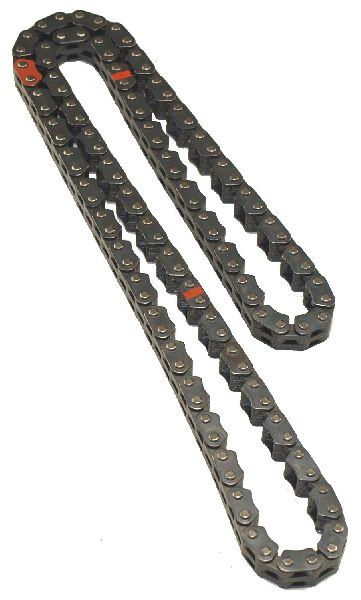
- Replacing only one timing chain. The 3.6L V6 has three separate timing chains (one primary, two secondary). All should be replaced at the same time, along with all related guides and tensioners, to ensure a lasting repair.
- Performing only an oil change. While low or dirty oil is a major cause, once the chains have physically stretched enough to set a code, an oil change alone will not fix it.
Most Likely Causes
- Stretched Timing Chains 🔴 High Probability → Shop Engine Timing Chain The original timing chains in early 3.6L V6 engines (especially the LY7 and early LLT) were of a design that was susceptible to premature wear and stretching. This was made worse by an overly optimistic Oil Life Monitoring System (OLMS) that allowed for excessively long oil change intervals, leading to oil breakdown and accelerated wear.
How to confirm: A mechanic can use a scan tool to read cam/crank correlation data to confirm the deviation. 🎬 Watch: How to use a labscope to confirm timing deviation. A physical inspection to measure chain slack is the definitive confirmation, but it is labor-intensive and usually only done once the repair is approved.
Typical fix: Replace all three timing chains, all tensioners, and all guides with an updated design timing chain kit.
Est. part cost: $300-$500 - Worn Timing Chain Tensioners and Guides 🔴 High Probability → Shop Engine Timing Chain The hydraulic tensioners rely on clean oil at proper pressure. Degraded oil can cause them to fail or not provide adequate tension. The plastic/nylon guides can become brittle with age and heat cycles, breaking apart and causing chain slack and noise.
How to confirm: Diagnosed during a physical inspection when replacing the timing chains. A distinct startup rattle is a strong indicator of a failed tensioner or broken guide pieces. 🎬 See this video to hear what timing chain rattle sounds like.
Typical fix: Always replaced as part of a complete timing chain kit replacement. It is considered malpractice to replace the chains without also replacing all guides and tensioners.
Est. part cost: $0 (Included in timing chain kit) - Low Engine Oil Level or Degraded Oil 🟡 Medium Probability The timing chain tensioners are hydraulic and require clean oil at the proper pressure to function. These engines can consume oil, and owners who follow the original, long oil change intervals may find the oil level critically low. An owner complaint (NHTSA ODI #11265888) noted the code appeared when the oil was 3 quarts low. Low or dirty oil starves the tensioners, accelerating chain wear.
How to confirm: Check the oil level and condition on the dipstick. If the oil is very low or appears black and sludgy, this is a major contributing factor.
Typical fix: Perform an oil and filter change with the correct specification oil (GM dexos-approved 5W-30). However, if the chain is already stretched and the code is set, this will not fix the problem but is critical for the health of the new parts after the repair.
Est. part cost: $50-$100
Rare But Worth Checking
- Shifted Crankshaft Reluctor Wheel: → Shop Engine Crankshaft GM TSB PIP3423P outlines a rare scenario where, even after timing chain replacement, the P0009 code (and others) persists. This can be caused by the crankshaft position reluctor wheel (a toothed ring on the crankshaft) physically slipping from its original position. Diagnosis can sometimes be done with a borescope through the crank sensor hole to inspect its alignment. The fix is a complete crankshaft replacement, a massive and very expensive repair.
- Faulty Camshaft or Crankshaft Position Sensor: → Shop Engine Crankshaft Position Sensor While a sensor can fail, it is extremely uncommon for this to be the root cause of P0009 on this platform. The problem is almost always mechanical (the chains). Do not replace sensors as a first step; this is a common misdiagnosis that wastes money.
- Failed VVT Solenoid (Actuator): A stuck or clogged Variable Valve Timing (VVT) solenoid can cause timing correlation issues. However, this typically sets more specific codes related to a single camshaft (like P0021 or P0024) rather than the general bank correlation code P0009. It's more likely to be a secondary issue or a misdiagnosis.
Diagnosis Steps
- Verify Engine Oil Level and Condition: Check the dipstick. If the oil is low or dirty, correct this first. An oil change is a good first step for documentation but will not fix a stretched chain.
- Scan for All Codes: Use an OBD-II scanner to confirm P0009 and look for other related codes like P0008, P0016, P0017, P0018, or P0019. The presence of multiple timing codes makes a mechanical fault highly likely.
- Listen for Engine Noise: Start the engine from cold and listen for a distinct rattling or scraping sound from the front of the engine (passenger side). This noise, even if it only lasts 2-3 seconds, is a classic symptom of a failing timing chain tensioner.
- Analyze Cam/Crank Data (Professional): A technician with an advanced scan tool can view the cam/crank correlation data to see how many degrees the timing has deviated. This confirms the misalignment electronically without disassembly.
- Physical Inspection (Professional): The definitive diagnosis involves accessing the timing chains to physically check for slack or wear. This is a labor-intensive step (requires removing the engine front cover) and is usually only done when the decision to perform the repair has already been made.
- Borescope Inspection for Reluctor Wheel (Rare): If new chains do not fix the code, a mechanic may use a borescope through the crankshaft position sensor port to inspect the reluctor wheel for slippage, as per TSB PIP3423P.
Parts You'll Likely Need
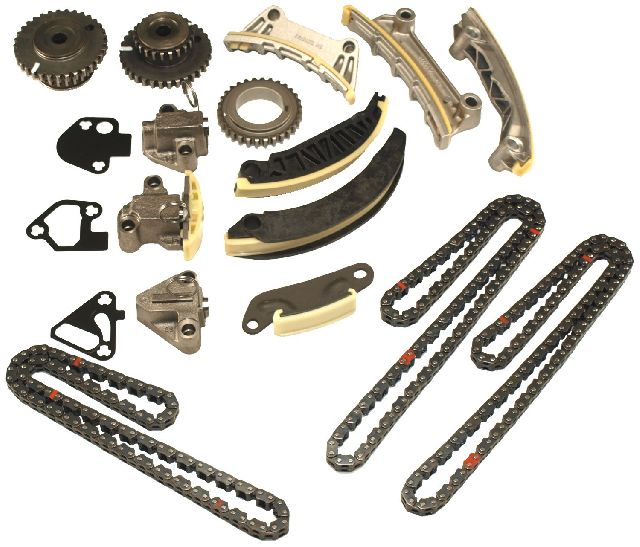
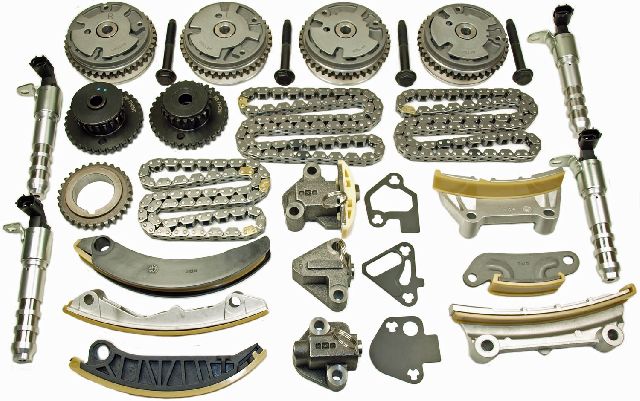
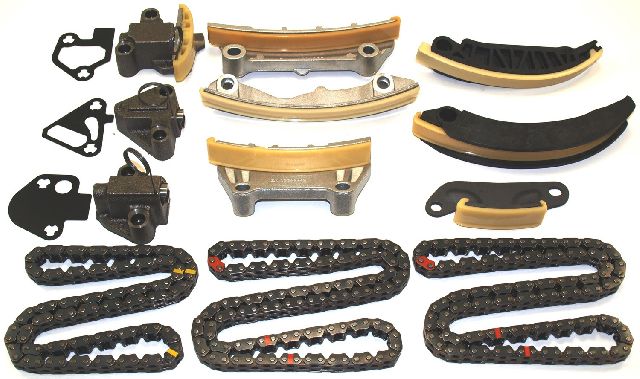
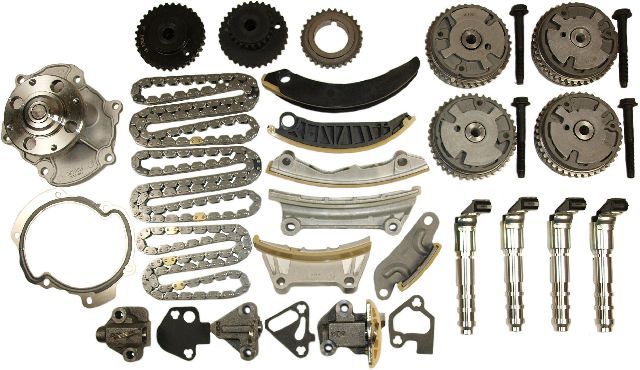
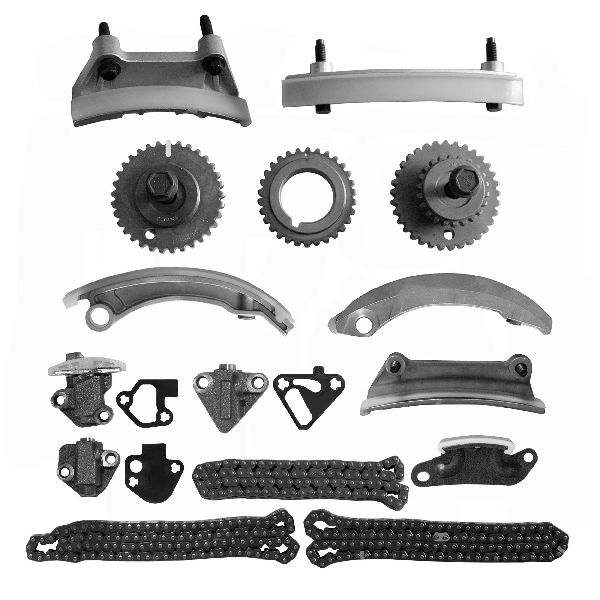
- Engine Timing Chain Kit
(OEM #12693218 (Supersedes 12651450))— This is the comprehensive solution. A complete OEM kit includes all three chains, all three tensioners, guides, seals, and gaskets. The original part number 12651450 was used in TSBs but has since been updated by GM. Using a complete, updated kit is critical. 🎬 Watch: Full length walkthrough of the timing chain replacement process.
Trusted brands: ACDelco (GM Original Equipment), Cloyes
OEM price range: $350-$500
Aftermarket price range: $250-$400 - Engine Oil and Filter — Fresh, correct-specification oil (dexos1 5W-30) and a new filter are mandatory after a timing chain replacement to ensure the new hydraulic tensioners and chains are properly lubricated from the start.
Trusted brands: ACDelco, Mobil 1, Pennzoil
OEM price range: $60-$90
Aftermarket price range: $40-$70
Related Codes That Often Appear With This One
- P0008 — P0008 is 'Engine Position System Performance Bank 1'. It's the companion code to P0009 for the other cylinder bank (closer to the radiator). Seeing both P0008 and P0009 together is extremely common and is a near-certain indicator of stretched timing chains affecting the entire engine.
- P0017 — 'Crankshaft Position - Camshaft Position Correlation Bank 1 Exhaust'. This is a more specific timing correlation code. It is often set along with P0008 and P0009, as noted in TSB #PIP3423P.
- P0016, P0018, P0019 — These are all related cam/crank correlation codes for different camshafts (intake/exhaust) and banks. TSB #12-06-01-009F lists all of these codes as being caused by stretched timing chains.
Technical Service Bulletins (TSBs) & Recalls
- PIP3423P: A broad preliminary bulletin covering multiple GM vehicles with the HFV6 engine. It advises technicians to first check for loose timing chains for codes P0008/P0009, but if that's not the cause, to inspect for a shifted crankshaft reluctor wheel.
- 12-06-01-009F: This bulletin announces the availability of updated, comprehensive timing chain service kits to repair stretched timing chains that cause DTCs P0008, P0009, P0016, P0017, P0018, and/or P0019. It lists the specific part numbers for the kits.
- 11340C: This is the Special Coverage Adjustment that extended the warranty for timing chain replacement to 10 years/120,000 miles for affected vehicles, including the 2009 Enclave. It superseded earlier attempts that only involved reprogramming the ECM.
Platform-Specific Known Issues
- GM issued Special Coverage Adjustment #11340C for some 2009 Enclaves (and other models/years) which extended the warranty on the timing chains to 10 years or 120,000 miles. This program acknowledged the high failure rate. While now expired for most vehicles due to age, it officially documents the problem.
- The initial fix attempted by GM under program #10287 was just an ECM reprogram to change the sensitivity of the Oil Life Monitor. When that proved insufficient, they issued #11340C to cover the full chain replacement.
- The root cause was a combination of the original chain design and an overly optimistic oil life monitoring system, which led to oil degradation and accelerated chain stretch. Later ECM updates and improved chain designs were implemented to mitigate the issue on newer vehicles.
Mechanic-Grade Diagnostic Values
- Cam/Crank Correlation Waveform Analysis (Lab Scope) — expected: On a known-good engine, the Bank 2 (firewall side) intake cam sensor signal should cross within the missing tooth gap of the crankshaft sensor signal. The Bank 2 exhaust cam sensor signal should cross about three teeth after the gap.. Failure: If the camshaft sensor signal has shifted relative to the crankshaft signal's missing tooth gap, it indicates a stretched chain or jumped timing. A deviation of 10-12 degrees is often enough to set a correlation code.
- Camshaft Position Actuator Solenoid Resistance — expected: Approximately 8 to 13 ohms.. Failure: A reading significantly outside this range, or an open/short circuit, indicates a failed solenoid. However, this typically sets solenoid-specific codes (like P0020/P0023), not P0009.
Scan Tool Commands That Help
- GDS2 (GM Dealer Scan Tool): Crankshaft Position Variation Learn — This procedure must be performed after replacing the timing chains, crankshaft, or crankshaft position sensor. It allows the ECM to learn the minor variations in the new crankshaft reluctor wheel to ensure accurate misfire detection and timing. Failure to perform this can lead to other running issues or codes.
- GDS2 or high-end bidirectional scanner: VVT (OCV) Solenoid Actuator Test — Used to test the functionality of the camshaft actuator solenoids. When commanded ON with the engine running, the engine should hesitate or stall. This helps rule out a stuck solenoid, though P0009 is rarely caused by a solenoid alone.
Wiring & Ground Locations
- ECM (Engine Control Module) — Located in the engine compartment, on the front of the motor.. The ECM is the central computer that receives signals from the cam and crank sensors and determines if they are out of sync. All related wiring terminates here.
- G101 — Located at the left front of the engine, on the lower block.. This is a primary ground point for the Engine Control Module (ECM). A poor ground here could potentially cause erratic sensor readings, although it is an unlikely cause for a persistent P0009.
- Bank 2 Camshaft Position Sensors — On the firewall side of the engine (Bank 2), inserted into the front timing cover. There is one for the intake camshaft and one for the exhaust camshaft.. These sensors provide the camshaft position data for Bank 2 to the ECM. The P0009 code is set when the data from these sensors does not correlate with the crankshaft sensor's data.
- Crankshaft Position (CKP) Sensor — Typically located on the lower side of the engine block, reading a reluctor wheel on the crankshaft. Access often requires removing a shield from underneath.. This sensor provides the primary reference signal for engine speed and crankshaft position. The ECM compares the camshaft signals against this signal to determine timing correlation.
Real Owner Repair Stories
- Reddit user on r/MechanicAdvice (2010 Buick Enclave with 130,000 miles) — Check engine light with code P0008 (Bank 1 timing performance).
❌ Tried (didn't work) The user was asking for advice before proceeding with repairs.
✅ What actually fixed it A professional mechanic in the thread confirmed the diagnosis is a stretched timing chain and that the only proper fix is replacement. The mechanic noted that the job is very labor-intensive, often requiring the entire powertrain to be dropped out from the bottom of the vehicle.
OEM Part Supersession History
12651450→12693218, which is now superseded by 12700436— The timing chain kits have been updated over the years to improve the design of the chains and guides to combat premature stretching.
Heads up: While physically interchangeable, using an older design kit on a newer engine is not recommended. Always use the latest superseded part number for the repair to get the most durable components.
Model Year Variations Within This Range
- 2008-2011: These years primarily used the 3.6L LLT V6 engine. While it featured direct injection, it used the earlier, more problematic timing chain design that is highly susceptible to stretching.
- 2012-2015: Starting in the 2012 model year, the Buick Enclave began using the updated 3.6L LFX V6 engine. The LFX featured redesigned cylinder heads and, most importantly, an improved timing chain design with an 'inverted tooth' pattern that is more durable and less prone to the stretching issues that plagued the earlier LLT engine. While still possible, timing chain failure is less common on the LFX.
Helpful Videos

We Have This Part in Stock

The information in this article is provided for general reference and educational purposes only. Vehicle specifications, procedures, and part compatibility can vary by production date, trim level, and region. Always consult your vehicle's factory service manual and verify part numbers before purchasing or performing repairs. Safety-critical components such as airbags, seat belts, and braking systems should be installed by a qualified professional.
- Buick ENCLAVE:
- 🧭 Diagnostic Flowchart
- 🎬 Helpful Videos
- 🛍️ Shop This Part
- What's Unique About the 2008-2015 Buick ENCLAVE
- Symptoms You May Notice
- Most Likely Causes
- Rare But Worth Checking
- Diagnosis Steps
- Parts You'll Likely Need
- Related Codes That Often Appear With This One
- Technical Service Bulletins (TSBs) & Recalls
- Platform-Specific Known Issues
- Mechanic-Grade Diagnostic Values
- Scan Tool Commands That Help
- Wiring & Ground Locations
- Real Owner Repair Stories
- OEM Part Supersession History
- Model Year Variations Within This Range
- 🎟️ Get 5% Off