

P0009 on 2005-2012 Buick LaCrosse: Stretched Timing Chain Causes and Fixes
On a 2005-2012 Buick LaCrosse with the 3.6L V6 engine, code P0009 almost always indicates the timing chains have stretched. This is a serious and expensive repair that involves replacing the chains, guides, and tensioners, often costing over $2,000 at a shop. This was a known issue, leading GM to issue a special warranty extension that has since expired for most vehicles.
- P0009 on a 3.6L LaCrosse is a serious code that almost always points to stretched timing chains.
- Do not ignore this code or its symptoms (like a startup rattle) as it can lead to catastrophic engine failure.
- The repair is complex and expensive, requiring the replacement of all chains, guides, and tensioners with a complete kit.
- Simply replacing sensors is highly unlikely to fix the problem and will be a waste of money.
- Regular, high-quality oil changes are critical to maximizing the life of the new timing chains.
What's Unique About the 2005-2012 Buick LACROSSE
The 3.6L V6 engines (codes LY7 and LLT) used in this era of Buick LaCrosse are well-documented as being prone to premature timing chain stretching. The original equipment chains were susceptible to wear, a problem often exacerbated by extended oil change intervals recommended by the vehicle's own Oil Life Monitor (OLM) system. General Motors acknowledged this widespread issue by releasing multiple Technical Service Bulletins (TSBs) and even a special warranty extension under Special Coverage Adjustment #11340. This program extended the timing chain warranty to 10 years or 120,000 miles, but it has likely expired for most of these vehicles by now.
Diagnostic Flowchart
Tap your situation to follow the diagnostic path that matches what you're seeing on this vehicle.
Generation note: This issue affects both the first generation (2005-2009) and second generation (2010-2012) LaCrosse models equipped with the 3.6L V6 engine (LY7 and LLT respectively). The problem is well-documented across this entire period and in many other GM vehicles using the same engine family.
Symptoms You May Notice
- Check Engine Light is on
- Rattling or clattering noise from the engine, especially for a few seconds on a cold startup
- Rough or unstable idle
- Reduced engine power and hesitation during acceleration
- Increased fuel consumption
- Difficulty starting the engine
- Replacing only the camshaft position sensors without verifying the physical engine timing.
- Replacing only the crankshaft position sensor.
- Replacing VVT solenoids without addressing the underlying chain stretch.
- Replacing the transmission due to poor acceleration performance, when the root cause is the engine's lack of power from incorrect timing.
Most Likely Causes
- Stretched Timing Chains 🔴 High Probability → Shop Engine Timing Chain The original equipment primary and secondary timing chains on the 3.6L V6 were made with link plates that were prone to premature wear and stretching. This issue was so prevalent that GM released updated chain kits.
How to confirm: The definitive diagnosis is a physical inspection, which requires removing the engine's front timing cover. A mechanic can also use an advanced scan tool to observe camshaft deviation data; significant and fluctuating values are a strong indicator. A lab scope can also be used to compare the crankshaft and camshaft sensor waveforms to a known-good pattern to confirm the timing deviation.
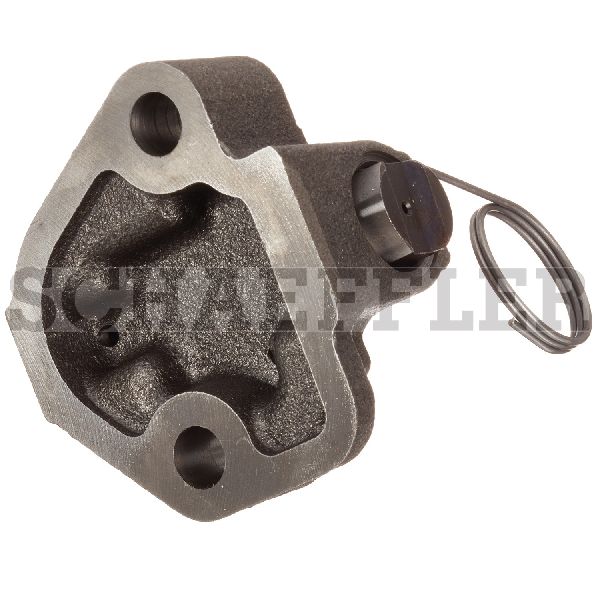
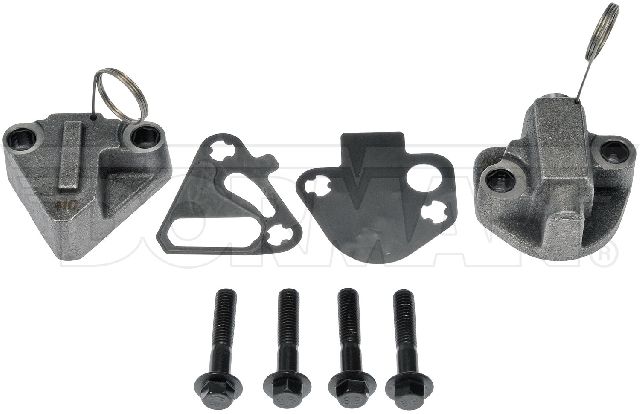
Typical fix: Replace all three timing chains, all tensioners, and all guides with a complete, high-quality kit. It is critical to use the updated parts specified by GM.
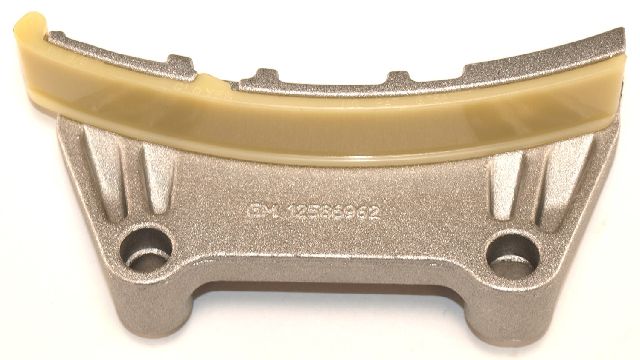
Est. part cost: $150-$450 for a complete aftermarket kit. - Worn Timing Chain Tensioners and Guides 🔴 High Probability → Shop Engine Timing Chain The tensioners are hydraulic and rely on oil pressure. Worn tensioners or broken plastic guides allow the chains to become slack, accelerating wear and leading to timing correlation codes. These parts often fail as a direct result of the stress from a stretched chain or from oil starvation.
How to confirm: These parts are inspected visually when the timing cover is removed to check the chains. Broken pieces of the plastic guides may be found in the oil pan.
Typical fix: These are always replaced as part of a complete timing chain job. Never replace just a single guide or tensioner.
Est. part cost: Included in the complete timing chain kit. - Low Engine Oil or Poor Oil Quality 🟡 Medium Probability The timing chain tensioners are hydraulic and rely on clean oil at the proper pressure to function. GM's original oil change recommendations, based on the Oil Life Monitor, were often too long (up to 7,500 miles or more), leading to oil breakdown and sludge. This accelerated wear on the entire timing system. GM later revised recommendations to 3,000-5,000 miles.
How to confirm: Check the oil level on the dipstick and review the vehicle's service history. If the oil is low, black, or sludgy, it's a major contributing factor. TSB #12-06-01-009F also recommends cleaning the PCV orifice during the repair, as a clogged PCV system can contribute to oil degradation.
Typical fix: If caught very early, correcting the oil level and performing regular oil changes (every 3,000-5,000 miles) with high-quality full synthetic oil meeting GM's Dexos specification may prolong the life of the chains, but it will not fix chains that are already stretched.
Est. part cost: $50-$100 for a synthetic oil change.
Rare But Worth Checking
- Faulty Camshaft or Crankshaft Position Sensor: → Shop Engine Crankshaft Position Sensor While these sensors can fail, it's much less common than the mechanical timing chain issue for this specific code on this engine. Owners often replace these first, hoping for a cheap fix, but it rarely solves P0009. A sensor failure would typically present with its own specific circuit code (e.g., P0340-P0344 for cam sensors, P0335-P0339 for crank sensor).
- Failed VVT (Variable Valve Timing) Solenoid/Actuator: A stuck VVT solenoid (also called a camshaft position actuator solenoid) can cause a correlation error, but it's less likely to be the root cause than a stretched chain. These solenoids more commonly trigger codes like P0010, P0013, P0020, or P0023. They are relatively easy to access and replace for testing purposes.
- Shifted Crankshaft Reluctor Wheel: → Shop Engine Crankshaft In some GM vehicles, the reluctor wheel (which the crankshaft sensor reads) can shift its position on the crankshaft, causing a timing correlation code even if the chains are good. TSB #PIP3423P mentions this as a possibility to investigate, though it is considered rare compared to chain stretch.
Diagnosis Steps
- Verify the code is present using an OBD-II scanner.
- Check the engine oil level and condition immediately. If it's low or dirty, correct it, clear codes, and see if the code returns. Note the oil condition as a likely contributing factor.
- Listen carefully for a metallic rattling sound from the front of the engine (passenger side) during a cold startup. This is a classic sign of slack timing chains.
- Using an advanced scan tool, monitor the camshaft position deviation/angle parameters. On GM vehicles, these PIDs can show how many degrees the camshafts are deviating from their target positions. Significant or fluctuating values strongly suggest a timing issue.
- If sensors are suspected, test their circuits and operation per the service manual. A simple swap of a sensor from one bank to another can see if the code follows the sensor, but this is unlikely to be the fix.
- The definitive step is to remove the front timing cover for a direct visual inspection of the timing chains, guides, and tensioners. Look for slack in the chains (especially the primary chain), broken plastic on the guides, and fully extended tensioners.
Parts You'll Likely Need
- Engine Timing Chain Kit
(OEM #12651450 (superseded by 12693218 or similar))— This is the definitive fix. A complete kit includes all three chains, tensioners, guides, gaskets, and seals, ensuring the entire system is renewed with updated parts designed to prevent repeat failure.
Trusted brands: ACDelco (OEM), Cloyes, Melling
OEM price range: $300-$500
Aftermarket price range: $200-$400 - Timing Cover Gasket Set
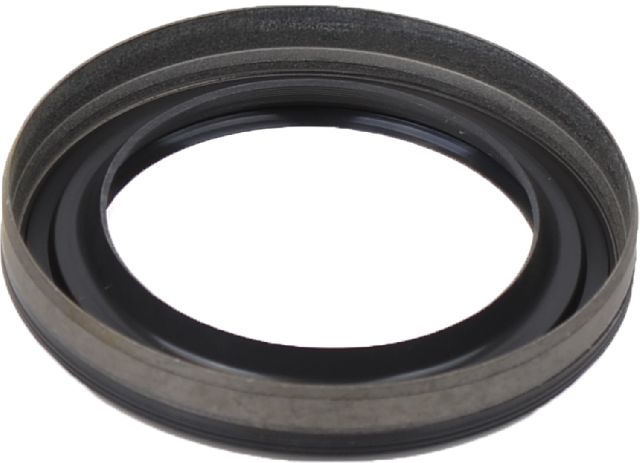
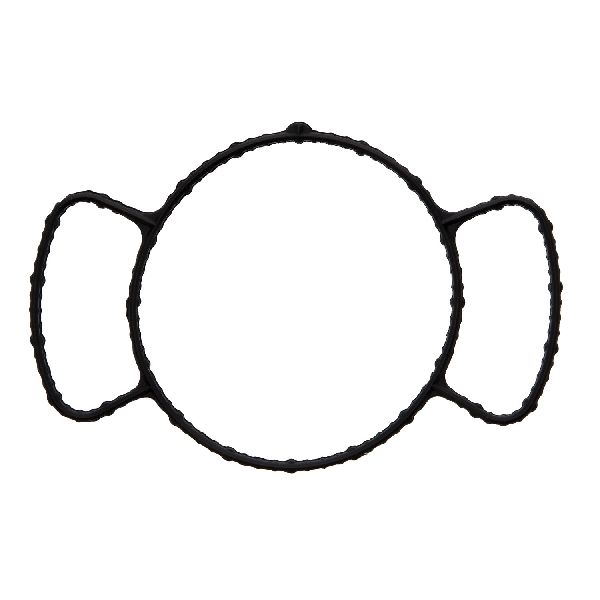
(OEM #Included in most comprehensive kits)— The timing cover must be removed for the repair, and the gaskets are single-use and must be replaced to prevent oil leaks. This includes the main cover gasket and crankshaft front seal.
Trusted brands: Fel-Pro, ACDelco
OEM price range: $50-$90
Aftermarket price range: $30-$60 - Engine Oil and Filter — Fresh, high-quality full synthetic oil (Dexos approved) and a new filter are mandatory after the repair to ensure the new hydraulic tensioners function correctly and to remove any debris from the old parts.
Trusted brands: ACDelco, Mobil 1, Pennzoil
OEM price range: $50-$100
Related Codes That Often Appear With This One
- P0008 — This is a general Engine Position System Performance code for Bank 1, often set alongside P0009 when the timing chains have stretched, as the primary chain affects both banks.
- P0016, P0017, P0018, P0019 — These are more specific camshaft/crankshaft correlation codes for different camshafts on both engine banks. Seeing any of these with P0009 strongly points to a systemic timing chain problem.
Technical Service Bulletins (TSBs) & Recalls
- PIP3423P: Advises technicians to inspect for loose timing chains or tensioners for DTCs including P0009, and also mentions the possibility of a shifted crankshaft reluctor wheel.
- 12-06-01-009F: Announces availability of updated timing chain kits for repairing stretched chains that cause DTCs including P0009 and provides detailed parts information.
- 11340C: This is the Special Coverage Adjustment that extended the powertrain warranty for timing chain wear to 10 years or 120,000 miles for affected vehicles.
Platform-Specific Known Issues
- A known issue of premature timing chain stretch affects the 3.6L V6 engines (LY7, LLT) in these vehicles.
- GM issued TSB #12-06-01-009F announcing the availability of updated timing chain kits to address codes like P0009 caused by stretched chains.
- TSB #PIP3423P directs technicians to inspect for loose timing chains or tensioners when P0009 is present.
- GM issued Special Coverage Adjustment #11340, extending the warranty on the timing chains to 10 years/120,000 miles due to premature wear, often linked to the original oil change interval recommendations.
Mechanic-Grade Diagnostic Values
- Camshaft Position Variance (using GDS2 or similar advanced scan tool) — expected: Under 4 degrees at idle.. Failure: A variance consistently over 4 degrees indicates a fault in the camshaft actuator system, very often due to chain stretch.
- Camshaft vs. Crankshaft Correlation (using an oscilloscope) — expected: A specific waveform pattern showing alignment between sensor signals.. Failure: A deviation equivalent to 2.5 or 3 teeth on the timing chain will typically set correlation codes like P0009.
Scan Tool Commands That Help
- GDS2 (Global Diagnostic System 2): Camshaft Position Actuator System Test — This bidirectional control allows a technician to command the VVT solenoids and monitor the camshafts' response. It helps differentiate between a faulty solenoid, a wiring issue, or a mechanically stuck camshaft phaser before disassembling the engine.
- GDS2 (Global Diagnostic System 2): Engine Control Module (ECM) Data Display — Used to monitor live data PIDs (Parameter IDs) for 'Camshaft Position Variance' for each camshaft. This is the primary data point for confirming a timing correlation issue electronically before physical inspection.
Wiring & Ground Locations
- G103 — Located at the left rear of the engine compartment on the cowl, above the brake booster.. This ground serves the Engine Control Module (ECM), Body Control Module (BCM), and the Data Link Connector (DLC). A poor connection here can cause a wide range of erratic electronic issues, including false sensor readings.
- G101 / G106 — G101 is on the left side of the engine block. G106 is on the front center of the frame cross rail, under the crank pulley. They are often jumpered together.. These are primary engine grounds. G101 specifically grounds the ECM and Transmission Control Module. A loose or corroded ground here can directly impact the reference voltage for the crankshaft and camshaft position sensors, potentially causing correlation codes.
- Camshaft Position Sensor Connectors — On the front of the engine, on the timing cover, near the VVT solenoids for each camshaft.. GM issued service bulletin #PI0090D regarding intermittent hesitation caused by poor terminal connections in the harness connectors for the camshaft position sensors. Inspecting these connectors for corrosion or loose pins is a critical step.
Real Owner Repair Stories
- Reddit user, r/MechanicAdvice (2007 Suzuki XL7 with 3.6L VVT (GM LY7 engine)) — Recurrent P0009 code.
❌ Tried (didn't work) A complete timing chain replacement was performed to fix the P0009 code.
✅ What actually fixed it Six days after the timing chain replacement, a P0008 code (Bank 1 correlation) appeared. The mechanic diagnosed this as a stuck camshaft actuator, suggesting it was an unlucky, unrelated failure. This highlights that even after the primary repair (timing chains), related components like VVT actuators can fail shortly after, causing similar codes for the opposite bank.
OEM Part Supersession History
12651450→12693218 (and potentially newer numbers like 12700436)— The original timing chains were prone to stretching. The updated kits include chains made with improved materials and design to increase longevity.
Heads up: When ordering, it is critical to get the complete kit specified for the engine (LY7 vs. LLT), as some components may differ. The kit with part number 12693218 is a comprehensive kit that includes all three chains, tensioners, gaskets, and seals.
Model Year Variations Within This Range
- 2005-2009 (approx.): First-generation LaCrosse models primarily used the 3.6L LY7 engine with conventional port fuel injection.
- 2010-2012: Second-generation LaCrosse models used the 3.6L LLT engine, which featured Spark Ignition Direct Injection (SIDI). While the timing chain issue persists, the direct injection system introduces other potential issues like carbon buildup on intake valves, which can cause misfires and rough running.
Helpful Videos
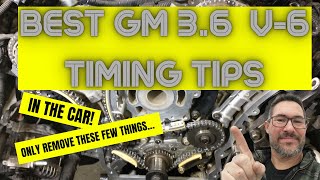
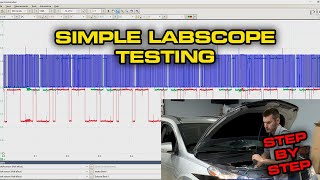
We Have This Part in Stock


The information in this article is provided for general reference and educational purposes only. Vehicle specifications, procedures, and part compatibility can vary by production date, trim level, and region. Always consult your vehicle's factory service manual and verify part numbers before purchasing or performing repairs. Safety-critical components such as airbags, seat belts, and braking systems should be installed by a qualified professional.
- Buick LACROSSE:
- 🧭 Diagnostic Flowchart
- 🎬 Helpful Videos
- 🛍️ Shop This Part
- What's Unique About the 2005-2012 Buick LACROSSE
- Symptoms You May Notice
- Most Likely Causes
- Rare But Worth Checking
- Diagnosis Steps
- Parts You'll Likely Need
- Related Codes That Often Appear With This One
- Technical Service Bulletins (TSBs) & Recalls
- Platform-Specific Known Issues
- Mechanic-Grade Diagnostic Values
- Scan Tool Commands That Help
- Wiring & Ground Locations
- Real Owner Repair Stories
- OEM Part Supersession History
- Model Year Variations Within This Range
- 🎟️ Get 5% Off