

P0009 on 2008-2012 Chevrolet Malibu 3.6L: Stretched Timing Chain Causes and Fixes
On a 2008-2012 Malibu with the 3.6L V6 engine, P0009 almost always means the timing chains have stretched and need to be replaced. This is a major, labor-intensive repair, often costing between $1,500 and $2,800 at a shop. The issue is extremely common across all GM vehicles using this engine.
- P0009 on a 3.6L Malibu is a serious code that points almost exclusively to stretched timing chains, a well-documented factory issue.
- This is a very expensive repair due to high labor costs; it is not a typical DIY job.
- Do not waste money replacing camshaft or crankshaft sensors; they are almost never the cause of this code on this engine.
- Using an updated, complete timing chain kit from a reputable brand like ACDelco is critical for a lasting repair.
- Poor oil maintenance significantly accelerates this failure; stick to regular, high-quality oil changes rather than relying solely on the oil life monitor.
What's Unique About the 2008-2012 Chevrolet MALIBU
The 3.6L V6 engine (RPO code LY7) used in this generation of Malibu is widely known for premature timing chain wear and stretching. This issue was so prevalent that General Motors issued multiple Technical Service Bulletins (TSBs) and even released updated timing chain kits to provide a more durable repair. The problem is often linked to two main factors: the original-design timing chains being prone to elongation and lubrication issues. Extended oil change intervals, which the vehicle's own oil life monitor sometimes encouraged, contributed to faster wear of the chain links and pins, causing them to elongate and throw off the critical cam/crank timing relationship. GM also issued a Special Coverage Adjustment (No. 11340C) that extended the warranty to 10 years/120,000 miles for this specific failure, though this coverage has now expired for most vehicles.
Diagnostic Flowchart
Tap your situation to follow the diagnostic path that matches what you're seeing on this vehicle.
Symptoms You May Notice
- Check Engine Light is on
- Rough or unstable idle
- Reduced engine power and sluggish acceleration.
- Engine rattling noise, especially on a cold start, that may last for a few seconds.
- Decreased fuel economy.
- Engine may be hard to start or may not start at all in advanced failure stages.
- Engine surging or fluctuating idle.
- Replacing the camshaft position sensors
- Replacing the crankshaft position sensor
- Replacing the variable valve timing (VVT) solenoids
Most Likely Causes
- Stretched Timing Chains 🔴 High Probability → Shop Engine Timing Chain The original timing chains on the 3.6L LY7 engine were susceptible to premature wear, a problem exacerbated by long oil change intervals and the design of the chains themselves. GM later released updated parts to improve durability.
How to confirm: A mechanic can use a scan tool to monitor camshaft/crankshaft deviation data. A labscope can also be used to graph the sensor signals to visually confirm the timing misalignment electronically. 🎬 Watch: How to test for timing issues using a labscope. Physical inspection for chain slack, which requires removing the engine's front cover, is the definitive confirmation.
Typical fix: Replace all three timing chains (one primary, two secondary) along with the tensioners and guides. Using an updated OEM kit (e.g., ACDelco 12700435) is highly recommended. It is critical to replace all components as a kit, not just the chains.
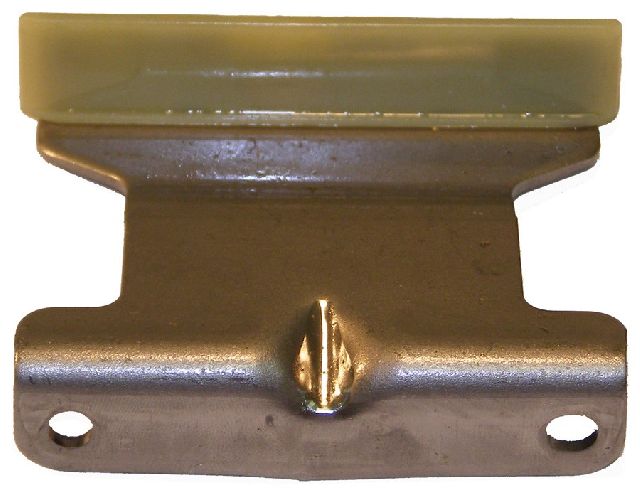
Est. part cost: $250-$500 - Worn Timing Chain Tensioners or Guides 🟡 Medium Probability → Shop Engine Timing Chain The tensioners are hydraulic and rely on clean oil at the correct pressure to function. They can weaken or fail, and the plastic guides can wear down or break, leading to chain slack. This is almost always diagnosed and replaced at the same time as the chains.
How to confirm: Visual inspection after removing the engine's front cover. A rattling noise on startup is a strong indicator of a slack chain slapping against the guides before oil pressure builds.
Typical fix: Replace as part of a complete timing chain kit service. Individual tensioners are available but should not be replaced in isolation.
Est. part cost: $100-$200 (if not included in a kit) - Low or Degraded Engine Oil ⚪ Low Probability The timing chain tensioners are hydraulic and rely on clean oil at the correct pressure to function. Dirty, old, or low oil can't properly lubricate the chains or operate the tensioners, accelerating wear. GM's own oil life monitoring system on early models was often too optimistic, contributing to the problem.
How to confirm: Check the oil level and condition on the dipstick. Review vehicle service history for oil change frequency.
Typical fix: An oil and filter change is a necessary first step, but if the P0009 code is already set, damage to the chains has likely already occurred and replacement is necessary. Changing the oil will not fix a stretched chain.
Est. part cost: $40-$80
Rare But Worth Checking
- Slipped Crankshaft Reluctor Wheel: → Shop Engine Crankshaft This is a rare but serious issue documented in GM TSB PIP3423P and its successors. The reluctor wheel is what the crankshaft position sensor reads. If it moves on the crankshaft, it will cause timing codes that cannot be fixed by replacing chains or sensors. A technician can sometimes inspect the wheel's position relative to the crankshaft throw using a borescope through the crank sensor hole. If it has moved, the crankshaft must be replaced.
Diagnosis Steps
- Scan the ECM for all stored trouble codes. Note if P0009 appears with P0008 or other timing codes like P0016-P0019. The presence of multiple codes makes a mechanical fault more likely.
- Check the engine oil level and condition. If low or very dirty, perform an oil and filter change, clear the codes, and see if they return. This is unlikely to be a permanent fix but is a necessary first step and rules out oil pressure issues with the tensioners.
- Using an advanced scan tool, monitor the live data for camshaft and crankshaft position sensor signals to check for any obvious sensor dropouts. A labscope provides a more definitive electronic test.
- If sensors appear to be functioning, the next step is to suspect a mechanical timing issue. This is the most likely cause on this engine.
- As per TSB PIP3423P, if possible, use a borescope to inspect the crankshaft reluctor wheel through the crank sensor hole to check for slippage before proceeding with major engine disassembly. This can prevent a costly and unnecessary timing chain replacement if the reluctor wheel is the true cause.
- The definitive diagnosis involves removing the engine's front timing cover to physically inspect the timing chains for slack and check the condition of the guides and tensioners.
Parts You'll Likely Need
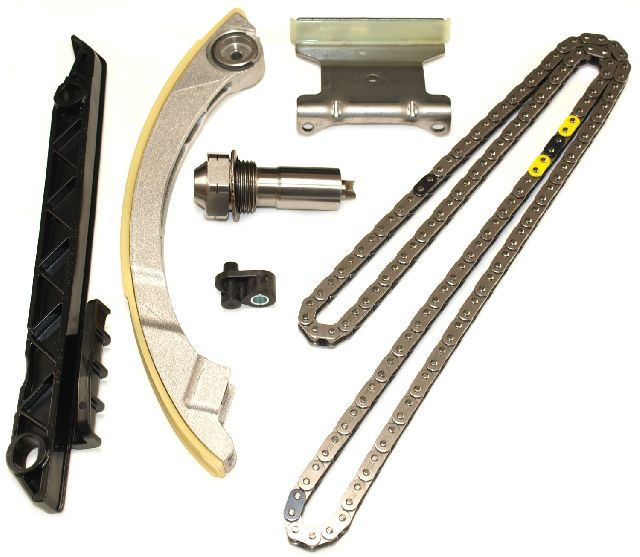
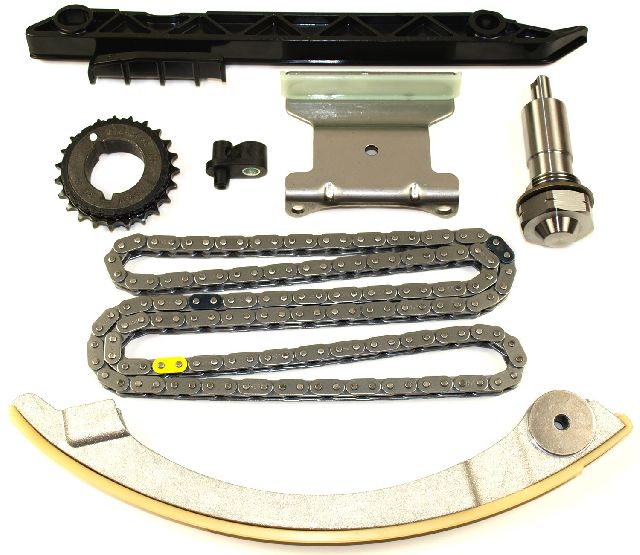
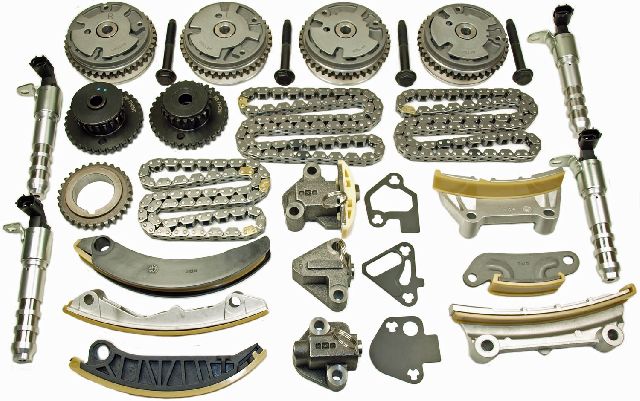
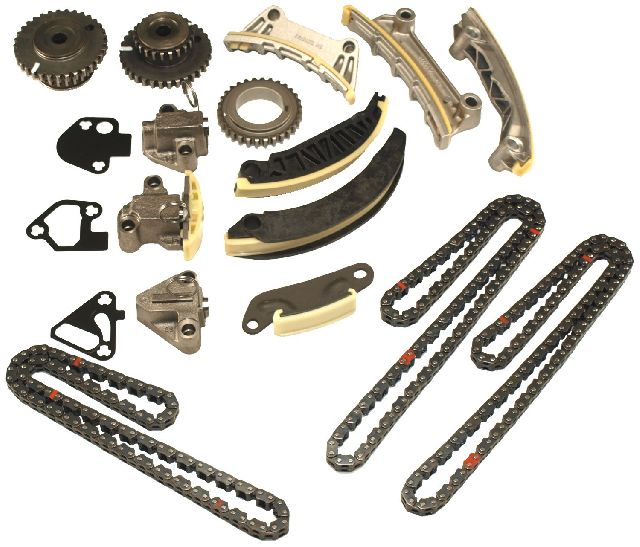
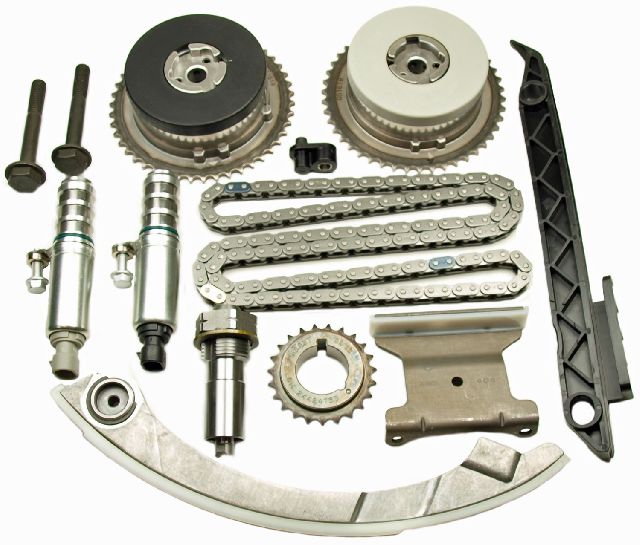
- Engine Timing Chain Kit
(OEM #12700435)— This is the primary failure point. A complete kit includes the three chains, three tensioners, and all necessary guides to correct the stretched chain issue. TSB 12-06-01-009F specifically advises against replacing sprockets or actuators unless they are found to be worn.
Trusted brands: ACDelco (GM Original Equipment), Cloyes
OEM price range: $300-$450
Aftermarket price range: $200-$350
Related Codes That Often Appear With This One
- P0008 — P0008 is the equivalent timing correlation code for Bank 1. When both P0008 and P0009 appear, it strongly indicates a problem with the primary timing chain affecting both banks.
- P0016, P0017, P0018, P0019 — These are more specific cam/crank correlation codes for intake and exhaust cams on both banks. Their presence further confirms a widespread mechanical timing issue and almost guarantees the timing chains have stretched.
Technical Service Bulletins (TSBs) & Recalls
- PIP3423P / PIP3423N/M: Instructs technicians to inspect for loose timing chains or a moved crankshaft reluctor for codes P0008/P0009. Provides detailed images and measurements for identifying a slipped reluctor wheel.
- 12-06-01-009F: Announces the availability of updated timing chain kits for repairing stretched chains causing codes like P0009 and advises against unnecessarily replacing other components like sprockets or actuators.
Platform-Specific Known Issues
- A known issue with the 3.6L LY7 engine is premature stretching of the timing chains, which prompted GM to issue TSB #12-06-01-009F announcing the availability of improved timing chain kits.
- TSB #PIP3423P and its later versions directly address codes P0008/P0009, instructing technicians to inspect for loose timing chains or a moved crankshaft reluctor wheel.
- An owner complaint filed with the NHTSA (ODI #10630584) for a 2009 Malibu with the 3.6L engine specifically mentions code P0009 and the possibility of the crankshaft reluctor having moved.
- GM's Special Coverage Adjustment #11340C extended the warranty on this repair to 10 years or 120,000 miles, acknowledging the high rate of failure. This program has since expired for these model years.
Mechanic-Grade Diagnostic Values
- Crankshaft Reluctor Wheel Position — expected: 25 to 26 mm from the machined surface of the crankshaft throw to the edge of the open space in the reluctor wheel.. Failure: Any measurement outside of the 25-26 mm range indicates the wheel has slipped and the crankshaft needs replacement.
- Camshaft Position Sensor Voltage (bench test) — expected: Approximately 4.8-5.0 Volts with no metal nearby.. Failure: Voltage should drop to 0V when a metal object is placed directly on the sensor tip; if the voltage does not change or is always zero, the sensor is likely faulty.
- Cam/Crank Correlation (Labscope) — expected: On a known-good waveform, the intake cam signal transition should occur in the middle of the wide crank sensor sync gap.. Failure: If the cam signal has shifted significantly relative to the crank signal's sync gap, it confirms a mechanical timing issue.
Wiring & Ground Locations
- ECM — Left front of the engine compartment for the 3.6L engine.. The ECM is the central processing unit that receives signals from all position sensors; its connections must be clean and secure.
- G106 — On the right front of the engine block (for the 3.6L V6).. This is a primary engine ground. A poor connection here can cause erratic sensor readings and phantom codes.
- G107 — Center rear of the engine (for the 3.6L V6).. Another critical engine ground point that ensures sensors have a stable reference, preventing signal noise that could be misinterpreted by the ECM.
- Bank 2 Camshaft Position Sensors — On the front of the left cylinder bank (the bank closer to the radiator).. These are the specific sensors for the bank referenced in the P0009 code. Their wiring and connectors are a primary point of inspection for electrical faults.
Real Owner Repair Stories
- Chevrolet Forum user (2009 Chevrolet Equinox 3.6L (same LY7 engine family)) — Recurring camshaft correlation codes for Bank 2 after a timing chain replacement.
❌ Tried (didn't work) Replacing timing chains (initially), Replacing VVT solenoids, Replacing tensioners with new GM parts
✅ What actually fixed it The user discovered the new aftermarket intake camshaft phaser for Bank 2 had excessive rotational play ('wiggle') even when torqued down. Replacing the faulty aftermarket phaser with a genuine GM part was identified as the necessary step to resolve the issue, as the excessive play was preventing correct timing.
"I Checked Everything" — The Actual Cause
- For code P0009, the equivalent of a 'smoke test clean' scenario is when all camshaft and crankshaft sensors test perfectly with a multimeter or labscope, and their wiring is confirmed to be intact. In this situation, the root cause is almost certainly mechanical. Technicians are directed by GM's service information to then inspect for stretched timing chains. If the chains are found to be tight and correctly timed, the final, less common cause is a slipped crankshaft reluctor wheel, which requires crankshaft replacement to fix.
When the Usual Fixes Don't Work
- While a stretched timing chain is the cause of P0009 in over 90% of cases for this vehicle, it is not the only possibility. There is strong counter-evidence, supported by official GM Technical Service Bulletins (PIP3423P), that a slipped crankshaft reluctor wheel can cause the exact same symptoms and codes. In this scenario, a technician could perform a complete, expensive timing chain replacement only to have the code return immediately. This is because the crankshaft position sensor is reading from a reluctor wheel that has physically moved on the crankshaft, creating a timing discrepancy that new chains cannot fix. The only resolution in this case is to replace the entire crankshaft.
OEM Part Supersession History
12650231, 12679116, 12693219→12700435— GM released updated timing chain kits to improve durability and address premature stretching issues.
Heads up: Using the latest kit (12700435) is highly recommended to get the most durable design. Older part numbers may be the original, failure-prone design.
Model Year Variations Within This Range
- 2008-2011: The timing chain issues were most prevalent on the earlier LY7 and LLT engines. By the 2012 model year, GM had implemented design changes to the timing chain components from the factory, making premature failure less common, though still possible.
Helpful Videos
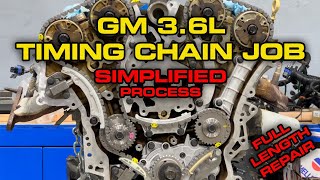
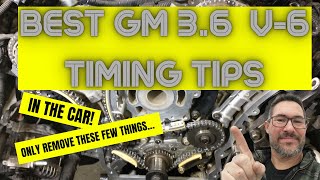
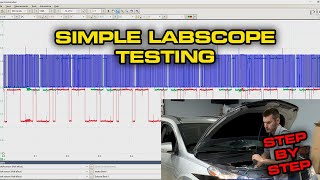

We Have This Part in Stock

The information in this article is provided for general reference and educational purposes only. Vehicle specifications, procedures, and part compatibility can vary by production date, trim level, and region. Always consult your vehicle's factory service manual and verify part numbers before purchasing or performing repairs. Safety-critical components such as airbags, seat belts, and braking systems should be installed by a qualified professional.
- Chevrolet MALIBU:
- 🧭 Diagnostic Flowchart
- 🎬 Helpful Videos
- 🛍️ Shop This Part
- What's Unique About the 2008-2012 Chevrolet MALIBU
- Symptoms You May Notice
- Most Likely Causes
- Rare But Worth Checking
- Diagnosis Steps
- Parts You'll Likely Need
- Related Codes That Often Appear With This One
- Technical Service Bulletins (TSBs) & Recalls
- Platform-Specific Known Issues
- Mechanic-Grade Diagnostic Values
- Wiring & Ground Locations
- Real Owner Repair Stories
- "I Checked Everything" — The Actual Cause
- When the Usual Fixes Don't Work
- OEM Part Supersession History
- Model Year Variations Within This Range
- 🎟️ Get 5% Off