

P0009 on 2015-2016 GMC Canyon 3.6L: Stretched Timing Chain Causes and Fixes
On a 2015-2016 GMC Canyon with the 3.6L V6, code P0009 almost always means the timing chains have stretched. This is a serious, complex, and expensive repair costing $1,800-$4,000+. Do not continue driving, as it can lead to catastrophic engine failure. No special warranty extension from GM is known to cover this specific model for this issue, making it an out-of-pocket expense for most owners.
- P0009 on a 2015-2016 GMC Canyon 3.6L is a critical code that almost certainly indicates a stretched timing chain.
- Do not drive the vehicle. Continuing to do so risks catastrophic, non-repairable engine damage.
- The correct fix is a complete timing chain service, replacing all chains, tensioners, and guides. This is an expensive, professional-level repair.
- Do not waste money replacing camshaft or crankshaft sensors first; they are very likely not the root cause.
- Regular oil changes with high-quality full synthetic oil are the best preventative measure against this failure.
What's Unique About the 2015-2016 Gmc CANYON
The 3.6L V6 (LFX) engine used in the 2015-2016 GMC Canyon is well-known for premature timing chain wear across numerous GM vehicles. The issue is so common that GM has issued multiple Technical Service Bulletins (TSBs) that directly link codes like P0009 to stretched timing chains. The problem was often made worse by long oil change intervals recommended by the original Oil Life Monitor (OLM) calibration, which can lead to oil degradation and accelerate wear on the chains, guides, and hydraulic tensioners. While some improvements were made to the timing components over the years, these models remain highly susceptible to this specific failure.
Diagnostic Flowchart
Tap your situation to follow the diagnostic path that matches what you're seeing on this vehicle.
Symptoms You May Notice
- Check Engine Light illuminated
- Engine rattling noise, especially on a cold start, sometimes described as 'marbles in a can'.
- Rough or unstable idle
- Loss of engine power and poor acceleration
- Difficulty starting the engine
- Reduced fuel economy
- Replacing only the camshaft position sensor
- Replacing only the crankshaft position sensor
- Replacing the VVT solenoids without addressing the timing chains
- Performing an oil change and assuming the problem is fixed (it will likely return quickly)
Most Likely Causes
- Stretched Timing Chains and Worn Tensioners/Guides 🔴 High Probability → Shop Engine Timing Chain The GM 3.6L V6 engine family has a documented history of premature timing chain wear. This is often attributed to the original chain design and exacerbated by oil degradation from extended oil change intervals recommended by the factory Oil Life Monitor.
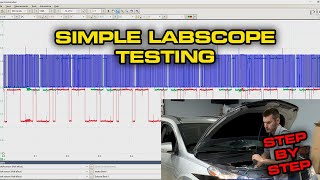
How to confirm: A definitive diagnosis requires removing the engine's front cover to physically inspect the chains for slack and measure the extension of the tensioner pistons. A scan tool can also show a persistent deviation between desired and actual cam angles, with a deviation of several degrees confirming a mechanical timing issue. 🎬 See how to test timing chain problems with a labscope
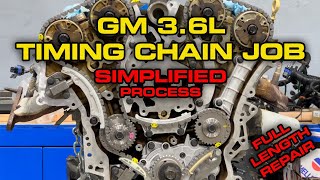
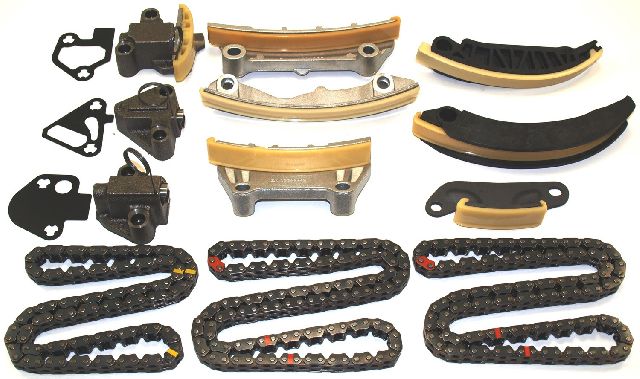
Typical fix: Replace all three timing chains, all tensioners, and all guides using an updated kit. It is also common to replace the water pump and VVT solenoids/actuators at the same time since the engine is already disassembled.
Est. part cost: $350-$700 - Low or Dirty Engine Oil 🟡 Medium Probability The timing chain tensioners are hydraulic and rely on clean oil at the proper pressure to function. Low or dirty oil can starve the tensioners, causing them to collapse and allowing the chain to go slack, which accelerates wear and can trigger timing correlation codes.
How to confirm: Check the oil level on the dipstick and inspect its condition. If the oil is very low, past the recommended change interval, or appears sludgy, this is a likely contributor to the failure.
Typical fix: Perform an oil and filter change using the manufacturer-specified oil (full synthetic Dexos 5W-30). However, if the chains have already stretched and set code P0009, an oil change alone will not solve the problem and the chains must be replaced.
Est. part cost: $50-$100 - Shifted Crankshaft Reluctor Wheel ⚪ Low Probability → Shop Engine Crankshaft GM TSB #PIP3423P notes that the reluctor wheel, which the crankshaft position sensor reads, can physically move on the crankshaft. This causes the ECM to receive incorrect crankshaft position data, triggering timing codes even if the chains are mechanically sound. This is a known, albeit uncommon, failure on the HFV6 engine family.
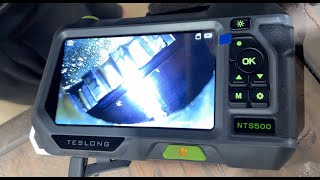
How to confirm: This is difficult to confirm without significant disassembly. TSB PIP3423P suggests it may be possible to inspect the wheel's position relative to the crankshaft counterweight with a borescope through the crankshaft position sensor hole. Otherwise, it is inspected during a timing chain job when the oil pan is removed. The TSB provides photographic examples of a correct vs. shifted wheel. 🎬 Watch: How to inspect the crankshaft reluctor wheel
Typical fix: The crankshaft must be replaced, as the reluctor wheel was not originally serviced separately. This is a massive repair typically done only if a new timing chain kit does not resolve the codes.
Est. part cost: $500-$900 for the crankshaft itself, plus significant labor.
Rare But Worth Checking
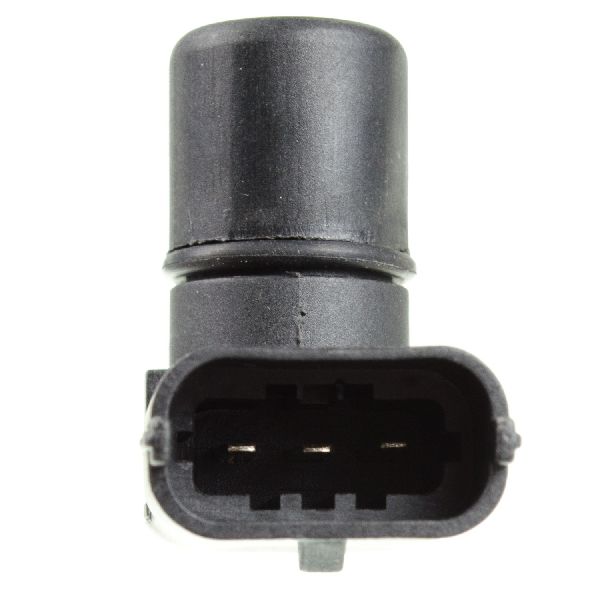
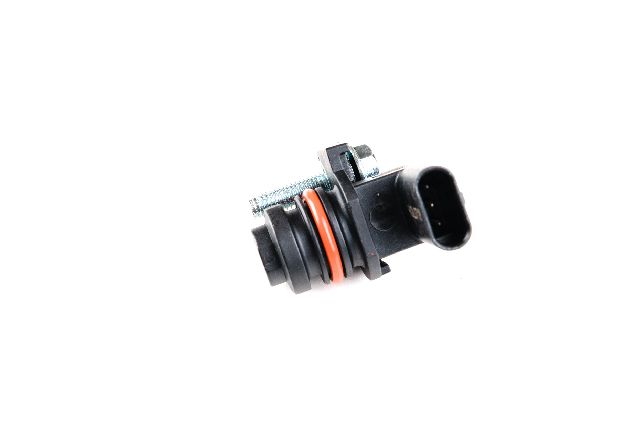
- Faulty Camshaft or Crankshaft Position Sensor: → Shop Engine Crankshaft Position Sensor While a sensor can fail, it is very rarely the cause of P0009 on this engine. The sensors are usually accurately reporting a real mechanical problem. Do not replace sensors as a first step; it is a common misdiagnosis that wastes money.
- Failing VVT Solenoid or Actuator: A stuck or clogged Variable Valve Timing (VVT) solenoid can cause timing issues, but it typically won't cause the primary P0008/P0009 codes, which point to a base timing problem between the crank and the intermediate chain gears.
Diagnosis Steps
- Verify the code with a quality OBD-II scanner. Note any other accompanying codes like P0008, P0017, P0018, or P0019, as their presence makes a timing chain failure nearly certain.
- Check the engine oil level and condition. If low, dirty, or sludgy, note this as a contributing factor. An oil change will not fix the code at this point.
- Using a scan tool with live data capability, monitor the desired vs. actual camshaft position angles for Bank 2. A consistent deviation that exceeds the manufacturer's specification (e.g., more than 4-8 degrees) points to a mechanical timing problem.
- Listen for a rattling noise from the front of the engine (timing cover area), especially during a cold start, which indicates a loose timing chain.
- If the above steps suggest a mechanical fault, the next step is to prepare for engine disassembly and replacement of the timing components.
- During disassembly, inspect the crankshaft reluctor wheel for any signs of movement as per TSB PIP3423P, especially if the timing chains do not show extreme slack.
Parts You'll Likely Need
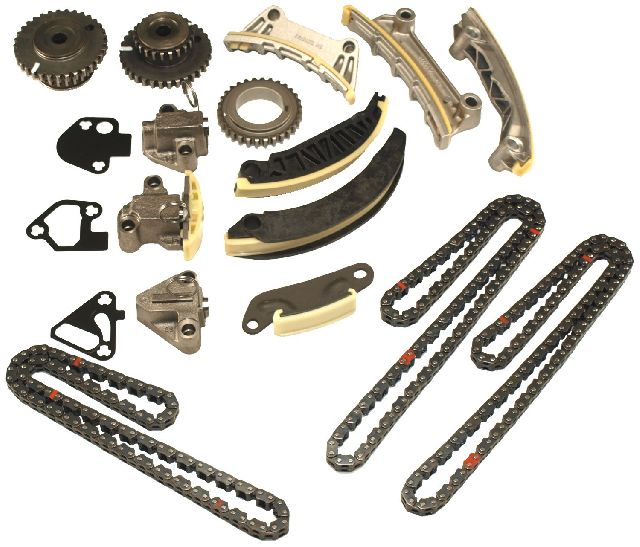
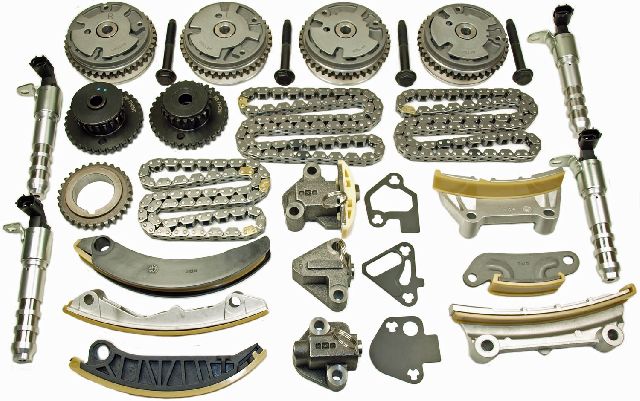
- Timing Chain Kit
(OEM #12651450 (superseded by 12693218, then 12700436))— This is the primary failure point. A complete kit ensures all worn components (3 chains, tensioners, guides, sprockets, gaskets) are replaced at once with updated parts.
Trusted brands: ACDelco (OEM), Cloyes
OEM price range: $400-$600
Aftermarket price range: $250-$450 - Water Pump — The water pump is driven by the primary timing chain and is located behind the timing cover. It is highly recommended to replace it during a timing chain service to avoid duplicating significant labor costs in the near future.
Trusted brands: ACDelco, Gates
OEM price range: $150-$250
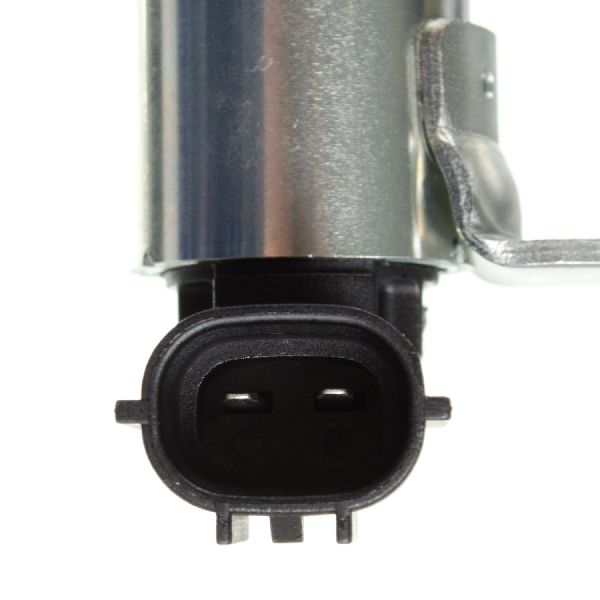
Aftermarket price range: $80-$150 - Camshaft Position Actuator Solenoid (VVT Solenoid) — These can become clogged with debris from a failing timing system or sludge from dirty oil. It is inexpensive preventative maintenance to replace all four solenoids while they are accessible during the timing job.
Trusted brands: ACDelco, Delphi
OEM price range: $40-$70 each
Aftermarket price range: $25-$50 each
Related Codes That Often Appear With This One
- P0008 — This is the corresponding code for Bank 1. Seeing P0008 and P0009 together strongly indicates a stretched primary timing chain affecting the entire engine.
- P0017 — This is a more specific correlation code for the exhaust camshaft on Bank 1. Its presence with P0009 reinforces a widespread timing issue.
- P0018 — This code points to a correlation issue with the intake camshaft on Bank 2. It often appears with P0009 and is a direct result of the same chain slack.
- P0019 — This code points to a correlation issue with the exhaust camshaft on Bank 2. It often appears with P0009.
Technical Service Bulletins (TSBs) & Recalls
- PIP3423P: This is the primary TSB for this issue. It advises technicians to check for loose timing chains or a shifted crankshaft reluctor wheel when codes P0008, P0009, P0016, P0017, P0018, or P0019 are present.
Platform-Specific Known Issues
- The 3.6L LFX V6 engine has a well-documented history of premature timing chain stretch across multiple GM platforms, including the Canyon.
- GM Technical Service Bulletin #PIP3423P specifically addresses codes P0008/P0009 and instructs technicians to inspect for loose timing chains, worn tensioners, or a shifted crankshaft reluctor wheel.
- While GM issued a special coverage warranty extension (11340C) for timing chains on some earlier 3.6L engines (LY7/LLT), no such widely applicable program has been identified for the 2015-2016 LFX engine in the Canyon.
Mechanic-Grade Diagnostic Values
- Camshaft Position Actuator Solenoid (VVT Solenoid) Resistance — expected: 5 to 15 Ohms at ~68°F (20°C).. Failure: A reading of mega-ohms (millions of ohms), an open circuit, or a reading significantly outside the expected range indicates a failed solenoid.
- Crankshaft Position (CKP) Sensor Resistance — expected: ~290 Ohms (0.29 kOhms).. Failure: A reading significantly different from the expected value, or an open/short circuit, indicates a failed sensor.
- Camshaft Position Sensor Low Reference Circuit to Ground — expected: Less than 5.0 Ohms.. Failure: A reading greater than 5.0 Ohms indicates high resistance in the sensor's ground circuit, which can cause signal issues.
- Scan Tool Cam/Crank Correlation Degrees at Idle — expected: Close to 0 degrees.. Failure: A consistent deviation greater than 4-8 degrees at idle is a strong indicator of a mechanical timing issue like a stretched chain.
Scan Tool Commands That Help
- GDS2 (or equivalent professional scan tool): Camshaft Position Actuator Solenoid Test — This bidirectional command is used to manually activate each VVT solenoid while the engine is running. A technician can observe live cam angle data and listen for an audible click to verify the solenoid is responding to commands, helping to rule out a faulty solenoid before engine disassembly.
- GDS2 (or equivalent professional scan tool): Crankshaft Position Variation Learn — This procedure is mandatory after replacing the timing chains, crankshaft, crankshaft position sensor, or ECM. It calibrates the ECM to the physical variations of the crankshaft reluctor wheel. Failure to perform this relearn can result in rough running, misfire detection issues, or other fault codes.
Wiring & Ground Locations
- G107 — On the front of the right cylinder head (Bank 1).. This is a primary engine ground. A poor connection here can introduce electrical noise or voltage drops into sensor circuits, potentially causing erratic signals for the camshaft or crankshaft position sensors.
- Main Engine Block to Chassis/Frame Ground Strap — Typically a braided strap connecting the engine block to the vehicle's frame or firewall.. This is the main ground path for the entire engine's electrical system, including the starter and alternator. Corrosion or a loose connection on this strap can cause a wide range of phantom electrical problems, including issues that could affect sensor readings and ECM operation.
"I Checked Everything" — The Actual Cause
- For code P0009, the equivalent of a 'smoke test clean' scenario is when the timing chains are replaced, but the code returns. In this situation, the most likely, though rare, cause is a shifted crankshaft reluctor wheel, as noted in TSB PIP3423P.
OEM Part Supersession History
12651450→12693218, and then the latest kit 12700436.— The timing chain kits were updated over time to include chains with an improved design, such as an 'inverted tooth' pattern, which is more durable and less prone to the premature stretching that plagued earlier versions of the 3.6L V6 engine.
Model Year Variations Within This Range
- 2015-2016: These models use the 3.6L LFX V6 engine, which is highly susceptible to the timing chain stretch issue causing code P0009. Starting in 2017, the GMC Canyon was equipped with the new-generation 3.6L LGZ V6 and an 8-speed automatic transmission. The LGZ engine is a significant redesign with a stronger block and an improved timing system, and it is not known to have the same prevalence of timing chain failures as the LFX.
Helpful Videos
We Have This Part in Stock

The information in this article is provided for general reference and educational purposes only. Vehicle specifications, procedures, and part compatibility can vary by production date, trim level, and region. Always consult your vehicle's factory service manual and verify part numbers before purchasing or performing repairs. Safety-critical components such as airbags, seat belts, and braking systems should be installed by a qualified professional.
- Gmc CANYON:
- 🧭 Diagnostic Flowchart
- 🎬 Helpful Videos
- 🛍️ Shop This Part
- What's Unique About the 2015-2016 Gmc CANYON
- Symptoms You May Notice
- Most Likely Causes
- Rare But Worth Checking
- Diagnosis Steps
- Parts You'll Likely Need
- Related Codes That Often Appear With This One
- Technical Service Bulletins (TSBs) & Recalls
- Platform-Specific Known Issues
- Mechanic-Grade Diagnostic Values
- Scan Tool Commands That Help
- Wiring & Ground Locations
- "I Checked Everything" — The Actual Cause
- OEM Part Supersession History
- Model Year Variations Within This Range
- 🎟️ Get 5% Off