

P0009 on 2013-2019 Hyundai Santa Fe 3.3L V6: Engine Timing Causes and Fixes
P0009 on the Hyundai Santa Fe 3.3L V6 almost always indicates a stretched timing chain and/or failed tensioners, a known issue on this engine. Expect a startup rattle noise. This is a major, labor-intensive repair costing $1,800-$3,000+. In some cases, Hyundai has extended warranty coverage for related engine failures to 15 years/150,000 miles.
- P0009 on this Santa Fe is a serious code that points to a mechanical timing issue, not a simple sensor swap.
- A rattling noise when starting the engine cold is the single biggest clue that you need a timing chain replacement.
- Always check your engine oil level and condition first, as low or dirty oil can cause or worsen this problem.
- This is not a DIY-friendly repair for most people. The cost is significant and primarily consists of labor due to the complexity of the job.
- Do not ignore this code. Continued driving risks the timing chain skipping, which can lead to catastrophic and far more expensive engine damage.
What's Unique About the 2013-2019 Hyundai Santa Fe
The Lambda II 3.3L V6 GDI engine (G6DH) used in the Santa Fe is known for premature timing chain stretch and hydraulic tensioner failure, particularly after 100,000 miles. The system is highly sensitive to oil level and quality, as oil pressure operates both the tensioners and the dual continuously variable valve timing (D-CVVT) system. A brief but distinct rattling sound on a cold start is the classic sign that a tensioner has lost hydraulic pressure, allowing the chain to go slack. This slack eventually leads to a cam/crank correlation error and the P0009 code. Because this is a Gasoline Direct Injection (GDI) engine, it is also more susceptible to fuel dilution of the oil and carbon buildup, which can degrade oil quality and accelerate wear on timing components.
Generation note: This guide covers the third-generation Hyundai Santa Fe. The 3.3L V6 was available in the long-wheelbase (LWB) 'Santa Fe' (2013-2018) and the 'Santa Fe XL' for the 2019 model year. The shorter 'Santa Fe Sport' (2013-2018) and the standard fourth-generation 'Santa Fe' (2019+) used different, 4-cylinder engines and are not covered by this guide.
Symptoms You May Notice
- Check Engine Light is on
- Rattling noise from the engine for 1-3 seconds on cold startup
- Rough or unstable idle
- Reduced engine power and poor acceleration
- Increased fuel consumption
- Engine may hesitate or stall, especially at low speeds
- Replacing the camshaft or crankshaft position sensors. These sensors are usually doing their job correctly by reporting the timing discrepancy. Replacing them will not fix the underlying mechanical issue and is a waste of money.
Most Likely Causes
- Stretched Timing Chain and/or Failed Tensioner(s) 🔴 High Probability → Shop Engine Timing Chain This is a widely documented weak point on the Lambda II 3.3L V6 engine, especially at mileages over 100,000 miles. The hydraulic tensioners can weaken, failing to keep the chains taut, leading to stretching.
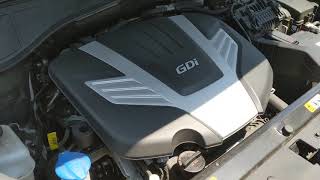
How to confirm: A persistent rattling noise on cold startups is the key symptom. 🎬 Listen to an example of this startup rattle An advanced scan tool can show cam/crank deviation; a consistent deviation of more than 4-5 degrees at idle confirms a mechanical timing issue. Final confirmation requires removing the timing cover to physically inspect chain slack and tensioner plunger extension.
Typical fix: Replace all timing chains (one primary, two secondary), all tensioners, and all chain guides. It is also wise to replace the water pump at the same time since it is driven by the timing chain and accessible during the repair. Use a complete, quality kit.
Est. part cost: $300-$600 for a complete, quality aftermarket timing chain kit. - Low or Dirty Engine Oil 🟡 Medium Probability The hydraulic timing chain tensioners and CVVT system rely on clean oil at the correct pressure to function. Low levels or sludge from extended oil change intervals can starve these components. GDI engines can also suffer from fuel dilution, which degrades oil viscosity and accelerates wear.
How to confirm: Check the oil level on the dipstick and inspect its condition. If the oil is very low, black, sludgy, or smells of gasoline, this is a likely contributor.
Typical fix: Perform an oil and filter change using a high-quality full synthetic oil of the correct viscosity (5W-30) and an OEM-quality filter. If the code disappears and does not return, this may have been the sole issue. However, running the engine with low/dirty oil often causes irreversible wear to the timing components, meaning the code will likely return.
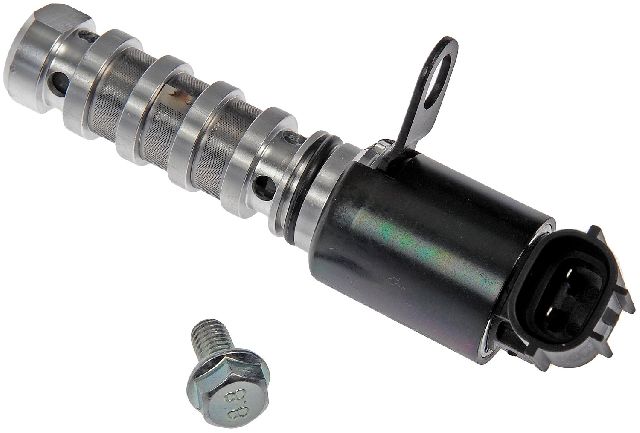
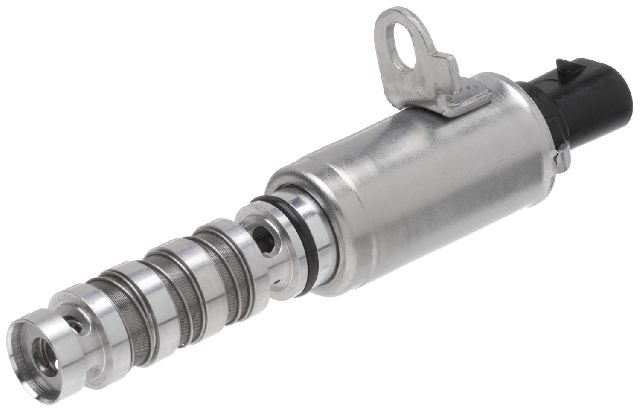
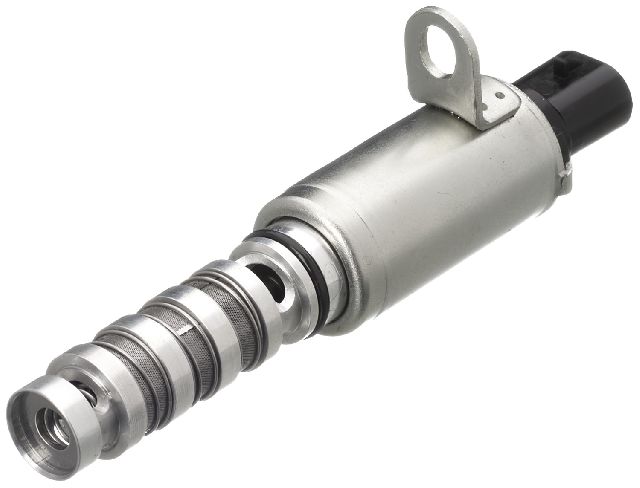
Est. part cost: $50-$100 - Failed Oil Control Valve (OCV/VVT Solenoid) ⚪ Low Probability
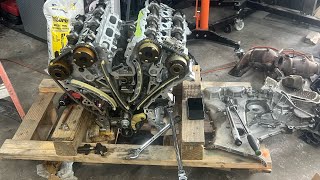
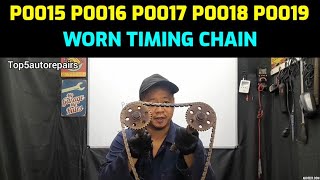
How to confirm: With the engine running, command the Bank 2 solenoids on and off with a bidirectional scan tool; a healthy solenoid will cause a change in idle. You can also measure the resistance of the solenoid (typically 8-12 ohms). A simpler method is to swap the Bank 2 intake and exhaust OCVs; 🎬 See how to diagnose these correlation codes if the code changes to P0019 (Bank 2 Exhaust) or P0018 (Bank 2 Intake), the solenoid is faulty.
Typical fix: Replace the faulty Oil Control Valve for the corresponding camshaft on Bank 2. Ensure you are replacing the correct one (intake vs. exhaust).
Est. part cost: $60-$120
Rare But Worth Checking
- Failed Camshaft or Crankshaft Position Sensor: → Shop Engine Crankshaft Position Sensor This is rare because P0009 indicates a correlation problem between working sensors. However, a sensor providing an erratic signal could theoretically trigger this code before a specific sensor code appears.
- Worn Camshaft/Crankshaft Reluctor Ring: → Shop Engine Crankshaft The reluctor ring (or tone ring) is what the position sensor reads. If it has slipped on the shaft or is damaged, it will send incorrect timing information to the ECM, causing a correlation code. This is an uncommon but possible cause.
Diagnosis Steps
- Check Engine Oil: Verify the engine oil is full, clean, and of the correct 5W-30 viscosity. If it's low or dirty, perform an oil change with a quality full synthetic oil and OEM filter. Clear the code and see if it returns.
- Listen for Startup Rattle: Start the engine when it's cold (after sitting for several hours). A distinct 1-3 second mechanical rattle strongly points to a worn timing chain tensioner that has bled down its oil pressure.
- Scan Tool Data: Use an advanced scan tool to monitor the live data for camshaft/crankshaft correlation on Bank 2. If the deviation angle is consistently greater than +/- 4-5 degrees at a steady idle, it confirms a mechanical timing problem.
- Inspect Oil Control Valves (OCVs): Locate the OCVs on the front of the valve cover for Bank 2. Check wiring and connectors for oil contamination or damage. Test the solenoids with a bidirectional scan tool or swap them to see if the fault code follows the part.
- Physical Inspection: If all signs point to a mechanical issue, the final step is to remove the engine timing cover to physically inspect the timing chains, guides, and tensioners for slack, wear, or damage. This is a labor-intensive step and generally confirms the need for a timing job.
Parts You'll Likely Need
- Timing Chain Kit
(OEM #24322-3CGA1 (Chain - Oil Pump), other kit components vary. Aftermarket kits are widely available.)— This is the most common failure. A complete kit should be used to replace all chains, guides, and tensioners to ensure a lasting repair.
Trusted brands: Hyundai Genuine, Melling, DNJ
OEM price range: $500-$700
Aftermarket price range: $300-$500 - Oil Control Valve (VVT Solenoid)
(OEM #e.g., 24375-3LAA1 (Varies by intake/exhaust and specific model year, verify with VIN))— A less common but possible cause. If diagnosis points to a solenoid, it's a much easier fix than the timing chain.
Trusted brands: Hyundai Genuine, Bosch, Dorman
OEM price range: $100-$150
Aftermarket price range: $50-$90
Related Codes That Often Appear With This One
- P0008 — Indicates an engine position system performance issue on Bank 1. Seeing P0008 and P0009 together strongly suggests a stretched primary timing chain affecting the entire engine, as it connects the crankshaft to both cylinder banks.
- P0018 — Indicates a correlation problem specifically between the crankshaft and the Bank 2 *intake* camshaft ('Sensor A'). It pinpoints the general fault of P0009 to the intake side of Bank 2.
- P0019 — Indicates a correlation problem specifically between the crankshaft and the Bank 2 *exhaust* camshaft ('Sensor B'). It pinpoints the general fault of P0009 to the exhaust side of Bank 2.
Technical Service Bulletins (TSBs) & Recalls
- TSB 10-EM-006: Provided a revised, in-vehicle procedure for replacing timing chain tensioners on 3.3L/3.8L engines, indicating the frequency of this specific repair.
- While not for P0009 directly, Hyundai has issued multiple TSBs related to engine oil consumption (e.g., 21-EM-003H) which is a contributing factor to timing system wear.
Platform-Specific Known Issues
- The Lambda II 3.3L V6 has a documented history of timing chain system wear, leading to startup rattle and timing correlation codes like P0009.
- Hyundai issued a warranty extension for certain 2013-2019 Santa Fe models with the 3.3L engine, covering certain engine repairs up to 15 years/150,000 miles. Owners experiencing abnormal noise or damage should check with a dealer for eligibility.
- Owners on Reddit and other forums have shared experiences of both successful warranty claims for engine issues and frustrations with denials, highlighting the importance of complete service records.
Mechanic-Grade Diagnostic Values
- Oil Control Valve (OCV) Coil Resistance (Denso supplier) — expected: 6.9–7.9 Ohms at 68°F (20°C). Failure: A reading of infinity (open circuit) or near zero (short circuit) indicates a failed OCV.
- Oil Control Valve (OCV) Coil Resistance (Delphi supplier) — expected: 6.7–7.7 Ohms at 68°F (20°C). Failure: A reading of infinity (open circuit) or near zero (short circuit) indicates a failed OCV.
- Camshaft Position Sensor (CMP) Connector - Reference Voltage — expected: Approximately 5V with key on, engine off (KOEO). Failure: No voltage or significantly lower voltage points to a wiring issue or a problem with the ECM's 5V reference circuit.
- Camshaft Position Sensor (CMP) Connector - Ground Circuit — expected: Near 0V when tested between the ground pin and a known good chassis ground.. Failure: High resistance or voltage on the ground pin indicates a bad ground connection.
- Scan Tool Live Data - Camshaft Position Error — expected: The difference between the desired and actual camshaft position should be less than +/- 4-5 degrees at a steady idle.. Failure: A consistent deviation greater than 4-5 degrees, or a deviation over 20 degrees while driving, indicates a mechanical timing fault.
Scan Tool Commands That Help
- Hyundai GDS (Global Diagnostic System): DTC Analysis & Guide — After retrieving the P0009 code, the GDS system provides a step-by-step diagnostic procedure, including component locations, wiring diagrams, and expected values for tests.
- Hyundai GDS (Global Diagnostic System): Actuation Test - CVVT Solenoid — To test the functionality of the Bank 2 Oil Control Valves (OCVs) directly. The tool commands the solenoid to activate, and the technician can observe the change in engine idle or live data to confirm its operation without manual swapping.
- Hyundai GDS (Global Diagnostic System): Flight Record — For intermittent issues where the timing correlation might only be off under specific driving conditions. The flight record function captures data over a period, which can be reviewed after the fact to catch the moment the fault occurs.
Wiring & Ground Locations
- Bank 2 CMP Sensor Connector — On the front valve cover (radiator side of the engine), connecting to the intake and exhaust camshaft position sensors.. This is the primary connection point for the sensors that provide Bank 2 timing information to the ECM. Damage, corrosion, or oil contamination here can directly cause signal loss or erratic readings, mimicking a sensor failure.
- G01 / G02 — G01 is at the base of the left kick panel; G02 is at the base of the right kick panel (based on a similar model year).. These are primary chassis ground points. While not directly for the engine sensors, a poor chassis ground can introduce electrical noise and voltage drop issues throughout the vehicle's systems, potentially affecting ECM calculations.
- Engine Ground Strap — Connects the engine block to the vehicle's chassis. Specific location varies but is typically a braided strap from the block or transmission to the frame rail.. This is the main ground path for the entire engine, including the ECM and its sensors. A corroded or loose engine ground strap can cause a wide range of bizarre, hard-to-diagnose electrical issues, including incorrect sensor readings that could lead to a P0009 code.
Real Owner Repair Stories
- Reddit user Grand-Breadfruit2759 in /r/kia (2016 Hyundai Santa Fe Limited 3.3L) — Engine seized at 105,000 miles with no warning. A replacement (used) engine developed a knocking sound on startup after 20,000 miles, which is getting worse.
❌ Tried (didn't work) Using higher octane gasoline., Using a specific oil additive (Penzoil Restore and Protect).
✅ What actually fixed it The original engine required a complete replacement. The user is currently experiencing the classic pre-failure symptom (startup rattle/knock) on the replacement engine, strongly indicating it is also suffering from the common timing chain/tensioner issue and will likely require a timing job or will fail.
OEM Part Supersession History
N/A (Various early tensioners)→24410-3C300— The original timing chain tensioner design was prone to bleeding down oil pressure when the engine was off, causing chain slack and a loud rattle on startup. This updated part resolves the issue.24355-3C100→24355-3C200— Updated design for the Oil Control Valve (OCV) to improve reliability and performance.
Heads up: The new part (24355-3C200) is a direct, backward-compatible replacement for the original.
Diagnostic Flowchart
Other Known Issues on This Vehicle
Issues unrelated to this code that are worth knowing about as an owner of this generation:
- Worn MDPS Steering Coupler 🟠 Medium — Very common; typically occurs after 60,000 miles. Causes a distinct clicking or clunking noise when turning the steering wheel. (Ref: TSB 17-ST-001 describes the replacement procedure for the flexible coupler, P/N 56315-2K000-FFF.)
- Engine Oil Consumption 🔴 High — Common across many Hyundai engines, including the 3.3L V6. Can be caused by carbon buildup on piston rings. (Ref: TSB 23-EM-007H (and predecessors) outlines an oil consumption test and combustion chamber cleaning procedure.)
- Rod Bearing Failure 🔴 High — Less common than on the 4-cylinder Theta II engines, but reports of sudden engine failure due to rod bearing wear exist for the 3.3L V6, sometimes with no prior warning. (Ref: Related to Hyundai's 15-year/150,000-mile warranty extension for certain engine conditions.)
- Faulty Knock Sensor 🟡 Low — Can fail and trigger a Check Engine Light (commonly code P0326) without noticeable drivability issues.
- Thermostat Failure 🟠 Medium — Commonly fails in the 'stuck open' position, leading to slow engine warm-up, poor heater performance, and code P0128.
Used vs. New Parts: Buying Guide for This Vehicle
When a used part is the smart pick: Due to the high rate of timing system and internal engine failures on the Lambda II 3.3L GDI, purchasing a used engine or timing components is extremely high-risk. Used parts should only be considered for external bolt-on components like sensors or wiring harnesses, which are not subject to the same internal wear patterns.
Donor-vehicle mileage cap: roughly under 60000 miles for the part to have meaningful remaining life.
What to inspect on the donor part:
- For a complete engine, demand detailed service records showing consistent oil changes with full synthetic oil.
- Avoid any engine from a vehicle with a front-end collision, which can damage the timing cover and accessories.
- Listen to the donor engine run if possible; any startup rattle is an absolute deal-breaker.
- Check for signs of heavy oil leaks around the valve covers or timing cover.
OEM-only on this vehicle (don't cheap out):
- Timing Chain Kit: Given the high labor cost of the repair and the known weakness of the original tensioner design, using a genuine Hyundai kit with the updated tensioner (24410-3C300) is critical for a lasting repair.
- Oil Filter: Many owners and technicians report that aftermarket oil filters can cause oil pressure discrepancies that trigger timing-related codes on this engine. Use of a genuine Hyundai filter is strongly recommended.
Aftermarket brands forum-validated for this vehicle:
- Melling (For timing chain kits)
Brands owners have reported issues with on this vehicle:
- Unbranded, no-name timing chain kits from online marketplaces. The quality of the chain, guides, and especially the tensioner is paramount in this repair, and cheap kits are known to fail prematurely.
Real Owner Stories
Aggregated from forums and TSBs cited above. Mileages and costs reflect what owners reported in those sources.
2013-2019 Hyundai Santa Fe 3.3L V6 — ~110000 miles
Symptoms: Rattling noise from the engine for 1-3 seconds on cold startup; persistent timing correlation issues.
What fixed it: Replacement of all timing chains (one primary, two secondary), all tensioners, and all chain guides.
Cost: $300-$600
Source hint: hyundai-forums.com threads regarding cold start rattle and timing chain failure on the 3.3L V6
2017-2018 Hyundai Santa Fe 3.3L V6
Symptoms: Concerns regarding GDI engine characteristics and potential for intake valve carbon buildup.
What fixed it: Owners discussed the importance of service records for warranty claims related to engine issues.
Source hint: BobIsTheOilGuy.com - '3.3 V-6 in 2017-18 Santa Fe engine concerns?'
2013-2019 Hyundai Santa Fe 3.3L V6
Symptoms: Abnormal engine noise and potential rod bearing wear; frustrations with warranty claim denials.
What fixed it: Engine repairs covered under the 15-year/150,000-mile warranty extension for eligible vehicles with complete service records.
Source hint: Reddit and other forums as cited in vehicle_specific_issues
Related OBD-II Codes
Frequently Asked Questions
Is there a warranty extension for the 3.3L V6 engine in my 2013-2019 Santa Fe?
My Santa Fe rattles for a few seconds when I first start it in the morning. Is this related to P0009?
Can I just change the oil to fix the P0009 code on my 3.3L Lambda II engine?
Does TSB 10-EM-006 apply to the timing issues on my Santa Fe?
What is the specific part number for the steering noise I hear in addition to the engine light?
How can I tell if the P0009 code is a bad sensor or a mechanical timing chain failure?
Helpful Videos
We Have This Part in Stock


The information in this article is provided for general reference and educational purposes only. Vehicle specifications, procedures, and part compatibility can vary by production date, trim level, and region. Always consult your vehicle's factory service manual and verify part numbers before purchasing or performing repairs. Safety-critical components such as airbags, seat belts, and braking systems should be installed by a qualified professional.
- Hyundai Santa Fe:
- 🧭 Diagnostic Flowchart
- 🎬 Helpful Videos
- 🛍️ Shop This Part
- What's Unique About the 2013-2019 Hyundai Santa Fe
- Symptoms You May Notice
- Most Likely Causes
- Rare But Worth Checking
- Diagnosis Steps
- Parts You'll Likely Need
- Related Codes That Often Appear With This One
- Technical Service Bulletins (TSBs) & Recalls
- Platform-Specific Known Issues
- Mechanic-Grade Diagnostic Values
- Scan Tool Commands That Help
- Wiring & Ground Locations
- Real Owner Repair Stories
- OEM Part Supersession History
- Other Known Issues on This Vehicle
- Used vs. New Parts: Buying Guide for This Vehicle
- Real Owner Stories
- 2013-2019 Hyundai Santa Fe 3.3L V6 — ~110000 miles
- 2017-2018 Hyundai Santa Fe 3.3L V6
- 2013-2019 Hyundai Santa Fe 3.3L V6
- Related OBD-II Codes
- Frequently Asked Questions
- 🎟️ Get 5% Off