

P0009 on 2007-2010 Pontiac G6: Stretched Timing Chain Causes & Fixes
P0009 on a Pontiac G6 with the 3.6L V6 almost always means the timing chains have stretched. This is a serious and expensive repair, often costing over $2,000, that requires replacing the timing chains, guides, and tensioners to prevent catastrophic engine failure. This was a widespread issue on early GM 3.6L engines, leading to multiple TSBs and a special warranty extension.
- P0009 on a 2007-2010 Pontiac G6 with the 3.6L V6 is almost certainly caused by stretched timing chains.
- This is a serious issue that requires immediate attention to avoid catastrophic engine failure. Do not continue to drive the vehicle.
- The only correct repair is to replace the timing chains, guides, and tensioners with the updated parts specified by GM in TSB 12-06-01-009F.
- The repair is complex and expensive, often requiring the engine to be removed from the vehicle, with costs frequently exceeding $2,000.
- This is a well-documented factory defect affecting many GM vehicles using the early 3.6L V6 engine.
What's Unique About the 2007-2010 Pontiac G6
The 2007-2010 Pontiac G6 equipped with the 3.6L LY7 V6 engine is well-known for premature timing chain stretching. This issue was so prevalent that General Motors issued multiple Technical Service Bulletins (TSBs) and a special coverage program (SCA 11340C). The problem is often linked to extended oil change intervals recommended by the original oil life monitor calibration, which led to oil breakdown and inadequate lubrication for the timing components. Later versions of the 3.6L engine (LFX/LGX) featured a revised timing chain design that resolved this issue.
Diagnostic Flowchart
Tap your situation to follow the diagnostic path that matches what you're seeing on this vehicle.
Symptoms You May Notice
- Check Engine Light is on
- Engine rattling noise, especially on a cold start
- Rough or unstable idle
- Reduced engine power and sluggish acceleration
- Difficulty starting the engine
- Decreased fuel economy
- Limp mode under sharp acceleration.
- Replacing only the camshaft or crankshaft position sensors without addressing the underlying mechanical timing chain issue.
- Replacing only one of the three timing chains or failing to replace all guides and tensioners.
Most Likely Causes
- Stretched Timing Chains 🔴 High Probability → Shop Engine Timing Chain The early GM 3.6L V6 (LY7) engines used timing chains that were susceptible to premature wear and stretching, a problem exacerbated by long oil change intervals and potentially undersized PCV orifices causing oil degradation. GM later released updated timing chain kits to address the durability issue.
How to confirm: A mechanic can use a scan tool to read cam/crank deviation data. A definitive diagnosis requires visual inspection of the timing chain tensioners and slack by removing the timing cover, which involves significant engine disassembly.
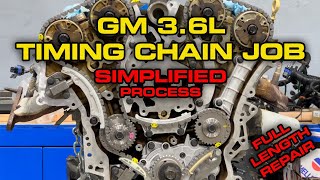
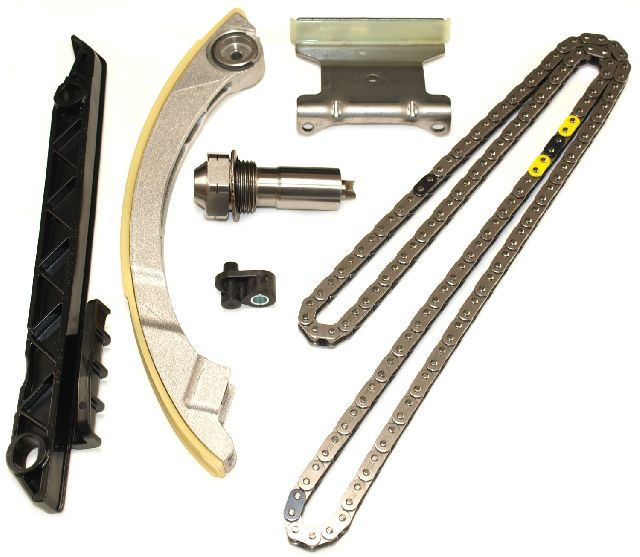
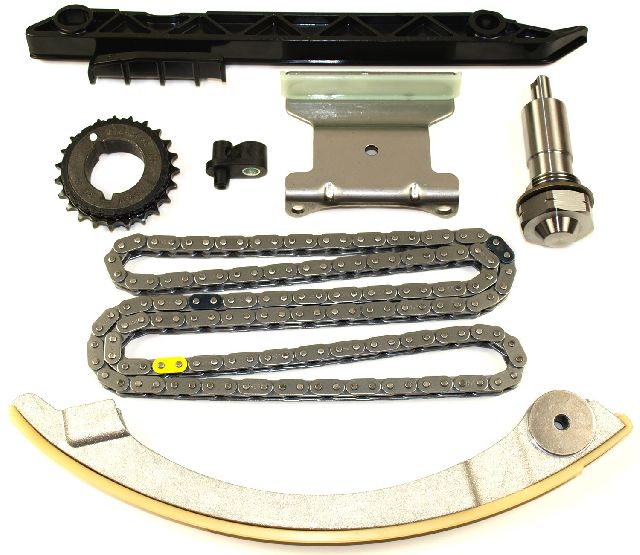
Typical fix: Replace all three timing chains (primary and two secondary), along with all tensioners and guides. This is sold as a complete kit. It is also highly recommended to replace the water pump and front crankshaft seal at the same time.
Est. part cost: $150-$450 - Worn Timing Chain Tensioners and Guides 🔴 High Probability → Shop Engine Timing Chain The tensioners are hydraulic and rely on clean oil and sufficient pressure. The plastic guides become brittle over time. A failed tensioner can no longer keep the chain taut, leading to slack, rattling, and timing correlation errors.
How to confirm: Confirmed during visual inspection when replacing the timing chains. A rattling noise from the front of the engine is a strong indicator.
Typical fix: Always replaced as part of a complete timing chain kit replacement.
Est. part cost: $0 (Included in timing chain kit) - Low Engine Oil Level or Degraded Oil 🟡 Medium Probability The timing chain tensioners are hydraulically operated by engine oil pressure. The original Oil Life Monitor (OLM) calibration allowed for excessively long change intervals, leading to oil breakdown. Low or dirty oil can cause the tensioners to fail, accelerating chain wear. GM's special coverage program included an OLM recalibration to shorten the intervals.
How to confirm: Check the oil level on the dipstick and inspect the oil's condition. If it is low, black, or gritty, this is a likely contributing factor.
Typical fix: Perform an oil and filter change with the correct grade of oil (5W-30). However, if the P0009 code is already set, this will not fix the stretched chain; it is a critical preventative measure for the future.
Est. part cost: $40-$80
Rare But Worth Checking
- Faulty Camshaft or Crankshaft Position Sensor: → Shop Engine Crankshaft Position Sensor While possible, this is an unlikely cause on this specific engine. Given the widespread, documented issues with timing chains, the mechanical components should be investigated first. Replacing sensors is a common misdiagnosis. A Reddit user shared an instance where a chafed wire to a sensor was the true cause, highlighting the need for proper diagnosis before ordering parts.
- Faulty VVT Solenoid (Oil Control Valve): A stuck or clogged VVT solenoid can affect cam timing and potentially trigger this code. However, it is much less common than chain stretch.
- Spun/Shifted Crankshaft Reluctor Wheel: → Shop Engine Crankshaft On rare occasions, the toothed reluctor wheel on the crankshaft, which the crankshaft position sensor reads, can move from its original position. This causes a discrepancy between the actual crank position and what the sensor reports, triggering timing correlation codes even if the chains are perfect. GM TSB #PIP3423P specifically mentions inspecting for this. Some engine remanufacturers like Jasper Engines prevent this by drilling and pinning the reluctor wheel.
Diagnosis Steps
- Verify the code with an OBD-II scanner.
- Check the engine oil level and condition. If low or dirty, correct it, clear the codes, and see if they return. This is unlikely to be a permanent fix but is a critical first step.
- Listen for a rattling or scraping sound from the front of the engine (timing cover area), especially during a cold start.
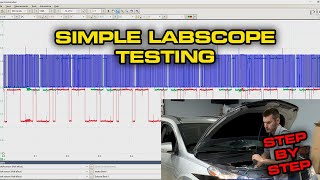
- Use an advanced scan tool to monitor the live data for camshaft and crankshaft position sensor signals. Check for cam angle deviation from the desired angle. A deviation 🎬 Watch: How to use a labscope to diagnose timing issues. greater than 9 degrees on a GM vehicle will typically set a code.
- Inspect sensor wiring for any signs of damage, chafing, or loose connections, as this can mimic a mechanical fault.
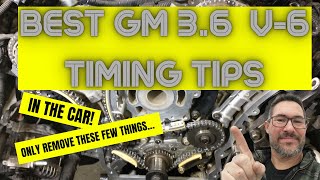
- If all signs point to a timing issue, the next step is partial engine disassembly to visually inspect the timing chains for slack, check the tensioner extension, and verify the timing marks.
- If the chains are stretched (a common finding), replace the complete timing chain kit, including all three chains, guides, and tensioners.
Parts You'll Likely Need
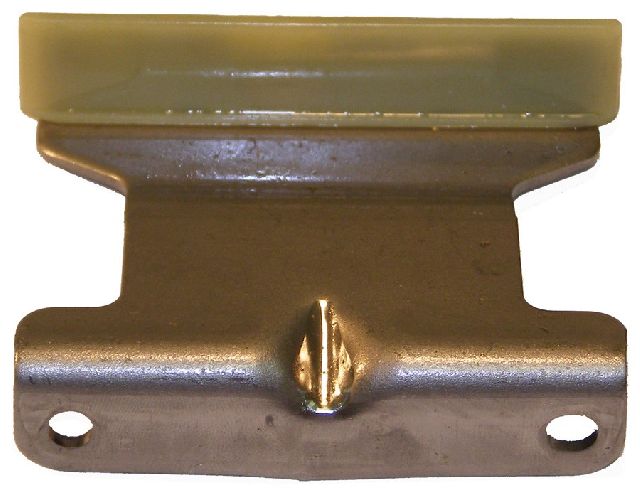
- Timing Chain Kit
(OEM #12650230 (For 2007 models), 12651768 (Superseded kit))— This is the definitive fix for the common stretched chain issue. A complete kit ensures all related wear components (chains, guides, tensioners) are replaced simultaneously with updated parts. TSB 12-06-01-009F specifies using these kits for the repair.
Trusted brands: ACDelco (GM Genuine), Cloyes
OEM price range: $250-$400
Aftermarket price range: $150-$250
Related Codes That Often Appear With This One
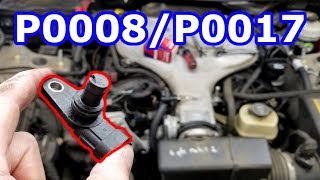
- P0008 — P0008 is the identical code but for Bank 1 (the cylinder head closer to the firewall). It's very common to see both P0008 and P0009 together, indicating a problem with the primary timing chain that affects both banks.
- P0016, P0017, P0018, P0019 — These are all more specific camshaft/crankshaft position correlation codes for both banks. The TSBs from GM explicitly group them with P0008 and P0009 as being caused by stretched timing chains.
Technical Service Bulletins (TSBs) & Recalls
- 12-06-01-009F: Announces the availability of updated, comprehensive timing chain kits for repairing stretched timing chains that cause codes like P0008, P0009, P0016, P0017, P0018, and/or P0019.
- PIP3423P: Guides technicians to inspect for loose timing chains or tensioners when P0009 and related codes are present, and also to inspect the crankshaft reluctor wheel for being out of position.
- 11340C: Special Coverage Adjustment extending the warranty on the timing chain system to 10 years/120,000 miles.
Platform-Specific Known Issues
- The GM High Feature 3.6L V6 (LY7) engine used in this vehicle is notorious for premature timing chain failure. GM released TSB #12-06-01-009F to address this, providing updated timing chain kits for repair.
- GM also released a special coverage program (SCA 11340C, related to program 10287) that extended the warranty for this specific issue to 10 years or 120,000 miles on some vehicles and provided for a reprogramming of the oil life monitor to recommend more frequent oil changes. Most vehicles are now outside this coverage window due to age.
- The repair is labor-intensive, often requiring the engine to be dropped from the vehicle for access, which significantly increases labor costs.
Mechanic-Grade Diagnostic Values
- Camshaft/Crankshaft Correlation — expected: Less than 9 degrees of deviation. Failure: When the ECM detects a deviation greater than 9 degrees between the camshaft and crankshaft, it will set a P0009 (or related) code.
- VVT Actuator Solenoid Resistance — expected: 5.0 to 15.0 Ohms. Failure: A reading outside this range, especially a very high resistance (Mega-Ohms), indicates a failed solenoid coil.
Wiring & Ground Locations
- G105 — On the left rear side of the engine compartment, on an engine transmission stud, below the upper coolant hose.. This is a critical ground point shared by the Engine Control Module (ECM), Transmission Control Module (TCM), and the Mass Air Flow sensor. A poor connection here can cause numerous, seemingly unrelated codes and drivability issues, including communication errors that could be mistaken for a failed ECM.
- G108 — On the right rear corner of the cylinder head (for the 3.6L engine).. This is another key engine ground. Ensuring all engine grounds are clean and secure is a fundamental step before diagnosing complex sensor or module issues.
- ECM (Engine Control Module) — Located on the left (driver's) side of the engine compartment.. This is the location of the computer that receives signals from the cam/crank sensors. All sensor wiring terminates here, making it a central point for checking wiring continuity from the sensor connectors.
Real Owner Repair Stories
- Chevrolet Forum user (2009 Chevrolet Equinox 3.6L (same LY7 family engine and issue)) — Persistent Bank 2 intake camshaft correlation code after multiple repairs.
❌ Tried (didn't work) Replaced timing chains, phasers, tensioners, and guides with aftermarket parts., Replaced VVT solenoids., Replaced tensioners again with GM parts., Replaced chains again with GM parts.
✅ What actually fixed it The user noticed excessive rotational play in the new aftermarket camshaft phaser. After replacing the aftermarket phasers with genuine GM phasers, the problem was resolved. This highlights that even new aftermarket parts can be faulty and cause persistent issues.
OEM Part Supersession History
Unknown early PNs→12650230, then 12651768— The original timing chains were prone to stretching. GM released multiple revisions of the timing chain kits to improve durability. The latest kits contain chains of an improved design.
Heads up: Early 2007 models may require a different kit (Part # 12799-78810 mentioned for Suzuki re-badge) than later models. It is critical to use a VIN to get the correct and most up-to-date kit for the specific vehicle being repaired.
Helpful Videos
We Have This Part in Stock


The information in this article is provided for general reference and educational purposes only. Vehicle specifications, procedures, and part compatibility can vary by production date, trim level, and region. Always consult your vehicle's factory service manual and verify part numbers before purchasing or performing repairs. Safety-critical components such as airbags, seat belts, and braking systems should be installed by a qualified professional.
- Pontiac G6:
- 🧭 Diagnostic Flowchart
- 🎬 Helpful Videos
- 🛍️ Shop This Part
- What's Unique About the 2007-2010 Pontiac G6
- Symptoms You May Notice
- Most Likely Causes
- Rare But Worth Checking
- Diagnosis Steps
- Parts You'll Likely Need
- Related Codes That Often Appear With This One
- Technical Service Bulletins (TSBs) & Recalls
- Platform-Specific Known Issues
- Mechanic-Grade Diagnostic Values
- Wiring & Ground Locations
- Real Owner Repair Stories
- OEM Part Supersession History
- 🎟️ Get 5% Off