

P0009 on 2008-2009 Pontiac Torrent GXP: Stretched Timing Chain Causes & Fixes
On a 2008-2009 Pontiac Torrent GXP with the 3.6L V6 engine, code P0009 almost always means the timing chains have stretched. This is a severe and costly repair that involves replacing the chains, guides, and tensioners, with shop costs often ranging from $2,000 to $3,500. The issue is a well-documented factory problem with the early LY7 engine, often accelerated by degraded oil from extended change intervals.
- P0009 on a 2008-2009 Torrent GXP is a very serious code that almost certainly indicates stretched timing chains, a well-known factory defect with the 3.6L LY7 engine.
- This is not a DIY repair for most people. It is a complex and expensive job with labor costs often exceeding $2,000.
- Do not waste money replacing camshaft or crankshaft sensors; they are almost never the root cause of this code on this engine.
- Using a complete, updated timing chain kit from a reputable brand like ACDelco or Cloyes is critical for a long-lasting repair.
- Neglecting oil changes and following the original, overly long Oil Life Monitor intervals significantly accelerates this failure.
What's Unique About the 2008-2009 Pontiac TORRENT
This issue is extremely common on the specific 3.6L V6 (RPO code LY7) engine found in the Torrent GXP models and its platform mates. These early 'High Feature' V6 engines were notorious for premature timing chain stretching. The problem was so widespread that General Motors issued multiple Technical Service Bulletins (TSBs) and even offered a Special Coverage Adjustment (program #11340) that extended the warranty to 10 years/120,000 miles for this exact failure on many vehicles with this engine, though this has now expired. The primary causes are attributed to the original chain design combined with oil degradation from extended oil change intervals encouraged by the factory's Oil Life Monitor (OLM) system.
🎬 Watch: Why these GM 3.6L timing chains fail so often.Diagnostic Flowchart
Tap your situation to follow the diagnostic path that matches what you're seeing on this vehicle.
Symptoms You May Notice
- Check Engine Light is on
- Rattling noise from the engine, especially on a cold start
- Reduced engine power and sluggish acceleration
- Rough or unstable idle
- Difficulty starting the engine
- Decreased fuel economy
- A flat spot in power delivery, particularly in the 2,000-3,000 RPM range, as noted by owners.
- Replacing only the camshaft position sensor for Bank 2.
- Replacing only the crankshaft position sensor.
- Replacing VVT solenoids (camshaft actuators) without confirming a mechanical timing fault first.
Most Likely Causes
- Stretched Timing Chains 🔴 High Probability → Shop Engine Timing Chain The original timing chains used on the 3.6L LY7 V6 engine were known for premature wear and stretching, a well-documented factory issue. GM later released updated, more durable parts to supersede the originals.
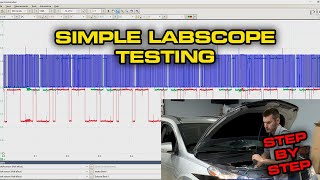
How to confirm: A mechanic can use a scan tool to monitor camshaft deviation data. A consistent deviation of more than 4-5 degrees often points to a mechanical timing issue. 🎬 See how to test timing chain problems with a labscope. Physical inspection by removing the engine's front cover is the definitive confirmation.
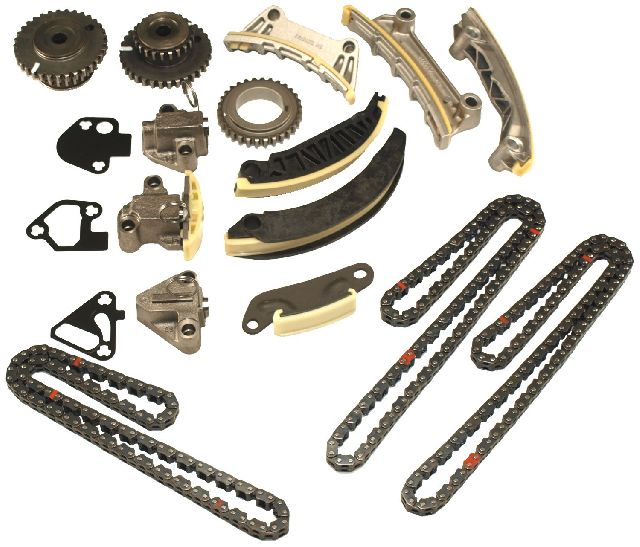
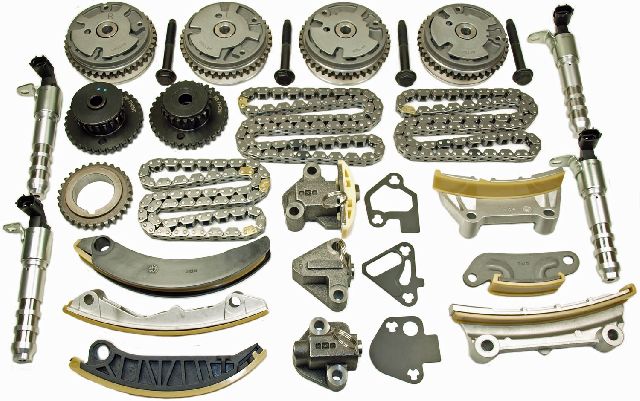
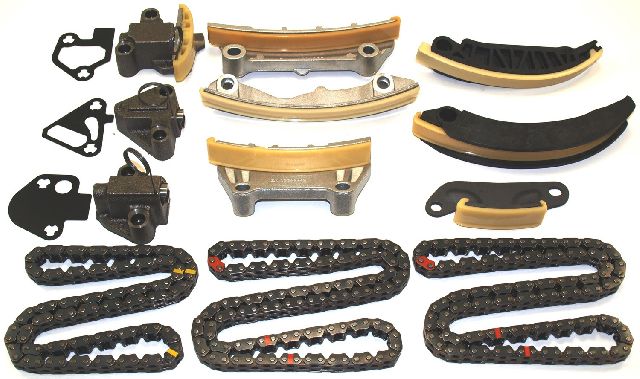
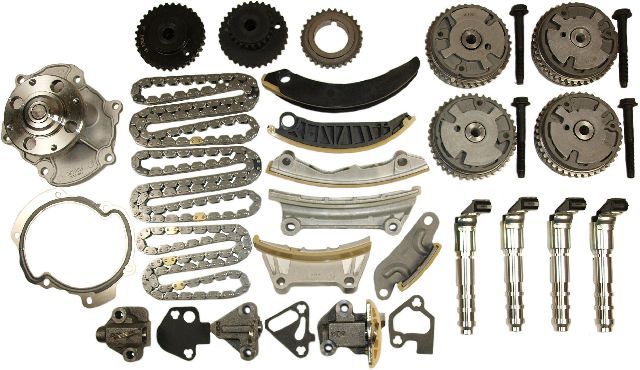
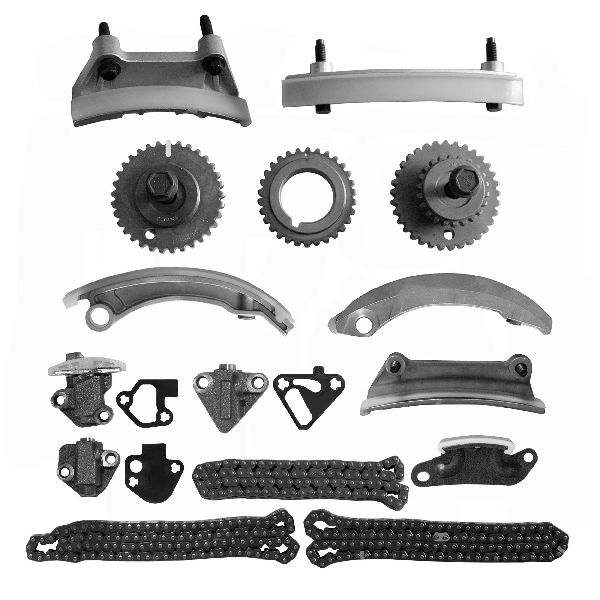
Typical fix: Replace all three timing chains (one primary, two secondary), along with the tensioners and guides, using an updated kit. It is critical to use the latest parts specified by GM.
Est. part cost: $300-$600 - Failed Timing Chain Tensioners and/or Guides 🔴 High Probability → Shop Engine Timing Chain The hydraulic tensioners rely on clean oil and proper pressure. As they wear or get clogged with sludge from degraded oil, they can fail to keep the chains properly tensioned, which rapidly accelerates chain wear. They are considered a wear item and are always replaced with the chains.
How to confirm: Diagnosed during the physical inspection for a timing chain replacement. A failed tensioner or broken plastic guide piece may be visible upon removing the timing cover.
Typical fix: Replace as part of a complete timing chain kit service.
Est. part cost: $0 (Included in timing chain kit) - Low or Degraded Engine Oil 🟡 Medium Probability The timing chain tensioners are hydraulic, meaning they use engine oil pressure to function. Following the factory's long oil change intervals, as prompted by the Oil Life Monitor (OLM), can lead to oil breakdown, sludge, and low pressure. This starves the tensioners and chains of proper lubrication and is a primary contributor to premature failure.
How to confirm: Check the oil level on the dipstick and inspect the oil's condition. Look for a low level or a thick, sludgy consistency. Check service records for long intervals between oil changes.
Typical fix: Perform an oil and filter change with high-quality synthetic oil that meets GM specifications. However, if the P0009 code is already present, this will not fix the stretched chains and is not a substitute for the mechanical repair.
Est. part cost: $50-$100
Rare But Worth Checking
- Slipped Crankshaft Reluctor Wheel: → Shop Engine Crankshaft TSB #PIP3423P and its successors mention that in some cases, the reluctor wheel (which the crankshaft sensor reads) can move slightly on the crankshaft. This creates a timing correlation error even if the chains are new. This is a rare but critical possibility to consider if a timing chain replacement doesn't fix the code. Inspection may be possible with a borescope through the crank sensor hole.
- Faulty Camshaft or Crankshaft Position Sensor: → Shop Engine Crankshaft Position Sensor While these sensors can fail, they are very rarely the cause of P0009 on this specific engine. They are a common misdiagnosis that fails to fix the problem. Do not replace sensors without first verifying the mechanical timing.
Diagnosis Steps
- Verify the code P0009 (and any others like P0008) with an OBD-II scanner.
- Check the engine oil level and condition. If low or dirty, correct it, clear the codes, and see if they return. This is unlikely to be a permanent fix.
- Using an advanced scan tool, monitor the camshaft position deviation PIDs. A consistent deviation of more than a few degrees (e.g., 4-5 degrees or more) at idle points to a mechanical timing issue.
- Listen for a distinct rattling or scraping noise from the front of the engine (passenger side, where the timing chains are located), especially during a cold start.
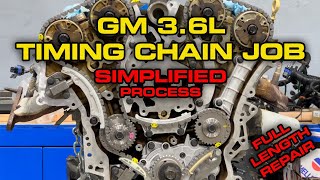
- If evidence points to a timing issue, the next step is to remove the engine front/timing cover for a direct physical inspection of the timing chains, guides, and tensioners. This is a labor-intensive step and is usually done as part of the repair itself. 🎬 Watch this full-length timing chain removal and installation guide.
Parts You'll Likely Need
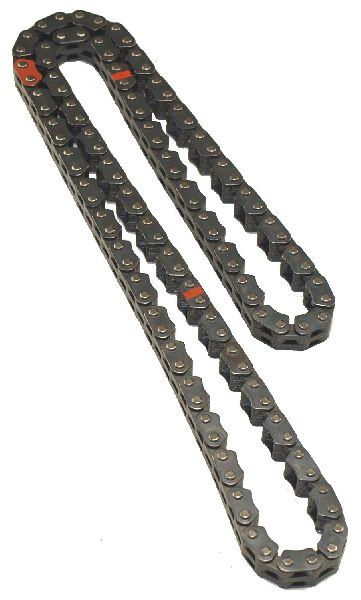
- Engine Timing Chain Kit
(OEM #ACDelco 12651450 (later superseded, check VIN with dealer), or 12700435)— This is the definitive fix for a stretched timing chain. A complete kit includes all three chains, all tensioners, guides, and necessary gaskets to do the job correctly. Using an updated kit from GM or a reputable aftermarket supplier is crucial for a lasting repair.
Trusted brands: ACDelco (GM Genuine), Cloyes (e.g., 9-0753S), Melling
OEM price range: $400-$600
Aftermarket price range: $250-$450
Related Codes That Often Appear With This One
- P0008 — P0008 is the identical code for Bank 1 (radiator side). Seeing both P0008 and P0009 together is very common and strongly indicates a stretched primary timing chain affecting both cylinder banks.
- P0016, P0017, P0018, P0019 — These are all more specific camshaft/crankshaft correlation codes for intake and exhaust cams on both banks. GM groups all of them together with P0008 and P0009 as being caused by stretched timing chains in TSBs #PIP3423P and #12-06-01-009F.
Technical Service Bulletins (TSBs) & Recalls
- PIP3423P: Instructs technicians to inspect for loose timing chains or tensioners when codes P0008, P0009, P0016, P0017, P0018, or P0019 are present. Also mentions the rare possibility of a slipped crankshaft reluctor wheel.
- 12-06-01-009F: Announces the availability of updated timing chain kits specifically for repairing stretched timing chains that cause these codes and explicitly lists the 2008-2009 Pontiac Torrent.
Platform-Specific Known Issues
- The 2008-2009 Pontiac Torrent GXP uses the 3.6L LY7 V6, which is widely known for premature timing chain failure.
- GM issued TSB #12-06-01-009F, which explicitly lists the 2008-2009 Pontiac Torrent (RPO LY7), announcing updated timing chain kits to address this specific problem.
- GM also issued Special Coverage Adjustment #11340C, which extended the warranty for timing chain wear to 10 years/120,000 miles on many LY7-equipped vehicles. While the Torrent was not explicitly listed in all versions of this customer-facing document, its platform mates were, and the repair is identical. This coverage is now expired due to age.
- The original factory Oil Life Monitor (OLM) calibration often allowed for oil change intervals that were too long, leading to oil degradation that accelerated the chain wear. A recalibration was part of the special coverage program.
Mechanic-Grade Diagnostic Values
- Scan Tool 'Camshaft Position Variance' PID — expected: < 2-4 degrees at idle.. Failure: A consistent deviation greater than 4-6 degrees between 'Desired' and 'Actual' camshaft position angles strongly suggests a mechanical timing issue like a stretched chain.
- Camshaft Position Actuator Solenoid Resistance (LY7 Engine) — expected: 4.6-7.5 Ohms.. Failure: A reading of 0 Ohms (short), infinite/OL (open), or a value significantly outside the expected range indicates a failed solenoid.
- Camshaft Position Sensor 5V Reference Circuit — expected: 4.8-5.2 Volts.. Failure: Voltage outside this range suggests a problem with the ECM or wiring.
- Crankshaft Reluctor Wheel Position Measurement — expected: 25 to 26 mm from the end of the machined surface of the crankshaft throw to the edge of the open space in the reluctor.. Failure: A measurement outside this range, either clockwise or counter-clockwise, indicates the reluctor has slipped and the crankshaft must be replaced.
Scan Tool Commands That Help
- GDS2 / Tech2: Camshaft Position Variation Learn — This procedure should be performed after replacing a camshaft, phaser, or timing chain to allow the ECM to learn the new baseline positions of the valvetrain components.
- GDS2 / Tech2: Camshaft Position Actuator Solenoid Test — This bidirectional control manually commands the solenoid on and off to verify if it is mechanically clicking and if the wiring from the ECM is functional. This helps differentiate a bad solenoid from a wiring or mechanical phaser issue.
Wiring & Ground Locations
- ECM (Engine Control Module) — Mounted on top of the battery cover in the engine compartment.. The ECM is the central computer that receives signals from the cam/crank sensors and sets code P0009. A poor connection or internal fault, though rare, could be a factor. It must be reprogrammed if replaced.
- G107 — On the upper left front side of the engine (for the 3.6L V6).. This is a primary engine ground point. A poor ground here can cause erratic behavior from engine sensors and the ECM.
- G108 — On the upper right rear side of the engine (for the 3.6L V6).. This is another primary engine ground point. A poor ground can affect sensor readings and module communication.
- G109 — On the upper left rear side of the engine (for the 3.6L V6).. This is a key engine ground point. Intermittent or poor grounding can lead to a variety of difficult-to-diagnose electrical issues.
Real Owner Repair Stories
- YouTube user 'sailingandthings' (2009 Buick Enclave (platform mate with 3.6L LY7 engine)) — Check engine light with code P0008 and poor driving performance.
❌ Tried (didn't work) The owner received quotes from a dealer and independent shop for $1900-$2500+, confirming the diagnosis was the timing chains, so no other parts were tried first.
✅ What actually fixed it A complete timing chain replacement was performed with the engine in the vehicle. The owner noted specific challenges, including needing a special 3-inch gear puller for the harmonic balancer due to tight space and removing a hidden alternator mounting stud that goes into the timing cover.
OEM Part Supersession History
12651450→12693218, then 12700436— GM updated the timing chain kits with more durable chains and improved guides to address the widespread premature stretching and wear issues found in the original parts.
Heads up: While older kits will physically fit, it is critical to use the latest available part number (e.g., 12700436 or a quality aftermarket equivalent like Cloyes 9-0753S) to get the most durable, updated components and prevent a repeat failure.
Model Year Variations Within This Range
- 2008-2009: The Pontiac Torrent GXP exclusively used the 3.6L LY7 port-injected V6. Other GM platforms began receiving the direct-injected LLT version in 2009, which had its own variations of the timing chain issue. The Torrent did not receive the LLT engine, so diagnosis and parts are specific to the LY7.
Helpful Videos

We Have This Part in Stock

The information in this article is provided for general reference and educational purposes only. Vehicle specifications, procedures, and part compatibility can vary by production date, trim level, and region. Always consult your vehicle's factory service manual and verify part numbers before purchasing or performing repairs. Safety-critical components such as airbags, seat belts, and braking systems should be installed by a qualified professional.
- Pontiac TORRENT:
- 🧭 Diagnostic Flowchart
- 🎬 Helpful Videos
- 🛍️ Shop This Part
- What's Unique About the 2008-2009 Pontiac TORRENT
- Symptoms You May Notice
- Most Likely Causes
- Rare But Worth Checking
- Diagnosis Steps
- Parts You'll Likely Need
- Related Codes That Often Appear With This One
- Technical Service Bulletins (TSBs) & Recalls
- Platform-Specific Known Issues
- Mechanic-Grade Diagnostic Values
- Scan Tool Commands That Help
- Wiring & Ground Locations
- Real Owner Repair Stories
- OEM Part Supersession History
- Model Year Variations Within This Range
- 🎟️ Get 5% Off