

P0009 on 2007-2010 Saturn Outlook: Engine Position Performance Bank 2 Fixes
Code P0009 on a 2007-2010 Saturn Outlook almost always means the timing chains have stretched. This is a widely-known, serious, and expensive repair often costing $1,800-$3,000+. GM acknowledged the problem with a Special Coverage program (#11340C) that extended the warranty to 10 years/120,000 miles, which has now expired for all affected vehicles. Do not ignore this code.
- P0009 on a 2007-2010 Saturn Outlook is a strong indicator of stretched timing chains, a known and common problem.
- Do not drive the vehicle, as you risk catastrophic engine failure.
- This is not a DIY-friendly repair. It is complex, time-consuming, and requires special tools.
- Do not waste money replacing camshaft or crankshaft sensors before a mechanic has confirmed the engine's mechanical timing is correct.
- Expect a significant repair bill, typically in the $1,800 to $3,000 range.
What's Unique About the 2007-2010 Saturn OUTLOOK
The 3.6L V6 engine (LY7 and LLT variants) used in the Saturn Outlook and its GM Lambda platform siblings is notorious for premature timing chain failure. The root cause is a combination of factors: the original timing chains were of a design that was susceptible to stretching, and this was exacerbated by GM's original Oil Life Monitor (OLM) calibration, which allowed for excessively long oil change intervals. Degraded or low oil cannot properly lubricate and tension the chains, leading to accelerated wear. The issue was so prevalent that GM issued multiple Technical Service Bulletins (TSBs) and a Special Coverage program (#11340C) to address it by replacing the chains with an updated design and reprogramming the ECM for shorter oil change intervals.
Diagnostic Flowchart
Tap your situation to follow the diagnostic path that matches what you're seeing on this vehicle.
Symptoms You May Notice
- Check Engine Light is on
- Engine running rough or idling poorly
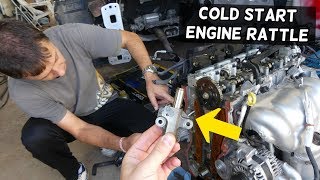
- Rattling, scraping, or whining noise from the engine, especially on cold starts, that may quiet down as the engine warms up.
- Reduced engine power and poor acceleration, sometimes described as 'limp mode'.
- Increased fuel consumption.
- Difficulty starting the engine
- A cluster of other timing-related codes like P0008, P0016, P0017, P0018, and P0019.
- Replacing only the camshaft position sensors or crankshaft position sensor without first verifying the mechanical timing of the engine. On this vehicle, the P0009 code is almost always a mechanical fault with the timing chains, not an electrical sensor failure.
Most Likely Causes
- Stretched Timing Chains 🔴 High Probability → Shop Engine Timing Chain The original timing chains on the 3.6L V6 engines in this era were prone to premature wear and stretching. This is a widely documented issue acknowledged by GM through multiple TSBs and a warranty extension.
How to confirm: A mechanic can use a scan tool to view camshaft deviation data; persistent deviation is a strong sign. The definitive method is physical inspection, which involves removing the engine's front cover to measure chain slack. This is labor-intensive.
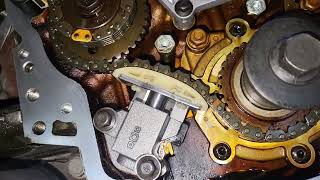
Typical fix: Replace all three timing chains, the tensioners, guides, and often the water pump (which is driven by the primary timing chain) at the same time. Use an updated design kit.
Est. part cost: $300-$750 - Failed Timing Chain Tensioners or Guides 🔴 High Probability → Shop Engine Timing Chain The tensioners are hydraulic and rely on oil pressure to keep the chains tight. The plastic guides can become brittle and break. These components typically fail along with the chains and are always replaced as a set.
How to confirm: These are inspected during a timing chain service. A rattling noise is a strong indicator of a tensioner or guide failure. Broken guide pieces may be found in the oil pan.
Typical fix: Always replaced as part of a complete timing chain kit service. It is considered poor practice to replace only a tensioner or guide without replacing the chains.
Est. part cost: $300-$750 (part of kit) - Low or Degraded Engine Oil 🟡 Medium Probability The timing chain tensioners are hydraulic and rely on clean oil at the correct pressure to function. GM's initial Oil Life Monitor (OLM) system allowed for intervals up to and beyond 10,000 miles, which led to oil breakdown, sludge, and accelerated chain wear. GM later issued an ECM update to shorten these intervals as part of Special Coverage #11340C.
How to confirm: Check the oil level and condition on the dipstick. If the oil is very low, black, or sludgy, this is a likely contributor. However, the damage to the chains is often already done.
Typical fix: Perform an oil and filter change with a quality full synthetic oil meeting GM's specification. This is critical for prevention but will NOT fix an already stretched chain.
Est. part cost: $40-$80 - Faulty Camshaft or Crankshaft Position Sensor ⚪ Low Probability → Shop Engine Crankshaft Position Sensor While possible, sensor failure is far less common than timing chain failure on this specific engine. Replacing sensors without verifying mechanical timing is a common and costly misdiagnosis.
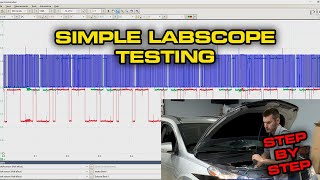
How to confirm: A mechanic can test the sensor's output with an oscilloscope or swap a suspect sensor with a known good one. However, this should only be done after ruling out a mechanical timing issue.
Typical fix: Replace the faulty sensor.
Est. part cost: $30-$90 per sensor
Rare But Worth Checking
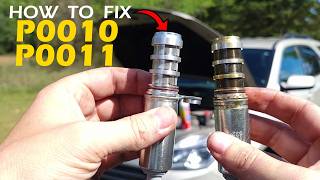
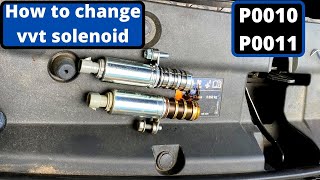
- Faulty VVT (Variable Valve Timing) Solenoid or Actuator: A stuck VVT solenoid (also called a camshaft position actuator solenoid) can cause the camshaft to be in the wrong position, mimicking a timing chain issue. These are much easier to access and replace than the chains and can be considered a diagnostic step if the oil is clean and chain noise is not obvious.
- Damaged Crankshaft Reluctor Wheel: → Shop Engine Crankshaft A GM TSB (PIP3423P) mentions that the reluctor wheel, which the crankshaft sensor reads, can sometimes move or shift on the crankshaft, causing timing correlation codes. This is rare but requires significant labor (oil pan removal) to inspect with a borescope.
Diagnosis Steps
- Read the fault codes with an OBD-II scanner to confirm P0009 and any other related codes (P0008, P0016-P0019 are common).
- Check the engine oil level and condition. Low or dirty oil is a major contributing factor and indicates potential neglect.
- Listen for a distinct rattling or chain-slap noise from the front (passenger side) of the engine, especially during a cold start for the first few seconds.
- Use an advanced scan tool to monitor the camshaft position deviation angles for Bank 2. A persistent deviation of more than a few degrees at idle strongly suggests a stretched chain.
- If chain stretch is suspected, test or replace the four VVT solenoids. They are relatively inexpensive and easy to access, and a stuck solenoid can cause similar symptoms.
- If the code persists, a physical inspection is required. This involves removing the front engine cover to directly check the timing chain for excessive slack. This is a labor-intensive step.
- While inspecting, check the plastic chain guides for broken pieces and ensure the tensioners are functioning.
- Only after confirming the mechanical timing is correct should you proceed to test the camshaft/crankshaft sensors and their wiring.
Parts You'll Likely Need
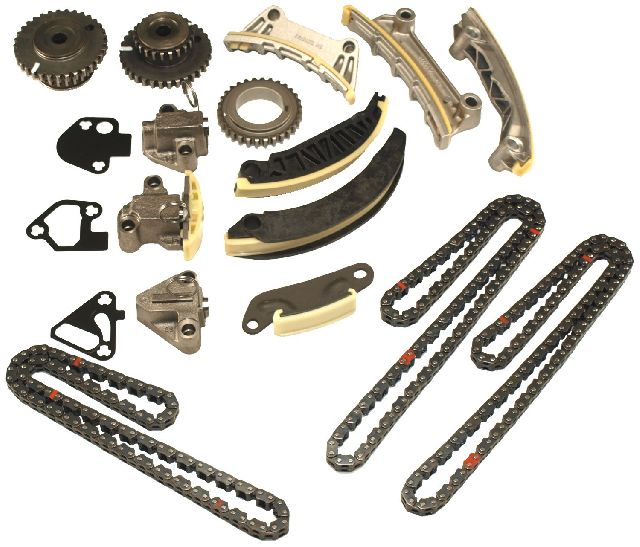
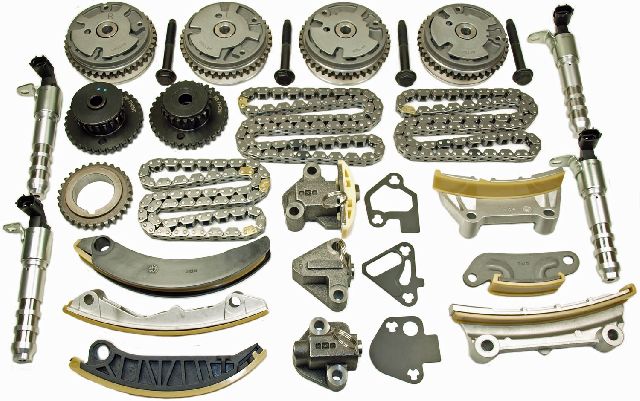
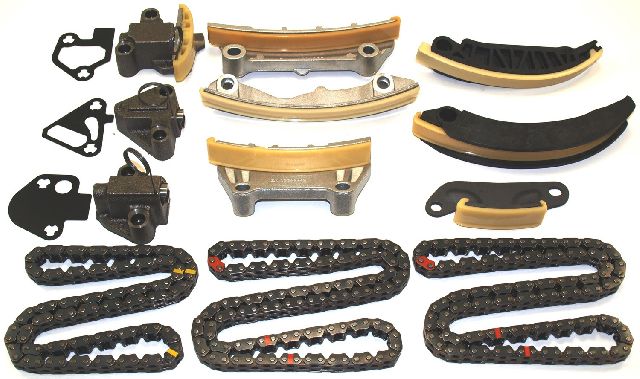
- Engine Timing Chain Kit
(OEM #ACDelco 12651450 (For 2009-2010 LLT) or 12650230 (For 2007-2008 LY7))— This is the most common failure. A complete kit ensures all worn components (chains, guides, tensioners) are replaced with updated parts. TSB 12-06-01-009F specifies using these kits.
Trusted brands: ACDelco (OEM), Cloyes
OEM price range: $500-$800
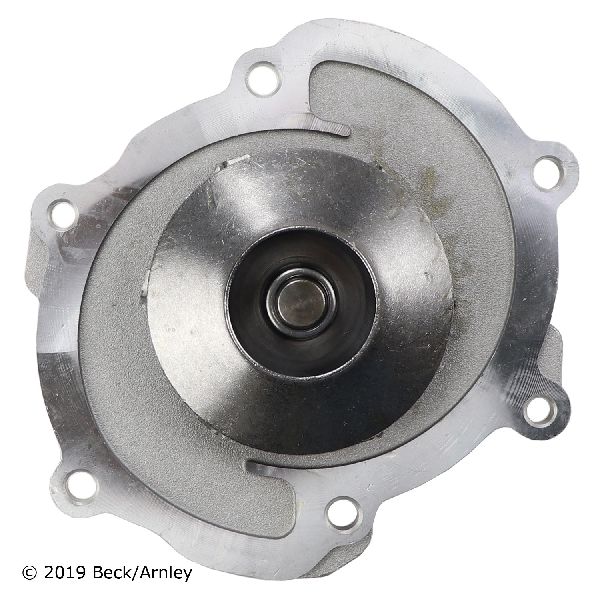
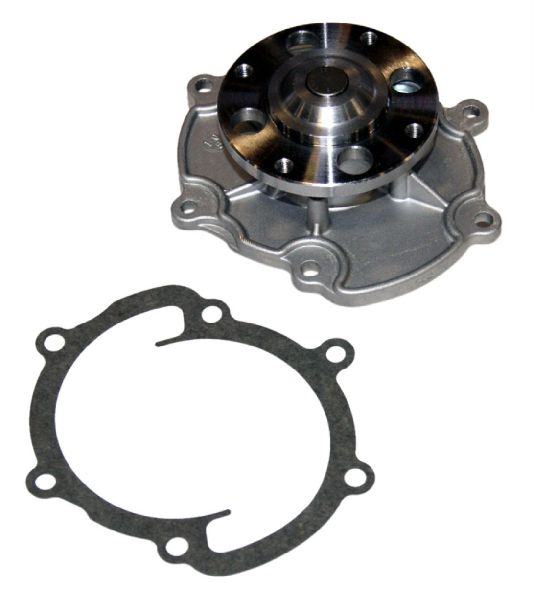
Aftermarket price range: $300-$550 - Water Pump — The water pump is driven by the primary timing chain and is located behind the timing cover. It is highly recommended to replace it during a timing chain job to avoid a future failure, as the labor to access it is the same.
Trusted brands: ACDelco, Gates
OEM price range: $150-$250
Aftermarket price range: $70-$150
Related Codes That Often Appear With This One
- P0008 — This is a general Engine Position System Performance code for Bank 1, often set alongside the bank-specific P0009 when the primary chain has stretched, affecting both banks.
- P0017 — Crankshaft Position - Camshaft Position Correlation (Bank 1 Exhaust). Often appears with P0008/P0009 as the timing issue affects multiple sensors.
- P0018 — Crankshaft Position - Camshaft Position Correlation (Bank 2 Intake). Directly related to P0009, indicating a correlation problem on the same bank.
- P0019 — Crankshaft Position - Camshaft Position Correlation (Bank 2 Exhaust). Directly related to P0009, indicating a correlation problem on the same bank.
Technical Service Bulletins (TSBs) & Recalls
- PIP3423P
- 12-06-01-009F
- 11340C
Platform-Specific Known Issues
- Premature timing chain stretching is the single most significant issue related to code P0009 on this vehicle.
- GM issued Special Coverage Adjustment #11340C, which extended the warranty on the timing chains to 10 years or 120,000 miles for certain model years, including the 2007 and 2009 Outlook. This program has since expired for all vehicles.
- As part of the special coverage, dealers would also reprogram the Engine Control Module (ECM) to shorten the oil change interval calculated by the Oil Life Monitor, acknowledging that long intervals contributed to the failures.
- GM issued Technical Service Bulletin #12-06-01-009F announcing the availability of updated timing chain kits to address this problem.
- GM also issued TSB #PIP3423P, which directly links codes like P0009 to loose timing chains or tensioners.
Mechanic-Grade Diagnostic Values
- VVT (Camshaft Position Actuator) Solenoid Resistance — expected: 6.9 to 12 Ohms. Failure: A reading outside this range indicates a faulty solenoid.
- Scan Tool Camshaft Position Variance — expected: Less than 2 degrees. Failure: If the variance is greater than 2 degrees when commanding the actuator with a scan tool, the mechanical camshaft phaser may be faulty.
Scan Tool Commands That Help
- GDS2 / Tech2 or equivalent advanced scan tool: Camshaft Position Actuator Control — Used to command the VVT solenoids from 0 to 40 degrees to check the system's response. While monitoring the 'Camshaft Position Variance' parameter, a technician can determine if the solenoid is responding and if the mechanical phaser is moving correctly. A variance over 2 degrees suggests a mechanical fault.
- GDS2 / Tech2 or equivalent advanced scan tool: Crankshaft Position (CKP) Variation Relearn — This procedure is mandatory after replacing the timing chains, crankshaft position sensor, or the ECM. Failure to perform the relearn can result in persistent timing codes (like P1336), rough running, or misfires as the ECM is using incorrect reference data for crankshaft position.
Wiring & Ground Locations
- G110 — Right front of the engine, mounted to the cylinder head (Bank 1).. Provides a ground path for various engine components. A poor ground here could potentially affect sensor readings on Bank 1, though P0009 is for Bank 2.
- G113 — Left side of the engine, at an engine-to-transmission stud.. This is a critical ground for Bank 2 components. A loose or corroded G113 could cause erratic signals from the Bank 2 camshaft position sensors, potentially triggering a P0009 code before suspecting major mechanical failure.
- ECM (Engine Control Module) — Left side of the engine compartment.. All sensor signals are processed here. The connectors and wiring harness to the ECM, specifically for the Bank 2 Camshaft Position Sensors and VVT solenoids, should be inspected for damage or corrosion.
- Crankshaft Position (CKP) Sensor — Right side of the engine block, sometimes viewed as being just above the passenger side CV axle.. This is the primary reference sensor for all timing calculations. A loose sensor, damaged wiring, or a shifted reluctor wheel it reads from will cause correlation codes for one or both banks.
- Bank 2 Camshaft Position (CMP) Sensors — Front of the left cylinder head (the one closer to the firewall). There is one for the intake camshaft and one for the exhaust.. These sensors provide the direct position data for Bank 2 that the ECM compares against the crankshaft sensor. P0009 is set when their signal is out of sync.
Real Owner Repair Stories
- YouTube user video (2007 Saturn Outlook 3.6L) — Was getting camshaft position sensor codes and other random codes after an engine replacement.
❌ Tried (didn't work) Checked all ground connections, verified computer was plugged in correctly, charged the battery.
✅ What actually fixed it The 10mm bolt holding the crankshaft position sensor was not fully tightened, causing the sensor to not sit flush. Pushing the sensor in flush and tightening the bolt resolved the issue without needing to replace the sensor.
OEM Part Supersession History
Varies by build date (Pre-2012 kits)→ACDelco 12651450 (LLT), ACDelco 12650230 (LY7)— GM released multiple revisions of the timing chain kits to address the premature stretching issue. The newer kits feature more robust chains.
Heads up: Using aftermarket chains of questionable quality can lead to the codes returning in as little as 15,000 miles. It is critical to use high-quality OEM or equivalent parts. Also, early 2007 engines may require the addition of nylon camshaft thrust washers if not already present.
Model Year Variations Within This Range
- 2007-2008: These model years used the 3.6L LY7 V6 engine with port fuel injection.
- 2009-2010: These model years used the updated 3.6L LLT V6 engine, which featured direct injection (DI). While the timing chain issue is common to both, the LLT has a different high-pressure fuel pump driven by the camshaft, adding complexity to the system. The timing chain kits and some sensor part numbers differ between the LY7 and LLT.
Helpful Videos

We Have This Part in Stock

The information in this article is provided for general reference and educational purposes only. Vehicle specifications, procedures, and part compatibility can vary by production date, trim level, and region. Always consult your vehicle's factory service manual and verify part numbers before purchasing or performing repairs. Safety-critical components such as airbags, seat belts, and braking systems should be installed by a qualified professional.
- Saturn OUTLOOK:
- 🧭 Diagnostic Flowchart
- 🎬 Helpful Videos
- 🛍️ Shop This Part
- What's Unique About the 2007-2010 Saturn OUTLOOK
- Symptoms You May Notice
- Most Likely Causes
- Rare But Worth Checking
- Diagnosis Steps
- Parts You'll Likely Need
- Related Codes That Often Appear With This One
- Technical Service Bulletins (TSBs) & Recalls
- Platform-Specific Known Issues
- Mechanic-Grade Diagnostic Values
- Scan Tool Commands That Help
- Wiring & Ground Locations
- Real Owner Repair Stories
- OEM Part Supersession History
- Model Year Variations Within This Range
- 🎟️ Get 5% Off