

P0010 on 2006-2020 Audi A3 2.0T: Causes and Fixes for the Camshaft Actuator Circuit Fault
On a 2.0T Audi A3, code P0010 is almost always a failed intake camshaft adjuster solenoid (N205 valve) or magnet. First, check your oil level and condition. If the oil is fine, the solenoid/magnet is the likely culprit, costing between $40-$150 for the part. This is a common and straightforward DIY repair.
- P0010 on an Audi A3 2.0T is an electrical circuit fault, not a mechanical timing fault.
- The most likely cause is a failed intake camshaft adjuster solenoid (N205 valve or magnet).
- Always check your engine oil level and condition first, as low or dirty oil can cause this issue.
- Identify your engine generation (8P vs. 8V) to ensure you purchase the correct replacement part, as they are different.
- Do not replace the camshaft position sensor for this code; it is a common misdiagnosis.
What's Unique About the 2006-2020 Audi A3
The 2006-2020 year range covers two distinct generations of the A3 with different 2.0T engines, and the fix for P0010 is different for each. Early models (8P generation, 2006-2013) with the FSI or early TSI engine have a single N205 solenoid valve. Later models (8V generation, 2013-2020) with the EA888 Gen 3 engine use a two-part system: an external 'cam adjuster magnet' and an internal 'control valve'. For P0010, which is an electrical circuit fault, the external magnet is the primary suspect on these later engines as it contains the coil that commonly fails.
Generation note: The 2006-2020 range covers the Audi A3 8P (2006-2013) and 8V (2013-2020) generations. - A3 8P (2006-2013): Uses the 2.0T FSI (e.g., BPY engine code) or early EA888 TSI engines. The fix typically involves replacing the entire N205 valve assembly, which is a single unit. - A3 8V (2013-2020): Uses the 2.0T EA888 Gen 3 engine. The fix for P0010 is usually the external cam adjuster magnet, which is separate from the internal control valve. This magnet is a known high-failure part, and Audi has released updated versions.
Symptoms You May Notice
- Check Engine Light is on
- Rough or unstable idle
- Reduced engine power and hesitation during acceleration
- Decreased fuel economy
- Engine may be difficult to start
- Rattling or knocking noises from the engine.
- Replacing the Camshaft Position Sensor. The sensor (G40) reports the camshaft's position, but P0010 is an electrical fault with the actuator circuit. Camshaft sensor faults have their own codes, like P0340 or P0341.
Most Likely Causes
- Failed Intake Camshaft Adjuster Solenoid (N205 Valve / Magnet) 🔴 High Probability → Shop Engine Camshaft The N205 valve/magnet is a known high-failure item on these engines due to electrical failure of its internal coil. The part is subject to intense heat cycles, which can lead to the internal wiring breaking down, causing an open or short circuit.
How to confirm: Inspect the electrical connector for damage or oil contamination. Test the solenoid/magnet's resistance with a multimeter. A healthy solenoid should have a resistance between 5.0 and 20.0 ohms depending on the specific engine generation. An open circuit (infinite resistance) or a short (near zero ohms) confirms failure. For 8V models, a quick test is to unplug the magnet while the engine is idling roughly; if the idle smooths out, the magnet is likely stuck and causing the issue.
Typical fix: Replace the faulty component. For 8P generation FSI/TSI engines, replace the N205 valve. 🎬 Watch: How to replace the N205 solenoid on 8P models. For 8V generation EA888 engines, replace the cam adjuster magnet. This is a very common DIY job.
Est. part cost: $40 - $150 - Low or Dirty Engine Oil 🟡 Medium Probability These direct-injection engines can be sensitive to oil quality and level. Infrequent oil changes lead to sludge that can clog the fine mesh screens on the VVT components, causing the solenoid to stick or malfunction electrically. Using oil that does not meet the required VW/Audi specification can accelerate this issue.
How to confirm: Check the engine oil dipstick for level and examine the oil's condition. If the oil is very dark, thick, or below the minimum mark, this is a likely contributor. Some owners recommend an engine flush before an oil change to help clear sludge.
Typical fix: Perform an engine oil and filter change using the manufacturer-specified oil (e.g., VW 502 00 or 504 00). If the solenoid is clogged, it may need to be removed and cleaned, but replacement is often necessary if cleaning doesn't resolve the circuit fault.
Est. part cost: $60 - $120 for oil and filter - Damaged Wiring or Connector ⚪ Low Probability
How to confirm: Visually inspect the wiring harness and electrical connector going to the N205 valve/magnet. Look for brittle or broken wires, corrosion in the pins, or a loose connection. On some Audi models, oil can leak from a faulty seal (like the cam adjuster magnet itself) and wick through the wiring harness, causing connection issues downstream.
Typical fix: Repair the damaged section of wiring or replace the pigtail connector. If oil has contaminated the harness, both the source of the leak and the affected wiring must be addressed.
Est. part cost: $15 - $40 for a new pigtail connector
Rare But Worth Checking
- Stretched Timing Chain: → Shop Engine Timing Chain While a very common issue on 2.0T engines, a stretched chain usually triggers performance/correlation codes like P0011 or P0016. It's less likely to cause only a P0010 circuit code, but a struggling VVT system could potentially contribute to electrical stress on the solenoid.
- Faulty Engine Control Module (ECM): This is extremely rare. The ECM's driver circuit for the N205 valve can fail, but all other potential causes should be exhaustively ruled out before considering ECM replacement.
Diagnosis Steps
- Check Engine Oil: Verify the oil level is correct and the oil is clean and meets VW/Audi specifications. If low or dirty, perform an oil and filter change before proceeding.
- Inspect Electrical Connection: Locate the intake camshaft adjuster solenoid/magnet on the front of the engine. Carefully inspect its electrical connector and nearby wiring for any signs of damage, corrosion, or oil contamination.
- Test the Solenoid/Magnet: Disconnect the connector. Use a multimeter set to Ohms (Ω) to measure the resistance across the two pins on the solenoid/magnet itself. A healthy part should read between 5.0 and 20.0 ohms, with specific ranges like 5.0-8.0 ohms for 8P FSI engines and 6.9-7.9 ohms for some 8V EA888 engines being common. A reading of 'OL' (open loop) or near 0 ohms indicates a failed part.
- Scan Tool Actuation Test: If you have an advanced scan tool (like VCDS), you can perform an output test (Final Control Diagnosis) to command the solenoid on and off. You should hear or feel a distinct 'click' from the part if it's working.
- Check for Power at the Connector: With the key on and engine off, use a multimeter to check for voltage at the wiring harness connector for the solenoid. One pin (typically Pin 1) should have battery voltage. If not, you have a wiring or power supply (e.g., J271 relay) issue.
- Replace the Faulty Part: If the solenoid/magnet fails the resistance test or is unresponsive, it must be replaced. This is the most common resolution for a P0010 code.
- Clear Codes and Test Drive: After replacement, clear the diagnostic trouble codes with a scanner and perform a test drive to ensure the code does not return.
Parts You'll Likely Need
- Camshaft Adjuster Magnet (for 2013-2020 EA888 Gen 3)
(OEM #06L109259D (supersedes 06L109259A, 06J109259A))— This is the external electromagnetic part that fails electrically, directly causing the P0010 circuit code on later model A3s. The original part is a known failure point. 🎬 Watch this walkthrough for replacing the 8V cam adjuster magnet.
Trusted brands: Genuine VW/Audi, INA, Pierburg, Febi Bilstein
OEM price range: $100-$150
Aftermarket price range: $50-$90 - Camshaft Adjuster Solenoid / N205 Valve (for 2006-2013 FSI/TSI)
(OEM #06F109257C)— On earlier 2.0T engines (BPY, CCTA, CBFA), this single unit contains the solenoid that fails and causes the P0010 circuit code.
Trusted brands: Genuine VW/Audi, INA, Febi, Pierburg
OEM price range: $120-$180
Aftermarket price range: $40-$80
Related Codes That Often Appear With This One
- P0011 — P0011 means 'Camshaft Position Timing Over-Advanced or System Performance'. It often appears with P0010 because the electrical failure in the actuator circuit (P0010) prevents the ECM from controlling the camshaft, causing its position to be incorrect (P0011).
- P000A — P000A means '"A" Camshaft Position Slow Response'. Similar to P0011, this indicates the camshaft is not adjusting its timing as quickly as the ECM commands, which can be a direct result of the electrical issue reported by P0010.
Platform-Specific Known Issues
- Oil Contamination in Wiring Harness: On EA888 Gen 3 engines, a failing camshaft adjuster magnet (06L109259A/D) can leak oil internally. This oil can then travel through the wiring harness ('wicking'), contaminating the connector and potentially reaching other sensors or even the ECM. If you find oil in the connector, the magnet must be replaced, and the harness needs to be thoroughly cleaned.
- Updated Connector for Revised Magnet: When replacing the original camshaft adjuster magnet (e.g., 06J109259A or 06L109259A) on some EA888 engines with the revised part (06L109259D), a new connector housing (part # 4H0973702A) may also be required as the plug design was updated.
Mechanic-Grade Diagnostic Values
- N205 Solenoid/Magnet Resistance (EA888 Gen 3) — expected: 6.9 to 7.9 Ω, though some service data allows a wider 5.0 to 20.0 Ω range.. Failure: A reading of OL (infinite resistance) for an open circuit or near 0 Ω for a short circuit.
- N205 Solenoid Resistance (8P FSI/TSI) — expected: 5.0 to 8.0 Ω at ~20°C (68°F).. Failure: A reading outside this range, or an open/shorted circuit.
- Voltage at N205 Connector (Pin 1 to Ground) — expected: Battery Voltage (approx. 12V) with ignition on, engine off.. Failure: No voltage or significantly low voltage, indicating a problem with the power supply (e.g., J271 relay) or wiring.
- Wiring from N205 Connector to ECM — expected: Less than 0.5 Ω resistance between N205 harness connector terminal 2 and ECM (J623) connector T105, pin 105.. Failure: High resistance or an open circuit (OL) indicates a break in the signal wire to the ECM.
- VCDS Camshaft Adaptation Phase Shift (MVB 93) — expected: A value close to 0°, typically within +/- 3°.. Failure: A value more negative than -5° strongly suggests a stretched timing chain, which can be a related issue.
Hidden / Shadow Codes Worth Checking
- Manufacturer-Specific DTCs (e.g., P001000): While P0010 is the generic code, VAG-specific scanners like VCDS may show a more detailed version with extra digits. Generic scanners might miss these nuances, potentially leading to misdiagnosis. (see via VCDS (VAG-COM), OBDeleven, or other professional VAG-specific diagnostic tools.)
Scan Tool Commands That Help
- VCDS (VAG-COM) or ODIS: Output Diagnostic Test Mode (DTM) / Final Control Diagnosis for N205 — This is a direct bidirectional test to check if the ECM can electrically activate the N205 solenoid. When activated, a healthy solenoid should produce an audible 'click'. No click points to a bad solenoid or a wiring/ECM driver issue.
- VCDS (VAG-COM): Basic Settings - Group 094 (Intake Cam) — For some engines, this test runs the VVT system through its range to verify mechanical function. The test will complete and display 'Syst. OK' if the camshaft adjustment is successful. This can help rule out mechanical blockages after electrical tests are passed.
Wiring & Ground Locations
- N205 Connector Pin 1 — The 2-pin connector on the camshaft adjuster magnet/solenoid at the front of the engine.. This pin should receive battery voltage from the Motronic Engine Control Module Power Supply Relay (J271) on some models. Lack of voltage here points to a power supply issue, not a faulty solenoid.
- N205 Connector Pin 2 — The 2-pin connector on the camshaft adjuster magnet/solenoid.. This is the signal wire that goes to the ECM. For a 2015 A3, this wire runs to pin 105 of the T105 connector at the ECM (J623). A break in this wire will cause a P0010 circuit fault.
- Engine Ground Points (e.g., 131, 639) — Various points in the engine compartment harness and on the chassis, such as the left A-pillar.. A poor engine or ECM ground can cause a variety of electrical faults, including incorrect sensor readings and actuator circuit codes. Verifying main grounds are clean and tight is a good practice when diagnosing any electrical DTC.
OEM Part Supersession History
06L109259A / 06J109259A→06L109259D— Updated design to improve reliability and address common failures of the original part.
Heads up: CRITICAL: When replacing an older 'A' version magnet with the new 'D' version, a new connector housing (Part # 4H0973702A) is often required because the plug design is different. The old connector must be de-pinned and the wires inserted into the new housing.
Model Year Variations Within This Range
- 2006-2013 (8P Generation, FSI/TSI): These models use a single N205 valve assembly (e.g., 06F109257C). The specified resistance is typically tighter, around 5.0-8.0 ohms.
- 2013-2020 (8V Generation, EA888 Gen 3): These models use the separate external cam adjuster magnet (e.g., 06L109259D). Service data may list a wider acceptable resistance range, such as 5.0-20.0 ohms. These engines are also susceptible to the camshaft bridge screen failure.
Diagnostic Flowchart
Other Known Issues on This Vehicle
Issues unrelated to this code that are worth knowing about as an owner of this generation:
- Timing Chain Tensioner Failure (EA888 Gen1/2) 🔴 High → Shop Engine Timing Chain — Very common on 2008-2012 2.0T TSI engines. Failure can occur without warning, often between 60,000 and 100,000 miles, leading to catastrophic engine damage. (Ref: No recall, but multiple TSBs exist and a class-action lawsuit was settled. An updated tensioner part is available.)
- Intake Valve Carbon Buildup (FSI & early TSI) 🟠 Medium — Inevitable on direct-injection engines. Significant power loss, misfires, and rough idle typically appear every 60,000-80,000 miles, requiring manual (walnut blasting) cleaning.
- Water Pump / Thermostat Housing Failure (EA888 Gen 3) 🔴 High — Extremely common on 2013+ models. The plastic housing becomes brittle and cracks, causing major coolant leaks. Failure often occurs between 40,000-80,000 miles. (Ref: Subject of a class-action lawsuit with an extended warranty for some vehicles, but failures are widespread.)
- PCV Valve Failure 🟠 Medium — Common across all 2.0T engine generations. The diaphragm inside the PCV valve tears, causing a loud whistling noise, rough idle, high oil consumption, and lean fault codes.
- High-Pressure Fuel Pump (HPFP) Cam Follower Wear (FSI) 🔴 High — A critical wear item on the BPY FSI engine (2006-2008). The follower can wear through, destroying the HPFP and the intake camshaft. Should be inspected every 20,000-30,000 miles.
- Excessive Oil Consumption (EA888 Gen 2) 🟠 Medium — Common on some 2009-2013 TSI engines due to piston ring design. Can lead to needing to add oil every 1,000 miles or less. (Ref: Subject of a class-action lawsuit. Fix involves new pistons and rings.)
Used vs. New Parts: Buying Guide for This Vehicle
When a used part is the smart pick: For this specific repair, buying a used camshaft adjuster magnet/solenoid is NOT recommended. It is a known high-failure electronic part, and a used unit from a salvage yard carries a high risk of being faulty or having a very short remaining service life.
What to inspect on the donor part:
- Not applicable as used purchase is not advised.
OEM-only on this vehicle (don't cheap out):
- While not strictly 'OEM-only', using a Genuine VW/Audi part or a reputable OEM supplier is strongly recommended for this component to ensure longevity and proper function.
Aftermarket brands forum-validated for this vehicle:
- INA (often the original equipment manufacturer)
- Pierburg
- Bosch
- Febi Bilstein
Brands owners have reported issues with on this vehicle:
- Unbranded, no-name parts from online marketplaces should be avoided. The failure rate for these parts is extremely high, and they often do not perform to the correct specifications, leading to the code returning quickly.
Related OBD-II Codes
Frequently Asked Questions
I found oil inside the electrical connector for the camshaft adjuster magnet on my A3. Is this a known problem?
I'm replacing the camshaft adjuster magnet on my newer A3 (8V) for a P0010 code. Do I need any other parts?
How can I test the N205 valve or camshaft magnet myself to confirm it's causing P0010?
Can using the wrong oil cause a P0010 code on my 2.0T engine?
My 2011 A3 has a rattling noise along with the P0010 code. Should I be worried about the timing chain?
Is the part that causes P0010 the same on an older 2007 A3 (8P) and a newer 2017 A3 (8V)?
Helpful Videos
We Have This Part in Stock
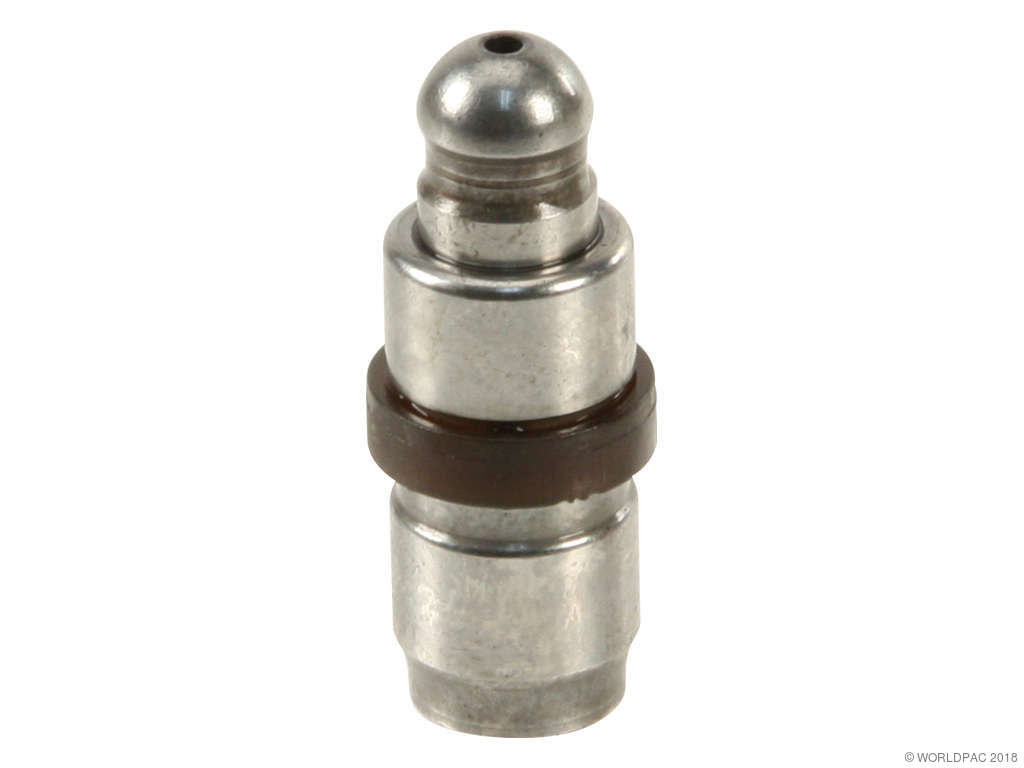

The information in this article is provided for general reference and educational purposes only. Vehicle specifications, procedures, and part compatibility can vary by production date, trim level, and region. Always consult your vehicle's factory service manual and verify part numbers before purchasing or performing repairs. Safety-critical components such as airbags, seat belts, and braking systems should be installed by a qualified professional.
- Audi A3:
- 🧭 Diagnostic Flowchart
- 🎬 Helpful Videos
- 🛍️ Shop This Part
- What's Unique About the 2006-2020 Audi A3
- Symptoms You May Notice
- Most Likely Causes
- Rare But Worth Checking
- Diagnosis Steps
- Parts You'll Likely Need
- Related Codes That Often Appear With This One
- Platform-Specific Known Issues
- Mechanic-Grade Diagnostic Values
- Hidden / Shadow Codes Worth Checking
- Scan Tool Commands That Help
- Wiring & Ground Locations
- OEM Part Supersession History
- Model Year Variations Within This Range
- Other Known Issues on This Vehicle
- Used vs. New Parts: Buying Guide for This Vehicle
- Related OBD-II Codes
- Frequently Asked Questions
- 🎟️ Get 5% Off