

P0010 on 2001-2016 Audi A4: Camshaft Actuator Circuit Causes and Fixes
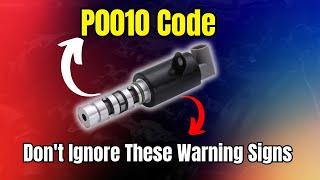
This code indicates an electrical fault with the intake camshaft position actuator solenoid on Bank 1. The most common fix is replacing the solenoid itself, but always check for low or dirty engine oil first, as this is a frequent underlying cause. On 2.0T engines, this part is often called the N205 valve.
- P0010 almost always points to a problem with the intake camshaft actuator solenoid on Bank 1, its wiring, or the oil that operates it.
- Always check your oil level and condition first. A simple oil change can sometimes fix this code.
- Do NOT confuse the Camshaft Position *Actuator Solenoid* (the fix) with the Camshaft Position *Sensor* (a common misdiagnosis).
- The solenoid is a relatively inexpensive part and is accessible for DIY replacement with basic tools on most of these engines.
- If you have a V6 engine, swapping the solenoids between banks is an effective way to confirm a faulty part.
What's Unique About the 2001-2016 Audi A4
On Audi and other VAG engines, P0010 is very frequently caused by either oil-related issues or a direct failure of the camshaft adjuster solenoid (often called an N205 valve or oil control valve). While the code is electrical, the root cause is often mechanical or hydraulic, such as oil sludge clogging the solenoid's small passages, a common issue on the 1.8T engines. The B8 generation's 2.0T EA888 engine is also notorious for timing chain tensioner failures, which, while typically setting correlation codes like P0016, can create an environment where other timing-related electrical faults are flagged. Older models in this year range (B6) can also be prone to brittle wiring insulation near the engine, which can crack and cause shorts or open circuits, directly triggering this code.
Generation note: This range covers the B6 (2001-2005), B7 (2005-2008), and B8 (2009-2016) generations. The 1.8T engine (timing belt) is in the B6, the 2.0T FSI (timing belt) is in the B7, and the 2.0T TSI (timing chain) is in the B8. The 2.8L V6 is less common. The fundamental causes of P0010 are consistent, but the specific part numbers and related issues (e.g., oil sludge in B6, cam follower in B7, timing chain in B8) vary significantly by generation. The B8.5/B9 generation EA888 Gen 3 engine uses a two-part system with an external magnet and internal control valve, where the external magnet is the primary suspect for P0010.
🎬 See how to replace the camshaft adjuster magnetSymptoms You May Notice
- Check Engine Light is on
- Rough or unstable idle
- Reduced engine power and poor acceleration
- Decreased fuel economy
- Engine may be difficult to start
- Rattling or knocking noise from the engine bay, especially from the upper timing cover area.
- Replacing the Camshaft Position *Sensor* instead of the Camshaft Position *Actuator Solenoid*. The code points to the actuator circuit, not the sensor itself. A Reddit user and forum posts confirm this common mistake does not fix the issue.
Most Likely Causes
- Faulty Camshaft Position Actuator Solenoid (VVT Solenoid / N205 Valve) 🔴 High Probability → Shop Engine Camshaft This solenoid is a very common failure item. It operates in hot engine oil and is subject to electrical stress. It can fail electrically (internal short/open) or become clogged with oil sludge, preventing it from operating correctly.
How to confirm: Test the solenoid's resistance with a multimeter; it should be within a specific range (e.g., 5.0-8.0 ohms is a common value for VAG parts). You can also try applying 12V power to see if it clicks. For V6 engines, swap the Bank 1 and Bank 2 solenoids and see if the code follows to the other bank (e.g., P0020).
Typical fix: Replace the camshaft position actuator solenoid for Bank 1.
Est. part cost: $40-$150 - Low or Dirty Engine Oil 🔴 High Probability The VVT system is hydraulic and relies on clean oil at the correct pressure. These engines, particularly the turbo models, can be sensitive to oil quality and level. Sludge from infrequent oil changes is a very common cause of VVT issues, especially in the 1.8T. The 2.0T engines are also known for high oil consumption, which can lead to low oil levels if not monitored.
How to confirm: Check the oil level on the dipstick (if equipped) or via the MMI system. Inspect the oil's condition; if it is dark, thick, or sludgy, it is overdue for a change. Check for sludge buildup under the oil cap.
Typical fix: Perform an engine oil and filter change using the manufacturer-specified oil (e.g., VW 502 00). If sludge is severe, an engine flush may be considered, though this carries its own risks.
Est. part cost: $50-$100 - Damaged Wiring or Electrical Connector 🟡 Medium Probability Engine heat and vibrations can cause wiring insulation to become brittle and crack over time, leading to a short or open circuit. The connector itself can also become loose, corroded, or contaminated with oil. On some 2.0T engines, an updated solenoid requires a new connector pigtail.
How to confirm: Visually inspect the wiring harness and connector for the VVT solenoid. Look for any signs of cracked insulation, frayed wires, or corrosion on the pins. Use a multimeter to check for continuity from the ECM to the solenoid connector.
Typical fix: Repair the damaged section of wiring or replace the pigtail connector.
Est. part cost: $15-$50
Rare But Worth Checking
- Worn Timing Chain or Tensioner: → Shop Engine Timing Chain While P0010 is an electrical code, severe mechanical timing issues from a stretched chain or failed tensioner (a notorious issue on B8 2.0T EA888 engines) can sometimes be accompanied by various timing-related codes. This is a more serious issue, often associated with rattling noises on startup. A visual inspection of the tensioner's extension through the inspection port is the definitive check.
- Faulty Engine Control Module (ECM): This is very rare. The ECM should only be considered after all other possibilities, including wiring, have been exhaustively checked and ruled out.
- Blown Fuse for Actuator Circuit: On some B6 models, a 15-amp fuse located in the water-resistant ECM container in the engine bay provides power to the camshaft actuator solenoid. This fuse can be hidden behind relays and is often missed during initial diagnosis. If it blows, the circuit will be open, triggering P0010.
Diagnosis Steps
- Check Engine Oil Level and Condition: Before doing anything else, verify the engine oil is full and clean. If it's low or appears sludgy, perform an oil and filter change with VW 502 00 specification oil.
- Scan for Codes: Confirm P0010 is the active code. Note any other codes, especially correlation codes like P0016, as they can point towards a more serious mechanical timing issue.
- Inspect Wiring and Connector: Carefully examine the electrical connector and wiring going to the Bank 1 intake camshaft actuator solenoid (N205 Valve). Look for any breaks, frays, oil saturation, or signs of corrosion.
- Test the Solenoid: Disconnect the solenoid. Use a multimeter to test the resistance between its two pins. Compare the reading to the manufacturer's specification (common ranges are 5.0-8.0 ohms or 6.9-7.9 ohms). An open circuit (OL) or a dead short (0 ohms) indicates a failed solenoid.
- (For V6) Swap Solenoids: On the 2.8L V6, you can swap the Bank 1 intake solenoid with the Bank 2 intake solenoid. Clear the codes and drive the vehicle. If the code changes to P0020 (Bank 2), the solenoid is confirmed to be faulty.
- Clean or Replace the Solenoid: If the solenoid is suspected to be clogged but tests okay electrically, you can try removing and cleaning it with brake cleaner. However, given the high failure rate and relatively low cost, replacement is often the most effective fix.
- Check for Voltage at the Connector: With the key on, engine off, carefully check for voltage at the solenoid's electrical connector. One pin should show battery voltage (~12V). The other is a ground control from the ECM.
- Clear Codes and Test Drive: After any repair, clear the trouble codes and perform a test drive to ensure the P0010 code does not return.
Parts You'll Likely Need
- Camshaft Position Actuator Solenoid / Oil Control Valve (N205)
(OEM #B6 1.8T: 058109088K; B7 2.0T FSI: 06F109257C; B8 2.0T TSI: 06H109257C (updated from 06H109257A); V6 2.8L: 06E109257L)— This is the component that the P0010 code directly monitors. It is the most common part to fail, either electrically or by getting clogged with oil sludge.
Trusted brands: Bosch, Hitachi, Pierburg, INA, Genuine VW/Audi
OEM price range: $100-$180
Aftermarket price range: $40-$90
Related Codes That Often Appear With This One
- P0300, P0301, P0302, etc. — Random or specific cylinder misfires can occur because incorrect camshaft timing disrupts the combustion process.
- P0011 — 'A' Camshaft Position - Timing Over-Advanced. This is a performance-related code, while P0010 is a circuit code. They can appear together if the electrical fault in the solenoid is causing it to get stuck in a position that over-advances the timing.
- P0016 — Crankshaft/Camshaft Correlation. This code indicates a mechanical timing mismatch. If you see P0010 and P0016 together on a 2.0T EA888 engine, it strongly suggests a stretched timing chain or failed tensioner, which is a much more serious problem.
Technical Service Bulletins (TSBs) & Recalls
- TSB 15-12-01: Addresses timing chain and tensioner issues on 2.0T EA888 engines, a potential underlying cause if other codes like P0016 are present.
Mechanic-Grade Diagnostic Values
- N205 Solenoid Internal Resistance (most models) — expected: 5.0 to 8.0 Ohms at ~20°C (68°F). Failure: Reading of 'OL' (open circuit) or near 0 ohms (short circuit).
- N205 Solenoid Internal Resistance (alternate spec) — expected: 6.9 to 7.9 Ohms at 20°C (68°F). Failure: Reading outside this specific range.
- N205 Solenoid Internal Resistance (1.8T APH engine) — expected: 10 to 18 Ohms. Failure: Reading outside this specific range.
- Voltage at N205 Connector Pin 1 (Key On, Engine Off) — expected: Battery Voltage (~12.5V). Failure: No voltage indicates an open circuit in the power supply from the relay/fuse.
- Continuity from N205 Connector Pin 2 to ECM — expected: Max 1.5 Ohms. Failure: Higher resistance or 'OL' indicates a break in the ground control wire.
- Engine-to-Chassis Ground Voltage Drop (B8) — expected: < 0.15 Volts at idle. Failure: Higher voltage drop indicates a degraded engine ground strap, which can cause various electrical issues.
Scan Tool Commands That Help
- VCDS (VAG-COM): Output Test for 'Camshaft Adjustment Valve 1 (N205)' — After confirming wiring and resistance are okay. This command will directly activate the solenoid, and you should hear an audible click from the engine bay. A lack of a click during the test points to a seized or faulty solenoid, even if its resistance is within spec.
- VCDS (VAG-COM): Measuring Blocks for Camshaft Adjustment — To monitor the specified vs. actual camshaft angle. While P0010 is an electrical fault, observing the live data can show if the actuator is responding at all, which can help differentiate between an intermittent electrical issue and a completely dead component.
Wiring & Ground Locations
- G12 (B6/B7) — Located at the center of the firewall.. This ground point serves the ECM. A poor connection here can cause a wide range of engine management faults, including incorrect readings or control for the VVT system.
- G18 (B6/B7) — Located near the ignition coils on the cylinder head.. This is a primary engine ground. A bad connection can affect sensors and actuators on the engine, including the N205 valve.
- G105 (B8) — Engine block-to-firewall ground strap.. This is a main engine ground strap on the B8 chassis. Degradation is common and can lead to voltage drops and various electrical faults.
- N205 Connector Pin 1 — On the connector for the camshaft actuator solenoid.. This pin should receive battery voltage from the power supply relay (J271) when the ignition is on. No voltage here points to a fuse, relay, or wiring issue upstream.
- N205 Connector Pin 2 — On the connector for the camshaft actuator solenoid.. This is the control wire that is pulsed to ground by the ECM to operate the solenoid. A break in this wire (high resistance) will cause a P0010.
Real Owner Repair Stories
- Reddit user post on r/Audi (2003 Audi A4 1.8T (B6)) — P0010 code, CEL on.
❌ Tried (didn't work) Replacing the camshaft position sensor.
✅ What actually fixed it The user found a post describing a hidden 15-amp fuse in the ECM container under the hood, behind a relay. The user pulled this fuse, found it was blown, replaced it, and the P0010 code was resolved. - Reddit user on r/AudiQ5 (2016 Audi Q5) — P0010 code appeared during a road trip.
❌ Tried (didn't work) Resetting the code (it came back).
✅ What actually fixed it The owner reset the wire connectors on the solenoid, topped off the engine oil (was down half a quart), and added a fuel injector cleaner. After clearing the code, it did not return for the rest of the day's driving. This suggests the issue was either a poor connection or was influenced by the low oil level.
OEM Part Supersession History
06H109257A→06H109257C— Updated design for the N205 valve on 2.0T TSI engines for improved reliability.
Heads up: The updated part may require a new electrical connector pigtail in some applications. Always verify fitment with the vehicle's VIN.06K109257 / 06K109257A / 06L109257B→06L109257F— Part evolution for the EA888 Gen 3 engine's oil control valve (used in late B8.5 and B9 models).
Heads up: These parts are for the newer EA888 Gen 3 engines and are not backwards compatible with the older FSI or early TSI engines.
Model Year Variations Within This Range
- 2001-2005 (B6): The 1.8T engine in this generation is particularly prone to oil sludge if not maintained with frequent oil changes using synthetic oil. This sludge is a primary cause for clogging the N205 solenoid. Wiring insulation is also known to become very brittle with age.
- 2005-2008 (B7): The 2.0T FSI (EA113) engine uses a timing belt and has its own specific N205 valve (P/N 06F109257C). Cam follower wear is a major issue on this engine, and while not directly related to P0010, it speaks to the importance of oil quality and maintenance.
- 2009-2016 (B8/B8.5): The 2.0T TSI (EA888) engine uses a timing chain. Early B8 models are known for timing chain tensioner failures. Later B8.5 models feature the EA888 Gen 3 engine, which uses a different two-part camshaft adjuster system (magnet and valve), with P/N 06L109257F being the relevant control valve.
Diagnostic Flowchart
Other Known Issues on This Vehicle
Issues unrelated to this code that are worth knowing about as an owner of this generation:
- Timing Chain Tensioner Failure (2.0T EA888) 🔴 High → Shop Engine Timing Chain — Very common on 2009-2013 models (B8 generation). The original tensioner can fail without warning, often between 60k-100k miles, leading to catastrophic engine damage. A rattling noise on cold start is a critical warning sign. (Ref: Multiple TSBs issued, e.g., TSB 15-12-01. A class-action lawsuit resulted in an extended warranty for some vehicles.)
- Excessive Oil Consumption (2.0T EA888) 🟠 Medium — Prevalent in 2009-2011 (B8) models due to piston ring design. Owners report consuming a quart of oil every 300-1000 miles. Later models are improved but can still consume oil. (Ref: A class-action lawsuit addressed this issue, leading to potential piston/ring replacement for affected vehicles under specific conditions.)
- HPFP Cam Follower Wear (2.0T FSI EA113) 🔴 High — Affects B7 generation (2005.5-2008). The cam follower for the high-pressure fuel pump wears out, potentially damaging the camshaft and HPFP. Recommended inspection every 20k-30k miles.
- PCV Valve Failure (All Engines) 🟠 Medium — Common across all generations. The PCV diaphragm tears, causing a loud squeal, high crankcase vacuum, rough idle, and lean codes. It's a relatively inexpensive but critical part to replace.
- Carbon Buildup on Intake Valves (2.0T FSI/TSI) 🟠 Medium — Inevitable on all direct-injection engines. Causes misfires, rough idle, and power loss, typically requiring manual cleaning (walnut blasting) every 60k-80k miles.
- Oil Sludge (1.8T) 🔴 High — A notorious problem for the B6 generation (2001-2005) 1.8T engine, caused by long oil change intervals and engine design. Can lead to a clogged oil pickup tube, oil starvation, and complete engine failure.
Used vs. New Parts: Buying Guide for This Vehicle
When a used part is the smart pick: For this specific repair, buying a used N205 solenoid is NOT recommended. It is a relatively low-cost electronic and hydraulic component that is a known failure point due to internal wear, electrical failure, and clogging from old oil. The risk of getting a part that is already failing or has a short remaining lifespan is very high.
Donor-vehicle mileage cap: roughly under 50000 miles for the part to have meaningful remaining life.
What to inspect on the donor part:
- If forced to consider used, pull from a documented low-mileage, rear-end collision vehicle.
- Inspect the mesh screens on the solenoid for any signs of sludge, debris, or metal particles. If not perfectly clean, do not buy.
- Test the resistance with a multimeter before purchase to ensure it is within the specified range (e.g., 5.0-8.0 ohms).
OEM-only on this vehicle (don't cheap out):
- While not strictly 'OEM-only', using a part from the original equipment manufacturer (OEM) or a reputable OE supplier is highly recommended for the N205 valve. Cheap, unbranded aftermarket solenoids have a high rate of premature failure.
Aftermarket brands forum-validated for this vehicle:
- INA (often the OE supplier)
- Pierburg (OE supplier)
- Bosch
- Hitachi
Brands owners have reported issues with on this vehicle:
- Unbranded parts from online marketplaces (e.g., generic eBay/Amazon parts) are a significant gamble and often fail quickly, leading to repeat labor.
Real Owner Stories
Aggregated from forums and TSBs cited above. Mileages and costs reflect what owners reported in those sources.
2001 Audi A4 2.8L V6
Symptoms: Experiencing P0010 (Camshaft Position Actuator Circuit Open Bank 1) along with misfire codes.
What fixed it: Swapped the Bank 1 and Bank 2 VVT solenoids to confirm the fault followed the part to the other bank.
Source hint: AudiWorld Forums: P0010 on 2.8L V6 - Diagnostic Swap
2003 Audi A4 B6
Symptoms: P0010 code present; owner incorrectly assumed the camshaft position sensor was the culprit.
What fixed it: The code returned after replacing the sensor, highlighting that the actuator circuit (N205) was the actual fault location.
Source hint: Reddit r/Audi: B6 A4 P0010 - Common Misdiagnosis
2002 Audi A4 1.8T
Symptoms: Persistent P0010 code despite multiple attempts to fix it by replacing the camshaft position sensor.
What fixed it: The owner replaced the sensor twice (including an OEM part) without resolution, confirming the issue was not the sensor but the actuator circuit.
Source hint: AudiForums.com: P0010 Woes - Another Sensor Misdiagnosis
2011 Audi A4 2.0T (B8) — ~80000 miles
Symptoms: Rattling noise on cold start and potential for catastrophic engine damage.
What fixed it: Replacement of the timing chain tensioner as per TSB 15-12-01 to address underlying mechanical timing issues.
Source hint: TSB 15-12-01
Related OBD-II Codes
Frequently Asked Questions
I have a 2009-2013 Audi A4 2.0T; is there a TSB for timing issues that might be related to my P0010 code?
Can I just swap parts to diagnose P0010 on my 2.8L V6 Audi A4?
I replaced the camshaft position sensor on my B6 A4 but the P0010 code is still there. Why?
What specific oil should I use in my Audi A4 to prevent VVT issues and sludge?
Is there a known issue with the high-pressure fuel pump that could affect my 2007 Audi A4's oil system?
My 2.0T engine is consuming a lot of oil; could this cause the P0010 code?
Helpful Videos
![How to Fix AUDI P0010 Engine Code in 4 Minutes [2 DIY Methods / Only $6.53]](https://img.youtube.com/vi/kyGFbQusu7o/mqdefault.jpg)

The information in this article is provided for general reference and educational purposes only. Vehicle specifications, procedures, and part compatibility can vary by production date, trim level, and region. Always consult your vehicle's factory service manual and verify part numbers before purchasing or performing repairs. Safety-critical components such as airbags, seat belts, and braking systems should be installed by a qualified professional.
- Audi A4:
- 🧭 Diagnostic Flowchart
- 🎬 Helpful Videos
- What's Unique About the 2001-2016 Audi A4
- Symptoms You May Notice
- Most Likely Causes
- Rare But Worth Checking
- Diagnosis Steps
- Parts You'll Likely Need
- Related Codes That Often Appear With This One
- Technical Service Bulletins (TSBs) & Recalls
- Mechanic-Grade Diagnostic Values
- Scan Tool Commands That Help
- Wiring & Ground Locations
- Real Owner Repair Stories
- OEM Part Supersession History
- Model Year Variations Within This Range
- Other Known Issues on This Vehicle
- Used vs. New Parts: Buying Guide for This Vehicle
- Real Owner Stories
- 2001 Audi A4 2.8L V6
- 2003 Audi A4 B6
- 2002 Audi A4 1.8T
- 2011 Audi A4 2.0T (B8) — ~80000 miles
- Related OBD-II Codes
- Frequently Asked Questions
- 🎟️ Get 5% Off