

P0010 on 2009-2017 Audi Q5 2.0T: Camshaft Actuator Circuit Causes and Fixes
For a 2009-2017 Audi Q5 2.0T, P0010 almost always points to a faulty intake camshaft adjuster solenoid (N205 valve, part #06H109257C) or low/dirty engine oil. First, check your oil level and condition; if it's fine, the N205 solenoid is the next likely culprit. It's a common failure item, costs between $50-$180, and is a straightforward DIY replacement for many owners.
- P0010 on this Audi Q5 is an electrical circuit code for the intake camshaft solenoid, not a mechanical timing failure.
- Always check the engine oil level first. The EA888 engine's oil consumption is a frequent root cause.
- The most likely failed part is the N205 Camshaft Adjuster Solenoid. It's a common failure and a relatively easy DIY replacement.
- You can confirm a bad solenoid by testing its resistance with a multimeter (target 6.9-7.9 Ω) or by swapping it with the exhaust solenoid to see if the code changes to P0013.
- Do not mistake this for a camshaft position sensor failure; replacing the sensor will not fix this code.
What's Unique About the 2009-2017 Audi Q5
The EA888 Gen 2 engine in this generation of Q5 is well-known for two issues that directly relate to this code: excessive oil consumption and timing chain tensioner problems, particularly in 2009-2012 models. Because the variable valve timing system is hydraulically operated by engine oil, P0010 is frequently a direct consequence of low oil levels resulting from this consumption. Furthermore, oil sludge from extended drain intervals or oil burning can easily clog the small passages in the N205 solenoid, which is a known high-failure item on this engine, leading to internal binding or electrical circuit faults.
Symptoms You May Notice
- Check Engine Light is on
- Rough or unstable idle
- Noticeable loss of engine power and hesitation during acceleration
- Reduced fuel economy
- Engine may be hard to start
- Rattling noise from the engine bay, especially on startup
- Replacing the Camshaft Position Sensor (G40). The sensor is doing its job by reporting the timing anomaly. P0010 is an electrical circuit code for the actuator (solenoid), not the sensor.
Most Likely Causes
- Low or Dirty Engine Oil 🔴 High Probability The 2009-2012 models with the EA888 Gen 2 engine are particularly known for excessive oil consumption due to piston ring design, which was the subject of a class-action lawsuit. The VVT system is hydraulic and will malfunction if starved of oil or if sludge clogs its components.
How to confirm: Check the engine oil level using the dipstick (or MMI system on later models). Inspect the oil for cleanliness. If the level is low or the oil is dark and sludgy, this is your likely starting point. A Reddit user reported their P0010 code on a 2016 Q5 was resolved after topping off the oil and cleaning the solenoid connector.
Typical fix: Top up the oil to the correct level. If the oil is old or dirty, perform a full oil and filter change using a manufacturer-approved oil (e.g., VW 502 00 spec, typically 5W-40 viscosity).
Est. part cost: $60-$120 - Failed Intake Camshaft Adjuster Solenoid (N205 Valve) 🔴 High Probability → Shop Engine Camshaft This solenoid is an electro-hydraulic part that is constantly working and is a very common failure point on the 2.0T engine. It can fail electrically (internal coil breaks) or get clogged with oil sludge. Oil can also leak through the solenoid's body into the electrical connector, causing a direct circuit fault.
How to confirm: Unplug the solenoid and inspect the connector for oil. Test the two pins on the solenoid with a multimeter set to resistance (Ohms). A healthy solenoid should read between 6.9 and 7.9 Ohms at room temperature (68°F). A reading of 'OL' (open loop) or 0 indicates failure. A popular diagnostic step is to swap it with the identical exhaust solenoid; if the code changes from P0010 to P0013, the solenoid is definitively faulty.
Typical fix: Replace the N205 valve. This is held in by two small bolts and is accessible on the upper timing cover. Be careful not to drop the bolts into the engine bay.
Est. part cost: $50-$180 - Damaged Wiring or Connector to N205 Valve ⚪ Low Probability
How to confirm: Visually inspect the wiring harness leading to the N205 solenoid. The plastic insulation can become brittle from engine heat and crack, leading to shorts or open circuits. Check for frayed wires or breaks, especially near the connector. Ensure the connector itself is not cracked and that the pins are clean and free of corrosion.
Typical fix: Repair the damaged section of wire or replace the connector pigtail. The pigtail part number is often a variation of 4H0973702A.
Est. part cost: $15-$40
Rare But Worth Checking
- Torn Camshaft Bridge Oil Screen: → Shop Engine Camshaft A small mesh screen in the camshaft bridge (which the N205 valve mounts to) can tear. Debris can then travel into the oil passages and clog the new solenoid, causing the fault to return. This is a known issue covered by Audi TSB 15-16-02 (also cited as 2045454 and 2045732). If P0010 returns quickly after replacing the N205 valve, this screen should be inspected. Audi's official recommendation is to remove the screen if the bridge is serviced.
- Stretched Timing Chain / Failed Tensioner: → Shop Engine Timing Chain While this issue usually triggers mechanical timing codes like P0016, a severely malfunctioning timing system can sometimes cause related electrical faults if the camshaft's position is so far off that the actuator circuit is commanded to its maximum duty cycle constantly. If you hear a rattling noise on startup, this is a much higher probability. This was a major issue on pre-2013 engines, leading to a class-action lawsuit.
- Blown Fuse: In some cases, the fuse supplying power to the VVT circuit can blow. One owner on a Reddit forum mentioned discovering a blown fuse in the ECU fuse box under the hood, which resolved their P0010 issue. This should be checked before replacing more expensive components.
Diagnosis Steps
- Read the fault code with an OBD-II scanner to confirm P0010 is present.
- Check the engine oil level and condition. Top up or change the oil and filter if low, old, or dirty. Use VW 502 00 specification oil.
- Locate the intake camshaft adjuster solenoid (N205 valve) on the upper timing cover. It is the front-most of the two identical solenoids.
- Disconnect the electrical connector from the solenoid. Inspect the connector and the solenoid pins for oil contamination, moisture, or corrosion. Clean with electrical contact cleaner if necessary.
- Using a multimeter, measure the resistance between the two pins on the solenoid itself. A reading between 6.9 and 7.9 ohms is expected at 68°F (20°C). If the reading is infinite (OL) or zero, the solenoid has failed and must be replaced.
- If resistance is good, inspect the wiring harness for any visible damage, especially near the connector where heat can make wires brittle. Test for voltage and ground at the connector with the key on, engine off.
- If the solenoid and wiring test good, consider swapping the intake solenoid with the exhaust solenoid (they are identical). Clear the codes and drive the vehicle. If the code changes to P0013, you have definitively proven the solenoid is at fault.
- Check the fuse for the VVT circuit in the under-hood fuse box.
- If the problem persists after all the above steps, the issue may be a clogged oil passage or a torn camshaft bridge screen, which is a more involved repair requiring removal of the camshaft bridge.
Parts You'll Likely Need
- Intake Camshaft Adjuster Solenoid (N205 Valve)
(OEM #06H109257C)— This solenoid is the most common part to fail, either electrically or by getting clogged with oil sludge, directly causing the P0010 circuit fault.
Trusted brands: Genuine VW/Audi, INA, Bosch, Kolbenschmidt
OEM price range: $120-$180
Aftermarket price range: $50-$100 - Engine Oil and Filter Kit — The VVT system is sensitive to oil quality and level. Given the engine's tendency to consume oil, an oil change is a critical first step and often resolves the issue if it was caused by a low oil level.
Trusted brands: Liqui Moly, Motul, Castrol EDGE, Mann-Filter, Mahle
OEM price range: $80-$130
Aftermarket price range: $60-$100
Related Codes That Often Appear With This One
- P0013 — 'B' Camshaft Position Actuator Circuit (Bank 1). This is the identical code but for the exhaust solenoid. If you swap the intake and exhaust solenoids for diagnosis, a P0010 will turn into a P0013 if the solenoid is bad.
- P0016 — Crankshaft Position - Camshaft Position Correlation. This indicates a mechanical timing mismatch and is often a sign of a stretched timing chain, a much more serious issue that requires immediate attention to prevent catastrophic engine failure.
Technical Service Bulletins (TSBs) & Recalls
- Audi TSB 15-16-02 (2045454)
Platform-Specific Known Issues
- Excessive Oil Consumption: Early (2009-2012) EA888 engines are subject to a class-action lawsuit regarding faulty piston rings causing high oil consumption. This can starve the VVT system and trigger this code.
- Timing Chain Tensioner Failure: A faulty tensioner design on pre-2013 models can lead to a stretched timing chain. While this typically sets other codes, it's a critical issue for this engine that affects overall timing health. A startup rattle is the key symptom.
Mechanic-Grade Diagnostic Values
- N205 Solenoid Resistance — expected: 6.9 - 7.9 Ohms at 68°F (20°C). Failure: A reading of 'OL' (Open Loop/infinite resistance) or near 0 Ohms indicates a failed solenoid coil.
- Timing Chain Stretch via VCDS Scan Tool — expected: 0° to -4.0° at warm idle. Failure: A value more negative than -5.0° indicates significant timing chain stretch that requires mechanical replacement.
Scan Tool Commands That Help
- VCDS (VAG-COM) or equivalent: Advanced Measuring Values for 'Camshaft adaptation intake bank 1: phase position' (e.g., IDE00182) — To check for timing chain stretch without disassembling the engine. This is a critical step if P0010 persists or is accompanied by rattling noises, as it can differentiate between a simple solenoid failure and a more serious mechanical timing issue.
- VCDS (VAG-COM) or equivalent: Output Test for N205 Camshaft Adjustment Valve — To functionally test the N205 solenoid. The scan tool commands the solenoid to cycle, and the technician can listen for an audible 'click'. No click suggests a failed solenoid or a wiring/power issue, helping to isolate the fault.
- VCDS (VAG-COM) or equivalent: Basic Settings - Camshaft Adaptation Reset — This function must be used after replacing the timing chain. The ECU stores learned adaptation values to compensate for chain stretch over time. Failing to reset this will cause the ECU to apply incorrect timing adjustments with the new, unstretched chain.
Wiring & Ground Locations
- Engine Ground Point 12 — In the engine compartment on the left side, typically on the frame rail or near the strut tower.. The N205 solenoid circuit relies on a solid ground connection to the chassis. A loose or corroded main engine ground can introduce electrical noise and resistance, potentially causing intermittent circuit faults like P0010.
- N205 Connector Pigtail — The two-pin electrical connector that plugs into the N205 solenoid on the upper timing chain cover.. This connector and its wiring are common failure points due to engine heat making them brittle. Oil can also leak into the connector, causing a short. The connector part number is often a variation of 4H0973702A.
Real Owner Repair Stories
- Reddit user in r/AudiQ5 (2016 Audi Q5) — Check Engine Light with code P0010 during a road trip.
❌ Tried (didn't work) Initially just clearing the code, which came back.
✅ What actually fixed it The owner reset the wire connectors on the solenoid, topped off the engine oil (it was a half quart low), and cleared the code. The Check Engine Light did not return after a day of driving. - Forum user on Golfmk6.com (same EA888 engine) (2012 VW GTI) — P0010 Check Engine Light came on immediately at ignition.
❌ Tried (didn't work) Replacing the N205 valve.
✅ What actually fixed it The issue was ultimately diagnosed as a bad timing chain tensioner, indicating the electrical code was a symptom of a larger mechanical problem. - Forum user on Golfmk6.com (same EA888 engine) (2012 VW GTI) — P0010 code, owner attempting to replace N205 valve.
❌ Tried (didn't work) Attempting to plug the new N205 valve into the old harness connector.
✅ What actually fixed it The owner discovered the original N205 valve had a metal connector body, while the new replacement part was all plastic with different keying. The fix required installing a new wiring connector pigtail to match the updated valve design.
OEM Part Supersession History
06H109257B, 06J109257B→06H109257C— Part revision and improvement by the manufacturer.
Heads up: Some earlier versions of the N205 valve had a metal connector body. The newer, all-plastic versions may have a different connector keying, requiring the replacement of the wiring harness pigtail (e.g., part 4H0973702A) for the new valve to fit.
Model Year Variations Within This Range
- 2009-2012: These earlier models are equipped with a timing chain tensioner design that is known to fail prematurely. This makes a stretched timing chain a more probable root cause for timing-related codes (including P0010 as a secondary symptom) on these specific years compared to the updated 2013-2017 models.
Diagnostic Flowchart
Other Known Issues on This Vehicle
Issues unrelated to this code that are worth knowing about as an owner of this generation:
- Excessive Oil Consumption 🔴 High — Very common on 2009-2012 models, less so on later models. Can start as early as 50,000-60,000 miles. (Ref: Multiple TSBs and a class-action lawsuit were issued. The fix involves new pistons and rings.)
- Timing Chain Tensioner Failure 🔴 High → Shop Engine Timing Chain — Common on models built before 2013. Failure can be catastrophic. A rattling sound on cold start is the main warning sign. (Ref: Audi TSB 2025424/15 addresses the updated tensioner part. A class-action lawsuit also covered this issue.)
- PCV Valve Failure 🟠 Medium — Common across all years. Symptoms include a whistling/howling noise, rough idle, and increased oil consumption.
- Water Pump / Thermostat Housing Leak 🟠 Medium — The plastic housing is prone to cracking and leaking coolant. Often fails between 60,000-100,000 miles. (Ref: TSB exists for this issue (e.g., CRP 050816). Many owners opt for an upgraded all-aluminum housing.)
- Intake Manifold Flap Failure / Carbon Buildup 🟠 Medium — Carbon buildup on intake valves is inherent to direct-injection engines. The plastic intake manifold's runner flaps can also fail, causing rough idle. (Ref: An extended warranty was offered for the intake manifold in some cases.)
- Turbocharger Failure 🟠 Medium — Can be caused by oil starvation from the consumption issue or simple wear. Symptoms include power loss, whining noises, and smoke.
Used vs. New Parts: Buying Guide for This Vehicle
When a used part is the smart pick: A used OEM N205 solenoid from a reputable, low-mileage donor vehicle can be a cost-effective option. Since it's an external engine component that is easy to access and replace, the labor risk is low if the used part fails.
Donor-vehicle mileage cap: roughly under 60000 miles for the part to have meaningful remaining life.
What to inspect on the donor part:
- Ensure the part is from a vehicle that was not in a front-end collision.
- Inspect the solenoid's mesh screens for any metallic debris or heavy sludge.
- Check the electrical connector pins for any signs of corrosion, oil contamination, or damage.
OEM-only on this vehicle (don't cheap out):
- While not required for the P0010 fix itself, if the diagnosis leads to a timing chain replacement, it is critical to use OEM or high-quality OE-supplier parts (e.g., IWIS chain, INA tensioner) due to the catastrophic consequences of failure.
Aftermarket brands forum-validated for this vehicle:
- INA
- Bosch
- Kolbenschmidt
- Pierburg
Brands owners have reported issues with on this vehicle:
- Unbranded, 'white-box' parts from online marketplaces are a significant gamble and often have high failure rates.
Real Owner Stories
Aggregated from forums and TSBs cited above. Mileages and costs reflect what owners reported in those sources.
2016 Audi Q5 2.0T
Symptoms: Check Engine Light (P0010) appeared while on a road trip.
What fixed it: Topped off the engine oil (which was down half a quart) and reseated the electrical connector to the solenoid.
Source hint: Reddit r/AudiQ5 thread titled 'Error Code P0010 on my 2016 Q5. On a road trip, what do?'
2009-2017 Audi Q5 2.0T
Symptoms: P0010: camshaft position actuator circuit open bank 1.
What fixed it: Swapped the intake and exhaust solenoids to see if the code followed the part, confirming a bad solenoid.
Source hint: AudiWorld Forums thread titled 'P0010: camshaft position actuator circuit open bank 1'
Related OBD-II Codes
Frequently Asked Questions
My 2011 Audi Q5 is consuming a lot of oil; could this be causing my P0010 code?
Is there a specific TSB for the timing issues on my 2.0T engine?
Can I test the N205 intake camshaft adjuster solenoid myself with a multimeter?
What oil specification should I use for my 2015 Q5 to avoid VVT issues?
Is there a common wiring part that fails near the N205 valve?
I hear a rattling noise from the engine bay on startup along with the P0010 code. What does that mean?
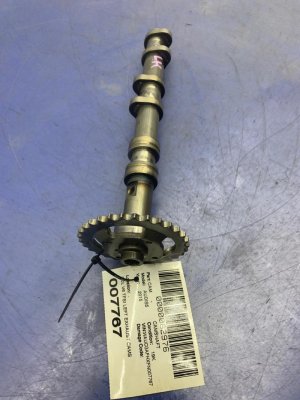
Used OEM Parts in Stock
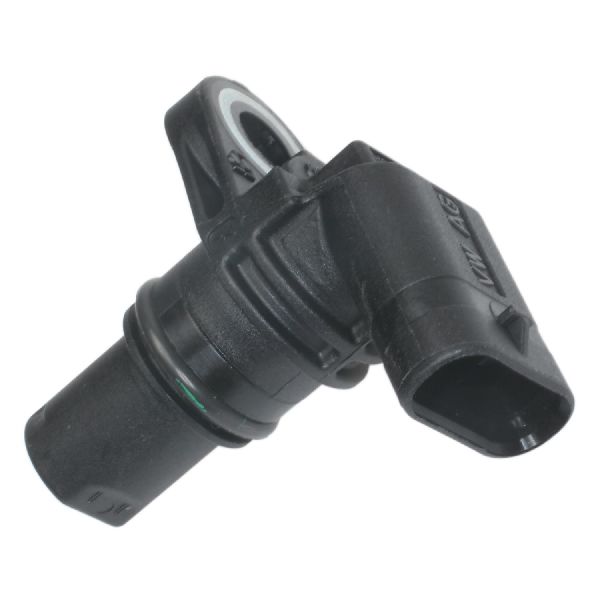
New Aftermarket Parts Available


The information in this article is provided for general reference and educational purposes only. Vehicle specifications, procedures, and part compatibility can vary by production date, trim level, and region. Always consult your vehicle's factory service manual and verify part numbers before purchasing or performing repairs. Safety-critical components such as airbags, seat belts, and braking systems should be installed by a qualified professional.
- Audi Q5:
- 🧭 Diagnostic Flowchart
- 🛍️ Shop This Part
- What's Unique About the 2009-2017 Audi Q5
- Symptoms You May Notice
- Most Likely Causes
- Rare But Worth Checking
- Diagnosis Steps
- Parts You'll Likely Need
- Related Codes That Often Appear With This One
- Technical Service Bulletins (TSBs) & Recalls
- Platform-Specific Known Issues
- Mechanic-Grade Diagnostic Values
- Scan Tool Commands That Help
- Wiring & Ground Locations
- Real Owner Repair Stories
- OEM Part Supersession History
- Model Year Variations Within This Range
- Other Known Issues on This Vehicle
- Used vs. New Parts: Buying Guide for This Vehicle
- Real Owner Stories
- 2016 Audi Q5 2.0T
- 2009-2017 Audi Q5 2.0T
- Related OBD-II Codes
- Frequently Asked Questions
- 🎟️ Get 5% Off