

P0010 on 2010-2016 Buick LaCrosse 2.4L: Intake Camshaft Actuator Circuit Causes and Fixes
On a 2010-2016 Buick LaCrosse with the 2.4L engine, code P0010 is almost always caused by a failed intake camshaft position actuator solenoid. Before replacing any parts, check your engine oil level, as the 2.4L Ecotec is notorious for oil consumption which can trigger this code. If the oil is full and clean, replacing the intake solenoid (Part No. 12679099) is a quick, inexpensive DIY fix that usually resolves the issue. Many owners and TSBs recommend replacing both intake and exhaust solenoids
- P0010 on your LaCrosse points to an electrical fault with the intake camshaft actuator solenoid.
- Before buying any parts, check your engine oil level. Low oil is a very common cause for this code on the 2.4L engine.
- The most likely fix is replacing the intake camshaft actuator solenoid, which is an easy and inexpensive DIY job located on top of the engine.
- Do not confuse the actuator solenoid with the camshaft position sensor; they are different parts, and replacing the sensor will not fix this code.
- It is often recommended to replace both the intake and exhaust solenoids at the same time.
What's Unique About the 2010-2016 Buick LaCrosse
The 2.4L Ecotec engine, used across many GM models including the LaCrosse, is exceptionally prone to issues that trigger P0010. Firstly, the engine has a well-documented history of excessive oil consumption due to piston ring design, a problem so widespread GM issued TSB 13-06-01-003I. Since the VVT system is hydraulic, low oil levels directly cause VVT faults. Secondly, the camshaft actuator solenoids themselves are a high-failure-rate item. Finally, a clogged PCV orifice in the intake manifold (addressed by TSB 14882) can exacerbate oil consumption, making this a trifecta of related problems that all point back to oil level and quality.
Symptoms You May Notice
- Check Engine Light is on
- Engine idles roughly or stumbles
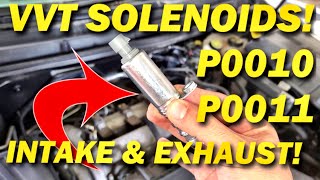
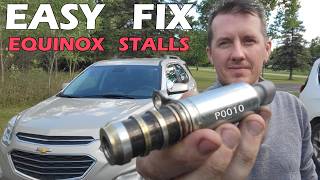
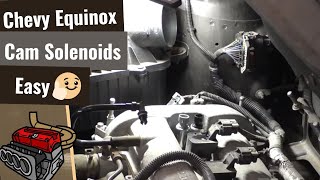
- Engine stalls when coming to a stop or at low RPM 🎬 Watch: How to fix stalling issues caused by these codes
- Hesitation or lack of power during acceleration
- Decreased fuel economy
- A slight "ticking" or clicking sound at very low RPMs
- Replacing the Camshaft Position SENSOR. The code P0010 refers to the actuator SOLENOID circuit, not the position sensor. The sensor reads the camshaft's position, while the solenoid is an oil control valve that moves it. Replacing the sensor will not fix this code.
Most Likely Causes
- Failed Intake Camshaft Position Actuator Solenoid 🔴 High Probability → Shop Engine Camshaft This is a very common failure part on the 2.4L Ecotec engine. The solenoids can fail internally (electrically) or become clogged with oil sludge over time, which is common on this engine. GM TSB 17-NA-098 specifically addresses this failure for P0010. An owner report in NHTSA ODI #10958019 for a similar GM model noted that a diagnostic check revealed the intake camshaft actuator solenoid was shorted, requiring replacement.
How to confirm: Unplug the solenoid and measure the resistance between its two pins with a multimeter. A healthy solenoid should read between 8 and 12 ohms. If it reads as an open circuit (OL or infinite resistance), it has failed. A definitive test is to swap the intake (gray connector) and exhaust (black connector) solenoids. Clear the codes. If the code returns as P0013 (Exhaust Circuit), the solenoid is confirmed bad.
Typical fix: Replace the intake camshaft position actuator solenoid. Per TSB 17-NA-098, GM recommends replacing both the intake and exhaust solenoids at the same time as a preventative measure. This is a common practice among owners.
Est. part cost: $25-$60 per solenoid - Low or Dirty Engine Oil 🔴 High Probability The VVT system uses oil pressure to adjust timing. The 2.4L Ecotec engine is infamous for excessive oil consumption due to piston ring issues (TSB 13-06-01-003I) and PCV system flaws (TSB 14882). A low oil level is a frequent and primary trigger for VVT codes on this specific vehicle.
How to confirm: Check the engine oil dipstick. The level should be in the cross-hatched area. Due to the dipstick design, no oil will appear on the stick if the engine is low by ~1.25 quarts or more. Check the oil's condition; if it is black, thick, or smells of fuel, it needs to be changed.
Typical fix: If the oil level is low, top it off to the full mark, clear the code, and drive. If the oil is old or dirty, perform a complete oil and filter change using a dexos-approved 5W-30 synthetic oil.
Est. part cost: $40-$80 - Damaged Wiring or Connector ⚪ Low Probability
How to confirm: Visually inspect the wiring harness and connector leading to the intake camshaft solenoid. Look for any frayed wires, corrosion in the connector pins, or loose connections. Wiggle the wires while testing resistance to check for intermittent breaks.
Typical fix: Repair the damaged section of wire or clean the connector pins. If the connector itself is broken or the locking tab is missing, replace the pigtail connector.
Est. part cost: $10-$30
Rare But Worth Checking
- Faulty Powertrain Control Module (PCM): This is extremely rare. The PCM should only be considered after all other possibilities, including solenoids, wiring, and oil pressure issues, have been exhaustively tested and ruled out.
Diagnosis Steps
- Read the code with an OBD-II scanner to confirm P0010 is present.
- CRITICAL FIRST STEP: Check the engine oil level and condition. Due to this engine's high oil consumption, a low oil level is a primary cause. If low, top up with 5W-30 synthetic oil, clear the code, and re-test. If dirty, perform an oil change.
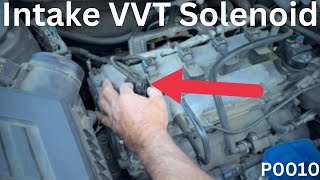
- If the oil level is good and the code returns, locate the intake and exhaust camshaft actuator solenoids on top of the valve cover. The intake solenoid is usually toward the front of the vehicle and has a gray electrical connector.
- Inspect the electrical connector and wiring for the intake solenoid. Look for damage, corrosion, or oil contamination in the connector.
- Disconnect the connector and test the solenoid's resistance with a multimeter. A reading between 8-12 ohms is good. An open circuit (OL) or a dead short (near 0 ohms) indicates a failed solenoid.
- Definitive Solenoid Test: Swap the intake and exhaust solenoids. They are physically identical. Clear the codes and run the engine. If the code changes to P0013 (Exhaust Camshaft Position Actuator Circuit), you have definitively proven the solenoid is the faulty component.
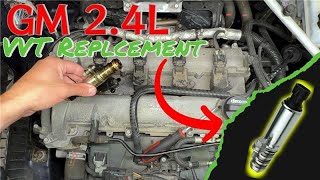
- If the solenoid is confirmed bad, replace it. 🎬 See this quick GM 2.4L solenoid replacement walkthrough It is highly recommended to replace both intake and exhaust solenoids at the same time with updated OEM parts.
- When replacing, remove the old solenoid and inspect its screens for metal shavings or sludge. Significant debris could indicate a larger engine problem, like a failing timing chain.
Parts You'll Likely Need
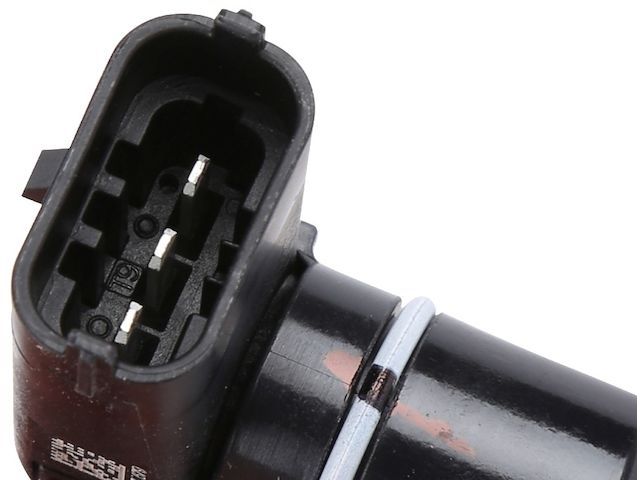
- Intake Camshaft Position Actuator Solenoid
(OEM #12679099 (Supersedes 12655420, 12628347, etc.))— This is the most common part to fail and directly cause the P0010 circuit code on the 2.4L Ecotec engine. The original part was updated by GM.
Trusted brands: ACDelco (OEM), Delphi, Dorman
OEM price range: $40-$60
Aftermarket price range: $25-$45 - Exhaust Camshaft Position Actuator Solenoid
(OEM #12679100 (Supersedes 12655421, 12628348, etc.))— Often replaced as a pair with the intake solenoid, as recommended by GM TSB 17-NA-098 and common practice to prevent a repeat failure for the other solenoid.
Trusted brands: ACDelco (OEM), Delphi, Dorman
OEM price range: $40-$60
Aftermarket price range: $25-$45
Related Codes That Often Appear With This One
- P0011 — P0011 indicates 'Intake Camshaft Position Timing Over-Advanced'. P0010 is an electrical circuit code. When the circuit fails, the PCM can no longer control the solenoid. This often causes the camshaft phaser to get stuck in one position, leading to a mechanical timing performance code like P0011 as a direct result.
- P0013 / P0014 — These are the equivalent circuit (P0013) and performance (P0014) codes for the exhaust camshaft actuator. It is very common for both intake and exhaust solenoids to fail around the same time, or for an owner to replace both as a set, so seeing these codes together is not unusual.
Technical Service Bulletins (TSBs) & Recalls
- TSB 13-06-01-003I: Addresses excessive oil consumption, recommending a consumption test and potential piston/ring replacement. This is a root cause of the low/dirty oil that kills solenoids.
- TSB 14882 (Special Coverage): Addresses a plugged PCV orifice in the intake manifold that increases crankcase pressure and oil consumption.
- TSB 17-NA-098: Directly addresses P0010/P0011/P0013/P0014, recommending the replacement of BOTH camshaft position actuator solenoid valves and an ECM software check.
- TSB PIP5162: Notes that inspecting the solenoid screens for debris is a key diagnostic step.
Platform-Specific Known Issues
- Extreme Oil Consumption: The 2.4L Ecotec engine is known for consuming oil between changes, often due to piston ring design. Owners must check their oil level manually and frequently, as the oil life monitor does not track oil level. A low oil level is the number one cause of VVT-related codes.
- Solenoid Failure is Common: The camshaft actuator solenoids are a known weak point on this engine platform, with electrical failure being very common as the vehicle ages. Many owners on forums like Reddit report having to replace them.
Mechanic-Grade Diagnostic Values
- Camshaft Position Actuator Solenoid Resistance — expected: 8 to 13 Ohms. Failure: An open circuit (OL or infinite resistance), a short (near 0 Ohms), or a reading that fluctuates wildly when wiggling the connector pins indicates a failed solenoid.
- Camshaft Position Actuator Solenoid Control Circuit Voltage (at connector) — expected: 1.5 - 4.5 V (Key On, Engine Off). Failure: Voltage outside this range, or a test lamp that doesn't illuminate, points to a wiring issue between the connector and the ECM, or a faulty ECM driver. The circuit is pulled up to a low current voltage.
- Scan Tool Live Data: Desired vs. Actual Camshaft Position Angle — expected: The 'Actual' position angle should closely track the 'Desired' angle commanded by the PCM as RPM changes.. Failure: A significant, persistent deviation between desired and actual angles (often >5 degrees for several seconds) after replacing a solenoid can indicate a mechanical issue like a stretched timing chain or a faulty phaser.
Scan Tool Commands That Help
- GDS2 / Tech2: Camshaft Position Actuator Control — This bidirectional command allows a technician to manually command the intake and exhaust solenoids on and off while monitoring engine RPM. A functional solenoid will produce a noticeable change in engine idle (stumble or stall) when activated. If commanding the solenoid ON causes no change, it confirms a problem in the solenoid, wiring, or oil pressure supply to that actuator. This can verify a failure without swapping parts.
Wiring & Ground Locations
- Q6 Intake Camshaft Position Actuator Solenoid Connector — Top of the valve cover, the front-most of the two solenoids, typically with a gray connector body.. This is the primary connection point for testing. Pin 1 is the ignition circuit (power) and Pin 2 is the control circuit from the ECM (ground-side switched). All electrical tests for the solenoid circuit start here.
- G103 — Located at the left rear of the engine compartment on the cowl, above the brake booster.. This is a major body and module ground. While not the primary engine ground, a poor connection here can cause erratic behavior in the BCM and other modules that communicate with the ECM, potentially leading to confusing diagnostic symptoms.
- G105 / G106 — Primary engine block grounds. G105 is often found on the front/side of the engine block near accessories. G106 is on the front center of the frame cross rail under the crank pulley. Another critical PCM ground is located on a stud under the alternator, above the A/C compressor.. These are the main ground paths for the ECM and the engine itself. A loose or corroded ground at these locations can cause a host of electrical issues, including incorrect sensor readings and insufficient voltage for actuators, potentially mimicking a failed component.
Real Owner Repair Stories
- YouTube video by 3D Auto Repair (2010 Buick LaCrosse, 140,000 miles) — Check engine light on, poor performance, cam timing correlation codes present.
❌ Tried (didn't work) The diagnosis immediately pointed towards a mechanical timing issue rather than just solenoids.
✅ What actually fixed it The timing chains had stretched significantly, creating slack that the tensioners could no longer compensate for. The fix was a complete timing chain job, replacing all three chains, guides, and tensioners. - YouTube video by kz guy 2 (2015 Chevy Equinox 2.4L (same engine and VVT system)) — Check engine light with codes P0010 and P0011, stalling, poor/rough running.
❌ Tried (didn't work) The owner did not report trying other fixes first.
✅ What actually fixed it Replaced both the intake and exhaust VVT solenoids. The video notes that this is the most common fix after verifying the oil level is correct. - NHTSA ODI #10875360 — An owner of a similar GM model reported the engine sounded like it was missing. OnStar diagnostics confirmed an issue with the timing system and error code P0010.
- NHTSA ODI #11208170 — A report for a related Buick model describes P0010 appearing alongside other codes like P0016, P0017, and P0299, accompanied by a Stabilitrak light and transmission fluid leaks.
OEM Part Supersession History
12628347, 12655420, 12578517, 12646783→12679099 (Intake)— GM released updated versions of the solenoids to improve durability and resistance to failure from heat and oil contamination.12628348, 12655421→12679100 (Exhaust)— GM released updated versions of the solenoids to improve durability and resistance to failure from heat and oil contamination.
Model Year Variations Within This Range
- 2010-2011: The 2.4L Ecotec was introduced as the standard engine mid-way through the 2010 model year to replace the 3.0L V6. Early 2.4L engines in this platform were noted in special coverage programs (#12313C) for potential balance shaft chain issues, which could contribute to overall engine noise and accelerated wear if not addressed.
- 2012+: Starting in 2012, the 2.4L Ecotec engine gained flex-fuel capability. While this did not directly change the VVT system, it represents a minor evolution in the engine management software and fuel system components.
Diagnostic Flowchart
Other Known Issues on This Vehicle
Issues unrelated to this code that are worth knowing about as an owner of this generation:
- Excessive Oil Consumption 🔴 High — Very common, especially on 2010-2013 models. Caused by a piston ring design flaw that allows oil to bypass into the combustion chamber. Consumption can exceed 1 quart per 2,000 miles. (Ref: TSB 13-06-01-003I outlines an oil consumption test and recommends piston/ring replacement if failure criteria are met.)
- Stretched Timing and/or Balance Shaft Chains 🔴 High — Common, typically between 70,000-120,000 miles. This is a direct consequence of the oil consumption issue, as low oil levels starve the hydraulic tensioners, leading to chain slack. A rattling noise on startup is a key symptom. (Ref: Special Coverage Adjustment #12313B/C covered the balance shaft chain for 2010-2011 models. No recall for the main timing chain, but it's a well-documented failure point.)
- Plugged PCV Orifice 🟠 Medium — Common, particularly in cold weather. A small orifice in the intake manifold for the PCV system can clog with carbon and sludge. This increases crankcase pressure, worsening oil consumption and potentially blowing out seals like the rear main seal. (Ref: Special Coverage Adjustment #14882 extended the warranty for this specific issue to 10 years/120,000 miles, covering the cleaning of the orifice.)
- High-Pressure Fuel Pump (HPFP) Failure 🟠 Medium — Can occur at various mileages. The internal seals of the pump can fail, allowing gasoline to leak directly into the crankcase. Symptoms include a strong fuel smell in the oil, a 'dieseling' or run-on condition after shutting the engine off, and codes like P0172 (Rich Condition).
Used vs. New Parts: Buying Guide for This Vehicle
When a used part is the smart pick: For this specific P0010 repair, using a used part is strongly discouraged. The primary failure component, the camshaft actuator solenoid, is a high-wear item with a known high failure rate and is inexpensive to buy new. A used solenoid carries a high risk of being near the end of its life or failing shortly after installation. Sourcing a used wiring pigtail from a junkyard is a viable option if only the connector is damaged.
Donor-vehicle mileage cap: roughly under 30000 miles for the part to have meaningful remaining life.
What to inspect on the donor part:
- If sourcing a wiring pigtail, inspect for brittle plastic, corrosion on the pins, or any signs of wire insulation cracking.
- Ensure the locking tab on the connector is intact and functional.
OEM-only on this vehicle (don't cheap out):
- Camshaft Position Actuator Solenoids: While some aftermarket brands are acceptable, the price difference is often small, and the ACDelco OEM part has the latest revisions to address the original flaws. Given the high failure rate, sticking with the updated OEM part is a safe bet.
Aftermarket brands forum-validated for this vehicle:
- Delphi (Often the original OEM supplier)
- Dorman (Offers a widely available alternative, sometimes with design improvements)
Brands owners have reported issues with on this vehicle:
- Unnamed, no-brand solenoids from online marketplaces. These often have poor quality control, incorrect resistance values, and can fail very quickly, leading you to redo the repair.
Real Owner Stories
Aggregated from forums and TSBs cited above. Mileages and costs reflect what owners reported in those sources.
2010-2016 Buick LaCrosse 2.4L Ecotec
Symptoms: Check engine light with P0010 error; classic symptoms of the 2.4L Ecotec platform.
What fixed it: Replacement of the intake camshaft actuator solenoid.
Source hint: Reddit: r/Buick - Check engine light with P0010 error
2010-2013 Buick LaCrosse 2.4L Ecotec — ~95000 miles
Symptoms: Rattling noise on startup and VVT-related codes; engine consuming over 1 quart of oil per 2,000 miles.
What fixed it: The root cause was identified as excessive oil consumption due to a piston ring design flaw, leading to low oil levels that starve the VVT system.
Source hint: TSB 13-06-01-003I
2011 Buick Regal (2.4L Ecotec)
Symptoms: Rough idle that required the driver to keep the idle speed up. A diagnostic check revealed a P0010 failure code.
What fixed it: The dealer found the intake camshaft actuator solenoid was shorted and replaced it.
Source hint: NHTSA ODI #10958019
Related OBD-II Codes
Frequently Asked Questions
Does TSB 17-NA-098 apply to my Buick LaCrosse if I have the P0010 code?
Why is my 2.4L LaCrosse stalling at stop lights when the P0010 code is active?
Can I just top off my oil to fix the P0010 code on my LaCrosse?
Should I replace both solenoids even if only the intake one is failing?
Is there a way to prove the solenoid is bad before I buy a new one?
What does it mean if I see metal shavings on the solenoid screens during replacement?
Helpful Videos
We Have This Part in Stock


The information in this article is provided for general reference and educational purposes only. Vehicle specifications, procedures, and part compatibility can vary by production date, trim level, and region. Always consult your vehicle's factory service manual and verify part numbers before purchasing or performing repairs. Safety-critical components such as airbags, seat belts, and braking systems should be installed by a qualified professional.
- Buick LaCrosse:
- 🧭 Diagnostic Flowchart
- 🎬 Helpful Videos
- 🛍️ Shop This Part
- What's Unique About the 2010-2016 Buick LaCrosse
- Symptoms You May Notice
- Most Likely Causes
- Rare But Worth Checking
- Diagnosis Steps
- Parts You'll Likely Need
- Related Codes That Often Appear With This One
- Technical Service Bulletins (TSBs) & Recalls
- Platform-Specific Known Issues
- Mechanic-Grade Diagnostic Values
- Scan Tool Commands That Help
- Wiring & Ground Locations
- Real Owner Repair Stories
- OEM Part Supersession History
- Model Year Variations Within This Range
- Other Known Issues on This Vehicle
- Used vs. New Parts: Buying Guide for This Vehicle
- Real Owner Stories
- 2010-2016 Buick LaCrosse 2.4L Ecotec
- 2010-2013 Buick LaCrosse 2.4L Ecotec — ~95000 miles
- 2011 Buick Regal (2.4L Ecotec)
- Related OBD-II Codes
- Frequently Asked Questions
- 🎟️ Get 5% Off