

P0010 on 2011-2017 Buick Regal: Intake Cam Actuator Circuit Causes and Fixes
On a 2011-2017 Buick Regal, code P0010 is almost always caused by a faulty intake camshaft position actuator solenoid. Before replacing it, check your engine oil level and condition, as low or dirty oil is a common trigger. Replacing both intake and exhaust solenoids is a simple, 30-minute DIY job costing about $40-$100 for a pair of aftermarket parts. This is a very common failure on GM Ecotec engines.
- P0010 on your Regal points directly to the intake camshaft actuator solenoid circuit.
- First, check your oil. Low or dirty oil is a very common cause and the easiest thing to fix.
- The most likely repair is replacing the intake camshaft actuator solenoid. This is a very easy, 30-minute DIY job.
- For best results, replace both the intake and exhaust solenoids at the same time with updated OEM or quality aftermarket parts.
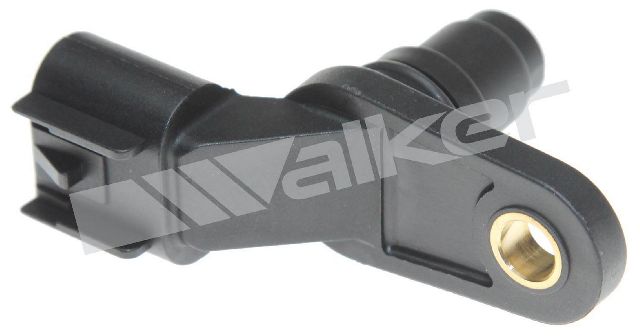
- Do not confuse the actuator solenoid with the camshaft position sensor; they are different parts.
What's Unique About the 2011-2017 Buick Regal
The GM 2.0L (LHU) and 2.4L (LAF, LEA, LUK) Ecotec engines used in this generation of Regal are known for having issues with the camshaft position actuator solenoids. The problem is common enough that GM has released several updated part numbers for these components. Because the VVT system relies on clean engine oil at the proper pressure, these engines are particularly sensitive to oil level and maintenance schedules. Sludge buildup from delayed oil changes is a frequent cause of solenoid failure and this specific code, as the debris clogs the fine mesh screens on the solenoids.
Symptoms You May Notice
- Check Engine Light is on
- Rough or unstable idle
- Engine hesitation or lack of power during acceleration
- Decreased fuel economy
- Engine stalling, sometimes specifically when the A/C is turned on 🎬 Watch a diagnostic video on a Regal stalling with the A/C on or when coming to a stop
- Rattling or ticking noise from the engine
- Replacing the camshaft position *sensor* instead of the camshaft position *actuator solenoid*. P0010 is a code for the actuator circuit, not the sensor that reads the camshaft's position. The actuators are on the top of the valve cover, while the sensors are typically on the side of the cylinder head.
Most Likely Causes
- Faulty Intake Camshaft Position Actuator Solenoid 🔴 High Probability → Shop Engine Camshaft These solenoids are a known, high-failure point on GM Ecotec engines. The internal coil can fail electrically, or the fine mesh screens can become clogged with oil sludge or debris, impeding oil flow. This is the most common cause of P0010.
How to confirm: Remove the solenoid (held by one 10mm bolt) and inspect the screens for sludge or metal debris. You can also test the solenoid's resistance with a multimeter; it should be between 8-13 ohms. A common and effective diagnostic trick is to swap the intake and exhaust solenoids; if the code changes to P0013 (Exhaust Actuator Circuit), the solenoid is confirmed bad.
Typical fix: Replace the intake camshaft position actuator solenoid. It is highly recommended to replace both the intake and exhaust solenoids as a pair, as they wear at similar rates and are subjected to the same conditions.
Est. part cost: $20-$50 for one, $40-$100 for a pair (aftermarket) - Low or Dirty Engine Oil 🟡 Medium Probability The VVT system is hydraulic and requires proper oil pressure and cleanliness to function. The 2.4L Ecotec engine, in particular, is known for excessive oil consumption issues, which can lead to low oil levels. Low or sludgy oil can starve the actuators or clog their screens, causing this code.
How to confirm: Check the engine oil level on the dipstick. Inspect the oil's color and consistency. If it is very dark, thick, or below the 'add' line, this is a likely contributor. This should be the first check before buying any parts.
Typical fix: Perform an engine oil and filter change using the manufacturer-specified grade of oil (typically 5W-30 full synthetic meeting Dexos specifications). If the oil was very low, monitor consumption closely as it may indicate a more serious issue like worn piston rings.
Est. part cost: $40-$80 - Damaged Wiring or Poor Connection ⚪ Low Probability
How to confirm: Visually inspect the wiring harness and connector going to the intake camshaft actuator solenoid. Look for any signs of frayed wires, corrosion on the connector pins, or a loose connection. The connector can become brittle from heat cycles.
Typical fix: Repair the damaged section of wire or clean/replace the electrical connector pigtail.
Est. part cost: $5-$30
Rare But Worth Checking
- Failing Engine Control Module (ECM): This is very rare. The ECM should only be considered after all other possibilities, including solenoids, oil, and wiring, have been thoroughly ruled out.
- Stretched Timing Chain: → Shop Engine Timing Chain While P0010 is an electrical circuit code, it can sometimes appear alongside timing correlation codes (like P0011, P0016, P0017) if the underlying issue is a stretched timing chain. Debris from failing plastic chain guides can clog the solenoid screens. If you hear a rattling noise on startup, this is a more likely cause.
Diagnosis Steps
- Check Engine Oil: Before buying any parts, check the oil level and condition. If it's low or dirty, an oil change might resolve the issue. This is especially critical on the 2.4L Ecotec known for oil consumption.
- Inspect the Connector: Unplug the electrical connector from the intake camshaft solenoid (the one closer to the front of the vehicle on the 2.4L). Check for corrosion, oil saturation, or damage.
- Swap the Solenoids (Diagnostic Test): The intake and exhaust solenoids are identical and interchangeable. Swap their positions. Clear the codes with a scan tool and drive the car. If the code changes to P0013 (Exhaust Camshaft Position Actuator Circuit), you have confirmed the solenoid you moved is faulty. This is a highly reliable and free diagnostic step.
- Test the Solenoid Circuit: Use a multimeter to check for 12V power at the connector with the key on. Check the resistance of the solenoid itself; a reading between 8 and 13 ohms is typical. An open circuit (infinite resistance) or short (near-zero resistance) indicates a bad solenoid.
- Replace the Solenoid(s): If the solenoid is confirmed bad or highly suspect, replace it. It is best practice to replace both intake and exhaust solenoids at the same time. They are located on top of the engine under the plastic cover, each held by a single 10mm bolt. Lightly oil the new solenoid's O-rings before installation.
- Clear Codes & Test Drive: After the repair, clear the trouble codes with a scan tool and test drive the vehicle to ensure the light does not return.
Parts You'll Likely Need
- Intake Camshaft Position Actuator Solenoid
(OEM #12655420, 12679099 (latest known))— This is the most common part to fail, causing the P0010 code. It either fails electrically or becomes clogged with debris. The part number has been superseded multiple times, indicating revisions by GM to address the failures.
Trusted brands: ACDelco (OEM), Delphi, Dorman
OEM price range: $40-$70
Aftermarket price range: $20-$50 - Exhaust Camshaft Position Actuator Solenoid
(OEM #12655421, 12679100 (latest known))— It is highly recommended to replace both solenoids at the same time, as they are subjected to the same conditions and have a similar service life. This prevents a repeat repair for the exhaust side shortly after fixing the intake.
Trusted brands: ACDelco (OEM), Delphi, Dorman
OEM price range: $40-$70
Aftermarket price range: $20-$50
Related Codes That Often Appear With This One
- P0011 — P0011 indicates 'Intake Camshaft Position Timing Over-Advanced'. P0010 is an electrical circuit code, while P0011 is a mechanical performance code. A failing solenoid circuit (P0010) can prevent the camshaft from moving correctly, leading to a performance fault (P0011). They often appear together.
- P0013 — This is the equivalent circuit code for the exhaust camshaft actuator solenoid ('B' Camshaft). If you see both P0010 and P0013, it may point to a common issue like low/dirty oil or a problem with the power supply to both solenoids. It's also common to see this code after swapping solenoids for diagnosis.
- P0014 — This is the performance code equivalent to P0011 but for the exhaust camshaft. Seeing P0010 and P0014 together is less common but could indicate widespread oiling issues or multiple failing components.
Technical Service Bulletins (TSBs) & Recalls
- PI0562E: Addresses camshaft actuator noise and recommends replacing original solenoids with updated part numbers on 2011-2012 models.
- PIP5162A: Advises inspection and cleaning of solenoid screens for debris as a primary diagnostic step for related camshaft timing codes on 2013-2014 models.
- PI0865: Service bulletin detailing parts to be transferred when replacing the 2.4L Ecotec service engine, highlighting the modularity and commonality of components across platforms.
Platform-Specific Known Issues
- GM issued a preliminary information bulletin (PI0562E) for 2011-2012 models related to camshaft actuator noise and codes, which involved replacing older-design solenoids with updated parts (12655420 and 12655421).
- TSB #PIP5162A for 2013-2014 models, while for P0011/P0014, directs technicians to inspect solenoid screens for debris, confirming this is a known issue that can be caused by oil contamination.
- The 2.4L Ecotec engine in many GM vehicles, including the Regal, was subject to class-action lawsuits for excessive oil consumption due to piston ring design. This chronic low oil condition is a major contributor to VVT system faults like P0010.
Mechanic-Grade Diagnostic Values
- Camshaft Position Actuator Solenoid Resistance — expected: 8 to 13 Ohms at 68°F (20°C). Failure: A reading that is very high (open circuit), near zero (short circuit), or wildly fluctuating indicates a failed solenoid.
- Solenoid Connector Voltage (Key On, Engine Off) — expected: One pin should have 12V+ (battery voltage). The other is the control wire from the ECM.. Failure: Absence of 12V+ power points to a problem in the supply circuit, fuse, or relay, not the solenoid itself.
Scan Tool Commands That Help
- GDS2 / Tech2 (or equivalent professional scanner): Camshaft Position Actuator Control / VVT Control B1 — This bidirectional test allows a technician to command the solenoid to operate while monitoring engine response or system data. It can confirm if the solenoid is physically responding to ECM commands, helping to isolate a circuit fault from a mechanical/hydraulic issue.
Wiring & Ground Locations
- G105 — On the lower left front of the engine block. On some Ecotec platforms, it can also be on the rear of the engine or near the cooling fan.. This is a primary engine block and ECM ground. A loose or corroded connection at G105 can cause erratic voltage and sensor readings, potentially leading to false circuit codes like P0010.
- G107 — Typically located on the driver's side of the engine block, sometimes near the starter motor.. This is a main engine ground strap. A poor connection here can cause a host of electrical faults throughout the powertrain system, as it's a critical ground path.
- Intake Camshaft Actuator Solenoid Connector — On top of the valve cover, closer to the front of the vehicle (radiator side). It is typically a gray connector.. This is the direct connection point for testing voltage and resistance of the P0010-related circuit and component. The wires are power-side switched and duty-cycle controlled by the ECM.
Real Owner Repair Stories
- Reddit user in r/Buick (2013 Buick Regal Turbo, 60k miles) — Check engine light with P0010 code, came on and off sporadically. Car ran fine.
❌ Tried (didn't work) Replaced the intake actuator solenoid with an aftermarket part (light came back)., Replaced the aftermarket part again under warranty (light remained on).
✅ What actually fixed it Replaced BOTH the intake and exhaust actuators with OEM replacement parts and reset the check engine light. The issue was resolved for over a month at the time of posting. - YouTube user 'SoSo Kustoms' (2011 Buick Regal) — Code P0010, car stalls when A/C is turned on and put in Drive, shaky acceleration.
❌ Tried (didn't work) Initially replaced the front solenoid (exhaust), which did not fix the stalling issue.
✅ What actually fixed it The user states that for P0010, 'bank one is in the back'. Replacing the rear solenoid (intake on this transverse mounting) resolved the stalling. The old solenoid was found to be full of sludge. - NHTSA ODI #10958019 — An owner reported a P0010 failure code where the intake camshaft actuator solenoid was found to be shorted. The vehicle required the driver to keep the idle speed up to prevent stalling before the solenoid was replaced.
OEM Part Supersession History
12628347, 12646783→12655420, which is now superseded by 12679099— GM has updated the part multiple times to improve reliability and address the high failure rate of the VVT solenoids on Ecotec engines.
Model Year Variations Within This Range
- 2014-2017: The 2014 model year received a mid-cycle refresh with revised exterior styling and an upgraded interior. The 2.0L turbo engine was updated to a more efficient version with increased power (259 hp). While the fundamental VVT system design remained the same, software calibrations in the ECM may differ from earlier models.
- 2013-2016: The 2.4L engine was available with GM's eAssist mild-hybrid system as standard on non-turbo models starting in 2013. This does not significantly change the diagnosis for P0010, as the core VVT components are the same, but it adds another layer of complexity to the overall powertrain system.
Diagnostic Flowchart
Other Known Issues on This Vehicle
Issues unrelated to this code that are worth knowing about as an owner of this generation:
- Excessive Oil Consumption (2.4L Engine) 🔴 High — Very common, particularly on 2011-2013 models. Can start as early as 60,000 miles. Caused by faulty piston ring design. (Ref: Subject of class-action lawsuits and Special Coverage Adjustments (e.g., #12313C, N192291100 for platform mates) which have mostly expired.)
- Timing Chain Stretch / Guide Failure (Both Engines) 🔴 High → Shop Engine Timing Chain — Common, especially on vehicles with poor oil change history or chronic low oil levels. Often presents between 80,000-120,000 miles. A rattling noise on cold startup is the key symptom. (Ref: Special Coverage #12313C addressed the balance shaft chain on some 2011 2.4L models, but not the main timing chain.)
- High-Pressure Fuel Pump (HPFP) Failure (2.0L Turbo & 2.4L) 🟠 Medium — Common failure item. On the 2.0L Turbo, it can cause fuel to leak into the crankcase, diluting the oil (P0191). On the 2.4L, it can cause stalling and rich conditions (P0172). (Ref: TSB 12313 addressed this for some 2011 2.4L models.)
- Sudden Engine Stalling 🔴 High — Frequently reported by owners, often linked to failing timing chains or high-pressure fuel pumps. Can occur at highway speeds with little warning, creating a safety risk.
Used vs. New Parts: Buying Guide for This Vehicle
When a used part is the smart pick: A used part is generally not recommended for the VVT solenoids themselves due to their high failure rate and the low cost of new aftermarket parts. However, sourcing a used wiring connector pigtail from a junkyard is a smart choice if only the plastic connector is broken or corroded, as it's an OEM part that can be spliced in.
Donor-vehicle mileage cap: roughly under 80000 miles for the part to have meaningful remaining life.
What to inspect on the donor part:
- For a wiring pigtail, ensure the plastic is not brittle and the locking tab is intact.
- Check the wires for any signs of cracking, previous repairs, or heat damage.
- Verify the donor vehicle is from a similar model year to ensure compatibility.
OEM-only on this vehicle (don't cheap out):
- While not strictly 'OEM-only', many owners report recurring issues with cheap, unbranded aftermarket solenoids. Using OEM ACDelco or reputable brands like Delphi is strongly advised for a lasting repair.
Aftermarket brands forum-validated for this vehicle:
- Delphi
- Dorman (often comes with a lifetime warranty)
Brands owners have reported issues with on this vehicle:
- Unbranded, no-name solenoids from online marketplaces are a gamble; many fail quickly or are dead on arrival.
Real Owner Stories
Aggregated from forums and TSBs cited above. Mileages and costs reflect what owners reported in those sources.
2013 Buick Regal Turbo 2.0L
Symptoms: The check engine light would come and go intermittently.
What fixed it: The owner reported the issue on Reddit r/Buick, identifying it as a recurring P0010 code related to the intake camshaft position actuator circuit.
Source hint: reddit.com/r/Buick - A 2013 Regal Turbo owner with a recurring P0010
2011 Buick Regal 2.4L — ~60000 miles
Symptoms: Excessive oil consumption leading to VVT system faults and potential stalling.
What fixed it: Repairs related to Special Coverage Adjustments (e.g., #12313C) which addressed components like the balance shaft chain or high-pressure fuel pump in some 2011 models.
Source hint: Special Coverage #12313C / TSB 12313
Documented NHTSA Reports
ODI #11208170: An owner reported a P0010 code appearing alongside P0016, P0017, and P0299, noting a Stabilitrak light that would come on and off sporadically.
Related OBD-II Codes
Frequently Asked Questions
My 2011 Buick Regal is making a rattling noise and throwing P0010. Is there a specific bulletin for this?
Can I test if the intake solenoid is actually bad before buying a new one?
Why does my 2.4L Regal stall when I turn on the A/C or come to a stop?
Is the P0010 code related to the oil consumption lawsuit for the 2.4L Ecotec?
Should I replace just the intake solenoid or both?
What type of oil should I use to prevent VVT issues in my 2.0L Turbo Regal?
Helpful Videos
We Have This Part in Stock



The information in this article is provided for general reference and educational purposes only. Vehicle specifications, procedures, and part compatibility can vary by production date, trim level, and region. Always consult your vehicle's factory service manual and verify part numbers before purchasing or performing repairs. Safety-critical components such as airbags, seat belts, and braking systems should be installed by a qualified professional.
- Buick Regal:
- 🧭 Diagnostic Flowchart
- 🎬 Helpful Videos
- 🛍️ Shop This Part
- What's Unique About the 2011-2017 Buick Regal
- Symptoms You May Notice
- Most Likely Causes
- Rare But Worth Checking
- Diagnosis Steps
- Parts You'll Likely Need
- Related Codes That Often Appear With This One
- Technical Service Bulletins (TSBs) & Recalls
- Platform-Specific Known Issues
- Mechanic-Grade Diagnostic Values
- Scan Tool Commands That Help
- Wiring & Ground Locations
- Real Owner Repair Stories
- OEM Part Supersession History
- Model Year Variations Within This Range
- Other Known Issues on This Vehicle
- Used vs. New Parts: Buying Guide for This Vehicle
- Real Owner Stories
- 2013 Buick Regal Turbo 2.0L
- 2011 Buick Regal 2.4L — ~60000 miles
- Documented NHTSA Reports
- Related OBD-II Codes
- Frequently Asked Questions
- 🎟️ Get 5% Off