

P0010 on 2012-2017 Buick Verano 2.4L: Causes and Fixes for the Intake Camshaft Actuator Circuit
For a 2012-2017 Buick Verano with the 2.4L engine, code P0010 is almost always caused by a failed intake camshaft position actuator solenoid. This is a very common and inexpensive DIY repair that takes less than 30 minutes with a 10mm socket. Replacing the solenoid, part number 12655420 (or its successor 12679099), typically resolves the issue. It is highly recommended to replace the exhaust solenoid (12655421) at the same time.
- P0010 on a 2.4L Verano points specifically to an electrical problem with the intake VVT solenoid.
- The most likely cause is a failed intake VVT solenoid (Part #12655420), which is a very common issue on this engine.
- Always check your oil level and condition first, as low or dirty oil can cause the same symptoms.
- This is a very DIY-friendly repair, requiring only basic tools and about 20-30 minutes.
- It is often recommended to replace both the intake and exhaust solenoids at the same time to prevent future issues.
What's Unique About the 2012-2017 Buick Verano
The 2.4L Ecotec engine used in the Verano and other GM vehicles is well-known for issues with its VVT solenoids. These components are prone to failure either from internal electronic faults or from clogging due to oil sludge, often exacerbated by the engine's tendency for high oil consumption. Because this is such a common failure point, a P0010 code is very frequently a straightforward fix involving the replacement of the accessible solenoid on top of the engine, rather than a more complex timing or wiring problem. GM issued Technical Service Bulletin 17-NA-098 for this exact issue, recommending the replacement of both solenoids.
Symptoms You May Notice
- Check Engine Light is on
- Engine stalling, especially when coming to a stop or when putting the car in reverse
- Rough or unstable idle
- Poor acceleration and loss of power, feels like the vehicle is 'chugging'
- Increased fuel consumption
- Rattling or ticking noise from the top of the engine
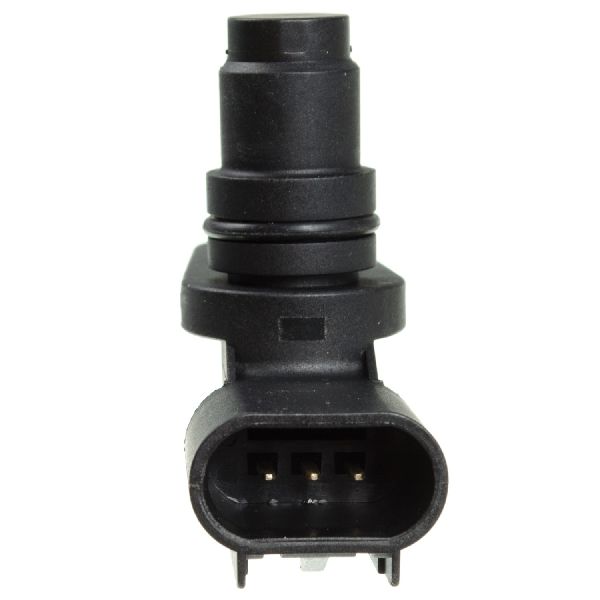
- Replacing the Camshaft Position SENSOR instead of the Camshaft Position ACTUATOR SOLENOID. P0010 is a code for the actuator solenoid circuit, not the sensor. This is a very common mistake made by DIYers.
Most Likely Causes
- Failed Intake Camshaft Position Actuator Solenoid 🔴 High Probability → Shop Engine Camshaft This is the most common failure point on the 2.4L Ecotec engine. The internal coil winding fails, creating an open circuit, or the small mesh screens on the solenoid become clogged with oil sludge or metallic debris from timing chain wear.
How to confirm: The easiest test is to swap the intake solenoid (front, often with a gray connector) with the identical exhaust solenoid (rear, often with a black connector). Clear the codes and drive. If the code changes to P0013 (Exhaust 'B' Camshaft Position Actuator Circuit), the solenoid you moved is faulty. You can also test the solenoid's resistance with a multimeter; a good one should read between 8 and 13 ohms, while a failed one will often read as an open circuit (infinite resistance) or show erratic, fluctuating readings.
Typical fix: Replace the intake camshaft position actuator solenoid. It is highly recommended to replace both the intake (12655420) and exhaust (12655421) solenoids at the same time for preventative maintenance, as recommended by GM TSB 17-NA-098.
Est. part cost: $25-$50 - Low or Dirty Engine Oil 🟡 Medium Probability The VVT system is entirely dependent on oil pressure. The 2.4L Ecotec is notorious for excessive oil consumption due to piston ring issues. If the oil level drops too low, the VVT system is one of the first things to be affected, leading to performance issues and codes. Old, sludgy oil can also clog the solenoid screens.
How to confirm: Check the engine oil dipstick frequently. The oil level should be in the correct range, and the oil should not be excessively dark, thick, or gritty. Many owners report the low oil light does not come on before the level is critically low.
Typical fix: Perform an oil and filter change using the manufacturer-specified oil type (5W-30 synthetic blend or full synthetic). Maintain the proper oil level between changes. If consumption is high, this is a temporary fix for the code but does not solve the underlying consumption problem.
Est. part cost: $30-$70 - Damaged Wiring or Connector ⚪ Low Probability
How to confirm: Visually inspect the electrical connector and wiring harness going to the intake VVT solenoid. The connector's locking tab can become brittle and break during removal. Look for any signs of corrosion, oil contamination, loose pins, or frayed wires.
Typical fix: Repair the damaged section of the wiring harness or clean/replace the connector pigtail if the lock is broken or pins are damaged.
Est. part cost: $10-$30
Rare But Worth Checking
- Failing Camshaft Phaser: → Shop Engine Camshaft If the solenoid and oil are good, the mechanical actuator (phaser) that the solenoid sends oil to could be stuck or failing. This is a much more involved and expensive repair.
- Timing Chain Issue: → Shop Engine Timing Chain While less common for this specific circuit code, a stretched timing chain can cause a variety of VVT-related performance codes (like P0011). More relevant to P0010, metallic debris from failing timing chain guides can travel through the oil and clog the VVT solenoid screens, causing it to fail. NHTSA ODI #10875360 notes a case where a diagnostic report indicated an issue with the timing system specifically associated with error code P0010.
- Faulty Engine Control Module (ECM): This is extremely rare. The ECM's internal driver for the solenoid circuit would have to fail. All other possibilities should be exhausted before considering ECM replacement.
Diagnosis Steps
- Read the codes with an OBD-II scanner to confirm P0010 is present. Note if P0011 is also present.
- CRITICAL FIRST STEP: Check the engine oil level and condition. Due to this engine's oil consumption issues, a low oil level is a highly probable cause. If low or dirty, correct this first, clear the codes, and see if the problem returns.
- Locate the two VVT solenoids on top of the valve cover under the plastic engine cover. The intake solenoid is the one closer to the front of the vehicle (gray connector).
- Inspect the electrical connector for the intake solenoid. Check for corrosion, damage, or oil saturation. The plastic locking tabs are known to be brittle.
- To definitively test the solenoid, swap the intake and exhaust solenoids (they are identical parts). They are each held by a single 10mm bolt. Torque spec for reinstallation is 89 in-lbs.
- Clear the trouble codes and drive the vehicle.
- If the code returns as P0013 (Exhaust Camshaft Position Actuator Circuit), the solenoid is confirmed to be faulty and must be replaced.
- If the P0010 code returns, the problem lies in the wiring or the ECM, not the solenoid itself. Further electrical testing will be needed.
Parts You'll Likely Need
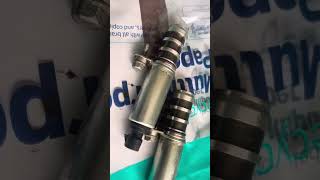
- Intake Camshaft Position Actuator Solenoid
(OEM #12655420, superseded by 12679099)— This is the most common failure part for a P0010 code on the 2.4L Ecotec engine due to either electrical failure or clogging from oil debris.
Trusted brands: ACDelco (OEM), Delphi, Standard Motor Products (SMP)
OEM price range: $40-$60
Aftermarket price range: $25-$45 - Exhaust Camshaft Position Actuator Solenoid
(OEM #12655421)— Often replaced as a pair with the intake solenoid for preventative maintenance, as recommended by GM TSB 17-NA-098. It is an identical part mechanically but sold under a different part number.
Trusted brands: ACDelco (OEM), Delphi, Standard Motor Products (SMP)
OEM price range: $40-$60
Aftermarket price range: $25-$45
Related Codes That Often Appear With This One
- P0011 — P0011 ('A' Camshaft Position - Timing Over-Advanced or System Performance) is a performance code that often appears with P0010. The P0010 electrical circuit fault prevents the solenoid from working, which in turn causes the camshaft timing performance to be incorrect, triggering P0011.
Technical Service Bulletins (TSBs) & Recalls
- 17-NA-098: Addresses rough running, hesitation, stalling, and codes P0010, P0011, P0013, P0014, recommending replacement of both VVT solenoids and an ECM software check.
- PIP5162E: Addresses P0011/P0014 codes, recommending inspection of solenoid screens for debris.
- 15285C: Pertains to excessive oil consumption on the 2.4L Ecotec due to piston ring wear, a root cause for oil-related VVT issues.
Platform-Specific Known Issues
- General Motors issued Technical Service Bulletin (TSB) 17-NA-098 which directly addresses codes P0010, P0011, P0013, and P0014 causing rough running and stalling. The official correction is to replace both camshaft position actuator solenoid valves and verify the ECM has the latest software.
- TSB PIP5162E (a revision of the one in pass 1) for related codes P0011/P0014 on the 2.5L engine (a close relative of the 2.4L), advises inspecting the solenoid screens for debris, which is also applicable here.
- The extreme oil consumption issue on this engine (covered by TSBs like 15285C) is a major contributing factor to VVT problems, as low oil levels starve the actuators and sludge clogs the solenoids.
Mechanic-Grade Diagnostic Values
- Camshaft Position Actuator Solenoid Resistance — expected: 8 to 13 Ohms at room temperature. Some sources state up to 15 Ohms is acceptable.. Failure: A reading of OL (Open Loop/infinite resistance) or near zero Ohms indicates a failed solenoid. Readings that fluctuate wildly when wiggling the connector also indicate an internal failure.
- VVT Solenoid Circuit Voltage (at connector, key on) — expected: The circuit is controlled by the ECM on both the power and ground sides. One wire is a pulse-width modulated power feed from the ECM, and the other is a constant ground provided by the ECM.. Failure: Absence of a PWM signal or a missing ground path points to a wiring or ECM driver issue, not a solenoid failure.
Scan Tool Commands That Help
- GDS2 (GM Global Diagnostic System 2): Actuator Test / Camshaft Position Actuator Solenoid Command — This bidirectional control allows a technician to command the solenoid on and off while the engine is running to verify its mechanical operation. When commanded, the engine idle should become rough or stall, and the desired vs. actual cam position PIDs should change, confirming the solenoid is responding to the ECM.
Wiring & Ground Locations
- Intake Camshaft Position Actuator Solenoid Connector — On top of the valve cover, toward the front of the vehicle (radiator side). It is typically a gray two-pin connector.. This is the primary connection point for testing. The circuit consists of a gray/blue wire (pulse-width modulated power from ECM) and a violet/brown wire (ground from ECM). A fault in this connector or its wiring will directly cause P0010.
- Engine Control Module (ECM) — Located in the engine bay, typically near the battery or firewall.. Both the power control and the ground for the VVT solenoid circuit originate from the ECM. A failure of the internal driver circuit in the ECM, while rare, can mimic a failed solenoid or wiring fault.
OEM Part Supersession History
12655420→12679099— Unspecified, but likely for improved reliability or manufacturing process change. The new part is a direct replacement.
Heads up: The new part number 12679099 also replaces several other older part numbers, including 12578517, 12628347, and 12646783, indicating it is the standard service replacement.
Model Year Variations Within This Range
- 2012: The 2012 model year 2.4L Ecotec was an E85-capable (FlexFuel) engine, coded as LEA. Later model years may have reverted to a gasoline-only version. This does not affect the P0010 diagnosis or repair, as the VVT system is identical.
Diagnostic Flowchart
Other Known Issues on This Vehicle
Issues unrelated to this code that are worth knowing about as an owner of this generation:
- Excessive Oil Consumption 🔴 High — Extremely common across the 2.4L Ecotec platform, often starting around 60,000-80,000 miles. Consumption can exceed 1 quart per 1,000-2,000 miles. (Ref: Multiple TSBs and a class-action lawsuit (Sanchez, et al., v. General Motors LLC) address this. TSB #15285C and Special Coverage N192291100 point to worn piston rings as the cause.)
- Timing Chain Stretch and Failure 🔴 High → Shop Engine Timing Chain — Common, particularly on vehicles with poor oil change history or frequent low oil level operation due to oil consumption. Can occur from 75,000 miles onward. (Ref: No specific recall, but a widely acknowledged problem. Failure is often of the primary chain, tensioners, or guides. Debris from a failing chain can clog VVT solenoids.)
- PCV System Clogging / Rear Main Seal Failure 🟠 Medium — The PCV orifice in the intake manifold can clog. In cold climates, moisture in the PCV system can freeze, causing pressure buildup that blows out the rear main engine seal, leading to a massive oil leak. (Ref: TSB 14-06-01-002F addresses a frozen PCV system in cold weather for related vehicles. The fix often involves cleaning the orifice or replacing the intake manifold.)
- Carbon Buildup on Intake Valves 🟠 Medium — As a direct-injection engine, fuel does not wash over the intake valves, leading to carbon accumulation over time (typically noticeable after 80,000-100,000 miles), which can cause rough idle and reduced performance.
Used vs. New Parts: Buying Guide for This Vehicle
When a used part is the smart pick: Given the low cost of new aftermarket parts ($25-$45) and the high failure rate of this specific component, using a part from a junkyard is generally not recommended. The risk of the used part failing shortly after installation is high, making the small cost savings not worthwhile.
Donor-vehicle mileage cap: roughly under 60000 miles for the part to have meaningful remaining life.
What to inspect on the donor part:
- Ensure the screens on the solenoid are perfectly clean, with no signs of sludge or metallic debris.
- Check the connector for any cracks or corrosion on the pins.
- If possible, test the resistance with a multimeter before purchase; it should be between 8-13 ohms.
- Ask for the service history of the donor vehicle to see if oil changes were performed regularly.
OEM-only on this vehicle (don't cheap out):
- While not strictly 'OEM-only', using genuine ACDelco or Delphi solenoids is highly recommended over budget brands due to better longevity and reliability. Many forum users report premature failure of cheap, unbranded solenoids.
Aftermarket brands forum-validated for this vehicle:
- ACDelco (OEM)
- Delphi
- Standard Motor Products (SMP)
- Gates
Brands owners have reported issues with on this vehicle:
- Dorman (for electrical components like solenoids, many mechanics report high failure rates)
- Unbranded, low-cost parts from online marketplaces (e.g., JDMSPEED) are a gamble with reported quality issues.
Real Owner Stories
Aggregated from forums and TSBs cited above. Mileages and costs reflect what owners reported in those sources.
2016 Buick Verano 2.4L
Symptoms: Check engine light P0010 and burning over 2 quarts of oil in 1500 miles.
What fixed it: The owner linked the P0010 code to the engine's known excessive oil consumption issues.
Source hint: Reddit r/MechanicAdvice - P0010 on 2016 Buick verano
2012-2017 Buick Verano 2.4L
Symptoms: Check engine light with P0010 error; code returned after initially replacing only one actuator.
What fixed it: Replacing both intake and exhaust actuators with OEM parts.
Source hint: Reddit r/Buick - Check engine light with P0010 error
2011 GMC Terrain 2.4L
Symptoms: P0010 code present; during the diagnostic process, the plastic locking tab on the solenoid connector became brittle and broke.
What fixed it: Repairing/replacing the connector pigtail due to the broken lock.
Source hint: Car Talk Community - P0010 on GMC Terrain, connector broke while removing
Documented NHTSA Reports
2012 Buick Verano
Symptoms: The engine sounded like it was missing. A diagnostic check revealed an issue with the timing system, specifically error code P0010.
Source: NHTSA ODI #10875360
Buick Regal (Cross-Model Reference)
Symptoms: An owner reported having to keep the idle speed up to prevent stalling. A diagnostic check revealed a P0010 failure code caused by a shorted intake camshaft actuator solenoid.
Source: NHTSA ODI #10958019
Buick Regal (Cross-Model Reference)
Symptoms: Multiple codes were reported including P0010, P0016, P0017, and P0299, along with the Stabilitrak light illuminating intermittently.
Source: NHTSA ODI #11208170
Related OBD-II Codes
Frequently Asked Questions
Does GM Technical Service Bulletin 17-NA-098 apply to my 2012-2017 Buick Verano?
Why is my Verano stalling at stop lights and when I put it in reverse?
Can I just replace the intake solenoid, or do I need to do both?
Is there a simple way to confirm the solenoid is the problem before I buy parts?
Could my Verano's high oil consumption be causing this P0010 code?
What should the resistance be if I test the solenoid with a multimeter?
Helpful Videos



We Have This Part in Stock



The information in this article is provided for general reference and educational purposes only. Vehicle specifications, procedures, and part compatibility can vary by production date, trim level, and region. Always consult your vehicle's factory service manual and verify part numbers before purchasing or performing repairs. Safety-critical components such as airbags, seat belts, and braking systems should be installed by a qualified professional.
- Buick Verano:
- 🧭 Diagnostic Flowchart
- 🎬 Helpful Videos
- 🛍️ Shop This Part
- What's Unique About the 2012-2017 Buick Verano
- Symptoms You May Notice
- Most Likely Causes
- Rare But Worth Checking
- Diagnosis Steps
- Parts You'll Likely Need
- Related Codes That Often Appear With This One
- Technical Service Bulletins (TSBs) & Recalls
- Platform-Specific Known Issues
- Mechanic-Grade Diagnostic Values
- Scan Tool Commands That Help
- Wiring & Ground Locations
- OEM Part Supersession History
- Model Year Variations Within This Range
- Other Known Issues on This Vehicle
- Used vs. New Parts: Buying Guide for This Vehicle
- Real Owner Stories
- 2016 Buick Verano 2.4L
- 2012-2017 Buick Verano 2.4L
- 2011 GMC Terrain 2.4L
- Documented NHTSA Reports
- 2012 Buick Verano
- Buick Regal (Cross-Model Reference)
- Buick Regal (Cross-Model Reference)
- Related OBD-II Codes
- Frequently Asked Questions
- 🎟️ Get 5% Off