

P0010 on 2005-2010 Chevrolet Cobalt: Intake Cam Solenoid Causes and Fixes
On a 2005-2010 Cobalt, code P0010 is almost always caused by a faulty intake camshaft position actuator solenoid. It's an easy, 10-minute DIY fix with a part costing between $25 and $60. Always check your oil level first, as low or dirty oil is the primary reason these solenoids fail. It is often recommended to replace both the intake and exhaust solenoids at the same time.
- P0010 on your Cobalt points directly to the intake camshaft actuator solenoid circuit.
- Before buying any parts, check your engine oil. Low or dirty oil is the root cause of most solenoid failures.
- The most effective and simple diagnostic step is to swap the intake and exhaust solenoids to see if the code follows the part.
- This is a very easy and inexpensive DIY repair. The solenoid is on top of the engine and held by one 10mm bolt.
What's Unique About the 2005-2010 Chevrolet Cobalt
The 2.2L and 2.4L Ecotec engines used in this generation of Chevrolet Cobalt are well-known for having issues with the camshaft position actuator solenoids. The problem is so common that most owners will experience it at some point. Fortunately, GM designed these engines with the solenoids located on the top of the valve cover, held in by a single bolt, making them exceptionally easy to access and replace without removing any other major components. This issue is shared across many GM vehicles using this engine, including the Pontiac G5, Chevrolet HHR, and Saturn Ion.
Symptoms You May Notice
- Check Engine Light is on
- Rough, unstable idle
- Poor acceleration and loss of engine power
- Decreased fuel economy
- Engine may stall when coming to a stop
- Rattling or clicking noise from the top of the engine
- Traction control light may illuminate
- Harsh or hard automatic transmission shifting
- Replacing the Camshaft Position SENSOR. P0010 is a circuit code for the actuator SOLENOID, which controls oil flow. The sensor's job is to read the camshaft's position. While related, they are different parts.
Most Likely Causes
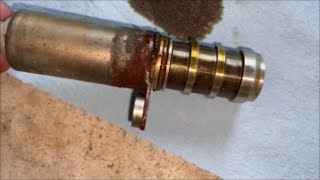
- Faulty Intake Camshaft Position Actuator Solenoid 🔴 High Probability → Shop Engine Camshaft These solenoids are a very common failure point on Ecotec engines. Internal components can fail electrically (creating an open circuit), or the small mesh screens on the solenoid can become clogged with oil sludge or even tear, preventing proper function.
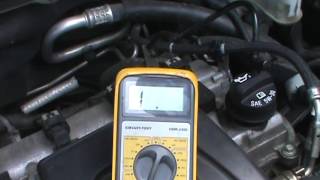
How to confirm: Swap the intake solenoid (front of the engine) with the exhaust solenoid (rear). Clear the codes and drive. If the code changes to P0013 (Exhaust Camshaft Position Actuator Circuit), the solenoid is bad. Alternatively, test the solenoid's resistance with a multimeter; it should be 8-12 Ohms. A reading of infinity (open circuit) confirms failure. A report for a similar GM engine in NHTSA ODI #11342559 found a failed intake solenoid testing at 1.4k Ohms, well outside the proper 8-13 Ohm range.
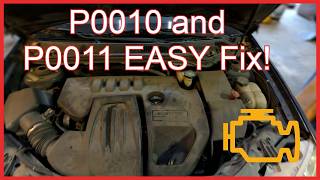
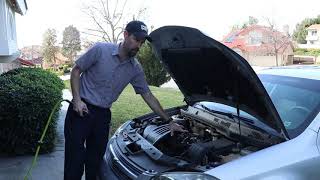
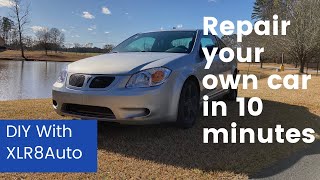
Typical fix: Replace the intake camshaft position actuator solenoid. It is held by a single 10mm bolt and is easily accessible 🎬 Watch: Quick Cobalt and G5 solenoid replacement guide on top of the engine. Many owners and mechanics recommend replacing both intake and exhaust solenoids at the same time, as they are exposed to the same conditions and the other is likely to fail soon.
Est. part cost: $25-$60 - Low or Dirty Engine Oil 🟡 Medium Probability The VVT system is hydraulic and highly sensitive to oil pressure and cleanliness. Infrequent oil changes lead to sludge buildup that clogs the solenoid screens and passages. Using conventional oil instead of the recommended synthetic can accelerate this process.
How to confirm: Check the oil level on the dipstick and inspect the oil's color and consistency. If the level is low or the oil is black and thick, this is a likely contributor.
Typical fix: Perform an engine oil and filter change using the manufacturer-specified 5W-30 synthetic oil. This may clean the solenoid enough to restore function, but often the solenoid has already been permanently damaged and will still require replacement.
Est. part cost: $30-$70 - Damaged Wiring or Connector ⚪ Low Probability
How to confirm: Visually inspect the wiring harness and electrical connector going to the intake solenoid. Look for any signs of frayed wires, corrosion on the pins, or damage to the plastic connector. The plastic wire loom in this area can become brittle from heat cycles and break, exposing the wires to damage. Check for a secure connection. Manufacturer Bulletin #PIP5553A notes that a P0010 can be caused by a wiring jumper harness chafed at a connector bolt, potentially leading to a stall or a crank-no-start condition.
Typical fix: Repair the damaged section of wire or replace the pigtail connector if it is corroded or broken. If the loom is deteriorated, replace it with new plastic conduit to protect the wiring.
Est. part cost: $10-$30
Rare But Worth Checking
- Stretched Timing Chain: → Shop Engine Timing Chain While a stretched timing chain can cause various timing-related codes (like P0011, P0016), it is much less common than a solenoid failure for an electrical circuit code like P0010. This would typically be accompanied by a significant rattling noise from the side of the engine on cold starts, which indicates a failing tensioner—a known weak point.
- Faulty Engine Control Module (ECM): This is extremely rare. The ECM should only be considered after all other possibilities, including wiring, have been thoroughly ruled out by a professional. A bad driver in the PCM is a theoretical but highly unlikely cause.
Diagnosis Steps
- Check Engine Oil: Verify the oil level is full and the oil is clean. If low or dirty, perform an oil change with 5W-30 synthetic oil, clear the code, and see if it returns.
- Inspect the Connector: Check the electrical connector on the intake solenoid (the one closer to the front bumper) for damage, corrosion, or a broken locking tab.
- Swap the Solenoids: Disconnect both solenoids. Unbolt them (10mm bolt each) and swap the intake and exhaust solenoids. They are identical parts. Clear the codes. If the code changes to P0013, you have confirmed the solenoid you moved to the exhaust position is faulty. This is the most definitive DIY test. 🎬 See this step-by-step solenoid replacement walkthrough
- Test Resistance (Optional): Use a multimeter to test the resistance of the suspect solenoid. Disconnect it and measure across the two pins. It should read between 8 and 12 ohms. A reading of OL (Open Loop) or significantly outside this range indicates it has failed electrically.
- Inspect Wiring: If a new solenoid does not fix the issue, carefully inspect the wiring harness leading to the solenoid for any breaks or shorts. Pay attention to the area where the loom may have cracked.
- Replace Solenoid: If the solenoid is confirmed bad, replace it with a new part. It is highly recommended to replace both solenoids at once.
Parts You'll Likely Need
- Intake Camshaft Position Actuator Solenoid
(OEM #12655420 (Newer design is 12679099, often supersedes 12628347))— This is the most common failure part for code P0010 on this engine. It either fails electrically or becomes clogged with oil debris. The exhaust solenoid is the same part number.
Trusted brands: ACDelco (OEM), Delphi, Dorman
OEM price range: $40-$60
Aftermarket price range: $25-$45
Related Codes That Often Appear With This One
- P0011 — P0011 indicates 'Intake Camshaft Position Timing - Over-Advanced'. A failing solenoid circuit (P0010) can directly cause the camshaft to be in the wrong position, triggering a performance code like P0011. Seeing both together strongly points to the solenoid itself.
- P0013 — This code is for the '"B" Camshaft Position Actuator Circuit (Bank 1)', which is the exhaust solenoid. If you see P0010 and P0013 together, it often indicates a systemic issue like extremely dirty oil, low oil pressure, or that both solenoids have failed around the same time, which is common.
Technical Service Bulletins (TSBs) & Recalls
- PIP4469F (related): Mentions machining debris causing intermittent VVT codes on 2009 Ecotec engines.
- Bulletin #PIP5553A: Notes that P0010 and P0011 may be accompanied by a stall or a crank-no-start condition due to electrical circuit issues.
Platform-Specific Known Issues
- A Technical Service Bulletin for 2009 models (PIP4469F) notes that casting sand or machining debris from the engine manufacturing process could cause intermittent VVT codes, though it specifically calls out P0011. This highlights the system's extreme sensitivity to oil contamination from day one.
- Owner experiences frequently highlight that using cheaper, aftermarket solenoids can lead to the code returning within a few thousand miles. Many recommend sticking with AC Delco or Delphi parts for longevity.
Mechanic-Grade Diagnostic Values
- Camshaft Actuator Solenoid Resistance — expected: 7-12 Ohms. Failure: A reading of 0 Ohms (shorted) or infinite/OL (open circuit).
- Voltage at Solenoid Connector (Key On, Engine Off) — expected: Battery voltage at the ignition circuit terminal (Pin 1).. Failure: No voltage indicates a problem with the ignition power supply or fuse.
- Scan Tool Commanded Voltage (Live Data) — expected: Transitions from >2V (commanded OFF) to <1V (commanded ON).. Failure: Voltage does not change when commanded, or does not meet the specified ranges, pointing to a wiring or ECM issue.
- Solenoid Bolt Torque Specification — expected: 10 N·m (89 lb in). Failure: N/A - This is an installation specification. Note: This is inch-pounds, not foot-pounds.
Scan Tool Commands That Help
- Tech2 / GDS2 / Professional Scan Tool: Intake Camshaft Position Actuator Solenoid Control — This bidirectional command allows a technician to manually command the solenoid ON and OFF while monitoring the circuit voltage or listening for a click from the solenoid. It's used to verify if the ECM, wiring, and solenoid are capable of functioning before removing parts.
Wiring & Ground Locations
- Intake Solenoid Connector — Top of the valve cover, the solenoid closer to the front bumper. The connector is typically gray.. This is the primary connection point to test for power, ground, and signal. It's exposed to heat and vibration, making it a potential point of failure due to a broken lock tab, corrosion, or oil contamination.
- Exhaust Solenoid Connector — Top of the valve cover, the solenoid closer to the firewall. The connector is typically black.. While not the direct cause of P0010, it's crucial for the 'swap test'. Knowing its location and color difference from the intake connector prevents confusion during diagnosis.
- Engine Bay Ground (Driver's Side) — On the driver's side strut tower, behind the underhood fuse panel.. A poor engine ground can cause a variety of floating voltages and unpredictable electrical faults. While not a direct cause, checking major grounds is a fundamental step when diagnosing any circuit code.
- Engine Block to Chassis Ground — A strap connecting the engine/transmission case to the vehicle's chassis/frame rail.. This is the main ground path for many engine components. Corrosion or a loose connection here can lead to intermittent and hard-to-diagnose electrical issues, including sensor and actuator circuit faults.
Real Owner Repair Stories
- Reddit user /u/Shouldveboughttsla (Chevrolet Cobalt (year not specified, but in relevant range)) — P0010 code
❌ Tried (didn't work) Replacing the faulty solenoid with a new one from AutoZone (an aftermarket part).
✅ What actually fixed it The code returned within 1,000 miles. The user warrantied the AutoZone part for another one, which then worked long-term. This highlights the inconsistent quality of some aftermarket parts; even a direct replacement from the same brand was needed to get a good unit. - CobaltSS.net forum user (2009 Cobalt LT 2.2L) — P0010 and P0013 codes appearing simultaneously.
❌ Tried (didn't work) The user was quoted $350 by a dealer to replace both solenoids.
✅ What actually fixed it The user was questioning if both solenoids failing at once pointed to a different root cause. This scenario is common and typically indicates either a systemic issue like very dirty oil affecting both solenoids, or simply that both original parts reached their end-of-life at the same time due to identical age and operating conditions. The fix remains replacing both solenoids. - NHTSA ODI #11183476 — An owner of a similar GM vehicle reported that the engine would run rough and then shut off daily after warming up. Despite replacing both intake and exhaust solenoids, the P0010 and P0011 codes persisted.
- NHTSA ODI #10735463 — An owner reported the vehicle would hesitate or stumble when pulling off from a stopped position. After a P0010 code appeared, the camshaft sensor was replaced, but the issue continued.
Documented NHTSA Reports
- NHTSA ODI #11366176: An owner reported that while turning, the front end would shake and make a clacking noise with the ESC and Traction Control off, accompanied by codes P0010, P0011, P0013, P0449, and P0722.
- NHTSA ODI #11342559: A report describes a vehicle that would kill when put in reverse and was hard to accelerate. A P0010 code was found, and testing revealed the intake solenoid had 1.4k Ohms of resistance when it should have been between 8-13 Ohms.
OEM Part Supersession History
12578517, 12628347→12646783 -> 12655420 -> 12679099— GM periodically updates part designs to improve reliability, integrate new materials, or consolidate parts across different engine platforms.
Heads up: All listed part numbers are interchangeable for this application. When ordering, you will typically receive the latest part number, 12679099, which replaces all previous versions.
Model Year Variations Within This Range
- 2005-2010: The intake solenoid connector is typically gray, and the exhaust solenoid connector is black. This color-coding is a helpful visual aid for technicians to quickly distinguish between the two circuits during diagnosis and repair.
Diagnostic Flowchart
Other Known Issues on This Vehicle
Issues unrelated to this code that are worth knowing about as an owner of this generation:
- Electric Power Steering (EPS) Motor Failure 🔴 High — Extremely common across all model years. Can occur at any mileage, leading to a sudden loss of power steering assist. (Ref: Recall 10V073000 (NHTSA ID) / N100023 (GM ID). GM recalled 1.3 million vehicles, including the 2005-2010 Cobalt, to replace the EPS motor.)
- Premature Failure of Front Lower Control Arm Bushings 🟠 Medium — Very common, often failing in as little as 20,000-40,000 miles. Causes clunking noises over bumps, poor handling, and uneven tire wear.
- Fuel Pump Module / Fuel Line Leaks 🔴 High — Widespread issue involving cracks in the plastic fuel pump outlet or return ports, leading to a strong fuel smell and leaks on top of the tank. Can also manifest as repeated fuel pump failures. (Ref: Recall 09V419000 (NHTSA ID) for fuel tank leaks. Recall 12V459000 for issues with the fuel pump module.)
- Faulty Timing Chain Tensioner 🔴 High → Shop Engine Timing Chain — A known weak point on Ecotec engines. A failing tensioner causes a brief (2-5 second) rattle on cold starts. If ignored, the chain can stretch or jump time, causing catastrophic engine damage. (Ref: GM released an updated tensioner design to address this weakness.)
- Key Stuck in Ignition / Failed Shifter Cable 🟡 Low — Common problem where the key cannot be removed from the ignition. Often caused by a failed shifter interlock solenoid or a stretched shifter cable. (Ref: Recall 14V171000 (NHTSA ID) for the ignition switch moving out of the 'Run' position, which is a related but distinct issue.)
Used vs. New Parts: Buying Guide for This Vehicle
When a used part is the smart pick: Given that brand new, OEM-quality solenoids are available for $40-$60 and are a known high-failure item, buying a used part from a junkyard is not recommended. The risk of getting a part that has already failed or is near the end of its service life is very high, and the small cost savings do not justify the potential for having to do the job twice.
What to inspect on the donor part:
- Not applicable, as buying used is not advised for this part.
OEM-only on this vehicle (don't cheap out):
- Camshaft Position Actuator Solenoid
Aftermarket brands forum-validated for this vehicle:
- ACDelco (OEM)
- Delphi (Often the original equipment manufacturer for GM)
Brands owners have reported issues with on this vehicle:
- Dorman (Forum and Reddit discussions frequently mention a high failure rate or inconsistent quality for their electronic parts and solenoids, with some users needing to replace them again shortly after installation).
- Unbranded/Generic (Extremely cheap parts found on sites like Amazon or eBay often have a very short lifespan, leading to the code returning quickly).
Real Owner Stories
Aggregated from forums and TSBs cited above. Mileages and costs reflect what owners reported in those sources.
2009 Chevrolet Cobalt 2.2L
Symptoms: The intake cam solenoid failed, causing a P0010 code. The fix was described as a simple 10-minute repair.
What fixed it: Replacement of the intake camshaft solenoid.
Source hint: reddit.com/r/MechanicAdvice - Thread 'P0010 - 09 Chevy Cobalt 2.2L'
2010 Chevrolet Cobalt
Symptoms: Error codes P0010 and P0011. Discussion included checking for a rotted wire loom or timing chain issues.
What fixed it: Users recommended an oil change and replacing the actuators.
Source hint: reddit.com/r/ChevyCobalt - Thread 'Error P0010 & P0011 2010 cobalt'
Chevrolet Cobalt
Symptoms: Owner experienced both P0010 and P0013 codes simultaneously, showing both solenoids failing at once.
What fixed it: Replacing both the intake and exhaust camshaft actuator solenoids.
Source hint: yourcobalt.com - Thread 'Camshaft Actuator Solenoid Circuit Engine Code'
Chevrolet Cobalt
Symptoms: Codes P0010 and P0011. The owner initially investigated a weak battery as a potential cause before focusing on the solenoids.
What fixed it: Replacing both solenoids at a dealer.
Source hint: cobaltss.net - Thread 'Codes P0010 & P0011 - VVT'
Related OBD-II Codes
Frequently Asked Questions
I have a 2009 Cobalt; is there a TSB for VVT issues on my specific year?
Can I use any 5W-30 oil to fix the P0010 code on my Ecotec engine?
Is there a specific part number recommended for the intake solenoid on the Cobalt?
My traction control light came on at the same time as the P0010 code; are they related?
How can I tell the difference between the intake and exhaust solenoids when looking at the engine?
Is the P0010 issue covered by the same recall as the power steering?
Helpful Videos
We Have This Part in Stock

The information in this article is provided for general reference and educational purposes only. Vehicle specifications, procedures, and part compatibility can vary by production date, trim level, and region. Always consult your vehicle's factory service manual and verify part numbers before purchasing or performing repairs. Safety-critical components such as airbags, seat belts, and braking systems should be installed by a qualified professional.
- Chevrolet Cobalt:
- 🧭 Diagnostic Flowchart
- 🎬 Helpful Videos
- 🛍️ Shop This Part
- What's Unique About the 2005-2010 Chevrolet Cobalt
- Symptoms You May Notice
- Most Likely Causes
- Rare But Worth Checking
- Diagnosis Steps
- Parts You'll Likely Need
- Related Codes That Often Appear With This One
- Technical Service Bulletins (TSBs) & Recalls
- Platform-Specific Known Issues
- Mechanic-Grade Diagnostic Values
- Scan Tool Commands That Help
- Wiring & Ground Locations
- Real Owner Repair Stories
- Documented NHTSA Reports
- OEM Part Supersession History
- Model Year Variations Within This Range
- Other Known Issues on This Vehicle
- Used vs. New Parts: Buying Guide for This Vehicle
- Real Owner Stories
- 2009 Chevrolet Cobalt 2.2L
- 2010 Chevrolet Cobalt
- Chevrolet Cobalt
- Chevrolet Cobalt
- Related OBD-II Codes
- Frequently Asked Questions
- 🎟️ Get 5% Off